


Details
| Stereochemistry | ABSOLUTE |
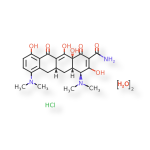
| Molecular Formula | C23H27N3O7.ClH |
| Molecular Weight | 493.937 |
| Optical Activity | UNSPECIFIED |
| Defined Stereocenters | 4 / 4 |
| E/Z Centers | 0 |
| Charge | 0 |
SHOW SMILES / InChI
SMILES
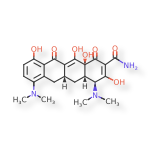
Cl.CN(C)[C@H]1[C@@H]2C[C@@H]3CC4=C(C(O)=CC=C4N(C)C)C(=O)C3=C(O)[C@]2(O)C(=O)C(C(N)=O)=C1O
InChI
InChIKey=GLMUAFMGXXHGLU-VQAITOIOSA-N
InChI=1S/C23H27N3O7.ClH/c1-25(2)12-5-6-13(27)15-10(12)7-9-8-11-17(26(3)4)19(29)16(22(24)32)21(31)23(11,33)20(30)14(9)18(15)28;/h5-6,9,11,17,27,29-30,33H,7-8H2,1-4H3,(H2,24,32);1H/t9-,11-,17-,23-;/m0./s1
| Molecular Formula | C23H27N3O7 |
| Molecular Weight | 457.4764 |
| Charge | 0 |
| Count |
|
| Stereochemistry | ABSOLUTE |
| Additional Stereochemistry | No |
| Defined Stereocenters | 4 / 4 |
| E/Z Centers | 0 |
| Optical Activity | UNSPECIFIED |
| Molecular Formula | ClH |
| Molecular Weight | 36.461 |
| Charge | 0 |
| Count |
|
| Stereochemistry | ACHIRAL |
| Additional Stereochemistry | No |
| Defined Stereocenters | 0 / 0 |
| E/Z Centers | 0 |
| Optical Activity | NONE |
Minocycline is a tetracycline analog, having a 7-dimethylamino and lacking the 5 methyl and hydroxyl groups, which is effective against tetracycline-resistant staphylococcus infections. Minocycline has many brand names one of them is minocin, Minocin is indicated in the treatment of the following infections due to susceptible isolates of the designated bacteria: Rocky Mountain spotted fever, typhus fever and the typhus group, Q fever, rickettsialpox and tick fevers caused by rickettsiae. Respiratory tract infections caused by Mycoplasma pneumoniae. Lymphogranuloma venereum caused by Chlamydia trachomatis. Psittacosis (Ornithosis) due to Chlamydophila psittaci etc. Minocycline is indicated for the treatment of infections caused by the following Gram-negative bacteria when bacteriologic testing indicates appropriate susceptibility to the drug: Escherichia coli. Enterobacter aerogenes. Shigella species etc. MINOCIN also is indicated for the treatment of infections caused by the following Gram-positive bacteria when bacteriologic testing indicates appropriate susceptibility to the drug: Upper respiratory tract infections caused by Streptococcus pneumoniae. Skin and skin structure infections caused by Staphylococcus aureus (Note: Minocycline is not the drug of choice in the treatment of any type of staphylococcal infection, etc. When penicillin is contraindicated, minocycline is an alternative drug in the treatment of the following infections: Meningitis due to Neisseria meningitidis. Syphilis caused by Treponema pallidum subspecies pallidum. Yaws caused by Treponema pallidum subspecies pertenue, etc. Minocycline passes directly through the lipid bilayer or passively diffuses through porin channels in the bacterial membrane. Minocycline inhibits protein synthesis by binding to 30S and possibly 50S ribosomal subunits of susceptible bacteria.
CNS Activity
Originator
Approval Year
Targets
| Primary Target | Pharmacology | Condition | Potency |
|---|---|---|---|
Target ID: CHEMBL2363135 |
Conditions
| Condition | Modality | Targets | Highest Phase | Product |
|---|---|---|---|---|
| Curative | MINOCIN Approved UseMinocycline hydrochloride capsules are indicated in the treatment of the following infections due to susceptible strains of the designated microorganisms: Rocky Mountain spotted fever, typhus fever and the typhus group, Q fever, rickettsialpox and tick fevers caused by rickettsiae. Respiratory tract infections caused by Mycoplasma pneumoniae. Lymphogranuloma venereum caused by Chlamydia trachomatis. Psittacosis (Ornithosis) due to Chlamydia psittaci. Trachoma caused by , although the infectious agent is not always eliminated, as judged by immunofluorescence. Chlamydia trachomatis Inclusion conjunctivitis caused by Chlamydia trachomatis. Nongonococcal urethritis, endocervical, or rectal infections in adults caused by or Ureaplasma urealyticum Chlamydia trachomatis. Relapsing fever due to Borrelia recurrentis. Chancroid caused by Haemophilus ducreyi. Plague due to Yersinia pestis. Tularemia due to Francisella tularensis. Cholera caused by Vibrio cholerae. Campylobacter fetus infections caused by Campylobacter fetus. Brucellosis due to species (in conjunction with streptomycin). Brucella Bartonellosis due to Bartonella bacilliformis. Granuloma inguinale caused by Calymmatobacterium granulomatis. Minocycline is indicated for the treatment of infections caused by the following gram-negative microorganisms, when bacteriologic testing indicates appropriate susceptibility to the drug: Escherichia coli. Enterobacter aerogenes. species. Shigella species. Acinetobacter Respiratory tract infections caused by Haemophilus influenzae. Respiratory tract and urinary tract infections caused by species. Klebsiella Minocycline hydrochloride capsules are indicated for the treatment of infections caused by the following gram-positive microorganisms when bacteriologic testing indicates appropriate susceptibility to the drug: Upper respiratory tract infections caused by . Streptococcus pneumoniae Skin and skin structure infections caused by (Note: Minocycline is not the drug of choice in the treatment of any type of staphylococcal infection.) Staphylococcus aureus. When penicillin is contraindicated, minocycline is an alternative drug in the treatment of the following infections: Uncomplicated urethritis in men due to and for the treatment of other gonococcal infections. Neisseria gonorrhoeae Infections in women caused by . Neisseria gonorrhoeae Syphilis caused by subspecies Treponema pallidum pallidum. Yaws caused by subspecies Treponema pallidum pertenue. Listeriosis due to Listeria monocytogenes. Anthrax due to . Bacillus anthracis Vincent’s infection caused by Fusobacterium fusiforme. Actinomycosis caused by Actinomyces israelii. Infections caused by species Clostridium . In acute minocycline may be a useful adjunct to amebicides. intestinal amebiasis, In severe minocycline may be useful adjunctive therapy. acne, Oral minocycline is indicated in the treatment of asymptomatic carriers of to eliminate meningococci from the nasopharynx. In order to preserve the usefulness of minocycline in the treatment of asymptomatic meningococcal carriers, diagnostic laboratory procedures, including serotyping and susceptibility testing, should be performed to establish the carrier state and the correct treatment. It is recommended that the prophylactic use of minocycline be reserved for situations in which the risk of meningococcal meningitis is high. Neisseria meningitidis Oral minocycline is not indicated for the treatment of meningococcal infection. Although no controlled clinical efficacy studies have been conducted, limited clinical data show that oral minocycline hydrochloride has been used successfully in the treatment of infections caused by Mycobacterium marinum. To reduce the development of drug-resistant bacteria and maintain the effectiveness of minocycline hydrochloride capsules and other antibacterial drugs, minocycline hydrochloride capsules should be used only to treat or prevent infections that are proven or strongly suspected to be caused by susceptible bacteria. When culture and susceptibility information are available, they should be considered in selecting or modifying antibacterial therapy. In the absence of such data, local epidemiology and susceptibility patterns may contribute to the empiric selection of therapy. Launch Date1971 |
|||
| Curative | MINOCIN Approved UseMinocycline hydrochloride capsules are indicated in the treatment of the following infections due to susceptible strains of the designated microorganisms: Rocky Mountain spotted fever, typhus fever and the typhus group, Q fever, rickettsialpox and tick fevers caused by rickettsiae. Respiratory tract infections caused by Mycoplasma pneumoniae. Lymphogranuloma venereum caused by Chlamydia trachomatis. Psittacosis (Ornithosis) due to Chlamydia psittaci. Trachoma caused by , although the infectious agent is not always eliminated, as judged by immunofluorescence. Chlamydia trachomatis Inclusion conjunctivitis caused by Chlamydia trachomatis. Nongonococcal urethritis, endocervical, or rectal infections in adults caused by or Ureaplasma urealyticum Chlamydia trachomatis. Relapsing fever due to Borrelia recurrentis. Chancroid caused by Haemophilus ducreyi. Plague due to Yersinia pestis. Tularemia due to Francisella tularensis. Cholera caused by Vibrio cholerae. Campylobacter fetus infections caused by Campylobacter fetus. Brucellosis due to species (in conjunction with streptomycin). Brucella Bartonellosis due to Bartonella bacilliformis. Granuloma inguinale caused by Calymmatobacterium granulomatis. Minocycline is indicated for the treatment of infections caused by the following gram-negative microorganisms, when bacteriologic testing indicates appropriate susceptibility to the drug: Escherichia coli. Enterobacter aerogenes. species. Shigella species. Acinetobacter Respiratory tract infections caused by Haemophilus influenzae. Respiratory tract and urinary tract infections caused by species. Klebsiella Minocycline hydrochloride capsules are indicated for the treatment of infections caused by the following gram-positive microorganisms when bacteriologic testing indicates appropriate susceptibility to the drug: Upper respiratory tract infections caused by . Streptococcus pneumoniae Skin and skin structure infections caused by (Note: Minocycline is not the drug of choice in the treatment of any type of staphylococcal infection.) Staphylococcus aureus. When penicillin is contraindicated, minocycline is an alternative drug in the treatment of the following infections: Uncomplicated urethritis in men due to and for the treatment of other gonococcal infections. Neisseria gonorrhoeae Infections in women caused by . Neisseria gonorrhoeae Syphilis caused by subspecies Treponema pallidum pallidum. Yaws caused by subspecies Treponema pallidum pertenue. Listeriosis due to Listeria monocytogenes. Anthrax due to . Bacillus anthracis Vincent’s infection caused by Fusobacterium fusiforme. Actinomycosis caused by Actinomyces israelii. Infections caused by species Clostridium . In acute minocycline may be a useful adjunct to amebicides. intestinal amebiasis, In severe minocycline may be useful adjunctive therapy. acne, Oral minocycline is indicated in the treatment of asymptomatic carriers of to eliminate meningococci from the nasopharynx. In order to preserve the usefulness of minocycline in the treatment of asymptomatic meningococcal carriers, diagnostic laboratory procedures, including serotyping and susceptibility testing, should be performed to establish the carrier state and the correct treatment. It is recommended that the prophylactic use of minocycline be reserved for situations in which the risk of meningococcal meningitis is high. Neisseria meningitidis Oral minocycline is not indicated for the treatment of meningococcal infection. Although no controlled clinical efficacy studies have been conducted, limited clinical data show that oral minocycline hydrochloride has been used successfully in the treatment of infections caused by Mycobacterium marinum. To reduce the development of drug-resistant bacteria and maintain the effectiveness of minocycline hydrochloride capsules and other antibacterial drugs, minocycline hydrochloride capsules should be used only to treat or prevent infections that are proven or strongly suspected to be caused by susceptible bacteria. When culture and susceptibility information are available, they should be considered in selecting or modifying antibacterial therapy. In the absence of such data, local epidemiology and susceptibility patterns may contribute to the empiric selection of therapy. Launch Date1971 |
|||
| Curative | MINOCIN Approved UseMinocycline hydrochloride capsules are indicated in the treatment of the following infections due to susceptible strains of the designated microorganisms: Rocky Mountain spotted fever, typhus fever and the typhus group, Q fever, rickettsialpox and tick fevers caused by rickettsiae. Respiratory tract infections caused by Mycoplasma pneumoniae. Lymphogranuloma venereum caused by Chlamydia trachomatis. Psittacosis (Ornithosis) due to Chlamydia psittaci. Trachoma caused by , although the infectious agent is not always eliminated, as judged by immunofluorescence. Chlamydia trachomatis Inclusion conjunctivitis caused by Chlamydia trachomatis. Nongonococcal urethritis, endocervical, or rectal infections in adults caused by or Ureaplasma urealyticum Chlamydia trachomatis. Relapsing fever due to Borrelia recurrentis. Chancroid caused by Haemophilus ducreyi. Plague due to Yersinia pestis. Tularemia due to Francisella tularensis. Cholera caused by Vibrio cholerae. Campylobacter fetus infections caused by Campylobacter fetus. Brucellosis due to species (in conjunction with streptomycin). Brucella Bartonellosis due to Bartonella bacilliformis. Granuloma inguinale caused by Calymmatobacterium granulomatis. Minocycline is indicated for the treatment of infections caused by the following gram-negative microorganisms, when bacteriologic testing indicates appropriate susceptibility to the drug: Escherichia coli. Enterobacter aerogenes. species. Shigella species. Acinetobacter Respiratory tract infections caused by Haemophilus influenzae. Respiratory tract and urinary tract infections caused by species. Klebsiella Minocycline hydrochloride capsules are indicated for the treatment of infections caused by the following gram-positive microorganisms when bacteriologic testing indicates appropriate susceptibility to the drug: Upper respiratory tract infections caused by . Streptococcus pneumoniae Skin and skin structure infections caused by (Note: Minocycline is not the drug of choice in the treatment of any type of staphylococcal infection.) Staphylococcus aureus. When penicillin is contraindicated, minocycline is an alternative drug in the treatment of the following infections: Uncomplicated urethritis in men due to and for the treatment of other gonococcal infections. Neisseria gonorrhoeae Infections in women caused by . Neisseria gonorrhoeae Syphilis caused by subspecies Treponema pallidum pallidum. Yaws caused by subspecies Treponema pallidum pertenue. Listeriosis due to Listeria monocytogenes. Anthrax due to . Bacillus anthracis Vincent’s infection caused by Fusobacterium fusiforme. Actinomycosis caused by Actinomyces israelii. Infections caused by species Clostridium . In acute minocycline may be a useful adjunct to amebicides. intestinal amebiasis, In severe minocycline may be useful adjunctive therapy. acne, Oral minocycline is indicated in the treatment of asymptomatic carriers of to eliminate meningococci from the nasopharynx. In order to preserve the usefulness of minocycline in the treatment of asymptomatic meningococcal carriers, diagnostic laboratory procedures, including serotyping and susceptibility testing, should be performed to establish the carrier state and the correct treatment. It is recommended that the prophylactic use of minocycline be reserved for situations in which the risk of meningococcal meningitis is high. Neisseria meningitidis Oral minocycline is not indicated for the treatment of meningococcal infection. Although no controlled clinical efficacy studies have been conducted, limited clinical data show that oral minocycline hydrochloride has been used successfully in the treatment of infections caused by Mycobacterium marinum. To reduce the development of drug-resistant bacteria and maintain the effectiveness of minocycline hydrochloride capsules and other antibacterial drugs, minocycline hydrochloride capsules should be used only to treat or prevent infections that are proven or strongly suspected to be caused by susceptible bacteria. When culture and susceptibility information are available, they should be considered in selecting or modifying antibacterial therapy. In the absence of such data, local epidemiology and susceptibility patterns may contribute to the empiric selection of therapy. Launch Date1971 |
|||
| Curative | MINOCIN Approved UseMinocycline hydrochloride capsules are indicated in the treatment of the following infections due to susceptible strains of the designated microorganisms: Rocky Mountain spotted fever, typhus fever and the typhus group, Q fever, rickettsialpox and tick fevers caused by rickettsiae. Respiratory tract infections caused by Mycoplasma pneumoniae. Lymphogranuloma venereum caused by Chlamydia trachomatis. Psittacosis (Ornithosis) due to Chlamydia psittaci. Trachoma caused by , although the infectious agent is not always eliminated, as judged by immunofluorescence. Chlamydia trachomatis Inclusion conjunctivitis caused by Chlamydia trachomatis. Nongonococcal urethritis, endocervical, or rectal infections in adults caused by or Ureaplasma urealyticum Chlamydia trachomatis. Relapsing fever due to Borrelia recurrentis. Chancroid caused by Haemophilus ducreyi. Plague due to Yersinia pestis. Tularemia due to Francisella tularensis. Cholera caused by Vibrio cholerae. Campylobacter fetus infections caused by Campylobacter fetus. Brucellosis due to species (in conjunction with streptomycin). Brucella Bartonellosis due to Bartonella bacilliformis. Granuloma inguinale caused by Calymmatobacterium granulomatis. Minocycline is indicated for the treatment of infections caused by the following gram-negative microorganisms, when bacteriologic testing indicates appropriate susceptibility to the drug: Escherichia coli. Enterobacter aerogenes. species. Shigella species. Acinetobacter Respiratory tract infections caused by Haemophilus influenzae. Respiratory tract and urinary tract infections caused by species. Klebsiella Minocycline hydrochloride capsules are indicated for the treatment of infections caused by the following gram-positive microorganisms when bacteriologic testing indicates appropriate susceptibility to the drug: Upper respiratory tract infections caused by . Streptococcus pneumoniae Skin and skin structure infections caused by (Note: Minocycline is not the drug of choice in the treatment of any type of staphylococcal infection.) Staphylococcus aureus. When penicillin is contraindicated, minocycline is an alternative drug in the treatment of the following infections: Uncomplicated urethritis in men due to and for the treatment of other gonococcal infections. Neisseria gonorrhoeae Infections in women caused by . Neisseria gonorrhoeae Syphilis caused by subspecies Treponema pallidum pallidum. Yaws caused by subspecies Treponema pallidum pertenue. Listeriosis due to Listeria monocytogenes. Anthrax due to . Bacillus anthracis Vincent’s infection caused by Fusobacterium fusiforme. Actinomycosis caused by Actinomyces israelii. Infections caused by species Clostridium . In acute minocycline may be a useful adjunct to amebicides. intestinal amebiasis, In severe minocycline may be useful adjunctive therapy. acne, Oral minocycline is indicated in the treatment of asymptomatic carriers of to eliminate meningococci from the nasopharynx. In order to preserve the usefulness of minocycline in the treatment of asymptomatic meningococcal carriers, diagnostic laboratory procedures, including serotyping and susceptibility testing, should be performed to establish the carrier state and the correct treatment. It is recommended that the prophylactic use of minocycline be reserved for situations in which the risk of meningococcal meningitis is high. Neisseria meningitidis Oral minocycline is not indicated for the treatment of meningococcal infection. Although no controlled clinical efficacy studies have been conducted, limited clinical data show that oral minocycline hydrochloride has been used successfully in the treatment of infections caused by Mycobacterium marinum. To reduce the development of drug-resistant bacteria and maintain the effectiveness of minocycline hydrochloride capsules and other antibacterial drugs, minocycline hydrochloride capsules should be used only to treat or prevent infections that are proven or strongly suspected to be caused by susceptible bacteria. When culture and susceptibility information are available, they should be considered in selecting or modifying antibacterial therapy. In the absence of such data, local epidemiology and susceptibility patterns may contribute to the empiric selection of therapy. Launch Date1971 |
|||
| Curative | MINOCIN Approved UseMinocycline hydrochloride capsules are indicated in the treatment of the following infections due to susceptible strains of the designated microorganisms: Rocky Mountain spotted fever, typhus fever and the typhus group, Q fever, rickettsialpox and tick fevers caused by rickettsiae. Respiratory tract infections caused by Mycoplasma pneumoniae. Lymphogranuloma venereum caused by Chlamydia trachomatis. Psittacosis (Ornithosis) due to Chlamydia psittaci. Trachoma caused by , although the infectious agent is not always eliminated, as judged by immunofluorescence. Chlamydia trachomatis Inclusion conjunctivitis caused by Chlamydia trachomatis. Nongonococcal urethritis, endocervical, or rectal infections in adults caused by or Ureaplasma urealyticum Chlamydia trachomatis. Relapsing fever due to Borrelia recurrentis. Chancroid caused by Haemophilus ducreyi. Plague due to Yersinia pestis. Tularemia due to Francisella tularensis. Cholera caused by Vibrio cholerae. Campylobacter fetus infections caused by Campylobacter fetus. Brucellosis due to species (in conjunction with streptomycin). Brucella Bartonellosis due to Bartonella bacilliformis. Granuloma inguinale caused by Calymmatobacterium granulomatis. Minocycline is indicated for the treatment of infections caused by the following gram-negative microorganisms, when bacteriologic testing indicates appropriate susceptibility to the drug: Escherichia coli. Enterobacter aerogenes. species. Shigella species. Acinetobacter Respiratory tract infections caused by Haemophilus influenzae. Respiratory tract and urinary tract infections caused by species. Klebsiella Minocycline hydrochloride capsules are indicated for the treatment of infections caused by the following gram-positive microorganisms when bacteriologic testing indicates appropriate susceptibility to the drug: Upper respiratory tract infections caused by . Streptococcus pneumoniae Skin and skin structure infections caused by (Note: Minocycline is not the drug of choice in the treatment of any type of staphylococcal infection.) Staphylococcus aureus. When penicillin is contraindicated, minocycline is an alternative drug in the treatment of the following infections: Uncomplicated urethritis in men due to and for the treatment of other gonococcal infections. Neisseria gonorrhoeae Infections in women caused by . Neisseria gonorrhoeae Syphilis caused by subspecies Treponema pallidum pallidum. Yaws caused by subspecies Treponema pallidum pertenue. Listeriosis due to Listeria monocytogenes. Anthrax due to . Bacillus anthracis Vincent’s infection caused by Fusobacterium fusiforme. Actinomycosis caused by Actinomyces israelii. Infections caused by species Clostridium . In acute minocycline may be a useful adjunct to amebicides. intestinal amebiasis, In severe minocycline may be useful adjunctive therapy. acne, Oral minocycline is indicated in the treatment of asymptomatic carriers of to eliminate meningococci from the nasopharynx. In order to preserve the usefulness of minocycline in the treatment of asymptomatic meningococcal carriers, diagnostic laboratory procedures, including serotyping and susceptibility testing, should be performed to establish the carrier state and the correct treatment. It is recommended that the prophylactic use of minocycline be reserved for situations in which the risk of meningococcal meningitis is high. Neisseria meningitidis Oral minocycline is not indicated for the treatment of meningococcal infection. Although no controlled clinical efficacy studies have been conducted, limited clinical data show that oral minocycline hydrochloride has been used successfully in the treatment of infections caused by Mycobacterium marinum. To reduce the development of drug-resistant bacteria and maintain the effectiveness of minocycline hydrochloride capsules and other antibacterial drugs, minocycline hydrochloride capsules should be used only to treat or prevent infections that are proven or strongly suspected to be caused by susceptible bacteria. When culture and susceptibility information are available, they should be considered in selecting or modifying antibacterial therapy. In the absence of such data, local epidemiology and susceptibility patterns may contribute to the empiric selection of therapy. Launch Date1971 |
|||
| Primary | MINOCIN Approved UseMinocycline hydrochloride capsules are indicated in the treatment of the following infections due to susceptible strains of the designated microorganisms: Rocky Mountain spotted fever, typhus fever and the typhus group, Q fever, rickettsialpox and tick fevers caused by rickettsiae. Respiratory tract infections caused by Mycoplasma pneumoniae. Lymphogranuloma venereum caused by Chlamydia trachomatis. Psittacosis (Ornithosis) due to Chlamydia psittaci. Trachoma caused by , although the infectious agent is not always eliminated, as judged by immunofluorescence. Chlamydia trachomatis Inclusion conjunctivitis caused by Chlamydia trachomatis. Nongonococcal urethritis, endocervical, or rectal infections in adults caused by or Ureaplasma urealyticum Chlamydia trachomatis. Relapsing fever due to Borrelia recurrentis. Chancroid caused by Haemophilus ducreyi. Plague due to Yersinia pestis. Tularemia due to Francisella tularensis. Cholera caused by Vibrio cholerae. Campylobacter fetus infections caused by Campylobacter fetus. Brucellosis due to species (in conjunction with streptomycin). Brucella Bartonellosis due to Bartonella bacilliformis. Granuloma inguinale caused by Calymmatobacterium granulomatis. Minocycline is indicated for the treatment of infections caused by the following gram-negative microorganisms, when bacteriologic testing indicates appropriate susceptibility to the drug: Escherichia coli. Enterobacter aerogenes. species. Shigella species. Acinetobacter Respiratory tract infections caused by Haemophilus influenzae. Respiratory tract and urinary tract infections caused by species. Klebsiella Minocycline hydrochloride capsules are indicated for the treatment of infections caused by the following gram-positive microorganisms when bacteriologic testing indicates appropriate susceptibility to the drug: Upper respiratory tract infections caused by . Streptococcus pneumoniae Skin and skin structure infections caused by (Note: Minocycline is not the drug of choice in the treatment of any type of staphylococcal infection.) Staphylococcus aureus. When penicillin is contraindicated, minocycline is an alternative drug in the treatment of the following infections: Uncomplicated urethritis in men due to and for the treatment of other gonococcal infections. Neisseria gonorrhoeae Infections in women caused by . Neisseria gonorrhoeae Syphilis caused by subspecies Treponema pallidum pallidum. Yaws caused by subspecies Treponema pallidum pertenue. Listeriosis due to Listeria monocytogenes. Anthrax due to . Bacillus anthracis Vincent’s infection caused by Fusobacterium fusiforme. Actinomycosis caused by Actinomyces israelii. Infections caused by species Clostridium . In acute minocycline may be a useful adjunct to amebicides. intestinal amebiasis, In severe minocycline may be useful adjunctive therapy. acne, Oral minocycline is indicated in the treatment of asymptomatic carriers of to eliminate meningococci from the nasopharynx. In order to preserve the usefulness of minocycline in the treatment of asymptomatic meningococcal carriers, diagnostic laboratory procedures, including serotyping and susceptibility testing, should be performed to establish the carrier state and the correct treatment. It is recommended that the prophylactic use of minocycline be reserved for situations in which the risk of meningococcal meningitis is high. Neisseria meningitidis Oral minocycline is not indicated for the treatment of meningococcal infection. Although no controlled clinical efficacy studies have been conducted, limited clinical data show that oral minocycline hydrochloride has been used successfully in the treatment of infections caused by Mycobacterium marinum. To reduce the development of drug-resistant bacteria and maintain the effectiveness of minocycline hydrochloride capsules and other antibacterial drugs, minocycline hydrochloride capsules should be used only to treat or prevent infections that are proven or strongly suspected to be caused by susceptible bacteria. When culture and susceptibility information are available, they should be considered in selecting or modifying antibacterial therapy. In the absence of such data, local epidemiology and susceptibility patterns may contribute to the empiric selection of therapy. Launch Date1971 |
Cmax
| Value | Dose | Co-administered | Analyte | Population |
|---|---|---|---|---|
2.63 μg/mL |
135 mg 1 times / day steady-state, oral dose: 135 mg route of administration: Oral experiment type: STEADY-STATE co-administered: |
MINOCYCLINE plasma | Homo sapiens population: HEALTHY age: ADULT sex: UNKNOWN food status: UNKNOWN |
AUC
| Value | Dose | Co-administered | Analyte | Population |
|---|---|---|---|---|
33.32 μg × h/mL |
135 mg 1 times / day steady-state, oral dose: 135 mg route of administration: Oral experiment type: STEADY-STATE co-administered: |
MINOCYCLINE plasma | Homo sapiens population: HEALTHY age: ADULT sex: UNKNOWN food status: UNKNOWN |
PubMed
| Title | Date | PubMed |
|---|---|---|
| Minocycline promotes dendritic spine maturation and improves behavioural performance in the fragile X mouse model. | 2009-02 |
|
| Minocycline suppresses morphine-induced respiratory depression, suppresses morphine-induced reward, and enhances systemic morphine-induced analgesia. | 2008-11 |
|
| Exposure to metal ions regulates mRNA levels of APP and BACE1 in PC12 cells: blockage by curcumin. | 2008-08-08 |
|
| Minocycline hepatitis. | 2008-08 |
|
| Monitoring the protective effects of minocycline treatment with radiolabeled annexin V in an experimental model of focal cerebral ischemia. | 2007-11 |
|
| Minocycline inhibits West Nile virus replication and apoptosis in human neuronal cells. | 2007-11 |
|
| Minocycline attenuates neuronal cell death and improves cognitive impairment in Alzheimer's disease models. | 2007-11 |
|
| Minocycline toxicity requiring liver transplant. | 2007-11 |
|
| Pimecrolimus-induced rosacea-like demodicidosis. | 2007-10 |
|
| Role of NF-kappaB and MAPKs in light-induced photoreceptor apoptosis. | 2007-10 |
|
| Characterization of rodent models of HIV-gp120 and anti-retroviral-associated neuropathic pain. | 2007-10 |
|
| [Severe drug rash with eosinophilia and systemic symptoms after treatment with minocycline]. | 2007-09 |
|
| Hyperthyroidism and lupus-like syndrome in an adolescent treated with minocycline for acne vulgaris. | 2007-06-05 |
|
| Minocycline-induced cutaneous polyarteritis nodosa. | 2007-06 |
|
| Newer tetracycline derivatives: synthesis, anti-HIV, antimycobacterial activities and inhibition of HIV-1 integrase. | 2007-04-15 |
|
| Minocycline delays but does not attenuate the course of experimental autoimmune encephalomyelitis in Streptococcus pneumoniae-infected mice. | 2007-01 |
|
| Protective effects of minocycline on behavioral changes and neurotoxicity in mice after administration of methamphetamine. | 2006-12-30 |
|
| Additional case of minocycline-induced cutaneous polyarteritis nodosa: comment on the article by Culver et al. | 2006-10-15 |
|
| Delayed minocycline inhibits ischemia-activated matrix metalloproteinases 2 and 9 after experimental stroke. | 2006-07-17 |
|
| Minocycline inhibits caspase-dependent and -independent cell death pathways and is neuroprotective against hippocampal damage after treatment with kainic acid in mice. | 2006-05-08 |
|
| Susceptibility to rotenone is increased in neurons from parkin null mice and is reduced by minocycline. | 2006-05 |
|
| The involvement of norepinephrine and microglia in hypothalamic and splenic IL-1beta responses to stress. | 2006-04 |
|
| Eosinophilic meningitis after implantation of a rifampin and minocycline-impregnated ventriculostomy catheter in a child. Case report. | 2006-01 |
|
| Minocycline-induced vasculitis fulfilling the criteria of polyarteritis nodosa. | 2006 |
|
| Amyotrophic lateral sclerosis: recent advances and future therapies. | 2005-12 |
|
| Safety of doxycycline and minocycline: a systematic review. | 2005-09 |
|
| Case report and review of minocycline-induced cutaneous polyarteritis nodosa. | 2005-06-15 |
|
| Minocycline inhibits oxidative stress and decreases in vitro and in vivo ischemic neuronal damage. | 2005-05-17 |
|
| [Minocycline-induced pleurocarditis and eosinophilic pneumonia: à propos of a case]. | 2005-03 |
|
| Minocycline in neurological diseases. | 2005-03 |
|
| Minocycline-mediated inhibition of microglia activation impairs oligodendrocyte progenitor cell responses and remyelination in a non-immune model of demyelination. | 2005-01 |
|
| Involvement of mitochondrial potential and calcium buffering capacity in minocycline cytoprotective actions. | 2005 |
|
| Minocycline prevents glutamate-induced apoptosis of cerebellar granule neurons by differential regulation of p38 and Akt pathways. | 2004-12 |
|
| Treatment of olfactory dysfunction, II: studies with minocycline. | 2004-12 |
|
| Minocycline inhibits apoptotic cell death via attenuation of TNF-alpha expression following iNOS/NO induction by lipopolysaccharide in neuron/glia co-cultures. | 2004-11 |
|
| An investigation of the neuroprotective effects of tetracycline derivatives in experimental models of retinal cell death. | 2004-11 |
|
| Minocycline protects PC12 cells from ischemic-like injury and inhibits 5-lipoxygenase activation. | 2004-10-05 |
|
| A novel action of minocycline: inhibition of human immunodeficiency virus type 1 infection in microglia. | 2004-10 |
|
| Minocycline inhibits apoptosis and inflammation in a rat model of ischemic renal injury. | 2004-10 |
|
| The headache of teenage acne. | 2004-06-08 |
|
| Deleterious effects of minocycline in animal models of Parkinson's disease and Huntington's disease. | 2004-06 |
|
| Placebo-controlled phase I/II studies of minocycline in amyotrophic lateral sclerosis. | 2004-05-25 |
|
| Minocycline up-regulates Bcl-2 and protects against cell death in mitochondria. | 2004-05-07 |
|
| Minocycline treatment reduces delayed oligodendrocyte death, attenuates axonal dieback, and improves functional outcome after spinal cord injury. | 2004-03-03 |
|
| Minocycline inhibits caspase activation and reactivation, increases the ratio of XIAP to smac/DIABLO, and reduces the mitochondrial leakage of cytochrome C and smac/DIABLO. | 2004-03-03 |
|
| Drug-induced liver injury. | 2004-03-01 |
|
| Severe acute myopathy induced by minocycline. | 2004-02-15 |
|
| Interstitial pneumonia and hepatitis caused by minocycline. | 2004-02 |
|
| Clarithromycin-minocycline is synergistic in a murine model of toxoplasmosis. | 1992-04 |
|
| Acute hepatic failure associated with oral minocycline: a case report. | 1992 |
Patents
Sample Use Guides
For Pediatric Patients above 8 years of Age: usual pediatric dose: Initial dose of 4 mg/kg, then 2 mg/kg administered over 60 minutes every 12 hours, not to exceed the usual adult dose.
Adults: usual adult dose: Initial dose of 200 mg, then 100 mg administered over 60 minutes ever y 12 hours and should not exceed 400 mg in 24 hours.
Route of Administration:
Intravenous
It was investigated the minimal inhibitory concentration (MIC) of minocycline on superinfecting microorganisms isolated from the periodontal pocket and the oral cavity of individuals with chronic periodontitis. Isolates of Enterobacteriaceae (n = 25), Staphylococcus spp. (n = 25), Pseudomonas aeruginosa (n = 9) and Candida spp. (n = 25) were included in the study. Minimal inhibitory concentrations (MIC) of minocycline were determined using the Müeller-Hinton agar dilution method. Staphylococcus spp. isolates were the most sensitive to minocycline with a MIC of 8 microg/mL, followed by Enterobacteriaceae with a MIC of 16 microg/mL. The concentration of 16 microg/mL inhibited 96% of Candida spp. isolates. The MIC for 88.8% of the isolates of Pseudomonas aeruginosa was 128 microg/mL. A concentration of 1,000 microg/mL was not enough to inhibit 100% of the tested isolates.
| Substance Class |
Chemical
Created
by
admin
on
Edited
Mon Mar 31 17:53:23 GMT 2025
by
admin
on
Mon Mar 31 17:53:23 GMT 2025
|
| Record UNII |
0020414E5U
|
| Record Status |
Validated (UNII)
|
| Record Version |
|
-
Download
| Name | Type | Language | ||
|---|---|---|---|---|
|
Preferred Name | English | ||
|
Common Name | English | ||
|
Brand Name | English | ||
|
Common Name | English | ||
|
Brand Name | English | ||
|
Common Name | English | ||
|
Brand Name | English | ||
|
Code | English | ||
|
Common Name | English | ||
|
Brand Name | English | ||
|
Common Name | English | ||
|
Brand Name | English | ||
|
Common Name | English | ||
|
Common Name | English | ||
|
Brand Name | English | ||
|
Brand Name | English | ||
|
Common Name | English | ||
|
Common Name | English | ||
|
Common Name | English | ||
|
Common Name | English | ||
|
Brand Name | English | ||
|
Common Name | English | ||
|
Common Name | English |
| Classification Tree | Code System | Code | ||
|---|---|---|---|---|
|
FDA ORPHAN DRUG |
213305
Created by
admin on Mon Mar 31 17:53:23 GMT 2025 , Edited by admin on Mon Mar 31 17:53:23 GMT 2025
|
||
|
NCI_THESAURUS |
C1595
Created by
admin on Mon Mar 31 17:53:23 GMT 2025 , Edited by admin on Mon Mar 31 17:53:23 GMT 2025
|
||
|
FDA ORPHAN DRUG |
67092
Created by
admin on Mon Mar 31 17:53:23 GMT 2025 , Edited by admin on Mon Mar 31 17:53:23 GMT 2025
|
| Code System | Code | Type | Description | ||
|---|---|---|---|---|---|
|
237-099-7
Created by
admin on Mon Mar 31 17:53:23 GMT 2025 , Edited by admin on Mon Mar 31 17:53:23 GMT 2025
|
PRIMARY | |||
|
0020414E5U
Created by
admin on Mon Mar 31 17:53:23 GMT 2025 , Edited by admin on Mon Mar 31 17:53:23 GMT 2025
|
PRIMARY | |||
|
50697
Created by
admin on Mon Mar 31 17:53:23 GMT 2025 , Edited by admin on Mon Mar 31 17:53:23 GMT 2025
|
PRIMARY | |||
|
100000091841
Created by
admin on Mon Mar 31 17:53:23 GMT 2025 , Edited by admin on Mon Mar 31 17:53:23 GMT 2025
|
PRIMARY | |||
|
DTXSID8044545
Created by
admin on Mon Mar 31 17:53:23 GMT 2025 , Edited by admin on Mon Mar 31 17:53:23 GMT 2025
|
PRIMARY | |||
|
SUB03304MIG
Created by
admin on Mon Mar 31 17:53:23 GMT 2025 , Edited by admin on Mon Mar 31 17:53:23 GMT 2025
|
PRIMARY | |||
|
6979
Created by
admin on Mon Mar 31 17:53:23 GMT 2025 , Edited by admin on Mon Mar 31 17:53:23 GMT 2025
|
PRIMARY | RxNorm | ||
|
1444004
Created by
admin on Mon Mar 31 17:53:23 GMT 2025 , Edited by admin on Mon Mar 31 17:53:23 GMT 2025
|
PRIMARY | |||
|
m7553
Created by
admin on Mon Mar 31 17:53:23 GMT 2025 , Edited by admin on Mon Mar 31 17:53:23 GMT 2025
|
PRIMARY | Merck Index | ||
|
C47622
Created by
admin on Mon Mar 31 17:53:23 GMT 2025 , Edited by admin on Mon Mar 31 17:53:23 GMT 2025
|
PRIMARY | |||
|
141993
Created by
admin on Mon Mar 31 17:53:23 GMT 2025 , Edited by admin on Mon Mar 31 17:53:23 GMT 2025
|
PRIMARY | |||
|
0020414E5U
Created by
admin on Mon Mar 31 17:53:23 GMT 2025 , Edited by admin on Mon Mar 31 17:53:23 GMT 2025
|
PRIMARY | |||
|
13614-98-7
Created by
admin on Mon Mar 31 17:53:23 GMT 2025 , Edited by admin on Mon Mar 31 17:53:23 GMT 2025
|
PRIMARY | |||
|
CHEMBL1434
Created by
admin on Mon Mar 31 17:53:23 GMT 2025 , Edited by admin on Mon Mar 31 17:53:23 GMT 2025
|
PRIMARY | |||
|
DBSALT000721
Created by
admin on Mon Mar 31 17:53:23 GMT 2025 , Edited by admin on Mon Mar 31 17:53:23 GMT 2025
|
PRIMARY |
| Related Record | Type | Details | ||
|---|---|---|---|---|
|
SOLVATE->ANHYDROUS |
|
||
|
|
PARENT -> SALT/SOLVATE |
|
| Related Record | Type | Details | ||
|---|---|---|---|---|
|
IMPURITY -> PARENT |
|
||
|
IMPURITY -> PARENT |
|
||
|
IMPURITY -> PARENT |
USP
|
||
|
IMPURITY -> PARENT |
CHROMATOGRAPHIC PURITY (HPLC/UV)
USP
|
||
|
IMPURITY -> PARENT |
|
||
|
IMPURITY -> PARENT |
|


| Related Record | Type | Details | ||
|---|---|---|---|---|
|
|
ACTIVE MOIETY |
|