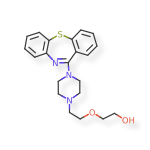
Details
| Stereochemistry | ACHIRAL |
| Molecular Formula | 2C21H25N3O2S.C4H4O4 |
| Molecular Weight | 883.086 |
| Optical Activity | NONE |
| Defined Stereocenters | 0 / 0 |
| E/Z Centers | 1 |
| Charge | 0 |
SHOW SMILES / InChI
SMILES
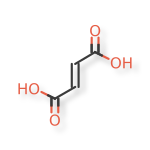
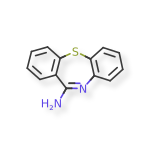
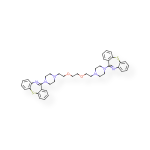
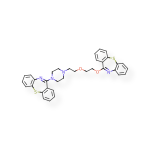
OC(=O)\C=C\C(O)=O.OCCOCCN1CCN(CC1)C2=NC3=CC=CC=C3SC4=CC=CC=C24.OCCOCCN5CCN(CC5)C6=NC7=CC=CC=C7SC8=CC=CC=C68
InChI
InChIKey=ZTHJULTYCAQOIJ-WXXKFALUSA-N
InChI=1S/2C21H25N3O2S.C4H4O4/c2*25-14-16-26-15-13-23-9-11-24(12-10-23)21-17-5-1-3-7-19(17)27-20-8-4-2-6-18(20)22-21;5-3(6)1-2-4(7)8/h2*1-8,25H,9-16H2;1-2H,(H,5,6)(H,7,8)/b;;2-1+
| Molecular Formula | C21H25N3O2S |
| Molecular Weight | 383.507 |
| Charge | 0 |
| Count |
|
| Stereochemistry | ACHIRAL |
| Additional Stereochemistry | No |
| Defined Stereocenters | 0 / 0 |
| E/Z Centers | 0 |
| Optical Activity | NONE |
| Molecular Formula | C4H4O4 |
| Molecular Weight | 116.0722 |
| Charge | 0 |
| Count |
|
| Stereochemistry | ACHIRAL |
| Additional Stereochemistry | No |
| Defined Stereocenters | 0 / 0 |
| E/Z Centers | 1 |
| Optical Activity | NONE |
DescriptionCurator's Comment: description was created based on several sources, including
https://www.ncbi.nlm.nih.gov/pubmed/12973385 |
https://www.ncbi.nlm.nih.gov/pubmed/10839333
Curator's Comment: description was created based on several sources, including
https://www.ncbi.nlm.nih.gov/pubmed/12973385 |
https://www.ncbi.nlm.nih.gov/pubmed/10839333
Quetiapine, marketed as SEROQUEL XR, is an atypical antipsychotic approved for the treatment of schizophrenia, bipolar disorder, and along with an antidepressant to treat major depressive disorder. The mechanism of action of SEROQUEL XR in the treatment of schizophrenia, bipolar disorder and major depressive disorder (MDD), is unknown. However, its efficacy in schizophrenia could be mediated through a combination of dopamine type 2 (D2) and serotonin type 2A (5HT2A) antagonism. The active metabolite, N-desalkyl quetiapine (norquetiapine), has similar activity at D2, but greater activity at 5HT2A receptors, than the parent drug (quetiapine). Quetiapine’s efficacy in bipolar depression and MDD may partly be explained by the high affinity and potent inhibitory effects that norquetiapine exhibits for the norepinephrine transporter. Antagonism at receptors other than dopamine and serotonin with similar or greater affinities may explain some of the other effects of quetiapine and norquetiapine: antagonism at histamine H1 receptors may explain the somnolence, antagonism at adrenergic α1b receptors may explain the orthostatic hypotension, and antagonism at muscarinic M1 receptors may explain the anticholinergic effects. Quetiapine and norquetiapine have affinity for multiple neurotransmitter receptors including dopamine D1 and D2, serotonin 5HT1A and 5HT2A, histamine H1, muscarinic M1, and adrenergic α1b and α2 receptors. Quetiapine differs from norquetiapine in having no appreciable affinity for muscarinic M1 receptors whereas norquetiapine has high affinity. Quetiapine and norquetiapine lack appreciable affinity for benzodiazepine receptors.
CNS Activity
Approval Year
Targets
| Primary Target | Pharmacology | Condition | Potency |
|---|---|---|---|
Target ID: CHEMBL224 |
|||
Target ID: CHEMBL217 |
Conditions
| Condition | Modality | Targets | Highest Phase | Product |
|---|---|---|---|---|
| Primary | SEROQUEL XR Approved Use1.1 Schizophrenia. SEROQUEL XR is indicated for the treatment of schizophrenia. The efficacy of SEROQUEL XR in schizophrenia was established in one 6-week and one maintenance trial in adults with schizophrenia. Efficacy was supported by three 6 week trials in adults with schizophrenia and one 6-week trial in adolescents with schizophrenia (13-17 years) treated with SEROQUEL. 1.2 Bipolar Disorder SEROQUEL XR is indicated for the acute treatment of manic or mixed episodes associated with bipolar I disorder, both as monotherapy and as an adjunct to lithium or divalproex. The efficacy of SEROQUEL XR in manic or mixed episodes
of bipolar I disorder was established in one 3-week trial in adults with manic or mixed episodes associated with bipolar I disorder. Efficacy was supported by two 12-week monotherapy trials and one 3-week adjunctive trial in adults with manic episodes associated with bipolar I disorder as well as one 3-week monotherapy trial in children and adolescents (10– 17 years) with manic episodes associated with bipolar I disorder treated with SEROQUEL. 1.3 Adjunctive Treatment of Major Depressive Disorder (MDD) ROQUEL XR is indicated for use as adjunctive therapy to antidepressants for the treatment of MDD. The efficacy of SEROQUEL XR as adjunctive therapy to antidepressants in MDD was established in two 6-week trials in adults with MDD who had an inadequate response to antidepressant treatment. Launch Date2007 |
|||
| Primary | SEROQUEL XR Approved Use1.1 Schizophrenia. SEROQUEL XR is indicated for the treatment of schizophrenia. The efficacy of SEROQUEL XR in schizophrenia was established in one 6-week and one maintenance trial in adults with schizophrenia. Efficacy was supported by three 6 week trials in adults with schizophrenia and one 6-week trial in adolescents with schizophrenia (13-17 years) treated with SEROQUEL. 1.2 Bipolar Disorder SEROQUEL XR is indicated for the acute treatment of manic or mixed episodes associated with bipolar I disorder, both as monotherapy and as an adjunct to lithium or divalproex. The efficacy of SEROQUEL XR in manic or mixed episodes
of bipolar I disorder was established in one 3-week trial in adults with manic or mixed episodes associated with bipolar I disorder. Efficacy was supported by two 12-week monotherapy trials and one 3-week adjunctive trial in adults with manic episodes associated with bipolar I disorder as well as one 3-week monotherapy trial in children and adolescents (10– 17 years) with manic episodes associated with bipolar I disorder treated with SEROQUEL. 1.3 Adjunctive Treatment of Major Depressive Disorder (MDD) ROQUEL XR is indicated for use as adjunctive therapy to antidepressants for the treatment of MDD. The efficacy of SEROQUEL XR as adjunctive therapy to antidepressants in MDD was established in two 6-week trials in adults with MDD who had an inadequate response to antidepressant treatment. Launch Date2007 |
|||
| Palliative | SEROQUEL XR Approved Use1.1 Schizophrenia. SEROQUEL XR is indicated for the treatment of schizophrenia. The efficacy of SEROQUEL XR in schizophrenia was established in one 6-week and one maintenance trial in adults with schizophrenia. Efficacy was supported by three 6 week trials in adults with schizophrenia and one 6-week trial in adolescents with schizophrenia (13-17 years) treated with SEROQUEL. 1.2 Bipolar Disorder SEROQUEL XR is indicated for the acute treatment of manic or mixed episodes associated with bipolar I disorder, both as monotherapy and as an adjunct to lithium or divalproex. The efficacy of SEROQUEL XR in manic or mixed episodes
of bipolar I disorder was established in one 3-week trial in adults with manic or mixed episodes associated with bipolar I disorder. Efficacy was supported by two 12-week monotherapy trials and one 3-week adjunctive trial in adults with manic episodes associated with bipolar I disorder as well as one 3-week monotherapy trial in children and adolescents (10– 17 years) with manic episodes associated with bipolar I disorder treated with SEROQUEL. 1.3 Adjunctive Treatment of Major Depressive Disorder (MDD) ROQUEL XR is indicated for use as adjunctive therapy to antidepressants for the treatment of MDD. The efficacy of SEROQUEL XR as adjunctive therapy to antidepressants in MDD was established in two 6-week trials in adults with MDD who had an inadequate response to antidepressant treatment. Launch Date2007 |
Cmax
| Value | Dose | Co-administered | Analyte | Population |
|---|---|---|---|---|
58.23 ng/mL EXPERIMENT https://pubmed.ncbi.nlm.nih.gov/25025989 |
25 mg single, oral dose: 25 mg route of administration: Oral experiment type: SINGLE co-administered: |
QUETIAPINE FUMARATE plasma | Homo sapiens population: HEALTHY age: ADULT sex: FEMALE / MALE food status: FASTED |
|
58.42 ng/mL EXPERIMENT https://pubmed.ncbi.nlm.nih.gov/25025989 |
25 mg single, oral dose: 25 mg route of administration: Oral experiment type: SINGLE co-administered: |
QUETIAPINE FUMARATE plasma | Homo sapiens population: HEALTHY age: ADULT sex: FEMALE food status: FASTED |
|
60.11 ng/mL EXPERIMENT https://pubmed.ncbi.nlm.nih.gov/25025989 |
25 mg single, oral dose: 25 mg route of administration: Oral experiment type: SINGLE co-administered: |
QUETIAPINE FUMARATE plasma | Homo sapiens population: HEALTHY age: ADULT sex: MALE food status: FASTED |
AUC
| Value | Dose | Co-administered | Analyte | Population |
|---|---|---|---|---|
187.44 ng × h/mL EXPERIMENT https://pubmed.ncbi.nlm.nih.gov/25025989 |
25 mg single, oral dose: 25 mg route of administration: Oral experiment type: SINGLE co-administered: |
QUETIAPINE FUMARATE plasma | Homo sapiens population: HEALTHY age: ADULT sex: FEMALE / MALE food status: FASTED |
|
197.55 ng × h/mL EXPERIMENT https://pubmed.ncbi.nlm.nih.gov/25025989 |
25 mg single, oral dose: 25 mg route of administration: Oral experiment type: SINGLE co-administered: |
QUETIAPINE FUMARATE plasma | Homo sapiens population: HEALTHY age: ADULT sex: FEMALE food status: FASTED |
|
190.39 ng × h/mL EXPERIMENT https://pubmed.ncbi.nlm.nih.gov/25025989 |
25 mg single, oral dose: 25 mg route of administration: Oral experiment type: SINGLE co-administered: |
QUETIAPINE FUMARATE plasma | Homo sapiens population: HEALTHY age: ADULT sex: MALE food status: FASTED |
T1/2
| Value | Dose | Co-administered | Analyte | Population |
|---|---|---|---|---|
3.86 h EXPERIMENT https://pubmed.ncbi.nlm.nih.gov/25025989 |
25 mg single, oral dose: 25 mg route of administration: Oral experiment type: SINGLE co-administered: |
QUETIAPINE FUMARATE plasma | Homo sapiens population: HEALTHY age: ADULT sex: FEMALE / MALE food status: FASTED |
|
3.85 h EXPERIMENT https://pubmed.ncbi.nlm.nih.gov/25025989 |
25 mg single, oral dose: 25 mg route of administration: Oral experiment type: SINGLE co-administered: |
QUETIAPINE FUMARATE plasma | Homo sapiens population: HEALTHY age: ADULT sex: FEMALE food status: FASTED |
|
3.98 h EXPERIMENT https://pubmed.ncbi.nlm.nih.gov/25025989 |
25 mg single, oral dose: 25 mg route of administration: Oral experiment type: SINGLE co-administered: |
QUETIAPINE FUMARATE plasma | Homo sapiens population: HEALTHY age: ADULT sex: MALE food status: FASTED |
Funbound
| Value | Dose | Co-administered | Analyte | Population |
|---|---|---|---|---|
17% |
unknown, unknown |
QUETIAPINE FUMARATE plasma | Homo sapiens population: UNKNOWN age: UNKNOWN sex: UNKNOWN food status: UNKNOWN |
Overview
| CYP3A4 | CYP2C9 | CYP2D6 | hERG |
|---|---|---|---|
OverviewOther
| Other Inhibitor | Other Substrate | Other Inducer |
|---|---|---|
Drug as perpetrator
| Target | Modality | Activity | Metabolite | Clinical evidence |
|---|---|---|---|---|
| yes [IC50 16.9 uM] | ||||
| yes [IC50 66.1 uM] | ||||
| yes [Inhibition 150 uM] | ||||
| yes [Inhibition 30 uM] | ||||
| yes [Inhibition 30 uM] | ||||
| yes [Inhibition 30 uM] | ||||
| yes [Inhibition 30 uM] |
Drug as victim
| Target | Modality | Activity | Metabolite | Clinical evidence |
|---|---|---|---|---|
| yes [Km 12.3 uM] | ||||
| yes | ||||
| yes | yes (co-administration study) Comment: all metabolites (5) formed from CYP3A4 metabolism; ketoconazole reduces clearance by 84%, increasing maximum plasma concentration by 335%; phenytoin increases clearance by 5-fold Sources: https://www.accessdata.fda.gov/drugsatfda_docs/label/2004/20639se1-017,016_seroquel_lbl.pdf Page: 4.0 |
Tox targets
| Target | Modality | Activity | Metabolite | Clinical evidence |
|---|---|---|---|---|
PubMed
| Title | Date | PubMed |
|---|---|---|
| Quetiapine and cataracts. | 2002-02 |
|
| Amisulpride, an unusual "atypical" antipsychotic: a meta-analysis of randomized controlled trials. | 2002-02 |
|
| [Drug-induced akathisia]. | 2002-01-19 |
|
| Does cognitive function improve with quetiapine in comparison to haloperidol? | 2002-01-15 |
|
| Treatment of drug-induced psychosis with quetiapine and clozapine in Parkinson's disease. | 2002-01-08 |
|
| Ziprasidone: an atypical antipsychotic drug for the treatment of schizophrenia. | 2002-01 |
|
| Quetiapine augmentation of serotonin reuptake inhibitors in obsessive-compulsive disorder. | 2002-01 |
|
| Falsely elevated imipramine levels in a patient taking quetiapine. | 2002-01 |
|
| Neuroleptic malignant syndrome and quetiapine. | 2002-01 |
|
| EEG abnormalities during treatment with typical and atypical antipsychotics. | 2002-01 |
|
| Antipsychotic medication adherence: is there a difference between typical and atypical agents? | 2002-01 |
|
| Effects of newer antipsychotics on extrapyramidal function. | 2002 |
|
| Broad therapeutic uses of atypical antipsychotic medications. | 2001-12-01 |
|
| Dopamine D(2) receptors and their role in atypical antipsychotic action: still necessary and may even be sufficient. | 2001-12-01 |
|
| Novel antipsychotics and acute dystonic reactions. | 2001-12 |
|
| Clozapine use in patients with schizophrenia and the risk of diabetes, hyperlipidemia, and hypertension: a claims-based approach. | 2001-12 |
|
| A 25-year-old woman with bipolar disorder, 1 year later. | 2001-11-28 |
|
| [Quetiapine poisoning]. | 2001-11-17 |
|
| Potent antagonism of 5-HT(3) and 5-HT(6) receptors by olanzapine. | 2001-11-02 |
|
| [Clinical and pharmacological studies of the second generation antipsychotics]. | 2001-11 |
|
| Antiaggressive effect of quetiapine in a patient with schizoaffective disorder. | 2001-11 |
|
| A comparison of the relative safety, efficacy, and tolerability of quetiapine and risperidone in outpatients with schizophrenia and other psychotic disorders: the quetiapine experience with safety and tolerability (QUEST) study. | 2001-11 |
|
| Antipsychotic drugs: prolonged QTc interval, torsade de pointes, and sudden death. | 2001-11 |
|
| Dopamine D(2) receptor occupancy is a common mechanism underlying animal models of antipsychotics and their clinical effects. | 2001-11 |
|
| Efficacy of antipsychotic agents at human 5-HT(1A) receptors determined by [3H]WAY100,635 binding affinity ratios: relationship to efficacy for G-protein activation. | 2001-10-05 |
|
| Atypical antipsychotics: impaired glucose metabolism. | 2001-10-02 |
|
| Ziprasidone: profile on safety. | 2001-10 |
|
| Antipsychotic medication: effects on regulation of glucose and lipids. | 2001-10 |
|
| Agranulocytosis and granulocytopenia associated with quetiapine. | 2001-10 |
|
| Cognitive improvements in psychotic subjects treated with "Seroquel" (quetiapine fumarate): an exploratory study. | 2001-10 |
|
| Quetiapine: efficacy and tolerability in schizophrenia. | 2001-10 |
|
| Quetiapine--efficacy in different domains. | 2001-10 |
|
| Quetiapine-related tardive dyskinesia. | 2001-10 |
|
| Inverse agonist actions of typical and atypical antipsychotic drugs at the human 5-hydroxytryptamine(2C) receptor. | 2001-10 |
|
| Quetiapine alone and added to a mood stabilizer for serious mood disorders. | 2001-09 |
|
| A case of depersonalization-derealization syndrome during treatment with quetiapine. | 2001-09 |
|
| Priapism from quetiapine overdose: first report and proposal of mechanism. | 2001-09 |
|
| Symptom reduction and suicide risk among patients treated with placebo in antipsychotic clinical trials: an analysis of the food and drug administration database. | 2001-09 |
|
| Failed challenge with quetiapine after neuroleptic malignant syndrome with conventional antipsychotics. | 2001-08 |
|
| The health economic implications of treatment with quetiapine: an audit of long-term treatment for patients with chronic schizophrenia. | 2001-08 |
|
| Use of atypical antipsychotics in mood disorders. | 2001-07 |
|
| Ziprasidone: a new atypical antipsychotic. | 2001-06 |
|
| Cost effectiveness of the newer atypical antipsychotics: a review of the pharmacoeconomic research evidence. | 2001-01 |
|
| Treatment of the agitation of late-life psychosis and Alzheimer's disease. | 2001-01 |
|
| Tolerability profile of atypical antipsychotics in children and adolescents. | 2001 |
|
| Economic evaluations during early (phase II) drug development: a role for clinical trial simulations? | 2001 |
|
| Long-term remission of schizophrenia in an adolescent treated with quetiapine. | 2001 |
|
| Review of atypical antipsychotics and weight gain. | 2001 |
|
| Hyperglycemia associated with the use of atypical antipsychotics. | 2001 |
|
| New antidepressive and antipsychotic drugs in juvenile neuronal ceroid lipofuscinoses--a pilot study. | 2001 |
Sample Use Guides
Schizophrenia- Adults: Day 1: 300 mg/day Dose increases can be made at intervals as short as 1 day and in increments of up to 300 mg/day
Schizophrenia-Adolescents: (13 to 17 years): Day 1: 50 mg/day; Day 2: 100 mg/day; Day 3: 200 mg/day; Day 4: 300 mg/day; Day 5: 400 mg/day;
Bipolar I Disorder manic or mixed-Acute monotherapy or adjunct to lithium or
divalproex-Adults: Day 1: 300 mg/day; Day 2: 600 mg/day; Day 3: between 400 and 800 mg/day.
Major Depressive Disorder Adjunctive Therapy with Antidepressants: Adults: Day 1: 50 mg/day; Day 2: 50 mg/day; Day 3: 150 mg/day
Bipolar I Disorder, manic Acute monotherapy: Children and Adolescents
(10 to 17 years) : Day 1: 50 mg/day; Day 2: 100 mg/day; Day 3: 200 mg/day; Day 4: 300 mg/day; Day 5: 400 mg/day.
Route of Administration:
Oral
In Vitro Use Guide
Curator's Comment: The antidepressant activity of quetiapine is considered to be mediated by the active metabolite N-desalkylquetiapine, which is mainly formed by CYP3A4. N-desalkylquetiapine is metabolized by both CYP2D6 and CYP3A4 in vitro with preference for the former enzyme. The pharmacologically active metabolite, 7-hydroxy-N-desalkylquetiapine, was exclusively formed by CYP2D6, whereas the two other metabolites were mainly formed by CYP3A4.
Unknown
| Substance Class |
Chemical
Created
by
admin
on
Edited
Mon Mar 31 18:23:28 GMT 2025
by
admin
on
Mon Mar 31 18:23:28 GMT 2025
|
| Record UNII |
2S3PL1B6UJ
|
| Record Status |
Validated (UNII)
|
| Record Version |
|
-
Download
| Name | Type | Language | ||
|---|---|---|---|---|
|
Official Name | English | ||
|
Preferred Name | English | ||
|
Common Name | English | ||
|
Brand Name | English | ||
|
Code | English | ||
|
Brand Name | English | ||
|
Common Name | English | ||
|
Code | English | ||
|
Code | English | ||
|
Code | English | ||
|
Code | English | ||
|
Common Name | English | ||
|
Code | English | ||
|
Common Name | English | ||
|
Common Name | English | ||
|
Code | English | ||
|
Common Name | English | ||
|
Common Name | English | ||
|
Common Name | English | ||
|
Code | English | ||
|
Common Name | English | ||
|
Common Name | English | ||
|
Common Name | English | ||
|
Common Name | English | ||
|
Common Name | English |
| Classification Tree | Code System | Code | ||
|---|---|---|---|---|
|
NCI_THESAURUS |
C29710
Created by
admin on Mon Mar 31 18:23:28 GMT 2025 , Edited by admin on Mon Mar 31 18:23:28 GMT 2025
|
||
|
NCI_THESAURUS |
C66885
Created by
admin on Mon Mar 31 18:23:28 GMT 2025 , Edited by admin on Mon Mar 31 18:23:28 GMT 2025
|
| Code System | Code | Type | Description | ||
|---|---|---|---|---|---|
|
111974-72-2
Created by
admin on Mon Mar 31 18:23:28 GMT 2025 , Edited by admin on Mon Mar 31 18:23:28 GMT 2025
|
PRIMARY | |||
|
8708
Created by
admin on Mon Mar 31 18:23:28 GMT 2025 , Edited by admin on Mon Mar 31 18:23:28 GMT 2025
|
PRIMARY | |||
|
100000091312
Created by
admin on Mon Mar 31 18:23:28 GMT 2025 , Edited by admin on Mon Mar 31 18:23:28 GMT 2025
|
PRIMARY | |||
|
m9425
Created by
admin on Mon Mar 31 18:23:28 GMT 2025 , Edited by admin on Mon Mar 31 18:23:28 GMT 2025
|
PRIMARY | Merck Index | ||
|
C47700
Created by
admin on Mon Mar 31 18:23:28 GMT 2025 , Edited by admin on Mon Mar 31 18:23:28 GMT 2025
|
PRIMARY | |||
|
CHEMBL716
Created by
admin on Mon Mar 31 18:23:28 GMT 2025 , Edited by admin on Mon Mar 31 18:23:28 GMT 2025
|
PRIMARY | |||
|
5281025
Created by
admin on Mon Mar 31 18:23:28 GMT 2025 , Edited by admin on Mon Mar 31 18:23:28 GMT 2025
|
PRIMARY | |||
|
HH-80
Created by
admin on Mon Mar 31 18:23:28 GMT 2025 , Edited by admin on Mon Mar 31 18:23:28 GMT 2025
|
PRIMARY | |||
|
2S3PL1B6UJ
Created by
admin on Mon Mar 31 18:23:28 GMT 2025 , Edited by admin on Mon Mar 31 18:23:28 GMT 2025
|
PRIMARY | |||
|
SUB56025
Created by
admin on Mon Mar 31 18:23:28 GMT 2025 , Edited by admin on Mon Mar 31 18:23:28 GMT 2025
|
PRIMARY | |||
|
1592704
Created by
admin on Mon Mar 31 18:23:28 GMT 2025 , Edited by admin on Mon Mar 31 18:23:28 GMT 2025
|
PRIMARY | |||
|
DBSALT002790
Created by
admin on Mon Mar 31 18:23:28 GMT 2025 , Edited by admin on Mon Mar 31 18:23:28 GMT 2025
|
PRIMARY | |||
|
DTXSID3044201
Created by
admin on Mon Mar 31 18:23:28 GMT 2025 , Edited by admin on Mon Mar 31 18:23:28 GMT 2025
|
PRIMARY | |||
|
221153
Created by
admin on Mon Mar 31 18:23:28 GMT 2025 , Edited by admin on Mon Mar 31 18:23:28 GMT 2025
|
PRIMARY | RxNorm | ||
|
2S3PL1B6UJ
Created by
admin on Mon Mar 31 18:23:28 GMT 2025 , Edited by admin on Mon Mar 31 18:23:28 GMT 2025
|
PRIMARY | |||
|
SUB15074MIG
Created by
admin on Mon Mar 31 18:23:28 GMT 2025 , Edited by admin on Mon Mar 31 18:23:28 GMT 2025
|
PRIMARY |
| Related Record | Type | Details | ||
|---|---|---|---|---|
|
|
PARENT -> SALT/SOLVATE |
|
| Related Record | Type | Details | ||
|---|---|---|---|---|
|
IMPURITY -> PARENT |
CHROMATOGRAPHIC PURITY (HPLC/UV)
EP
|
||
|
IMPURITY -> PARENT |
CHROMATOGRAPHIC PURITY (HPLC/UV)
USP
|
||
|
IMPURITY -> PARENT |
CHROMATOGRAPHIC PURITY (HPLC/UV)
EP
|
||
|
IMPURITY -> PARENT |
CHROMATOGRAPHIC PURITY (HPLC/UV)
EP
|
||
|
IMPURITY -> PARENT |
CHROMATOGRAPHIC PURITY (HPLC/UV)
EP
|
||
|
IMPURITY -> PARENT |
CHROMATOGRAPHIC PURITY (HPLC/UV)
EP
|
||
|
IMPURITY -> PARENT |
CHROMATOGRAPHIC PURITY (HPLC/UV)
EP
|
||
|
IMPURITY -> PARENT |
CHROMATOGRAPHIC PURITY (HPLC/UV)
EP
|
||
|
IMPURITY -> PARENT |
CHROMATOGRAPHIC PURITY (HPLC/UV)
USP
|
||
|
IMPURITY -> PARENT |
CHROMATOGRAPHIC PURITY (HPLC/UV)
EP
|
||
|
IMPURITY -> PARENT |
CHROMATOGRAPHIC PURITY (HPLC/UV)
EP
|
||
|
IMPURITY -> PARENT |
CHROMATOGRAPHIC PURITY (HPLC/UV)
EP
|
||
|
IMPURITY -> PARENT |
CHROMATOGRAPHIC PURITY (HPLC/UV)
USP
|
||
|
IMPURITY -> PARENT |
CHROMATOGRAPHIC PURITY (HPLC/UV)
EP
|
||
|
IMPURITY -> PARENT |
CHROMATOGRAPHIC PURITY (HPLC/UV)
EP
|
||
|
IMPURITY -> PARENT |
CHROMATOGRAPHIC PURITY (HPLC/UV)
USP
|
||
|
IMPURITY -> PARENT |
CHROMATOGRAPHIC PURITY (HPLC/UV)
USP
|
||
|
IMPURITY -> PARENT |
CHROMATOGRAPHIC PURITY (HPLC/UV)
EP
|
||
|
IMPURITY -> PARENT |
CHROMATOGRAPHIC PURITY (HPLC/UV)
EP
|
||
|
IMPURITY -> PARENT |
CHROMATOGRAPHIC PURITY (HPLC/UV)
EP
|
||
|
IMPURITY -> PARENT |
CHROMATOGRAPHIC PURITY (HPLC/UV)
EP
|
||
|
IMPURITY -> PARENT |
CHROMATOGRAPHIC PURITY (HPLC/UV)
USP
|
||
|
IMPURITY -> PARENT |
CHROMATOGRAPHIC PURITY (HPLC/UV)
EP
|
||
|
IMPURITY -> PARENT |
CHROMATOGRAPHIC PURITY (HPLC/UV)
EP
|
||
|
IMPURITY -> PARENT |
CHROMATOGRAPHIC PURITY (HPLC/UV)
EP
|
||
|
IMPURITY -> PARENT |
CHROMATOGRAPHIC PURITY (HPLC/UV)
EP
|
||
|
IMPURITY -> PARENT |
CHROMATOGRAPHIC PURITY (HPLC/UV)
EP
|
| Related Record | Type | Details | ||
|---|---|---|---|---|
|
|
ACTIVE MOIETY |
|