


Details
| Stereochemistry | ACHIRAL |
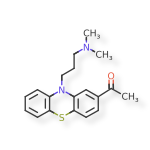
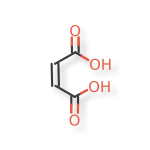
| Molecular Formula | C19H22N2OS.C4H4O4 |
| Molecular Weight | 442.528 |
| Optical Activity | NONE |
| Defined Stereocenters | 0 / 0 |
| E/Z Centers | 1 |
| Charge | 0 |
SHOW SMILES / InChI
SMILES
OC(=O)\C=C/C(O)=O.CN(C)CCCN1C2=CC=CC=C2SC3=CC=C(C=C13)C(C)=O
InChI
InChIKey=FQRHOOHLUYHMGG-BTJKTKAUSA-N
InChI=1S/C19H22N2OS.C4H4O4/c1-14(22)15-9-10-19-17(13-15)21(12-6-11-20(2)3)16-7-4-5-8-18(16)23-19;5-3(6)1-2-4(7)8/h4-5,7-10,13H,6,11-12H2,1-3H3;1-2H,(H,5,6)(H,7,8)/b;2-1-
| Molecular Formula | C19H22N2OS |
| Molecular Weight | 326.456 |
| Charge | 0 |
| Count |
|
| Stereochemistry | ACHIRAL |
| Additional Stereochemistry | No |
| Defined Stereocenters | 0 / 0 |
| E/Z Centers | 0 |
| Optical Activity | NONE |
| Molecular Formula | C4H4O4 |
| Molecular Weight | 116.0722 |
| Charge | 0 |
| Count |
|
| Stereochemistry | ACHIRAL |
| Additional Stereochemistry | No |
| Defined Stereocenters | 0 / 0 |
| E/Z Centers | 1 |
| Optical Activity | NONE |
Acepromazine a potent neuroleptic agent with a low order of toxicity, is of particular value in the tranquilization of dogs, cats and horses. Its rapid action and lack of hypnotic effect are added advantages. Acepromazine is a commonly used tranquilizer/sedative in dogs, cats, horses, and other animals. Veterinarians typically prescribe acepromazine to quiet agitated animals or use it as a part of an anesthetic protocol. It is important to note that when used alone, acepromazine is not an effective pain reliever and does little if anything to relieve a pet’s anxiety or fear. Acepromazine can also be used to treat motion sickness and nausea associated with car or plane rides. The mechanism by which acepromazine decreases a pet’s alertness is not fully understood. It is thought to block dopamine receptors in the brain or inhibit the activity of dopamine in other ways.
CNS Activity
Originator
Approval Year
Targets
| Primary Target | Pharmacology | Condition | Potency |
|---|---|---|---|
Target ID: CHEMBL2096905 |
|||
Conditions
| Condition | Modality | Targets | Highest Phase | Product |
|---|---|---|---|---|
| Primary | ACEPROMAZINE MALEATE Approved UseActions: Acepromazine maleate has a depressant effect on the central nervous system and therefore, causes sedation, muscular relaxation and a reduction in spontaneous activity. It acts rapidly, exerting a prompt and pronounced calming effect.
Indications: Dogs and Cats: Acepromazine Maleate Injection can be used as an aid in controlling intractable animals during examination, treatment, grooming, x-ray and minor surgical procedures; to alleviate itching as a result of skin irritation; as an antiemetic to control vomiting associated with motion sickness. Acepromazine Maleate Injection is particularly useful as a preanesthetic agent (1) to enhance and prolong the effects of barbiturates, thus reducing the requirements for general anesthesia; (2) as an adjunct to surgery under local anesthesia.
Horses: Acepromazine Maleate Injection can be used as an aid in controlling fractious animals during examination, treatment, loading and transportation. Particularly useful when used in conjunction with local anesthesia for firing, castration, neurectomy, removal of skin tumors, ocular surgery and applying casts. |
|||
| Primary | Unknown Approved UseUnknown |
Overview
| CYP3A4 | CYP2C9 | CYP2D6 | hERG |
|---|---|---|---|
OverviewOther
| Other Inhibitor | Other Substrate | Other Inducer |
|---|---|---|
Drug as perpetrator
| Target | Modality | Activity | Metabolite | Clinical evidence |
|---|---|---|---|---|
| no | ||||
| no | ||||
| no | ||||
| weak [IC50 111.6 uM] | ||||
| yes [IC50 1.585 uM] | ||||
| yes [IC50 2.5119 uM] | ||||
| yes [Ki 10.6 uM] |
Drug as victim
| Target | Modality | Activity | Metabolite | Clinical evidence |
|---|---|---|---|---|
| yes |
Tox targets
| Target | Modality | Activity | Metabolite | Clinical evidence |
|---|---|---|---|---|
PubMed
| Title | Date | PubMed |
|---|---|---|
| Effects of chronic baroreceptor unloading on blood pressure in the dog. | 2005-04 |
|
| Laparoscopic nonanatomic hepatic resection employing the LigaSure device. | 2005-03-29 |
|
| Analgesic efficacy of preoperative administration of meloxicam or butorphanol in onychectomized cats. | 2005-03-15 |
|
| Results of 24-hour ambulatory electrocardiography in dogs undergoing ovariohysterectomy following premedication with medetomidine or acepromazine. | 2005-03-01 |
|
| Effects of acepromazine on pulmonary gas exchange and circulation during sedation and dissociative anaesthesia in horses. | 2005-03 |
|
| Muscle metabolic changes associated with long-term inhalation anaesthesia in the horse analysed by muscle biopsy and microdialysis techniques. | 2005-03 |
|
| Therapeutic effects of Holmium-166 chitosan complex in rat brain tumor model. | 2005-02-28 |
|
| Overdose during chemical restraint in a black rhinoceros (Diceros bicornis). | 2005-01 |
|
| Gamma scintigraphic evaluation of a miniaturized AERx pulmonary delivery system for aerosol delivery to anesthetized animals using a positive pressure ventilation system. | 2005 |
|
| Effect of meloxicam and carprofen on renal function when administered to healthy dogs prior to anesthesia and painful stimulation. | 2004-10 |
|
| Neuroleptanalgesia in wild Asian elephants (Elephas maximus maximus). | 2004-10 |
|
| Effects of doxapram HCl on laryngeal function of normal dogs and dogs with naturally occurring laryngeal paralysis. | 2004-10 |
|
| Intentional overdose of Large Animal Immobilon. | 2004-10 |
|
| Effects of ovariohysterectomy on canine blood neutrophil respiratory burst: a chemiluminescence study. | 2004-09-15 |
|
| Does the A-line ARX-lndex provide a reasonable assessment of anaesthetic depth in dogs undergoing routine surgery? | 2004-09 |
|
| Relationships between a proprietary index, bispectral index, and hemodynamic variables as a means for evaluating depth of anesthesia in dogs anesthetized with sevoflurane. | 2004-08 |
|
| Investigation of the effect of acepromazine on intravenous glucose tolerance tests in dogs. | 2004-08 |
|
| Determinants of cardiac electrophysiological properties in mice. | 2004-08 |
|
| Standing sedation and pain management for ophthalmic patients. | 2004-08 |
|
| Effects of propofol on the electrocardiogram and systolic blood pressure of healthy cats pre-medicated with acepromazine. | 2004-07 |
|
| Comparison of preoperative carprofen and postoperative butorphanol as postsurgical analgesics in cats undergoing ovariohysterectomy. | 2004-07 |
|
| Intense (18)F-FDG uptake in brown fat can be reduced pharmacologically. | 2004-07 |
|
| Sonographic features of drug-induced splenic congestion. | 2004-06-18 |
|
| NF-kappaB p50 facilitates neutrophil accumulation during LPS-induced pulmonary inflammation. | 2004-06-09 |
|
| Elevated nociceptive thresholds in rats with multifocal brain damage induced with single subcutaneous injections of lithium and pilocarpine. | 2004-06 |
|
| An animal model for ultrasound lung imaging. | 2004-05 |
|
| Normal spatial and contextual learning for ketamine-treated rats in the pilocarpine epilepsy model. | 2004-05 |
|
| Middle-latency auditory-evoked potential in acepromazine-sedated dogs. | 2004-04-03 |
|
| The effect of four anesthetic protocols on splenic size in dogs. | 2004-04 |
|
| Effects of various anesthetic agents on laryngeal motion during laryngoscopy in normal dogs. | 2004-03-19 |
|
| Ganglion cell contributions to the rat full-field electroretinogram. | 2004-02-15 |
|
| Development of a rapid screening test for veterinary sedatives and the beta-blocker carazolol in porcine kidney by ELISA. | 2004-02 |
|
| The neuromatrix and the epileptic brain: behavioral and learning preservation in limbic epileptic rats treated with ketamine but not acepromazine. | 2004-02 |
|
| Systemic lidocaine infusion as an analgesic for intraocular surgery in dogs: a pilot study. | 2004-01 |
|
| Evaluation of intraperitoneal and incisional lidocaine or bupivacaine for analgesia following ovariohysterectomy in the dog. | 2004-01 |
|
| Effects of acepromazine on the incidence of vomiting associated with opioid administration in dogs. | 2004-01 |
|
| Orthologous gene-expression profiling in multi-species models: search for candidate genes. | 2004 |
|
| Temporal changes in ventricular function assessed echocardiographically in conscious and anesthetized mice. | 2003-11 |
|
| Effects of midazolam-butorphanol, acepromazine-butorphanol and medetomidine on an induction dose of propofol and their compatibility in dogs. | 2003-10 |
|
| A comparison of preoperative tramadol and morphine for the control of early postoperative pain in canine ovariohysterectomy. | 2003-10 |
|
| Analysis of phenothiazine and its derivatives using LC/electrochemistry/MS and LC/electrochemistry/fluorescence. | 2003-09-15 |
|
| Effects of dopamine antagonists on alfentanil-induced locomotor activity in horses. | 2003-07 |
|
| Changes in the EEG during castration in horses and ponies anaesthetized with halothane. | 2003-07 |
|
| The sedative and behavioral effects of nalbuphine in dogs. | 2003-07 |
|
| A comparison of the analgesic effects of butorphanol with those of meloxicam after elective ovariohysterectomy in dogs. | 2003-07 |
|
| Hypotensive effect of push-pull gravitational stress occurs after autonomic blockade. | 2003-07 |
|
| Effects of acepromazine on renal function in anesthetized dogs. | 2003-05 |
|
| Hematology and serum chemistry of the island spotted skunk on Santa Cruz Island. | 2003-04 |
|
| Effects of acepromazine on capture stress in roe deer (Capreolus capreolus). | 2003-04 |
|
| Application of pulsed Doppler ultrasound for the evaluation of small intestinal motility in dogs. | 2001-04 |
Patents
Sample Use Guides
Acepromazine Maleate Injection may be given intravenously, intramuscularly or subcutaneously. The following schedule may be used as a guide to IV, IM or SC injections:Dogs: 0.25-0.5 mg/lb of body weight.Cats: 0.5-1 mg/lb of body weight.Horses: 2-4 mg/100 lb of body weight.0.25 - 3 mg per kg body weight by oral administration.
Route of Administration:
Other
The crude extract of Chlamydia pneumoniae induced the differentiation of monocytes into macrophages in 45 ± 5% of the cells. Acepromazine significantly reduced the mean percentage of differentiated cells: with 10−5 M ACP, 18 ± % (p < 0.005) of the cells differentiated into macrophages and with 10−4 M the mean percentage of differentiated cells was equivalent to the control values: 5 ± 1% (p < 0.001). Viability of the differentiated and nondifferentiated THP-1 was = 98%.
| Substance Class |
Chemical
Created
by
admin
on
Edited
Mon Mar 31 17:51:11 GMT 2025
by
admin
on
Mon Mar 31 17:51:11 GMT 2025
|
| Record UNII |
37862HP2OM
|
| Record Status |
Validated (UNII)
|
| Record Version |
|
-
Download
| Name | Type | Language | ||
|---|---|---|---|---|
|
Preferred Name | English | ||
|
Official Name | English | ||
|
Common Name | English | ||
|
Common Name | English | ||
|
Common Name | English | ||
|
Systematic Name | English | ||
|
Common Name | English | ||
|
Systematic Name | English | ||
|
Common Name | English | ||
|
Common Name | English | ||
|
Common Name | English |
| Classification Tree | Code System | Code | ||
|---|---|---|---|---|
|
NCI_THESAURUS |
C66883
Created by
admin on Mon Mar 31 17:51:11 GMT 2025 , Edited by admin on Mon Mar 31 17:51:11 GMT 2025
|
| Code System | Code | Type | Description | ||
|---|---|---|---|---|---|
|
CHEMBL39560
Created by
admin on Mon Mar 31 17:51:11 GMT 2025 , Edited by admin on Mon Mar 31 17:51:11 GMT 2025
|
PRIMARY | |||
|
SUB21524
Created by
admin on Mon Mar 31 17:51:11 GMT 2025 , Edited by admin on Mon Mar 31 17:51:11 GMT 2025
|
PRIMARY | |||
|
100000088299
Created by
admin on Mon Mar 31 17:51:11 GMT 2025 , Edited by admin on Mon Mar 31 17:51:11 GMT 2025
|
PRIMARY | |||
|
1001502
Created by
admin on Mon Mar 31 17:51:11 GMT 2025 , Edited by admin on Mon Mar 31 17:51:11 GMT 2025
|
PRIMARY | |||
|
C76652
Created by
admin on Mon Mar 31 17:51:11 GMT 2025 , Edited by admin on Mon Mar 31 17:51:11 GMT 2025
|
PRIMARY | |||
|
DTXSID6047783
Created by
admin on Mon Mar 31 17:51:11 GMT 2025 , Edited by admin on Mon Mar 31 17:51:11 GMT 2025
|
PRIMARY | |||
|
37862HP2OM
Created by
admin on Mon Mar 31 17:51:11 GMT 2025 , Edited by admin on Mon Mar 31 17:51:11 GMT 2025
|
PRIMARY | |||
|
222-748-9
Created by
admin on Mon Mar 31 17:51:11 GMT 2025 , Edited by admin on Mon Mar 31 17:51:11 GMT 2025
|
PRIMARY | |||
|
6420038
Created by
admin on Mon Mar 31 17:51:11 GMT 2025 , Edited by admin on Mon Mar 31 17:51:11 GMT 2025
|
PRIMARY | |||
|
37862HP2OM
Created by
admin on Mon Mar 31 17:51:11 GMT 2025 , Edited by admin on Mon Mar 31 17:51:11 GMT 2025
|
PRIMARY | |||
|
m1303
Created by
admin on Mon Mar 31 17:51:11 GMT 2025 , Edited by admin on Mon Mar 31 17:51:11 GMT 2025
|
PRIMARY | Merck Index | ||
|
264522
Created by
admin on Mon Mar 31 17:51:11 GMT 2025 , Edited by admin on Mon Mar 31 17:51:11 GMT 2025
|
PRIMARY | |||
|
DBSALT001612
Created by
admin on Mon Mar 31 17:51:11 GMT 2025 , Edited by admin on Mon Mar 31 17:51:11 GMT 2025
|
PRIMARY | |||
|
3598-37-6
Created by
admin on Mon Mar 31 17:51:11 GMT 2025 , Edited by admin on Mon Mar 31 17:51:11 GMT 2025
|
PRIMARY | |||
|
1114057
Created by
admin on Mon Mar 31 17:51:11 GMT 2025 , Edited by admin on Mon Mar 31 17:51:11 GMT 2025
|
PRIMARY | RxNorm |
| Related Record | Type | Details | ||
|---|---|---|---|---|
|
|
PARENT -> SALT/SOLVATE | |||
|
|
PARENT -> SALT/SOLVATE |
| Related Record | Type | Details | ||
|---|---|---|---|---|
|
|
ACTIVE MOIETY |