


Details
| Stereochemistry | ABSOLUTE |
| Molecular Formula | C27H29NO10.C6H8O7 |
| Molecular Weight | 719.6434 |
| Optical Activity | UNSPECIFIED |
| Defined Stereocenters | 6 / 6 |
| E/Z Centers | 0 |
| Charge | 0 |
SHOW SMILES / InChI
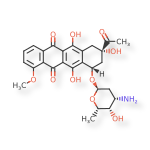
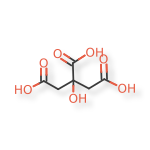
SMILES
OC(=O)CC(O)(CC(O)=O)C(O)=O.COC1=CC=CC2=C1C(=O)C3=C(O)C4=C(C[C@](O)(C[C@@H]4O[C@H]5C[C@H](N)[C@H](O)[C@H](C)O5)C(C)=O)C(O)=C3C2=O
InChI
InChIKey=VNTHYLVDGVBPOU-QQYBVWGSSA-N
InChI=1S/C27H29NO10.C6H8O7/c1-10-22(30)14(28)7-17(37-10)38-16-9-27(35,11(2)29)8-13-19(16)26(34)21-20(24(13)32)23(31)12-5-4-6-15(36-3)18(12)25(21)33;7-3(8)1-6(13,5(11)12)2-4(9)10/h4-6,10,14,16-17,22,30,32,34-35H,7-9,28H2,1-3H3;13H,1-2H2,(H,7,8)(H,9,10)(H,11,12)/t10-,14-,16-,17-,22+,27-;/m0./s1
| Molecular Formula | C6H8O7 |
| Molecular Weight | 192.1235 |
| Charge | 0 |
| Count |
|
| Stereochemistry | ACHIRAL |
| Additional Stereochemistry | No |
| Defined Stereocenters | 0 / 0 |
| E/Z Centers | 0 |
| Optical Activity | NONE |
| Molecular Formula | C27H29NO10 |
| Molecular Weight | 527.5199 |
| Charge | 0 |
| Count |
|
| Stereochemistry | ABSOLUTE |
| Additional Stereochemistry | No |
| Defined Stereocenters | 6 / 6 |
| E/Z Centers | 0 |
| Optical Activity | UNSPECIFIED |
DescriptionCurator's Comment: description was created based on several sources, including
https://www.ncbi.nlm.nih.gov/pubmed/22260166 | https://www.ncbi.nlm.nih.gov/pubmed/7932544 | https://www.ncbi.nlm.nih.gov/pubmed/13146115 | https://www.accessdata.fda.gov/drugsatfda_docs/label/2010/050467s070lbl.pdf
Curator's Comment: description was created based on several sources, including
https://www.ncbi.nlm.nih.gov/pubmed/22260166 | https://www.ncbi.nlm.nih.gov/pubmed/7932544 | https://www.ncbi.nlm.nih.gov/pubmed/13146115 | https://www.accessdata.fda.gov/drugsatfda_docs/label/2010/050467s070lbl.pdf
Daunorubicin, also known as daunomycin, is a chemotherapy medication used to treat cancer. Specifically, it is used for acute myeloid leukemia (AML), acute lymphocytic leukemia (ALL), chronic myelogenous leukemia (CML), and Kaposi's sarcoma. Similar to doxorubicin, daunorubicin interacts with DNA by intercalation and inhibition of macromolecular biosynthesis. This inhibits the progression of the enzyme topoisomerase II, which relaxes supercoils in DNA for transcription. Daunorubicin stabilizes the topoisomerase II complex after it has broken the DNA chain for replication, preventing the DNA double helix from being resealed and thereby stopping the process of replication. On binding to DNA, daunomycin intercalates, with its daunosamine residue directed toward the minor groove. It has the highest preference for two adjacent G/C base pairs flanked on the 5' side by an A/T base pair. Daunorubicin should only be administered in a rapid intravenous infusion. It should not be administered intramuscularly or subcutaneously, since it may cause extensive tissue necrosis. It should also never be administered intrathecally (into the spinal canal), as this will cause extensive damage to the nervous system and may lead to death.
Originator
Approval Year
Targets
| Primary Target | Pharmacology | Condition | Potency |
|---|---|---|---|
Target ID: CHEMBL1806 |
|||
Target ID: CHEMBL1781 |
|||
Target ID: CHEMBL3004 |
70.0 nM [IC50] |
Conditions
| Condition | Modality | Targets | Highest Phase | Product |
|---|---|---|---|---|
| Primary | CERUBIDINE Approved UseDaunorubicin hydrochloride injection in combination with other approved anticancer drugs is indicated for remission induction in acute nonlymphocytic leukemia (myelogenous, monocytic, erythroid) of adults and for remission induction in acute lymphocytic leukemia of children and adults. Launch Date1979 |
|||
| Primary | CERUBIDINE Approved UseDaunorubicin hydrochloride injection in combination with other approved anticancer drugs is indicated for remission induction in acute nonlymphocytic leukemia (myelogenous, monocytic, erythroid) of adults and for remission induction in acute lymphocytic leukemia of children and adults. Launch Date1979 |
|||
| Primary | CERUBIDINE Approved UseDaunorubicin hydrochloride injection in combination with other approved anticancer drugs is indicated for remission induction in acute nonlymphocytic leukemia (myelogenous, monocytic, erythroid) of adults and for remission induction in acute lymphocytic leukemia of children and adults. Launch Date1979 |
Cmax
| Value | Dose | Co-administered | Analyte | Population |
|---|---|---|---|---|
26 μg/mL |
44 mg/m² 1 times / 2 days multiple, intravenous dose: 44 mg/m² route of administration: Intravenous experiment type: MULTIPLE co-administered: Cytarabine |
DAUNORUBICIN plasma | Homo sapiens population: UNHEALTHY age: ADULT sex: UNKNOWN food status: UNKNOWN |
AUC
| Value | Dose | Co-administered | Analyte | Population |
|---|---|---|---|---|
637 μg × h/mL |
44 mg/m² 1 times / 2 days multiple, intravenous dose: 44 mg/m² route of administration: Intravenous experiment type: MULTIPLE co-administered: Cytarabine |
DAUNORUBICIN plasma | Homo sapiens population: UNHEALTHY age: ADULT sex: UNKNOWN food status: UNKNOWN |
T1/2
| Value | Dose | Co-administered | Analyte | Population |
|---|---|---|---|---|
31.5 h |
44 mg/m² 1 times / 2 days multiple, intravenous dose: 44 mg/m² route of administration: Intravenous experiment type: MULTIPLE co-administered: Cytarabine |
DAUNORUBICIN plasma | Homo sapiens population: UNHEALTHY age: ADULT sex: UNKNOWN food status: UNKNOWN |
Funbound
| Value | Dose | Co-administered | Analyte | Population |
|---|---|---|---|---|
3% |
DAUNORUBICIN plasma | Homo sapiens population: UNKNOWN age: UNKNOWN sex: UNKNOWN food status: UNKNOWN |
Doses
| Dose | Population | Adverse events |
|---|---|---|
190 mg/m2 1 times / 3 weeks multiple, intravenous Highest studied dose Dose: 190 mg/m2, 1 times / 3 weeks Route: intravenous Route: multiple Dose: 190 mg/m2, 1 times / 3 weeks Sources: |
unhealthy, 10 |
DLT: Neutropenia, Leucopenia... Dose limiting toxicities: Neutropenia (grade 4, 100%) Sources: Leucopenia (grade 4, 100%) Thrombocytopenia (grade 4, 16.7%) Anemia (grade 4, 16.7%) |
155 mg/m2 1 times / 3 weeks multiple, intravenous MTD Dose: 155 mg/m2, 1 times / 3 weeks Route: intravenous Route: multiple Dose: 155 mg/m2, 1 times / 3 weeks Sources: |
unhealthy, 10 |
DLT: Neutropenia, Leucopenia... Disc. AE: Cardiac failure... Dose limiting toxicities: Neutropenia (grade 4, 100%) AEs leading toLeucopenia (grade 4, 50%) discontinuation/dose reduction: Cardiac failure (grade 5, 16.7%) Sources: |
50 mg/m2 1 times / 4 weeks multiple, intravenous Recommended Dose: 50 mg/m2, 1 times / 4 weeks Route: intravenous Route: multiple Dose: 50 mg/m2, 1 times / 4 weeks Sources: |
unhealthy, 27-87 Health Status: unhealthy Age Group: 27-87 Sex: M+F Sources: |
Disc. AE: Skin toxicity... AEs leading to discontinuation/dose reduction: Skin toxicity (4.2%) Sources: |
20 mg/m2 1 times / 2 weeks multiple, intravenous Recommended Dose: 20 mg/m2, 1 times / 2 weeks Route: intravenous Route: multiple Dose: 20 mg/m2, 1 times / 2 weeks Sources: |
unhealthy, 38.7 Health Status: unhealthy Age Group: 38.7 Sex: M+F Sources: |
Disc. AE: Skin eruption... AEs leading to discontinuation/dose reduction: Skin eruption (0.9%) Sources: |
80 mg/m2 1 times / 3 weeks multiple, intravenous MTD Dose: 80 mg/m2, 1 times / 3 weeks Route: intravenous Route: multiple Dose: 80 mg/m2, 1 times / 3 weeks Sources: |
unhealthy, 60 |
|
100 mg/m2 1 times / 3 weeks multiple, intravenous Studied dose Dose: 100 mg/m2, 1 times / 3 weeks Route: intravenous Route: multiple Dose: 100 mg/m2, 1 times / 3 weeks Sources: |
unhealthy, 60 |
DLT: Acute diverticular perforation... Dose limiting toxicities: Acute diverticular perforation Sources: |
100 mg/m2 1 times / 3 weeks multiple, intravenous Studied dose Dose: 100 mg/m2, 1 times / 3 weeks Route: intravenous Route: multiple Dose: 100 mg/m2, 1 times / 3 weeks Sources: |
unhealthy, 63 |
Disc. AE: Ejection fraction decreased, Prolonged neutropenia... Other AEs: Granulocytopenia, Thrombocytopenia... AEs leading to discontinuation/dose reduction: Ejection fraction decreased (5.3%) Other AEs:Prolonged neutropenia (2.6%) Granulocytopenia (grade 4, 21%) Sources: Thrombocytopenia (grade 4, 8%) Febrile neutropenia (grade 4, 11%) |
50 mg/m2 1 times / 4 weeks multiple, intravenous Recommended Dose: 50 mg/m2, 1 times / 4 weeks Route: intravenous Route: multiple Dose: 50 mg/m2, 1 times / 4 weeks Sources: |
unhealthy Health Status: unhealthy Sources: |
Disc. AE: Infusion related reaction, Myelosuppression... AEs leading to discontinuation/dose reduction: Infusion related reaction (acute) Sources: Myelosuppression (severe) Cardiotoxicity Congestive heart failure Hepatic impairment Reaction anaphylactic anaphylactoid (grade 3-5) |
AEs
| AE | Significance | Dose | Population |
|---|---|---|---|
| Leucopenia | grade 4, 100% DLT |
190 mg/m2 1 times / 3 weeks multiple, intravenous Highest studied dose Dose: 190 mg/m2, 1 times / 3 weeks Route: intravenous Route: multiple Dose: 190 mg/m2, 1 times / 3 weeks Sources: |
unhealthy, 10 |
| Neutropenia | grade 4, 100% DLT |
190 mg/m2 1 times / 3 weeks multiple, intravenous Highest studied dose Dose: 190 mg/m2, 1 times / 3 weeks Route: intravenous Route: multiple Dose: 190 mg/m2, 1 times / 3 weeks Sources: |
unhealthy, 10 |
| Anemia | grade 4, 16.7% DLT |
190 mg/m2 1 times / 3 weeks multiple, intravenous Highest studied dose Dose: 190 mg/m2, 1 times / 3 weeks Route: intravenous Route: multiple Dose: 190 mg/m2, 1 times / 3 weeks Sources: |
unhealthy, 10 |
| Thrombocytopenia | grade 4, 16.7% DLT |
190 mg/m2 1 times / 3 weeks multiple, intravenous Highest studied dose Dose: 190 mg/m2, 1 times / 3 weeks Route: intravenous Route: multiple Dose: 190 mg/m2, 1 times / 3 weeks Sources: |
unhealthy, 10 |
| Neutropenia | grade 4, 100% DLT |
155 mg/m2 1 times / 3 weeks multiple, intravenous MTD Dose: 155 mg/m2, 1 times / 3 weeks Route: intravenous Route: multiple Dose: 155 mg/m2, 1 times / 3 weeks Sources: |
unhealthy, 10 |
| Leucopenia | grade 4, 50% DLT |
155 mg/m2 1 times / 3 weeks multiple, intravenous MTD Dose: 155 mg/m2, 1 times / 3 weeks Route: intravenous Route: multiple Dose: 155 mg/m2, 1 times / 3 weeks Sources: |
unhealthy, 10 |
| Cardiac failure | grade 5, 16.7% Disc. AE |
155 mg/m2 1 times / 3 weeks multiple, intravenous MTD Dose: 155 mg/m2, 1 times / 3 weeks Route: intravenous Route: multiple Dose: 155 mg/m2, 1 times / 3 weeks Sources: |
unhealthy, 10 |
| Skin toxicity | 4.2% Disc. AE |
50 mg/m2 1 times / 4 weeks multiple, intravenous Recommended Dose: 50 mg/m2, 1 times / 4 weeks Route: intravenous Route: multiple Dose: 50 mg/m2, 1 times / 4 weeks Sources: |
unhealthy, 27-87 Health Status: unhealthy Age Group: 27-87 Sex: M+F Sources: |
| Skin eruption | 0.9% Disc. AE |
20 mg/m2 1 times / 2 weeks multiple, intravenous Recommended Dose: 20 mg/m2, 1 times / 2 weeks Route: intravenous Route: multiple Dose: 20 mg/m2, 1 times / 2 weeks Sources: |
unhealthy, 38.7 Health Status: unhealthy Age Group: 38.7 Sex: M+F Sources: |
| Acute diverticular perforation | DLT, Disc. AE | 100 mg/m2 1 times / 3 weeks multiple, intravenous Studied dose Dose: 100 mg/m2, 1 times / 3 weeks Route: intravenous Route: multiple Dose: 100 mg/m2, 1 times / 3 weeks Sources: |
unhealthy, 60 |
| Prolonged neutropenia | 2.6% Disc. AE |
100 mg/m2 1 times / 3 weeks multiple, intravenous Studied dose Dose: 100 mg/m2, 1 times / 3 weeks Route: intravenous Route: multiple Dose: 100 mg/m2, 1 times / 3 weeks Sources: |
unhealthy, 63 |
| Ejection fraction decreased | 5.3% Disc. AE |
100 mg/m2 1 times / 3 weeks multiple, intravenous Studied dose Dose: 100 mg/m2, 1 times / 3 weeks Route: intravenous Route: multiple Dose: 100 mg/m2, 1 times / 3 weeks Sources: |
unhealthy, 63 |
| Febrile neutropenia | grade 4, 11% | 100 mg/m2 1 times / 3 weeks multiple, intravenous Studied dose Dose: 100 mg/m2, 1 times / 3 weeks Route: intravenous Route: multiple Dose: 100 mg/m2, 1 times / 3 weeks Sources: |
unhealthy, 63 |
| Granulocytopenia | grade 4, 21% | 100 mg/m2 1 times / 3 weeks multiple, intravenous Studied dose Dose: 100 mg/m2, 1 times / 3 weeks Route: intravenous Route: multiple Dose: 100 mg/m2, 1 times / 3 weeks Sources: |
unhealthy, 63 |
| Thrombocytopenia | grade 4, 8% | 100 mg/m2 1 times / 3 weeks multiple, intravenous Studied dose Dose: 100 mg/m2, 1 times / 3 weeks Route: intravenous Route: multiple Dose: 100 mg/m2, 1 times / 3 weeks Sources: |
unhealthy, 63 |
| Cardiotoxicity | Disc. AE | 50 mg/m2 1 times / 4 weeks multiple, intravenous Recommended Dose: 50 mg/m2, 1 times / 4 weeks Route: intravenous Route: multiple Dose: 50 mg/m2, 1 times / 4 weeks Sources: |
unhealthy Health Status: unhealthy Sources: |
| Congestive heart failure | Disc. AE | 50 mg/m2 1 times / 4 weeks multiple, intravenous Recommended Dose: 50 mg/m2, 1 times / 4 weeks Route: intravenous Route: multiple Dose: 50 mg/m2, 1 times / 4 weeks Sources: |
unhealthy Health Status: unhealthy Sources: |
| Hepatic impairment | Disc. AE | 50 mg/m2 1 times / 4 weeks multiple, intravenous Recommended Dose: 50 mg/m2, 1 times / 4 weeks Route: intravenous Route: multiple Dose: 50 mg/m2, 1 times / 4 weeks Sources: |
unhealthy Health Status: unhealthy Sources: |
| Infusion related reaction | acute Disc. AE |
50 mg/m2 1 times / 4 weeks multiple, intravenous Recommended Dose: 50 mg/m2, 1 times / 4 weeks Route: intravenous Route: multiple Dose: 50 mg/m2, 1 times / 4 weeks Sources: |
unhealthy Health Status: unhealthy Sources: |
| Reaction anaphylactic anaphylactoid | grade 3-5 Disc. AE |
50 mg/m2 1 times / 4 weeks multiple, intravenous Recommended Dose: 50 mg/m2, 1 times / 4 weeks Route: intravenous Route: multiple Dose: 50 mg/m2, 1 times / 4 weeks Sources: |
unhealthy Health Status: unhealthy Sources: |
| Myelosuppression | severe Disc. AE |
50 mg/m2 1 times / 4 weeks multiple, intravenous Recommended Dose: 50 mg/m2, 1 times / 4 weeks Route: intravenous Route: multiple Dose: 50 mg/m2, 1 times / 4 weeks Sources: |
unhealthy Health Status: unhealthy Sources: |
PubMed
| Title | Date | PubMed |
|---|---|---|
| Human intestinal absorption of imidacloprid with Caco-2 cells as enterocyte model. | 2004-01-01 |
|
| Impact of neutropenia on delivering planned adjuvant chemotherapy: UK audit of primary breast cancer patients. | 2003-12-01 |
|
| Cardiac troponin T as an indicator of reduced left ventricular contractility in experimental anthracycline-induced cardiomyopathy. | 2003-11 |
|
| Liposomal daunorubicin (DaunoXome) in multiple myeloma: a modified VAD regimen using short-term infusion. | 2003-11 |
|
| OSI-211, a novel liposomal topoisomerase I inhibitor, is active in SCID mouse models of human AML and ALL. | 2003-11 |
|
| Neurotoxicity of intrathecal methotrexate: MR imaging findings. | 2003-10 |
|
| Population pharmacokinetics of liposomal daunorubicin in children. | 2003-10 |
|
| Pilot study of gemtuzumab ozogamicin, liposomal daunorubicin, cytarabine and cyclosporine regimen in patients with refractory acute myelogenous leukemia. | 2003-10 |
|
| Potentiation of tumour apoptosis by human growth hormone via glutathione production and decreased NF-kappaB activity. | 2003-09-15 |
|
| From conventional to stealth liposomes: a new frontier in cancer chemotherapy. | 2003-08-12 |
|
| Safety of high-dose liposomal daunorubicin (daunoxome) for refractory or relapsed acute myeloblastic leukaemia. | 2003-07 |
|
| Daunorubicin-induced variations in gene transcription: commitment to proliferation arrest, senescence and apoptosis. | 2003-06-15 |
|
| Cytotoxic drugs enhance the ex vivo sensitivity of malignant cells from a subset of acute myeloid leukaemia patients to apoptosis induction by tumour necrosis factor receptor-related apoptosis-inducing ligand. | 2003-06 |
|
| Multiple alterations of canalicular membrane transport activities in rats with CCl(4)-induced hepatic injury. | 2003-04 |
|
| A phase I/II study of the MDR modulator Valspodar (PSC 833) combined with daunorubicin and cytarabine in patients with relapsed and primary refractory acute myeloid leukemia. | 2003-04 |
|
| The dose related effect of steroids on blast reduction rate and event free survival in children with acute lymphoblastic leukemia. | 2003-03 |
|
| Efficacy and toxicity of liposomal daunorubicin included in PVABEC regimen for aggressive NHL of the elderly. | 2003-03 |
|
| [Successful treatment after acute promyelocytic leukemia (APL) syndrome of relapsed API with arsenic trioxide]. | 2003-03 |
|
| Cloning and functional characterization of the multidrug resistance-associated protein (MRP1/ABCC1) from the cynomolgus monkey. | 2003-03 |
|
| Different effects of metabolic inhibitors and cyclosporin A on daunorubicin transport in leukemia cells from patients with AML. | 2003-02 |
|
| Effects of carvedilol on MDR1-mediated multidrug resistance: comparison with verapamil. | 2003-01 |
|
| Vincristine neurotoxicity in the presence of hereditary neuropathy. | 2003-01 |
|
| Disposition of liposomal daunorubicin during cotreatment with cytarabine in patients with leukaemia. | 2003 |
|
| High-dose daunorubicin as liposomal compound (Daunoxome) in elderly patients with acute lymphoblastic leukemia. | 2003 |
|
| Determination of free and liposome-associated daunorubicin and daunorubicinol in plasma by capillary electrophoresis. | 2002-12-06 |
|
| Comparative study of chronic toxic effects of daunorubicin and doxorubicin in rabbits. | 2002-12 |
|
| Comparison of anthracycline-induced death of human leukemia cells: programmed cell death versus necrosis. | 2002-12 |
|
| Liposomal daunorubicin overcomes drug resistance in human breast, ovarian and lung carcinoma cells. | 2002-11 |
|
| Resistance of bcr-abl-positive acute lymphoblastic leukemia to daunorubicin is not mediated by mdr1 gene expression. | 2002-11 |
|
| Induction of metallothionein by zinc protects from daunorubicin toxicity in rats. | 2002-09-30 |
|
| Nucleotide triphosphatase/helicase of hepatitis C virus as a target for antiviral therapy. | 2002-09 |
|
| Liposomal daunorubicin (DaunoXome) for treatment of relapsed meningeal acute myeloid leukemia. | 2002-09 |
|
| [Liposomal daunorubicine combined with cytarabine in the treatment of relapsed/refractory acute myeloid leukemia in children]. | 2002-08-08 |
|
| Liposomal daunorubicin (DaunoXome) for treatment of poor-risk acute leukemia. | 2002-08 |
|
| Subcellular daunorubicin distribution and its relation to multidrug resistance phenotype in drug-resistant cell line SMMC-7721/R. | 2002-08 |
|
| Reversible vincristine-related flaccid paralysis in a child with acute lymphoblastic leukemia. | 2002-08 |
|
| Reversal of multidrug resistance-associated protein-mediated daunorubicin resistance by camptothecin. | 2002-08 |
|
| A phase I dose-escalating study of DaunoXome, liposomal daunorubicin, in metastatic breast cancer. | 2002-07-01 |
|
| Monitoring daunorubicin-induced alterations in protein expression in pancreas carcinoma cells by two-dimensional gel electrophoresis. | 2002-06 |
|
| Influence of chemosensitizers on resistance mechanisms in daunorubicin-resistant Ehrlich ascites tumour cells. | 2002-06 |
|
| Liposomal daunorubicin (DaunoXome) plus dexamethasone for patients with multiple myeloma. A phase II International Oncology Study Group study. | 2002-05-15 |
|
| Homocamptothecin-daunorubicin association overcomes multidrug-resistance in breast cancer MCF7 cells. | 2002-05 |
|
| NTPase/helicase of Flaviviridae: inhibitors and inhibition of the enzyme. | 2002 |
|
| Effect of aging on cardiac contractility in a rat model of chronic daunorubicin cardiotoxicity. | 2002 |
|
| Correlation of histopathological and biochemical appraisal of anthracyclin-induced myocardium damage. | 2002 |
|
| Bradycardia due to anthracyclines. | 1992-10-03 |
|
| HIV-1 and HIV-2 reverse transcriptases: a comparative study of sensitivity to inhibition by selected natural products. | 1992-05-29 |
|
| Tumorigenicity in vivo and induction of malignant transformation and mutagenesis in cell cultures by adriamycin and daunomycin. | 1976-06 |
|
| Daunorubicin-induced cardiotoxicity. | 1976-03 |
|
| The cardiotoxicity of adriamycin and daunomycin in children. | 1976-02 |
Patents
Sample Use Guides
Usual Adult Dose for Acute Nonlymphocytic Leukemia: Under 60 years of age: 45 mg/m2 IV over 2 to 5 minutes once a day on days 1, 2, and 3 for the first course and on days 1 and 2 for subsequent courses) with cytosine arabinoside (ara-C) intravenously once a day (usually for 7 days for the first course and 5 days for subsequent courses) as remission induction therapy.
Route of Administration:
Intravenous
In order to determine the viability of HL-60, K562, THP-1, and HEK293T cells, they were trypsinized, counted, and seeded into 96-well plates and were treated with serial dilutions (0.0001, 0.001, 0.01, 0.1, 1 mkM) of DNR (Daunorubicin). Cell viability was determined 48 h after DNR treatment using the luminescent cell viability assay (Promega) through luminescence testing by BMG NOVOstar machine.
| Substance Class |
Chemical
Created
by
admin
on
Edited
Mon Mar 31 18:13:44 GMT 2025
by
admin
on
Mon Mar 31 18:13:44 GMT 2025
|
| Record UNII |
5L84T2Z6NP
|
| Record Status |
Validated (UNII)
|
| Record Version |
|
-
Download
| Name | Type | Language | ||
|---|---|---|---|---|
|
Common Name | English | ||
|
Preferred Name | English | ||
|
Common Name | English | ||
|
Brand Name | English | ||
|
Common Name | English | ||
|
Common Name | English | ||
|
Common Name | English | ||
|
Brand Name | English | ||
|
Common Name | English | ||
|
Common Name | English |
| Classification Tree | Code System | Code | ||
|---|---|---|---|---|
|
FDA ORPHAN DRUG |
73693
Created by
admin on Mon Mar 31 18:13:44 GMT 2025 , Edited by admin on Mon Mar 31 18:13:44 GMT 2025
|
||
|
FDA ORPHAN DRUG |
266508
Created by
admin on Mon Mar 31 18:13:44 GMT 2025 , Edited by admin on Mon Mar 31 18:13:44 GMT 2025
|
||
|
FDA ORPHAN DRUG |
393413
Created by
admin on Mon Mar 31 18:13:44 GMT 2025 , Edited by admin on Mon Mar 31 18:13:44 GMT 2025
|
||
|
NCI_THESAURUS |
C1594
Created by
admin on Mon Mar 31 18:13:44 GMT 2025 , Edited by admin on Mon Mar 31 18:13:44 GMT 2025
|
||
|
EU-Orphan Drug |
EU/3/08/585
Created by
admin on Mon Mar 31 18:13:44 GMT 2025 , Edited by admin on Mon Mar 31 18:13:44 GMT 2025
|
| Code System | Code | Type | Description | ||
|---|---|---|---|---|---|
|
DTXSID20190659
Created by
admin on Mon Mar 31 18:13:44 GMT 2025 , Edited by admin on Mon Mar 31 18:13:44 GMT 2025
|
PRIMARY | |||
|
221087
Created by
admin on Mon Mar 31 18:13:44 GMT 2025 , Edited by admin on Mon Mar 31 18:13:44 GMT 2025
|
PRIMARY | |||
|
371770-68-2
Created by
admin on Mon Mar 31 18:13:44 GMT 2025 , Edited by admin on Mon Mar 31 18:13:44 GMT 2025
|
PRIMARY | |||
|
DBSALT001476
Created by
admin on Mon Mar 31 18:13:44 GMT 2025 , Edited by admin on Mon Mar 31 18:13:44 GMT 2025
|
PRIMARY | |||
|
CHEMBL178
Created by
admin on Mon Mar 31 18:13:44 GMT 2025 , Edited by admin on Mon Mar 31 18:13:44 GMT 2025
|
PRIMARY | |||
|
C47471
Created by
admin on Mon Mar 31 18:13:44 GMT 2025 , Edited by admin on Mon Mar 31 18:13:44 GMT 2025
|
PRIMARY | |||
|
100000086576
Created by
admin on Mon Mar 31 18:13:44 GMT 2025 , Edited by admin on Mon Mar 31 18:13:44 GMT 2025
|
PRIMARY | |||
|
9961878
Created by
admin on Mon Mar 31 18:13:44 GMT 2025 , Edited by admin on Mon Mar 31 18:13:44 GMT 2025
|
PRIMARY | |||
|
5L84T2Z6NP
Created by
admin on Mon Mar 31 18:13:44 GMT 2025 , Edited by admin on Mon Mar 31 18:13:44 GMT 2025
|
PRIMARY | |||
|
1364321
Created by
admin on Mon Mar 31 18:13:44 GMT 2025 , Edited by admin on Mon Mar 31 18:13:44 GMT 2025
|
ALTERNATIVE | |||
|
214468
Created by
admin on Mon Mar 31 18:13:44 GMT 2025 , Edited by admin on Mon Mar 31 18:13:44 GMT 2025
|
ALTERNATIVE | |||
|
SUB22734
Created by
admin on Mon Mar 31 18:13:44 GMT 2025 , Edited by admin on Mon Mar 31 18:13:44 GMT 2025
|
PRIMARY |
| Related Record | Type | Details | ||
|---|---|---|---|---|
|
|
PARENT -> SALT/SOLVATE | |||
|
|
PARENT -> SALT/SOLVATE |
| Related Record | Type | Details | ||
|---|---|---|---|---|
|
|
ACTIVE MOIETY |
| Name | Property Type | Amount | Referenced Substance | Defining | Parameters | References |
|---|---|---|---|---|---|---|
| Biological Half-life | PHARMACOKINETIC |
|
|
|||
| Volume of Distribution | PHARMACOKINETIC |
|
|
|||