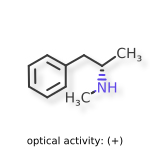
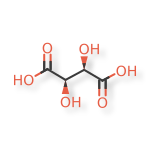
Details
| Stereochemistry | ABSOLUTE |
| Molecular Formula | C10H15N.C4H6O6 |
| Molecular Weight | 299.3196 |
| Optical Activity | UNSPECIFIED |
| Defined Stereocenters | 3 / 3 |
| E/Z Centers | 0 |
| Charge | 0 |
SHOW SMILES / InChI
SMILES
O[C@H]([C@@H](O)C(O)=O)C(O)=O.CN[C@@H](C)CC1=CC=CC=C1
InChI
InChIKey=SOSGXQJCXKXQCB-NDAAPVSOSA-N
InChI=1S/C10H15N.C4H6O6/c1-9(11-2)8-10-6-4-3-5-7-10;5-1(3(7)8)2(6)4(9)10/h3-7,9,11H,8H2,1-2H3;1-2,5-6H,(H,7,8)(H,9,10)/t9-;1-,2-/m01/s1
| Molecular Formula | C10H15N |
| Molecular Weight | 149.2328 |
| Charge | 0 |
| Count |
|
| Stereochemistry | ABSOLUTE |
| Additional Stereochemistry | No |
| Defined Stereocenters | 1 / 1 |
| E/Z Centers | 0 |
| Optical Activity | UNSPECIFIED |
| Molecular Formula | C4H6O6 |
| Molecular Weight | 150.0868 |
| Charge | 0 |
| Count |
|
| Stereochemistry | ABSOLUTE |
| Additional Stereochemistry | No |
| Defined Stereocenters | 2 / 2 |
| E/Z Centers | 0 |
| Optical Activity | UNSPECIFIED |
DescriptionSources: https://www.accessdata.fda.gov/drugsatfda_docs/label/2007/005378s026lbl.pdf | https://www.ncbi.nlm.nih.gov/pubmed/24484975https://www.ncbi.nlm.nih.gov/pubmed/9800366 | http://www.legacyhealth.org/for-health-professionals/refer-a-patient/laboratory-services/test-table/dl-methamphetamine-isomers-confirmation-urine.aspx
Sources: https://www.accessdata.fda.gov/drugsatfda_docs/label/2007/005378s026lbl.pdf | https://www.ncbi.nlm.nih.gov/pubmed/24484975https://www.ncbi.nlm.nih.gov/pubmed/9800366 | http://www.legacyhealth.org/for-health-professionals/refer-a-patient/laboratory-services/test-table/dl-methamphetamine-isomers-confirmation-urine.aspx
DL-Methamphetamine (also known as +/- Methamphetamin) is a central nervous system stimulant and sympathomimetic with actions and uses similar to DEXTROAMPHETAMINE. The smokable form is a drug of abuse and is referred to as crank, crystal, crystal meth, ice, and speed. Methamphetamine is a mixture of two isomers. One isomer called Dextro, or D Methamphetamine, is active as a central nervous system stimulant and it is a DEA Schedule 2 controlled drug commonly called “Meth” or “Speed”. Desoxyn, a prescription drug also contains D Methamphetamine. The other isomer, Levo, or L Methamphetamine is not a DEA controlled drug. It is found in an over the counter medicine called “Vicks Inhaler” or as the prescription drug, Selegiline. (+)-methamphetamine is the more physiologically active isomer. In addition to some medications, L Methamphetamine can be produced in the illegal production of street Methamphetamine.
CNS Activity
Approval Year
Targets
| Primary Target | Pharmacology | Condition | Potency |
|---|---|---|---|
Target ID: CHEMBL2363064 |
|||
Target ID: Q05940 Gene ID: 6571.0 Gene Symbol: SLC18A2 Target Organism: Homo sapiens (Human) |
|||
Target ID: Q96RJ0 Gene ID: 134864.0 Gene Symbol: TAAR1 Target Organism: Homo sapiens (Human) |
|||
Target ID: CHEMBL2095158 |
Conditions
| Condition | Modality | Targets | Highest Phase | Product |
|---|---|---|---|---|
| Primary | DESOXYN Approved UseAttention Deficit Disorder with Hyperactivity: DESOXYN tablets are indicated as an integral part of a total treatment program which typically includes other remedial measures (psychological, educational, social) for a stabilizing effect in children over 6 years of age with a behavioral syndrome characterized by the following group of developmentally inappropriate symptoms: moderate to severe distractibility, short attention span, hyperactivity, emotional lability, and impulsivity. The diagnosis of this syndrome should not be made with finality when these symptoms are only of comparatively recent origin. Nonlocalizing (soft) neurological signs, learning disability, and abnormal EEG may or may not be present, and a diagnosis of central nervous system dysfunction may or may not be warranted. Exogenous Obesity: as a short-term (i.e., a few weeks) adjunct in a regimen of weight reduction based on caloric restriction, for patients in whom obesity is refractory to alternative therapy, e.g., repeated diets, group programs, and other drugs. Launch Date1943 |
|||
| Palliative | DESOXYN Approved UseAttention Deficit Disorder with Hyperactivity Methamphetamine hydrochloride tablets are indicated as an integral part of a total treatment program which typically includes other remedial measures (psychological, educational, social) for a stabilizing effect in children over 6 years of age with a behavioral syndrome characterized by the following group of developmentally inappropriate symptoms: moderate to severe distractibility, short attention span, hyperactivity, emotional lability, and impulsivity. The diagnosis of this syndrome should not be made with finality when these symptoms are only of comparatively recent origin. Nonlocalizing (soft) neurological signs, learning disability, and abnormal EEG may or may not be present, and a diagnosis of central nervous system dysfunction may or may not be warranted. Exogenous Obesity As a short-term (i.e., a few weeks) adjunct in a regimen of weight reduction based on caloric restriction, for patients in whom obesity is refractory to alternative therapy, e.g., repeated diets, group programs, and other drugs. The limited usefulness of methamphetamine hydrochloride tablets (see CLINICAL PHARMACOLOGY) should be weighed against possible risks inherent in use of the drug, such as those described below. Launch Date1943 |
|||
Cmax
| Value | Dose | Co-administered | Analyte | Population |
|---|---|---|---|---|
19.8 ng/mL EXPERIMENT https://pubmed.ncbi.nlm.nih.gov/1362938/ |
0.125 mg/kg single, oral dose: 0.125 mg/kg route of administration: Oral experiment type: SINGLE co-administered: |
METHAMPHETAMINE plasma | Homo sapiens population: HEALTHY age: ADULT sex: MALE food status: UNKNOWN |
AUC
| Value | Dose | Co-administered | Analyte | Population |
|---|---|---|---|---|
330 ng × h/mL EXPERIMENT https://pubmed.ncbi.nlm.nih.gov/1362938/ |
0.125 mg/kg single, oral dose: 0.125 mg/kg route of administration: Oral experiment type: SINGLE co-administered: |
METHAMPHETAMINE plasma | Homo sapiens population: HEALTHY age: ADULT sex: MALE food status: UNKNOWN |
T1/2
| Value | Dose | Co-administered | Analyte | Population |
|---|---|---|---|---|
8.46 h EXPERIMENT https://pubmed.ncbi.nlm.nih.gov/1362938/ |
0.125 mg/kg single, oral dose: 0.125 mg/kg route of administration: Oral experiment type: SINGLE co-administered: |
METHAMPHETAMINE plasma | Homo sapiens population: HEALTHY age: ADULT sex: MALE food status: UNKNOWN |
Doses
| Dose | Population | Adverse events |
|---|---|---|
2 g single, oral Overdose |
healthy, adult Health Status: healthy Age Group: adult Sex: unknown Sources: |
Disc. AE: Intoxication... AEs leading to discontinuation/dose reduction: Intoxication (25 patients) Sources: |
40 mg single, oral |
healthy, adult Health Status: healthy Age Group: adult Sex: unknown Sources: |
AEs
| AE | Significance | Dose | Population |
|---|---|---|---|
| Intoxication | 25 patients Disc. AE |
2 g single, oral Overdose |
healthy, adult Health Status: healthy Age Group: adult Sex: unknown Sources: |
PubMed
| Title | Date | PubMed |
|---|---|---|
| Effects of lubeluzole on the methamphetamine-induced increase in extracellular glutamate and the long-term depletion of striatal dopamine. | 2001-05 |
|
| Increased expression of synaptophysin and stathmin mRNAs after methamphetamine administration in rat brain. | 2001-04-17 |
|
| Dose-dependent protective effects of apomorphine against methamphetamine-induced nigrostriatal damage. | 2001-04-13 |
|
| Delta opioid peptide augments functional effects and intrastriatal graft survival of rat fetal ventral mesencephalic cells. | 2001-04-11 |
|
| Speed demons. | 2001-04-02 |
|
| Immunohistochemical investigation of pulmonary surfactant-associated protein A in fatal poisoning. | 2001-04-01 |
|
| Dose-related neuroprotective effects of chronic nicotine in 6-hydroxydopamine treated rats, and loss of neuroprotection in alpha4 nicotinic receptor subunit knockout mice. | 2001-04 |
|
| Sensitized increase of period gene expression in the mouse caudate/putamen caused by repeated injection of methamphetamine. | 2001-04 |
|
| Neonatal phencyclidine treatment selectively attenuates mesolimbic dopamine function in adult rats as revealed by methamphetamine-induced behavior and c-fos mRNA expression in the brain. | 2001-04 |
|
| Plasma and brain methamphetamine concentrations in neonatal rats. | 2001-03-29 |
|
| Elevations in plasmatic titers of corticosterone and aldosterone, in the absence of changes in ACTH, testosterone, or glial fibrillary acidic protein, 72 h following D,L-fenfluramine or D-fenfluramine administration to rats. | 2001-03-29 |
|
| Protective effect of the antioxidant 6-ethoxy-2,2-pentamethylen-1,2-dihydroquinoline (S 33113) in models of cerebral neurodegeneration. | 2001-03-23 |
|
| Delta opioid peptide [D-Ala2, D-Leu5]enkephalin causes a near complete blockade of the neuronal damage caused by a single high dose of methamphetamine: examining the role of p53. | 2001-03-15 |
|
| Dopaminergic role in stimulant-induced wakefulness. | 2001-03-01 |
|
| Fos expression in orexin neurons varies with behavioral state. | 2001-03-01 |
|
| Differences between methamphetamine users and cocaine users in treatment. | 2001-03-01 |
|
| Analysis of amphetamine and congeners in illicit samples by liquid chromatography and capillary electrophoresis. | 2001-03 |
|
| [Pharmacological and physiological effects of ginseng on actions induced by opioids and psychostimulants]. | 2001-03 |
|
| Methamphetamine potentiates ischemia/reperfusion insults after transient middle cerebral artery ligation. | 2001-03 |
|
| Comparison of ELISAs for opiates, methamphetamine, cocaine metabolite, benzodiazepines, phencyclidine, and cannabinoids in whole blood and urine. | 2001-03 |
|
| Higher cortical and lower subcortical metabolism in detoxified methamphetamine abusers. | 2001-03 |
|
| Association of dopamine transporter reduction with psychomotor impairment in methamphetamine abusers. | 2001-03 |
|
| Airway effects of marijuana, cocaine, and other inhaled illicit agents. | 2001-03 |
|
| Lobeline inhibits the neurochemical and behavioral effects of amphetamine. | 2001-03 |
|
| Regulation of the vesicular monoamine transporter-2: a novel mechanism for cocaine and other psychostimulants. | 2001-03 |
|
| IGF-I and bFGF improve dopamine neuron survival and behavioral outcome in parkinsonian rats receiving cultured human fetal tissue strands. | 2001-03 |
|
| Glycine reduces novelty- and methamphetamine-induced locomotor activity in neonatal ventral hippocampal damaged rats. | 2001-03 |
|
| Analysis of benzphetamine and its metabolites in rat urine by liquid chromatography-electrospray ionization mass spectrometry. | 2001-02-25 |
|
| Long-term effects of a high-dose methamphetamine regimen on subsequent methamphetamine-induced dopamine release in vivo. | 2001-02-16 |
|
| The effect of testosterone upon methamphetamine neurotoxicity of the nigrostriatal dopaminergic system. | 2001-02-16 |
|
| Regional distribution of methamphetamine in autopsied brain of chronic human methamphetamine users. | 2001-02-15 |
|
| Susceptibility of PharmChek drugs of abuse patch to environmental contamination. | 2001-02-15 |
|
| Reversal effect of sulpiride on rotational behaviour of rats with unilateral frontal cortex ablation: an alternative explanation for the pharmacological mechanism of its antidepressant effect. | 2001-02 |
|
| Substance abuse and dependence in a public hospital: Hawaii. | 2001-02 |
|
| Relevance of pharmacokinetic parameters in animal models of methamphetamine abuse. | 2001-02 |
|
| Identification of reaction products of methamphetamine and hydrogen peroxide in hair dye and decolorant treatments by high-performance liquid chromatography/mass spectrometry. | 2001-02 |
|
| Unintentional methamphetamine intoxication. | 2001-02 |
|
| Long-term changes in basal ganglia function after a neurotoxic regimen of methamphetamine. | 2001-02 |
|
| Clozapine, but not haloperidol, reverses social behavior deficit in mice during withdrawal from chronic phencyclidine treatment. | 2001-01-22 |
|
| Drug addicts treatment for ten years in Thanyarak Hospital (1989-1998). | 2001-01 |
|
| Alterations in diurnal and nocturnal locomotor activity in rats treated with a monoamine-depleting regimen of methamphetamine or 3,4-methylenedioxymethamphetamine. | 2001-01 |
|
| [Advanced findings on the molecular mechanisms for behavioral sensitization to psychostimulants]. | 2001-01 |
|
| [Amotivational syndrome in organic solvent abusers]. | 2001-01 |
|
| The association study of DRD2, ACE and AGT gene polymorphisms and metamphetamine dependence. | 2001 |
|
| Anti-apoptotic and apoptotic action of (-)-deprenyl and its metabolites. | 2001 |
|
| Postnatal maturation of prefrontal pyramidal neurones is sensitive to a single early dose of methamphetamine in gerbils (Meriones unguiculatus). | 2001 |
|
| Estrogen protects against the synergistic toxicity by HIV proteins, methamphetamine and cocaine. | 2001 |
|
| Tamoxifen abolishes estrogen's neuroprotective effect upon methamphetamine neurotoxicity of the nigrostriatal dopaminergic system. | 2001 |
|
| Differential effects of cocaine and methamphetamine on neurotensin/neuromedin N and preprotachykinin messenger RNA expression in unique regions of the striatum. | 2001 |
|
| Decision-making deficits, linked to a dysfunctional ventromedial prefrontal cortex, revealed in alcohol and stimulant abusers. | 2001 |
Sample Use Guides
Attention Deficit Disorder with Hyperactivity: For treatment of children 6 years or older with a behavioral syndrome characterized by moderate to severe distractibility, short attention span, hyperactivity, emotional lability and impulsivity: an initial dose of 5 mg DESOXYN once or twice a day is recommended. Daily dosage may be raised in increments of 5 mg at weekly intervals until an optimum clinical response is achieved. The usual effective dose is 20 to 25 mg daily. The total daily dose may be given in two divided
doses daily. Where possible, drug administration should be interrupted
occasionally to determine if there is a recurrence of behavioral symptoms sufficient to require continued therapy.
For Obesity: One 5 mg tablet should be taken one-half hour before each meal. Treatment should not exceed a few weeks in duration. Methamphetamine is not recommended for use as an anorectic agent in children under 12 years of age.
Route of Administration:
Oral
It was investigated whether the psychostimulant methamphetamine (METH) has a cytotoxic effect on oligodendrocytes and which cell-death pathways are involved in the cytotoxic process. METH caused concentration- and time-dependent cytotoxicity in rat oligodendrocyte cultures. METH induced apoptotic cell death and mRNA expression of pro-apoptotic proteins (bax and DP5), but not anti-apoptotic proteins (bcl-2 and bcl-XL). These results suggest that METH induces cytotoxicity in rat oligodendrocytes via the differential regulation of the expression of genes involved in the apoptotic process.
| Substance Class |
Chemical
Created
by
admin
on
Edited
Mon Mar 31 17:50:01 GMT 2025
by
admin
on
Mon Mar 31 17:50:01 GMT 2025
|
| Record UNII |
7520HJS99O
|
| Record Status |
Validated (UNII)
|
| Record Version |
|
-
Download
| Name | Type | Language | ||
|---|---|---|---|---|
|
Common Name | English | ||
|
Preferred Name | English | ||
|
Systematic Name | English | ||
|
Systematic Name | English | ||
|
Systematic Name | English | ||
|
Common Name | English | ||
|
Common Name | English | ||
|
Systematic Name | English |
| Code System | Code | Type | Description | ||
|---|---|---|---|---|---|
|
DBSALT002267
Created by
admin on Mon Mar 31 17:50:01 GMT 2025 , Edited by admin on Mon Mar 31 17:50:01 GMT 2025
|
PRIMARY | |||
|
62265-33-2
Created by
admin on Mon Mar 31 17:50:01 GMT 2025 , Edited by admin on Mon Mar 31 17:50:01 GMT 2025
|
PRIMARY | |||
|
DTXSID20211318
Created by
admin on Mon Mar 31 17:50:01 GMT 2025 , Edited by admin on Mon Mar 31 17:50:01 GMT 2025
|
PRIMARY | |||
|
7520HJS99O
Created by
admin on Mon Mar 31 17:50:01 GMT 2025 , Edited by admin on Mon Mar 31 17:50:01 GMT 2025
|
PRIMARY | |||
|
7487-70-9
Created by
admin on Mon Mar 31 17:50:01 GMT 2025 , Edited by admin on Mon Mar 31 17:50:01 GMT 2025
|
NON-SPECIFIC STEREOCHEMISTRY | |||
|
65440-27-9
Created by
admin on Mon Mar 31 17:50:01 GMT 2025 , Edited by admin on Mon Mar 31 17:50:01 GMT 2025
|
NON-SPECIFIC STOICHIOMETRY | |||
|
76966389
Created by
admin on Mon Mar 31 17:50:01 GMT 2025 , Edited by admin on Mon Mar 31 17:50:01 GMT 2025
|
PRIMARY |
| Related Record | Type | Details | ||
|---|---|---|---|---|
|
|
PARENT -> SALT/SOLVATE | |||
|
|
PARENT -> SALT/SOLVATE |