


Details
| Stereochemistry | ABSOLUTE |
| Molecular Formula | C22H31NO.ClH |
| Molecular Weight | 361.949 |
| Optical Activity | UNSPECIFIED |
| Defined Stereocenters | 1 / 1 |
| E/Z Centers | 0 |
| Charge | 0 |
SHOW SMILES / InChI
SMILES
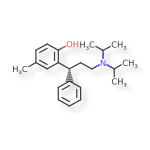
Cl.CC(C)N(CC[C@H](C1=CC=CC=C1)C2=CC(C)=CC=C2O)C(C)C
InChI
InChIKey=FSUOGWPKKKHHHM-VEIFNGETSA-N
InChI=1S/C22H31NO.ClH/c1-16(2)23(17(3)4)14-13-20(19-9-7-6-8-10-19)21-15-18(5)11-12-22(21)24;/h6-12,15-17,20,24H,13-14H2,1-5H3;1H/t20-;/m1./s1
| Molecular Formula | C22H31NO |
| Molecular Weight | 325.4876 |
| Charge | 0 |
| Count |
|
| Stereochemistry | ABSOLUTE |
| Additional Stereochemistry | No |
| Defined Stereocenters | 1 / 1 |
| E/Z Centers | 0 |
| Optical Activity | UNSPECIFIED |
| Molecular Formula | ClH |
| Molecular Weight | 36.461 |
| Charge | 0 |
| Count |
|
| Stereochemistry | ACHIRAL |
| Additional Stereochemistry | No |
| Defined Stereocenters | 0 / 0 |
| E/Z Centers | 0 |
| Optical Activity | NONE |
Tolterodine is competitive muscarinic receptors M3 and M2 antagonist. It was sold under trade names detrol for the treatment of overactive bladder with symptoms of urge urinary incontinence. Both urinary bladder contraction and salivation are mediated via cholinergic muscarinic receptors. After oral administration, tolterodine is metabolized in the liver, resulting in the formation of the 5-hydroxymethyl derivative, a major pharmacologically active metabolite. The 5-hydroxymethyl metabolite, which exhibits an antimuscarinic activity similar to that of tolterodine, contributes significantly to the therapeutic effect. Both tolterodine and the 5-hydroxymethyl metabolite exhibit a high specificity for muscarinic receptors, since both show negligible activity and affinity for other neurotransmitter receptors and other potential cellular targets, such as calcium channels. Tolterodine has a pronounced effect on bladder function. The main effects of tolterodine at 1 and 5 hours were an increase in residual urine, reflecting an incomplete emptying of the bladder, and a decrease in detrusor pressure. These findings are consistent with an antimuscarinic action on the lower urinary tract.
Approval Year
Targets
| Primary Target | Pharmacology | Condition | Potency |
|---|---|---|---|
Target ID: CHEMBL245 |
|||
Target ID: CHEMBL211 |
Conditions
| Condition | Modality | Targets | Highest Phase | Product |
|---|---|---|---|---|
| Primary | DETROL Approved UseTolterodine tartrate extended-release capsules are indicated for the treatment of overactive bladder with symptoms of urge urinary incontinence, urgency, and frequency [see CLINICAL STUDIES (14) Launch Date1998 |
Cmax
| Value | Dose | Co-administered | Analyte | Population |
|---|---|---|---|---|
3.2 μg/L |
4 mg single, oral dose: 4 mg route of administration: Oral experiment type: SINGLE co-administered: |
TOLTERODINE plasma | Homo sapiens population: UNKNOWN age: ADULT sex: UNKNOWN food status: UNKNOWN |
|
20 μg/L |
4 mg single, oral dose: 4 mg route of administration: Oral experiment type: SINGLE co-administered: |
TOLTERODINE plasma | Homo sapiens population: HEALTHY age: ADULT sex: MALE food status: UNKNOWN |
|
5.2 μg/L |
4 mg 2 times / day multiple, oral dose: 4 mg route of administration: Oral experiment type: MULTIPLE co-administered: |
TOLTERODINE plasma | Homo sapiens population: UNKNOWN age: ADULT sex: UNKNOWN food status: UNKNOWN |
|
38 μg/L |
4 mg 2 times / day multiple, oral dose: 4 mg route of administration: Oral experiment type: MULTIPLE co-administered: |
TOLTERODINE plasma | Homo sapiens population: UNKNOWN age: ADULT sex: UNKNOWN food status: UNKNOWN |
|
1.8 μg/L |
8 mg single, oral dose: 8 mg route of administration: Oral experiment type: SINGLE co-administered: |
TOLTERODINE plasma | Homo sapiens population: UNKNOWN age: ADULT sex: UNKNOWN food status: HIGH-FAT |
|
2.3 μg/L |
8 mg single, oral dose: 8 mg route of administration: Oral experiment type: SINGLE co-administered: |
TOLTERODINE plasma | Homo sapiens population: UNKNOWN age: ADULT sex: UNKNOWN food status: FASTED |
AUC
| Value | Dose | Co-administered | Analyte | Population |
|---|---|---|---|---|
23 μg × h/L |
8 mg single, oral dose: 8 mg route of administration: Oral experiment type: SINGLE co-administered: |
TOLTERODINE plasma | Homo sapiens population: UNKNOWN age: ADULT sex: UNKNOWN food status: HIGH-FAT |
|
27 μg × h/L |
8 mg single, oral dose: 8 mg route of administration: Oral experiment type: SINGLE co-administered: |
TOLTERODINE plasma | Homo sapiens population: UNKNOWN age: ADULT sex: UNKNOWN food status: FASTED |
T1/2
| Value | Dose | Co-administered | Analyte | Population |
|---|---|---|---|---|
2 h |
4 mg single, oral dose: 4 mg route of administration: Oral experiment type: SINGLE co-administered: |
TOLTERODINE plasma | Homo sapiens population: UNKNOWN age: ADULT sex: UNKNOWN food status: UNKNOWN |
|
6.5 h |
4 mg single, oral dose: 4 mg route of administration: Oral experiment type: SINGLE co-administered: |
TOLTERODINE plasma | Homo sapiens population: HEALTHY age: ADULT sex: MALE food status: UNKNOWN |
|
2.2 h |
4 mg 2 times / day multiple, oral dose: 4 mg route of administration: Oral experiment type: MULTIPLE co-administered: |
TOLTERODINE plasma | Homo sapiens population: UNKNOWN age: ADULT sex: UNKNOWN food status: UNKNOWN |
|
9.6 h |
4 mg 2 times / day multiple, oral dose: 4 mg route of administration: Oral experiment type: MULTIPLE co-administered: |
TOLTERODINE plasma | Homo sapiens population: UNKNOWN age: ADULT sex: UNKNOWN food status: UNKNOWN |
|
8.1 h |
8 mg single, oral dose: 8 mg route of administration: Oral experiment type: SINGLE co-administered: |
TOLTERODINE plasma | Homo sapiens population: UNKNOWN age: ADULT sex: UNKNOWN food status: HIGH-FAT |
|
7.9 h |
8 mg single, oral dose: 8 mg route of administration: Oral experiment type: SINGLE co-administered: |
TOLTERODINE plasma | Homo sapiens population: UNKNOWN age: ADULT sex: UNKNOWN food status: FASTED |
Doses
| Dose | Population | Adverse events |
|---|---|---|
2 mg 2 times / day multiple, oral Recommended Dose: 2 mg, 2 times / day Route: oral Route: multiple Dose: 2 mg, 2 times / day Sources: |
unhealthy, 20-93 |
Disc. AE: Dry mouth... AEs leading to discontinuation/dose reduction: Dry mouth (2.4%) Sources: |
4 mg 2 times / day multiple, oral Highest studied dose Dose: 4 mg, 2 times / day Route: oral Route: multiple Dose: 4 mg, 2 times / day Sources: |
unhealthy, 52 |
Disc. AE: Urinary retention... AEs leading to discontinuation/dose reduction: Urinary retention (6.9%) Sources: |
2 mg 2 times / day multiple, oral Recommended Dose: 2 mg, 2 times / day Route: oral Route: multiple Dose: 2 mg, 2 times / day Sources: |
unhealthy Health Status: unhealthy Sex: M+F Sources: |
Disc. AE: Dry mouth, Dizziness... AEs leading to discontinuation/dose reduction: Dry mouth (1%) Sources: Dizziness (common) Headache (common) |
AEs
| AE | Significance | Dose | Population |
|---|---|---|---|
| Dry mouth | 2.4% Disc. AE |
2 mg 2 times / day multiple, oral Recommended Dose: 2 mg, 2 times / day Route: oral Route: multiple Dose: 2 mg, 2 times / day Sources: |
unhealthy, 20-93 |
| Urinary retention | 6.9% Disc. AE |
4 mg 2 times / day multiple, oral Highest studied dose Dose: 4 mg, 2 times / day Route: oral Route: multiple Dose: 4 mg, 2 times / day Sources: |
unhealthy, 52 |
| Dry mouth | 1% Disc. AE |
2 mg 2 times / day multiple, oral Recommended Dose: 2 mg, 2 times / day Route: oral Route: multiple Dose: 2 mg, 2 times / day Sources: |
unhealthy Health Status: unhealthy Sex: M+F Sources: |
| Dizziness | common Disc. AE |
2 mg 2 times / day multiple, oral Recommended Dose: 2 mg, 2 times / day Route: oral Route: multiple Dose: 2 mg, 2 times / day Sources: |
unhealthy Health Status: unhealthy Sex: M+F Sources: |
| Headache | common Disc. AE |
2 mg 2 times / day multiple, oral Recommended Dose: 2 mg, 2 times / day Route: oral Route: multiple Dose: 2 mg, 2 times / day Sources: |
unhealthy Health Status: unhealthy Sex: M+F Sources: |
PubMed
| Title | Date | PubMed |
|---|---|---|
| 25-Hydroxylation of vitamin D3 in primary cultures of pig hepatocytes: evidence for a role of both CYP2D25 and CYP27A1. | 2003-04-11 |
|
| The use of tolterodine in children after oxybutynin failure. | 2003-03 |
|
| A new once-daily formulation of tolterodine provides superior efficacy and is well tolerated in women with overactive bladder. | 2003-02 |
|
| In vivo evaluation of the potency and bladder-vascular selectivity of the ATP-sensitive potassium channel openers (-)-cromakalim, ZD6169 and WAY-133537 in rats. | 2003-02 |
|
| Simplified bladder training augments the effectiveness of tolterodine in patients with an overactive bladder. | 2003-01 |
|
| Therapeutic efficacy of extended release oxybutynin chloride, and immediate release and long acting tolterodine tartrate in children with diurnal urinary incontinence. | 2003-01 |
|
| Effects of ATP-sensitive K+ channel openers and tolterodine on involuntary bladder contractions in a pig model of partial bladder outlet obstruction. | 2003 |
|
| Long-term health-related quality of life of patients receiving extended-release tolterodine for overactive bladder. | 2002-12 |
|
| Health-related quality of life of patients receiving extended-release tolterodine for overactive bladder. | 2002-12 |
|
| Advances in drug delivery: improved bioavailability and drug effect. | 2002-12 |
|
| Methodologic shortcomings inherent in a post-hoc analysis. | 2002-12 |
|
| Different responses to drugs against overactive bladder in detrusor muscle of pig, guinea pig and mouse. | 2002-11-01 |
|
| Muscarinic receptor subtypes and management of the overactive bladder. | 2002-11 |
|
| Conservative management in neurogenic bladder dysfunction. | 2002-11 |
|
| Functional role of central muscarinic receptors for micturition in normal conscious rats. | 2002-11 |
|
| Human variability in polymorphic CYP2D6 metabolism: is the kinetic default uncertainty factor adequate? | 2002-11 |
|
| The subtypes of muscarinic receptors for neurogenic bladder contraction in rats. | 2002-10-04 |
|
| The newer antimuscarinic drugs: bladder control with less dry mouth. | 2002-10 |
|
| Pharmacologic treatment for detrusor overactivity. | 2002-10 |
|
| Treatment of overactive bladder: the Antimuscarinic Clinical Effectiveness Trial. | 2002-10 |
|
| Characterization of a new muscarinic receptor antagonist PNU-171990 in guinea pig, cat and human smooth muscle. | 2002-09-13 |
|
| Gateways to clinical trials. | 2002-09-13 |
|
| Gateways to Clinical Trials. | 2002-09 |
|
| Does gender or age affect the efficacy and safety of tolterodine? | 2002-09 |
|
| A randomized controlled trial of tolterodine and oxybutynin on tolerability and clinical efficacy for treating Chinese women with an overactive bladder. | 2002-09 |
|
| The minor population of M3-receptors mediate contraction of human detrusor muscle in vitro. | 2002-07-19 |
|
| Current pharmacotherapeutic strategies for overactive bladder. | 2002-07 |
|
| The overactive bladder: a nursing perspective. | 2002-06 |
|
| Risk of delirium with concomitant use of tolterodine and acetylcholinesterase inhibitors. | 2002-06 |
|
| Long-term safety, tolerability and efficacy of extended-release tolterodine in the treatment of overactive bladder. | 2002-06 |
|
| Effect of muscarinic antagonists on micturition pressure measured by cystometry in normal, conscious rats. | 2002-06 |
|
| Overactive bladder patients and role of the pharmacist. | 2002-05-28 |
|
| Comparison of laparoscopic Burch and tension-free vaginal tape in treating stress urinary incontinence in obese patients. | 2002-05-11 |
|
| Gateways to clinical trials. | 2002-05-01 |
|
| Achieving bladder control. Treatment in the primary care setting. | 2002-05 |
|
| Tolterodine and its active 5-hydroxymethyl metabolite: pure muscarinic receptor antagonists. | 2002-05 |
|
| Tolterodine: as effective but better tolerated than oxybutynin in Asian patients with symptoms of overactive bladder. | 2002-05 |
|
| Efficacy, safety, and tolerability of extended-release once-daily tolterodine treatment for overactive bladder in older versus younger patients. | 2002-05 |
|
| Tolterodine-associated acute mixed liver injury. | 2002-05 |
|
| Assessment and conservative management of the neuropathic bladder. | 2002-05 |
|
| Gateways to Clinical Trials. | 2002-04 |
|
| A multicenter, prospective, open-label study of tolterodine extended-release 4 mg for overactive bladder: the speed of onset of therapeutic assessment trial (STAT). | 2002-04 |
|
| Tolterodine: a safe and effective treatment for older patients with overactive bladder. | 2002-04 |
|
| Once-daily, extended-release formulations of antimuscarinic agents in the treatment of overactive bladder: a review. | 2002-01 |
|
| Effect of tolterodine on the anticoagulant actions and pharmacokinetics of single-dose warfarin in healthy volunteers. | 2002 |
|
| Treatment of overactive bladder with once-daily extended-release tolterodine or oxybutynin: the antimuscarinic clinical effectiveness trial (ACET). | 2002 |
|
| Anticholinergic drugs versus placebo for overactive bladder syndrome in adults. | 2002 |
|
| New treatment options for overactive bladder and incontinence. | 2002 |
|
| Tolterodine: selectivity for the urinary bladder over the eye (as measured by visual accommodation) in healthy volunteers. | 2002 |
|
| Treatment can lead to a long dry spell. | 2002 |
Sample Use Guides
The initial recommended dose of DETROL (tolterodine tartrate tablets) is 2 mg twice daily. The dose may be lowered to 1 mg twice daily based on individual response and tolerability. For patients with significantly reduced hepatic or renal function or who are currently taking drugs that are potent inhibitors of CYP3A4, the recommended dose of DETROL is 1 mg twice daily
Route of Administration:
Oral
It was compared the antimuscarinic properties of tolterodine with those of oxybutynin, in vitro and in vivo. Tolterodine effectively inhibited carbachol-induced contractions of isolated strips of urinary bladder from guinea pigs (K(B) 3.0 nM; pA2 8.6; Schild slope 0.97) and humans (K(B) 4.0 nM; pA2 8.4; Schild slope 1.04) in a concentration-dependent, competitive manner. The affinity of tolterodine was similar to that derived for oxybutynin (K(B) 4.4 nM; pA2 8.5; Schild slope 0.89) in the guinea-pig bladder. Radioligand binding data showed that tolterodine bound with high affinity to muscarinic receptors in urinary bladder (K(i) 2.7 nM), heart (K(i) 1.6 nM), cerebral cortex (K(i) 0.75 nM) and parotid gland (K(i) 4.8 nM) from guinea pigs and in urinary bladder from humans (K(i) 3.3 nM). The combined in vitro and in vivo data on tolterodine and oxybutynin may indicate either that muscarinic M3/m3 receptors in glands are more sensitive to blockade than those in bladder smooth muscle, or that muscarinic M2/m2 receptors contribute to bladder contraction.
| Substance Class |
Chemical
Created
by
admin
on
Edited
Wed Apr 02 05:05:43 GMT 2025
by
admin
on
Wed Apr 02 05:05:43 GMT 2025
|
| Record UNII |
75I47Y48S7
|
| Record Status |
Validated (UNII)
|
| Record Version |
|
-
Download
| Name | Type | Language | ||
|---|---|---|---|---|
|
Preferred Name | English | ||
|
Common Name | English |
| Code System | Code | Type | Description | ||
|---|---|---|---|---|---|
|
124936-75-0
Created by
admin on Wed Apr 02 05:05:43 GMT 2025 , Edited by admin on Wed Apr 02 05:05:43 GMT 2025
|
PRIMARY | |||
|
75I47Y48S7
Created by
admin on Wed Apr 02 05:05:43 GMT 2025 , Edited by admin on Wed Apr 02 05:05:43 GMT 2025
|
PRIMARY | |||
|
46911937
Created by
admin on Wed Apr 02 05:05:43 GMT 2025 , Edited by admin on Wed Apr 02 05:05:43 GMT 2025
|
PRIMARY |
| Related Record | Type | Details | ||
|---|---|---|---|---|
|
PARENT -> SALT/SOLVATE |
| Related Record | Type | Details | ||
|---|---|---|---|---|
|
ACTIVE MOIETY |
| Name | Property Type | Amount | Referenced Substance | Defining | Parameters | References |
|---|---|---|---|---|---|---|
| Biological Half-life | PHARMACOKINETIC |
|
|
|||
| Volume of Distribution | PHARMACOKINETIC |
|
||||