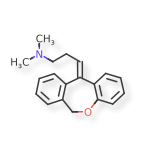
Details
| Stereochemistry | ACHIRAL |
| Molecular Formula | C19H21NO.ClH |
| Molecular Weight | 315.837 |
| Optical Activity | NONE |
| Defined Stereocenters | 0 / 0 |
| E/Z Centers | 1 |
| Charge | 0 |
SHOW SMILES / InChI
SMILES
Cl.CN(C)CC\C=C1/C2=CC=CC=C2COC3=CC=CC=C13
InChI
InChIKey=MHNSPTUQQIYJOT-SJDTYFKWSA-N
InChI=1S/C19H21NO.ClH/c1-20(2)13-7-11-17-16-9-4-3-8-15(16)14-21-19-12-6-5-10-18(17)19;/h3-6,8-12H,7,13-14H2,1-2H3;1H/b17-11+;
| Molecular Formula | C19H21NO |
| Molecular Weight | 279.3761 |
| Charge | 0 |
| Count |
|
| Stereochemistry | ACHIRAL |
| Additional Stereochemistry | No |
| Defined Stereocenters | 0 / 0 |
| E/Z Centers | 1 |
| Optical Activity | NONE |
| Molecular Formula | ClH |
| Molecular Weight | 36.461 |
| Charge | 0 |
| Count |
|
| Stereochemistry | ACHIRAL |
| Additional Stereochemistry | No |
| Defined Stereocenters | 0 / 0 |
| E/Z Centers | 0 |
| Optical Activity | NONE |
DescriptionCurator's Comment: description was created based on several sources, including
https://www.ncbi.nlm.nih.gov/pubmed/11465523 | https://www.drugs.com/monograph/doxepin-hydrochloride.html | https://dailymed.nlm.nih.gov/dailymed/drugInfo.cfm?setid=aa69c63c-ced6-4676-a16b-554f1af7d210
Curator's Comment: description was created based on several sources, including
https://www.ncbi.nlm.nih.gov/pubmed/11465523 | https://www.drugs.com/monograph/doxepin-hydrochloride.html | https://dailymed.nlm.nih.gov/dailymed/drugInfo.cfm?setid=aa69c63c-ced6-4676-a16b-554f1af7d210
Doxepin is a dibenzoxepin tricyclic antidepressant marketed worldwide. It is a white crystalline solid readily soluble in water, lower alcohols and chloroform. The mechanism of action of doxepin is not definitely known. It is not a central nervous system stimulant nor a monoamine oxidase inhibitor. The current hypothesis is that the clinical effects are due, at least in part, to influences on the adrenergic activity at the synapses so that deactivation of norepinephrine by reuptake into the nerve terminals is prevented. Antidepressants may increase risk of suicidal thinking and behavior (suicidality) in children, adolescents, and young adults (18–24 years of age) with major depressive disorder and other psychiatric disorders. Drowsiness is the most commonly noticed side effect. This tends to disappear as therapy is continued. Other infrequently reported CNS side effects are confusion, disorientation, hallucinations, numbness, paresthesias, ataxia, extrapyramidal symptoms, seizures, tardive dyskinesia, and tremor. : Cardiovascular effects including hypotension, hypertension, and tachycardia have been reported occasionally. Skin rash, edema, photosensitization, and pruritus have occasionally occurred. Eosinophilia has been reported in a few patients. There have been occasional reports of bone marrow depression manifesting as agranulocytosis, leukopenia, thrombocytopenia, and purpura. Doxepin is used to treat depression, anxiety disorders, itchiness, trouble sleeping, and as a second-line treatment of chronic idiopathic urticaria (hives). Its oral formulations are FDA-approved for the treatment of depression, anxiety, and insomnia and its topical formulations are FDA-approved the short-term management (up to 8 days) of atopic dermatitis and lichen simplex chronicus. Whereas in Australia and the UK, the only licensed indication(s) is/are in the treatment of major depression and pruritus in eczema, respectively.
Originator
Approval Year
Targets
| Primary Target | Pharmacology | Condition | Potency |
|---|---|---|---|
Target ID: CHEMBL3622 |
|||
Target ID: GO:0098810 |
|||
Conditions
| Condition | Modality | Targets | Highest Phase | Product |
|---|---|---|---|---|
| Primary | SINEQUAN Approved UseINDICATIONS & USAGE Doxepin is recommended for the treatment of: Psychoneurotic patients with depression and/or anxiety. Depression and/or anxiety associated with alcoholism (not to be taken concomitantly with alcohol). Depression and/or anxiety associated with organic disease (the possibility of drug interaction should be considered if the patient is receiving other drugs concomitantly). Psychotic depressive disorders with associated anxiety including involutional depression and manic-depressive disorders. The target symptoms of psychoneurosis that respond particularly well to doxepin include anxiety, tension, depression, somatic symptoms and concerns, sleep disturbances, guilt, lack of energy, fear, apprehension and worry. Clinical experience has shown that doxepin is safe and well tolerated even in the elderly patient. Owing to lack of clinical experience in the pediatric population, doxepin is not recommended for use in children under 12 years of age. Launch Date1969 |
|||
| Primary | SINEQUAN Approved UseINDICATIONS & USAGE Doxepin is recommended for the treatment of: Psychoneurotic patients with depression and/or anxiety. Depression and/or anxiety associated with alcoholism (not to be taken concomitantly with alcohol). Depression and/or anxiety associated with organic disease (the possibility of drug interaction should be considered if the patient is receiving other drugs concomitantly). Psychotic depressive disorders with associated anxiety including involutional depression and manic-depressive disorders. The target symptoms of psychoneurosis that respond particularly well to doxepin include anxiety, tension, depression, somatic symptoms and concerns, sleep disturbances, guilt, lack of energy, fear, apprehension and worry. Clinical experience has shown that doxepin is safe and well tolerated even in the elderly patient. Owing to lack of clinical experience in the pediatric population, doxepin is not recommended for use in children under 12 years of age. Launch Date1969 |
|||
| Primary | ZONALON Approved UseINDICATIONS & USAGE Zonalon Cream is indicated for the short-term (up to 8 days) management of moderate pruritus in adult patients with atopic dermatitis or lichen simplex chronicus. Launch Date1994 |
PubMed
| Title | Date | PubMed |
|---|---|---|
| Profiling of a prescription drug library for potential renal drug-drug interactions mediated by the organic cation transporter 2. | 2011-07-14 |
|
| Identification of human Ether-à-go-go related gene modulators by three screening platforms in an academic drug-discovery setting. | 2010-12 |
|
| Hypothermia in a combined intoxication with doxepin and moclobemide in an adolescent. | 2010-02-25 |
|
| Doxepin rinse for management of mucositis pain in patients with cancer: one week follow-up of topical therapy. | 2008-04-12 |
|
| In vitro detection of drug-induced phospholipidosis using gene expression and fluorescent phospholipid based methodologies. | 2007-09 |
|
| Oral doxepin rinse: the analgesic effect and duration of pain reduction in patients with oral mucositis due to cancer therapy. | 2006-08 |
|
| [Trazodone for the treatment of behavioral and psychological symptoms of dementia (BPSD) in Alzheimer's disease: a retrospective study focused on the aggression and negativism in caregiving situations]. | 2006-06 |
|
| Frequency of high-risk use of QT-prolonging medications. | 2006-06 |
|
| QT prolongation and syncope with methadone, doxepin, and a beta-blocker. | 2005-10 |
|
| Antidepressant-associated chronic irritable dysphoria (acid) in bipolar disorder: a case series. | 2005-02 |
|
| 'Hypnotic' prescription patterns in a large managed-care population. | 2004-09 |
|
| Glutathione S-transferase pi as a target for tricyclic antidepressants in human brain. | 2004 |
|
| Focal cortical transient preceding myoclonus during lithium and tricyclic antidepressant therapy. | 1999-01-01 |
|
| Pharmacological profile of antidepressants and related compounds at human monoamine transporters. | 1997-12-11 |
|
| Electrocardiographic effects of fluoxetine and doxepin in patients with major depressive disorder. | 1997-02 |
|
| Doxepin-induced recurrent acute hepatitis. | 1993-10 |
|
| Bupropion-induced carbohydrate craving and weight gain. | 1992-10 |
|
| Effect of IAP and chronic antidepressant administration on the 5HT1A receptor in rat cortical membranes. | 1992-05 |
|
| Tricyclics and heart failure. | 1991-11 |
|
| Is doxepin a safer tricyclic for the heart? | 1991-08 |
|
| Serious adverse effects of combining fluoxetine and tricyclic antidepressants. | 1990-04 |
|
| Possible induction of mania by buspirone. | 1990-01 |
|
| Protracted ventricular arrhythmias occurring after abrupt tricyclic antidepressant withdrawal. | 1990 |
|
| Doxepin in the treatment of female detrusor overactivity: a randomized double-blind crossover study. | 1989-10 |
|
| A case of immune complex hemolytic anemia, thrombocytopenia, and acute renal failure associated with doxepin use. | 1989-03 |
|
| Dystonic reactions to amitriptyline and doxepin. | 1988-05 |
|
| Acute effects of maprotiline, doxepin and zimeldine with alcohol in healthy volunteers. | 1988-01-01 |
|
| Seizures with neuroleptics and antidepressants. | 1987-03 |
|
| Orthostatic effect of imipramine and doxepin in depressed geriatric outpatients. | 1985-04 |
|
| Double-blind comparative trials of fluoxetine and doxepin in geriatric patients with major depressive disorder. | 1985-03 |
|
| A comparative trial of the antidepressant, anxiolytic, and cardiovascular effects of trimipramine and doxepin in depressed hospitalized patients. | 1985-03 |
|
| Alprazolam, amitriptyline, doxepin, and placebo in the treatment of depression. | 1985-02 |
|
| Neuropathy and fatal hepatitis in a patient receiving amiodarone. | 1984-06-02 |
|
| Bilateral internuclear ophthalmoplegia from doxepin overdose. | 1984-02 |
|
| Therapeutic superiority of maprotiline versus doxepin in geriatric depression. | 1983-12 |
|
| Doxepin and tinnitus. | 1983-09 |
|
| Doxepin and visual hallucinations. | 1982-12 |
|
| Doxepin induced torsade de pointes. | 1982-11 |
|
| Transient ophthalmoparesis with doxepin overdosage. | 1981-06 |
|
| Tricyclic antidepressants and cardiac arrhythmias during halothane-pancuronium anesthesia. | 1981-03-01 |
|
| A comparative study of the therapeutic effect and cardiotoxicity of dothiepin HCl and doxepin HCl in reactive depression. | 1981 |
|
| Delirium associated with sulindac. | 1980-04-25 |
|
| Delirium after abrupt withdrawal from doxepin: case report. | 1980-02 |
|
| Hoarseness and aphonia as a side effect of tricyclic antidepressants. | 1979-12 |
|
| Hypertensive crisis possibly due to drug interaction. | 1979-11 |
|
| Comparison of the cardiovascular toxicity of three tricyclic antidepressant drugs: imipramine, amitriptyline, and doxepin. | 1979-03 |
|
| Tricyclic-induced myoclonus. | 1977-01 |
|
| Effect of beta-adrenoceptor blocking drugs, physostigmine, and atropine on the toxicity of doxepin in mice. | 1975-08 |
|
| The antinicotinic effects of drugs with clinically useful sedative-antianxiety properties. | 1975 |
|
| A review of clinical studies with combinations of fluphenazine and nortriptyline. | 1972 |
Patents
Sample Use Guides
In Vivo Use Guide
Curator's Comment: http://www.accessdata.fda.gov/drugsatfda_docs/label/2002/20126slr006_Zonalon_lbl.pdf
For Mild Anxiety: Initial dose: 25 mg per day in 1 to 3 divided doses. Maintenance dose: 25 to 50 mg per day in 1 to 3 divided doses.
For Moderate Anxiety: Initial dose: 75 mg per day in 1 to 3 divided doses. Maintenance dose: 75 to 150 mg per day in 1 to 3 divided doses.
For Severe Anxiety: Initial dose: 150 mg per day in 1 to 3 divided doses. Maintenance dose: 150 to 300 mg per day in 1 to 3 divided doses.
The maximum single dose should not exceed 150 mg.
For treatment moderate pruritus
A thin film of Doxepin should be applied four times each day with at least a 3 to 4 hour interval between applications. There are no data to establish the safety and effectiveness of Doxepin when used for greater than 8 days. Chronic use beyond eight days may result in higher systemic levels and should be avoided.
Route of Administration:
Other
| Substance Class |
Chemical
Created
by
admin
on
Edited
Mon Mar 31 18:52:19 GMT 2025
by
admin
on
Mon Mar 31 18:52:19 GMT 2025
|
| Record UNII |
CU61C5RH24
|
| Record Status |
Validated (UNII)
|
| Record Version |
|
-
Download
| Name | Type | Language | ||
|---|---|---|---|---|
|
Common Name | English | ||
|
Preferred Name | English | ||
|
Common Name | English |
| Code System | Code | Type | Description | ||
|---|---|---|---|---|---|
|
6419921
Created by
admin on Mon Mar 31 18:52:19 GMT 2025 , Edited by admin on Mon Mar 31 18:52:19 GMT 2025
|
PRIMARY | |||
|
CU61C5RH24
Created by
admin on Mon Mar 31 18:52:19 GMT 2025 , Edited by admin on Mon Mar 31 18:52:19 GMT 2025
|
PRIMARY | |||
|
4698-39-9
Created by
admin on Mon Mar 31 18:52:19 GMT 2025 , Edited by admin on Mon Mar 31 18:52:19 GMT 2025
|
PRIMARY |
| Related Record | Type | Details | ||
|---|---|---|---|---|
|
|
PARENT -> SALT/SOLVATE | |||
|
|
SUBSTANCE->BASIS OF STRENGTH |