


Details
| Stereochemistry | RACEMIC |
| Molecular Formula | 2C24H26N2O4.H2O.2H3O4P |
| Molecular Weight | 1026.9541 |
| Optical Activity | ( + / - ) |
| Defined Stereocenters | 0 / 2 |
| E/Z Centers | 0 |
| Charge | 0 |
SHOW SMILES / InChI
SMILES
O.OP(O)(O)=O.OP(O)(O)=O.COC1=CC=CC=C1OCCNCC(O)COC2=CC=CC3=C2C4=C(N3)C=CC=C4.COC5=CC=CC=C5OCCNCC(O)COC6=C7C(NC8=C7C=CC=C8)=CC=C6
InChI
InChIKey=LHNYXTULDSJZRB-UHFFFAOYSA-N
InChI=1S/2C24H26N2O4.2H3O4P.H2O/c2*1-28-21-10-4-5-11-22(21)29-14-13-25-15-17(27)16-30-23-12-6-9-20-24(23)18-7-2-3-8-19(18)26-20;2*1-5(2,3)4;/h2*2-12,17,25-27H,13-16H2,1H3;2*(H3,1,2,3,4);1H2
| Molecular Formula | H2O |
| Molecular Weight | 18.0153 |
| Charge | 0 |
| Count |
|
| Stereochemistry | ACHIRAL |
| Additional Stereochemistry | No |
| Defined Stereocenters | 0 / 0 |
| E/Z Centers | 0 |
| Optical Activity | NONE |
| Molecular Formula | C24H26N2O4 |
| Molecular Weight | 406.4742 |
| Charge | 0 |
| Count |
|
| Stereochemistry | RACEMIC |
| Additional Stereochemistry | No |
| Defined Stereocenters | 0 / 1 |
| E/Z Centers | 0 |
| Optical Activity | ( + / - ) |
| Molecular Formula | H3O4P |
| Molecular Weight | 97.9952 |
| Charge | 0 |
| Count |
|
| Stereochemistry | ACHIRAL |
| Additional Stereochemistry | No |
| Defined Stereocenters | 0 / 0 |
| E/Z Centers | 0 |
| Optical Activity | NONE |
Carvedilol competitively blocks β1, β2 and α1 receptors. The drug lacks sympathomimetic activity and has vasodilating properties that are exerted primarily through α1-blockade. Animal models indicate that carvedilol confers protection against myocardial necrosis, arrhythmia and cell damage caused by oxidising free radicals, and the drug has no adverse effects on plasma lipid profiles. COREG® (carvedilol) is a racemic mixture in which nonselective β-adrenoreceptor blocking activity is present in the S(-) enantiomer and α1-adrenergic blocking activity is present in both R(+) and S(-) enantiomers at equal potency. Carvedilol is the first drug of its kind to be approved for the treatment of congestive heart failure, and is now the standard of care for this devastating disease. Carvedilol is also confirmed as effective in the management of mild to moderate hypertension and ischaemic heart disease.
Approval Year
Targets
| Primary Target | Pharmacology | Condition | Potency |
|---|---|---|---|
Target ID: CHEMBL2094118 |
Conditions
| Condition | Modality | Targets | Highest Phase | Product |
|---|---|---|---|---|
| Primary | COREG Approved UseCOREG® (carvedilol) is indicated for the treatment of mild-to-severe chronic heart failure of ischemic or cardiomyopathic origin, usually in addition to diuretics, ACE inhibitors, and digitalis, to increase survival and, also, to reduce the risk of hospitalization.
COREG is indicated to reduce cardiovascular mortality in clinically stable patients who
have survived the acute phase of a myocardial infarction and have a left ventricular ejection fraction of ≤40% (with or without symptomatic heart failure).
COREG is indicated for the management of essential hypertension. It can be used alone or in combination with other antihypertensive agents, especially thiazide-type diuretics. Launch Date1995 |
|||
| Primary | COREG Approved UseCOREG® (carvedilol) is indicated for the treatment of mild-to-severe chronic heart failure of ischemic or cardiomyopathic origin, usually in addition to diuretics, ACE inhibitors, and digitalis, to increase survival and, also, to reduce the risk of hospitalization.
COREG is indicated to reduce cardiovascular mortality in clinically stable patients who
have survived the acute phase of a myocardial infarction and have a left ventricular ejection fraction of ≤40% (with or without symptomatic heart failure).
COREG is indicated for the management of essential hypertension. It can be used alone or in combination with other antihypertensive agents, especially thiazide-type diuretics. Launch Date1995 |
|||
| Primary | COREG Approved UseCOREG® (carvedilol) is indicated for the treatment of mild-to-severe chronic heart failure of ischemic or cardiomyopathic origin, usually in addition to diuretics, ACE inhibitors, and digitalis, to increase survival and, also, to reduce the risk of hospitalization.
COREG is indicated to reduce cardiovascular mortality in clinically stable patients who
have survived the acute phase of a myocardial infarction and have a left ventricular ejection fraction of ≤40% (with or without symptomatic heart failure).
COREG is indicated for the management of essential hypertension. It can be used alone or in combination with other antihypertensive agents, especially thiazide-type diuretics. Launch Date1995 |
Cmax
| Value | Dose | Co-administered | Analyte | Population |
|---|---|---|---|---|
26.5 ng/mL EXPERIMENT https://pubmed.ncbi.nlm.nih.gov/10934668 |
6.25 mg 2 times / day steady-state, oral dose: 6.25 mg route of administration: Oral experiment type: STEADY-STATE co-administered: |
CARVEDILOL plasma | Homo sapiens population: UNHEALTHY age: UNKNOWN sex: UNKNOWN food status: UNKNOWN |
|
18.4 ng/mL EXPERIMENT https://pubmed.ncbi.nlm.nih.gov/10934668 |
6.25 mg 2 times / day steady-state, oral dose: 6.25 mg route of administration: Oral experiment type: STEADY-STATE co-administered: |
CARVEDILOL, (+)- plasma | Homo sapiens population: UNHEALTHY age: ADULT sex: UNKNOWN food status: FASTED |
|
8.46 ng/mL EXPERIMENT https://pubmed.ncbi.nlm.nih.gov/10934668 |
6.25 mg 2 times / day steady-state, oral dose: 6.25 mg route of administration: Oral experiment type: STEADY-STATE co-administered: |
CARVEDILOL, (-)- plasma | Homo sapiens population: UNHEALTHY age: ADULT sex: UNKNOWN food status: FASTED |
AUC
| Value | Dose | Co-administered | Analyte | Population |
|---|---|---|---|---|
139 ng × h/mL EXPERIMENT https://pubmed.ncbi.nlm.nih.gov/10934668 |
6.25 mg 2 times / day steady-state, oral dose: 6.25 mg route of administration: Oral experiment type: STEADY-STATE co-administered: |
CARVEDILOL plasma | Homo sapiens population: UNHEALTHY age: UNKNOWN sex: UNKNOWN food status: UNKNOWN |
|
94.3 ng × h/mL EXPERIMENT https://pubmed.ncbi.nlm.nih.gov/10934668 |
6.25 mg 2 times / day steady-state, oral dose: 6.25 mg route of administration: Oral experiment type: STEADY-STATE co-administered: |
CARVEDILOL, (+)- plasma | Homo sapiens population: UNHEALTHY age: ADULT sex: UNKNOWN food status: FASTED |
|
42.2 ng × h/mL EXPERIMENT https://pubmed.ncbi.nlm.nih.gov/10934668 |
6.25 mg 2 times / day steady-state, oral dose: 6.25 mg route of administration: Oral experiment type: STEADY-STATE co-administered: |
CARVEDILOL, (-)- plasma | Homo sapiens population: UNHEALTHY age: ADULT sex: UNKNOWN food status: FASTED |
PubMed
| Title | Date | PubMed |
|---|---|---|
| Radical-scavenging and iron-chelating properties of carvedilol, an antihypertensive drug with antioxidative activity. | 2001-07-15 |
|
| Effects of carvedilol on left ventricular function, mass, and scintigraphic findings in isolated left ventricular non-compaction. | 2001-07 |
|
| Catecholamines stimulate interleukin-6 synthesis in rat cardiac fibroblasts. | 2001-07 |
|
| Stereoselective effects of (R)- and (S)-carvedilol in humans. | 2001-07 |
|
| Random research. | 2001-06-26 |
|
| Nebivolol, carvedilol and metoprolol do not influence cardiac Ca(2+) sensitivity. | 2001-06-22 |
|
| Relationship between tumor necrosis factor-alpha production and oxidative stress in the failing hearts of patients with dilated cardiomyopathy. | 2001-06-15 |
|
| Beta-blocker trials seem to be in conflict. | 2001-06-12 |
|
| Beta-blockade in chronic heart failure. | 2001-06-12 |
|
| Plasma N-terminal pro-brain natriuretic peptide and adrenomedullin: prognostic utility and prediction of benefit from carvedilol in chronic ischemic left ventricular dysfunction. Australia-New Zealand Heart Failure Group. | 2001-06-01 |
|
| Protective effect of carvedilol on chenodeoxycholate induction of the permeability transition pore. | 2001-06-01 |
|
| Using isoproterenol stress echocardiography to predict the response to carvedilol in patients with dilated cardiomyopathy. | 2001-06 |
|
| Beta-blockers to reduce mortality in patients with systolic dysfunction: a meta-analysis. | 2001-06 |
|
| Bucindolol, a nonselective beta 1- and beta 2-adrenergic receptor antagonist, decreases beta-adrenergic receptor density in cultured embryonic chick cardiac myocyte membranes. | 2001-06 |
|
| Clinical Trials Update: CAPRICORN, COPERNICUS, MIRACLE, STAF, RITZ-2, RECOVER and RENAISSANCE and cachexia and cholesterol in heart failure. Highlights of the Scientific Sessions of the American College of Cardiology, 2001. | 2001-06 |
|
| A cost-effectiveness analysis of bisoprolol for heart failure. | 2001-06 |
|
| Differing beta-blocking effects of carvedilol and metoprolol. | 2001-06 |
|
| Influence of carvedilol on the benefits of physical training in patients with moderate chronic heart failure. | 2001-06 |
|
| Carvedilol increases plasma vascular endothelial growth factor (VEGF) in patients with chronic heart failure. | 2001-06 |
|
| Plasma brain natriuretic peptide as a novel therapeutic indicator in idiopathic dilated cardiomyopathy during beta-blocker therapy: a potential of hormone-guided treatment. | 2001-06 |
|
| Comparative effects of carvedilol and metoprolol on left ventricular ejection fraction in heart failure: results of a meta-analysis. | 2001-06 |
|
| Expanding indications for beta-blockers in heart failure. | 2001-05-31 |
|
| Effect of carvedilol on survival in severe chronic heart failure. | 2001-05-31 |
|
| Myocardial free fatty acid and glucose use after carvedilol treatment in patients with congestive heart failure. | 2001-05-22 |
|
| [Effects of carvedilol in rats with induced chronic kidney failure]. | 2001-05-10 |
|
| Current role of beta-adrenergic blockers in the management of chronic heart failure. | 2001-05-07 |
|
| Economic impact of beta blockade in heart failure. | 2001-05-07 |
|
| Separation of carvedilol enantiomers in very small volumes of human plasma by capillary electrophoresis with laser-induced fluorescence. | 2001-05-05 |
|
| Effect of carvedilol on outcome after myocardial infarction in patients with left-ventricular dysfunction: the CAPRICORN randomised trial. | 2001-05-05 |
|
| Racial differences in the response to drugs--pointers to genetic differences. | 2001-05-03 |
|
| Race and the response to adrenergic blockade with carvedilol in patients with chronic heart failure. | 2001-05-03 |
|
| Benefits of beta-blockers in heart failure: a class specific effect? | 2001-05 |
|
| Does intention-to-treat analysis answer all questions in long-term mortality trials? Considerations on the basis of the ANZ trial. | 2001-05 |
|
| Mechanisms of carvedilol action in human congestive heart failure. | 2001-05 |
|
| Overview of the results of recent beta blocker trials. | 2001-05 |
|
| Influence of carvedilol on hospitalizations in heart failure: incidence, resource utilization and costs. U.S. Carvedilol Heart Failure Study Group. | 2001-05 |
|
| Carvedilol in the treatment of chronic heart failure. | 2001-05 |
|
| Carvedilol versus other beta-blockers in heart failure. | 2001-05 |
|
| Reducing readmissions for congestive heart failure. | 2001-04-15 |
|
| 50th Annual scientific sessions of the American college of cardiology. | 2001-04-10 |
|
| CAPRICORN: a story of alpha allocation and beta-blockers in left ventricular dysfunction post-MI. | 2001-04 |
|
| Characterization of beta(1)-selectivity, adrenoceptor-G(s)-protein interaction and inverse agonism of nebivolol in human myocardium. | 2001-04 |
|
| Carvedilol as therapy in pediatric heart failure: an initial multicenter experience. | 2001-04 |
|
| Carvedilol--a new dimension in pediatric heart failure therapy. | 2001-04 |
|
| [Severe heart failure. Carvedilol lowers mortality]. | 2001-03-01 |
|
| [Options in drug combinations]. | 2001-03 |
|
| [Adrenergic beta inhibitors in heart insufficiency: which and when?]. | 2001-03 |
|
| Determination of carvedilol in human cardiac tissue by high-performance liquid chromatography. | 2001-03 |
|
| Detection of low levels of the amorphous phase in crystalline pharmaceutical materials by thermally stimulated current spectrometry. | 2001-01 |
|
| Levosimendan. | 2001 |
Sample Use Guides
Take with food. Individualize dosage and monitor during up-titration.• Heart failure: Start at 3.125 mg twice daily and increase to 6.25, 12.5, and then 25 mg twice daily over intervals of at least 2 weeks. Maintain lower doses if higher doses are not tolerated.• Left ventricular dysfunction following myocardial infarction: Start at 6.25 mg twice daily and increase to 12.5 mg then 25 mg twice daily afterintervals of 3 to 10 days. A lower starting dose or slower titration may be used.• Hypertension: Start at 6.25 mg twice daily and increase if needed for blood pressure control to 12.5 mg then 25 mg twice daily over intervals of 1 to 2 weeks.
Route of Administration:
Oral
Compared with the PDGF-stimulated control, DNA synthesis decreased significantly to 60.3% +/- 10.4% and 18.3% +/- 5.9% in the presence of 1 and 10 microM of carvedilol, respectively (P < 0.05, each). Carvedilol significantly inhibited the activity of VSMCs stimulated by ET-1 and ANG-II. The IC50 of carvedilol was 1-10 microM. CsA only inhibited VSMCs significantly in the PDGF-stimulated subgroup. The addition of CsA in the presence of carvedilol did not affect the inhibitory activity of carvedilol. The pattern of inhibition in the combined group was uniform and similar to that of the carvedilol alone group, regardless of the stimulator used.
| Substance Class |
Chemical
Created
by
admin
on
Edited
Mon Mar 31 18:06:23 GMT 2025
by
admin
on
Mon Mar 31 18:06:23 GMT 2025
|
| Record UNII |
EQT531S367
|
| Record Status |
Validated (UNII)
|
| Record Version |
|
-
Download
| Name | Type | Language | ||
|---|---|---|---|---|
|
Official Name | English | ||
|
Preferred Name | English | ||
|
Common Name | English | ||
|
Code | English | ||
|
Common Name | English | ||
|
Common Name | English | ||
|
Common Name | English | ||
|
Common Name | English | ||
|
Brand Name | English | ||
|
Common Name | English | ||
|
Common Name | English | ||
|
Common Name | English | ||
|
Code | English | ||
|
Common Name | English | ||
|
Code | English |
| Classification Tree | Code System | Code | ||
|---|---|---|---|---|
|
NCI_THESAURUS |
C29576
Created by
admin on Mon Mar 31 18:06:23 GMT 2025 , Edited by admin on Mon Mar 31 18:06:23 GMT 2025
|
| Code System | Code | Type | Description | ||
|---|---|---|---|---|---|
|
EQT531S367
Created by
admin on Mon Mar 31 18:06:23 GMT 2025 , Edited by admin on Mon Mar 31 18:06:23 GMT 2025
|
PRIMARY | |||
|
11954344
Created by
admin on Mon Mar 31 18:06:23 GMT 2025 , Edited by admin on Mon Mar 31 18:06:23 GMT 2025
|
PRIMARY | |||
|
DTXSID60976535
Created by
admin on Mon Mar 31 18:06:23 GMT 2025 , Edited by admin on Mon Mar 31 18:06:23 GMT 2025
|
PRIMARY | |||
|
DBSALT001201
Created by
admin on Mon Mar 31 18:06:23 GMT 2025 , Edited by admin on Mon Mar 31 18:06:23 GMT 2025
|
PRIMARY | |||
|
610309-89-2
Created by
admin on Mon Mar 31 18:06:23 GMT 2025 , Edited by admin on Mon Mar 31 18:06:23 GMT 2025
|
PRIMARY | |||
|
668310
Created by
admin on Mon Mar 31 18:06:23 GMT 2025 , Edited by admin on Mon Mar 31 18:06:23 GMT 2025
|
PRIMARY | RxNorm | ||
|
C65292
Created by
admin on Mon Mar 31 18:06:23 GMT 2025 , Edited by admin on Mon Mar 31 18:06:23 GMT 2025
|
PRIMARY | |||
|
EQT531S367
Created by
admin on Mon Mar 31 18:06:23 GMT 2025 , Edited by admin on Mon Mar 31 18:06:23 GMT 2025
|
PRIMARY | |||
|
QQ-49
Created by
admin on Mon Mar 31 18:06:23 GMT 2025 , Edited by admin on Mon Mar 31 18:06:23 GMT 2025
|
PRIMARY | |||
|
SUB25804
Created by
admin on Mon Mar 31 18:06:23 GMT 2025 , Edited by admin on Mon Mar 31 18:06:23 GMT 2025
|
PRIMARY | |||
|
CHEMBL723
Created by
admin on Mon Mar 31 18:06:23 GMT 2025 , Edited by admin on Mon Mar 31 18:06:23 GMT 2025
|
PRIMARY |
| Related Record | Type | Details | ||
|---|---|---|---|---|
|
ANHYDROUS->SOLVATE | |||
|
|
PARENT -> SALT/SOLVATE |
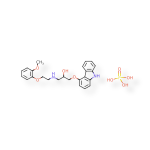
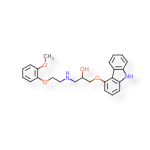
| Related Record | Type | Details | ||
|---|---|---|---|---|
|
IMPURITY -> PARENT |
|
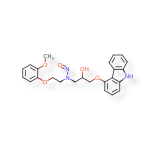
| Related Record | Type | Details | ||
|---|---|---|---|---|
|
|
ACTIVE MOIETY |