


Details
| Stereochemistry | ABSOLUTE |
| Molecular Formula | C15H20Cl2N2O3.C4H6O6 |
| Molecular Weight | 497.324 |
| Optical Activity | UNSPECIFIED |
| Defined Stereocenters | 3 / 3 |
| E/Z Centers | 0 |
| Charge | 0 |
SHOW SMILES / InChI
SMILES
O[C@H]([C@@H](O)C(O)=O)C(O)=O.CCN1CCC[C@H]1CNC(=O)C2=C(OC)C(Cl)=CC(Cl)=C2O
InChI
InChIKey=QULBVRZTKPQGCR-NDAAPVSOSA-N
InChI=1S/C15H20Cl2N2O3.C4H6O6/c1-3-19-6-4-5-9(19)8-18-15(21)12-13(20)10(16)7-11(17)14(12)22-2;5-1(3(7)8)2(6)4(9)10/h7,9,20H,3-6,8H2,1-2H3,(H,18,21);1-2,5-6H,(H,7,8)(H,9,10)/t9-;1-,2-/m01/s1
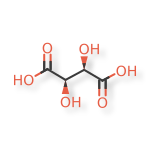
| Molecular Formula | C4H6O6 |
| Molecular Weight | 150.0868 |
| Charge | 0 |
| Count |
|
| Stereochemistry | ABSOLUTE |
| Additional Stereochemistry | No |
| Defined Stereocenters | 2 / 2 |
| E/Z Centers | 0 |
| Optical Activity | UNSPECIFIED |
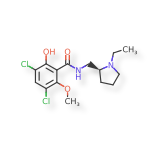
| Molecular Formula | C15H20Cl2N2O3 |
| Molecular Weight | 347.237 |
| Charge | 0 |
| Count |
|
| Stereochemistry | ABSOLUTE |
| Additional Stereochemistry | No |
| Defined Stereocenters | 1 / 1 |
| E/Z Centers | 0 |
| Optical Activity | UNSPECIFIED |
DescriptionSources: https://www.ncbi.nlm.nih.gov/pubmed/3131792 | https://www.ncbi.nlm.nih.gov/pubmed/3873656 | https://www.ncbi.nlm.nih.gov/pubmed/27286237 | https://www.ncbi.nlm.nih.gov/pubmed/21678422https://www.ncbi.nlm.nih.gov/pubmed/2975809Curator's Comment: the description was created based on several sources, including
https://www.ncbi.nlm.nih.gov/pubmed/24848155 | https://www.ncbi.nlm.nih.gov/pubmed/17765546 | https://www.drugs.com/mmx/raclopride-c-11.html
Sources: https://www.ncbi.nlm.nih.gov/pubmed/3131792 | https://www.ncbi.nlm.nih.gov/pubmed/3873656 | https://www.ncbi.nlm.nih.gov/pubmed/27286237 | https://www.ncbi.nlm.nih.gov/pubmed/21678422https://www.ncbi.nlm.nih.gov/pubmed/2975809
Curator's Comment: the description was created based on several sources, including
https://www.ncbi.nlm.nih.gov/pubmed/24848155 | https://www.ncbi.nlm.nih.gov/pubmed/17765546 | https://www.drugs.com/mmx/raclopride-c-11.html
Raclopride is a salicylamide neuroleptic, that acts as a selective antagonist of D2 dopamine receptors both in vitro and in vivo. Tritium-labelled raclopride has properties that demonstrate its usefulness as a radioligand for the labelling of dopamine-D2 receptors : 3H-Raclopride has a high affinity for the rat and human dopamine-D2 receptors, the non-specific binding of 3H-raclopride is very low, not exceeding 5% of the total binding and the distribution of the 3H-raclopride binding sites in the brain closely correlates with the dopaminergic innervation. The binding of 3H-raclopride is blocked by dopamine-D2 agonists and antagonists, while the D1 agonist SKF 38393 and the Dl antagonist SCH 23390 have much less potency. The interaction of dopamine with 3H-raclopride binding results in a shallow competition curve, which suggests that 3H-raclopride, similar to other dopamine-D2 radioligands, labels both high and low agonist affinity states of the dopamine-D2 receptor. The in vivo receptor binding studies performed with 3H-raclopride also demonstrate its favorable properties as a dopamine-D2 receptor marker in vivo In contrast to some other compounds used as radioligands, raclopride enters the brain readily and binds with a low component of non-specific binding in all dopamine-rich brain areas. A saturation curve may be achieved in vivo binding studies since injections of increasing concentrations of 3H-raclopride appears to be saturated at concentrations above 25 mkCi (corresponding to approximately 5 nmol/kg). Raclopride antagonizes apomorphine-induced hyperactivity in the rat at low doses (ED50 = 130 nM/kg i.p.) but induces catalepsy only at much higher doses (ED50 = 27 mkM/kg i.p.). Radiolabelled raclopride has been used as a ligand for in vitro and in vivo autoradiography in rat and primate brains. Raclopride C 11 is used with positron emission tomography (PET) as a clinical research tool to determine dopamine type 2 (D 2) receptor density in the human brain under normal and pathological conditions. For example, raclopride C 11 used in PET studies has served to confirm the age-related decrease in striatal dopamine D2 receptor density, which may be associated with a decline in the motor as well as cognitive functions. In patients with Alzheimer's disease, raclopride C 11 may be used to examine neuroreceptor distribution and quantities, which may help in the analysis of degenerative alterations of neuron populations and neuroreceptor systems in patients with this disease. In Huntington's disease, in which degeneration of neostriatal interneurons occurs (postsynaptic to the dopaminergic input), specific binding of raclopride C 11 to D 2 receptors may serve as one of the parameters in predicting performance in cognitive tasks.
CNS Activity
Approval Year
Targets
| Primary Target | Pharmacology | Condition | Potency |
|---|---|---|---|
Target ID: CHEMBL217 |
12.7 nM [Ki] | ||
Target ID: CHEMBL234 |
13.4 nM [Ki] | ||
Target ID: CHEMBL219 |
3100.0 nM [Ki] | ||
Target ID: CHEMBL2096905 |
8.7 nM [Ki] |
Conditions
| Condition | Modality | Targets | Highest Phase | Product |
|---|---|---|---|---|
| Diagnostic | Unknown Approved UseUnknown |
|||
| Diagnostic | Unknown Approved UseUnknown |
|||
| Diagnostic | Unknown Approved UseUnknown |
|||
| Diagnostic | Unknown Approved UseUnknown |
Cmax
| Value | Dose | Co-administered | Analyte | Population |
|---|---|---|---|---|
92.5 nM EXPERIMENT https://pubmed.ncbi.nlm.nih.gov/7647082/ |
8 mg single, oral dose: 8 mg route of administration: Oral experiment type: SINGLE co-administered: |
RACLOPRIDE plasma | Homo sapiens population: UNHEALTHY age: ADULT sex: MALE food status: UNKNOWN |
|
158.8 nM EXPERIMENT https://pubmed.ncbi.nlm.nih.gov/7647082/ |
8 mg 2 times / day steady-state, oral dose: 8 mg route of administration: Oral experiment type: STEADY-STATE co-administered: |
RACLOPRIDE plasma | Homo sapiens population: UNHEALTHY age: ADULT sex: MALE food status: UNKNOWN |
|
288.25 nM EXPERIMENT https://pubmed.ncbi.nlm.nih.gov/7647082/ |
12 mg 2 times / day steady-state, oral dose: 12 mg route of administration: Oral experiment type: STEADY-STATE co-administered: |
RACLOPRIDE plasma | Homo sapiens population: UNHEALTHY age: ADULT sex: MALE food status: UNKNOWN |
|
448.75 nM EXPERIMENT https://pubmed.ncbi.nlm.nih.gov/7647082/ |
16 mg 2 times / day steady-state, oral dose: 16 mg route of administration: Oral experiment type: STEADY-STATE co-administered: |
RACLOPRIDE plasma | Homo sapiens population: UNHEALTHY age: ADULT sex: MALE food status: UNKNOWN |
AUC
| Value | Dose | Co-administered | Analyte | Population |
|---|---|---|---|---|
1949 nM × h EXPERIMENT https://pubmed.ncbi.nlm.nih.gov/7647082/ |
8 mg single, oral dose: 8 mg route of administration: Oral experiment type: SINGLE co-administered: |
RACLOPRIDE plasma | Homo sapiens population: UNHEALTHY age: ADULT sex: MALE food status: UNKNOWN |
|
1597 nM × h EXPERIMENT https://pubmed.ncbi.nlm.nih.gov/7647082/ |
8 mg 2 times / day steady-state, oral dose: 8 mg route of administration: Oral experiment type: STEADY-STATE co-administered: |
RACLOPRIDE plasma | Homo sapiens population: UNHEALTHY age: ADULT sex: MALE food status: UNKNOWN |
|
2648 nM × h EXPERIMENT https://pubmed.ncbi.nlm.nih.gov/7647082/ |
12 mg 2 times / day steady-state, oral dose: 12 mg route of administration: Oral experiment type: STEADY-STATE co-administered: |
RACLOPRIDE plasma | Homo sapiens population: UNHEALTHY age: ADULT sex: MALE food status: UNKNOWN |
|
4025 nM × h EXPERIMENT https://pubmed.ncbi.nlm.nih.gov/7647082/ |
16 mg 2 times / day steady-state, oral dose: 16 mg route of administration: Oral experiment type: STEADY-STATE co-administered: |
RACLOPRIDE plasma | Homo sapiens population: UNHEALTHY age: ADULT sex: MALE food status: UNKNOWN |
T1/2
| Value | Dose | Co-administered | Analyte | Population |
|---|---|---|---|---|
7.38 h EXPERIMENT https://pubmed.ncbi.nlm.nih.gov/7647082/ |
8 mg single, oral dose: 8 mg route of administration: Oral experiment type: SINGLE co-administered: |
RACLOPRIDE plasma | Homo sapiens population: UNHEALTHY age: ADULT sex: MALE food status: UNKNOWN |
|
27.56 h EXPERIMENT https://pubmed.ncbi.nlm.nih.gov/7647082/ |
8 mg 2 times / day steady-state, oral dose: 8 mg route of administration: Oral experiment type: STEADY-STATE co-administered: |
RACLOPRIDE plasma | Homo sapiens population: UNHEALTHY age: ADULT sex: MALE food status: UNKNOWN |
|
9.3 h EXPERIMENT https://pubmed.ncbi.nlm.nih.gov/7647082/ |
12 mg 2 times / day steady-state, oral dose: 12 mg route of administration: Oral experiment type: STEADY-STATE co-administered: |
RACLOPRIDE plasma | Homo sapiens population: UNHEALTHY age: ADULT sex: MALE food status: UNKNOWN |
|
13.29 h EXPERIMENT https://pubmed.ncbi.nlm.nih.gov/7647082/ |
16 mg 2 times / day steady-state, oral dose: 16 mg route of administration: Oral experiment type: STEADY-STATE co-administered: |
RACLOPRIDE plasma | Homo sapiens population: UNHEALTHY age: ADULT sex: MALE food status: UNKNOWN |
Doses
| Dose | Population | Adverse events |
|---|---|---|
16 mg 2 times / day multiple, oral Highest recorded dose Dose: 16 mg, 2 times / day Route: oral Route: multiple Dose: 16 mg, 2 times / day Sources: |
unhealthy, ADULT Health Status: unhealthy Age Group: ADULT Sex: M Food Status: UNKNOWN Sources: |
Disc. AE: Drug-induced extrapyramidal side effects... AEs leading to discontinuation/dose reduction: Drug-induced extrapyramidal side effects (16.7%) Sources: |
8 mg 2 times / day multiple, oral Highest studied dose Dose: 8 mg, 2 times / day Route: oral Route: multiple Dose: 8 mg, 2 times / day Sources: |
unhealthy, ADULT Health Status: unhealthy Age Group: ADULT Sex: M+F Food Status: UNKNOWN Sources: |
Disc. AE: Bilirubin increased, Hypotension postural... AEs leading to discontinuation/dose reduction: Bilirubin increased (2.3%) Sources: Hypotension postural (2.3%) Neutrophils (2.3%) |
8 mg 2 times / day multiple, oral Highest studied dose Dose: 8 mg, 2 times / day Route: oral Route: multiple Dose: 8 mg, 2 times / day Sources: |
unhealthy, ADULT Health Status: unhealthy Age Group: ADULT Sex: M+F Food Status: UNKNOWN Sources: |
Disc. AE: Aggressiveness... AEs leading to discontinuation/dose reduction: Aggressiveness (13.3%) Sources: |
16 mg single, oral Studied dose |
healthy |
Other AEs: Akathisia... |
AEs
| AE | Significance | Dose | Population |
|---|---|---|---|
| Drug-induced extrapyramidal side effects | 16.7% Disc. AE |
16 mg 2 times / day multiple, oral Highest recorded dose Dose: 16 mg, 2 times / day Route: oral Route: multiple Dose: 16 mg, 2 times / day Sources: |
unhealthy, ADULT Health Status: unhealthy Age Group: ADULT Sex: M Food Status: UNKNOWN Sources: |
| Bilirubin increased | 2.3% Disc. AE |
8 mg 2 times / day multiple, oral Highest studied dose Dose: 8 mg, 2 times / day Route: oral Route: multiple Dose: 8 mg, 2 times / day Sources: |
unhealthy, ADULT Health Status: unhealthy Age Group: ADULT Sex: M+F Food Status: UNKNOWN Sources: |
| Hypotension postural | 2.3% Disc. AE |
8 mg 2 times / day multiple, oral Highest studied dose Dose: 8 mg, 2 times / day Route: oral Route: multiple Dose: 8 mg, 2 times / day Sources: |
unhealthy, ADULT Health Status: unhealthy Age Group: ADULT Sex: M+F Food Status: UNKNOWN Sources: |
| Neutrophils | 2.3% Disc. AE |
8 mg 2 times / day multiple, oral Highest studied dose Dose: 8 mg, 2 times / day Route: oral Route: multiple Dose: 8 mg, 2 times / day Sources: |
unhealthy, ADULT Health Status: unhealthy Age Group: ADULT Sex: M+F Food Status: UNKNOWN Sources: |
| Aggressiveness | 13.3% Disc. AE |
8 mg 2 times / day multiple, oral Highest studied dose Dose: 8 mg, 2 times / day Route: oral Route: multiple Dose: 8 mg, 2 times / day Sources: |
unhealthy, ADULT Health Status: unhealthy Age Group: ADULT Sex: M+F Food Status: UNKNOWN Sources: |
| Akathisia | 100% | 16 mg single, oral Studied dose |
healthy |
Overview
| CYP3A4 | CYP2C9 | CYP2D6 | hERG |
|---|---|---|---|
OverviewOther
| Other Inhibitor | Other Substrate | Other Inducer |
|---|---|---|
Drug as perpetrator
| Target | Modality | Activity | Metabolite | Clinical evidence |
|---|---|---|---|---|
| inconclusive [IC50 31.6228 uM] | ||||
| inconclusive [IC50 7.9433 uM] | ||||
| no [IC50 >10 uM] | ||||
| no | ||||
| no | ||||
| yes [IC50 1.2589 uM] | ||||
| yes [IC50 12.5893 uM] |
Drug as victim
| Target | Modality | Activity | Metabolite | Clinical evidence |
|---|---|---|---|---|
| no | ||||
Page: 244 | 246 |
no |
PubMed
| Title | Date | PubMed |
|---|---|---|
| Demonstration of competition between endogenous dopamine and [11C]raclopride binding in in vitro brain slices using a dynamic autoradiography technique. | 2002-04 |
|
| In vivo assessment of adenoviral vector-mediated gene expression of dopamine D(2) receptors in the rat striatum by positron emission tomography. | 2002-03-01 |
|
| Relationship between blockade of dopamine transporters by oral methylphenidate and the increases in extracellular dopamine: therapeutic implications. | 2002-03-01 |
|
| Amphetamine-induced dopamine release and post-synaptic specific binding in patients with mild tardive dyskinesia. | 2002-03 |
|
| Clozapine can induce high dopamine D(2) receptor occupancy in vivo. | 2002-02 |
|
| SIC, an intracerebral beta(+)-range-sensitive probe for radiopharmacology investigations in small laboratory animals: binding studies with (11)C-raclopride. | 2002-02 |
|
| Atropine reduces raclopride-induced muscle rigidity by acting in the ventral region of the striatum. | 2002-01-11 |
|
| NMDA antagonist effects on striatal dopamine release: positron emission tomography studies in humans. | 2002-01 |
|
| Facilitation of dopaminergic neural transmission does not affect [(11)C]SCH23390 binding to the striatal D(1) dopamine receptors, but the facilitation enhances phosphodiesterase type-IV activity through D(1) receptors: PET studies in the conscious monkey brain. | 2001-12-15 |
|
| Agonist, antagonist, and inverse agonist properties of antipsychotics at human recombinant 5-HT(1A) receptors expressed in HeLa cells. | 2001-12-14 |
|
| Differential effects of dopamine antagonists on locomotor activity, conditioned activity and conditioned place preference induced by cocaine in rats. | 2001-12 |
|
| Combined alpha 2-adrenergic/D2 dopamine receptor blockade fails to reproduce the ability of clozapine to reverse phencyclidine-induced deficits in prepulse inhibition of startle. | 2001-12 |
|
| Neurons and neuronal systems involved in the pathophysiologies of Rett syndrome. | 2001-12 |
|
| Dopamine D2 receptor-mediated G-protein activation in rat striatum: functional autoradiography and influence of unilateral 6-hydroxydopamine lesions of the substantia nigra. | 2001-11-30 |
|
| Pharmacodynamic modeling of oral levodopa in Parkinson's disease. | 2001-11 |
|
| Antagonism of the discriminative stimulus effects of cocaine at two training doses by dopamine D2-like receptor antagonists. | 2001-11 |
|
| Hypothermia reduces the rate of dissociation of specific ligands from dopamine-D2 and 5-hydroxytryptamine1A receptors in the mouse brain in vivo. | 2001-11 |
|
| Potent inhibitory effect of selective D2 and D3 agonists on dopamine-responsive dorsomedial arcuate neurons in brain slices of estrogen-primed rats. | 2001-10-19 |
|
| Aberrant behavioral effects of a dopamine D1 receptor antagonist and agonist in monkeys: evidence of uncharted dopamine D1 receptor actions. | 2001-10-01 |
|
| Catecholamines in murine bone marrow derived mast cells. | 2001-10-01 |
|
| Catalepsy induced by a blockade of dopamine D1 or D2 receptors was reversed by a concomitant blockade of adenosine A(2A) receptors in the caudate-putamen of rats. | 2001-10 |
|
| Effects of raclopride in the nucleus accumbens on ethanol seeking and consumption. | 2001-10 |
|
| Apomorphine-induced changes in synaptic dopamine levels: positron emission tomography evidence for presynaptic inhibition. | 2001-10 |
|
| [11C]Raclopride binding was reduced in vivo by sigma(1) receptor ligand SA4503 in the mouse brain, while [11C]SA4503 binding was not by raclopride. | 2001-10 |
|
| Potentials and pitfalls using high affinity radioligands in PET and SPET determinations on regional drug induced D2 receptor occupancy--a simulation study based on experimental data. | 2001-10 |
|
| Age-related changes of dopamine D1-like and D2-like receptor binding in the F344/N rat striatum revealed by positron emission tomography and in vitro receptor autoradiography. | 2001-09-15 |
|
| [Th effect of D2-dopamine receptor blockade on glutamate release into extracellular space of Nucleus accumbens during food reinforcement]. | 2001-09-11 |
|
| A role for dopamine D1 receptors of the nucleus accumbens shell in conditioned taste aversion learning. | 2001-09-01 |
|
| Drug-induced receptor occupancy: substantial differences in measurements made in vivo vs ex vivo. | 2001-09 |
|
| Expression and localization of human dopamine D2 and D4 receptor mRNA in the adrenal gland, aldosterone-producing adenoma, and pheochromocytoma. | 2001-09 |
|
| Imaging human mesolimbic dopamine transmission with positron emission tomography: I. Accuracy and precision of D(2) receptor parameter measurements in ventral striatum. | 2001-09 |
|
| Dopamine inhibits vasopressin action in the rat inner medullary collecting duct via alpha(2)-adrenoceptors. | 2001-09 |
|
| The effect of dopamine receptor blockade on motor behavior in Aplysia californica. | 2001-08-18 |
|
| Iron deficiency decreases dopamine D1 and D2 receptors in rat brain. | 2001-08-18 |
|
| D1 or D2 antagonism in nucleus accumbens core or dorsomedial shell suppresses lever pressing for food but leads to compensatory increases in chow consumption. | 2001-08-18 |
|
| Functional neuroanatomy of the ventral striopallidal GABA pathway. New sites of intervention in the treatment of schizophrenia. | 2001-08-15 |
|
| Expectation and dopamine release: mechanism of the placebo effect in Parkinson's disease. | 2001-08-10 |
|
| Atropine acts in the ventral striatum to reduce raclopride-induced catalepsy. | 2001-07-27 |
|
| Delta 9-tetrahydrocannabinol-induced MAPK/ERK and Elk-1 activation in vivo depends on dopaminergic transmission. | 2001-07 |
|
| An investigation of the mechanisms responsible for acute fluoxetine-induced anxiogenic-like effects in mice. | 2001-06 |
|
| Vulnerability of positron emission tomography radiotracers to endogenous competition. New insights. | 2001-06 |
|
| Aging and caloric restriction in nonhuman primates: behavioral and in vivo brain imaging studies. | 2001-04 |
|
| D1 but not D2 dopamine receptor antagonism blocks the acquisition of a flavor preference conditioned by intragastric carbohydrate infusions. | 2001-04 |
|
| A PET study with [11-C]raclopride in Parkinson's disease: preliminary results on the effect of amantadine on the dopaminergic system. | 2001-02 |
|
| Effects of single and repeated administration of 1,2,3,4-tetrahydroisoquinoline analogs on the binding of [11C]raclopride to dopamine D2 receptors in the mouse brain. | 2001 |
|
| Dopamine and glutamate release in the nucleus accumbens and ventral tegmental area of rat following lateral hypothalamic self-stimulation. | 2001 |
|
| Effects of the atypical neuroleptic clozapine on micturition parameters in anesthetized rats. | 2001 |
|
| Caudate nucleus dopamine D(2) receptors in depressed suicide victims. | 2001 |
|
| Scopolamine does not restore normal conditioned avoidance performance in raclopride-treated rats. | 2001 |
|
| Stereoselective binding of 11C-raclopride in living human brain--a search for extrastriatal central D2-dopamine receptors by PET. | 1988 |
Sample Use Guides
Primary cultures of rat neonatal ventricular cardiac myocytes were prepared by enzymatic digestion of ventricle tissue with 0.25% trypsin. The cardiomyocytes were first plated for 2 h to reduce non-myocyte contamination. The cells were then washed to remove erythrocytes, replated at a density of 2.0x10^6 cells in culture flasks and incubated at 37C in the presence of 5% CO2 in a humidified incubator. 2.0x10^6 neonatal rat ventricular myocytes were treated with 40 mkM of Raclopride for 24 h.
| Substance Class |
Chemical
Created
by
admin
on
Edited
Mon Mar 31 18:01:18 GMT 2025
by
admin
on
Mon Mar 31 18:01:18 GMT 2025
|
| Record UNII |
EXZ5FGZ55J
|
| Record Status |
Validated (UNII)
|
| Record Version |
|
-
Download
| Name | Type | Language | ||
|---|---|---|---|---|
|
Common Name | English | ||
|
Preferred Name | English |
| Code System | Code | Type | Description | ||
|---|---|---|---|---|---|
|
EXZ5FGZ55J
Created by
admin on Mon Mar 31 18:01:18 GMT 2025 , Edited by admin on Mon Mar 31 18:01:18 GMT 2025
|
PRIMARY | |||
|
DTXSID00913404
Created by
admin on Mon Mar 31 18:01:18 GMT 2025 , Edited by admin on Mon Mar 31 18:01:18 GMT 2025
|
PRIMARY | |||
|
57346
Created by
admin on Mon Mar 31 18:01:18 GMT 2025 , Edited by admin on Mon Mar 31 18:01:18 GMT 2025
|
PRIMARY | |||
|
98185-20-7
Created by
admin on Mon Mar 31 18:01:18 GMT 2025 , Edited by admin on Mon Mar 31 18:01:18 GMT 2025
|
PRIMARY |
| Related Record | Type | Details | ||
|---|---|---|---|---|
|
|
PARENT -> SALT/SOLVATE | |||
|
|
PARENT -> SALT/SOLVATE |
| Related Record | Type | Details | ||
|---|---|---|---|---|
|
|
ACTIVE MOIETY |