


Details
| Stereochemistry | ABSOLUTE |
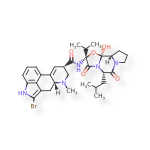
| Molecular Formula | C32H40BrN5O5.CH4O3S |
| Molecular Weight | 750.7 |
| Optical Activity | UNSPECIFIED |
| Defined Stereocenters | 6 / 6 |
| E/Z Centers | 0 |
| Charge | 0 |
SHOW SMILES / InChI
SMILES
CS(O)(=O)=O.CC(C)C[C@@H]1N2C(=O)[C@](NC(=O)[C@H]3CN(C)[C@@H]4CC5=C(Br)NC6=CC=CC(=C56)C4=C3)(O[C@@]2(O)[C@@H]7CCCN7C1=O)C(C)C
InChI
InChIKey=NOJMTMIRQRDZMT-GSPXQYRGSA-N
InChI=1S/C32H40BrN5O5.CH4O3S/c1-16(2)12-24-29(40)37-11-7-10-25(37)32(42)38(24)30(41)31(43-32,17(3)4)35-28(39)18-13-20-19-8-6-9-22-26(19)21(27(33)34-22)14-23(20)36(5)15-18;1-5(2,3)4/h6,8-9,13,16-18,23-25,34,42H,7,10-12,14-15H2,1-5H3,(H,35,39);1H3,(H,2,3,4)/t18-,23-,24+,25+,31-,32+;/m1./s1
| Molecular Formula | CH4O3S |
| Molecular Weight | 96.106 |
| Charge | 0 |
| Count |
|
| Stereochemistry | ACHIRAL |
| Additional Stereochemistry | No |
| Defined Stereocenters | 0 / 0 |
| E/Z Centers | 0 |
| Optical Activity | NONE |
| Molecular Formula | C32H40BrN5O5 |
| Molecular Weight | 654.594 |
| Charge | 0 |
| Count |
|
| Stereochemistry | ABSOLUTE |
| Additional Stereochemistry | No |
| Defined Stereocenters | 6 / 6 |
| E/Z Centers | 0 |
| Optical Activity | UNSPECIFIED |
DescriptionCurator's Comment: description was created based on several sources, including:
https://www.accessdata.fda.gov/drugsatfda_docs/label/2009/020866lbl.pdf | https://www.drugs.com/mtm/bromocriptine.html
Curator's Comment: description was created based on several sources, including:
https://www.accessdata.fda.gov/drugsatfda_docs/label/2009/020866lbl.pdf | https://www.drugs.com/mtm/bromocriptine.html
Bromocriptine is an ergot derivative with potent dopamine receptor agonist activity, which activates post-synaptic dopamine receptors. Bromocriptine is indicated for the treatment of dysfunctions associated with hyperprolactinemia. Bromocriptine therapy is indicated in the treatment of acromegaly and in the treatment of the signs and symptoms of idiopathic or postencephalitic Parkinson’s disease. It is approved as an adjunct to diet and exercise to improve glycemic control in adults with type 2 diabetes mellitus. Some commonly reported adverse reactions include nausea, fatigue, dizziness, vomiting and headache. Bromocriptine may interact with dopamine antagonists, butyrophenones and certain other agents.
Originator
Approval Year
Targets
| Primary Target | Pharmacology | Condition | Potency |
|---|---|---|---|
Target ID: CHEMBL217 |
36.0 nM [Ki] | ||
Target ID: CHEMBL234 |
197.0 nM [Ki] | ||
Target ID: CHEMBL2056 |
2.2 µM [Ki] | ||
Target ID: CHEMBL2093864 |
Conditions
| Condition | Modality | Targets | Highest Phase | Product |
|---|---|---|---|---|
| Palliative | PARLODEL Approved UseHyperprolactinemia-Associated Dysfunctions Bromocriptine mesylate tablets are indicated for the treatment of dysfunctions associated with hyperprolactinemia including amenorrhea with or without galactorrhea, infertility or hypogonadism. Bromocriptine mesylate tablets treatment is indicated in patients with prolactin-secreting adenomas, which may be the basic underlying endocrinopathy contributing to the above clinical presentations. Reduction in tumor size has been demonstrated in both male and female patients with macroadenomas. In cases where adenectomy is elected, a course of bromocriptine mesylate tablets therapy may be used to reduce the tumor mass prior to surgery. Acromegaly Bromocriptine mesylate tablets therapy is indicated in the treatment of acromegaly. Bromocriptine mesylate tablets therapy, alone or as adjunctive therapy with pituitary irradiation or surgery, reduces serum growth hormone by 50% or more in approximately ½ of patients treated, although not usually to normal levels. Since the effects of external pituitary radiation may not become maximal for several years, adjunctive therapy with bromocriptine mesylate tablets offers potential benefit before the effects of irradiation are manifested. Parkinson's Disease Bromocriptine mesylate tablets are indicated in the treatment of the signs and symptoms of idiopathic or postencephalitic Parkinson's disease. As adjunctive treatment to levodopa (alone or with a peripheral decarboxylase inhibitor), bromocriptine mesylate tablets therapy may provide additional therapeutic benefits in those patients who are currently maintained on optimal dosages of levodopa, those who are beginning to deteriorate (develop tolerance) to levodopa therapy, and those who are experiencing end of dose failure on levodopa therapy. Bromocriptine mesylate tablets therapy may permit a reduction of the maintenance dose of levodopa and, thus may ameliorate the occurrence and/or severity of adverse reactions associated with long-term levodopa therapy such as abnormal involuntary movements (e.g., dyskinesias) and the marked swings in motor function (on-off phenomenon). Continued efficacy of bromocriptine mesylate tablets therapy during treatment of more than 2 years has not been established. Data are insufficient to evaluate potential benefit from treating newly diagnosed Parkinson's disease with bromocriptine mesylate tablets. Studies have shown, however, significantly more adverse reactions (notably nausea, hallucinations, confusion and hypotension) in bromocriptine mesylate treated patients than in levodopa/carbidopa treated patients. Patients unresponsive to levodopa are poor candidates for bromocriptine mesylate tablets therapy. Launch Date1978 |
|||
| Primary | PARLODEL Approved UseHyperprolactinemia-Associated Dysfunctions Bromocriptine mesylate tablets are indicated for the treatment of dysfunctions associated with hyperprolactinemia including amenorrhea with or without galactorrhea, infertility or hypogonadism. Bromocriptine mesylate tablets treatment is indicated in patients with prolactin-secreting adenomas, which may be the basic underlying endocrinopathy contributing to the above clinical presentations. Reduction in tumor size has been demonstrated in both male and female patients with macroadenomas. In cases where adenectomy is elected, a course of bromocriptine mesylate tablets therapy may be used to reduce the tumor mass prior to surgery. Acromegaly Bromocriptine mesylate tablets therapy is indicated in the treatment of acromegaly. Bromocriptine mesylate tablets therapy, alone or as adjunctive therapy with pituitary irradiation or surgery, reduces serum growth hormone by 50% or more in approximately ½ of patients treated, although not usually to normal levels. Since the effects of external pituitary radiation may not become maximal for several years, adjunctive therapy with bromocriptine mesylate tablets offers potential benefit before the effects of irradiation are manifested. Parkinson's Disease Bromocriptine mesylate tablets are indicated in the treatment of the signs and symptoms of idiopathic or postencephalitic Parkinson's disease. As adjunctive treatment to levodopa (alone or with a peripheral decarboxylase inhibitor), bromocriptine mesylate tablets therapy may provide additional therapeutic benefits in those patients who are currently maintained on optimal dosages of levodopa, those who are beginning to deteriorate (develop tolerance) to levodopa therapy, and those who are experiencing end of dose failure on levodopa therapy. Bromocriptine mesylate tablets therapy may permit a reduction of the maintenance dose of levodopa and, thus may ameliorate the occurrence and/or severity of adverse reactions associated with long-term levodopa therapy such as abnormal involuntary movements (e.g., dyskinesias) and the marked swings in motor function (on-off phenomenon). Continued efficacy of bromocriptine mesylate tablets therapy during treatment of more than 2 years has not been established. Data are insufficient to evaluate potential benefit from treating newly diagnosed Parkinson's disease with bromocriptine mesylate tablets. Studies have shown, however, significantly more adverse reactions (notably nausea, hallucinations, confusion and hypotension) in bromocriptine mesylate treated patients than in levodopa/carbidopa treated patients. Patients unresponsive to levodopa are poor candidates for bromocriptine mesylate tablets therapy. Launch Date1978 |
|||
| Primary | PARLODEL Approved UseHyperprolactinemia-Associated Dysfunctions Bromocriptine mesylate tablets are indicated for the treatment of dysfunctions associated with hyperprolactinemia including amenorrhea with or without galactorrhea, infertility or hypogonadism. Bromocriptine mesylate tablets treatment is indicated in patients with prolactin-secreting adenomas, which may be the basic underlying endocrinopathy contributing to the above clinical presentations. Reduction in tumor size has been demonstrated in both male and female patients with macroadenomas. In cases where adenectomy is elected, a course of bromocriptine mesylate tablets therapy may be used to reduce the tumor mass prior to surgery. Acromegaly Bromocriptine mesylate tablets therapy is indicated in the treatment of acromegaly. Bromocriptine mesylate tablets therapy, alone or as adjunctive therapy with pituitary irradiation or surgery, reduces serum growth hormone by 50% or more in approximately ½ of patients treated, although not usually to normal levels. Since the effects of external pituitary radiation may not become maximal for several years, adjunctive therapy with bromocriptine mesylate tablets offers potential benefit before the effects of irradiation are manifested. Parkinson's Disease Bromocriptine mesylate tablets are indicated in the treatment of the signs and symptoms of idiopathic or postencephalitic Parkinson's disease. As adjunctive treatment to levodopa (alone or with a peripheral decarboxylase inhibitor), bromocriptine mesylate tablets therapy may provide additional therapeutic benefits in those patients who are currently maintained on optimal dosages of levodopa, those who are beginning to deteriorate (develop tolerance) to levodopa therapy, and those who are experiencing end of dose failure on levodopa therapy. Bromocriptine mesylate tablets therapy may permit a reduction of the maintenance dose of levodopa and, thus may ameliorate the occurrence and/or severity of adverse reactions associated with long-term levodopa therapy such as abnormal involuntary movements (e.g., dyskinesias) and the marked swings in motor function (on-off phenomenon). Continued efficacy of bromocriptine mesylate tablets therapy during treatment of more than 2 years has not been established. Data are insufficient to evaluate potential benefit from treating newly diagnosed Parkinson's disease with bromocriptine mesylate tablets. Studies have shown, however, significantly more adverse reactions (notably nausea, hallucinations, confusion and hypotension) in bromocriptine mesylate treated patients than in levodopa/carbidopa treated patients. Patients unresponsive to levodopa are poor candidates for bromocriptine mesylate tablets therapy. Launch Date1978 |
|||
| Primary | CYCLOSET Approved UseDrug is indicated as an adjunct to diet and exercise to improve glycemic control in adults with type 2 diabetes mellitus. Launch Date2009 |
Cmax
| Value | Dose | Co-administered | Analyte | Population |
|---|---|---|---|---|
628 pg/mL |
5 mg 1 times / day steady-state, oral dose: 5 mg route of administration: Oral experiment type: STEADY-STATE co-administered: |
BROMOCRIPTINE plasma | Homo sapiens population: UNHEALTHY age: ADULT sex: FEMALE / MALE food status: UNKNOWN |
AUC
| Value | Dose | Co-administered | Analyte | Population |
|---|---|---|---|---|
2377 pg × h/mL |
5 mg 1 times / day steady-state, oral dose: 5 mg route of administration: Oral experiment type: STEADY-STATE co-administered: |
BROMOCRIPTINE plasma | Homo sapiens population: UNHEALTHY age: ADULT sex: FEMALE / MALE food status: UNKNOWN |
T1/2
| Value | Dose | Co-administered | Analyte | Population |
|---|---|---|---|---|
4.85 h |
5 mg 1 times / day steady-state, oral dose: 5 mg route of administration: Oral experiment type: STEADY-STATE co-administered: |
BROMOCRIPTINE plasma | Homo sapiens population: UNHEALTHY age: ADULT sex: FEMALE / MALE food status: UNKNOWN |
Funbound
| Value | Dose | Co-administered | Analyte | Population |
|---|---|---|---|---|
4% |
5 mg 1 times / day steady-state, oral dose: 5 mg route of administration: Oral experiment type: STEADY-STATE co-administered: |
BROMOCRIPTINE plasma | Homo sapiens population: UNHEALTHY age: ADULT sex: FEMALE / MALE food status: UNKNOWN |
Doses
| Dose | Population | Adverse events |
|---|---|---|
4.8 mg 1 times / day multiple, oral Recommended Dose: 4.8 mg, 1 times / day Route: oral Route: multiple Dose: 4.8 mg, 1 times / day Sources: |
unhealthy, 27-80 Health Status: unhealthy Age Group: 27-80 Sex: M+F Sources: |
Disc. AE: Nausea... AEs leading to discontinuation/dose reduction: Nausea Sources: |
4.8 mg 1 times / day multiple, oral MTD Dose: 4.8 mg, 1 times / day Route: oral Route: multiple Dose: 4.8 mg, 1 times / day Sources: |
unhealthy, 55+/-1 |
Disc. AE: Nausea, Dizziness... AEs leading to discontinuation/dose reduction: Nausea (4%) Sources: Dizziness (2.8%) Asthenia (1.5%) Rhinitis (1.5%) |
4.8 mg 1 times / day multiple, oral MTD Dose: 4.8 mg, 1 times / day Route: oral Route: multiple Dose: 4.8 mg, 1 times / day Sources: |
unhealthy, 59.5 +/- 10.2 Health Status: unhealthy Age Group: 59.5 +/- 10.2 Sex: M+F Sources: |
Disc. AE: Nausea... AEs leading to discontinuation/dose reduction: Nausea Sources: |
100 mg 1 times / day multiple, oral Highest studied dose Dose: 100 mg, 1 times / day Route: oral Route: multiple Dose: 100 mg, 1 times / day Sources: |
unhealthy Health Status: unhealthy Sources: |
|
300 mg single, oral Highest studied dose |
unhealthy |
|
30 mg 1 times / day multiple, oral Recommended Dose: 30 mg, 1 times / day Route: oral Route: multiple Dose: 30 mg, 1 times / day Sources: |
unhealthy |
AEs
| AE | Significance | Dose | Population |
|---|---|---|---|
| Nausea | Disc. AE | 4.8 mg 1 times / day multiple, oral Recommended Dose: 4.8 mg, 1 times / day Route: oral Route: multiple Dose: 4.8 mg, 1 times / day Sources: |
unhealthy, 27-80 Health Status: unhealthy Age Group: 27-80 Sex: M+F Sources: |
| Asthenia | 1.5% Disc. AE |
4.8 mg 1 times / day multiple, oral MTD Dose: 4.8 mg, 1 times / day Route: oral Route: multiple Dose: 4.8 mg, 1 times / day Sources: |
unhealthy, 55+/-1 |
| Rhinitis | 1.5% Disc. AE |
4.8 mg 1 times / day multiple, oral MTD Dose: 4.8 mg, 1 times / day Route: oral Route: multiple Dose: 4.8 mg, 1 times / day Sources: |
unhealthy, 55+/-1 |
| Dizziness | 2.8% Disc. AE |
4.8 mg 1 times / day multiple, oral MTD Dose: 4.8 mg, 1 times / day Route: oral Route: multiple Dose: 4.8 mg, 1 times / day Sources: |
unhealthy, 55+/-1 |
| Nausea | 4% Disc. AE |
4.8 mg 1 times / day multiple, oral MTD Dose: 4.8 mg, 1 times / day Route: oral Route: multiple Dose: 4.8 mg, 1 times / day Sources: |
unhealthy, 55+/-1 |
| Nausea | Disc. AE | 4.8 mg 1 times / day multiple, oral MTD Dose: 4.8 mg, 1 times / day Route: oral Route: multiple Dose: 4.8 mg, 1 times / day Sources: |
unhealthy, 59.5 +/- 10.2 Health Status: unhealthy Age Group: 59.5 +/- 10.2 Sex: M+F Sources: |
Overview
| CYP3A4 | CYP2C9 | CYP2D6 | hERG |
|---|---|---|---|
OverviewOther
| Other Inhibitor | Other Substrate | Other Inducer |
|---|---|---|
Drug as perpetrator
| Target | Modality | Activity | Metabolite | Clinical evidence |
|---|---|---|---|---|
| yes [IC50 1.69 uM] | ||||
| yes [Ki 6.52 uM] | ||||
| yes |
Drug as victim
| Target | Modality | Activity | Metabolite | Clinical evidence |
|---|---|---|---|---|
| inconclusive | ||||
| likely | ||||
| likely | ||||
| likely | ||||
| yes | ||||
| yes | ||||
| yes | ||||
| yes | ||||
| yes |
PubMed
| Title | Date | PubMed |
|---|---|---|
| Differential signalling of both wild-type and Thr(343)Arg dopamine D(2short) receptor by partial agonists in a G-protein-dependent manner. | 2001-09-15 |
|
| Neuroendocrine effects of d-fenfluramine and bromocriptine following repeated smoked cocaine in humans. | 2001-09-01 |
|
| Dopamine D(2) receptor activation causes mitogenesis via p44/42 mitogen-activated protein kinase in opossum kidney cells. | 2001-09 |
|
| Prolactin actions in the sheep testis: a test of the priming hypothesis. | 2001-09 |
|
| Bromocriptine in rheumatic and autoimmune diseases. | 2001-08 |
|
| Effects of dopamine d2 receptor agonists in a pituitary transplantation-induced hyperprolactinaemia/anovulation model in rats. | 2001-08 |
|
| Luteolytic effect of prolactin is dependent on the degree of differentiation of luteal cells in the rat. | 2001-08 |
|
| Upregulation of lymphocyte apoptosis as a strategy for preventing and treating autoimmune disorders: a role for whole-food vegan diets, fish oil and dopamine agonists. | 2001-08 |
|
| [Cerebral meningeal hemorrhage and acute cerebral angiopathy associated with the taking of phenylpropanolamine: a new case]. | 2001-07-31 |
|
| Rehabilitative management of post-stroke visuospatial inattention. | 2001-07-10 |
|
| Androgen suppression and clinical improvement with dopamine agonists in hyperandrogenic-hyperprolactinemic women. | 2001-07 |
|
| Hepatic Encephalopathy. | 2001-07 |
|
| Centrally mediated effects of bromocriptine on cardiac sympathovagal balance. | 2001-07 |
|
| Functional characterization of basolateral and luminal dopamine receptors in rabbit CCD. | 2001-07 |
|
| Biphasic effects of 7-OH-DPAT on the acquisition of responding for conditioned reward in rats. | 2001-06-23 |
|
| Sleep attacks and antiparkinsonian drugs: a pilot prospective pharmacoepidemiologic study. | 2001-06-08 |
|
| Double-blind, crossover, placebo-controlled trial of bromocriptine in patients with sleep bruxism. | 2001-06-08 |
|
| Microvessel density in pituitary adenomas and carcinomas. | 2001-06 |
|
| Effect of serotonin depletion by p-chlorophenylalanine on serum prolactin levels in estrogen-treated ovariectomized rats: insights concerning the serotoninergic, dopaminergic and opioid systems. | 2001-06 |
|
| [Pharmacological effects of cabergoline against parkinsonism]. | 2001-06 |
|
| Pituitary prolactin-secreting macroadenoma combined with bilateral breast cancer in a 45-year-old male. | 2001-06 |
|
| Neuroleptic malignant syndrome during a change from haloperidol to risperidone. | 2001-06 |
|
| Estrogen, prolactin, and autoimmunity: actions and interactions. | 2001-06 |
|
| Cerebrospinal fluid fistula as the presenting manifestation of pituitary adenoma: case report with a 4-year follow-up. | 2001-06 |
|
| Laboratory and clinical experience in 55 patients with macroprolactinemia identified by a simple polyethylene glycol precipitation method. | 2001-06 |
|
| Study of the change of prolactin and progesterone during dopaminergic agonist treatments in pseudopregnant bitches. | 2001-05-31 |
|
| [Reversible blindness caused by an invasive prolactinoma]. | 2001-05-25 |
|
| Anxiolytic effects of aniracetam in three different mouse models of anxiety and the underlying mechanism. | 2001-05-18 |
|
| Fertile estrus induced in bitches by bromocryptine, a dopamine agonist: a clinical trial. | 2001-05-01 |
|
| [A-56-year-old woman with parkinsonism, whose mother had Parkinson's disease]. | 2001-05 |
|
| Central bromocriptine-induced tachycardia is reversed to bradycardia in conscious, deoxycorticosterone acetate-salt hypertensive rats. | 2001-05 |
|
| Clinical, endocrinological and radiography features in a child with McCune-Albright syndrome and pituitary adenoma. | 2001-05 |
|
| Long-term mortality results of the randomized controlled study comparing bromocriptine to which levodopa was later added with levodopa alone in previously untreated patients with Parkinson's disease. | 2001-05 |
|
| Pituitary tumours in adolescence: clinical behaviour and neuroimaging features of seven cases. | 2001-05 |
|
| Increased responsiveness to the hyperglycemic, hyperglucagonemic and hyperinsulinemic effects of circulating norepinephrine in ob/ob mice. | 2001-05 |
|
| Neostriatal muscarinic receptor subtypes involved in the generation of tremulous jaw movements in rodents implications for cholinergic involvement in parkinsonism. | 2001-04-27 |
|
| Polysomnographic measures in Parkinson's disease: a comparison between patients with and without REM sleep disturbances. | 2001-04-17 |
|
| Dopamine D2 receptor gene expression in human adenohypophysial adenomas. | 2001-04 |
|
| Cyclophosphamide plus somatostatin, bromocriptin, retinoids, melatonin and ACTH in the treatment of low-grade non-Hodgkin's lymphomas at advanced stage: results of a phase II trial. | 2001-04 |
|
| [Increased T1 signal of the residual normal anterior pituitary gland following medical treatment of pituitary prolactinoma]. | 2001-04 |
|
| The role of hypertension in bromocriptine-related puerperal intracranial hemorrhage. | 2001-04 |
|
| Alpha-dihydroergocryptine and predictive factors in migraine prophylaxis. | 2001-04 |
|
| Efficacy and tolerability of dopamine agonists in a parkinsonian population. | 2001-02 |
|
| Neuroleptic malignant syndrome without neuroleptics. | 2001-02 |
|
| Clinical management of neuroleptic malignant syndrome. | 2001 |
|
| Clinical features and medical treatment of male prolactinomas. | 2001 |
|
| Are dopamine receptor agonists neuroprotective in Parkinson's disease? | 2001 |
|
| Pregnancy in hyperprolactinemic infertile women treated with vaginal bromocriptine: report of two cases and review of the literature. | 2001 |
|
| Dopamine agonists. | 2001 |
|
| Efficacy of monochemotherapy with docetaxel (taxotere) in relation to prolactin secretion in heavily pretreated metastatic breast cancer. | 2001 |
Sample Use Guides
Type 2 diabetes mellitus: Initial dose is one tablet (0.8 mg) daily increased weekly by one tablet until maximal tolerated daily dose of 1.6 to 4.8 mg is achieved.
Hyperprolactinemic Indications: The initial dosage in adults is ½ to one 2½ mg scored tablet daily. An additional 2½ mg tablet may be added to the treatment regimen as tolerated every 2-7 days until an optimal therapeutic response is achieved. The therapeutic dosage ranged from 2.5-15 mg daily in adults studied clinically.
Parkinson’s Disease: The initial dose is ½ of a 2½ mg twice daily with meals. Assessments are advised at 2-week intervals during dosage titration to ensure that the lowest
dosage producing an optimal therapeutic response is not exceeded. If necessary, the dosage may be increased every 14-28 days by 2½ mg/day with meals.
Route of Administration:
Oral
Bromocriptine has been shown to augment glutamate uptake at a concentration of 10 uM in HeLaS3 cells that stably express EAAT1, the human homolog of GLAST. Therefore, it was evaluated whether bromocriptine affects D-[3 H]aspartate uptake in HEK293/EcR cells expressing EAAT2. However, bromocriptine failed to alter D-[3 H]aspartate uptake at concentrations as high as 30 uM, suggesting that bromocriptine has little or no effect on the excitatory amino acid uptake via EAAT2.
| Substance Class |
Chemical
Created
by
admin
on
Edited
Mon Mar 31 17:49:09 GMT 2025
by
admin
on
Mon Mar 31 17:49:09 GMT 2025
|
| Record UNII |
FFP983J3OD
|
| Record Status |
Validated (UNII)
|
| Record Version |
|
-
Download
| Name | Type | Language | ||
|---|---|---|---|---|
|
Preferred Name | English | ||
|
Official Name | English | ||
|
Common Name | English | ||
|
Common Name | English | ||
|
Common Name | English | ||
|
Brand Name | English | ||
|
Common Name | English | ||
|
Common Name | English | ||
|
Common Name | English | ||
|
Common Name | English | ||
|
Common Name | English | ||
|
Common Name | English | ||
|
Common Name | English | ||
|
Common Name | English | ||
|
Brand Name | English | ||
|
Common Name | English | ||
|
Common Name | English | ||
|
Code | English | ||
|
Common Name | English | ||
|
Code | English | ||
|
Code | English | ||
|
Common Name | English | ||
|
Common Name | English | ||
|
Common Name | English |
| Classification Tree | Code System | Code | ||
|---|---|---|---|---|
|
CFR |
21 CFR 216.24
Created by
admin on Mon Mar 31 17:49:09 GMT 2025 , Edited by admin on Mon Mar 31 17:49:09 GMT 2025
|
||
|
NCI_THESAURUS |
C66884
Created by
admin on Mon Mar 31 17:49:09 GMT 2025 , Edited by admin on Mon Mar 31 17:49:09 GMT 2025
|
||
|
NCI_THESAURUS |
C1509
Created by
admin on Mon Mar 31 17:49:09 GMT 2025 , Edited by admin on Mon Mar 31 17:49:09 GMT 2025
|
| Code System | Code | Type | Description | ||
|---|---|---|---|---|---|
|
100000090410
Created by
admin on Mon Mar 31 17:49:09 GMT 2025 , Edited by admin on Mon Mar 31 17:49:09 GMT 2025
|
PRIMARY | |||
|
244-881-1
Created by
admin on Mon Mar 31 17:49:09 GMT 2025 , Edited by admin on Mon Mar 31 17:49:09 GMT 2025
|
PRIMARY | |||
|
31100
Created by
admin on Mon Mar 31 17:49:09 GMT 2025 , Edited by admin on Mon Mar 31 17:49:09 GMT 2025
|
PRIMARY | |||
|
CHEMBL493
Created by
admin on Mon Mar 31 17:49:09 GMT 2025 , Edited by admin on Mon Mar 31 17:49:09 GMT 2025
|
PRIMARY | |||
|
3182
Created by
admin on Mon Mar 31 17:49:09 GMT 2025 , Edited by admin on Mon Mar 31 17:49:09 GMT 2025
|
PRIMARY | |||
|
SUB00878MIG
Created by
admin on Mon Mar 31 17:49:09 GMT 2025 , Edited by admin on Mon Mar 31 17:49:09 GMT 2025
|
PRIMARY | |||
|
DTXSID6020197
Created by
admin on Mon Mar 31 17:49:09 GMT 2025 , Edited by admin on Mon Mar 31 17:49:09 GMT 2025
|
PRIMARY | |||
|
755915
Created by
admin on Mon Mar 31 17:49:09 GMT 2025 , Edited by admin on Mon Mar 31 17:49:09 GMT 2025
|
PRIMARY | |||
|
FFP983J3OD
Created by
admin on Mon Mar 31 17:49:09 GMT 2025 , Edited by admin on Mon Mar 31 17:49:09 GMT 2025
|
PRIMARY | |||
|
22260-51-1
Created by
admin on Mon Mar 31 17:49:09 GMT 2025 , Edited by admin on Mon Mar 31 17:49:09 GMT 2025
|
PRIMARY | |||
|
m2694
Created by
admin on Mon Mar 31 17:49:09 GMT 2025 , Edited by admin on Mon Mar 31 17:49:09 GMT 2025
|
PRIMARY | Merck Index | ||
|
DBSALT001209
Created by
admin on Mon Mar 31 17:49:09 GMT 2025 , Edited by admin on Mon Mar 31 17:49:09 GMT 2025
|
PRIMARY | |||
|
C317
Created by
admin on Mon Mar 31 17:49:09 GMT 2025 , Edited by admin on Mon Mar 31 17:49:09 GMT 2025
|
PRIMARY | |||
|
142426
Created by
admin on Mon Mar 31 17:49:09 GMT 2025 , Edited by admin on Mon Mar 31 17:49:09 GMT 2025
|
PRIMARY | RxNorm | ||
|
FFP983J3OD
Created by
admin on Mon Mar 31 17:49:09 GMT 2025 , Edited by admin on Mon Mar 31 17:49:09 GMT 2025
|
PRIMARY | |||
|
1076501
Created by
admin on Mon Mar 31 17:49:09 GMT 2025 , Edited by admin on Mon Mar 31 17:49:09 GMT 2025
|
PRIMARY |
| Related Record | Type | Details | ||
|---|---|---|---|---|
|
|
PARENT -> SALT/SOLVATE |
| Related Record | Type | Details | ||
|---|---|---|---|---|
|
|
ACTIVE MOIETY |