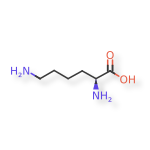
Details
| Stereochemistry | ABSOLUTE |
| Molecular Formula | C6H14N2O2.CH2O3 |
| Molecular Weight | 208.2123 |
| Optical Activity | UNSPECIFIED |
| Defined Stereocenters | 1 / 1 |
| E/Z Centers | 0 |
| Charge | 0 |
SHOW SMILES / InChI
SMILES
OC(O)=O.NCCCC[C@H](N)C(O)=O
InChI
InChIKey=OCHFNTLZOZPXFE-JEDNCBNOSA-N
InChI=1S/C6H14N2O2.CH2O3/c7-4-2-1-3-5(8)6(9)10;2-1(3)4/h5H,1-4,7-8H2,(H,9,10);(H2,2,3,4)/t5-;/m0./s1
| Molecular Formula | C6H14N2O2 |
| Molecular Weight | 146.1876 |
| Charge | 0 |
| Count |
|
| Stereochemistry | ABSOLUTE |
| Additional Stereochemistry | No |
| Defined Stereocenters | 1 / 1 |
| E/Z Centers | 0 |
| Optical Activity | UNSPECIFIED |
| Molecular Formula | CH2O3 |
| Molecular Weight | 62.0248 |
| Charge | 0 |
| Count |
|
| Stereochemistry | ACHIRAL |
| Additional Stereochemistry | No |
| Defined Stereocenters | 0 / 0 |
| E/Z Centers | 0 |
| Optical Activity | NONE |
DescriptionCurator's Comment: description was created based on several sources, including
https://www.drugs.com/npp/lysine.html | https://www.ncbi.nlm.nih.gov/pubmed/26252373
Curator's Comment: description was created based on several sources, including
https://www.drugs.com/npp/lysine.html | https://www.ncbi.nlm.nih.gov/pubmed/26252373
Lysing is an essential basic amino-acid encoded by codone AAA and AAG, and used in the biosynthesis of proteins. The daily requirement for lysine is 38 mg/kg body weight. The most rich source of lysine is fish, beef, chicken. In a clinical study lysine supplements was found to be an effective for reduction of occurrence, severity and healing time for recurrent HSV infection, however Cochrane Review concluded that the evidence is insufficient. Lysine was investigated for improving anxiety, ameliorating angina prectoris. Lysine acetylsalicylate has been used to treat pain and to detoxify the body after heroin use. Lysine clonixinate has been used for its analgesic properties for the treatment of migraine headaches and other painful conditions. However, limited clinical trials exist for these conditions.
CNS Activity
Approval Year
Targets
| Primary Target | Pharmacology | Condition | Potency |
|---|---|---|---|
Target ID: CHEMBL1875 |
|||
Target ID: CHEMBL2093872 |
Conditions
| Condition | Modality | Targets | Highest Phase | Product |
|---|---|---|---|---|
| Primary | L-LYSINE MONOHYDRATE Approved UseLysine has been studied for the prevention and treatment of herpes infections and cold sores. |
|||
| Primary | L-LYSINE MONOHYDRATE Approved UseLysine supplements may relieve effort-related angina pectoris. |
|||
| Primary | L-LYSINE MONOHYDRATE Approved UseLysine increases the intestinal absorption and reduces the renal elimination of calcium. |
|||
| Primary | L-LYSINE MONOHYDRATE Approved UseLysine is believed to exert anxiolytic effects by acting as a partial serotonin receptor 4 antagonist and as a partial benzodiazepine agonist |
|||
| Palliative | L-LYSINE MONOHYDRATE Approved UseLysine acetylsalicylate has been used to detoxify the body after heroin use. |
|||
| Primary | NEOPROFEN Approved UseNeoProfen is indicated to close a clinically significant patent ductus arteriosus (PDA) in premature infants weighing between 500 and 1500 g, who are no more than 32 weeks gestational age when usual medical management (e.g., fluid restriction, diuretics, respiratory support, etc.) is ineffective. The clinical trial was conducted among infants with an asymptomatic PDA. However, the consequences beyond 8 weeks after treatment have not been evaluated; therefore, treatment should be reserved for infants with clear evidence of a clinically significant PDA. Launch Date2006 |
PubMed
| Title | Date | PubMed |
|---|---|---|
| The function of interdomain interactions in controlling nucleotide exchange rates in transducin. | 2001-06-29 |
|
| Endogenous formation of protein adducts with carcinogenic aldehydes: implications for oxidative stress. | 2001-06-29 |
|
| Chemical and biological evaluation of endotoxin contamination on natural rubber latex products. | 2001-06-05 |
|
| CYP2A6*6, a novel polymorphism in cytochrome p450 2A6, has a single amino acid substitution (R128Q) that inactivates enzymatic activity. | 2001-05-25 |
|
| Isolation and characterization of senescence-induced cDNAs encoding deoxyhypusine synthase and eucaryotic translation initiation factor 5A from tomato. | 2001-05-18 |
|
| Human corneal GlcNac 6-O-sulfotransferase and mouse intestinal GlcNac 6-O-sulfotransferase both produce keratan sulfate. | 2001-05-11 |
|
| Inhibition of cytosolic phospholipase A2 by annexin I. Specific interaction model and mapping of the interaction site. | 2001-05-11 |
|
| The heme-regulated eukaryotic initiation factor 2alpha kinase. A potential regulatory target for control of protein synthesis by diffusible gases. | 2001-05-04 |
|
| Evidence that the peptidylprolyl isomerase domain of the hsp90-binding immunophilin FKBP52 is involved in both dynein interaction and glucocorticoid receptor movement to the nucleus. | 2001-05-04 |
|
| Influence of crystal shape on the tableting performance of L-lysine monohydrochloride dihydrate. | 2001-05 |
|
| Peflin and ALG-2, members of the penta-EF-hand protein family, form a heterodimer that dissociates in a Ca2+-dependent manner. | 2001-04-27 |
|
| Ethanol production from wheat straw hemicellulose hydrolysate by Pichia stipitis. | 2001-04-27 |
|
| Properties of microtubules assembled from mammalian tubulin synthesized in Escherichia coli. | 2001-04-17 |
|
| The number of morphological synapses between neurons does not predict the strength of their physiological synaptic interactions: a study of dendrites in the nematode Ascaris suum. | 2001-04-16 |
|
| Effect of the degree of fatty acid unsaturation of rat heart mitochondria on their rates of H2O2 production and lipid and protein oxidative damage. | 2001-04-15 |
|
| Efficient preparation of natural and synthetic galactosides with a recombinant beta-1,4-galactosyltransferase-/UDP-4'-gal epimerase fusion protein. | 2001-04-06 |
|
| Identification of the alpha-aminoadipic semialdehyde dehydrogenase-phosphopantetheinyl transferase gene, the human ortholog of the yeast LYS5 gene. | 2001-04 |
|
| A systematic approach to the analysis of protein phosphorylation. | 2001-04 |
|
| Differences in sialic acid density in pathogenic and non-pathogenic Aspergillus species. | 2001-04 |
|
| Formation of 1,1'-iminodicarboxylic acid derivatives, 2,6-diketo-piperazine and dibenzodiazocine-2,6-dione by variations of multicomponent reactions. | 2001-04 |
|
| The fermentative production of L-lysine as an animal feed additive. | 2001-04 |
|
| Translational extracts active biologically in vitro obtained from eukaryotic monolayer cells: a versatile method for viral RNA studies. | 2001-04 |
|
| A simple method for midkine purification by affinity chromatography with a heavy chain variable domain (VH) fragment of antibody. | 2001-03-28 |
|
| Clinical studies of human papilloma vaccines in pre-invasive and invasive cancer. | 2001-03-21 |
|
| High pressure increases bactericidal activity and spectrum of lactoferrin, lactoferricin and nisin. | 2001-03-20 |
|
| Enhancement of tumor lysate- and peptide-pulsed dendritic cell-based vaccines by the addition of foreign helper protein. | 2001-03-15 |
|
| Induction and clonal expansion of tumor-specific cytotoxic T lymphocytes from renal cell carcinoma patients after stimulation with autologous dendritic cells loaded with tumor cells. | 2001-03-15 |
|
| Effects of initial particle size on the tableting properties of L-lysine monohydrochloride dihydrate powder. | 2001-03-14 |
|
| Characterization of mouse brain-specific angiogenesis inhibitor 1 (BAI1) and phytanoyl-CoA alpha-hydroxylase-associated protein 1, a novel BAI1-binding protein. | 2001-03-05 |
|
| Investigating the surface expression of the renal type IIa Na+/Pi-cotransporter in Xenopus laevis oocytes. | 2001-03-01 |
|
| T cell-dependent antitumor immunity mediated by secondary lymphoid tissue chemokine: augmentation of dendritic cell-based immunotherapy. | 2001-03-01 |
|
| XIAP regulates Akt activity and caspase-3-dependent cleavage during cisplatin-induced apoptosis in human ovarian epithelial cancer cells. | 2001-03-01 |
|
| Characterisation of L-tryptophan transporters in human placenta: a comparison of brush border and basal membrane vesicles. | 2001-03-01 |
|
| Quantitative analysis of specific mRNA species in minute cell samples by RT-PCR and flow cytometry. | 2001-03-01 |
|
| Enhancement of antitumor immune response in glioma models in mice by genetically modified dendritic cells pulsed with Semliki forest virus-mediated complementary DNA. | 2001-03 |
|
| Mechanisms of photoreceptor cell death in cancer-associated retinopathy. | 2001-03 |
|
| Biochemical and functional characterization of a molecule expressed by a subset of thymic medullary epithelial cells. | 2001-02 |
|
| Isolation of the Escherichia coli nucleoid. | 2001-02 |
|
| Detection of early gene expression changes during activation of human primary lymphocytes by in vitro synthesis of proteins from polysome-associated mRNAs. | 2001-02 |
|
| The effect of protease inhibitors on the two-dimensional electrophoresis pattern of red blood cell membranes. | 2001-02 |
|
| In vivo distribution and speciation of [114mIn]InCl3 in the Wistar rat. | 2001-02 |
|
| L-lysine reduces nonenzymatic glycation of glomerular basement membrane collagen and albuminuria in diabetic rats. | 2001-02 |
|
| Endotoxin, endotoxin-neutralizing-capacity, sCD14, sICAM-1, and cytokines in patients with various degrees of alcoholic liver disease. | 2001-02 |
|
| Hydrolysed protein accelerates the gastrointestinal transport of formula in preterm infants. | 2001-02 |
|
| Uptake and accumulation of exogenous docosahexaenoic acid by Chlorella. | 2001-01 |
|
| Endotoxemia and acute-phase proteins in major abdominal surgery. | 2001-01 |
|
| Influence of lysates of the salivary glands of Lutzomyia longipalpis on the development of a Leishmania-major-like parasite in the skin of the golden hamster. | 2001-01 |
|
| ESR detection of intraphagosomal superoxide in polymorphonuclear leukocytes using 5-(diethoxyphosphoryl)-5-methyl-l-pyrroline-N-oxide. | 2001-01 |
|
| Antibodies to SOX13 (ICA12) are associated with type 1 diabetes. | 2001 |
|
| The antioxidant system beta-D(+) glucose-glucose oxidase-catalase: tests for pyrogenicity and antigenicity. | 2001 |
Sample Use Guides
Lysin is an essential amino-acid. The daily requirement for lysine is 38 mg/kg body weight. The most rich source of lysine is fish, beef, chicken.
Route of Administration:
Oral
In the in vitro study of herpes simplex virus (HSV) growth in tissue culture, arginine deficiency suppressed HSV growth. Maximum herpes growth (as measured by plaques counting) was observed in flasks, containing 10-20 ug/ml of arginine. The addition of 50 ug/ml of lysine to the flasks containing 2.5 and 5.0 ug/ml of arginine reduced the number of viable plaque-forming units (PFU) from 3300 and 48800 to less than 10.
| Substance Class |
Chemical
Created
by
admin
on
Edited
Mon Mar 31 17:56:17 GMT 2025
by
admin
on
Mon Mar 31 17:56:17 GMT 2025
|
| Record UNII |
QPG0PZ2GXY
|
| Record Status |
Validated (UNII)
|
| Record Version |
|
-
Download
| Name | Type | Language | ||
|---|---|---|---|---|
|
Systematic Name | English | ||
|
Preferred Name | English |
| Code System | Code | Type | Description | ||
|---|---|---|---|---|---|
|
28231-58-5
Created by
admin on Mon Mar 31 17:56:17 GMT 2025 , Edited by admin on Mon Mar 31 17:56:17 GMT 2025
|
PRIMARY | |||
|
QPG0PZ2GXY
Created by
admin on Mon Mar 31 17:56:17 GMT 2025 , Edited by admin on Mon Mar 31 17:56:17 GMT 2025
|
PRIMARY | |||
|
936843-38-8
Created by
admin on Mon Mar 31 17:56:17 GMT 2025 , Edited by admin on Mon Mar 31 17:56:17 GMT 2025
|
NON-SPECIFIC STEREOCHEMISTRY | |||
|
75124169
Created by
admin on Mon Mar 31 17:56:17 GMT 2025 , Edited by admin on Mon Mar 31 17:56:17 GMT 2025
|
PRIMARY | |||
|
248-918-2
Created by
admin on Mon Mar 31 17:56:17 GMT 2025 , Edited by admin on Mon Mar 31 17:56:17 GMT 2025
|
PRIMARY |
| Related Record | Type | Details | ||
|---|---|---|---|---|
|
PARENT -> SALT/SOLVATE |