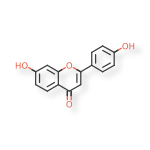
Details
| Stereochemistry | ABSOLUTE |
| Molecular Formula | C15H12O4 |
| Molecular Weight | 256.2534 |
| Optical Activity | UNSPECIFIED |
| Defined Stereocenters | 1 / 1 |
| E/Z Centers | 0 |
| Charge | 0 |
SHOW SMILES / InChI
SMILES
OC1=CC=C(C=C1)[C@@H]2CC(=O)C3=C(O2)C=C(O)C=C3
InChI
InChIKey=FURUXTVZLHCCNA-AWEZNQCLSA-N
InChI=1S/C15H12O4/c16-10-3-1-9(2-4-10)14-8-13(18)12-6-5-11(17)7-15(12)19-14/h1-7,14,16-17H,8H2/t14-/m0/s1
| Molecular Formula | C15H12O4 |
| Molecular Weight | 256.2534 |
| Charge | 0 |
| Count |
|
| Stereochemistry | ABSOLUTE |
| Additional Stereochemistry | No |
| Defined Stereocenters | 1 / 1 |
| E/Z Centers | 0 |
| Optical Activity | UNSPECIFIED |
DescriptionCurator's Comment: Description was created using several sources including: https://www.ncbi.nlm.nih.gov/pubmed/18669586 | https://www.ncbi.nlm.nih.gov/pubmed/11501051 | https://www.ncbi.nlm.nih.gov/pubmed/24738081
Curator's Comment: Description was created using several sources including: https://www.ncbi.nlm.nih.gov/pubmed/18669586 | https://www.ncbi.nlm.nih.gov/pubmed/11501051 | https://www.ncbi.nlm.nih.gov/pubmed/24738081
Liquiritigenin is a plant-derived flavonoid isolated from the roots of plants belonging to licorice species (Glycyrrhiza uralensis, Glycyrrhiza glabra, Glycyrrhiza inflate etc) and is available in common foods and alternative medicine. Liquiritigenin is one of the major active compounds of MF101, selective ER-beta agonist herbal extract of 22 botanical ingredients originally tested for reducing the frequency and severity of menopausal hot flashes. At sufficient concentrations, liquiritigenin is also a partial agonist of ER-alpha but has a 20-fold higher affinity for ER-beta than for ER-alpha. Several studies showed that liquiritigenin exerts cytoprotective effects against heavy metal-induced toxicity in cultured hepatocytes, has protective effects against liver injuries induced by acetaminophen and buthione sulfoximine in rats and has an anti-inflammatory effect in macrophages suggesting its potential therapeutic use for liver diseases. Liquiritigenin inhibits the activity of MAO A and B in rat brain mitochondria and displayed favorable properties as a specific transient receptor potential melastatin 3 (TRPM3) blocker. Anti-hepatocellular carcinoma effects of liquiritigenin are related to its modulation of the activations of mitogen-activated protein kinase (MAPKs) and was discovered, that this compound is a potential therapeutic agent for hepatocellular carcinoma treatment.
CNS Activity
Sources: https://www.ncbi.nlm.nih.gov/pubmed/27113683 | https://www.ncbi.nlm.nih.gov/pubmed/27107388
Curator's Comment: Known to be CNS penetrant in mouse; rats. Human data not available
https://www.ncbi.nlm.nih.gov/pubmed/25815607
Approval Year
PubMed
| Title | Date | PubMed |
|---|---|---|
| Induction of NAD(P)H:Quinone Oxidoreductase 1 (NQO1) by Glycyrrhiza Species Used for Women's Health: Differential Effects of the Michael Acceptors Isoliquiritigenin and Licochalcone A. | 2015-11-16 |
|
| Selectivity of natural, synthetic and environmental estrogens for zebrafish estrogen receptors. | 2014-10-01 |
|
| Anti-hepatitis C virus compounds obtained from Glycyrrhiza uralensis and other Glycyrrhiza species. | 2014-03 |
|
| Antispasmodic effect of shakuyakukanzoto extract on experimental muscle cramps in vivo: role of the active constituents of Glycyrrhizae radix. | 2013-01-09 |
|
| Estradiol antagonism of glucocorticoid-induced GILZ expression in human uterine epithelial cells and murine uterus. | 2013-01 |
|
| Whole genome co-expression analysis of soybean cytochrome P450 genes identifies nodulation-specific P450 monooxygenases. | 2010-11-09 |
|
| Liquiritigenin pharmacokinetics in a rat model of diabetes mellitus induced by streptozotocin: greater formation of glucuronides in the liver, especially M2, due to increased hepatic uridine 5'-diphosphoglucuronic acid level. | 2010-10 |
|
| Promotion of rat brain-derived progenitor cell neurogenesis by liquiritigenin treatment: underlying mechanisms. | 2010-09-13 |
|
| [On-line sample stacking for the analysis of glycyrrhiza flavonoids by anion selective exhaustive injection-sweeping micellar electrokinetic chromatography]. | 2010-09 |
|
| Fuscacarpans A-C, new pterocarpans from the stems of Erythrina fusca. | 2010-09 |
|
| [Studies on changes of in vitro and in vivo material base of Shaoyao Gancao decoction based on HPLC-DAD-ESI-MS]. | 2010-08 |
|
| Liquiritigenin derivatives and their hepatotoprotective activity. | 2010-08 |
|
| Soybean metabolites regulated in root hairs in response to the symbiotic bacterium Bradyrhizobium japonicum. | 2010-08 |
|
| Synthesis and antitumor activity of liquiritigenin thiosemicarbazone derivatives. | 2010-08 |
|
| Effects of liquiritigenin treatment on the learning and memory deficits induced by amyloid beta-peptide (25-35) in rats. | 2010-06-26 |
|
| Intricate environment-modulated genetic networks control isoflavone accumulation in soybean seeds. | 2010-06-11 |
|
| [Studies on the flavonoids from Lignum Dalbergiae Odoriferae (II)]. | 2010-06 |
|
| Pharmacokinetics of liquiritigenin and its two glucuronides, M1 and M2, in rats with acute hepatitis induced by d-galactosamine/lipopolysaccharide or CCl(4). | 2010-06 |
|
| Inhibition of hepatoma 22 tumor by Liquiritigenin. | 2010-06 |
|
| Determination of flavonoids in licorice using acid hydrolysis and reversed-phase HPLC and evaluation of the chemical quality of cultivated licorice. | 2010-05 |
|
| Flavone synthase II (CYP93B16) from soybean (Glycine max L.). | 2010-04 |
|
| Identification and characterisation of CYP75A31, a new flavonoid 3'5'-hydroxylase, isolated from Solanum lycopersicum. | 2010-02-03 |
|
| Pharmacokinetic interaction between liquiritigenin (LQ) and DDB: increased glucuronidation of LQ in the liver possibly due to increased hepatic blood flow rate by DDB. | 2010-01-31 |
|
| Aldose reductase inhibitory compounds from Glycyrrhiza uralensis. | 2010 |
|
| Pharmacokinetics of liquiritigenin in mice, rats, rabbits, and dogs, and animal scale-up. | 2009-11 |
|
| Simultaneous determination of five flavonoids in licorice using pressurized liquid extraction and capillary electrochromatography coupled with peak suppression diode array detection. | 2009-10-23 |
|
| Separation, characterization and dose-effect relationship of the PPARgamma-activating bio-active constituents in the Chinese herb formulation 'San-Ao decoction'. | 2009-10-09 |
|
| Drug and cell type-specific regulation of genes with different classes of estrogen receptor beta-selective agonists. | 2009-07-17 |
|
| Ethyl acetate extracts of alfalfa (Medicago sativa L.) sprouts inhibit lipopolysaccharide-induced inflammation in vitro and in vivo. | 2009-07-14 |
|
| Liquiritigenin inhibits Abeta(25-35)-induced neurotoxicity and secretion of Abeta(1-40) in rat hippocampal neurons. | 2009-07 |
|
| Pharmacokinetics and first-pass effects of liquiritigenin in rats: low bioavailability is primarily due to extensive gastrointestinal first-pass effect. | 2009-06 |
|
| Phytochemical analysis of young fustic (Cotinus coggygria heartwood) and identification of isolated colourants in historical textiles. | 2009-06 |
|
| Oral Administration of Ren-Shen-Yang-Rong-Tang 'Ninjin'yoeito' Protects Against Hematotoxicity and Induces Immature Erythroid Progenitor Cells in 5-Fluorouracil-induced Anemia. | 2009-06 |
|
| Hepatoprotective Activity of Licorice Water Extract against Cadmium-induced Toxicity in Rats. | 2009-06 |
|
| Liquiritigenin, a licorice flavonoid, helps mice resist disseminated candidiasis due to Candida albicans by Th1 immune response, whereas liquiritin, its glycoside form, does not. | 2009-05 |
|
| Effect of liquiritigenin, a flavanone existed from Radix glycyrrhizae on pro-apoptotic in SMMC-7721 cells. | 2009-04 |
|
| Survey of Glycyrrhizae Radix resources in Mongolia: chemical assessment of the underground part of Glycyrrhiza uralensis and comparison with Chinese Glycyrrhizea Radix. | 2009-04 |
|
| Licorice flavonoids inhibit eotaxin-1 secretion by human fetal lung fibroblasts in vitro. | 2009-02-11 |
|
| Liquiritigenin, a flavonoid aglycone from licorice, has a choleretic effect and the ability to induce hepatic transporters and phase-II enzymes. | 2009-02 |
|
| Brazilian red propolis--chemical composition and botanical origin. | 2008-12 |
|
| Oxidative in vitro metabolism of liquiritigenin, a bioactive compound isolated from the Chinese herbal selective estrogen beta-receptor agonist MF101. | 2008-11 |
|
| Biotransformation of the chemopreventive agent 2',4',4-trihydroxychalcone (isoliquiritigenin) by UDP-glucuronosyltransferases. | 2008-10 |
|
| Screening of herbal constituents for aromatase inhibitory activity. | 2008-09-15 |
|
| Transport and metabolism of flavonoids from Chinese herbal remedy Xiaochaihu- tang across human intestinal Caco-2 cell monolayers. | 2008-09 |
|
| Isoliquiritigenin suppresses cocaine-induced extracellular dopamine release in rat brain through GABA(B) receptor. | 2008-06-10 |
|
| Cytoprotective Activity of Glycyrrhizae radix Extract Against Arsenite-induced Cytotoxicity. | 2008-06 |
|
| In vitro antimalarial activity of prenylated flavonoids from Erythrina fusca. | 2008-04 |
|
| Anti-cancer effects of xanthones from pericarps of mangosteen. | 2008-03 |
|
| Indian herbs and herbal drugs used for the treatment of diabetes. | 2007-05 |
|
| Saikokeishito Extract Exerts a Therapeutic Effect on alpha-Naphthylisothiocyanate-Induced Liver Injury in Rats through Attenuation of Enhanced Neutrophil Infiltration and Oxidative Stress in the Liver Tissue. | 2007-01 |
Patents
Sample Use Guides
4.5 g/day (dry weight of extract) of MF101 (Liquiritigeni is one of the major active compounds of MF101), 9.0 g/day (dry weight of extract) of MF101 for 12 weeks in healthy postmenopausal women experiencing at least 5 hot flashes per day or 35 hot flashes per week.
Route of Administration:
Oral
Liquiritigenin was added in final concentrations of 10*(−11) –10*(−5) M every 48–120 hours to human breast cancer cell lines HCC1806 and HCC1937. Proliferation was determined by a colorimetric assay. Changes in viability were used as marker for proliferation. Treatment with liquiritigenin reduced the ability to invade a reconstituted basement membrane and to migrate in response to the cellular stimulus also treatment with liquiritigenin resulted in a significant decrease of CXCR4 protein expression
| Substance Class |
Chemical
Created
by
admin
on
Edited
Mon Mar 31 18:59:05 GMT 2025
by
admin
on
Mon Mar 31 18:59:05 GMT 2025
|
| Record UNII |
T194LKP9W6
|
| Record Status |
Validated (UNII)
|
| Record Version |
|
-
Download
| Name | Type | Language | ||
|---|---|---|---|---|
|
Preferred Name | English | ||
|
Official Name | English | ||
|
Systematic Name | English | ||
|
Systematic Name | English | ||
|
Systematic Name | English | ||
|
Common Name | English | ||
|
Systematic Name | English | ||
|
Systematic Name | English | ||
|
Systematic Name | English |
| Code System | Code | Type | Description | ||
|---|---|---|---|---|---|
|
136678
Created by
admin on Mon Mar 31 18:59:05 GMT 2025 , Edited by admin on Mon Mar 31 18:59:05 GMT 2025
|
PRIMARY | |||
|
578-86-9
Created by
admin on Mon Mar 31 18:59:05 GMT 2025 , Edited by admin on Mon Mar 31 18:59:05 GMT 2025
|
PRIMARY | |||
|
DTXSID90206493
Created by
admin on Mon Mar 31 18:59:05 GMT 2025 , Edited by admin on Mon Mar 31 18:59:05 GMT 2025
|
PRIMARY | |||
|
28777
Created by
admin on Mon Mar 31 18:59:05 GMT 2025 , Edited by admin on Mon Mar 31 18:59:05 GMT 2025
|
PRIMARY | |||
|
300000051223
Created by
admin on Mon Mar 31 18:59:05 GMT 2025 , Edited by admin on Mon Mar 31 18:59:05 GMT 2025
|
PRIMARY | |||
|
T194LKP9W6
Created by
admin on Mon Mar 31 18:59:05 GMT 2025 , Edited by admin on Mon Mar 31 18:59:05 GMT 2025
|
PRIMARY | |||
|
114829
Created by
admin on Mon Mar 31 18:59:05 GMT 2025 , Edited by admin on Mon Mar 31 18:59:05 GMT 2025
|
PRIMARY | |||
|
LIQUIRITIGENIN
Created by
admin on Mon Mar 31 18:59:05 GMT 2025 , Edited by admin on Mon Mar 31 18:59:05 GMT 2025
|
PRIMARY |
| Related Record | Type | Details | ||
|---|---|---|---|---|
|
METABOLIC ENZYME -> SUBSTRATE |
MAJOR
|
||
|
PARENT -> CONSTITUENT ALWAYS PRESENT |
LIQUIRITIGENIN was tested for antithrombotic activity.
|
||
|
PARENT -> CONSTITUENT ALWAYS PRESENT |
LIQUIRITIGENIN was tested for antimicrobial activity against methicillin sensitive Staphylococcus aureus, methicillin resistant S. aureus, Micrococcus luteus, Bacillus subtilis, Escherichia coli, Klebsiella pneumoniae and Pseudomonas aeruginosa and found to be inactive.
|
||
|
METABOLIC ENZYME -> SUBSTRATE |
MAJOR
|
||
|
PARENT -> CONSTITUENT ALWAYS PRESENT | |||
|
|
PARENT -> CONSTITUENT ALWAYS PRESENT | |||
|
PARENT -> CONSTITUENT ALWAYS PRESENT |
Anti-HCV activity was found to be 16.4 ug/mL.
|


| Related Record | Type | Details | ||
|---|---|---|---|---|
|
METABOLITE -> PARENT |