


Details
| Stereochemistry | ACHIRAL |
| Molecular Formula | 2C10H10ClO3.Ca |
| Molecular Weight | 467.353 |
| Optical Activity | NONE |
| Defined Stereocenters | 0 / 0 |
| E/Z Centers | 0 |
| Charge | 0 |
SHOW SMILES / InChI
SMILES
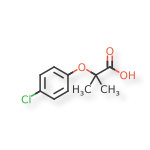
[Ca++].CC(C)(OC1=CC=C(Cl)C=C1)C([O-])=O.CC(C)(OC2=CC=C(Cl)C=C2)C([O-])=O
InChI
InChIKey=IXCILCKRXAZYGP-UHFFFAOYSA-L
InChI=1S/2C10H11ClO3.Ca/c2*1-10(2,9(12)13)14-8-5-3-7(11)4-6-8;/h2*3-6H,1-2H3,(H,12,13);/q;;+2/p-2
| Molecular Formula | C10H10ClO3 |
| Molecular Weight | 213.638 |
| Charge | -1 |
| Count |
|
| Stereochemistry | ACHIRAL |
| Additional Stereochemistry | No |
| Defined Stereocenters | 0 / 0 |
| E/Z Centers | 0 |
| Optical Activity | NONE |
| Molecular Formula | Ca |
| Molecular Weight | 40.078 |
| Charge | 2 |
| Count |
|
| Stereochemistry | ACHIRAL |
| Additional Stereochemistry | No |
| Defined Stereocenters | 0 / 0 |
| E/Z Centers | 0 |
| Optical Activity | NONE |
Clofibrate is a fibric acid derivative used to lower cholesterol and triglyceride (fat-like substances) levels in the blood. This may help prevent medical problems caused by such substances clogging the blood vessels. However, this treatment was discontinued in 2002 due to adverse effects. Clofibrate is an agonist of the PPAR-α receptor in muscle, liver, and other tissues. This agonism ultimately leads to modification in gene expression resulting in increased beta-oxidation, decreased triglyceride secretion, increased HDL, and increased lipoprotein lipase activity. Clofibrate increased the activity of extrahepatic lipoprotein lipase (LL), thereby increasing lipoprotein triglyceride lipolysis, inhibited the synthesis, and increases the clearance of apolipoprotein B, a carrier molecule for VLDL. In addition, clofibrate was investigated as a novel therapy agent in multiple myeloma and it shown the promising results.
Approval Year
Targets
| Primary Target | Pharmacology | Condition | Potency |
|---|---|---|---|
Target ID: CHEMBL239 |
50.0 µM [EC50] | ||
Target ID: Q7RTX0 Gene ID: 83756.0 Gene Symbol: TAS1R3 Target Organism: Homo sapiens (Human) |
28.0 µM [IC50] | ||
Target ID: CHEMBL239 |
Conditions
| Condition | Modality | Targets | Highest Phase | Product |
|---|---|---|---|---|
| Primary | ATROMID-S Approved UseUnknown Launch Date1967 |
|||
| Primary | Unknown Approved UseUnknown |
Cmax
| Value | Dose | Co-administered | Analyte | Population |
|---|---|---|---|---|
216 μg/mL EXPERIMENT https://pubmed.ncbi.nlm.nih.gov/7550835/ |
100 mg/kg single, oral dose: 100 mg/kg route of administration: Oral experiment type: SINGLE co-administered: |
CLOFIBRIC ACID plasma | Homo sapiens population: UNHEALTHY age: NEWBORN sex: FEMALE / MALE food status: UNKNOWN |
AUC
| Value | Dose | Co-administered | Analyte | Population |
|---|---|---|---|---|
30649 μg × h/mL EXPERIMENT https://pubmed.ncbi.nlm.nih.gov/7550835/ |
100 mg/kg single, oral dose: 100 mg/kg route of administration: Oral experiment type: SINGLE co-administered: |
CLOFIBRIC ACID plasma | Homo sapiens population: UNHEALTHY age: NEWBORN sex: FEMALE / MALE food status: UNKNOWN |
T1/2
| Value | Dose | Co-administered | Analyte | Population |
|---|---|---|---|---|
103.1 h EXPERIMENT https://pubmed.ncbi.nlm.nih.gov/7550835/ |
100 mg/kg single, oral dose: 100 mg/kg route of administration: Oral experiment type: SINGLE co-administered: |
CLOFIBRIC ACID plasma | Homo sapiens population: UNHEALTHY age: NEWBORN sex: FEMALE / MALE food status: UNKNOWN |
PubMed
| Title | Date | PubMed |
|---|---|---|
| Effects of fatty acids on mitochondrial beta-oxidation enzyme gene expression in renal cell lines. | 2002-08 |
|
| Ligands of the peroxisome proliferator-activated receptors (PPAR-gamma and PPAR-alpha) reduce myocardial infarct size. | 2002-07 |
|
| Effects of peroxisome proliferator-activated receptor agonists on LPS-induced neuronal death in mixed cortical neurons: associated with iNOS and COX-2. | 2002-06-21 |
|
| Influence of peroxisome proliferator-activated receptor alpha agonists on the intracellular turnover and secretion of apolipoprotein (Apo) B-100 and ApoB-48. | 2002-06-21 |
|
| PPARgamma ligands suppress proliferation of human urothelial basal cells in vitro. | 2002-06 |
|
| Prediction of compound signature using high density gene expression profiling. | 2002-06 |
|
| Gene expression analysis reveals chemical-specific profiles. | 2002-06 |
|
| Exposure simulation for pharmaceuticals in European surface waters with GREAT-ER. | 2002-05-10 |
|
| Selective inhibition of cyclooxygenase-2 expression by 15-deoxy-Delta(12,14)(12,14)-prostaglandin J(2) in activated human astrocytes, but not in human brain macrophages. | 2002-05-01 |
|
| Blunted induction of hepatic CYP4A in TNF (p55-/-/p75-/-) double receptor knockout mice following clofibrate treatment. | 2002-05 |
|
| Activation of the immune system and inflammatory activity in relation to markers of atherothrombotic disease and atherosclerosis in rheumatoid arthritis. | 2002-05 |
|
| Lipid-lowering drug use and cardiovascular events after myocardial infarction. | 2002-05 |
|
| Role of hypolipidemic drug clofibrate in altering iron regulatory proteins IRP1 and IRP2 activities and hepatic iron metabolism in rats fed a low-iron diet. | 2002-04-15 |
|
| Troglitazone suppresses the secretion of type I collagen by mesangial cells in vitro. | 2002-04 |
|
| Getting a GRIP on liprins. | 2002-03-28 |
|
| Myopathy and rhabdomyolysis with lipid-lowering drugs. | 2002-03-10 |
|
| Clofibrate-induced relocation of phosphatidylcholine transfer protein to mitochondria in endothelial cells. | 2002-03-10 |
|
| Effect of clofibrate administration on the esterification and deesterification of steroid hormones by liver and extrahepatic tissues in rats. | 2002-03-01 |
|
| Presence and features of fatty acyl-CoA binding activity in rat hepatic peroxisomes. | 2002-03 |
|
| Potentiation of TNF-alpha-stimulated group IIA phospholipase A(2) expression by peroxisome proliferator-activated receptor alpha activators in rat mesangial cells. | 2002-03 |
|
| In vitro induction of bilirubin conjugation in primary rat hepatocyte culture. | 2002-02-15 |
|
| Synergistic effect of 4-hydroxynonenal and PPAR ligands in controlling human leukemic cell growth and differentiation. | 2002-02-01 |
|
| Eighth World Congress of Intensive and Critical Care Medicine, 28 October-1 November 2001, Sydney, Australia: Harm minimization and effective risk management. | 2002-02 |
|
| Do lipid-lowering drugs cause erectile dysfunction? A systematic review. | 2002-02 |
|
| Characterization of catechol glucuronidation in rat liver. | 2002-02 |
|
| Fibrate and statin synergistically increase the transcriptional activities of PPARalpha/RXRalpha and decrease the transactivation of NFkappaB. | 2002-01-11 |
|
| Peroxisome proliferator-activated receptor ligands as antiatherogenic agents: panacea or another Pandora's box? | 2002-01 |
|
| Topical peroxisome proliferator activated receptor-alpha activators reduce inflammation in irritant and allergic contact dermatitis models. | 2002-01 |
|
| CYP1A-mediated metabolism of the Janus kinase-3 inhibitor 4-(4'-hydroxyphenyl)-amino-6,7-dimethoxyquinazoline: structural basis for inactivation by regioselective O-demethylation. | 2002-01 |
|
| Comparison of various characteristics of women who do and do not attend for breast cancer screening. | 2002 |
|
| The transcription of the peroxisome proliferator-activated receptor alpha gene is regulated by protein kinase C. | 2001-12-15 |
|
| Detection of DNA adducts using a quantitative long PCR technique and the fluorogenic 5' nuclease assay (TaqMan). | 2001-12-12 |
|
| Peroxisome proliferator-activated receptor alpha (PPAR alpha) agonist, WY-14,643, increased transcription of myosin light chain-2 in cardiomyocytes. | 2001-12 |
|
| The use of fibrates and of statins in preventing atherosclerosis in diabetes. | 2001-12 |
|
| A systematic gene expression screen of Caenorhabditis elegans cytochrome P450 genes reveals CYP35 as strongly xenobiotic inducible. | 2001-11-15 |
|
| Contribution of CYP1A2 in the hepatic metabolism of melatonin: studies with isolated microsomal preparations and liver slices. | 2001-11 |
|
| Autoantibodies to lipids in bronchoalveolar lavage fluid of patients with acute respiratory distress syndrome. | 2001-10 |
|
| Mechanism of clofibrate hepatotoxicity: mitochondrial damage and oxidative stress in hepatocytes. | 2001-09-01 |
|
| Characterization of clofibrate-induced retrograde Golgi membrane movement to the endoplasmic reticulum: clofibrate distinguishes the Golgi from the trans Golgi network. | 2001-08 |
|
| Binding constant determination of drugs toward subdomain IIIA of human serum albumin by near-infrared dye-displacement capillary electrophoresis. | 2001-08 |
|
| Peroxisome proliferator-activated receptors (PPAR) and the mitochondrial aldehyde dehydrogenase (ALDH2) promoter in vitro and in vivo. | 2001-07 |
|
| [A 50-year history of new drugs in Japan: the developments and trends of antihyperlipidemic drugs]. | 2001 |
|
| [Fibrate influence on lipids and insulin resistance in patients with metabolic syndrome]. | 2001 |
|
| Use of isotopes and LC-MS-ESI-TOF for mechanistic studies of tienilic acid metabolic activation. | 2001 |
|
| Tg.AC genetically altered mouse: assay working group overview of available data. | 2001 |
|
| The syrian hamster embryo (SHE) cell transformation assay: review of the methods and results. | 2001 |
|
| Neonatal mouse model: review of methods and results. | 2001 |
|
| How well tolerated are lipid-lowering drugs? | 2001 |
|
| [Necrotizing myopathies]. | 2001 |
|
| Effects of clofibrate in primary biliary cirrhosis hypercholesterolemia and gallstones. | 1975-10 |
Sample Use Guides
For oral dosage form (capsules): for high cholesterol: adults—1.5 to 2 grams a day. This is divided into two to four doses. Children—Dose must be determined by doctor.
Route of Administration:
Oral
The antitumor apoptotic effect of clofibrate at doses ranging from 0.1-600 μM was investigated on four human and one murine myeloma cell lines, as well as in two human lymphoma cell lines, using the 3-(4,5-dimethylthiazol-2-yl)-2,5-diphenyltetrazolium-bromide assay. Clofibrate significantly reduced cell viability in all tested myeloma and lymphoma cell lines in a dose-dependent manner, while healthy cells were hardly affected.
| Substance Class |
Chemical
Created
by
admin
on
Edited
Mon Mar 31 18:29:12 GMT 2025
by
admin
on
Mon Mar 31 18:29:12 GMT 2025
|
| Record UNII |
TT85QFR500
|
| Record Status |
Validated (UNII)
|
| Record Version |
|
-
Download
| Name | Type | Language | ||
|---|---|---|---|---|
|
Preferred Name | English | ||
|
Official Name | English | ||
|
Common Name | English | ||
|
Common Name | English |
| Classification Tree | Code System | Code | ||
|---|---|---|---|---|
|
NCI_THESAURUS |
C98150
Created by
admin on Mon Mar 31 18:29:12 GMT 2025 , Edited by admin on Mon Mar 31 18:29:12 GMT 2025
|
| Code System | Code | Type | Description | ||
|---|---|---|---|---|---|
|
39087-48-4
Created by
admin on Mon Mar 31 18:29:12 GMT 2025 , Edited by admin on Mon Mar 31 18:29:12 GMT 2025
|
PRIMARY | |||
|
DTXSID60959904
Created by
admin on Mon Mar 31 18:29:12 GMT 2025 , Edited by admin on Mon Mar 31 18:29:12 GMT 2025
|
PRIMARY | |||
|
SUB06050MIG
Created by
admin on Mon Mar 31 18:29:12 GMT 2025 , Edited by admin on Mon Mar 31 18:29:12 GMT 2025
|
PRIMARY | |||
|
254-284-8
Created by
admin on Mon Mar 31 18:29:12 GMT 2025 , Edited by admin on Mon Mar 31 18:29:12 GMT 2025
|
PRIMARY | |||
|
C75993
Created by
admin on Mon Mar 31 18:29:12 GMT 2025 , Edited by admin on Mon Mar 31 18:29:12 GMT 2025
|
PRIMARY | |||
|
100000081593
Created by
admin on Mon Mar 31 18:29:12 GMT 2025 , Edited by admin on Mon Mar 31 18:29:12 GMT 2025
|
PRIMARY | |||
|
TT85QFR500
Created by
admin on Mon Mar 31 18:29:12 GMT 2025 , Edited by admin on Mon Mar 31 18:29:12 GMT 2025
|
PRIMARY | |||
|
CHEMBL683
Created by
admin on Mon Mar 31 18:29:12 GMT 2025 , Edited by admin on Mon Mar 31 18:29:12 GMT 2025
|
PRIMARY | |||
|
68659
Created by
admin on Mon Mar 31 18:29:12 GMT 2025 , Edited by admin on Mon Mar 31 18:29:12 GMT 2025
|
PRIMARY | |||
|
3848
Created by
admin on Mon Mar 31 18:29:12 GMT 2025 , Edited by admin on Mon Mar 31 18:29:12 GMT 2025
|
PRIMARY |
| Related Record | Type | Details | ||
|---|---|---|---|---|
|
|
PARENT -> SALT/SOLVATE |
| Related Record | Type | Details | ||
|---|---|---|---|---|
|
|
ACTIVE MOIETY |