


Details
| Stereochemistry | ACHIRAL |
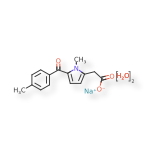
| Molecular Formula | C15H14NO3.Na |
| Molecular Weight | 279.2663 |
| Optical Activity | NONE |
| Defined Stereocenters | 0 / 0 |
| E/Z Centers | 0 |
| Charge | 0 |
SHOW SMILES / InChI
SMILES
[Na+].CN1C(CC([O-])=O)=CC=C1C(=O)C2=CC=C(C)C=C2
InChI
InChIKey=QGUALMNFRILWRA-UHFFFAOYSA-M
InChI=1S/C15H15NO3.Na/c1-10-3-5-11(6-4-10)15(19)13-8-7-12(16(13)2)9-14(17)18;/h3-8H,9H2,1-2H3,(H,17,18);/q;+1/p-1
| Molecular Formula | Na |
| Molecular Weight | 22.98976928 |
| Charge | 1 |
| Count |
|
| Stereochemistry | ACHIRAL |
| Additional Stereochemistry | No |
| Defined Stereocenters | 0 / 0 |
| E/Z Centers | 0 |
| Optical Activity | NONE |
| Molecular Formula | C15H14NO3 |
| Molecular Weight | 256.2766 |
| Charge | -1 |
| Count |
|
| Stereochemistry | ACHIRAL |
| Additional Stereochemistry | No |
| Defined Stereocenters | 0 / 0 |
| E/Z Centers | 0 |
| Optical Activity | NONE |
Tolmetin is a nonsteroidal anti-inflammatory agent. It was marketed as Tolectin in USA. TOLECTIN (tolmetin sodium) is indicated for the relief of signs and symptoms of
rheumatoid arthritis and osteoarthritis. TOLECTIN is indicated in the treatment of
acute flares and the long-term management of the chronic disease.
TOLECTIN is also indicated for treatment of juvenile rheumatoid arthritis. The mode of action of tolmetin is not known. However, studies in laboratory animals and man have demonstrated that the anti-inflammatory action of tolmetin is not due to pituitary-adrenal stimulation. Tolmetin inhibits prostaglandin synthetase in vitro and lowers the plasma level of prostaglandin E in man. This reduction in prostaglandin synthesis may be responsible for the anti-inflammatory action.
Approval Year
Targets
| Primary Target | Pharmacology | Condition | Potency |
|---|---|---|---|
Target ID: CHEMBL221 |
0.35 µM [IC50] | ||
Target ID: CHEMBL230 |
0.82 µM [IC50] | ||
Target ID: CHEMBL2094253 |
Conditions
| Condition | Modality | Targets | Highest Phase | Product |
|---|---|---|---|---|
| Primary | Tolmetin sodium Approved UseCarefully consider the potential benefits and risks of tolmetin sodium capsules and other treatment options before deciding to use tolmetin sodium capsules. Use the lowest effective dose for the shortest duration consistent with individual patient treatment goals (see WARNINGS). Tolmetin sodium capsules are indicated for the relief of signs and symptoms of rheumatoid arthritis and osteoarthritis. Tolmetin sodium capsules are indicated in the treatment of acute flares and the long-term management of the chronic disease. Tolmetin sodium capsules are also indicated for treatment of juvenile rheumatoid arthritis. The safety and effectiveness of tolmetin sodium capsules have not been established in pediatric patients under 2 years of age. Launch Date1976 |
|||
| Primary | Tolmetin sodium Approved UseCarefully consider the potential benefits and risks of tolmetin sodium capsules and other treatment options before deciding to use tolmetin sodium capsules. Use the lowest effective dose for the shortest duration consistent with individual patient treatment goals (see WARNINGS). Tolmetin sodium capsules are indicated for the relief of signs and symptoms of rheumatoid arthritis and osteoarthritis. Tolmetin sodium capsules are indicated in the treatment of acute flares and the long-term management of the chronic disease. Tolmetin sodium capsules are also indicated for treatment of juvenile rheumatoid arthritis. The safety and effectiveness of tolmetin sodium capsules have not been established in pediatric patients under 2 years of age. Launch Date1976 |
Cmax
| Value | Dose | Co-administered | Analyte | Population |
|---|---|---|---|---|
29.3 μg/mL EXPERIMENT https://pubmed.ncbi.nlm.nih.gov/1126116/ |
300 mg single, oral dose: 300 mg route of administration: Oral experiment type: SINGLE co-administered: |
TOLMETIN plasma | Homo sapiens population: UNHEALTHY age: ADULT sex: FEMALE / MALE food status: FASTED |
AUC
| Value | Dose | Co-administered | Analyte | Population |
|---|---|---|---|---|
50.5 μg × h/mL EXPERIMENT https://pubmed.ncbi.nlm.nih.gov/1126116/ |
300 mg single, oral dose: 300 mg route of administration: Oral experiment type: SINGLE co-administered: |
TOLMETIN plasma | Homo sapiens population: UNHEALTHY age: ADULT sex: FEMALE / MALE food status: FASTED |
T1/2
| Value | Dose | Co-administered | Analyte | Population |
|---|---|---|---|---|
0.83 h EXPERIMENT https://pubmed.ncbi.nlm.nih.gov/1126116/ |
300 mg single, oral dose: 300 mg route of administration: Oral experiment type: SINGLE co-administered: |
TOLMETIN plasma | Homo sapiens population: UNHEALTHY age: ADULT sex: FEMALE / MALE food status: FASTED |
Doses
| Dose | Population | Adverse events |
|---|---|---|
400 mg 3 times / day steady, oral Dose: 400 mg, 3 times / day Route: oral Route: steady Dose: 400 mg, 3 times / day Sources: |
unhealthy, adults Health Status: unhealthy Age Group: adults Sources: |
Other AEs: Nausea, Dyspepsia... Other AEs: Nausea (11%) Sources: Dyspepsia (3-9) Distress gastrointestinal (3-9) Abdominal pain (3-9) Diarrhea (3-9) Flatulence (3-9) Vomiting (3-9) Constipation (1-3) Gastritis (1-3) Peptic ulcer (1-3) Headache (3-9) Asthenia (3-9) Chest pain (1-3) Blood pressure increased (3-9) Edema (3-9) Dizziness (3-9) Drowsiness (3-9) Depression (1-3) Weight gain (3-9) Weight loss (3-9) Skin irritation (1-3) Tinnitus (1-3) Visual disturbance (1-3) Blood urea nitrogen increased (1-3) Urinary tract infection (1-3) Gastrointestinal ulcer bleeding (<1%) Bleeding gastrointestinal (<1%) Perforation (<1%) Glossitis (<1%) Stomatitis (<1%) Hepatitis (<1%) Function liver abnormal (<1%) Anaphylactoid reaction (<1%) Fever (<1%) Lymphadenopathy (<1%) Serum sickness (<1%) Hemolytic anemia (<1%) Thrombocytopenia (<1%) Granulocytopenia (<1%) Agranulocytosis (<1%) Urticaria (<1%) Purpura (<1%) Erythema multiforme (<1%) Toxic epidermal necrolysis (<1%) Hematuria (<1%) Proteinuria (<1%) Dysuria (<1%) Renal failure (<1%) |
AEs
| AE | Significance | Dose | Population |
|---|---|---|---|
| Blood urea nitrogen increased | 1-3 | 400 mg 3 times / day steady, oral Dose: 400 mg, 3 times / day Route: oral Route: steady Dose: 400 mg, 3 times / day Sources: |
unhealthy, adults Health Status: unhealthy Age Group: adults Sources: |
| Chest pain | 1-3 | 400 mg 3 times / day steady, oral Dose: 400 mg, 3 times / day Route: oral Route: steady Dose: 400 mg, 3 times / day Sources: |
unhealthy, adults Health Status: unhealthy Age Group: adults Sources: |
| Constipation | 1-3 | 400 mg 3 times / day steady, oral Dose: 400 mg, 3 times / day Route: oral Route: steady Dose: 400 mg, 3 times / day Sources: |
unhealthy, adults Health Status: unhealthy Age Group: adults Sources: |
| Depression | 1-3 | 400 mg 3 times / day steady, oral Dose: 400 mg, 3 times / day Route: oral Route: steady Dose: 400 mg, 3 times / day Sources: |
unhealthy, adults Health Status: unhealthy Age Group: adults Sources: |
| Gastritis | 1-3 | 400 mg 3 times / day steady, oral Dose: 400 mg, 3 times / day Route: oral Route: steady Dose: 400 mg, 3 times / day Sources: |
unhealthy, adults Health Status: unhealthy Age Group: adults Sources: |
| Peptic ulcer | 1-3 | 400 mg 3 times / day steady, oral Dose: 400 mg, 3 times / day Route: oral Route: steady Dose: 400 mg, 3 times / day Sources: |
unhealthy, adults Health Status: unhealthy Age Group: adults Sources: |
| Skin irritation | 1-3 | 400 mg 3 times / day steady, oral Dose: 400 mg, 3 times / day Route: oral Route: steady Dose: 400 mg, 3 times / day Sources: |
unhealthy, adults Health Status: unhealthy Age Group: adults Sources: |
| Tinnitus | 1-3 | 400 mg 3 times / day steady, oral Dose: 400 mg, 3 times / day Route: oral Route: steady Dose: 400 mg, 3 times / day Sources: |
unhealthy, adults Health Status: unhealthy Age Group: adults Sources: |
| Urinary tract infection | 1-3 | 400 mg 3 times / day steady, oral Dose: 400 mg, 3 times / day Route: oral Route: steady Dose: 400 mg, 3 times / day Sources: |
unhealthy, adults Health Status: unhealthy Age Group: adults Sources: |
| Visual disturbance | 1-3 | 400 mg 3 times / day steady, oral Dose: 400 mg, 3 times / day Route: oral Route: steady Dose: 400 mg, 3 times / day Sources: |
unhealthy, adults Health Status: unhealthy Age Group: adults Sources: |
| Nausea | 11% | 400 mg 3 times / day steady, oral Dose: 400 mg, 3 times / day Route: oral Route: steady Dose: 400 mg, 3 times / day Sources: |
unhealthy, adults Health Status: unhealthy Age Group: adults Sources: |
| Abdominal pain | 3-9 | 400 mg 3 times / day steady, oral Dose: 400 mg, 3 times / day Route: oral Route: steady Dose: 400 mg, 3 times / day Sources: |
unhealthy, adults Health Status: unhealthy Age Group: adults Sources: |
| Asthenia | 3-9 | 400 mg 3 times / day steady, oral Dose: 400 mg, 3 times / day Route: oral Route: steady Dose: 400 mg, 3 times / day Sources: |
unhealthy, adults Health Status: unhealthy Age Group: adults Sources: |
| Blood pressure increased | 3-9 | 400 mg 3 times / day steady, oral Dose: 400 mg, 3 times / day Route: oral Route: steady Dose: 400 mg, 3 times / day Sources: |
unhealthy, adults Health Status: unhealthy Age Group: adults Sources: |
| Diarrhea | 3-9 | 400 mg 3 times / day steady, oral Dose: 400 mg, 3 times / day Route: oral Route: steady Dose: 400 mg, 3 times / day Sources: |
unhealthy, adults Health Status: unhealthy Age Group: adults Sources: |
| Distress gastrointestinal | 3-9 | 400 mg 3 times / day steady, oral Dose: 400 mg, 3 times / day Route: oral Route: steady Dose: 400 mg, 3 times / day Sources: |
unhealthy, adults Health Status: unhealthy Age Group: adults Sources: |
| Dizziness | 3-9 | 400 mg 3 times / day steady, oral Dose: 400 mg, 3 times / day Route: oral Route: steady Dose: 400 mg, 3 times / day Sources: |
unhealthy, adults Health Status: unhealthy Age Group: adults Sources: |
| Drowsiness | 3-9 | 400 mg 3 times / day steady, oral Dose: 400 mg, 3 times / day Route: oral Route: steady Dose: 400 mg, 3 times / day Sources: |
unhealthy, adults Health Status: unhealthy Age Group: adults Sources: |
| Dyspepsia | 3-9 | 400 mg 3 times / day steady, oral Dose: 400 mg, 3 times / day Route: oral Route: steady Dose: 400 mg, 3 times / day Sources: |
unhealthy, adults Health Status: unhealthy Age Group: adults Sources: |
| Edema | 3-9 | 400 mg 3 times / day steady, oral Dose: 400 mg, 3 times / day Route: oral Route: steady Dose: 400 mg, 3 times / day Sources: |
unhealthy, adults Health Status: unhealthy Age Group: adults Sources: |
| Flatulence | 3-9 | 400 mg 3 times / day steady, oral Dose: 400 mg, 3 times / day Route: oral Route: steady Dose: 400 mg, 3 times / day Sources: |
unhealthy, adults Health Status: unhealthy Age Group: adults Sources: |
| Headache | 3-9 | 400 mg 3 times / day steady, oral Dose: 400 mg, 3 times / day Route: oral Route: steady Dose: 400 mg, 3 times / day Sources: |
unhealthy, adults Health Status: unhealthy Age Group: adults Sources: |
| Vomiting | 3-9 | 400 mg 3 times / day steady, oral Dose: 400 mg, 3 times / day Route: oral Route: steady Dose: 400 mg, 3 times / day Sources: |
unhealthy, adults Health Status: unhealthy Age Group: adults Sources: |
| Weight gain | 3-9 | 400 mg 3 times / day steady, oral Dose: 400 mg, 3 times / day Route: oral Route: steady Dose: 400 mg, 3 times / day Sources: |
unhealthy, adults Health Status: unhealthy Age Group: adults Sources: |
| Weight loss | 3-9 | 400 mg 3 times / day steady, oral Dose: 400 mg, 3 times / day Route: oral Route: steady Dose: 400 mg, 3 times / day Sources: |
unhealthy, adults Health Status: unhealthy Age Group: adults Sources: |
| Agranulocytosis | <1% | 400 mg 3 times / day steady, oral Dose: 400 mg, 3 times / day Route: oral Route: steady Dose: 400 mg, 3 times / day Sources: |
unhealthy, adults Health Status: unhealthy Age Group: adults Sources: |
| Anaphylactoid reaction | <1% | 400 mg 3 times / day steady, oral Dose: 400 mg, 3 times / day Route: oral Route: steady Dose: 400 mg, 3 times / day Sources: |
unhealthy, adults Health Status: unhealthy Age Group: adults Sources: |
| Bleeding gastrointestinal | <1% | 400 mg 3 times / day steady, oral Dose: 400 mg, 3 times / day Route: oral Route: steady Dose: 400 mg, 3 times / day Sources: |
unhealthy, adults Health Status: unhealthy Age Group: adults Sources: |
| Dysuria | <1% | 400 mg 3 times / day steady, oral Dose: 400 mg, 3 times / day Route: oral Route: steady Dose: 400 mg, 3 times / day Sources: |
unhealthy, adults Health Status: unhealthy Age Group: adults Sources: |
| Erythema multiforme | <1% | 400 mg 3 times / day steady, oral Dose: 400 mg, 3 times / day Route: oral Route: steady Dose: 400 mg, 3 times / day Sources: |
unhealthy, adults Health Status: unhealthy Age Group: adults Sources: |
| Fever | <1% | 400 mg 3 times / day steady, oral Dose: 400 mg, 3 times / day Route: oral Route: steady Dose: 400 mg, 3 times / day Sources: |
unhealthy, adults Health Status: unhealthy Age Group: adults Sources: |
| Function liver abnormal | <1% | 400 mg 3 times / day steady, oral Dose: 400 mg, 3 times / day Route: oral Route: steady Dose: 400 mg, 3 times / day Sources: |
unhealthy, adults Health Status: unhealthy Age Group: adults Sources: |
| Gastrointestinal ulcer bleeding | <1% | 400 mg 3 times / day steady, oral Dose: 400 mg, 3 times / day Route: oral Route: steady Dose: 400 mg, 3 times / day Sources: |
unhealthy, adults Health Status: unhealthy Age Group: adults Sources: |
| Glossitis | <1% | 400 mg 3 times / day steady, oral Dose: 400 mg, 3 times / day Route: oral Route: steady Dose: 400 mg, 3 times / day Sources: |
unhealthy, adults Health Status: unhealthy Age Group: adults Sources: |
| Granulocytopenia | <1% | 400 mg 3 times / day steady, oral Dose: 400 mg, 3 times / day Route: oral Route: steady Dose: 400 mg, 3 times / day Sources: |
unhealthy, adults Health Status: unhealthy Age Group: adults Sources: |
| Hematuria | <1% | 400 mg 3 times / day steady, oral Dose: 400 mg, 3 times / day Route: oral Route: steady Dose: 400 mg, 3 times / day Sources: |
unhealthy, adults Health Status: unhealthy Age Group: adults Sources: |
| Hemolytic anemia | <1% | 400 mg 3 times / day steady, oral Dose: 400 mg, 3 times / day Route: oral Route: steady Dose: 400 mg, 3 times / day Sources: |
unhealthy, adults Health Status: unhealthy Age Group: adults Sources: |
| Hepatitis | <1% | 400 mg 3 times / day steady, oral Dose: 400 mg, 3 times / day Route: oral Route: steady Dose: 400 mg, 3 times / day Sources: |
unhealthy, adults Health Status: unhealthy Age Group: adults Sources: |
| Lymphadenopathy | <1% | 400 mg 3 times / day steady, oral Dose: 400 mg, 3 times / day Route: oral Route: steady Dose: 400 mg, 3 times / day Sources: |
unhealthy, adults Health Status: unhealthy Age Group: adults Sources: |
| Perforation | <1% | 400 mg 3 times / day steady, oral Dose: 400 mg, 3 times / day Route: oral Route: steady Dose: 400 mg, 3 times / day Sources: |
unhealthy, adults Health Status: unhealthy Age Group: adults Sources: |
| Proteinuria | <1% | 400 mg 3 times / day steady, oral Dose: 400 mg, 3 times / day Route: oral Route: steady Dose: 400 mg, 3 times / day Sources: |
unhealthy, adults Health Status: unhealthy Age Group: adults Sources: |
| Purpura | <1% | 400 mg 3 times / day steady, oral Dose: 400 mg, 3 times / day Route: oral Route: steady Dose: 400 mg, 3 times / day Sources: |
unhealthy, adults Health Status: unhealthy Age Group: adults Sources: |
| Renal failure | <1% | 400 mg 3 times / day steady, oral Dose: 400 mg, 3 times / day Route: oral Route: steady Dose: 400 mg, 3 times / day Sources: |
unhealthy, adults Health Status: unhealthy Age Group: adults Sources: |
| Serum sickness | <1% | 400 mg 3 times / day steady, oral Dose: 400 mg, 3 times / day Route: oral Route: steady Dose: 400 mg, 3 times / day Sources: |
unhealthy, adults Health Status: unhealthy Age Group: adults Sources: |
| Stomatitis | <1% | 400 mg 3 times / day steady, oral Dose: 400 mg, 3 times / day Route: oral Route: steady Dose: 400 mg, 3 times / day Sources: |
unhealthy, adults Health Status: unhealthy Age Group: adults Sources: |
| Thrombocytopenia | <1% | 400 mg 3 times / day steady, oral Dose: 400 mg, 3 times / day Route: oral Route: steady Dose: 400 mg, 3 times / day Sources: |
unhealthy, adults Health Status: unhealthy Age Group: adults Sources: |
| Toxic epidermal necrolysis | <1% | 400 mg 3 times / day steady, oral Dose: 400 mg, 3 times / day Route: oral Route: steady Dose: 400 mg, 3 times / day Sources: |
unhealthy, adults Health Status: unhealthy Age Group: adults Sources: |
| Urticaria | <1% | 400 mg 3 times / day steady, oral Dose: 400 mg, 3 times / day Route: oral Route: steady Dose: 400 mg, 3 times / day Sources: |
unhealthy, adults Health Status: unhealthy Age Group: adults Sources: |
PubMed
| Title | Date | PubMed |
|---|---|---|
| Systems pharmacological analysis of drugs inducing stevens-johnson syndrome and toxic epidermal necrolysis. | 2015-05-18 |
|
| A correlation between the in vitro drug toxicity of drugs to cell lines that express human P450s and their propensity to cause liver injury in humans. | 2014-01 |
|
| Identification of old drugs as potential inhibitors of HIV-1 integrase - human LEDGF/p75 interaction via molecular docking. | 2012-12 |
|
| Selected pharmacokinetic issues of the use of antiepileptic drugs and parenteral nutrition in critically ill patients. | 2010-12-31 |
|
| Friedel-Crafts acylation of pyrroles and indoles using 1,5-diazabicyclo[4.3.0]non-5-ene (DBN) as a nucleophilic catalyst. | 2010-12-17 |
|
| Determination of actarit from human plasma for bioequivalence studies. | 2010-11 |
|
| Diclofenac hypersensitivity: antibody responses to the parent drug and relevant metabolites. | 2010-10-28 |
|
| Validation and clinical application of an LC-ESI-MS/MS method for simultaneous determination of tolmetin and MED5, the metabolites of amtolmetin guacil in human plasma. | 2010-10 |
|
| Effect of ketorolac and diclofenac on the impairment of endothelium-dependent relaxation induced by reactive oxygen species in rabbit abdominal aorta. | 2010-09 |
|
| An evaluation of the utility of routine laboratory monitoring of juvenile idiopathic arthritis (JIA) patients using non-steroidal anti-inflammatory drugs (NSAIDs): a retrospective review. | 2010-04-14 |
|
| Accuracy of rapid urease test in diagnosing Helicobacter pylori infection in patients using NSAIDs. | 2010-03-27 |
|
| Nonsteroidal Anti-Inflammatory Drugs: A survey of practices and concerns of pediatric medical and surgical specialists and a summary of available safety data. | 2010-02-04 |
|
| Unusual interleukin-1 and -6 expression in fetal cartilage is associated with placental abnormalities. | 2010-01-01 |
|
| Development of theophylline floating microballoons using cellulose acetate butyrate and/or Eudragit RL 100 polymers with different permeability characteristics. | 2010-01 |
|
| Evaluation of Wound Healing Potential of Bauhinia purpurea Leaf Extracts in Rats. | 2010-01 |
|
| Effect of formulation and processing variables on the characteristics of tolmetin microspheres prepared by double emulsion solvent diffusion method. | 2010-01 |
|
| Entrapment of ketorolac tromethamine in polymeric vehicle for controlled drug delivery. | 2009-11 |
|
| Sequential injection system for phospholipase A2 activity evaluation: studies on liposomes using an environment-sensitive fluorescent probe. | 2009-09-15 |
|
| Maternal toxicity of nonsteroidal anti-inflammatory drugs as an important factor affecting prenatal development. | 2009-09 |
|
| Glycerolysis of acyl glucuronides as an artifact of in vitro drug metabolism incubations. | 2009-08 |
|
| Control of encapsulation efficiency in polymeric microparticle system of tolmetin. | 2009-06-10 |
|
| A study of the intermolecular interactions of tolmetin/N-acetyl-L-tyrosine ethyl ester complex. | 2009-06 |
|
| Drug-organic electrolyte complexes as controlled release systems. | 2009-01 |
|
| Methotrexate for the treatment of juvenile idiopathic arthritis: process to approval for JIA indication in Japan. | 2009 |
|
| The effect of piroxicam on the formation of postoperative, intraabdominal adhesion in rats. | 2008-10 |
|
| A novel high-throughput screening assay for putative antidiabetic agents through PPARalpha interactions. | 2008-10 |
|
| Ionic liquid-based dynamic liquid-phase microextraction: application to the determination of anti-inflammatory drugs in urine samples. | 2008-08-15 |
|
| Topical ocular delivery of NSAIDs. | 2008-06 |
|
| Modulation of dopaminergic neurotransmission in rat striatum upon in vitro and in vivo diclofenac treatment. | 2008-04 |
|
| Singlet oxygen scavenging activity of non-steroidal anti-inflammatory drugs. | 2008 |
|
| Role of biotransformation studies in minimizing metabolism-related liabilities in drug discovery. | 2008 |
|
| Cyclooxygenase inhibitors affect bone mineralization in rat fetuses. | 2008 |
|
| Idiopathic chondrolysis of the hip: a case report. | 2007-10 |
|
| Determination of non-steroidal anti-inflammatory drugs in urine by combining an immobilized carboxylated carbon nanotubes minicolumn for solid-phase extraction with capillary electrophoresis-mass spectrometry. | 2007-08-03 |
|
| A peripatetic pediatrician's journey into pediatric rheumatology: Part II. | 2007-06-21 |
|
| Determination of degradation pathways and kinetics of acyl glucuronides by NMR spectroscopy. | 2007-06 |
|
| Improving adherence to medical regimens for juvenile rheumatoid arthritis. | 2007-05-18 |
|
| Studies on the metabolism of tolmetin to the chemically reactive acyl-coenzyme A thioester intermediate in rats. | 2007-05 |
|
| In vivo effects of amtolmetin guacyl on lipid peroxidation and antioxidant defence systems. Comparison with non-selective and COX-2 selective NSAIDs. | 2007-04 |
|
| One center's experience: the serology and drugs associated with drug-induced immune hemolytic anemia--a new paradigm. | 2007-04 |
|
| Non-steroidal anti-inflammatory agents, tolmetin and sulindac attenuate quinolinic acid (QA)-induced oxidative stress in primary hippocampal neurons and reduce QA-induced spatial reference memory deficits in male Wistar rats. | 2007-03-20 |
|
| Polyproline-rod approach to isolating protein targets of bioactive small molecules: isolation of a new target of indomethacin. | 2007-01-31 |
|
| In vivo effects of amtolmetin guacyl on lipid peroxidation and antioxidant defence systems in different models of gastrointestinal injury. | 2007-01 |
|
| Potential antioxidant activity of celecoxib and amtolmetin guacyl: in vitro studies. | 2007-01 |
|
| Interaction of nonsteroidal anti-inflammatory drugs with multidrug resistance protein (MRP) 2/ABCC2- and MRP4/ABCC4-mediated methotrexate transport. | 2007-01 |
|
| Non-steroidal anti-inflammatory agents, tolmetin and sulindac, inhibit liver tryptophan 2,3-dioxygenase activity and alter brain neurotransmitter levels. | 2006-11-10 |
|
| I almost crossed over. | 2005-10 |
|
| Naproxen-induced recurrent aseptic meningitis. | 1991-11 |
|
| Multisystem failure and hepatic microvesicular fatty metamorphosis associated with tolmetin ingestion. | 1991-08 |
|
| Immune hemolytic anemia associated with tolmetin and suprofen. | 1989-09 |
Sample Use Guides
For the relief of rheumatoid arthritis or osteoarthritis, the recommended starting dose
for adults is 400 mg three times daily (1200 mg daily), preferably including a dose on
arising and a dose at bedtime. To achieve optimal therapeutic effect the dose should
be adjusted according to the patient’s response after one or two weeks. Control is
15
usually achieved at doses of 600-1800 mg daily in divided doses (generally t.i.d.).
Doses larger than 1800 mg/day have not been studied and are not recommended.
Route of Administration:
Oral
| Substance Class |
Chemical
Created
by
admin
on
Edited
Mon Mar 31 18:13:04 GMT 2025
by
admin
on
Mon Mar 31 18:13:04 GMT 2025
|
| Record UNII |
WL259637KX
|
| Record Status |
Validated (UNII)
|
| Record Version |
|
-
Download
| Name | Type | Language | ||
|---|---|---|---|---|
|
Common Name | English | ||
|
Preferred Name | English | ||
|
Common Name | English | ||
|
Common Name | English | ||
|
Common Name | English | ||
|
Common Name | English |
| Code System | Code | Type | Description | ||
|---|---|---|---|---|---|
|
9619
Created by
admin on Mon Mar 31 18:13:04 GMT 2025 , Edited by admin on Mon Mar 31 18:13:04 GMT 2025
|
PRIMARY | |||
|
100000084635
Created by
admin on Mon Mar 31 18:13:04 GMT 2025 , Edited by admin on Mon Mar 31 18:13:04 GMT 2025
|
PRIMARY | |||
|
35711-34-3
Created by
admin on Mon Mar 31 18:13:04 GMT 2025 , Edited by admin on Mon Mar 31 18:13:04 GMT 2025
|
PRIMARY | |||
|
WL259637KX
Created by
admin on Mon Mar 31 18:13:04 GMT 2025 , Edited by admin on Mon Mar 31 18:13:04 GMT 2025
|
PRIMARY | |||
|
DTXSID2091546
Created by
admin on Mon Mar 31 18:13:04 GMT 2025 , Edited by admin on Mon Mar 31 18:13:04 GMT 2025
|
PRIMARY | |||
|
23665411
Created by
admin on Mon Mar 31 18:13:04 GMT 2025 , Edited by admin on Mon Mar 31 18:13:04 GMT 2025
|
PRIMARY | |||
|
252-687-3
Created by
admin on Mon Mar 31 18:13:04 GMT 2025 , Edited by admin on Mon Mar 31 18:13:04 GMT 2025
|
PRIMARY |
| Related Record | Type | Details | ||
|---|---|---|---|---|
|
SOLVATE->ANHYDROUS | |||
|
|
PARENT -> SALT/SOLVATE |

| Related Record | Type | Details | ||
|---|---|---|---|---|
|
|
ACTIVE MOIETY |