


Details
| Stereochemistry | ABSOLUTE |
| Molecular Formula | C24H30F2O6 |
| Molecular Weight | 452.4882 |
| Optical Activity | UNSPECIFIED |
| Defined Stereocenters | 9 / 9 |
| E/Z Centers | 0 |
| Charge | 0 |
SHOW SMILES / InChI
SMILES
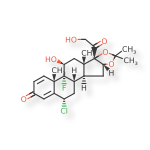
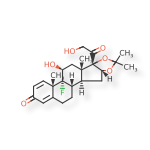
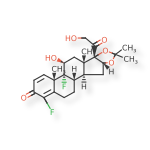
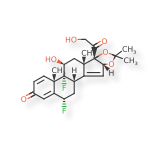
CC1(C)O[C@@H]2C[C@H]3[C@@H]4C[C@H](F)C5=CC(=O)C=C[C@]5(C)[C@@]4(F)[C@@H](O)C[C@]3(C)[C@@]2(O1)C(=O)CO
InChI
InChIKey=FEBLZLNTKCEFIT-VSXGLTOVSA-N
InChI=1S/C24H30F2O6/c1-20(2)31-19-9-13-14-8-16(25)15-7-12(28)5-6-21(15,3)23(14,26)17(29)10-22(13,4)24(19,32-20)18(30)11-27/h5-7,13-14,16-17,19,27,29H,8-11H2,1-4H3/t13-,14-,16-,17-,19+,21-,22-,23-,24+/m0/s1
| Molecular Formula | C24H30F2O6 |
| Molecular Weight | 452.4882 |
| Charge | 0 |
| Count |
|
| Stereochemistry | ABSOLUTE |
| Additional Stereochemistry | No |
| Defined Stereocenters | 9 / 9 |
| E/Z Centers | 0 |
| Optical Activity | UNSPECIFIED |
DescriptionSources: http://www.drugbank.ca/drugs/DB00591Curator's Comment: Description was created based on several sources, including
http://www.accessdata.fda.gov/drugsatfda_docs/label/2013/012787s071lblrev.pdf
Sources: http://www.drugbank.ca/drugs/DB00591
Curator's Comment: Description was created based on several sources, including
http://www.accessdata.fda.gov/drugsatfda_docs/label/2013/012787s071lblrev.pdf
Fluocinolone Acetonide is a corticosteroid that binds to the cytosolic glucocorticoid receptor. After binding the receptor the newly formed receptor-ligand complex translocates itself into the cell nucleus, where it binds to many glucocorticoid response elements (GRE) in the promoter region of the target genes. The DNA bound receptor then interacts with basic transcription factors, causing the increase in expression of specific target genes. The anti-inflammatory actions of corticosteroids are thought to involve lipocortins, phospholipase A2 inhibitory proteins which, through inhibition arachidonic acid, control the biosynthesis of prostaglandins and leukotrienes. Specifically glucocorticoids induce lipocortin-1 (annexin-1) synthesis, which then binds to cell membranes preventing the phospholipase A2 from coming into contact with its substrate arachidonic acid. This leads to diminished eicosanoid production. Cyclooxygenase (both COX-1 and COX-2) expression is also suppressed, potentiating the effect. In another words, the two main products in inflammation Prostaglandins and Leukotrienes are inhibited by the action of Glucocorticoids. Glucocorticoids also stimulate the lipocortin-1 escaping to the extracellular space, where it binds to the leukocyte membrane receptors and inhibits various inflammatory events: epithelial adhesion, emigration, chemotaxis, phagocytosis, respiratory burst and the release of various inflammatory mediators (lysosomal enzymes, cytokines, tissue plasminogen activator, chemokines etc.) from neutrophils, macrophages and mastocytes. Additionally the immune system is suppressed by corticosteroids due to a decrease in the function of the lymphatic system, a reduction in immunoglobulin and complement concentrations, the precipitation of lymphocytopenia, and interference with antigen-antibody binding. Like other glucocorticoid agents Fluocinolone acetonide acts as a physiological antagonist to insulin by decreasing glycogenesis (formation of glycogen). It also promotes the breakdown of lipids (lipolysis), and proteins, leading to the mobilization of extrahepatic amino acids and ketone bodies. This leads to increased circulating glucose concentrations (in the blood). There is also decreased glycogen formation in the liver. Fluocinolone Acetonide is used for the relief of the inflammatory and pruritic manifestations of corticosteroid-responsive dermatoses. Also for the treatment of chronic non-infectious uveitis affecting the posterior segment of the eye (Retisert). Preparations containing Fluocinolone Acetonide were first marketed under the name Synalar.
Approval Year
Targets
| Primary Target | Pharmacology | Condition | Potency |
|---|---|---|---|
Target ID: CHEMBL2034 Sources: http://www.drugbank.ca/drugs/DB00591 |
2.0 nM [IC50] |
Conditions
| Condition | Modality | Targets | Highest Phase | Product |
|---|---|---|---|---|
| Primary | SYNALAR Approved UseSYNALAR® Cream is indicated for the relief of the inflammatory and pruritic manifestations of corticosteriod-responsive dermatoses. Launch Date1963 |
|||
| Primary | Retisert Approved UseRetisert is indicated for the treatment of chronic non-infectious uveitis affecting the posterior segment of the eye. Launch Date2005 |
Cmax
| Value | Dose | Co-administered | Analyte | Population |
|---|---|---|---|---|
1.5 ng/mL EXPERIMENT https://pubmed.ncbi.nlm.nih.gov/20202684/ |
0.5 μg 1 times / day multiple, intraocular dose: 0.5 μg route of administration: Intraocular experiment type: MULTIPLE co-administered: |
FLUOCINOLONE ACETONIDE aqueous humor | Homo sapiens population: UNHEALTHY age: UNKNOWN sex: UNKNOWN food status: UNKNOWN |
|
0 ng/mL EXPERIMENT https://pubmed.ncbi.nlm.nih.gov/35988360/ |
0.25 mL 2 times / day multiple, auricular (otic) dose: 0.25 mL route of administration: Auricular (otic) experiment type: MULTIPLE co-administered: CIPROFLOXACIN |
FLUOCINOLONE ACETONIDE plasma | Homo sapiens population: UNHEALTHY age: CHILD sex: UNKNOWN food status: UNKNOWN |
|
54 ng/mL EXPERIMENT https://www.ncbi.nlm.nih.gov/pubmed/1874579 |
0.8 mg single, topical dose: 0.8 mg route of administration: Topical experiment type: SINGLE co-administered: |
FLUOCINOLONE ACETONIDE plasma | Homo sapiens population: HEALTHY age: ADULT sex: FEMALE / MALE food status: UNKNOWN |
AUC
| Value | Dose | Co-administered | Analyte | Population |
|---|---|---|---|---|
354.8 ng × h/mL EXPERIMENT https://www.ncbi.nlm.nih.gov/pubmed/1874579 |
0.8 mg single, topical dose: 0.8 mg route of administration: Topical experiment type: SINGLE co-administered: |
FLUOCINOLONE ACETONIDE plasma | Homo sapiens population: HEALTHY age: ADULT sex: FEMALE / MALE food status: UNKNOWN |
T1/2
| Value | Dose | Co-administered | Analyte | Population |
|---|---|---|---|---|
250 day EXPERIMENT https://pubmed.ncbi.nlm.nih.gov/20202684/ |
0.5 μg 1 times / day multiple, intraocular dose: 0.5 μg route of administration: Intraocular experiment type: MULTIPLE co-administered: |
FLUOCINOLONE ACETONIDE aqueous humor | Homo sapiens population: UNHEALTHY age: UNKNOWN sex: UNKNOWN food status: UNKNOWN |
|
14.8 h EXPERIMENT https://www.ncbi.nlm.nih.gov/pubmed/1874579 |
0.8 mg single, topical dose: 0.8 mg route of administration: Topical experiment type: SINGLE co-administered: |
FLUOCINOLONE ACETONIDE plasma | Homo sapiens population: HEALTHY age: ADULT sex: FEMALE / MALE food status: UNKNOWN |
Doses
| Dose | Population | Adverse events |
|---|---|---|
6 ug 1 times / day multiple, intravitreal Highest studied dose Dose: 6 ug, 1 times / day Route: intravitreal Route: multiple Dose: 6 ug, 1 times / day Sources: |
unhealthy, 24 –51 |
Disc. AE: Central retinal vein occlusion... AEs leading to discontinuation/dose reduction: Central retinal vein occlusion (16.7%) Sources: |
2 ug 1 times / day multiple, intravitreal Studied dose Dose: 2 ug, 1 times / day Route: intravitreal Route: multiple Dose: 2 ug, 1 times / day Sources: |
unhealthy, 43.2 |
|
0.6 ug 1 times / day multiple, intravitreal Recommended Dose: 0.6 ug, 1 times / day Route: intravitreal Route: multiple Dose: 0.6 ug, 1 times / day Sources: |
unhealthy |
Disc. AE: Increased intraocular pressure... AEs leading to discontinuation/dose reduction: Increased intraocular pressure (2.4%) Sources: |
2 ug 1 times / day multiple, intravitreal Studied dose Dose: 2 ug, 1 times / day Route: intravitreal Route: multiple Dose: 2 ug, 1 times / day Sources: |
unhealthy Health Status: unhealthy Sources: |
Other AEs: Intraocular pressure abnormal... Other AEs: Intraocular pressure abnormal Sources: |
AEs
| AE | Significance | Dose | Population |
|---|---|---|---|
| Central retinal vein occlusion | 16.7% Disc. AE |
6 ug 1 times / day multiple, intravitreal Highest studied dose Dose: 6 ug, 1 times / day Route: intravitreal Route: multiple Dose: 6 ug, 1 times / day Sources: |
unhealthy, 24 –51 |
| Increased intraocular pressure | 2.4% Disc. AE |
0.6 ug 1 times / day multiple, intravitreal Recommended Dose: 0.6 ug, 1 times / day Route: intravitreal Route: multiple Dose: 0.6 ug, 1 times / day Sources: |
unhealthy |
| Intraocular pressure abnormal | 2 ug 1 times / day multiple, intravitreal Studied dose Dose: 2 ug, 1 times / day Route: intravitreal Route: multiple Dose: 2 ug, 1 times / day Sources: |
unhealthy Health Status: unhealthy Sources: |
Overview
| CYP3A4 | CYP2C9 | CYP2D6 | hERG |
|---|---|---|---|
OverviewOther
| Other Inhibitor | Other Substrate | Other Inducer |
|---|---|---|
Drug as perpetrator
| Target | Modality | Activity | Metabolite | Clinical evidence |
|---|---|---|---|---|
| no [IC50 >10 uM] | ||||
| no [IC50 >10 uM] | ||||
| no [IC50 >10 uM] | ||||
| no [IC50 >10 uM] | ||||
| no [IC50 >10 uM] | ||||
| no [IC50 >10 uM] | ||||
| no [IC50 >10 uM] | ||||
| yes |
Drug as victim
| Target | Modality | Activity | Metabolite | Clinical evidence |
|---|---|---|---|---|
| yes | ||||
| yes |
PubMed
| Title | Date | PubMed |
|---|---|---|
| Injectable, in situ forming poly(propylene fumarate)-based ocular drug delivery systems. | 2007-12-01 |
|
| Epithelial cells in the hair follicle bulge do not contribute to epidermal regeneration after glucocorticoid-induced cutaneous atrophy. | 2007-12 |
|
| Compressor/nebulizers differences in the nebulization of corticosteroids. The CODE study (Corticosteroids and Devices Efficiency). | 2007-09-20 |
|
| Strength and endurance of the respiratory and handgrip muscles after the use of flunisolide in normal subjects. | 2007-07 |
|
| Vitreous band formation and the sustained-release, intravitreal fluocinolone (Retisert) implant. | 2007-06 |
|
| Drug delivery methods for posterior segment disease. | 2007-05 |
|
| Hypertrichosis as a side effect of inhaled steroids in children. | 2007-04 |
|
| A comparison of triple combination cream and hydroquinone 4% cream for the treatment of moderate to severe facial melasma. | 2007-03 |
|
| Retisert: is the new advance in treatment of uveitis a good one? | 2007-03 |
|
| Cost-effectiveness of a fixed combination of hydroquinone/tretinoin/fluocinolone cream compared with hydroquinone alone in the treatment of melasma. | 2007-02 |
|
| Cytomegalovirus retinitis after fluocinolone acetonide (Retisert) implant. | 2007-02 |
|
| Fluocinolone acetonide intravitreal sustained release device--a new addition to the armamentarium of uveitic management. | 2007 |
|
| Pharmacotherapies for diabetic retinopathy: present and future. | 2007 |
|
| Emerging therapies for the treatment of neovascular age-related macular degeneration and diabetic macular edema. | 2007 |
|
| [New drugs in the treatment of noninfectious uveitis]. | 2006-12 |
|
| Validation of a melasma quality of life questionnaire for Brazilian Portuguese language: the MelasQoL-BP study and improvement of QoL of melasma patients after triple combination therapy. | 2006-12 |
|
| Ethnic considerations in the treatment of Hispanic and Latin-American patients with hyperpigmentation. | 2006-12 |
|
| Intravitreal steroids in the management of macular oedema. | 2006-12 |
|
| Treating chronic noninfectious posterior segment uveitis: the impact of cumulative damage. Proceedings of an expert panel roundtable discussion. | 2006-10 |
|
| Topical glucocorticosteroids in rhinitis: clinical aspects. | 2006-10 |
|
| Long-term release of fluocinolone acetonide using biodegradable fumarate-based polymers. | 2006-08-28 |
|
| Postinflammatory hyperpigmentation: evolving combination treatment strategies. | 2006-08 |
|
| Efficacy of low-release-rate fluocinolone acetonide intravitreal implants to treat experimental uveitis. | 2006-07 |
|
| Dark brown scaly plaques on face and ears. | 2006-06 |
|
| Fluocinolone acetonide implant (Retisert) for noninfectious posterior uveitis: thirty-four-week results of a multicenter randomized clinical study. | 2006-06 |
|
| Once-daily intranasal corticosteroids for allergic rhinitis. Examining Treatment issues. | 2006-04 |
|
| Long-term continuous efalizumab therapy in patients with moderate to severe chronic plaque psoriasis: updated results from an ongoing trial. | 2006-04 |
|
| Community-based trial of a triple-combination agent for the treatment of facial melasma. | 2006-03 |
|
| Expression of TNF-alpha in oral lichen planus treated with fluocinolone acetonide 0.1%. | 2006-03 |
|
| Inhaled flunisolide suppresses the hypothalamic-pituitary-adrenocortical axis, but has minimal systemic immune effects in healthy cats. | 2006-02-25 |
|
| Nebulized drug admixtures: effect on aerosol characteristics and albuterol output. | 2006 |
|
| Flunisolide decreases exhaled nitric oxide and nitrotyrosine levels in asthmatic children. | 2006 |
|
| A comprehensive review of the long-term and short-term treatment of melasma with a triple combination cream. | 2006 |
|
| Efficacy of nebulized flunisolide combined with salbutamol and ipratropium bromide in stable patients with moderate-to-severe chronic obstructive pulmonary disease. | 2006 |
|
| Retisert (Bausch & Lomb/Control Delivery Systems). | 2005-11 |
|
| Evidence of remodeling in peripheral airways of patients with mild to moderate asthma: effect of hydrofluoroalkane-flunisolide. | 2005-11 |
|
| A large 12-month extension study of an 8-week trial to evaluate the safety and efficacy of triple combination (TC) cream in melasma patients previously treated with TC cream or one of its dyads. | 2005-09-20 |
|
| Effects of drug treatment on inflammation and hyperreactivity of airways and on immune variables in cats with experimentally induced asthma. | 2005-07 |
|
| The nitrosterols--a step forward from the steroid anti-inflammatory drugs? | 2005-07 |
|
| Long-term follow-up results of a pilot trial of a fluocinolone acetonide implant to treat posterior uveitis. | 2005-07 |
|
| Gateways to clinical trials. | 2005-06 |
|
| Steroids for choroidal neovascularization. | 2005-03 |
|
| The safety profile of long-term, high-dose intraocular corticosteroid delivery. | 2005-03 |
|
| Hydroquinone 4%, tretinoin 0.05%, fluocinolone acetonide 0.01%: a safe and efficacious 12-month treatment for melasma. | 2005-01 |
|
| Comparison of the analysis of corticosteroids using different techniques. | 2005-01 |
|
| Fluocinolone acetonide ophthalmic--Bausch & Lomb: fluocinolone acetonide Envision TD implant. | 2005 |
|
| Fluocinolone acetonide topical oil for scalp psoriasis. | 2004-12 |
|
| Utilizing combination therapy to optimize melasma outcomes. | 2004-11-24 |
|
| Photochemistry and phototoxicity of fluocinolone 16,17-acetonide. | 2004-11-13 |
|
| Asthma steroid pharmacogenetics: a study strategy to identify replicated treatment responses. | 2004 |
Sample Use Guides
In Vivo Use Guide
Curator's Comment: can also be used as intravitreal implant http://www.accessdata.fda.gov/drugsatfda_docs/nda/2005/021737s000_PRNTLBL.pdf
generally applied to the affected area as a thin film from two
to four times daily depending on the severity of the condition. In hairy sites, the
hair should be parted to allow direct contact with the lesion.
Route of Administration:
Topical
| Substance Class |
Chemical
Created
by
admin
on
Edited
Mon Mar 31 17:48:36 GMT 2025
by
admin
on
Mon Mar 31 17:48:36 GMT 2025
|
| Record UNII |
0CD5FD6S2M
|
| Record Status |
Validated (UNII)
|
| Record Version |
|
-
Download
| Name | Type | Language | ||
|---|---|---|---|---|
|
Official Name | English | ||
|
Preferred Name | English | ||
|
Common Name | English | ||
|
Brand Name | English | ||
|
Common Name | English | ||
|
Common Name | English | ||
|
Brand Name | English | ||
|
Common Name | English | ||
|
Brand Name | English | ||
|
Common Name | English | ||
|
Brand Name | English | ||
|
Common Name | English | ||
|
Brand Name | English | ||
|
Common Name | English | ||
|
Brand Name | English | ||
|
Brand Name | English | ||
|
Common Name | English | ||
|
Common Name | English | ||
|
Common Name | English | ||
|
Common Name | English | ||
|
Common Name | English | ||
|
Common Name | English | ||
|
Brand Name | English | ||
|
Common Name | English | ||
|
Common Name | English | ||
|
Common Name | English | ||
|
Brand Name | English | ||
|
Brand Name | English | ||
|
Brand Name | English | ||
|
Code | English | ||
|
Brand Name | English | ||
|
Common Name | English | ||
|
Common Name | English | ||
|
Brand Name | English | ||
|
Common Name | English |
| Classification Tree | Code System | Code | ||
|---|---|---|---|---|
|
WHO-VATC |
QS02CA05
Created by
admin on Mon Mar 31 17:48:36 GMT 2025 , Edited by admin on Mon Mar 31 17:48:36 GMT 2025
|
||
|
WHO-VATC |
QC05AA10
Created by
admin on Mon Mar 31 17:48:36 GMT 2025 , Edited by admin on Mon Mar 31 17:48:36 GMT 2025
|
||
|
EU-Orphan Drug |
EU/3/16/1647
Created by
admin on Mon Mar 31 17:48:36 GMT 2025 , Edited by admin on Mon Mar 31 17:48:36 GMT 2025
|
||
|
NCI_THESAURUS |
C521
Created by
admin on Mon Mar 31 17:48:36 GMT 2025 , Edited by admin on Mon Mar 31 17:48:36 GMT 2025
|
||
|
WHO-VATC |
QD07CC02
Created by
admin on Mon Mar 31 17:48:36 GMT 2025 , Edited by admin on Mon Mar 31 17:48:36 GMT 2025
|
||
|
WHO-VATC |
QS01BA15
Created by
admin on Mon Mar 31 17:48:36 GMT 2025 , Edited by admin on Mon Mar 31 17:48:36 GMT 2025
|
||
|
WHO-ATC |
D07BC02
Created by
admin on Mon Mar 31 17:48:36 GMT 2025 , Edited by admin on Mon Mar 31 17:48:36 GMT 2025
|
||
|
NDF-RT |
N0000175576
Created by
admin on Mon Mar 31 17:48:36 GMT 2025 , Edited by admin on Mon Mar 31 17:48:36 GMT 2025
|
||
|
WHO-VATC |
QD07AC04
Created by
admin on Mon Mar 31 17:48:36 GMT 2025 , Edited by admin on Mon Mar 31 17:48:36 GMT 2025
|
||
|
WHO-ATC |
S02BA08
Created by
admin on Mon Mar 31 17:48:36 GMT 2025 , Edited by admin on Mon Mar 31 17:48:36 GMT 2025
|
||
|
WHO-ATC |
S02CA05
Created by
admin on Mon Mar 31 17:48:36 GMT 2025 , Edited by admin on Mon Mar 31 17:48:36 GMT 2025
|
||
|
WHO-ATC |
D07AC04
Created by
admin on Mon Mar 31 17:48:36 GMT 2025 , Edited by admin on Mon Mar 31 17:48:36 GMT 2025
|
||
|
WHO-ATC |
S01CA10
Created by
admin on Mon Mar 31 17:48:36 GMT 2025 , Edited by admin on Mon Mar 31 17:48:36 GMT 2025
|
||
|
WHO-VATC |
QS01CA10
Created by
admin on Mon Mar 31 17:48:36 GMT 2025 , Edited by admin on Mon Mar 31 17:48:36 GMT 2025
|
||
|
NDF-RT |
N0000175450
Created by
admin on Mon Mar 31 17:48:36 GMT 2025 , Edited by admin on Mon Mar 31 17:48:36 GMT 2025
|
||
|
WHO-VATC |
QD07BC02
Created by
admin on Mon Mar 31 17:48:36 GMT 2025 , Edited by admin on Mon Mar 31 17:48:36 GMT 2025
|
||
|
WHO-ATC |
D07CC02
Created by
admin on Mon Mar 31 17:48:36 GMT 2025 , Edited by admin on Mon Mar 31 17:48:36 GMT 2025
|
||
|
WHO-ATC |
C05AA10
Created by
admin on Mon Mar 31 17:48:36 GMT 2025 , Edited by admin on Mon Mar 31 17:48:36 GMT 2025
|
||
|
WHO-VATC |
QS02BA08
Created by
admin on Mon Mar 31 17:48:36 GMT 2025 , Edited by admin on Mon Mar 31 17:48:36 GMT 2025
|
||
|
WHO-ATC |
S01BA15
Created by
admin on Mon Mar 31 17:48:36 GMT 2025 , Edited by admin on Mon Mar 31 17:48:36 GMT 2025
|
| Code System | Code | Type | Description | ||
|---|---|---|---|---|---|
|
D005446
Created by
admin on Mon Mar 31 17:48:36 GMT 2025 , Edited by admin on Mon Mar 31 17:48:36 GMT 2025
|
PRIMARY | |||
|
SUB07714MIG
Created by
admin on Mon Mar 31 17:48:36 GMT 2025 , Edited by admin on Mon Mar 31 17:48:36 GMT 2025
|
PRIMARY | |||
|
DB00591
Created by
admin on Mon Mar 31 17:48:36 GMT 2025 , Edited by admin on Mon Mar 31 17:48:36 GMT 2025
|
PRIMARY | |||
|
C29055
Created by
admin on Mon Mar 31 17:48:36 GMT 2025 , Edited by admin on Mon Mar 31 17:48:36 GMT 2025
|
PRIMARY | |||
|
7077
Created by
admin on Mon Mar 31 17:48:36 GMT 2025 , Edited by admin on Mon Mar 31 17:48:36 GMT 2025
|
PRIMARY | |||
|
DTXSID0040674
Created by
admin on Mon Mar 31 17:48:36 GMT 2025 , Edited by admin on Mon Mar 31 17:48:36 GMT 2025
|
PRIMARY | |||
|
FLUOCINOLONE ACETONIDE
Created by
admin on Mon Mar 31 17:48:36 GMT 2025 , Edited by admin on Mon Mar 31 17:48:36 GMT 2025
|
PRIMARY | |||
|
67-73-2
Created by
admin on Mon Mar 31 17:48:36 GMT 2025 , Edited by admin on Mon Mar 31 17:48:36 GMT 2025
|
PRIMARY | |||
|
31623
Created by
admin on Mon Mar 31 17:48:36 GMT 2025 , Edited by admin on Mon Mar 31 17:48:36 GMT 2025
|
PRIMARY | |||
|
92339
Created by
admin on Mon Mar 31 17:48:36 GMT 2025 , Edited by admin on Mon Mar 31 17:48:36 GMT 2025
|
PRIMARY | |||
|
100000090159
Created by
admin on Mon Mar 31 17:48:36 GMT 2025 , Edited by admin on Mon Mar 31 17:48:36 GMT 2025
|
PRIMARY | |||
|
0CD5FD6S2M
Created by
admin on Mon Mar 31 17:48:36 GMT 2025 , Edited by admin on Mon Mar 31 17:48:36 GMT 2025
|
PRIMARY | |||
|
6215
Created by
admin on Mon Mar 31 17:48:36 GMT 2025 , Edited by admin on Mon Mar 31 17:48:36 GMT 2025
|
PRIMARY | |||
|
4461
Created by
admin on Mon Mar 31 17:48:36 GMT 2025 , Edited by admin on Mon Mar 31 17:48:36 GMT 2025
|
PRIMARY | RxNorm | ||
|
1204
Created by
admin on Mon Mar 31 17:48:36 GMT 2025 , Edited by admin on Mon Mar 31 17:48:36 GMT 2025
|
PRIMARY | |||
|
0CD5FD6S2M
Created by
admin on Mon Mar 31 17:48:36 GMT 2025 , Edited by admin on Mon Mar 31 17:48:36 GMT 2025
|
PRIMARY | |||
|
200-668-5
Created by
admin on Mon Mar 31 17:48:36 GMT 2025 , Edited by admin on Mon Mar 31 17:48:36 GMT 2025
|
PRIMARY | |||
|
1046
Created by
admin on Mon Mar 31 17:48:36 GMT 2025 , Edited by admin on Mon Mar 31 17:48:36 GMT 2025
|
PRIMARY | |||
|
1275009
Created by
admin on Mon Mar 31 17:48:36 GMT 2025 , Edited by admin on Mon Mar 31 17:48:36 GMT 2025
|
PRIMARY | |||
|
3083
Created by
admin on Mon Mar 31 17:48:36 GMT 2025 , Edited by admin on Mon Mar 31 17:48:36 GMT 2025
|
PRIMARY | |||
|
m5451
Created by
admin on Mon Mar 31 17:48:36 GMT 2025 , Edited by admin on Mon Mar 31 17:48:36 GMT 2025
|
PRIMARY | Merck Index | ||
|
CHEMBL989
Created by
admin on Mon Mar 31 17:48:36 GMT 2025 , Edited by admin on Mon Mar 31 17:48:36 GMT 2025
|
PRIMARY |
| Related Record | Type | Details | ||
|---|---|---|---|---|
|
DEGRADENT -> PARENT |
Degradant product of Norris Type I photoreaction.
|
||
|
BASIS OF STRENGTH->SUBSTANCE |
ASSAY (UV)
EP
|
||
|
BASIS OF STRENGTH->SUBSTANCE |
ASSAY (HPLC)
USP
|
||
|
TARGET -> AGONIST | |||
|
|
SALT/SOLVATE -> PARENT |
|
||
|
SOLVATE->ANHYDROUS |

| Related Record | Type | Details | ||
|---|---|---|---|---|
|
IMPURITY -> PARENT |
|
||
|
IMPURITY -> PARENT |
|
||
|
IMPURITY -> PARENT |
|
||
|
IMPURITY -> PARENT |
|
||
|
IMPURITY -> PARENT |
|
||
|
IMPURITY -> PARENT |
|
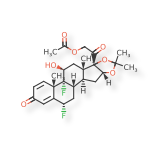
![Structure of (6?,11?,16?)-6,9-Difluoro-11,21-dihydroxy-16,17-[(1-methylethylidene)bis(oxy)]pregna-1,4-diene-3,20-dione](/img/129462f1-891f-49de-8af5-de6456743ed3.svg "Structure of (6?,11?,16?)-6,9-Difluoro-11,21-dihydroxy-16,17-[(1-methylethylidene)bis(oxy)]pregna-1,4-diene-3,20-dione")
| Related Record | Type | Details | ||
|---|---|---|---|---|
|
|
ACTIVE MOIETY |
|