


Details
| Stereochemistry | ABSOLUTE |
| Molecular Formula | C7H17NO5.C7H8N4O2 |
| Molecular Weight | 375.3776 |
| Optical Activity | UNSPECIFIED |
| Defined Stereocenters | 4 / 4 |
| E/Z Centers | 0 |
| Charge | 0 |
SHOW SMILES / InChI
SMILES
CNC[C@H](O)[C@@H](O)[C@H](O)[C@H](O)CO.CN1C2=C(NC=N2)C(=O)N(C)C1=O
InChI
InChIKey=SYVYGLNOQIZPJI-WZTVWXICSA-N
InChI=1S/C7H8N4O2.C7H17NO5/c1-10-5-4(8-3-9-5)6(12)11(2)7(10)13;1-8-2-4(10)6(12)7(13)5(11)3-9/h3H,1-2H3,(H,8,9);4-13H,2-3H2,1H3/t;4-,5+,6+,7+/m.0/s1
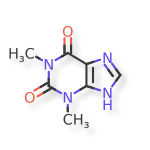
| Molecular Formula | C7H8N4O2 |
| Molecular Weight | 180.164 |
| Charge | 0 |
| Count |
|
| Stereochemistry | ACHIRAL |
| Additional Stereochemistry | No |
| Defined Stereocenters | 0 / 0 |
| E/Z Centers | 0 |
| Optical Activity | NONE |
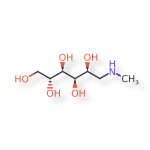
| Molecular Formula | C7H17NO5 |
| Molecular Weight | 195.2136 |
| Charge | 0 |
| Count |
|
| Stereochemistry | ABSOLUTE |
| Additional Stereochemistry | No |
| Defined Stereocenters | 4 / 4 |
| E/Z Centers | 0 |
| Optical Activity | UNSPECIFIED |
DescriptionCurator's Comment: Description was created based on several sources, including
https://www.ncbi.nlm.nih.gov/pubmed/9676340 | https://www.ncbi.nlm.nih.gov/pubmed/27713276
Curator's Comment: Description was created based on several sources, including
https://www.ncbi.nlm.nih.gov/pubmed/9676340 | https://www.ncbi.nlm.nih.gov/pubmed/27713276
Since its discovery as component of the tea leaf by Albert Kossel in 1888, the history of theophylline (CAS 58-55-9) has been a long and successful one. At the turn of the century, theophylline became less expensive due to chemical synthesis and was primarily used as diuretic in subsequent years. It was Samuel Hirsch who discovered the bronchospasmolytic effect of theophylline in 1992, however, despite this pioneering discovery theophylline continued to be used primarily as diuretic and cardiac remedy. The molecular mechanism of bronchodilatation is inhibition of phosphodiesterase(PDE)3 and PDE4, but the anti-inflammatory effect may be due to histone deacetylase (HDAC) activation, resulting in switching off of activated inflammatory genes.
Theophylline is indicated for the treatment of acute exacerbations of the symptoms and reversible airflow obstruction associated with asthma and other chronic lung diseases, e.g., emphysema and chronic bronchitis.
Approval Year
Targets
| Primary Target | Pharmacology | Condition | Potency |
|---|---|---|---|
Conditions
| Condition | Modality | Targets | Highest Phase | Product |
|---|---|---|---|---|
| Primary | THEOPHYLLINE AND DEXTROSE 5% IN PLASTIC CONTAINER Approved UseTheophylline is indicated for the treatment of the symptoms and reversible airflow obstruction associated with chronic asthma and other chronic lung diseases, e.g., emphysema and chronic bronchitis. Launch Date1982 |
Cmax
| Value | Dose | Co-administered | Analyte | Population |
|---|---|---|---|---|
7.3 μg/mL EXPERIMENT https://pubmed.ncbi.nlm.nih.gov/7332727/ |
200 mg single, oral dose: 200 mg route of administration: Oral experiment type: SINGLE co-administered: |
THEOPHYLLINE serum | Homo sapiens population: HEALTHY age: ADULT sex: MALE food status: FASTED |
AUC
| Value | Dose | Co-administered | Analyte | Population |
|---|---|---|---|---|
95.5 μg × h/mL EXPERIMENT https://pubmed.ncbi.nlm.nih.gov/7332727/ |
200 mg single, oral dose: 200 mg route of administration: Oral experiment type: SINGLE co-administered: |
THEOPHYLLINE serum | Homo sapiens population: HEALTHY age: ADULT sex: MALE food status: FASTED |
T1/2
| Value | Dose | Co-administered | Analyte | Population |
|---|---|---|---|---|
8.51 h EXPERIMENT https://pubmed.ncbi.nlm.nih.gov/7332727/ |
200 mg single, oral dose: 200 mg route of administration: Oral experiment type: SINGLE co-administered: |
THEOPHYLLINE serum | Homo sapiens population: HEALTHY age: ADULT sex: MALE food status: FASTED |
Funbound
| Value | Dose | Co-administered | Analyte | Population |
|---|---|---|---|---|
41% EXPERIMENT https://pubmed.ncbi.nlm.nih.gov/7332727/ |
200 mg single, oral dose: 200 mg route of administration: Oral experiment type: SINGLE co-administered: |
THEOPHYLLINE serum | Homo sapiens population: HEALTHY age: ADULT sex: MALE food status: FASTED |
Doses
| Dose | Population | Adverse events |
|---|---|---|
20 mg/mL steady, intravenous Highest studied dose Dose: 20 mg/mL Route: intravenous Route: steady Dose: 20 mg/mL Sources: |
unhealthy, 39 years (51 % < 40 years) Health Status: unhealthy Age Group: 39 years (51 % < 40 years) Sex: M+F Sources: |
Disc. AE: Vomiting... Other AEs: Vomiting... AEs leading to discontinuation/dose reduction: Vomiting (grade 3, 5.75%) Other AEs:Vomiting (12.64%) Sources: |
1200 mg 1 times / day steady, oral Recommended Dose: 1200 mg, 1 times / day Route: oral Route: steady Dose: 1200 mg, 1 times / day Sources: |
unhealthy, 66 ± 9 |
Disc. AE: Gastrointestinal discomfort, Supraventricular tachycardia... Other AEs: Tremor, Nervousness... AEs leading to discontinuation/dose reduction: Gastrointestinal discomfort (grade 3, 16.7%) Other AEs:Supraventricular tachycardia (grade 3, 16.7%) Tremor (16.7%) Sources: Nervousness (16.7%) Dysrhythmias (grade 1, 16.7%) |
800 mg single, oral Recommended |
unhealthy, 66 ± 9 |
|
800 mg 1 times / day steady, oral Recommended Dose: 800 mg, 1 times / day Route: oral Route: steady Dose: 800 mg, 1 times / day Sources: |
unhealthy, 66 ± 9 |
|
1600 mg 1 times / day multiple, oral Overdose Dose: 1600 mg, 1 times / day Route: oral Route: multiple Dose: 1600 mg, 1 times / day Sources: |
unhealthy Health Status: unhealthy Sources: |
Other AEs: Generalized epileptic seizure, Cardiac arrhythmias... Other AEs: Generalized epileptic seizure (grade 4-5) Sources: Cardiac arrhythmias (grade 4-5) Calcium increased serum Creatine kinase increased Blood myoglobin increased Leukocyte count increased Serum phosphate decreased Magnesium serum decreased Acute myocardial infarction Obstructive uropathy Cardio-respiratory arrest (grade 5) Hypoxic encephalopathy (grade 5) |
1600 mg 1 times / day multiple, oral Overdose Dose: 1600 mg, 1 times / day Route: oral Route: multiple Dose: 1600 mg, 1 times / day Sources: |
unhealthy Health Status: unhealthy Sources: |
Other AEs: Vomiting, Hypokalemia... Other AEs: Vomiting (30%) Sources: Hypokalemia (44%) Hyperglycemia (18%) Acid-base balance abnoraml (9%) Sinus tachycardia (100%) Supraventricular tachycardia (12%) Premature ventricular ectopic beats (10%) Atrial flutter/ fibrillation (12%) Multifocal atrial tachycardia (2%) Hemodynamic instability (40%) Tremor (16%) Seizures (14%) |
1600 mg 1 times / day multiple, oral Overdose Dose: 1600 mg, 1 times / day Route: oral Route: multiple Dose: 1600 mg, 1 times / day Sources: |
unhealthy Health Status: unhealthy Sources: |
Other AEs: Vomiting, Abdominal pain... Other AEs: Vomiting (61%) Sources: Abdominal pain (12%) Diarrhea (14%) Hematemesis (2%) Hypokalemia (43%) Acid-base balance abnoraml (9%) Sinus tachycardia (62%) Supraventricular tachycardia (14%) Premature ventricular ectopic beats (19%) Hypotension (8%) Nervousness (21%) Tremor (14%) Disorientation (11%) Seizures (5%) |
10 mg/kg single, oral Overdose Dose: 10 mg/kg Route: oral Route: single Dose: 10 mg/kg Sources: |
unknown Health Status: unknown Sources: |
Other AEs: Vomiting, Hypokalemia... Other AEs: Vomiting (73%) Sources: Hypokalemia (85%) Hyperglycemia (98%) Acid-base balance abnoraml (34%) Sinus tachycardia (100%) Supraventricular tachycardia (2%) Premature ventricular ectopic beats (3%) Atrial flutter/ fibrillation (1%) Hemodynamic instability (7%) Tremor (38%) Seizures (5%) |
10 mg/kg single, oral Overdose Dose: 10 mg/kg Route: oral Route: single Dose: 10 mg/kg Sources: |
unknown Health Status: unknown Sources: |
Other AEs: Abdominal pain, Rhabdomyolysis... Other AEs: Abdominal pain (21%) Sources: Rhabdomyolysis (7%) Hypotension (21%) Nervousness (64%) Disorientation (7%) |
AEs
| AE | Significance | Dose | Population |
|---|---|---|---|
| Vomiting | 12.64% | 20 mg/mL steady, intravenous Highest studied dose Dose: 20 mg/mL Route: intravenous Route: steady Dose: 20 mg/mL Sources: |
unhealthy, 39 years (51 % < 40 years) Health Status: unhealthy Age Group: 39 years (51 % < 40 years) Sex: M+F Sources: |
| Vomiting | grade 3, 5.75% Disc. AE |
20 mg/mL steady, intravenous Highest studied dose Dose: 20 mg/mL Route: intravenous Route: steady Dose: 20 mg/mL Sources: |
unhealthy, 39 years (51 % < 40 years) Health Status: unhealthy Age Group: 39 years (51 % < 40 years) Sex: M+F Sources: |
| Nervousness | 16.7% | 1200 mg 1 times / day steady, oral Recommended Dose: 1200 mg, 1 times / day Route: oral Route: steady Dose: 1200 mg, 1 times / day Sources: |
unhealthy, 66 ± 9 |
| Tremor | 16.7% | 1200 mg 1 times / day steady, oral Recommended Dose: 1200 mg, 1 times / day Route: oral Route: steady Dose: 1200 mg, 1 times / day Sources: |
unhealthy, 66 ± 9 |
| Dysrhythmias | grade 1, 16.7% | 1200 mg 1 times / day steady, oral Recommended Dose: 1200 mg, 1 times / day Route: oral Route: steady Dose: 1200 mg, 1 times / day Sources: |
unhealthy, 66 ± 9 |
| Gastrointestinal discomfort | grade 3, 16.7% Disc. AE |
1200 mg 1 times / day steady, oral Recommended Dose: 1200 mg, 1 times / day Route: oral Route: steady Dose: 1200 mg, 1 times / day Sources: |
unhealthy, 66 ± 9 |
| Supraventricular tachycardia | grade 3, 16.7% Disc. AE |
1200 mg 1 times / day steady, oral Recommended Dose: 1200 mg, 1 times / day Route: oral Route: steady Dose: 1200 mg, 1 times / day Sources: |
unhealthy, 66 ± 9 |
| Acute myocardial infarction | 1600 mg 1 times / day multiple, oral Overdose Dose: 1600 mg, 1 times / day Route: oral Route: multiple Dose: 1600 mg, 1 times / day Sources: |
unhealthy Health Status: unhealthy Sources: |
|
| Blood myoglobin increased | 1600 mg 1 times / day multiple, oral Overdose Dose: 1600 mg, 1 times / day Route: oral Route: multiple Dose: 1600 mg, 1 times / day Sources: |
unhealthy Health Status: unhealthy Sources: |
|
| Calcium increased serum | 1600 mg 1 times / day multiple, oral Overdose Dose: 1600 mg, 1 times / day Route: oral Route: multiple Dose: 1600 mg, 1 times / day Sources: |
unhealthy Health Status: unhealthy Sources: |
|
| Creatine kinase increased | 1600 mg 1 times / day multiple, oral Overdose Dose: 1600 mg, 1 times / day Route: oral Route: multiple Dose: 1600 mg, 1 times / day Sources: |
unhealthy Health Status: unhealthy Sources: |
|
| Leukocyte count increased | 1600 mg 1 times / day multiple, oral Overdose Dose: 1600 mg, 1 times / day Route: oral Route: multiple Dose: 1600 mg, 1 times / day Sources: |
unhealthy Health Status: unhealthy Sources: |
|
| Magnesium serum decreased | 1600 mg 1 times / day multiple, oral Overdose Dose: 1600 mg, 1 times / day Route: oral Route: multiple Dose: 1600 mg, 1 times / day Sources: |
unhealthy Health Status: unhealthy Sources: |
|
| Obstructive uropathy | 1600 mg 1 times / day multiple, oral Overdose Dose: 1600 mg, 1 times / day Route: oral Route: multiple Dose: 1600 mg, 1 times / day Sources: |
unhealthy Health Status: unhealthy Sources: |
|
| Serum phosphate decreased | 1600 mg 1 times / day multiple, oral Overdose Dose: 1600 mg, 1 times / day Route: oral Route: multiple Dose: 1600 mg, 1 times / day Sources: |
unhealthy Health Status: unhealthy Sources: |
|
| Cardiac arrhythmias | grade 4-5 | 1600 mg 1 times / day multiple, oral Overdose Dose: 1600 mg, 1 times / day Route: oral Route: multiple Dose: 1600 mg, 1 times / day Sources: |
unhealthy Health Status: unhealthy Sources: |
| Generalized epileptic seizure | grade 4-5 | 1600 mg 1 times / day multiple, oral Overdose Dose: 1600 mg, 1 times / day Route: oral Route: multiple Dose: 1600 mg, 1 times / day Sources: |
unhealthy Health Status: unhealthy Sources: |
| Cardio-respiratory arrest | grade 5 | 1600 mg 1 times / day multiple, oral Overdose Dose: 1600 mg, 1 times / day Route: oral Route: multiple Dose: 1600 mg, 1 times / day Sources: |
unhealthy Health Status: unhealthy Sources: |
| Hypoxic encephalopathy | grade 5 | 1600 mg 1 times / day multiple, oral Overdose Dose: 1600 mg, 1 times / day Route: oral Route: multiple Dose: 1600 mg, 1 times / day Sources: |
unhealthy Health Status: unhealthy Sources: |
| Premature ventricular ectopic beats | 10% | 1600 mg 1 times / day multiple, oral Overdose Dose: 1600 mg, 1 times / day Route: oral Route: multiple Dose: 1600 mg, 1 times / day Sources: |
unhealthy Health Status: unhealthy Sources: |
| Sinus tachycardia | 100% | 1600 mg 1 times / day multiple, oral Overdose Dose: 1600 mg, 1 times / day Route: oral Route: multiple Dose: 1600 mg, 1 times / day Sources: |
unhealthy Health Status: unhealthy Sources: |
| Atrial flutter/ fibrillation | 12% | 1600 mg 1 times / day multiple, oral Overdose Dose: 1600 mg, 1 times / day Route: oral Route: multiple Dose: 1600 mg, 1 times / day Sources: |
unhealthy Health Status: unhealthy Sources: |
| Supraventricular tachycardia | 12% | 1600 mg 1 times / day multiple, oral Overdose Dose: 1600 mg, 1 times / day Route: oral Route: multiple Dose: 1600 mg, 1 times / day Sources: |
unhealthy Health Status: unhealthy Sources: |
| Seizures | 14% | 1600 mg 1 times / day multiple, oral Overdose Dose: 1600 mg, 1 times / day Route: oral Route: multiple Dose: 1600 mg, 1 times / day Sources: |
unhealthy Health Status: unhealthy Sources: |
| Tremor | 16% | 1600 mg 1 times / day multiple, oral Overdose Dose: 1600 mg, 1 times / day Route: oral Route: multiple Dose: 1600 mg, 1 times / day Sources: |
unhealthy Health Status: unhealthy Sources: |
| Hyperglycemia | 18% | 1600 mg 1 times / day multiple, oral Overdose Dose: 1600 mg, 1 times / day Route: oral Route: multiple Dose: 1600 mg, 1 times / day Sources: |
unhealthy Health Status: unhealthy Sources: |
| Multifocal atrial tachycardia | 2% | 1600 mg 1 times / day multiple, oral Overdose Dose: 1600 mg, 1 times / day Route: oral Route: multiple Dose: 1600 mg, 1 times / day Sources: |
unhealthy Health Status: unhealthy Sources: |
| Vomiting | 30% | 1600 mg 1 times / day multiple, oral Overdose Dose: 1600 mg, 1 times / day Route: oral Route: multiple Dose: 1600 mg, 1 times / day Sources: |
unhealthy Health Status: unhealthy Sources: |
| Hemodynamic instability | 40% | 1600 mg 1 times / day multiple, oral Overdose Dose: 1600 mg, 1 times / day Route: oral Route: multiple Dose: 1600 mg, 1 times / day Sources: |
unhealthy Health Status: unhealthy Sources: |
| Hypokalemia | 44% | 1600 mg 1 times / day multiple, oral Overdose Dose: 1600 mg, 1 times / day Route: oral Route: multiple Dose: 1600 mg, 1 times / day Sources: |
unhealthy Health Status: unhealthy Sources: |
| Acid-base balance abnoraml | 9% | 1600 mg 1 times / day multiple, oral Overdose Dose: 1600 mg, 1 times / day Route: oral Route: multiple Dose: 1600 mg, 1 times / day Sources: |
unhealthy Health Status: unhealthy Sources: |
| Disorientation | 11% | 1600 mg 1 times / day multiple, oral Overdose Dose: 1600 mg, 1 times / day Route: oral Route: multiple Dose: 1600 mg, 1 times / day Sources: |
unhealthy Health Status: unhealthy Sources: |
| Abdominal pain | 12% | 1600 mg 1 times / day multiple, oral Overdose Dose: 1600 mg, 1 times / day Route: oral Route: multiple Dose: 1600 mg, 1 times / day Sources: |
unhealthy Health Status: unhealthy Sources: |
| Diarrhea | 14% | 1600 mg 1 times / day multiple, oral Overdose Dose: 1600 mg, 1 times / day Route: oral Route: multiple Dose: 1600 mg, 1 times / day Sources: |
unhealthy Health Status: unhealthy Sources: |
| Supraventricular tachycardia | 14% | 1600 mg 1 times / day multiple, oral Overdose Dose: 1600 mg, 1 times / day Route: oral Route: multiple Dose: 1600 mg, 1 times / day Sources: |
unhealthy Health Status: unhealthy Sources: |
| Tremor | 14% | 1600 mg 1 times / day multiple, oral Overdose Dose: 1600 mg, 1 times / day Route: oral Route: multiple Dose: 1600 mg, 1 times / day Sources: |
unhealthy Health Status: unhealthy Sources: |
| Premature ventricular ectopic beats | 19% | 1600 mg 1 times / day multiple, oral Overdose Dose: 1600 mg, 1 times / day Route: oral Route: multiple Dose: 1600 mg, 1 times / day Sources: |
unhealthy Health Status: unhealthy Sources: |
| Hematemesis | 2% | 1600 mg 1 times / day multiple, oral Overdose Dose: 1600 mg, 1 times / day Route: oral Route: multiple Dose: 1600 mg, 1 times / day Sources: |
unhealthy Health Status: unhealthy Sources: |
| Nervousness | 21% | 1600 mg 1 times / day multiple, oral Overdose Dose: 1600 mg, 1 times / day Route: oral Route: multiple Dose: 1600 mg, 1 times / day Sources: |
unhealthy Health Status: unhealthy Sources: |
| Hypokalemia | 43% | 1600 mg 1 times / day multiple, oral Overdose Dose: 1600 mg, 1 times / day Route: oral Route: multiple Dose: 1600 mg, 1 times / day Sources: |
unhealthy Health Status: unhealthy Sources: |
| Seizures | 5% | 1600 mg 1 times / day multiple, oral Overdose Dose: 1600 mg, 1 times / day Route: oral Route: multiple Dose: 1600 mg, 1 times / day Sources: |
unhealthy Health Status: unhealthy Sources: |
| Vomiting | 61% | 1600 mg 1 times / day multiple, oral Overdose Dose: 1600 mg, 1 times / day Route: oral Route: multiple Dose: 1600 mg, 1 times / day Sources: |
unhealthy Health Status: unhealthy Sources: |
| Sinus tachycardia | 62% | 1600 mg 1 times / day multiple, oral Overdose Dose: 1600 mg, 1 times / day Route: oral Route: multiple Dose: 1600 mg, 1 times / day Sources: |
unhealthy Health Status: unhealthy Sources: |
| Hypotension | 8% | 1600 mg 1 times / day multiple, oral Overdose Dose: 1600 mg, 1 times / day Route: oral Route: multiple Dose: 1600 mg, 1 times / day Sources: |
unhealthy Health Status: unhealthy Sources: |
| Acid-base balance abnoraml | 9% | 1600 mg 1 times / day multiple, oral Overdose Dose: 1600 mg, 1 times / day Route: oral Route: multiple Dose: 1600 mg, 1 times / day Sources: |
unhealthy Health Status: unhealthy Sources: |
| Atrial flutter/ fibrillation | 1% | 10 mg/kg single, oral Overdose Dose: 10 mg/kg Route: oral Route: single Dose: 10 mg/kg Sources: |
unknown Health Status: unknown Sources: |
| Sinus tachycardia | 100% | 10 mg/kg single, oral Overdose Dose: 10 mg/kg Route: oral Route: single Dose: 10 mg/kg Sources: |
unknown Health Status: unknown Sources: |
| Supraventricular tachycardia | 2% | 10 mg/kg single, oral Overdose Dose: 10 mg/kg Route: oral Route: single Dose: 10 mg/kg Sources: |
unknown Health Status: unknown Sources: |
| Premature ventricular ectopic beats | 3% | 10 mg/kg single, oral Overdose Dose: 10 mg/kg Route: oral Route: single Dose: 10 mg/kg Sources: |
unknown Health Status: unknown Sources: |
| Acid-base balance abnoraml | 34% | 10 mg/kg single, oral Overdose Dose: 10 mg/kg Route: oral Route: single Dose: 10 mg/kg Sources: |
unknown Health Status: unknown Sources: |
| Tremor | 38% | 10 mg/kg single, oral Overdose Dose: 10 mg/kg Route: oral Route: single Dose: 10 mg/kg Sources: |
unknown Health Status: unknown Sources: |
| Seizures | 5% | 10 mg/kg single, oral Overdose Dose: 10 mg/kg Route: oral Route: single Dose: 10 mg/kg Sources: |
unknown Health Status: unknown Sources: |
| Hemodynamic instability | 7% | 10 mg/kg single, oral Overdose Dose: 10 mg/kg Route: oral Route: single Dose: 10 mg/kg Sources: |
unknown Health Status: unknown Sources: |
| Vomiting | 73% | 10 mg/kg single, oral Overdose Dose: 10 mg/kg Route: oral Route: single Dose: 10 mg/kg Sources: |
unknown Health Status: unknown Sources: |
| Hypokalemia | 85% | 10 mg/kg single, oral Overdose Dose: 10 mg/kg Route: oral Route: single Dose: 10 mg/kg Sources: |
unknown Health Status: unknown Sources: |
| Hyperglycemia | 98% | 10 mg/kg single, oral Overdose Dose: 10 mg/kg Route: oral Route: single Dose: 10 mg/kg Sources: |
unknown Health Status: unknown Sources: |
| Abdominal pain | 21% | 10 mg/kg single, oral Overdose Dose: 10 mg/kg Route: oral Route: single Dose: 10 mg/kg Sources: |
unknown Health Status: unknown Sources: |
| Hypotension | 21% | 10 mg/kg single, oral Overdose Dose: 10 mg/kg Route: oral Route: single Dose: 10 mg/kg Sources: |
unknown Health Status: unknown Sources: |
| Nervousness | 64% | 10 mg/kg single, oral Overdose Dose: 10 mg/kg Route: oral Route: single Dose: 10 mg/kg Sources: |
unknown Health Status: unknown Sources: |
| Disorientation | 7% | 10 mg/kg single, oral Overdose Dose: 10 mg/kg Route: oral Route: single Dose: 10 mg/kg Sources: |
unknown Health Status: unknown Sources: |
| Rhabdomyolysis | 7% | 10 mg/kg single, oral Overdose Dose: 10 mg/kg Route: oral Route: single Dose: 10 mg/kg Sources: |
unknown Health Status: unknown Sources: |
PubMed
| Title | Date | PubMed |
|---|---|---|
| Escape deficits induced by inescapable shock and metabolic stress are reversed by adenosine receptor antagonists. | 2001-05 |
|
| Preparation of controlled release systems by free-radical UV polymerizations in the presence of a drug. | 2001-04-02 |
|
| Creatinine clearance overestimated glomerular filtration rate in a heavy tea-drinker. | 2001-04 |
|
| Differential effects of fluvoxamine and other antidepressants on the biotransformation of melatonin. | 2001-04 |
|
| Antiasthmatic effect of YM976, a novel PDE4 inhibitor, in guinea pigs. | 2001-04 |
|
| Activation of glutamate uptake by guanosine in primary astrocyte cultures. | 2001-03-26 |
|
| A multiparticulate drug-delivery system based on pellets incorporated into congealable polyethylene glycol carrier materials. | 2001-03-23 |
|
| Profile of moxifloxacin drug interactions. | 2001-03-15 |
|
| Cytosolic xanthine oxidoreductase mediated bioactivation of ethanol to acetaldehyde and free radicals in rat breast tissue. Its potential role in alcohol-promoted mammary cancer. | 2001-03-07 |
|
| Inhibitory effect of theophylline on recombinant GABA(A) receptor. | 2001-03-05 |
|
| Newer and alternative non-steroidal treatments for asthmatic inflammation. | 2001-03-03 |
|
| The mechanism of gentisic acid-induced relaxation of the guinea pig isolated trachea: the role of potassium channels and vasoactive intestinal peptide receptors. | 2001-03 |
|
| Intravenous theophylline--an alternative to temporary pacing in the management of bradycardia secondary to AV nodal block. | 2001-03 |
|
| Drug treatment of airway inflammation in asthma. | 2001-03 |
|
| Plasma adenosine levels and P-selectin expression on platelets in preeclampsia. | 2001-03 |
|
| Adenosine inhibits norepinephrine release in the postischemic rat heart: the mechanism of neuronal stunning. | 2001-03 |
|
| Antiarrhythmic effects of adenosine on ischemia-induced ventricular fibrillation. | 2001-03 |
|
| Study of in vitro and in vivo dissolution of theophylline from film-coated pellets. | 2001-03 |
|
| New combination therapies for asthma. | 2001-03 |
|
| Refractory seizure with hypokalaemia. | 2001-03 |
|
| Continuous venovenous haemofiltration for the treatment of theophylline toxicity. | 2001-03 |
|
| Improvement of encapsulation efficiency of water-in-oil-in-water emulsion with hypertonic inner aqueous phase. | 2001-02-24 |
|
| Role of adenosine and glycogen in ischemic preconditioning of rat hearts. | 2001-02-23 |
|
| Comparison of the potency of adenosine as an agonist at human adenosine receptors expressed in Chinese hamster ovary cells. | 2001-02-15 |
|
| Screening of beta-2 agonists and confirmation of fenoterol, orciprenaline, reproterol and terbutaline with gas chromatography-mass spectrometry as tetrahydroisoquinoline derivatives. | 2001-02-10 |
|
| Determination of urinary methylated purine pattern by high-performance liquid chromatography. | 2001-02-10 |
|
| [Cerebral infarction in a patient consuming MaHuang extract and guarana]. | 2001-02-03 |
|
| [Use of the paraxanthine/caffeine ratio in the saliva of patients with liver cirrhosis]. | 2001-02-01 |
|
| How to safeguard delivery of high-alert i.v. drugs. | 2001-02 |
|
| Caffeine metabolism before and after liver transplantation. | 2001-02 |
|
| Metabolism of 2-amino-3,8-dimethylimidazo[4,5-f]quinoxaline in human hepatocytes: 2-amino-3-methylimidazo[4,5-f]quinoxaline-8-carboxylic acid is a major detoxification pathway catalyzed by cytochrome P450 1A2. | 2001-02 |
|
| High-throughput cytochrome P450 (CYP) inhibition screening via a cassette probe-dosing strategy. V. Validation of a direct injection/on-line guard cartridge extraction--tandem mass spectrometry method for CYP1A2 inhibition assessment. | 2001-02 |
|
| Myocardial perfusion imaging findings and the role of adenosine in the warm-up angina phenomenon. | 2001-02 |
|
| Theophylline metabolism after cardiac surgery. | 2001-02 |
|
| Effect of coadministered drugs and ethanol on the binding of therapeutic drugs to human serum in vitro. | 2001-02 |
|
| [Rhabdomyolysis as a rare complication of theophylline poisoning]. | 2001-01-15 |
|
| Suspected caffeine and ephedrine toxicosis resulting from ingestion of an herbal supplement containing guarana and ma huang in dogs: 47 cases (1997-1999). | 2001-01-15 |
|
| [Theophylline in the treatment of sleep-related breathing disorders]. | 2001-01 |
|
| Development of heart failure in bradycardic sick sinus syndrome. | 2001-01 |
|
| Caffeine metabolism in a group of 67 patients with primary biliary cirrhosis. | 2001-01 |
|
| Computerised advice on drug dosage to improve prescribing practice. | 2001 |
|
| Oral methyl-xanthines for bronchiectasis. | 2001 |
|
| Methyl-xanthines for exacerbations of chronic obstructive pulmonary disease. | 2001 |
|
| Treatment options for sleep apnoea. | 2001 |
|
| Doxofylline: a new generation xanthine bronchodilator devoid of major cardiovascular adverse effects. | 2001 |
|
| Time dependence of elastic recovery for characterization of tableting materials. | 2001 |
|
| A comparison of reflectance and transmittance near-infrared spectroscopic techniques in determining drug content in intact tablets. | 2001 |
|
| A novel method for measuring gel strength of controlled release hydrogel tablets using a cone/plate rheometer. | 2001 |
|
| Rat ventral prostate xanthine oxidase bioactivation of ethanol to acetaldehyde and 1-hydroxyethyl free radicals: analysis of its potential role in heavy alcohol drinking tumor-promoting effects. | 2001 |
|
| Caffeine citrate: a review of its use in apnoea of prematurity. | 2001 |
Patents
Sample Use Guides
For a given population there is no single theophylline dose that will provide both safe
and effective serum concentrations for all patients. The dose of theophylline must be individualized on the basis of serum theophylline concentration measurements in order to achieve a dose that will provide maximum potential benefit with minimal risk of adverse effects.
Route of Administration:
Other
| Substance Class |
Chemical
Created
by
admin
on
Edited
Mon Mar 31 17:47:07 GMT 2025
by
admin
on
Mon Mar 31 17:47:07 GMT 2025
|
| Record UNII |
1442U7XKHA
|
| Record Status |
Validated (UNII)
|
| Record Version |
|
-
Download
| Name | Type | Language | ||
|---|---|---|---|---|
|
Preferred Name | English |
| Code System | Code | Type | Description | ||
|---|---|---|---|---|---|
|
1442U7XKHA
Created by
admin on Mon Mar 31 17:47:07 GMT 2025 , Edited by admin on Mon Mar 31 17:47:07 GMT 2025
|
PRIMARY | |||
|
8048-39-3
Created by
admin on Mon Mar 31 17:47:07 GMT 2025 , Edited by admin on Mon Mar 31 17:47:07 GMT 2025
|
PRIMARY | |||
|
67829207
Created by
admin on Mon Mar 31 17:47:07 GMT 2025 , Edited by admin on Mon Mar 31 17:47:07 GMT 2025
|
PRIMARY |
| Related Record | Type | Details | ||
|---|---|---|---|---|
|
|
PARENT -> SALT/SOLVATE | |||
|
|
PARENT -> SALT/SOLVATE |
| Related Record | Type | Details | ||
|---|---|---|---|---|
|
|
ACTIVE MOIETY |