


Details
| Stereochemistry | ACHIRAL |
| Molecular Formula | C17H12Cl2N4 |
| Molecular Weight | 343.21 |
| Optical Activity | NONE |
| Defined Stereocenters | 0 / 0 |
| E/Z Centers | 0 |
| Charge | 0 |
SHOW SMILES / InChI
SMILES
CC1=NN=C2CN=C(C3=CC=CC=C3Cl)C4=CC(Cl)=CC=C4N12
InChI
InChIKey=JOFWLTCLBGQGBO-UHFFFAOYSA-N
InChI=1S/C17H12Cl2N4/c1-10-21-22-16-9-20-17(12-4-2-3-5-14(12)19)13-8-11(18)6-7-15(13)23(10)16/h2-8H,9H2,1H3
| Molecular Formula | C17H12Cl2N4 |
| Molecular Weight | 343.21 |
| Charge | 0 |
| Count |
|
| Stereochemistry | ACHIRAL |
| Additional Stereochemistry | No |
| Defined Stereocenters | 0 / 0 |
| E/Z Centers | 0 |
| Optical Activity | NONE |
DescriptionSources: http://www.drugbank.ca/drugs/DB00897Curator's Comment: Description was created based on several sources, including
http://www.accessdata.fda.gov/drugsatfda_docs/label/2008/017892s038lbl.pdf
Sources: http://www.drugbank.ca/drugs/DB00897
Curator's Comment: Description was created based on several sources, including
http://www.accessdata.fda.gov/drugsatfda_docs/label/2008/017892s038lbl.pdf
Triazolam is a short-acting benzodiazepine used as a hypnotic agent in the treatment of insomnia. Some countries temporarily withdrew triazolam from the market because of concerns about adverse reactions, mostly psychological, associated with higher dose ranges. Its use at lower doses with appropriate care and labeling has been reaffirmed by the FDA and most other countries. Triazolam has a shorter half-life than chlordiazepoxide, flurazepam, and prazepam and does not generate active metabolites. Benzodiazepines bind nonspecifically to bezodiazepine receptors BNZ1, which mediates sleep, and BNZ2, which affects affects muscle relaxation, anticonvulsant activity, motor coordination, and memory. As benzodiazepine receptors are thought to be coupled to gamma-aminobutyric acid-A (GABAA) receptors, this enhances the effects of GABA by increasing GABA affinity for the GABA receptor. Binding of GABA to the site opens the chloride channel, resulting in a hyperpolarized cell membrane that prevents further excitation of the cell. Triazolam is used for the short-term treatment of insomnia. Triazolam`s original brand name is Halcion. Triazolam is withdrawn in the United Kingdom due to risk of psychiatric adverse drug reactions. This drug continues to be available in the U.S. Internationally, triazolam is a Schedule IV drug under the Convention on Psychotropic Substances.
CNS Activity
Originator
Approval Year
Targets
| Primary Target | Pharmacology | Condition | Potency |
|---|---|---|---|
| 0.8 nM [Ki] | |||
Target ID: CHEMBL2094130 |
0.59 nM [Ki] | ||
Target ID: CHEMBL2094121 |
0.8 nM [Ki] | ||
Target ID: CHEMBL2094120 |
1.43 nM [Ki] | ||
Target ID: CHEMBL2094122 |
1.54 nM [Ki] |
Conditions
| Condition | Modality | Targets | Highest Phase | Product |
|---|---|---|---|---|
| Primary | Halcion Approved UseHalcion is indicated for the short-term treatment of insomnia (generally 7–10 days). Use for more than 2–3 weeks requires complete reevaluation of the patient Launch Date1982 |
Cmax
| Value | Dose | Co-administered | Analyte | Population |
|---|---|---|---|---|
4.39 ng/mL EXPERIMENT https://pubmed.ncbi.nlm.nih.gov/8275618/ |
0.25 mg single, oral dose: 0.25 mg route of administration: Oral experiment type: SINGLE co-administered: |
TRIAZOLAM plasma | Homo sapiens population: HEALTHY age: ADULT sex: FEMALE / MALE food status: FASTED |
|
3.75 ng/mL EXPERIMENT https://pubmed.ncbi.nlm.nih.gov/8275618/ |
0.25 mg single, oral dose: 0.25 mg route of administration: Oral experiment type: SINGLE co-administered: |
TRIAZOLAM plasma | Homo sapiens population: UNHEALTHY age: ADULT sex: FEMALE / MALE food status: FASTED |
|
1.69 ng/mL EXPERIMENT https://pubmed.ncbi.nlm.nih.gov/11503006/ |
0.25 mg single, oral dose: 0.25 mg route of administration: Oral experiment type: SINGLE co-administered: |
TRIAZOLAM plasma | Homo sapiens population: HEALTHY age: ADULT sex: FEMALE / MALE food status: UNKNOWN |
|
0.91 ng/mL EXPERIMENT https://pubmed.ncbi.nlm.nih.gov/11503006/ |
0.25 mg single, oral dose: 0.25 mg route of administration: Oral experiment type: SINGLE co-administered: |
.ALPHA.-HYDROXYTRIAZOLAM plasma | Homo sapiens population: HEALTHY age: ADULT sex: FEMALE / MALE food status: UNKNOWN |
|
1.05 ng/mL EXPERIMENT https://pubmed.ncbi.nlm.nih.gov/11503006/ |
0.25 mg single, oral dose: 0.25 mg route of administration: Oral experiment type: SINGLE co-administered: |
.ALPHA.-HYDROXYTRIAZOLAM plasma | Homo sapiens population: HEALTHY age: ADULT sex: FEMALE / MALE food status: UNKNOWN |
|
1.69 ng/mL EXPERIMENT https://pubmed.ncbi.nlm.nih.gov/11503006/ |
0.25 mg single, oral dose: 0.25 mg route of administration: Oral experiment type: SINGLE co-administered: |
TRIAZOLAM plasma | Homo sapiens population: HEALTHY age: ADULT sex: FEMALE / MALE food status: UNKNOWN |
AUC
| Value | Dose | Co-administered | Analyte | Population |
|---|---|---|---|---|
13.78 ng × h/mL EXPERIMENT https://pubmed.ncbi.nlm.nih.gov/8275618/ |
0.25 mg single, oral dose: 0.25 mg route of administration: Oral experiment type: SINGLE co-administered: |
TRIAZOLAM plasma | Homo sapiens population: HEALTHY age: ADULT sex: FEMALE / MALE food status: FASTED |
|
13.05 ng × h/mL EXPERIMENT https://pubmed.ncbi.nlm.nih.gov/8275618/ |
0.25 mg single, oral dose: 0.25 mg route of administration: Oral experiment type: SINGLE co-administered: |
TRIAZOLAM plasma | Homo sapiens population: UNHEALTHY age: ADULT sex: FEMALE / MALE food status: FASTED |
|
9.93 ng × h/mL EXPERIMENT https://pubmed.ncbi.nlm.nih.gov/11503006/ |
0.25 mg single, oral dose: 0.25 mg route of administration: Oral experiment type: SINGLE co-administered: |
TRIAZOLAM plasma | Homo sapiens population: HEALTHY age: ADULT sex: FEMALE / MALE food status: UNKNOWN |
|
5.88 ng × h/mL EXPERIMENT https://pubmed.ncbi.nlm.nih.gov/11503006/ |
0.25 mg single, oral dose: 0.25 mg route of administration: Oral experiment type: SINGLE co-administered: |
.ALPHA.-HYDROXYTRIAZOLAM plasma | Homo sapiens population: HEALTHY age: ADULT sex: FEMALE / MALE food status: UNKNOWN |
|
7.99 ng × h/mL EXPERIMENT https://pubmed.ncbi.nlm.nih.gov/11503006/ |
0.25 mg single, oral dose: 0.25 mg route of administration: Oral experiment type: SINGLE co-administered: |
.ALPHA.-HYDROXYTRIAZOLAM plasma | Homo sapiens population: HEALTHY age: ADULT sex: FEMALE / MALE food status: UNKNOWN |
|
11.8 ng × h/mL EXPERIMENT https://pubmed.ncbi.nlm.nih.gov/11503006/ |
0.25 mg single, oral dose: 0.25 mg route of administration: Oral experiment type: SINGLE co-administered: |
TRIAZOLAM plasma | Homo sapiens population: HEALTHY age: ADULT sex: FEMALE / MALE food status: UNKNOWN |
T1/2
| Value | Dose | Co-administered | Analyte | Population |
|---|---|---|---|---|
2.27 h EXPERIMENT https://pubmed.ncbi.nlm.nih.gov/8275618/ |
0.25 mg single, oral dose: 0.25 mg route of administration: Oral experiment type: SINGLE co-administered: |
TRIAZOLAM plasma | Homo sapiens population: HEALTHY age: ADULT sex: FEMALE / MALE food status: FASTED |
|
4.07 h EXPERIMENT https://pubmed.ncbi.nlm.nih.gov/8275618/ |
0.25 mg single, oral dose: 0.25 mg route of administration: Oral experiment type: SINGLE co-administered: |
TRIAZOLAM plasma | Homo sapiens population: UNHEALTHY age: ADULT sex: FEMALE / MALE food status: FASTED |
|
3.18 h EXPERIMENT https://pubmed.ncbi.nlm.nih.gov/11503006/ |
0.25 mg single, oral dose: 0.25 mg route of administration: Oral experiment type: SINGLE co-administered: |
TRIAZOLAM plasma | Homo sapiens population: HEALTHY age: ADULT sex: FEMALE / MALE food status: UNKNOWN |
|
5.54 h EXPERIMENT https://pubmed.ncbi.nlm.nih.gov/11503006/ |
0.25 mg single, oral dose: 0.25 mg route of administration: Oral experiment type: SINGLE co-administered: |
.ALPHA.-HYDROXYTRIAZOLAM plasma | Homo sapiens population: HEALTHY age: ADULT sex: FEMALE / MALE food status: UNKNOWN |
|
5.49 h EXPERIMENT https://pubmed.ncbi.nlm.nih.gov/11503006/ |
0.25 mg single, oral dose: 0.25 mg route of administration: Oral experiment type: SINGLE co-administered: |
.ALPHA.-HYDROXYTRIAZOLAM plasma | Homo sapiens population: HEALTHY age: ADULT sex: FEMALE / MALE food status: UNKNOWN |
|
3.48 h EXPERIMENT https://pubmed.ncbi.nlm.nih.gov/11503006/ |
0.25 mg single, oral dose: 0.25 mg route of administration: Oral experiment type: SINGLE co-administered: |
TRIAZOLAM plasma | Homo sapiens population: HEALTHY age: ADULT sex: FEMALE / MALE food status: UNKNOWN |
Doses
| Dose | Population | Adverse events |
|---|---|---|
3 mg single, oral Highest studied dose |
unhealthy, 21 - 60 years Health Status: unhealthy Age Group: 21 - 60 years Sex: M Sources: |
Disc. AE: Ataxia, Drowsiness... AEs leading to discontinuation/dose reduction: Ataxia (1 patient) Sources: Drowsiness (1 patient) |
0.25 mg 1 times / day steady, oral Recommended Dose: 0.25 mg, 1 times / day Route: oral Route: steady Dose: 0.25 mg, 1 times / day Sources: |
unhealthy Health Status: unhealthy Sources: |
Disc. AE: Coordination abnormal, Drowsiness... AEs leading to discontinuation/dose reduction: Coordination abnormal Sources: Drowsiness Groggy Somnolence Depression Restlessness Dizziness Lightheadedness Headache Nausea Visual disturbance Nervousness Abdominal distress Bladder disorders NEC Aching in limb Backache Blepharitis |
AEs
| AE | Significance | Dose | Population |
|---|---|---|---|
| Ataxia | 1 patient Disc. AE |
3 mg single, oral Highest studied dose |
unhealthy, 21 - 60 years Health Status: unhealthy Age Group: 21 - 60 years Sex: M Sources: |
| Drowsiness | 1 patient Disc. AE |
3 mg single, oral Highest studied dose |
unhealthy, 21 - 60 years Health Status: unhealthy Age Group: 21 - 60 years Sex: M Sources: |
| Abdominal distress | Disc. AE | 0.25 mg 1 times / day steady, oral Recommended Dose: 0.25 mg, 1 times / day Route: oral Route: steady Dose: 0.25 mg, 1 times / day Sources: |
unhealthy Health Status: unhealthy Sources: |
| Aching in limb | Disc. AE | 0.25 mg 1 times / day steady, oral Recommended Dose: 0.25 mg, 1 times / day Route: oral Route: steady Dose: 0.25 mg, 1 times / day Sources: |
unhealthy Health Status: unhealthy Sources: |
| Backache | Disc. AE | 0.25 mg 1 times / day steady, oral Recommended Dose: 0.25 mg, 1 times / day Route: oral Route: steady Dose: 0.25 mg, 1 times / day Sources: |
unhealthy Health Status: unhealthy Sources: |
| Bladder disorders NEC | Disc. AE | 0.25 mg 1 times / day steady, oral Recommended Dose: 0.25 mg, 1 times / day Route: oral Route: steady Dose: 0.25 mg, 1 times / day Sources: |
unhealthy Health Status: unhealthy Sources: |
| Blepharitis | Disc. AE | 0.25 mg 1 times / day steady, oral Recommended Dose: 0.25 mg, 1 times / day Route: oral Route: steady Dose: 0.25 mg, 1 times / day Sources: |
unhealthy Health Status: unhealthy Sources: |
| Coordination abnormal | Disc. AE | 0.25 mg 1 times / day steady, oral Recommended Dose: 0.25 mg, 1 times / day Route: oral Route: steady Dose: 0.25 mg, 1 times / day Sources: |
unhealthy Health Status: unhealthy Sources: |
| Depression | Disc. AE | 0.25 mg 1 times / day steady, oral Recommended Dose: 0.25 mg, 1 times / day Route: oral Route: steady Dose: 0.25 mg, 1 times / day Sources: |
unhealthy Health Status: unhealthy Sources: |
| Dizziness | Disc. AE | 0.25 mg 1 times / day steady, oral Recommended Dose: 0.25 mg, 1 times / day Route: oral Route: steady Dose: 0.25 mg, 1 times / day Sources: |
unhealthy Health Status: unhealthy Sources: |
| Drowsiness | Disc. AE | 0.25 mg 1 times / day steady, oral Recommended Dose: 0.25 mg, 1 times / day Route: oral Route: steady Dose: 0.25 mg, 1 times / day Sources: |
unhealthy Health Status: unhealthy Sources: |
| Groggy | Disc. AE | 0.25 mg 1 times / day steady, oral Recommended Dose: 0.25 mg, 1 times / day Route: oral Route: steady Dose: 0.25 mg, 1 times / day Sources: |
unhealthy Health Status: unhealthy Sources: |
| Headache | Disc. AE | 0.25 mg 1 times / day steady, oral Recommended Dose: 0.25 mg, 1 times / day Route: oral Route: steady Dose: 0.25 mg, 1 times / day Sources: |
unhealthy Health Status: unhealthy Sources: |
| Lightheadedness | Disc. AE | 0.25 mg 1 times / day steady, oral Recommended Dose: 0.25 mg, 1 times / day Route: oral Route: steady Dose: 0.25 mg, 1 times / day Sources: |
unhealthy Health Status: unhealthy Sources: |
| Nausea | Disc. AE | 0.25 mg 1 times / day steady, oral Recommended Dose: 0.25 mg, 1 times / day Route: oral Route: steady Dose: 0.25 mg, 1 times / day Sources: |
unhealthy Health Status: unhealthy Sources: |
| Nervousness | Disc. AE | 0.25 mg 1 times / day steady, oral Recommended Dose: 0.25 mg, 1 times / day Route: oral Route: steady Dose: 0.25 mg, 1 times / day Sources: |
unhealthy Health Status: unhealthy Sources: |
| Restlessness | Disc. AE | 0.25 mg 1 times / day steady, oral Recommended Dose: 0.25 mg, 1 times / day Route: oral Route: steady Dose: 0.25 mg, 1 times / day Sources: |
unhealthy Health Status: unhealthy Sources: |
| Somnolence | Disc. AE | 0.25 mg 1 times / day steady, oral Recommended Dose: 0.25 mg, 1 times / day Route: oral Route: steady Dose: 0.25 mg, 1 times / day Sources: |
unhealthy Health Status: unhealthy Sources: |
| Visual disturbance | Disc. AE | 0.25 mg 1 times / day steady, oral Recommended Dose: 0.25 mg, 1 times / day Route: oral Route: steady Dose: 0.25 mg, 1 times / day Sources: |
unhealthy Health Status: unhealthy Sources: |
Overview
| CYP3A4 | CYP2C9 | CYP2D6 | hERG |
|---|---|---|---|
Drug as perpetrator
| Target | Modality | Activity | Metabolite | Clinical evidence |
|---|---|---|---|---|
| yes |
Drug as victim
| Target | Modality | Activity | Metabolite | Clinical evidence |
|---|---|---|---|---|
| no | ||||
| yes | ||||
| yes | yes (co-administration study) Comment: contraindicated with strong CYP3A inhibitors such as ketoconazole, itraconazole, nefazodone, ritonavir, indinavir, nelfinavir, saquinavir, and lopinavir; from 2019 label: grapefruit juice increased maximum plasma concentration of triazolam by 25% and increased AUC by 48% Page: 7.0 |
PubMed
| Title | Date | PubMed |
|---|---|---|
| [Diagnostics and treatment of sleep disorders in elderly people]. | 2003-08-02 |
|
| In vitro metabolism of midazolam, triazolam, nifedipine, and testosterone by human liver microsomes and recombinant cytochromes p450: role of cyp3a4 and cyp3a5. | 2003-07 |
|
| Role of platelet activating factor in triazolobenzodiazepines-induced retrograde amnesia. | 2003-06-16 |
|
| Comparative abuse liability and pharmacological effects of meprobamate, triazolam, and butabarbital. | 2003-06 |
|
| Selective effects of triazolam on memory for emotional, relative to neutral, stimuli: differential effects on gist versus detail. | 2003-06 |
|
| Comparison of hangover effects among triazolam, flunitrazepam and quazepam in healthy subjects: a preliminary report. | 2003-06 |
|
| Differential effects in humans after repeated administrations of zolpidem and triazolam. | 2003-05 |
|
| A study into the rate of incorporation of eight benzodiazepines into rat hair. | 2003-04-23 |
|
| Discriminative-stimulus effects of triazolam in light and moderate drinkers. | 2003-04 |
|
| Apparent mechanism-based inhibition of human CYP3A in-vitro by lopinavir. | 2003-03 |
|
| Anxiolysis in general dental practice. | 2003-03 |
|
| Triazolam-amphetamine interaction: dissociation of effects on memory versus arousal. | 2003-03 |
|
| Cocaine-like subjective effects of nicotine are not blocked by the D1 selective antagonist ecopipam (SCH 39166). | 2003-03 |
|
| Long-, intermediate- and short-acting benzodiazepine effects on human sleep EEG spectra. | 2003-02 |
|
| Effects of short-acting hypnotics on sleep latency in rats placed on grid suspended over water. | 2003-01-24 |
|
| Semi-micro column HPLC of triazolam in rat plasma and brain microdialysate and its application to drug interaction study with itraconazole. | 2003-01-15 |
|
| Pharmacokinetic interactions with rifampicin : clinical relevance. | 2003 |
|
| [Cytochrome P450 3A4 and Benzodiazepines]. | 2003 |
|
| Study of nocturnal sleep and the carryover effects of triazolam and brotizolam using neurophysiological and subjective methods. | 2003 |
|
| Clinically important drug interactions with zopiclone, zolpidem and zaleplon. | 2003 |
|
| Lopinavir/ritonavir: a review of its use in the management of HIV infection. | 2003 |
|
| Clinical pharmacokinetic profile of modafinil. | 2003 |
|
| A role for cryptochromes in sleep regulation. | 2002-12-20 |
|
| Alcohol and triazolam: differential effects on memory, psychomotor performance and subjective ratings of effects. | 2002-12 |
|
| Effects of triazolam, 8-OH-DPAT, and buspirone on repeated acquisition in squirrel monkeys. | 2002-11 |
|
| Acute and chronic effects of the neuroactive steroid pregnanolone on schedule-controlled responding in rhesus monkeys. | 2002-11 |
|
| Selective antagonism of the ataxic effects of zolpidem and triazolam by the GABAA/alpha1-preferring antagonist beta-CCt in squirrel monkeys. | 2002-11 |
|
| Transnational industrial power, the medical profession and the regulatory state: adverse drug reactions and the crisis over the safety of Halcion in the Netherlands and the UK. | 2002-11 |
|
| Development and use of a computer program to detect potentially inappropriate prescribing in older adults residing in Canadian long-term care facilities. | 2002-10-14 |
|
| Interactions between recreational drugs and antiretroviral agents. | 2002-10 |
|
| Comparison of the effects of zaleplon, zolpidem, and triazolam at various GABA(A) receptor subtypes. | 2002-09-13 |
|
| Melatonin microinjection into the medial preoptic area increases sleep in the rat. | 2002-09-13 |
|
| Discriminative-stimulus effects of modafinil in cocaine-trained humans. | 2002-08-01 |
|
| Comparative metabolic capabilities of CYP3A4, CYP3A5, and CYP3A7. | 2002-08 |
|
| Effect of zaleplon on learning and memory in rats. | 2002-08 |
|
| The study of polysomnography and sleepiness the morning after administration of triazolam and brotizolam. | 2002-06 |
|
| Fulminant hepatic failure associated with triazolam. | 2002-05 |
|
| Role of GABAA/benzodiazepine receptors containing alpha 1 and alpha 5 subunits in the discriminative stimulus effects of triazolam in squirrel monkeys. | 2002-05 |
|
| Nighttime versus daytime hypnotic self-administration. | 2002-05 |
|
| Safety of zaleplon in the treatment of insomnia. | 2002-05 |
|
| Feeding melatonin enhances the phase shifting response to triazolam in both young and old golden hamsters. | 2002-05 |
|
| Effects of endogenous steroids on CYP3A4-mediated drug metabolism by human liver microsomes. | 2002-05 |
|
| Disposition of triazolam in the rat by brain microdialysis and semi-micro column high-performance liquid chromatography with UV absorbance detection. | 2002-05 |
|
| Sensitive method for the detection of 22 benzodiazepines by gas chromatography-ion trap tandem mass spectrometry. | 2002-04-19 |
|
| Orally delivered alprazolam, diazepam, and triazolam as reinforcers in rhesus monkeys. | 2002-04 |
|
| Acute performance-impairing and subject-rated effects of triazolam and temazepam, alone and in combination with ethanol, in humans. | 2002-03 |
|
| [Identification of estazolam, alprazolam and triazolam in human urine by LC/MSn]. | 2002-02 |
|
| Tolerability of hypnosedatives in older patients. | 2002 |
|
| Oral mucosal drug delivery: clinical pharmacokinetics and therapeutic applications. | 2002 |
|
| Toxicological interactions between alcohol and benzodiazepines. | 2002 |
Sample Use Guides
The recommended dose for most adults is 0.25 mg before retiring. A dose of 0.125 mg may be found to be sufficient for some patients (e.g., low body weight). A dose of 0.5 mg should be used only for exceptional patients who do not respond adequately to a trial of a lower dose since the risk of several adverse reactions increases with the size of the dose administered. A dose of 0.5 mg should not be exceeded.
Route of Administration:
Oral
| Substance Class |
Chemical
Created
by
admin
on
Edited
Mon Mar 31 17:55:44 GMT 2025
by
admin
on
Mon Mar 31 17:55:44 GMT 2025
|
| Record UNII |
1HM943223R
|
| Record Status |
Validated (UNII)
|
| Record Version |
|
-
Download
| Name | Type | Language | ||
|---|---|---|---|---|
|
Preferred Name | English | ||
|
Official Name | English | ||
|
Common Name | English | ||
|
Common Name | English | ||
|
Code | English | ||
|
Common Name | English | ||
|
Common Name | English | ||
|
Systematic Name | English | ||
|
Common Name | English | ||
|
Common Name | English | ||
|
Code | English | ||
|
Common Name | English | ||
|
Common Name | English | ||
|
Common Name | English | ||
|
Common Name | English | ||
|
Common Name | English | ||
|
Common Name | English | ||
|
Brand Name | English | ||
|
Common Name | English |
| Classification Tree | Code System | Code | ||
|---|---|---|---|---|
|
WHO-VATC |
QN05CD05
Created by
admin on Mon Mar 31 17:55:44 GMT 2025 , Edited by admin on Mon Mar 31 17:55:44 GMT 2025
|
||
|
NDF-RT |
N0000007542
Created by
admin on Mon Mar 31 17:55:44 GMT 2025 , Edited by admin on Mon Mar 31 17:55:44 GMT 2025
|
||
|
NCI_THESAURUS |
C1012
Created by
admin on Mon Mar 31 17:55:44 GMT 2025 , Edited by admin on Mon Mar 31 17:55:44 GMT 2025
|
||
|
NDF-RT |
N0000175694
Created by
admin on Mon Mar 31 17:55:44 GMT 2025 , Edited by admin on Mon Mar 31 17:55:44 GMT 2025
|
||
|
LIVERTOX |
NBK547843
Created by
admin on Mon Mar 31 17:55:44 GMT 2025 , Edited by admin on Mon Mar 31 17:55:44 GMT 2025
|
||
|
DEA NO. |
2887
Created by
admin on Mon Mar 31 17:55:44 GMT 2025 , Edited by admin on Mon Mar 31 17:55:44 GMT 2025
|
||
|
WHO-ATC |
N05CD05
Created by
admin on Mon Mar 31 17:55:44 GMT 2025 , Edited by admin on Mon Mar 31 17:55:44 GMT 2025
|
| Code System | Code | Type | Description | ||
|---|---|---|---|---|---|
|
1HM943223R
Created by
admin on Mon Mar 31 17:55:44 GMT 2025 , Edited by admin on Mon Mar 31 17:55:44 GMT 2025
|
PRIMARY | |||
|
6759
Created by
admin on Mon Mar 31 17:55:44 GMT 2025 , Edited by admin on Mon Mar 31 17:55:44 GMT 2025
|
PRIMARY | |||
|
2729
Created by
admin on Mon Mar 31 17:55:44 GMT 2025 , Edited by admin on Mon Mar 31 17:55:44 GMT 2025
|
PRIMARY | |||
|
DB00897
Created by
admin on Mon Mar 31 17:55:44 GMT 2025 , Edited by admin on Mon Mar 31 17:55:44 GMT 2025
|
PRIMARY | |||
|
DTXSID6046763
Created by
admin on Mon Mar 31 17:55:44 GMT 2025 , Edited by admin on Mon Mar 31 17:55:44 GMT 2025
|
PRIMARY | |||
|
m11035
Created by
admin on Mon Mar 31 17:55:44 GMT 2025 , Edited by admin on Mon Mar 31 17:55:44 GMT 2025
|
PRIMARY | Merck Index | ||
|
100000092518
Created by
admin on Mon Mar 31 17:55:44 GMT 2025 , Edited by admin on Mon Mar 31 17:55:44 GMT 2025
|
PRIMARY | |||
|
249-307-3
Created by
admin on Mon Mar 31 17:55:44 GMT 2025 , Edited by admin on Mon Mar 31 17:55:44 GMT 2025
|
PRIMARY | |||
|
TRIAZOLAM
Created by
admin on Mon Mar 31 17:55:44 GMT 2025 , Edited by admin on Mon Mar 31 17:55:44 GMT 2025
|
PRIMARY | |||
|
CHEMBL646
Created by
admin on Mon Mar 31 17:55:44 GMT 2025 , Edited by admin on Mon Mar 31 17:55:44 GMT 2025
|
PRIMARY | |||
|
5556
Created by
admin on Mon Mar 31 17:55:44 GMT 2025 , Edited by admin on Mon Mar 31 17:55:44 GMT 2025
|
PRIMARY | |||
|
28911-01-5
Created by
admin on Mon Mar 31 17:55:44 GMT 2025 , Edited by admin on Mon Mar 31 17:55:44 GMT 2025
|
PRIMARY | |||
|
3409
Created by
admin on Mon Mar 31 17:55:44 GMT 2025 , Edited by admin on Mon Mar 31 17:55:44 GMT 2025
|
PRIMARY | |||
|
D014229
Created by
admin on Mon Mar 31 17:55:44 GMT 2025 , Edited by admin on Mon Mar 31 17:55:44 GMT 2025
|
PRIMARY | |||
|
10767
Created by
admin on Mon Mar 31 17:55:44 GMT 2025 , Edited by admin on Mon Mar 31 17:55:44 GMT 2025
|
PRIMARY | RxNorm | ||
|
7313
Created by
admin on Mon Mar 31 17:55:44 GMT 2025 , Edited by admin on Mon Mar 31 17:55:44 GMT 2025
|
PRIMARY | |||
|
Triazolam
Created by
admin on Mon Mar 31 17:55:44 GMT 2025 , Edited by admin on Mon Mar 31 17:55:44 GMT 2025
|
PRIMARY | |||
|
1680506
Created by
admin on Mon Mar 31 17:55:44 GMT 2025 , Edited by admin on Mon Mar 31 17:55:44 GMT 2025
|
PRIMARY | |||
|
C29520
Created by
admin on Mon Mar 31 17:55:44 GMT 2025 , Edited by admin on Mon Mar 31 17:55:44 GMT 2025
|
PRIMARY | |||
|
9674
Created by
admin on Mon Mar 31 17:55:44 GMT 2025 , Edited by admin on Mon Mar 31 17:55:44 GMT 2025
|
PRIMARY | |||
|
SUB11258MIG
Created by
admin on Mon Mar 31 17:55:44 GMT 2025 , Edited by admin on Mon Mar 31 17:55:44 GMT 2025
|
PRIMARY | |||
|
1HM943223R
Created by
admin on Mon Mar 31 17:55:44 GMT 2025 , Edited by admin on Mon Mar 31 17:55:44 GMT 2025
|
PRIMARY |
| Related Record | Type | Details | ||
|---|---|---|---|---|
|
BINDER->LIGAND |
BINDING
|
||
|
METABOLIC ENZYME -> SUBSTRATE | |||
|
METABOLIC ENZYME -> SUBSTRATE |


| Related Record | Type | Details | ||
|---|---|---|---|---|
|
|
METABOLITE -> PARENT | |||
|
|
METABOLITE -> PARENT | |||
|
|
METABOLITE ACTIVE -> PARENT | |||
|
|
METABOLITE ACTIVE -> PARENT |
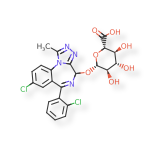
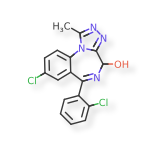
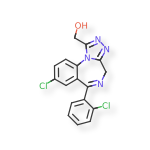

| Related Record | Type | Details | ||
|---|---|---|---|---|
|
|
ACTIVE MOIETY |
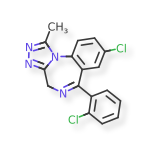
| Name | Property Type | Amount | Referenced Substance | Defining | Parameters | References |
|---|---|---|---|---|---|---|
| Biological Half-life | PHARMACOKINETIC |
|
|
|||