


Details
| Stereochemistry | MIXED |
| Molecular Formula | C35H38Cl2N8O4 |
| Molecular Weight | 705.6346 |
| Optical Activity | ( + / - ) |
| Defined Stereocenters | 2 / 3 |
| E/Z Centers | 0 |
| Charge | 0 |
SHOW SMILES / InChI
SMILES
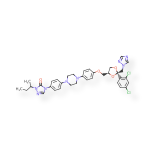
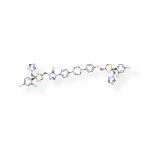
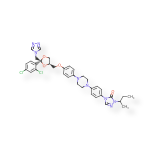
CCC(C)N1N=CN(C1=O)C2=CC=C(C=C2)N3CCN(CC3)C4=CC=C(OC[C@H]5CO[C@@](CN6C=NC=N6)(O5)C7=C(Cl)C=C(Cl)C=C7)C=C4
InChI
InChIKey=VHVPQPYKVGDNFY-ZPGVKDDISA-N
InChI=1S/C35H38Cl2N8O4/c1-3-25(2)45-34(46)44(24-40-45)29-7-5-27(6-8-29)41-14-16-42(17-15-41)28-9-11-30(12-10-28)47-19-31-20-48-35(49-31,21-43-23-38-22-39-43)32-13-4-26(36)18-33(32)37/h4-13,18,22-25,31H,3,14-17,19-21H2,1-2H3/t25?,31-,35-/m0/s1
| Molecular Formula | C35H38Cl2N8O4 |
| Molecular Weight | 705.6346 |
| Charge | 0 |
| Count |
|
| Stereochemistry | EPIMERIC |
| Additional Stereochemistry | No |
| Defined Stereocenters | 2 / 3 |
| E/Z Centers | 0 |
| Optical Activity | UNSPECIFIED |
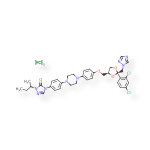
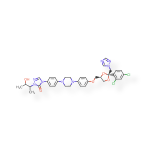
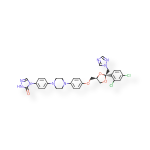
SPORANOX is the brand name for itraconazole, an azole antifungal agent. Itraconazole is a 1:1:1:1 racemic mixture of four diastereomers (two enantiomeric pairs), each possessing three chiral centers. In vitro studies have demonstrated that itraconazole inhibits the cytochrome P450-dependent synthesis of ergosterol, which is a vital component of fungal cell membranes. As ergosterol is an essential component of the fungal cell membrane, inhibition of its synthesis results in increased cellular permeability causing leakage of cellular contents. Itraconazole may also inhibit endogenous respiration, interact with membrane phospholipids, inhibit the transformation of yeasts to mycelial forms, inhibit purine uptake, and impair triglyceride and/or phospholipid biosynthesis. SPORANOX capsules are indicated for the treatment of the following fungal infections in immunocompromised and non-immunocompromised patients: Blastomycosis, pulmonary and extrapulmonary; Histoplasmosis, including chronic cavitary pulmonary disease and disseminated, nonmeningeal histoplasmosis, and Aspergillosis, pulmonary and extrapulmonary, in patients who are intolerant of or who are refractory to amphotericin B therapy. SPORANOX is also indicated for the treatment of the following fungal infections in non-immunocompromised patients: Onychomycosis of the toenail, with or without fingernail involvement, due to dermatophytes (tinea unguium), and Onychomycosis of the fingernail due to dermatophytes (tinea unguium). Itraconazole is mainly metabolized through CYP3A4. Other drugs that either share this metabolic pathway or modify CYP3A4 activity may influence the pharmacokinetics of itraconazole. Similarly, itraconazole may modify the pharmacokinetics of other drugs that share this metabolic pathway. Itraconazole is a potent CYP3A4 inhibitor and a P-glycoprotein inhibitor. When using concomitant medication, it is recommended that the corresponding label be consulted for information on the route of metabolism and the possible need to adjust dosages.
CNS Activity
Curator's Comment: Limited ability to cross the blood-brain barrier
https://books.google.ru/books?id=Qd_nCAAAQBAJ&pg=PA198&lpg=PA198&dq=ITRACONAZOLE+cross+blood-brain+barrier&source=bl&ots=gExVhzS3wQ&sig=M2Vea-eTPaedoDjCOCqfNT-Ftu0&hl=ru&sa=X&ved=0ahUKEwi21cbW4PbPAhVGuhoKHXGhDk44ChDoAQgbMAA#v=onepage&q=ITRACONAZOLE%20cross%20blood-brain%20barrier&f=false
Approval Year
Targets
| Primary Target | Pharmacology | Condition | Potency |
|---|---|---|---|
Target ID: CHEMBL1780 |
Conditions
| Condition | Modality | Targets | Highest Phase | Product |
|---|---|---|---|---|
| Curative | SPORANOX Approved UseSPORANOX® (itraconazole) Capsules are indicated for the treatment of the following fungal infections in immunocompromised and non-immunocompromised patients: Blastomycosis, pulmonary and extrapulmonary Histoplasmosis, including chronic cavitary pulmonary disease and disseminated, non-meningeal histoplasmosis, and Aspergillosis, pulmonary and extrapulmonary, in patients who are intolerant of or who are refractory to amphotericin B therapy. Specimens for fungal cultures and other relevant laboratory studies (wet mount, histopathology, serology) should be obtained before therapy to isolate and identify causative organisms. Therapy may be instituted before the results of the cultures and other laboratory studies are known; however, once these results become available, antiinfective therapy should be adjusted accordingly. SPORANOX® Capsules are also indicated for the treatment of the following fungal infections in non-immunocompromised patients: Onychomycosis of the toenail, with or without fingernail involvement, due to dermatophytes (tinea unguium), and Onychomycosis of the fingernail due to dermatophytes (tinea unguium). Prior to initiating treatment, appropriate nail specimens for laboratory testing (KOH preparation, fungal culture, or nail biopsy) should be obtained to confirm the diagnosis of onychomycosis. (See CLINICAL PHARMACOLOGY: Special Populations, CONTRAINDICATIONS, WARNINGS, and ADVERSE REACTIONS: Post-marketing Experience for more information.) Description of Clinical Studies Blastomycosis Analyses were conducted on data from two open-label, non-concurrently controlled studies (N=73 combined) in patients with normal or abnormal immune status. The median dose was 200 mg/day. A response for most signs and symptoms was observed within the first 2 weeks, and all signs and symptoms cleared between 3 and 6 months. Results of these two studies demonstrated substantial evidence of the effectiveness of itraconazole for the treatment of blastomycosis compared with the natural history of untreated cases. Histoplasmosis Analyses were conducted on data from two open-label, non-concurrently controlled studies (N=34 combined) in patients with normal or abnormal immune status (not including HIV-infected patients). The median dose was 200 mg/day. A response for most signs and symptoms was observed within the first 2 weeks, and all signs and symptoms cleared between 3 and 12 months. Results of these two studies demonstrated substantial evidence of the effectiveness of itraconazole for the treatment of histoplasmosis, compared with the natural history of untreated cases. Histoplasmosis in HIV-infected patients Data from a small number of HIV-infected patients suggested that the response rate of histoplasmosis in HIV-infected patients is similar to that of non-HIV-infected patients. The clinical course of histoplasmosis in HIV-infected patients is more severe and usually requires maintenance therapy to prevent relapse. Aspergillosis Analyses were conducted on data from an open-label, single-patient-use protocol designed to make itraconazole available in the U.S. for patients who either failed or were intolerant of amphotericin B therapy (N=190). The findings were corroborated by two smaller open-label studies (N=31 combined) in the same patient population. Most adult patients were treated with a daily dose of 200 to 400 mg, with a median duration of 3 months. Results of these studies demonstrated substantial evidence of effectiveness of itraconazole as a second-line therapy for the treatment of aspergillosis compared with the natural history of the disease in patients who either failed or were intolerant of amphotericin B therapy. Onychomycosis of the toenail Analyses were conducted on data from three double-blind, placebo-controlled studies (N=214 total; 110 given SPORANOX® Capsules) in which patients with onychomycosis of the toenails received 200 mg of SPORANOX® Capsules once daily for 12 consecutive weeks. Results of these studies demonstrated mycologic cure, defined as simultaneous occurrence of negative KOH plus negative culture, in 54% of patients. Thirty-five percent (35%) of patients were considered an overall success (mycologic cure plus clear or minimal nail involvement with significantly decreased signs) and 14% of patients demonstrated mycologic cure plus clinical cure (clearance of all signs, with or without residual nail deformity). The mean time to overall success was approximately 10 months. Twenty-one percent (21%) of the overall success group had a relapse (worsening of the global score or conversion of KOH or culture from negative to positive). Onychomycosis of the fingernail Analyses were conducted on data from a double-blind, placebo-controlled study (N=73 total; 37 given SPORANOX® Capsules) in which patients with onychomycosis of the fingernails received a 1-week course (pulse) of 200 mg of SPORANOX® Capsules b.i.d., followed by a 3-week period without SPORANOX®, which was followed by a second 1-week pulse of 200 mg of SPORANOX® Capsules b.i.d. Results demonstrated mycologic cure in 61% of patients. Fifty-six percent (56%) of patients were considered an overall success and 47% of patients demonstrated mycologic cure plus clinical cure. The mean time to overall success was approximately 5 months. None of the patients who achieved overall success relapsed. Launch Date1992 |
|||
| Curative | SPORANOX Approved UseSPORANOX® (itraconazole) Capsules are indicated for the treatment of the following fungal infections in immunocompromised and non-immunocompromised patients: Blastomycosis, pulmonary and extrapulmonary Histoplasmosis, including chronic cavitary pulmonary disease and disseminated, non-meningeal histoplasmosis, and Aspergillosis, pulmonary and extrapulmonary, in patients who are intolerant of or who are refractory to amphotericin B therapy. Specimens for fungal cultures and other relevant laboratory studies (wet mount, histopathology, serology) should be obtained before therapy to isolate and identify causative organisms. Therapy may be instituted before the results of the cultures and other laboratory studies are known; however, once these results become available, antiinfective therapy should be adjusted accordingly. SPORANOX® Capsules are also indicated for the treatment of the following fungal infections in non-immunocompromised patients: Onychomycosis of the toenail, with or without fingernail involvement, due to dermatophytes (tinea unguium), and Onychomycosis of the fingernail due to dermatophytes (tinea unguium). Prior to initiating treatment, appropriate nail specimens for laboratory testing (KOH preparation, fungal culture, or nail biopsy) should be obtained to confirm the diagnosis of onychomycosis. (See CLINICAL PHARMACOLOGY: Special Populations, CONTRAINDICATIONS, WARNINGS, and ADVERSE REACTIONS: Post-marketing Experience for more information.) Description of Clinical Studies Blastomycosis Analyses were conducted on data from two open-label, non-concurrently controlled studies (N=73 combined) in patients with normal or abnormal immune status. The median dose was 200 mg/day. A response for most signs and symptoms was observed within the first 2 weeks, and all signs and symptoms cleared between 3 and 6 months. Results of these two studies demonstrated substantial evidence of the effectiveness of itraconazole for the treatment of blastomycosis compared with the natural history of untreated cases. Histoplasmosis Analyses were conducted on data from two open-label, non-concurrently controlled studies (N=34 combined) in patients with normal or abnormal immune status (not including HIV-infected patients). The median dose was 200 mg/day. A response for most signs and symptoms was observed within the first 2 weeks, and all signs and symptoms cleared between 3 and 12 months. Results of these two studies demonstrated substantial evidence of the effectiveness of itraconazole for the treatment of histoplasmosis, compared with the natural history of untreated cases. Histoplasmosis in HIV-infected patients Data from a small number of HIV-infected patients suggested that the response rate of histoplasmosis in HIV-infected patients is similar to that of non-HIV-infected patients. The clinical course of histoplasmosis in HIV-infected patients is more severe and usually requires maintenance therapy to prevent relapse. Aspergillosis Analyses were conducted on data from an open-label, single-patient-use protocol designed to make itraconazole available in the U.S. for patients who either failed or were intolerant of amphotericin B therapy (N=190). The findings were corroborated by two smaller open-label studies (N=31 combined) in the same patient population. Most adult patients were treated with a daily dose of 200 to 400 mg, with a median duration of 3 months. Results of these studies demonstrated substantial evidence of effectiveness of itraconazole as a second-line therapy for the treatment of aspergillosis compared with the natural history of the disease in patients who either failed or were intolerant of amphotericin B therapy. Onychomycosis of the toenail Analyses were conducted on data from three double-blind, placebo-controlled studies (N=214 total; 110 given SPORANOX® Capsules) in which patients with onychomycosis of the toenails received 200 mg of SPORANOX® Capsules once daily for 12 consecutive weeks. Results of these studies demonstrated mycologic cure, defined as simultaneous occurrence of negative KOH plus negative culture, in 54% of patients. Thirty-five percent (35%) of patients were considered an overall success (mycologic cure plus clear or minimal nail involvement with significantly decreased signs) and 14% of patients demonstrated mycologic cure plus clinical cure (clearance of all signs, with or without residual nail deformity). The mean time to overall success was approximately 10 months. Twenty-one percent (21%) of the overall success group had a relapse (worsening of the global score or conversion of KOH or culture from negative to positive). Onychomycosis of the fingernail Analyses were conducted on data from a double-blind, placebo-controlled study (N=73 total; 37 given SPORANOX® Capsules) in which patients with onychomycosis of the fingernails received a 1-week course (pulse) of 200 mg of SPORANOX® Capsules b.i.d., followed by a 3-week period without SPORANOX®, which was followed by a second 1-week pulse of 200 mg of SPORANOX® Capsules b.i.d. Results demonstrated mycologic cure in 61% of patients. Fifty-six percent (56%) of patients were considered an overall success and 47% of patients demonstrated mycologic cure plus clinical cure. The mean time to overall success was approximately 5 months. None of the patients who achieved overall success relapsed. Launch Date1992 |
|||
| Curative | SPORANOX Approved UseSPORANOX® (itraconazole) Capsules are indicated for the treatment of the following fungal infections in immunocompromised and non-immunocompromised patients: Blastomycosis, pulmonary and extrapulmonary Histoplasmosis, including chronic cavitary pulmonary disease and disseminated, non-meningeal histoplasmosis, and Aspergillosis, pulmonary and extrapulmonary, in patients who are intolerant of or who are refractory to amphotericin B therapy. Specimens for fungal cultures and other relevant laboratory studies (wet mount, histopathology, serology) should be obtained before therapy to isolate and identify causative organisms. Therapy may be instituted before the results of the cultures and other laboratory studies are known; however, once these results become available, antiinfective therapy should be adjusted accordingly. SPORANOX® Capsules are also indicated for the treatment of the following fungal infections in non-immunocompromised patients: Onychomycosis of the toenail, with or without fingernail involvement, due to dermatophytes (tinea unguium), and Onychomycosis of the fingernail due to dermatophytes (tinea unguium). Prior to initiating treatment, appropriate nail specimens for laboratory testing (KOH preparation, fungal culture, or nail biopsy) should be obtained to confirm the diagnosis of onychomycosis. (See CLINICAL PHARMACOLOGY: Special Populations, CONTRAINDICATIONS, WARNINGS, and ADVERSE REACTIONS: Post-marketing Experience for more information.) Description of Clinical Studies Blastomycosis Analyses were conducted on data from two open-label, non-concurrently controlled studies (N=73 combined) in patients with normal or abnormal immune status. The median dose was 200 mg/day. A response for most signs and symptoms was observed within the first 2 weeks, and all signs and symptoms cleared between 3 and 6 months. Results of these two studies demonstrated substantial evidence of the effectiveness of itraconazole for the treatment of blastomycosis compared with the natural history of untreated cases. Histoplasmosis Analyses were conducted on data from two open-label, non-concurrently controlled studies (N=34 combined) in patients with normal or abnormal immune status (not including HIV-infected patients). The median dose was 200 mg/day. A response for most signs and symptoms was observed within the first 2 weeks, and all signs and symptoms cleared between 3 and 12 months. Results of these two studies demonstrated substantial evidence of the effectiveness of itraconazole for the treatment of histoplasmosis, compared with the natural history of untreated cases. Histoplasmosis in HIV-infected patients Data from a small number of HIV-infected patients suggested that the response rate of histoplasmosis in HIV-infected patients is similar to that of non-HIV-infected patients. The clinical course of histoplasmosis in HIV-infected patients is more severe and usually requires maintenance therapy to prevent relapse. Aspergillosis Analyses were conducted on data from an open-label, single-patient-use protocol designed to make itraconazole available in the U.S. for patients who either failed or were intolerant of amphotericin B therapy (N=190). The findings were corroborated by two smaller open-label studies (N=31 combined) in the same patient population. Most adult patients were treated with a daily dose of 200 to 400 mg, with a median duration of 3 months. Results of these studies demonstrated substantial evidence of effectiveness of itraconazole as a second-line therapy for the treatment of aspergillosis compared with the natural history of the disease in patients who either failed or were intolerant of amphotericin B therapy. Onychomycosis of the toenail Analyses were conducted on data from three double-blind, placebo-controlled studies (N=214 total; 110 given SPORANOX® Capsules) in which patients with onychomycosis of the toenails received 200 mg of SPORANOX® Capsules once daily for 12 consecutive weeks. Results of these studies demonstrated mycologic cure, defined as simultaneous occurrence of negative KOH plus negative culture, in 54% of patients. Thirty-five percent (35%) of patients were considered an overall success (mycologic cure plus clear or minimal nail involvement with significantly decreased signs) and 14% of patients demonstrated mycologic cure plus clinical cure (clearance of all signs, with or without residual nail deformity). The mean time to overall success was approximately 10 months. Twenty-one percent (21%) of the overall success group had a relapse (worsening of the global score or conversion of KOH or culture from negative to positive). Onychomycosis of the fingernail Analyses were conducted on data from a double-blind, placebo-controlled study (N=73 total; 37 given SPORANOX® Capsules) in which patients with onychomycosis of the fingernails received a 1-week course (pulse) of 200 mg of SPORANOX® Capsules b.i.d., followed by a 3-week period without SPORANOX®, which was followed by a second 1-week pulse of 200 mg of SPORANOX® Capsules b.i.d. Results demonstrated mycologic cure in 61% of patients. Fifty-six percent (56%) of patients were considered an overall success and 47% of patients demonstrated mycologic cure plus clinical cure. The mean time to overall success was approximately 5 months. None of the patients who achieved overall success relapsed. Launch Date1992 |
|||
| Curative | SPORANOX Approved UseSPORANOX® (itraconazole) Capsules are indicated for the treatment of the following fungal infections in immunocompromised and non-immunocompromised patients: Blastomycosis, pulmonary and extrapulmonary Histoplasmosis, including chronic cavitary pulmonary disease and disseminated, non-meningeal histoplasmosis, and Aspergillosis, pulmonary and extrapulmonary, in patients who are intolerant of or who are refractory to amphotericin B therapy. Specimens for fungal cultures and other relevant laboratory studies (wet mount, histopathology, serology) should be obtained before therapy to isolate and identify causative organisms. Therapy may be instituted before the results of the cultures and other laboratory studies are known; however, once these results become available, antiinfective therapy should be adjusted accordingly. SPORANOX® Capsules are also indicated for the treatment of the following fungal infections in non-immunocompromised patients: Onychomycosis of the toenail, with or without fingernail involvement, due to dermatophytes (tinea unguium), and Onychomycosis of the fingernail due to dermatophytes (tinea unguium). Prior to initiating treatment, appropriate nail specimens for laboratory testing (KOH preparation, fungal culture, or nail biopsy) should be obtained to confirm the diagnosis of onychomycosis. (See CLINICAL PHARMACOLOGY: Special Populations, CONTRAINDICATIONS, WARNINGS, and ADVERSE REACTIONS: Post-marketing Experience for more information.) Description of Clinical Studies Blastomycosis Analyses were conducted on data from two open-label, non-concurrently controlled studies (N=73 combined) in patients with normal or abnormal immune status. The median dose was 200 mg/day. A response for most signs and symptoms was observed within the first 2 weeks, and all signs and symptoms cleared between 3 and 6 months. Results of these two studies demonstrated substantial evidence of the effectiveness of itraconazole for the treatment of blastomycosis compared with the natural history of untreated cases. Histoplasmosis Analyses were conducted on data from two open-label, non-concurrently controlled studies (N=34 combined) in patients with normal or abnormal immune status (not including HIV-infected patients). The median dose was 200 mg/day. A response for most signs and symptoms was observed within the first 2 weeks, and all signs and symptoms cleared between 3 and 12 months. Results of these two studies demonstrated substantial evidence of the effectiveness of itraconazole for the treatment of histoplasmosis, compared with the natural history of untreated cases. Histoplasmosis in HIV-infected patients Data from a small number of HIV-infected patients suggested that the response rate of histoplasmosis in HIV-infected patients is similar to that of non-HIV-infected patients. The clinical course of histoplasmosis in HIV-infected patients is more severe and usually requires maintenance therapy to prevent relapse. Aspergillosis Analyses were conducted on data from an open-label, single-patient-use protocol designed to make itraconazole available in the U.S. for patients who either failed or were intolerant of amphotericin B therapy (N=190). The findings were corroborated by two smaller open-label studies (N=31 combined) in the same patient population. Most adult patients were treated with a daily dose of 200 to 400 mg, with a median duration of 3 months. Results of these studies demonstrated substantial evidence of effectiveness of itraconazole as a second-line therapy for the treatment of aspergillosis compared with the natural history of the disease in patients who either failed or were intolerant of amphotericin B therapy. Onychomycosis of the toenail Analyses were conducted on data from three double-blind, placebo-controlled studies (N=214 total; 110 given SPORANOX® Capsules) in which patients with onychomycosis of the toenails received 200 mg of SPORANOX® Capsules once daily for 12 consecutive weeks. Results of these studies demonstrated mycologic cure, defined as simultaneous occurrence of negative KOH plus negative culture, in 54% of patients. Thirty-five percent (35%) of patients were considered an overall success (mycologic cure plus clear or minimal nail involvement with significantly decreased signs) and 14% of patients demonstrated mycologic cure plus clinical cure (clearance of all signs, with or without residual nail deformity). The mean time to overall success was approximately 10 months. Twenty-one percent (21%) of the overall success group had a relapse (worsening of the global score or conversion of KOH or culture from negative to positive). Onychomycosis of the fingernail Analyses were conducted on data from a double-blind, placebo-controlled study (N=73 total; 37 given SPORANOX® Capsules) in which patients with onychomycosis of the fingernails received a 1-week course (pulse) of 200 mg of SPORANOX® Capsules b.i.d., followed by a 3-week period without SPORANOX®, which was followed by a second 1-week pulse of 200 mg of SPORANOX® Capsules b.i.d. Results demonstrated mycologic cure in 61% of patients. Fifty-six percent (56%) of patients were considered an overall success and 47% of patients demonstrated mycologic cure plus clinical cure. The mean time to overall success was approximately 5 months. None of the patients who achieved overall success relapsed. Launch Date1992 |
Cmax
| Value | Dose | Co-administered | Analyte | Population |
|---|---|---|---|---|
213 ng/mL |
200 mg single, oral dose: 200 mg route of administration: Oral experiment type: SINGLE co-administered: |
ITRACONAZOLE plasma | Homo sapiens population: HEALTHY age: ADULT sex: FEMALE / MALE food status: HIGH-FAT |
|
162 ng/mL |
200 mg single, oral dose: 200 mg route of administration: Oral experiment type: SINGLE co-administered: |
ITRACONAZOLE plasma | Homo sapiens population: HEALTHY age: ADULT sex: FEMALE / MALE food status: FASTED |
|
332 ng/mL |
200 mg single, oral dose: 200 mg route of administration: Oral experiment type: SINGLE co-administered: |
HYDROXYITRACONAZOLE plasma | Homo sapiens population: HEALTHY age: ADULT sex: FEMALE / MALE food status: HIGH-FAT |
|
264 ng/mL |
200 mg single, oral dose: 200 mg route of administration: Oral experiment type: SINGLE co-administered: |
HYDROXYITRACONAZOLE plasma | Homo sapiens population: HEALTHY age: ADULT sex: FEMALE / MALE food status: FASTED |
|
116.8 ng/mL |
200 mg single, oral dose: 200 mg route of administration: Oral experiment type: SINGLE co-administered: |
ITRACONAZOLE plasma | Homo sapiens population: HEALTHY age: ADULT sex: UNKNOWN food status: FED |
|
658.1 ng/mL |
200 mg 1 times / day steady-state, oral dose: 200 mg route of administration: Oral experiment type: STEADY-STATE co-administered: |
ITRACONAZOLE plasma | Homo sapiens population: HEALTHY age: ADULT sex: UNKNOWN food status: FED |
|
221.7 ng/mL |
200 mg single, oral dose: 200 mg route of administration: Oral experiment type: SINGLE co-administered: |
HYDROXYITRACONAZOLE plasma | Homo sapiens population: HEALTHY age: ADULT sex: UNKNOWN food status: FED |
|
974.2 ng/mL |
200 mg 1 times / day steady-state, oral dose: 200 mg route of administration: Oral experiment type: STEADY-STATE co-administered: |
HYDROXYITRACONAZOLE plasma | Homo sapiens population: HEALTHY age: ADULT sex: UNKNOWN food status: FED |
AUC
| Value | Dose | Co-administered | Analyte | Population |
|---|---|---|---|---|
3.34 ng × h/mL |
200 mg single, oral dose: 200 mg route of administration: Oral experiment type: SINGLE co-administered: |
ITRACONAZOLE plasma | Homo sapiens population: HEALTHY age: ADULT sex: FEMALE / MALE food status: HIGH-FAT |
|
2.27 μg × h/mL |
200 mg single, oral dose: 200 mg route of administration: Oral experiment type: SINGLE co-administered: |
ITRACONAZOLE plasma | Homo sapiens population: HEALTHY age: ADULT sex: FEMALE / MALE food status: FASTED |
|
7.05 μg × h/mL |
200 mg single, oral dose: 200 mg route of administration: Oral experiment type: SINGLE co-administered: |
HYDROXYITRACONAZOLE plasma | Homo sapiens population: HEALTHY age: ADULT sex: FEMALE / MALE food status: HIGH-FAT |
|
4.58 μg × h/mL |
200 mg single, oral dose: 200 mg route of administration: Oral experiment type: SINGLE co-administered: |
HYDROXYITRACONAZOLE plasma | Homo sapiens population: HEALTHY age: ADULT sex: FEMALE / MALE food status: FASTED |
|
905.09 ng × h/mL |
200 mg single, oral dose: 200 mg route of administration: Oral experiment type: SINGLE co-administered: |
ITRACONAZOLE plasma | Homo sapiens population: HEALTHY age: ADULT sex: UNKNOWN food status: FED |
|
9046.81 ng × h/mL |
200 mg 1 times / day steady-state, oral dose: 200 mg route of administration: Oral experiment type: STEADY-STATE co-administered: |
ITRACONAZOLE plasma | Homo sapiens population: HEALTHY age: ADULT sex: UNKNOWN food status: FED |
|
2538.33 ng × h/mL |
200 mg single, oral dose: 200 mg route of administration: Oral experiment type: SINGLE co-administered: |
HYDROXYITRACONAZOLE plasma | Homo sapiens population: HEALTHY age: ADULT sex: UNKNOWN food status: FED |
|
19054.95 ng × h/mL |
200 mg 1 times / day steady-state, oral dose: 200 mg route of administration: Oral experiment type: STEADY-STATE co-administered: |
HYDROXYITRACONAZOLE plasma | Homo sapiens population: HEALTHY age: ADULT sex: UNKNOWN food status: FED |
T1/2
| Value | Dose | Co-administered | Analyte | Population |
|---|---|---|---|---|
36.84 h |
200 mg 1 times / day steady-state, oral dose: 200 mg route of administration: Oral experiment type: STEADY-STATE co-administered: |
ITRACONAZOLE plasma | Homo sapiens population: HEALTHY age: ADULT sex: UNKNOWN food status: FED |
|
20.06 h |
200 mg 1 times / day steady-state, oral dose: 200 mg route of administration: Oral experiment type: STEADY-STATE co-administered: |
HYDROXYITRACONAZOLE plasma | Homo sapiens population: HEALTHY age: ADULT sex: UNKNOWN food status: FED |
Funbound
| Value | Dose | Co-administered | Analyte | Population |
|---|---|---|---|---|
0.2% |
200 mg single, oral dose: 200 mg route of administration: Oral experiment type: SINGLE co-administered: |
ITRACONAZOLE plasma | Homo sapiens population: HEALTHY age: ADULT sex: FEMALE / MALE food status: HIGH-FAT |
|
0.2% |
200 mg single, oral dose: 200 mg route of administration: Oral experiment type: SINGLE co-administered: |
ITRACONAZOLE plasma | Homo sapiens population: HEALTHY age: ADULT sex: FEMALE / MALE food status: FASTED |
|
0.5% |
200 mg single, oral dose: 200 mg route of administration: Oral experiment type: SINGLE co-administered: |
HYDROXYITRACONAZOLE plasma | Homo sapiens population: HEALTHY age: ADULT sex: FEMALE / MALE food status: HIGH-FAT |
|
0.5% |
200 mg single, oral dose: 200 mg route of administration: Oral experiment type: SINGLE co-administered: |
HYDROXYITRACONAZOLE plasma | Homo sapiens population: HEALTHY age: ADULT sex: FEMALE / MALE food status: FASTED |
|
0.2% |
200 mg single, oral dose: 200 mg route of administration: Oral experiment type: SINGLE co-administered: |
ITRACONAZOLE plasma | Homo sapiens population: HEALTHY age: ADULT sex: UNKNOWN food status: FED |
|
0.2% |
200 mg 1 times / day steady-state, oral dose: 200 mg route of administration: Oral experiment type: STEADY-STATE co-administered: |
ITRACONAZOLE plasma | Homo sapiens population: HEALTHY age: ADULT sex: UNKNOWN food status: FED |
|
0.5% |
200 mg single, oral dose: 200 mg route of administration: Oral experiment type: SINGLE co-administered: |
HYDROXYITRACONAZOLE plasma | Homo sapiens population: HEALTHY age: ADULT sex: UNKNOWN food status: FED |
|
0.5% |
200 mg 1 times / day steady-state, oral dose: 200 mg route of administration: Oral experiment type: STEADY-STATE co-administered: |
HYDROXYITRACONAZOLE plasma | Homo sapiens population: HEALTHY age: ADULT sex: UNKNOWN food status: FED |
Doses
| Dose | Population | Adverse events |
|---|---|---|
2.5 mg/kg single, intravenous Dose: 2.5 mg/kg Route: intravenous Route: single Dose: 2.5 mg/kg Sources: |
unhealthy, 0.5 - 16 years Health Status: unhealthy Age Group: 0.5 - 16 years Sex: M+F Sources: |
|
100 mg 2 times / day steady, oral Recommended Dose: 100 mg, 2 times / day Route: oral Route: steady Dose: 100 mg, 2 times / day Sources: |
unhealthy, adult Health Status: unhealthy Age Group: adult Sex: unknown Sources: |
Other AEs: Nausea, Diarrhea... Other AEs: Nausea (11%) Sources: Diarrhea (11%) Vomiting (7%) Abdominal pain (6%) Constipation (2%) Fever (7%) Chest pain (3%) Pain (2%) Fatigue (2%) Coughing (4%) Dyspnea (2%) Pneumonia (2%) Sinusitis (2%) Sputum increased (2%) Rash (4%) Sweating increased (3%) Skin and subcutaneous tissue disorders (2%) Headache (4%) Dizziness (2%) Pneumocystis carinii infection (2%) |
100 mg 2 times / day steady, oral Recommended Dose: 100 mg, 2 times / day Route: oral Route: steady Dose: 100 mg, 2 times / day Sources: |
unhealthy, adult Health Status: unhealthy Age Group: adult Sex: unknown Sources: |
Other AEs: Depression... Other AEs: Depression (2%) Sources: |
400 mg 1 times / day steady, oral Recommended Dose: 400 mg, 1 times / day Route: oral Route: steady Dose: 400 mg, 1 times / day Sources: |
unhealthy, adult Health Status: unhealthy Age Group: adult Sex: unknown Sources: |
AEs
| AE | Significance | Dose | Population |
|---|---|---|---|
| Diarrhea | 11% | 100 mg 2 times / day steady, oral Recommended Dose: 100 mg, 2 times / day Route: oral Route: steady Dose: 100 mg, 2 times / day Sources: |
unhealthy, adult Health Status: unhealthy Age Group: adult Sex: unknown Sources: |
| Nausea | 11% | 100 mg 2 times / day steady, oral Recommended Dose: 100 mg, 2 times / day Route: oral Route: steady Dose: 100 mg, 2 times / day Sources: |
unhealthy, adult Health Status: unhealthy Age Group: adult Sex: unknown Sources: |
| Constipation | 2% | 100 mg 2 times / day steady, oral Recommended Dose: 100 mg, 2 times / day Route: oral Route: steady Dose: 100 mg, 2 times / day Sources: |
unhealthy, adult Health Status: unhealthy Age Group: adult Sex: unknown Sources: |
| Dizziness | 2% | 100 mg 2 times / day steady, oral Recommended Dose: 100 mg, 2 times / day Route: oral Route: steady Dose: 100 mg, 2 times / day Sources: |
unhealthy, adult Health Status: unhealthy Age Group: adult Sex: unknown Sources: |
| Dyspnea | 2% | 100 mg 2 times / day steady, oral Recommended Dose: 100 mg, 2 times / day Route: oral Route: steady Dose: 100 mg, 2 times / day Sources: |
unhealthy, adult Health Status: unhealthy Age Group: adult Sex: unknown Sources: |
| Fatigue | 2% | 100 mg 2 times / day steady, oral Recommended Dose: 100 mg, 2 times / day Route: oral Route: steady Dose: 100 mg, 2 times / day Sources: |
unhealthy, adult Health Status: unhealthy Age Group: adult Sex: unknown Sources: |
| Pain | 2% | 100 mg 2 times / day steady, oral Recommended Dose: 100 mg, 2 times / day Route: oral Route: steady Dose: 100 mg, 2 times / day Sources: |
unhealthy, adult Health Status: unhealthy Age Group: adult Sex: unknown Sources: |
| Pneumocystis carinii infection | 2% | 100 mg 2 times / day steady, oral Recommended Dose: 100 mg, 2 times / day Route: oral Route: steady Dose: 100 mg, 2 times / day Sources: |
unhealthy, adult Health Status: unhealthy Age Group: adult Sex: unknown Sources: |
| Pneumonia | 2% | 100 mg 2 times / day steady, oral Recommended Dose: 100 mg, 2 times / day Route: oral Route: steady Dose: 100 mg, 2 times / day Sources: |
unhealthy, adult Health Status: unhealthy Age Group: adult Sex: unknown Sources: |
| Sinusitis | 2% | 100 mg 2 times / day steady, oral Recommended Dose: 100 mg, 2 times / day Route: oral Route: steady Dose: 100 mg, 2 times / day Sources: |
unhealthy, adult Health Status: unhealthy Age Group: adult Sex: unknown Sources: |
| Skin and subcutaneous tissue disorders | 2% | 100 mg 2 times / day steady, oral Recommended Dose: 100 mg, 2 times / day Route: oral Route: steady Dose: 100 mg, 2 times / day Sources: |
unhealthy, adult Health Status: unhealthy Age Group: adult Sex: unknown Sources: |
| Sputum increased | 2% | 100 mg 2 times / day steady, oral Recommended Dose: 100 mg, 2 times / day Route: oral Route: steady Dose: 100 mg, 2 times / day Sources: |
unhealthy, adult Health Status: unhealthy Age Group: adult Sex: unknown Sources: |
| Chest pain | 3% | 100 mg 2 times / day steady, oral Recommended Dose: 100 mg, 2 times / day Route: oral Route: steady Dose: 100 mg, 2 times / day Sources: |
unhealthy, adult Health Status: unhealthy Age Group: adult Sex: unknown Sources: |
| Sweating increased | 3% | 100 mg 2 times / day steady, oral Recommended Dose: 100 mg, 2 times / day Route: oral Route: steady Dose: 100 mg, 2 times / day Sources: |
unhealthy, adult Health Status: unhealthy Age Group: adult Sex: unknown Sources: |
| Coughing | 4% | 100 mg 2 times / day steady, oral Recommended Dose: 100 mg, 2 times / day Route: oral Route: steady Dose: 100 mg, 2 times / day Sources: |
unhealthy, adult Health Status: unhealthy Age Group: adult Sex: unknown Sources: |
| Headache | 4% | 100 mg 2 times / day steady, oral Recommended Dose: 100 mg, 2 times / day Route: oral Route: steady Dose: 100 mg, 2 times / day Sources: |
unhealthy, adult Health Status: unhealthy Age Group: adult Sex: unknown Sources: |
| Rash | 4% | 100 mg 2 times / day steady, oral Recommended Dose: 100 mg, 2 times / day Route: oral Route: steady Dose: 100 mg, 2 times / day Sources: |
unhealthy, adult Health Status: unhealthy Age Group: adult Sex: unknown Sources: |
| Abdominal pain | 6% | 100 mg 2 times / day steady, oral Recommended Dose: 100 mg, 2 times / day Route: oral Route: steady Dose: 100 mg, 2 times / day Sources: |
unhealthy, adult Health Status: unhealthy Age Group: adult Sex: unknown Sources: |
| Fever | 7% | 100 mg 2 times / day steady, oral Recommended Dose: 100 mg, 2 times / day Route: oral Route: steady Dose: 100 mg, 2 times / day Sources: |
unhealthy, adult Health Status: unhealthy Age Group: adult Sex: unknown Sources: |
| Vomiting | 7% | 100 mg 2 times / day steady, oral Recommended Dose: 100 mg, 2 times / day Route: oral Route: steady Dose: 100 mg, 2 times / day Sources: |
unhealthy, adult Health Status: unhealthy Age Group: adult Sex: unknown Sources: |
| Depression | 2% | 100 mg 2 times / day steady, oral Recommended Dose: 100 mg, 2 times / day Route: oral Route: steady Dose: 100 mg, 2 times / day Sources: |
unhealthy, adult Health Status: unhealthy Age Group: adult Sex: unknown Sources: |
Overview
| CYP3A4 | CYP2C9 | CYP2D6 | hERG |
|---|---|---|---|
OverviewOther
| Other Inhibitor | Other Substrate | Other Inducer |
|---|---|---|
Drug as perpetrator
| Target | Modality | Activity | Metabolite | Clinical evidence |
|---|---|---|---|---|
| no | ||||
| no | ||||
| no | ||||
| no | ||||
| no | ||||
| strong [IC50 0.0004 uM] | ||||
| strong [IC50 0.007 uM] | ||||
| strong [IC50 0.0326 uM] | yes (co-administration study) Comment: [PMID:15242978]: unbound Ki = 1.3 nM; unbound IC50 = 6.1 nM |
|||
| strong [IC50 2 uM] | ||||
| strong [IC50 2 uM] | ||||
| strong [IC50 2 uM] | weak (co-administration study) Comment: Itraconazole increased the mean area under the plasma concentration-time curve [AUC (0-9)] of morphine by 29% (P=0.002), its AUC (0-48) by 22% (P=0.013) and its peak plasma concentration by 28% |
|||
| strong [Ki 0.0144 uM] | ||||
| yes [IC50 >10 uM] | ||||
| yes [IC50 >10 uM] | ||||
| yes |
Drug as victim
| Target | Modality | Activity | Metabolite | Clinical evidence |
|---|---|---|---|---|
| no | ||||
| no | ||||
| no | ||||
| no | ||||
| no | ||||
| no | ||||
| no | ||||
| no | ||||
| yes |
PubMed
| Title | Date | PubMed |
|---|---|---|
| Oropharyngeal candidiasis in patients with human immunodeficiency virus: correlation of clinical outcome with in vitro resistance, serum azole levels, and immunosuppression. | 2001-06-01 |
|
| Successful treatment of aspergillus brain abscess with itraconazole and interferon-gamma in a patient with chronic granulomatous disease. | 2001-05-15 |
|
| Gastrointestinal basidiobolomycosis in Arizona: clinical and epidemiological characteristics and review of the literature. | 2001-05-15 |
|
| Itraconazole for treatment of sporotrichosis in a dog residing on a Christmas tree farm. | 2001-05-01 |
|
| Lymphomatoid granulomatosis after childhood acute lymphoblastic leukemia: report of effective therapy. | 2001-05 |
|
| Effect of inoculum form on in vitro antifungal susceptibilities of Aspergillus spp. | 2001-05 |
|
| Therapy for fungal infections in leukemia. | 2001-05 |
|
| A case of cutaneous ulcerative alternariosis: rare association with diabetes mellitus and unusual failure of itraconazole treatment. | 2001-04-15 |
|
| Cervical manifestation of blastomycosis. | 2001-04-03 |
|
| Candida dubliniensis at a cancer center. | 2001-04-01 |
|
| DNA fingerprinting of serial Candida albicans isolates obtained during itraconazole prophylaxis in patients with AIDS. | 2001-04 |
|
| Effect of clarithromycin and itraconazole on the pharmacokinetics of ropivacaine. | 2001-04 |
|
| A molecular epidemiological study of sequential oral isolates of Candida albicans from terminally ill patients. | 2001-04 |
|
| In vitro activity of propyl gallate-azole drug combination against fluconazole- and itraconazole-resistant Candida albicans strains. | 2001-04 |
|
| Subcutaneous phaeohyphomycotic cysts caused by Exophiala jeanselmei in a lung transplant patient. | 2001-04 |
|
| Spontaneous fungal peritonitis (Candida glabrata) in a patient with cirrhosis. | 2001-04 |
|
| Enhanced cyclosporine-itraconazole interaction with cola in lung transplant recipients. | 2001-04 |
|
| Pathologic quiz case: A persistent cutaneous eruption in a human immunodeficiency virus-infected man. | 2001-04 |
|
| Prediction of midazolam-CYP3A inhibitors interaction in the human liver from in vivo/in vitro absorption, distribution, and metabolism data. | 2001-04 |
|
| Coadministration of itraconazole and tacrolimus after thoracic organ transplantation. | 2001-03-27 |
|
| Possible drug interaction between itraconazole and vinorelbine tartrate leading to death after one dose of chemotherapy. | 2001-03-06 |
|
| Quantitation of itraconazole in rat heparinized plasma by liquid chromatography-mass spectrometry. | 2001-03-05 |
|
| Long-term follow-up study of onychomycosis: cure rate and dropout rate with oral antifungal treatments. | 2001-03 |
|
| Trends in frequency and susceptibilities of Candida glabrata bloodstream isolates at a university hospital. | 2001-03 |
|
| Oral antifungals as prophylaxis in haematological malignancy. | 2001-03 |
|
| Malassezia pachydermatis fungaemia in a neonatal intensive care unit. | 2001-03 |
|
| Isolation and in vitro susceptibility to amphotericin B, itraconazole and posaconazole of voriconazole-resistant laboratory isolates of Aspergillus fumigatus. | 2001-03 |
|
| [Characteristics of a statine of the most recent generation]. | 2001-03 |
|
| Impending rupture in an aortic arch aneurysm by Candida infection. | 2001-03 |
|
| Allergic bronchopulmonary disease caused by Bipolaris hawaiiensis presenting as a necrotizing pneumonia: case report and review of literature. | 2001-03 |
|
| Efficacy of maintenance therapy with topical boric acid in comparison with oral itraconazole in the treatment of recurrent vulvovaginal candidiasis. | 2001-03 |
|
| Itraconazole-enhanced vincristine neurotoxicity in a child with acute lymphoblastic leukemia. | 2001-03 |
|
| Periorbital cellulitis secondary to Conidiobolus incongruus. | 2001-03 |
|
| Clinical inquiries. What is the best oral antifungal medication for tinea capitis? | 2001-03 |
|
| Blastomycosis of the petrous apex. | 2001-03 |
|
| In vitro fungicidal activities of voriconazole, itraconazole, and amphotericin B against opportunistic moniliaceous and dematiaceous fungi. | 2001-03 |
|
| Treating onychomycosis. | 2001-02-15 |
|
| Hereditary palmoplantar keratoderma (four cases in three generations). | 2001-02 |
|
| Synergistic interaction of terbinafine with triazoles or amphotericin B against Aspergillus species. | 2001-02 |
|
| Phaeohyphomycosis due to Cladosporium cladosporioides. | 2001-02 |
|
| Cutaneous alternariosis in a cat. | 2001-02 |
|
| [New developments in medical mycology]. | 2001-02 |
|
| Effect of ketoconazole, itraconazole and fluconazole on the gastrointestinal colonization of mice by Candida albicans. | 2001-02 |
|
| Cutaneous alternariosis in a cardiac transplant recipient. | 2001-02 |
|
| Itraconazole: an effective oral antifungal for onychomycosis. | 2001-01 |
|
| Clinical activity of the new triazole drug voriconazole (UK 109, 496) against disseminated hepatosplenic aspergillosis in a patient with relapsed leukemia. | 2001 |
|
| Muscular-skeletal cryptococcosis in a patient with idiopathic CD4+ lymphopenia. | 2001 |
|
| Electrophoretic karyotyping and antifungal susceptibility patterns of Candida parapsilosis clinical isolates causing deep and superficial fungal infections. | 2001 |
|
| Penicillium marneffei: types and drug susceptibility. | 2001 |
|
| In vitro susceptibility of 137 Candida sp. isolates from HIV positive patients to several antifungal drugs. | 2001 |
Sample Use Guides
Blastomycosis and Histoplasmosis:
The recommended dose is 200 mg once daily (2 capsules). If there is no obvious improvement, or there is evidence of progressive fungal disease, the dose should be increased in 100-mg increments to a maximum of 400 mg daily. Doses above 200 mg/day should be given in two divided doses.
Aspergillosis:
A daily dose of 200 to 400 mg is recommended. Treatment in Life-Threatening Situations: In life-threatening situations, a loading dose should be used. Although clinical studies did not provide for a loading dose, it is recommended, based on pharmacokinetic data, that a loading dose of 200 mg (2 capsules) three times daily (600 mg/day) be given for the first 3 days of treatment.
Onychomycosis: Toenails with or without fingernail involvement:
The recommended dose is 200 mg (2 capsules) once daily for 12 consecutive weeks.
Onychomycosis: Fingernails only:
The recommended dosing regimen is 2 treatment pulses, each consisting of
200 mg (2 capsules) b.i.d. (400 mg/day) for 1 week.
Route of Administration:
Oral
The growth inhibition effects of different concentrations of itraconazole ITC (2, 6, 15 µmol/L) was detected by CCK8 assay in KG1α and primary adult acute leukemia cells. Different concentrations of ITC for 7, 14 and 21 days were applied for observing the effect on colony formation. After 48 h treatments with 6 µmol/L ITC the morphological changes of cells were observed by Wright staining.
| Substance Class |
Chemical
Created
by
admin
on
Edited
Mon Mar 31 18:19:21 GMT 2025
by
admin
on
Mon Mar 31 18:19:21 GMT 2025
|
| Record UNII |
304NUG5GF4
|
| Record Status |
FAILED
|
| Record Version |
|
-
Download
| Name | Type | Language | ||
|---|---|---|---|---|
|
Official Name | English | ||
|
Preferred Name | English | ||
|
Common Name | English | ||
|
Common Name | English | ||
|
Brand Name | English | ||
|
Brand Name | English | ||
|
Brand Name | English | ||
|
Common Name | English | ||
|
Common Name | English | ||
|
Brand Name | English | ||
|
Brand Name | English | ||
|
Systematic Name | English | ||
|
Brand Name | English | ||
|
Common Name | English | ||
|
Brand Name | English | ||
|
Brand Name | English | ||
|
Brand Name | English | ||
|
Code | English | ||
|
Common Name | English | ||
|
Common Name | English | ||
|
Common Name | English | ||
|
Brand Name | English | ||
|
Brand Name | English | ||
|
Common Name | English | ||
|
Common Name | English | ||
|
Code | English | ||
|
Code | English | ||
|
Common Name | English | ||
|
Brand Name | English | ||
|
Common Name | English | ||
|
Brand Name | English | ||
|
Common Name | English | ||
|
Common Name | English | ||
|
Brand Name | English | ||
|
Common Name | English | ||
|
Brand Name | English | ||
|
Common Name | English |
| Classification Tree | Code System | Code | ||
|---|---|---|---|---|
|
WHO-VATC |
QJ02AC02
Created by
admin on Mon Mar 31 18:19:21 GMT 2025 , Edited by admin on Mon Mar 31 18:19:21 GMT 2025
|
||
|
NCI_THESAURUS |
C514
Created by
admin on Mon Mar 31 18:19:21 GMT 2025 , Edited by admin on Mon Mar 31 18:19:21 GMT 2025
|
||
|
EMA VETERINARY ASSESSMENT REPORTS |
FUNGITRAXX (AUTHORISED)
Created by
admin on Mon Mar 31 18:19:21 GMT 2025 , Edited by admin on Mon Mar 31 18:19:21 GMT 2025
|
||
|
FDA ORPHAN DRUG |
781320
Created by
admin on Mon Mar 31 18:19:21 GMT 2025 , Edited by admin on Mon Mar 31 18:19:21 GMT 2025
|
||
|
FDA ORPHAN DRUG |
509515
Created by
admin on Mon Mar 31 18:19:21 GMT 2025 , Edited by admin on Mon Mar 31 18:19:21 GMT 2025
|
||
|
WHO-ATC |
J02AC02
Created by
admin on Mon Mar 31 18:19:21 GMT 2025 , Edited by admin on Mon Mar 31 18:19:21 GMT 2025
|
||
|
NDF-RT |
N0000008217
Created by
admin on Mon Mar 31 18:19:21 GMT 2025 , Edited by admin on Mon Mar 31 18:19:21 GMT 2025
|
||
|
LIVERTOX |
NBK548273
Created by
admin on Mon Mar 31 18:19:21 GMT 2025 , Edited by admin on Mon Mar 31 18:19:21 GMT 2025
|
||
|
EU-Orphan Drug |
EU/3/17/1901
Created by
admin on Mon Mar 31 18:19:21 GMT 2025 , Edited by admin on Mon Mar 31 18:19:21 GMT 2025
|
||
|
FDA ORPHAN DRUG |
257308
Created by
admin on Mon Mar 31 18:19:21 GMT 2025 , Edited by admin on Mon Mar 31 18:19:21 GMT 2025
|
||
|
FDA ORPHAN DRUG |
473715
Created by
admin on Mon Mar 31 18:19:21 GMT 2025 , Edited by admin on Mon Mar 31 18:19:21 GMT 2025
|
||
|
NDF-RT |
N0000175487
Created by
admin on Mon Mar 31 18:19:21 GMT 2025 , Edited by admin on Mon Mar 31 18:19:21 GMT 2025
|
| Code System | Code | Type | Description | ||
|---|---|---|---|---|---|
|
100000091697
Created by
admin on Mon Mar 31 18:19:21 GMT 2025 , Edited by admin on Mon Mar 31 18:19:21 GMT 2025
|
PRIMARY | |||
|
m6562
Created by
admin on Mon Mar 31 18:19:21 GMT 2025 , Edited by admin on Mon Mar 31 18:19:21 GMT 2025
|
PRIMARY | Merck Index | ||
|
84604-65-9
Created by
admin on Mon Mar 31 18:19:21 GMT 2025 , Edited by admin on Mon Mar 31 18:19:21 GMT 2025
|
ALTERNATIVE | |||
|
1513
Created by
admin on Mon Mar 31 18:19:21 GMT 2025 , Edited by admin on Mon Mar 31 18:19:21 GMT 2025
|
PRIMARY | |||
|
6076
Created by
admin on Mon Mar 31 18:19:21 GMT 2025 , Edited by admin on Mon Mar 31 18:19:21 GMT 2025
|
PRIMARY | |||
|
N0000185503
Created by
admin on Mon Mar 31 18:19:21 GMT 2025 , Edited by admin on Mon Mar 31 18:19:21 GMT 2025
|
PRIMARY | P-Glycoprotein Inhibitors [MoA] | ||
|
CHEMBL22587
Created by
admin on Mon Mar 31 18:19:21 GMT 2025 , Edited by admin on Mon Mar 31 18:19:21 GMT 2025
|
PRIMARY | |||
|
304NUG5GF4
Created by
admin on Mon Mar 31 18:19:21 GMT 2025 , Edited by admin on Mon Mar 31 18:19:21 GMT 2025
|
PRIMARY | |||
|
55283
Created by
admin on Mon Mar 31 18:19:21 GMT 2025 , Edited by admin on Mon Mar 31 18:19:21 GMT 2025
|
PRIMARY | |||
|
C1138
Created by
admin on Mon Mar 31 18:19:21 GMT 2025 , Edited by admin on Mon Mar 31 18:19:21 GMT 2025
|
PRIMARY | |||
|
Itraconazole
Created by
admin on Mon Mar 31 18:19:21 GMT 2025 , Edited by admin on Mon Mar 31 18:19:21 GMT 2025
|
PRIMARY | |||
|
84625-61-6
Created by
admin on Mon Mar 31 18:19:21 GMT 2025 , Edited by admin on Mon Mar 31 18:19:21 GMT 2025
|
PRIMARY | |||
|
7839
Created by
admin on Mon Mar 31 18:19:21 GMT 2025 , Edited by admin on Mon Mar 31 18:19:21 GMT 2025
|
PRIMARY | |||
|
304NUG5GF4
Created by
admin on Mon Mar 31 18:19:21 GMT 2025 , Edited by admin on Mon Mar 31 18:19:21 GMT 2025
|
PRIMARY | |||
|
1354251
Created by
admin on Mon Mar 31 18:19:21 GMT 2025 , Edited by admin on Mon Mar 31 18:19:21 GMT 2025
|
PRIMARY | |||
|
ITRACONAZOLE
Created by
admin on Mon Mar 31 18:19:21 GMT 2025 , Edited by admin on Mon Mar 31 18:19:21 GMT 2025
|
PRIMARY | |||
|
759239
Created by
admin on Mon Mar 31 18:19:21 GMT 2025 , Edited by admin on Mon Mar 31 18:19:21 GMT 2025
|
PRIMARY | |||
|
U-56
Created by
admin on Mon Mar 31 18:19:21 GMT 2025 , Edited by admin on Mon Mar 31 18:19:21 GMT 2025
|
PRIMARY | |||
|
28031
Created by
admin on Mon Mar 31 18:19:21 GMT 2025 , Edited by admin on Mon Mar 31 18:19:21 GMT 2025
|
PRIMARY | RxNorm | ||
|
5387
Created by
admin on Mon Mar 31 18:19:21 GMT 2025 , Edited by admin on Mon Mar 31 18:19:21 GMT 2025
|
PRIMARY | |||
|
SUB08353MIG
Created by
admin on Mon Mar 31 18:19:21 GMT 2025 , Edited by admin on Mon Mar 31 18:19:21 GMT 2025
|
PRIMARY | |||
|
DB01167
Created by
admin on Mon Mar 31 18:19:21 GMT 2025 , Edited by admin on Mon Mar 31 18:19:21 GMT 2025
|
PRIMARY | |||
|
DTXSID3023180
Created by
admin on Mon Mar 31 18:19:21 GMT 2025 , Edited by admin on Mon Mar 31 18:19:21 GMT 2025
|
PRIMARY | |||
|
D017964
Created by
admin on Mon Mar 31 18:19:21 GMT 2025 , Edited by admin on Mon Mar 31 18:19:21 GMT 2025
|
PRIMARY | |||
|
N0000182141
Created by
admin on Mon Mar 31 18:19:21 GMT 2025 , Edited by admin on Mon Mar 31 18:19:21 GMT 2025
|
PRIMARY | Cytochrome P450 3A4 Inhibitors [MoA] |
| Related Record | Type | Details | ||
|---|---|---|---|---|
|
TARGET ORGANISM->INHIBITOR |
|
||
|
BASIS OF STRENGTH->SUBSTANCE |
ASSAY (TITRATION)
USP
|
||
|
METABOLIC ENZYME -> INHIBITOR |
STRONG
|
||
|
TRANSPORTER -> INHIBITOR | |||
|
BINDER->LIGAND |
BINDING
|
||
|
TRANSPORTER -> SUBSTRATE | |||
|
TARGET -> INHIBITOR |
|
||
|
BASIS OF STRENGTH->SUBSTANCE |
ASSAY (TITRATION)
EP
|
||
|
TARGET ORGANISM->INHIBITOR |
|
||
|
TARGET ORGANISM->INHIBITOR |
|
||
|
SALT/SOLVATE -> PARENT |
|



| Related Record | Type | Details | ||
|---|---|---|---|---|
|
METABOLITE ACTIVE -> PARENT |
MAJOR
|
||
|
METABOLITE ACTIVE -> PARENT |
MAJOR
PLASMA
|
||
|
METABOLITE -> PARENT |
|
||
|
METABOLITE -> PARENT |
|
||
|
METABOLITE -> PARENT |
|
| Related Record | Type | Details | ||
|---|---|---|---|---|
|
IMPURITY -> PARENT |
CHROMATOGRAPHIC PURITY (HPLC/UV)
USP
|
||
|
IMPURITY -> PARENT |
CHROMATOGRAPHIC PURITY (HPLC/UV)
USP
|
||
|
IMPURITY -> PARENT |
Sum of impurities C and D: not more than 0.3 percent peak area.
CHROMATOGRAPHIC PURITY (HPLC/UV)
EP
|
||
|
IMPURITY -> PARENT |
CHROMATOGRAPHIC PURITY (HPLC/UV)
USP
|
||
|
IMPURITY -> PARENT |
CHROMATOGRAPHIC PURITY (HPLC/UV)
USP
|
||
|
IMPURITY -> PARENT |
CHROMATOGRAPHIC PURITY (HPLC/UV)
EP
|
||
|
IMPURITY -> PARENT |
CHROMATOGRAPHIC PURITY (HPLC/UV)
EP
|
||
|
IMPURITY -> PARENT |
CHROMATOGRAPHIC PURITY (HPLC/UV)
EP
|
||
|
IMPURITY -> PARENT |
CHROMATOGRAPHIC PURITY (HPLC/UV)
EP
|
||
|
IMPURITY -> PARENT |
CHROMATOGRAPHIC PURITY (HPLC/UV)
EP
|
||
|
IMPURITY -> PARENT |
sum of impurities C and D: not more than 0.3 percent peak area
CHROMATOGRAPHIC PURITY (HPLC/UV)
EP
|
||
|
IMPURITY -> PARENT |
CHROMATOGRAPHIC PURITY (HPLC/UV)
USP
|
| Related Record | Type | Details | ||
|---|---|---|---|---|
|
|
ACTIVE MOIETY |
|
| Name | Property Type | Amount | Referenced Substance | Defining | Parameters | References |
|---|---|---|---|---|---|---|
| Volume of Distribution | PHARMACOKINETIC |
|
|
|||