


Details
| Stereochemistry | ABSOLUTE |
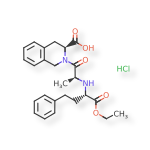
| Molecular Formula | C25H30N2O5.ClH |
| Molecular Weight | 474.977 |
| Optical Activity | UNSPECIFIED |
| Defined Stereocenters | 3 / 3 |
| E/Z Centers | 0 |
| Charge | 0 |
SHOW SMILES / InChI
SMILES
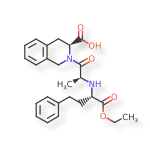
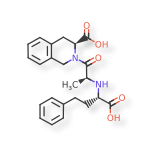
Cl.CCOC(=O)[C@H](CCC1=CC=CC=C1)N[C@@H](C)C(=O)N2CC3=CC=CC=C3C[C@H]2C(O)=O
InChI
InChIKey=IBBLRJGOOANPTQ-JKVLGAQCSA-N
InChI=1S/C25H30N2O5.ClH/c1-3-32-25(31)21(14-13-18-9-5-4-6-10-18)26-17(2)23(28)27-16-20-12-8-7-11-19(20)15-22(27)24(29)30;/h4-12,17,21-22,26H,3,13-16H2,1-2H3,(H,29,30);1H/t17-,21-,22-;/m0./s1
| Molecular Formula | ClH |
| Molecular Weight | 36.461 |
| Charge | 0 |
| Count |
|
| Stereochemistry | ACHIRAL |
| Additional Stereochemistry | No |
| Defined Stereocenters | 0 / 0 |
| E/Z Centers | 0 |
| Optical Activity | NONE |
| Molecular Formula | C25H30N2O5 |
| Molecular Weight | 438.5161 |
| Charge | 0 |
| Count |
|
| Stereochemistry | ABSOLUTE |
| Additional Stereochemistry | No |
| Defined Stereocenters | 3 / 3 |
| E/Z Centers | 0 |
| Optical Activity | UNSPECIFIED |
DescriptionCurator's Comment: description was created based on several sources, including
https://clinicaltrials.gov/ct2/show/NCT00651287 | https://www.ncbi.nlm.nih.gov/pubmed/25922179 | https://www.ncbi.nlm.nih.gov/pubmed/1691409
Curator's Comment: description was created based on several sources, including
https://clinicaltrials.gov/ct2/show/NCT00651287 | https://www.ncbi.nlm.nih.gov/pubmed/25922179 | https://www.ncbi.nlm.nih.gov/pubmed/1691409
Quinapril is the hydrochloride salt of quinapril, the ethyl ester of a non-sulfhydryl, angiotensin-converting enzyme (ACE) inhibitor, quinaprilat. Quinapril hydrochloride is a white to off-white amorphous powder that is freely soluble in aqueous solvents. Quinapril is indicated for the treatment of high blood pressure (hypertension) and as adjunctive therapy in the management of heart failure. It may be used for the treatment of hypertension by itself or in combination with thiazide diuretics, and with diuretics and digoxin for heart failure.
CNS Activity
Originator
Approval Year
Targets
| Primary Target | Pharmacology | Condition | Potency |
|---|---|---|---|
Target ID: CHEMBL1808 |
2.8 nM [IC50] | ||
Target ID: CHEMBL4074 |
110.0 nM [IC50] |
Conditions
| Condition | Modality | Targets | Highest Phase | Product |
|---|---|---|---|---|
| Primary | ACCURETIC Approved UseINDICATIONS AND USA. Hypertension: ACCURETIC is indicated for the treatment of hypertension, to lower blood
pressure. Lowering blood pressure reduces the risk of fatal and nonfatal cardiovascular
events, primarily strokes and myocardial infarctions. These benefits have been seen in
controlled trials of antihypertensive drugs from a wide variety of pharmacologic classes
including the class to which this drug principally belongs. There are no controlled trials
demonstrating risk reduction with ACCURETIC.
Control of high blood pressure should be part of comprehensive cardiovascular risk
management, including, as appropriate, lipid control, diabetes management, antithrombotic
therapy, smoking cessation, exercise, and limited sodium intake. Many patients will require
more than one drug to achieve blood pressure goals. For specific advice on goals and
management, see published guidelines, such as those of the National High Blood Pressure
Education Program’s Joint National Committee on Prevention, Detection, Evaluation, and
Treatment of High Blood Pressure (JNC).
Numerous antihypertensive drugs, from a variety of pharmacologic classes and with
different mechanisms of action, have been shown in randomized controlled trials to reduce
cardiovascular morbidity and mortality, and it can be concluded that it is blood pressure
reduction, and not some other pharmacologic property of the drugs, that is largely
responsible for those benefits. The largest and most consistent cardiovascular outcome
benefit has been a reduction in the risk of stroke, but reductions in myocardial infarction
and cardiovascular mortality also have been seen regularly.
6
Reference ID: 3818285
Elevated systolic or diastolic pressure causes increased cardiovascular risk, and the
absolute risk increase per mmHg is greater at higher blood pressures, so that even modest
reductions of severe hypertension can provide substantial benefit. Relative risk reduction
from blood pressure reduction is similar across populations with varying absolute risk, so
the absolute benefit is greater in patients who are at higher risk independent of their
hypertension (for example, patients with diabetes or hyperlipidemia), and such patients
would be expected to benefit from more aggressive treatment to a lower blood pressure
goal.
Some antihypertensive drugs have smaller blood pressure effects (as monotherapy) in black
patients, and many antihypertensive drugs have additional approved indications and effects
(e.g., on angina, heart failure, or diabetic kidney disease). These considerations may guide
selection of therapy.
This fixed combination is not indicated for the initial therapy of hypertension (see
DOSAGE AND ADMINISTRATION).
In using ACCURETIC, consideration should be given to the fact that another angiotensinconverting
enzyme inhibitor, captopril, has caused agranulocytosis, particularly in patients
with renal impairment or collagen-vascular disease. Available data are insufficient to show
that quinapril does not have a similar risk (see WARNINGS:
Neutropenia/Agranulocytosis).
Angioedema in Black Patients: Black patients receiving ACE inhibitor monotherapy have
been reported to have a higher incidence of angioedema compared to non-blacks. It should
also be noted that in controlled clinical trials, ACE inhibitors have an effect on blood
pressure that is less in black patients than in non-blacks. Launch Date1999 |
Cmax
| Value | Dose | Co-administered | Analyte | Population |
|---|---|---|---|---|
345 ng/mL EXPERIMENT https://pubmed.ncbi.nlm.nih.gov/8739020/ |
2.5 mg single, intravenous dose: 2.5 mg route of administration: Intravenous experiment type: SINGLE co-administered: |
QUINAPRILAT plasma | Homo sapiens population: HEALTHY age: ADULT sex: MALE food status: FASTED |
|
1526 ng/mL EXPERIMENT https://pubmed.ncbi.nlm.nih.gov/8739020/ |
10 mg single, intravenous dose: 10 mg route of administration: Intravenous experiment type: SINGLE co-administered: |
QUINAPRILAT plasma | Homo sapiens population: HEALTHY age: ADULT sex: MALE food status: FASTED |
AUC
| Value | Dose | Co-administered | Analyte | Population |
|---|---|---|---|---|
1706 μg × h/L EXPERIMENT https://pubmed.ncbi.nlm.nih.gov/8198942/ |
10 mg 2 times / day steady-state, oral dose: 10 mg route of administration: Oral experiment type: STEADY-STATE co-administered: |
QUINAPRILAT plasma | Homo sapiens population: UNHEALTHY age: ADULT sex: FEMALE / MALE food status: FASTED |
|
580 ng × h/mL EXPERIMENT https://pubmed.ncbi.nlm.nih.gov/8739020/ |
2.5 mg single, intravenous dose: 2.5 mg route of administration: Intravenous experiment type: SINGLE co-administered: |
QUINAPRILAT plasma | Homo sapiens population: HEALTHY age: ADULT sex: MALE food status: FASTED |
|
2670 ng × h/mL EXPERIMENT https://pubmed.ncbi.nlm.nih.gov/8739020/ |
10 mg single, intravenous dose: 10 mg route of administration: Intravenous experiment type: SINGLE co-administered: |
QUINAPRILAT plasma | Homo sapiens population: HEALTHY age: ADULT sex: MALE food status: FASTED |
T1/2
| Value | Dose | Co-administered | Analyte | Population |
|---|---|---|---|---|
3.7 h EXPERIMENT https://pubmed.ncbi.nlm.nih.gov/8198942/ |
10 mg 2 times / day steady-state, oral dose: 10 mg route of administration: Oral experiment type: STEADY-STATE co-administered: |
QUINAPRILAT plasma | Homo sapiens population: UNHEALTHY age: ADULT sex: FEMALE / MALE food status: FASTED |
|
2.26 h EXPERIMENT https://pubmed.ncbi.nlm.nih.gov/8739020/ |
2.5 mg single, intravenous dose: 2.5 mg route of administration: Intravenous experiment type: SINGLE co-administered: |
QUINAPRILAT plasma | Homo sapiens population: HEALTHY age: ADULT sex: MALE food status: FASTED |
|
2.29 h EXPERIMENT https://pubmed.ncbi.nlm.nih.gov/8739020/ |
10 mg single, intravenous dose: 10 mg route of administration: Intravenous experiment type: SINGLE co-administered: |
QUINAPRILAT plasma | Homo sapiens population: HEALTHY age: ADULT sex: MALE food status: FASTED |
Doses
| Dose | Population | Adverse events |
|---|---|---|
40 mg 1 times / day multiple, oral Recommended Dose: 40 mg, 1 times / day Route: oral Route: multiple Dose: 40 mg, 1 times / day Sources: |
unhealthy, adult Health Status: unhealthy Age Group: adult Sex: M+F Sources: |
Disc. AE: Headache, Dizziness... AEs leading to discontinuation/dose reduction: Headache (0.7%) Sources: Dizziness (0.8%) Fatigue (0.3%) Coughing (0.5%) Nausea and vomiting (0.3%) Abdominal pain (0.2%) |
40 mg 1 times / day multiple, oral Recommended Dose: 40 mg, 1 times / day Route: oral Route: multiple Dose: 40 mg, 1 times / day Sources: |
unhealthy, adult Health Status: unhealthy Age Group: adult Sex: M+F Sources: |
Disc. AE: Dizziness, Coughing... AEs leading to discontinuation/dose reduction: Dizziness (0.7%) Sources: Coughing (0.3%) Fatigue (0.2%) Nausea and vomiting (0.2%) Hypotension (0.5%) Dyspnea (0.2%) Rash (0.2%) |
AEs
| AE | Significance | Dose | Population |
|---|---|---|---|
| Abdominal pain | 0.2% Disc. AE |
40 mg 1 times / day multiple, oral Recommended Dose: 40 mg, 1 times / day Route: oral Route: multiple Dose: 40 mg, 1 times / day Sources: |
unhealthy, adult Health Status: unhealthy Age Group: adult Sex: M+F Sources: |
| Fatigue | 0.3% Disc. AE |
40 mg 1 times / day multiple, oral Recommended Dose: 40 mg, 1 times / day Route: oral Route: multiple Dose: 40 mg, 1 times / day Sources: |
unhealthy, adult Health Status: unhealthy Age Group: adult Sex: M+F Sources: |
| Nausea and vomiting | 0.3% Disc. AE |
40 mg 1 times / day multiple, oral Recommended Dose: 40 mg, 1 times / day Route: oral Route: multiple Dose: 40 mg, 1 times / day Sources: |
unhealthy, adult Health Status: unhealthy Age Group: adult Sex: M+F Sources: |
| Coughing | 0.5% Disc. AE |
40 mg 1 times / day multiple, oral Recommended Dose: 40 mg, 1 times / day Route: oral Route: multiple Dose: 40 mg, 1 times / day Sources: |
unhealthy, adult Health Status: unhealthy Age Group: adult Sex: M+F Sources: |
| Headache | 0.7% Disc. AE |
40 mg 1 times / day multiple, oral Recommended Dose: 40 mg, 1 times / day Route: oral Route: multiple Dose: 40 mg, 1 times / day Sources: |
unhealthy, adult Health Status: unhealthy Age Group: adult Sex: M+F Sources: |
| Dizziness | 0.8% Disc. AE |
40 mg 1 times / day multiple, oral Recommended Dose: 40 mg, 1 times / day Route: oral Route: multiple Dose: 40 mg, 1 times / day Sources: |
unhealthy, adult Health Status: unhealthy Age Group: adult Sex: M+F Sources: |
| Dyspnea | 0.2% Disc. AE |
40 mg 1 times / day multiple, oral Recommended Dose: 40 mg, 1 times / day Route: oral Route: multiple Dose: 40 mg, 1 times / day Sources: |
unhealthy, adult Health Status: unhealthy Age Group: adult Sex: M+F Sources: |
| Fatigue | 0.2% Disc. AE |
40 mg 1 times / day multiple, oral Recommended Dose: 40 mg, 1 times / day Route: oral Route: multiple Dose: 40 mg, 1 times / day Sources: |
unhealthy, adult Health Status: unhealthy Age Group: adult Sex: M+F Sources: |
| Nausea and vomiting | 0.2% Disc. AE |
40 mg 1 times / day multiple, oral Recommended Dose: 40 mg, 1 times / day Route: oral Route: multiple Dose: 40 mg, 1 times / day Sources: |
unhealthy, adult Health Status: unhealthy Age Group: adult Sex: M+F Sources: |
| Rash | 0.2% Disc. AE |
40 mg 1 times / day multiple, oral Recommended Dose: 40 mg, 1 times / day Route: oral Route: multiple Dose: 40 mg, 1 times / day Sources: |
unhealthy, adult Health Status: unhealthy Age Group: adult Sex: M+F Sources: |
| Coughing | 0.3% Disc. AE |
40 mg 1 times / day multiple, oral Recommended Dose: 40 mg, 1 times / day Route: oral Route: multiple Dose: 40 mg, 1 times / day Sources: |
unhealthy, adult Health Status: unhealthy Age Group: adult Sex: M+F Sources: |
| Hypotension | 0.5% Disc. AE |
40 mg 1 times / day multiple, oral Recommended Dose: 40 mg, 1 times / day Route: oral Route: multiple Dose: 40 mg, 1 times / day Sources: |
unhealthy, adult Health Status: unhealthy Age Group: adult Sex: M+F Sources: |
| Dizziness | 0.7% Disc. AE |
40 mg 1 times / day multiple, oral Recommended Dose: 40 mg, 1 times / day Route: oral Route: multiple Dose: 40 mg, 1 times / day Sources: |
unhealthy, adult Health Status: unhealthy Age Group: adult Sex: M+F Sources: |
Overview
| CYP3A4 | CYP2C9 | CYP2D6 | hERG |
|---|---|---|---|
OverviewOther
| Other Inhibitor | Other Substrate | Other Inducer |
|---|---|---|
Drug as perpetrator
| Target | Modality | Activity | Metabolite | Clinical evidence |
|---|---|---|---|---|
| yes [IC50 6.2 uM] |
Drug as victim
| Target | Modality | Activity | Metabolite | Clinical evidence |
|---|---|---|---|---|
| yes | ||||
| yes | ||||
| yes |
PubMed
| Title | Date | PubMed |
|---|---|---|
| In vitro study on binding interaction of quinapril with bovine serum albumin (BSA) using multi-spectroscopic and molecular docking methods. | 2017-08 |
|
| Genetic variants associated with angiotensin-converting enzyme inhibitor-induced cough: a genome-wide association study in a Swedish population. | 2017-02 |
|
| Attenuation of heart failure due to coronary stenosis by ACE inhibitor and angiotensin receptor blocker. | 2003-07 |
|
| Usefulness of quinapril and irbesartan to improve the anti-inflammatory response of atorvastatin and aspirin in patients with coronary heart disease. | 2003-05-01 |
|
| Square wave voltammetric determination of the angiotensin-converting enzyme inhibitors cilazapril, quinapril and ramipril in pharmaceutical formulations. | 2003-05 |
|
| Role of PKC in autocrine regulation of rat ventricular K+ currents by angiotensin and endothelin. | 2003-04 |
|
| Improvement of endothelial dysfunction by angiotensin II blockade accompanied by induction of vascular hepatocyte growth factor system in diabetic spontaneously hypertensive rats. | 2003-03 |
|
| Pharmacokinetics of quinapril in children: assessment during substitution for chronic angiotensin-converting enzyme inhibitor treatment. | 2003-02 |
|
| Effect of combination therapy with dipyridamole and quinapril in diabetic nephropathy. | 2003-02 |
|
| Comparative effects of angiotensin II receptor blockade (candesartan) with angiotensin-converting enzyme inhibitor (quinapril) in rats with dilated cardiomyopathy. | 2003-01 |
|
| Moexipril and quinapril inhibition of tissue angiotensin-converting enzyme activity in the rat: evidence for direct effects in heart, lung and kidney and stimulation of prostacyclin generation. | 2003-01 |
|
| Effects of angiotensin-converting enzyme inhibition and calcium channel blockade on cardiac apoptosis in rats with 2K1C (two-kidney/one-clip) renovascular hypertension. | 2003-01 |
|
| [Angiotensin-converting enzyme, quinapril, in treating chronic cardiac failure]. | 2003 |
|
| Time-effect profile of antihypertensive agents assessed with trough/peak ratio, smoothness index and dose omission: an ambulatory blood pressure monitoring study with trandolapril vs. quinapril. | 2002-12 |
|
| The ACE inhibitor, quinapril, ameliorates peritoneal fibrosis in an encapsulating peritoneal sclerosis model in mice. | 2002-12 |
|
| Effects of antihypertensive drugs in experimental type 2 diabetes-related nephropathy. | 2002-12 |
|
| Angiotensin II regulates the synthesis of proinflammatory cytokines and chemokines in the kidney. | 2002-12 |
|
| Optimisation by experimental design of a capillary electrophoretic method for the separation of several inhibitors of angiotensin-converting enzyme using alkylsulphonates. | 2002-11-29 |
|
| Ischemia Management with Accupril post bypass Graft via Inhibition of angiotensin coNverting enzyme (IMAGINE): a multicentre randomized trial - design and rationale. | 2002-11 |
|
| Effect of losartan on nocturnal blood pressure in patients with stroke: comparison with angiotensin converting enzyme inhibitor. | 2002-11 |
|
| Captopril and quinapril reduce reactive oxygen species. | 2002-10 |
|
| Effects of a long-term pharmacological interruption of the renin-angiotensin system on the fibrinolytic system in essential hypertension. | 2002-09-06 |
|
| Prevention of vascular damage in scleroderma with angiotensin-converting enzyme (ACE) inhibition. | 2002-09 |
|
| Enalapril and quinapril improve endothelial vasodilator function and aortic eNOS gene expression in L-NAME-treated rats. | 2002-08-16 |
|
| Using ACE inhibitors appropriately. | 2002-08-01 |
|
| [Is mild essential hypertension without obvious organ complications and risk factors associated with increased levels of circulating markers of endothelial dysfunction? Effect of ACE inhibitor therapy]. | 2002-08 |
|
| Influence of antihypertensive drugs on renal microcirculation and renal hemodynamics in cyclosporine A-treated rats. | 2002-08 |
|
| AT1 receptor blockade increases cardiac bradykinin via neutral endopeptidase after induction of myocardial infarction in rats. | 2002-08 |
|
| Circulating intercellular cell adhesion molecule-1, endothelin-1 and von Willebrand factor-markers of endothelial dysfunction in uncomplicated essential hypertension: the effect of treatment with ACE inhibitors. | 2002-08 |
|
| Bradykinin as a major endogenous regulator of endothelial function. | 2002-06-12 |
|
| The mechanism of the angiotensin-converting enzyme inhibitor quinapril is not related to bradykinin level in heart tissue. | 2002-06 |
|
| Subacute and chronic effects of quinapril on cardiac cytokine expression, remodeling, and function after myocardial infarction in the rat. | 2002-06 |
|
| Quinapril treatment restores the vasodilator action of insulin in fructose-hypertensive rats. | 2002-05-16 |
|
| Lowering of blood pressure improves endothelial dysfunction by increase of nitric oxide production in hypertensive rats. | 2002-05 |
|
| Pretreatment with angiotensin-converting enzyme inhibitors attenuates ischemia-reperfusion injury. | 2002-05 |
|
| Ventricular remodeling after myocardial infarction and effects of ACE inhibition on hemodynamics and scar formation in SHR. | 2002-04-06 |
|
| Rapid increase in cardiac adrenomedullin gene expression caused by acute pressure overload: effect of the renin-angiotensin system on gene expression. | 2002-04 |
|
| Quinapril prevents restenosis after coronary stenting in patients with angiotensin-converting enzyme D allele. | 2002-04 |
|
| Inhibition of left ventricular fibrosis by tranilast in rats with renovascular hypertension. | 2002-04 |
|
| Blockade of endothelial enzymes: new therapeutic targets. | 2002-03 |
|
| Influence of angiotensinogen M253T gene polymorphism and an angiotensin converting enzyme inhibitor on restenosis after percutaneous coronary intervention. | 2002-02 |
|
| Simultaneous determination of quinapril and its active metabolite quinaprilat in human plasma using high-performance liquid chromatography with ultraviolet detection. | 2002-01-25 |
|
| Angiotensin II as an inflammatory mediator: evolving concepts in the role of the renin angiotensin system in the failing heart. | 2002-01 |
|
| Effects of quinapril on myocardial function, ventricular remodeling and cardiac cytokine expression in congestive heart failure in the rat. | 2002-01 |
|
| Effects of a citrate buffer system on the solid-state chemical stability of lyophilized quinapril preparations. | 2002-01 |
|
| [Some new data concerning effectiveness of amlodipine, atorvastatine and quinaprile for heart diseases]. | 2002 |
|
| [Clinical sequelae of tissue angiotensin converting enzyme inhibition: practicability of use in ischemic heart disease]. | 2002 |
|
| Clinical pharmacokinetics and selective pharmacodynamics of new angiotensin converting enzyme inhibitors: an update. | 2002 |
|
| Angiotensin II induced inflammation in the kidney and in the heart of double transgenic rats. | 2002 |
|
| The influence of angiotensin-converting enzyme inhibitors on the aorta elastin metabolism in diet-induced hypercholesterolaemia in rabbits. | 2001-03 |
Sample Use Guides
The recommended initial dosage of ACCUPRIL in patients not on diuretics is 10 or 20 mg once daily. Dosage should be adjusted according to blood pressure response measured at peak (2–6 hours after dosing) and trough (predosing). Generally, dosage adjustments should be made at intervals of at least 2 weeks. Most patients have required dosages of 20, 40, or 80 mg/day, given as a single dose or in two equally divided doses.
Route of Administration:
Oral
| Substance Class |
Chemical
Created
by
admin
on
Edited
Mon Mar 31 17:53:10 GMT 2025
by
admin
on
Mon Mar 31 17:53:10 GMT 2025
|
| Record UNII |
33067B3N2M
|
| Record Status |
Validated (UNII)
|
| Record Version |
|
-
Download
| Name | Type | Language | ||
|---|---|---|---|---|
|
Preferred Name | English | ||
|
Official Name | English | ||
|
Common Name | English | ||
|
Common Name | English | ||
|
Common Name | English | ||
|
Common Name | English | ||
|
Common Name | English | ||
|
Common Name | English | ||
|
Common Name | English | ||
|
Common Name | English | ||
|
Common Name | English | ||
|
Code | English | ||
|
Common Name | English | ||
|
Common Name | English | ||
|
Code | English | ||
|
Common Name | English | ||
|
Common Name | English | ||
|
Common Name | English | ||
|
Common Name | English | ||
|
Common Name | English | ||
|
Common Name | English |
| Classification Tree | Code System | Code | ||
|---|---|---|---|---|
|
NCI_THESAURUS |
C247
Created by
admin on Mon Mar 31 17:53:10 GMT 2025 , Edited by admin on Mon Mar 31 17:53:10 GMT 2025
|
| Code System | Code | Type | Description | ||
|---|---|---|---|---|---|
|
1593401
Created by
admin on Mon Mar 31 17:53:10 GMT 2025 , Edited by admin on Mon Mar 31 17:53:10 GMT 2025
|
PRIMARY | |||
|
SUB04164MIG
Created by
admin on Mon Mar 31 17:53:10 GMT 2025 , Edited by admin on Mon Mar 31 17:53:10 GMT 2025
|
PRIMARY | |||
|
8714
Created by
admin on Mon Mar 31 17:53:10 GMT 2025 , Edited by admin on Mon Mar 31 17:53:10 GMT 2025
|
PRIMARY | |||
|
235759
Created by
admin on Mon Mar 31 17:53:10 GMT 2025 , Edited by admin on Mon Mar 31 17:53:10 GMT 2025
|
PRIMARY | RxNorm | ||
|
CHEMBL1592
Created by
admin on Mon Mar 31 17:53:10 GMT 2025 , Edited by admin on Mon Mar 31 17:53:10 GMT 2025
|
PRIMARY | |||
|
54891
Created by
admin on Mon Mar 31 17:53:10 GMT 2025 , Edited by admin on Mon Mar 31 17:53:10 GMT 2025
|
PRIMARY | |||
|
7046
Created by
admin on Mon Mar 31 17:53:10 GMT 2025 , Edited by admin on Mon Mar 31 17:53:10 GMT 2025
|
PRIMARY | |||
|
m9437
Created by
admin on Mon Mar 31 17:53:10 GMT 2025 , Edited by admin on Mon Mar 31 17:53:10 GMT 2025
|
PRIMARY | Merck Index | ||
|
W-125
Created by
admin on Mon Mar 31 17:53:10 GMT 2025 , Edited by admin on Mon Mar 31 17:53:10 GMT 2025
|
PRIMARY | |||
|
82586-55-8
Created by
admin on Mon Mar 31 17:53:10 GMT 2025 , Edited by admin on Mon Mar 31 17:53:10 GMT 2025
|
PRIMARY | |||
|
C29398
Created by
admin on Mon Mar 31 17:53:10 GMT 2025 , Edited by admin on Mon Mar 31 17:53:10 GMT 2025
|
PRIMARY | |||
|
DTXSID3021221
Created by
admin on Mon Mar 31 17:53:10 GMT 2025 , Edited by admin on Mon Mar 31 17:53:10 GMT 2025
|
PRIMARY | |||
|
DBSALT000465
Created by
admin on Mon Mar 31 17:53:10 GMT 2025 , Edited by admin on Mon Mar 31 17:53:10 GMT 2025
|
PRIMARY | |||
|
33067B3N2M
Created by
admin on Mon Mar 31 17:53:10 GMT 2025 , Edited by admin on Mon Mar 31 17:53:10 GMT 2025
|
PRIMARY | |||
|
100000090468
Created by
admin on Mon Mar 31 17:53:10 GMT 2025 , Edited by admin on Mon Mar 31 17:53:10 GMT 2025
|
PRIMARY | |||
|
33067B3N2M
Created by
admin on Mon Mar 31 17:53:10 GMT 2025 , Edited by admin on Mon Mar 31 17:53:10 GMT 2025
|
PRIMARY | |||
|
758222
Created by
admin on Mon Mar 31 17:53:10 GMT 2025 , Edited by admin on Mon Mar 31 17:53:10 GMT 2025
|
PRIMARY |
| Related Record | Type | Details | ||
|---|---|---|---|---|
|
|
PARENT -> SALT/SOLVATE | |||
|
BASIS OF STRENGTH->SUBSTANCE |
ASSAY (TITRATION)
EP
|
||
|
BASIS OF STRENGTH->SUBSTANCE |
ASSAY (HPLC)
USP
|
| Related Record | Type | Details | ||
|---|---|---|---|---|
|
IMPURITY -> PARENT |
CHROMATOGRAPHIC PURITY (HPLC/UV)
EP
|
||
|
IMPURITY -> PARENT |
CHROMATOGRAPHIC PURITY (HPLC/UV)
EP
|
||
|
IMPURITY -> PARENT |
CHROMATOGRAPHIC PURITY (HPLC/UV)
EP
|
||
|
IMPURITY -> PARENT |
UNSPECIFIED
EP
|
||
|
IMPURITY -> PARENT |
CHROMATOGRAPHIC PURITY (GC)
EP
|
||
|
IMPURITY -> PARENT |
CHROMATOGRAPHIC PURITY (HPLC/UV)
EP
|
||
|
IMPURITY -> PARENT |
CHROMATOGRAPHIC PURITY (HPLC/UV)
EP
|
||
|
IMPURITY -> PARENT |
|
||
|
IMPURITY -> PARENT |
For the calculation of contents, multiply the peak areas by 1.5
CHROMATOGRAPHIC PURITY (HPLC/UV)
EP
|
||
|
IMPURITY -> PARENT |
UNSPECIFIED
EP
|
||
|
IMPURITY -> PARENT |
UNSPECIFIED
CHROMATOGRAPHIC PURITY (HPLC/UV)
USP
|
||
|
IMPURITY -> PARENT |
CHROMATOGRAPHIC PURITY (HPLC/UV)
EP
|
||
|
IMPURITY -> PARENT |
UNSPECIFIED
CHROMATOGRAPHIC PURITY (HPLC/UV)
USP
|
||
|
|
IMPURITY GENOTOXIC->PARENT |
|

| Related Record | Type | Details | ||
|---|---|---|---|---|
|
|
ACTIVE MOIETY |