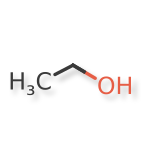
Details
| Stereochemistry | ACHIRAL |
| Molecular Formula | C2H6O |
| Molecular Weight | 46.0684 |
| Optical Activity | NONE |
| Defined Stereocenters | 0 / 0 |
| E/Z Centers | 0 |
| Charge | 0 |
SHOW SMILES / InChI
SMILES
CCO
InChI
InChIKey=LFQSCWFLJHTTHZ-UHFFFAOYSA-N
InChI=1S/C2H6O/c1-2-3/h3H,2H2,1H3
| Molecular Formula | C2H6O |
| Molecular Weight | 46.0684 |
| Charge | 0 |
| Count |
|
| Stereochemistry | ACHIRAL |
| Additional Stereochemistry | No |
| Defined Stereocenters | 0 / 0 |
| E/Z Centers | 0 |
| Optical Activity | NONE |
DescriptionCurator's Comment: description was created based on several sources, including
http://www.accessdata.fda.gov/drugsatfda_docs/label/2015/021074Orig1s010lbl.pdf
https://www.ncbi.nlm.nih.gov/pubmed/17591544
Curator's Comment: description was created based on several sources, including
http://www.accessdata.fda.gov/drugsatfda_docs/label/2015/021074Orig1s010lbl.pdf
https://www.ncbi.nlm.nih.gov/pubmed/17591544
Alcohols exhibit rapid broad-spectrum antimicrobial activity against vegetative bacteria (including mycobacteria), viruses, and fungi but are not sporicidal. They are, however, known to inhibit sporulation and spore germination, but this effect is reversible. Because of the lack of sporicidal activity, alcohols are not recommended for sterilization but are widely used for both hard-surface disinfection and skin antisepsis. Lower concentrations may also be used as preservatives and to potentiate the activity of other biocides. Many alcohol products include low levels of other biocides (in particular chlorhexidine), which remain on the skin following evaporation of the alcohol, or excipients (including emollients), which decrease the evaporation time of the alcohol and can significantly increase product efficacy. Ethanol in combination with: chlorhexidine gluconate 1% was approved to use in surgical hand antiseptic. It significantly reduces the number of microorganisms on the hands and forearms prior to surgery or patient care. Ethanol is also used as a co-solvent to dissolve many insoluble drugs and to serve as a mild sedative in some medicinal formulations. Ethanol is metabolized by the hepatic enzyme alcohol dehydrogenase. Ethanol affects the brain’s neurons in several ways. It alters their membranes as well as their ion channels, enzymes, and receptors. Alcohol also binds directly to the receptors for acetylcholine, serotonin, GABA, and the NMDA receptors for glutamate. The sedative effects of ethanol are mediated through binding to GABA receptors and glycine receptors (alpha 1 and alpha 2 subunits). It also inhibits NMDA receptor functioning. In its role as an anti-infective, ethanol acts as an osmolyte or dehydrating agent that disrupts the osmotic balance across cell membranes.
CNS Activity
Approval Year
Targets
| Primary Target | Pharmacology | Condition | Potency |
|---|---|---|---|
Target ID: CHEMBL1962 |
Conditions
| Condition | Modality | Targets | Highest Phase | Product |
|---|---|---|---|---|
| Curative | AVAGARD Approved UseSurgical hand antiseptic: Significantly reduces the number of micro-organisms on the hands and forearms prior to surgery or patient care Launch Date2001 |
PubMed
| Title | Date | PubMed |
|---|---|---|
| Increased production of human proinsulin in the periplasmic space of Escherichia coli by fusion to DsbA. | 2001-11-30 |
|
| Switching osmolyte strategies: response of Methanococcus thermolithotrophicus to changes in external NaCl. | 2001-11-15 |
|
| On the enzymatic activation of NADH. | 2001-03-23 |
|
| Regulation of the aldehyde dehydrogenase gene (aldA) and its role in the control of the coinducer level necessary for induction of the ethanol utilization pathway in Aspergillus nidulans. | 2001-03-09 |
|
| Phosphatidic acid regulates tyrosine phosphorylating activity in human neutrophils: enhancement of Fgr activity. | 2001-02-16 |
|
| Intracellular fluxes in a recombinant xylose-utilizing Saccharomyces cerevisiae cultivated anaerobically at different dilution rates and feed concentrations. | 2001-02-05 |
|
| Prediction of Fenton oxidation positions in polycyclic aromatic hydrocarbons by Frontier electron density. | 2001-02 |
|
| Bacterial release of arsenic ions and organoarsenic compounds from soil contaminated by chemical warfare agents. | 2001-02 |
|
| Microparticles of soy lecithin formed by supercritical processes. | 2001-01-20 |
|
| Energetics of growth and penicillin production in a high-producing strain of Penicillium chrysogenum. | 2001-01-20 |
|
| Efficient regression calibration for logistic regression in main study/internal validation study designs with an imperfect reference instrument. | 2001-01-15 |
|
| Expression of a cytoplasmic transhydrogenase in Saccharomyces cerevisiae results in formation of 2-oxoglutarate due to depletion of the NADPH pool. | 2001-01-15 |
|
| Morphometric assessment of testicular changes in drug-related fatalities. | 2001-01-15 |
|
| Caffeine dissociates complexes between DNA and intercalating dyes: application for bleaching fluorochrome-stained cells for their subsequent restaining and analysis by laser scanning cytometry. | 2001-01-01 |
|
| Biochemical characterization and mechanism of action of a thermostable beta-glucosidase purified from Thermoascus aurantiacus. | 2001-01-01 |
|
| Patients admitted to emergency services for drunkenness: moderate alcohol users or harmful drinkers? | 2001-01 |
|
| The efficacy of esmolol versus lidocaine to attenuate the hemodynamic response to intubation in isolated head trauma patients. | 2001-01 |
|
| Selected in-treatment outcomes of long-term methadone maintenance treatment patients in New York State. | 2001-01 |
|
| Integrating the methadone patient in the traditional addiction inpatient rehabilitation program--problems and solutions. | 2001-01 |
|
| Severe ethylene glycol ingestion treated without hemodialysis. | 2001-01 |
|
| Fomepizole in the treatment of poisoning. | 2001-01 |
|
| Major changes in human ocular UV protection with age. | 2001-01 |
|
| Inhibition of CYP2E1 with natural agents may be a feasible strategy for minimizing the hepatotoxicity of ethanol. | 2001-01 |
|
| Up-regulation of hepatic IGFBP-1 production as a strategy for preventing benign prostatic hyperplasia. | 2001-01 |
|
| Effects of vitamin D (calcitriol) on transitional cell carcinoma of the bladder in vitro and in vivo. | 2001-01 |
|
| Ethanol acts synergistically with a D2 dopamine agonist to cause translocation of protein kinase C. | 2001-01 |
|
| Outcome of hospital care of liver disease associated with hepatitis C in the United States. | 2001-01 |
|
| Uteroplacental insufficiency alters hepatic fatty acid-metabolizing enzymes in juvenile and adult rats. | 2001-01 |
|
| A single bout of exercise induces beta-adrenergic desensitization in human adipose tissue. | 2001-01 |
|
| Effects of posttraining ethanol on an appetitive task. | 2001-01 |
|
| Genetic alterations in head and neck cancer: interactions among environmental carcinogens, cell cycle control, and host DNA repair. | 2001-01 |
|
| DNA supercoiling-dependent transcriptional coupling between the divergently transcribed promoters of the ilvYC operon of Escherichia coli is proportional to promoter strengths and transcript lengths. | 2001-01 |
|
| Induction of ppGpp synthesis in Streptomyces coelicolor A3(2) grown under conditions of nutritional sufficiency elicits actII-ORF4 transcription and actinorhodin biosynthesis. | 2001-01 |
|
| Acute effects of 3,4-methylenedioxymethamphetamine alone and in combination with ethanol on the immune system in humans. | 2001-01 |
|
| Ethanol potentiation of glycine-induced responses in dissociated neurons of rat ventral tegmental area. | 2001-01 |
|
| Evaluation of surgical excision of non-homogeneous oral leukoplakia in a screening intervention trial, Kerala, India. | 2001-01 |
|
| Smoking and alcohol in the etiology of oral cancer: gender-specific risk profiles in the south of Greece. | 2001-01 |
|
| Mortality among women and men relative to unemployment, part time work, overtime work, and extra work: a study based on data from the Swedish twin registry. | 2001-01 |
|
| Evaluation of a modified German version of the Q16 questionnaire for neurotoxic symptoms in workers exposed to solvents. | 2001-01 |
|
| Release of biochemical markers of damage to neuronal and glial brain tissue is associated with short and long term neuropsychological outcome after traumatic brain injury. | 2001-01 |
|
| Cystic fibrosis transmembrane regulator (CFTR) DeltaF508 mutation and 5T allele in patients with chronic pancreatitis and exocrine pancreatic cancer. PANKRAS II Study Group. | 2001-01 |
|
| Glycosaminoglycan synthesis and secretion by the retinal pigment epithelium: polarized delivery of hyaluronan from the apical surface. | 2001-01 |
|
| Optimizing the sterilization of PLGA scaffolds for use in tissue engineering. | 2001-01 |
|
| Effect of short-term ethanol administration on cadmium excretion in rats. | 2001-01 |
|
| Preparation and characterization of chitin beads as a wound dressing precursor. | 2001-01 |
|
| Risk factors for pancreatic cancer: a case-control study based on direct interviews. | 2001 |
|
| Generalisation of ethanol with drug mixtures containing a positive modulator of the GABA(A) receptor and an NMDA antagonist. | 2001 |
|
| Laryngeal carcinoma--epidemiological and clinical features: experience of the Rabin Medical Center in Israel. | 2000-12-15 |
|
| Occupational health services for municipal employees. | 2000-12-07 |
|
| Acute ethanol decreases NPY mRNA but not POMC mRNA in the arcuate nucleus. | 2000-11-09 |
Patents
Sample Use Guides
Primary cultures of cortical neurons obtained from 1-day-old rats were exposed to EtOH after 7days of culture, and viability and morphology were analyzed at structural and ultrastructural levels after 24-h EtOH exposure. EtOH caused a significant reduction of 73±7% in the viability of cultured cortical neurons, by preferentially inducing apoptotic cellular death. This effect was accompanied by an increase in caspase 3 and 9 expression. EtOH induced a reduction in total dendrite length and in the number of dendrites per cell. Ultrastructural studies showed that EtOH increased the number of lipidic vacuoles, lysosomes and multilamellar vesicles and induced a dilated endoplasmatic reticulum lumen and a disorganized Golgi apparatus with a ring-shape appearance. Microtubules showed a disorganized distribution
| Substance Class |
Chemical
Created
by
admin
on
Edited
Mon Mar 31 17:52:14 GMT 2025
by
admin
on
Mon Mar 31 17:52:14 GMT 2025
|
| Record UNII |
3K9958V90M
|
| Record Status |
Validated (UNII)
|
| Record Version |
|
-
Download
| Related Record | Type |
|---|
| Name | Type | Language | ||
|---|---|---|---|---|
|
Preferred Name | English | ||
|
Official Name | English | ||
|
Common Name | English | ||
|
Common Name | English | ||
|
Common Name | English | ||
|
Common Name | English | ||
|
Common Name | English | ||
|
Common Name | English | ||
|
Code | English | ||
|
Common Name | English | ||
|
Systematic Name | English | ||
|
Common Name | English | ||
|
Common Name | English | ||
|
Common Name | English | ||
|
Common Name | English | ||
|
Common Name | English | ||
|
Common Name | English | ||
|
Common Name | English | ||
|
Common Name | English | ||
|
Common Name | English | ||
|
Systematic Name | English | ||
|
Common Name | English | ||
|
Common Name | English | ||
|
Common Name | English | ||
|
Common Name | English | ||
|
Systematic Name | English | ||
|
Code | English | ||
|
Systematic Name | English | ||
|
Common Name | English | ||
|
Common Name | English | ||
|
Systematic Name | English | ||
|
Common Name | English | ||
|
Common Name | English | ||
|
Common Name | English | ||
|
Common Name | English | ||
|
Common Name | English | ||
|
Common Name | English | ||
|
Common Name | English | ||
|
Common Name | English | ||
|
Common Name | English | ||
|
Common Name | English | ||
|
Common Name | English | ||
|
Common Name | English | ||
|
Common Name | English | ||
|
Brand Name | English | ||
|
Common Name | English | ||
|
Common Name | English | ||
|
Common Name | English | ||
|
Common Name | English |
| Classification Tree | Code System | Code | ||
|---|---|---|---|---|
|
CFR |
21 CFR 184.1293
Created by
admin on Mon Mar 31 17:52:14 GMT 2025 , Edited by admin on Mon Mar 31 17:52:14 GMT 2025
|
||
|
WHO-ESSENTIAL MEDICINES LIST |
15.1
Created by
admin on Mon Mar 31 17:52:14 GMT 2025 , Edited by admin on Mon Mar 31 17:52:14 GMT 2025
|
||
|
WHO-VATC |
QV03AB16
Created by
admin on Mon Mar 31 17:52:14 GMT 2025 , Edited by admin on Mon Mar 31 17:52:14 GMT 2025
|
||
|
CFR |
21 CFR 862.3050
Created by
admin on Mon Mar 31 17:52:14 GMT 2025 , Edited by admin on Mon Mar 31 17:52:14 GMT 2025
|
||
|
FDA ORPHAN DRUG |
402513
Created by
admin on Mon Mar 31 17:52:14 GMT 2025 , Edited by admin on Mon Mar 31 17:52:14 GMT 2025
|
||
|
EPA PESTICIDE CODE |
1501
Created by
admin on Mon Mar 31 17:52:14 GMT 2025 , Edited by admin on Mon Mar 31 17:52:14 GMT 2025
|
||
|
NCI_THESAURUS |
C29756
Created by
admin on Mon Mar 31 17:52:14 GMT 2025 , Edited by admin on Mon Mar 31 17:52:14 GMT 2025
|
||
|
WHO-ATC |
V03AB16
Created by
admin on Mon Mar 31 17:52:14 GMT 2025 , Edited by admin on Mon Mar 31 17:52:14 GMT 2025
|
||
|
WHO-VATC |
QV03AZ01
Created by
admin on Mon Mar 31 17:52:14 GMT 2025 , Edited by admin on Mon Mar 31 17:52:14 GMT 2025
|
||
|
FDA ORPHAN DRUG |
212205
Created by
admin on Mon Mar 31 17:52:14 GMT 2025 , Edited by admin on Mon Mar 31 17:52:14 GMT 2025
|
||
|
FDA ORPHAN DRUG |
361611
Created by
admin on Mon Mar 31 17:52:14 GMT 2025 , Edited by admin on Mon Mar 31 17:52:14 GMT 2025
|
||
|
DSLD |
1152 (Number of products:173)
Created by
admin on Mon Mar 31 17:52:14 GMT 2025 , Edited by admin on Mon Mar 31 17:52:14 GMT 2025
|
||
|
WHO-VATC |
QD08AX08
Created by
admin on Mon Mar 31 17:52:14 GMT 2025 , Edited by admin on Mon Mar 31 17:52:14 GMT 2025
|
||
|
FDA ORPHAN DRUG |
212505
Created by
admin on Mon Mar 31 17:52:14 GMT 2025 , Edited by admin on Mon Mar 31 17:52:14 GMT 2025
|
||
|
WHO-ATC |
D08AX08
Created by
admin on Mon Mar 31 17:52:14 GMT 2025 , Edited by admin on Mon Mar 31 17:52:14 GMT 2025
|
||
|
EU-Orphan Drug |
EU/3/04/191
Created by
admin on Mon Mar 31 17:52:14 GMT 2025 , Edited by admin on Mon Mar 31 17:52:14 GMT 2025
|
||
|
CFR |
21 CFR 862.3040
Created by
admin on Mon Mar 31 17:52:14 GMT 2025 , Edited by admin on Mon Mar 31 17:52:14 GMT 2025
|
||
|
WHO-ATC |
V03AZ01
Created by
admin on Mon Mar 31 17:52:14 GMT 2025 , Edited by admin on Mon Mar 31 17:52:14 GMT 2025
|
||
|
JECFA EVALUATION |
ETHANOL
Created by
admin on Mon Mar 31 17:52:14 GMT 2025 , Edited by admin on Mon Mar 31 17:52:14 GMT 2025
|
||
|
DSLD |
291 (Number of products:2)
Created by
admin on Mon Mar 31 17:52:14 GMT 2025 , Edited by admin on Mon Mar 31 17:52:14 GMT 2025
|
||
|
FDA ORPHAN DRUG |
746720
Created by
admin on Mon Mar 31 17:52:14 GMT 2025 , Edited by admin on Mon Mar 31 17:52:14 GMT 2025
|
||
|
WHO-ATC |
D08AX08
Created by
admin on Mon Mar 31 17:52:14 GMT 2025 , Edited by admin on Mon Mar 31 17:52:14 GMT 2025
|
||
|
NCI_THESAURUS |
C218
Created by
admin on Mon Mar 31 17:52:14 GMT 2025 , Edited by admin on Mon Mar 31 17:52:14 GMT 2025
|
||
|
CFR |
21 CFR 328.10
Created by
admin on Mon Mar 31 17:52:14 GMT 2025 , Edited by admin on Mon Mar 31 17:52:14 GMT 2025
|
| Code System | Code | Type | Description | ||
|---|---|---|---|---|---|
|
DB00898
Created by
admin on Mon Mar 31 17:52:14 GMT 2025 , Edited by admin on Mon Mar 31 17:52:14 GMT 2025
|
PRIMARY | |||
|
16236
Created by
admin on Mon Mar 31 17:52:14 GMT 2025 , Edited by admin on Mon Mar 31 17:52:14 GMT 2025
|
PRIMARY | |||
|
3K9958V90M
Created by
admin on Mon Mar 31 17:52:14 GMT 2025 , Edited by admin on Mon Mar 31 17:52:14 GMT 2025
|
PRIMARY | |||
|
CHEMBL545
Created by
admin on Mon Mar 31 17:52:14 GMT 2025 , Edited by admin on Mon Mar 31 17:52:14 GMT 2025
|
PRIMARY | |||
|
100000078985
Created by
admin on Mon Mar 31 17:52:14 GMT 2025 , Edited by admin on Mon Mar 31 17:52:14 GMT 2025
|
PRIMARY | |||
|
C2190
Created by
admin on Mon Mar 31 17:52:14 GMT 2025 , Edited by admin on Mon Mar 31 17:52:14 GMT 2025
|
PRIMARY | |||
|
SUB11947MIG
Created by
admin on Mon Mar 31 17:52:14 GMT 2025 , Edited by admin on Mon Mar 31 17:52:14 GMT 2025
|
PRIMARY | |||
|
1310469
Created by
admin on Mon Mar 31 17:52:14 GMT 2025 , Edited by admin on Mon Mar 31 17:52:14 GMT 2025
|
ALTERNATIVE | |||
|
1076
Created by
admin on Mon Mar 31 17:52:14 GMT 2025 , Edited by admin on Mon Mar 31 17:52:14 GMT 2025
|
PRIMARY | |||
|
3K9958V90M
Created by
admin on Mon Mar 31 17:52:14 GMT 2025 , Edited by admin on Mon Mar 31 17:52:14 GMT 2025
|
PRIMARY | |||
|
448
Created by
admin on Mon Mar 31 17:52:14 GMT 2025 , Edited by admin on Mon Mar 31 17:52:14 GMT 2025
|
PRIMARY | |||
|
64-17-5
Created by
admin on Mon Mar 31 17:52:14 GMT 2025 , Edited by admin on Mon Mar 31 17:52:14 GMT 2025
|
PRIMARY | |||
|
200-578-6
Created by
admin on Mon Mar 31 17:52:14 GMT 2025 , Edited by admin on Mon Mar 31 17:52:14 GMT 2025
|
PRIMARY | |||
|
m11495
Created by
admin on Mon Mar 31 17:52:14 GMT 2025 , Edited by admin on Mon Mar 31 17:52:14 GMT 2025
|
PRIMARY | Merck Index | ||
|
8024-45-1
Created by
admin on Mon Mar 31 17:52:14 GMT 2025 , Edited by admin on Mon Mar 31 17:52:14 GMT 2025
|
SUPERSEDED | |||
|
8000-16-6
Created by
admin on Mon Mar 31 17:52:14 GMT 2025 , Edited by admin on Mon Mar 31 17:52:14 GMT 2025
|
SUPERSEDED | |||
|
ALCOHOL, DEHYDRATED
Created by
admin on Mon Mar 31 17:52:14 GMT 2025 , Edited by admin on Mon Mar 31 17:52:14 GMT 2025
|
PRIMARY | Description: A colourless, clear and mobile liquid; odour, characteristic.Miscibility: Miscible with water and ether R.Category: Solvent; antiseptic.Storage: Ethanol should be kept in a well-closed container, and stored whenever possible at a temperature between 8 and 15 ?C.Additional information: Ethanol is flammable, burning with a blue smokeless flame. Hygroscopic. Boiling point, about 79 ?C.Requirement: Ethanol contains not less than 98.8% v/v and not more than the equivalent of 100.0% v/v of C2H6O, corresponding to not less than 98.1% m/m and not more than the equivalent of 100.0% m/mof C2H6O. | ||
|
Alcohol
Created by
admin on Mon Mar 31 17:52:14 GMT 2025 , Edited by admin on Mon Mar 31 17:52:14 GMT 2025
|
PRIMARY | |||
|
SUB13730MIG
Created by
admin on Mon Mar 31 17:52:14 GMT 2025 , Edited by admin on Mon Mar 31 17:52:14 GMT 2025
|
PRIMARY | |||
|
m5084
Created by
admin on Mon Mar 31 17:52:14 GMT 2025 , Edited by admin on Mon Mar 31 17:52:14 GMT 2025
|
PRIMARY | Merck Index | ||
|
ETHANOL
Created by
admin on Mon Mar 31 17:52:14 GMT 2025 , Edited by admin on Mon Mar 31 17:52:14 GMT 2025
|
PRIMARY | |||
|
D000431
Created by
admin on Mon Mar 31 17:52:14 GMT 2025 , Edited by admin on Mon Mar 31 17:52:14 GMT 2025
|
PRIMARY | |||
|
702
Created by
admin on Mon Mar 31 17:52:14 GMT 2025 , Edited by admin on Mon Mar 31 17:52:14 GMT 2025
|
PRIMARY | |||
|
SUB125851
Created by
admin on Mon Mar 31 17:52:14 GMT 2025 , Edited by admin on Mon Mar 31 17:52:14 GMT 2025
|
ALTERNATIVE | |||
|
30879
Created by
admin on Mon Mar 31 17:52:14 GMT 2025 , Edited by admin on Mon Mar 31 17:52:14 GMT 2025
|
PRIMARY | |||
|
DTXSID9020584
Created by
admin on Mon Mar 31 17:52:14 GMT 2025 , Edited by admin on Mon Mar 31 17:52:14 GMT 2025
|
PRIMARY | |||
|
1012772
Created by
admin on Mon Mar 31 17:52:14 GMT 2025 , Edited by admin on Mon Mar 31 17:52:14 GMT 2025
|
PRIMARY | |||
|
ALCOHOL
Created by
admin on Mon Mar 31 17:52:14 GMT 2025 , Edited by admin on Mon Mar 31 17:52:14 GMT 2025
|
PRIMARY | Description: A clear, colourless, and mobile liquid; odour, characteristic. Miscibility: Miscible with water, ether R, and glycerol R. Category: Solvent; antiseptic. Storage: Alcohol should be kept in a well-closed container, and stored whenever possible at a temperature between 8 and 15 ?C. Labelling: The designation on the container should state the content of Alcohol in % v/v. Additional information: Different concentrations of Alcohol are prepared from alcohol 96% v/v and water at about 20 ?C.Note: Contraction of volume and rise in temperature occur when mixing Alcohol with water. | ||
|
151
Created by
admin on Mon Mar 31 17:52:14 GMT 2025 , Edited by admin on Mon Mar 31 17:52:14 GMT 2025
|
PRIMARY |
| Related Record | Type | Details | ||
|---|---|---|---|---|
|
METABOLIC ENZYME -> SUBSTRATE |
|
||
|
|
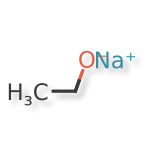
SALT/SOLVATE -> PARENT |
|
||
|
METABOLIC ENZYME -> SUBSTRATE |
|
||
|
|
METABOLIC ENZYME -> INDUCER |
CLINICALLY SIGNIFICANT
|
||
|
|
SUB_CONCEPT->SUBSTANCE |
|
||
|
|
SUB_CONCEPT->SUBSTANCE |
|


| Related Record | Type | Details | ||
|---|---|---|---|---|
|
|
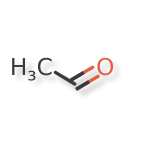
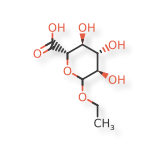
METABOLITE -> PARENT |
|
||
|
|
METABOLITE TOXIC -> PARENT |
|
||
|
METABOLITE -> PARENT |
|
||
|
|
METABOLITE -> PARENT |
|
| Related Record | Type | Details | ||
|---|---|---|---|---|
|
PARENT -> IMPURITY |
| Related Record | Type | Details | ||
|---|---|---|---|---|
|
|
ACTIVE MOIETY |
|