


Details
| Stereochemistry | ABSOLUTE |
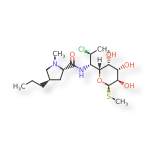
| Molecular Formula | C18H33ClN2O5S |
| Molecular Weight | 424.983 |
| Optical Activity | UNSPECIFIED |
| Defined Stereocenters | 9 / 9 |
| E/Z Centers | 0 |
| Charge | 0 |
SHOW SMILES / InChI
SMILES
CCC[C@@H]1C[C@H](N(C)C1)C(=O)N[C@H]([C@H](C)Cl)[C@H]2O[C@H](SC)[C@H](O)[C@@H](O)[C@H]2O
InChI
InChIKey=KDLRVYVGXIQJDK-AWPVFWJPSA-N
InChI=1S/C18H33ClN2O5S/c1-5-6-10-7-11(21(3)8-10)17(25)20-12(9(2)19)16-14(23)13(22)15(24)18(26-16)27-4/h9-16,18,22-24H,5-8H2,1-4H3,(H,20,25)/t9-,10+,11-,12+,13-,14+,15+,16+,18+/m0/s1
| Molecular Formula | C18H33ClN2O5S |
| Molecular Weight | 424.983 |
| Charge | 0 |
| Count |
|
| Stereochemistry | ABSOLUTE |
| Additional Stereochemistry | No |
| Defined Stereocenters | 9 / 9 |
| E/Z Centers | 0 |
| Optical Activity | UNSPECIFIED |
DescriptionSources: http://www.accessdata.fda.gov/drugsatfda_docs/label/2016/050441s072,050639s033lbl.pdfhttp://www.accessdata.fda.gov/drugsatfda_docs/label/2014/050162s092s093lbl.pdfCurator's Comment: description was created based on several sources, including:
http://www.accessdata.fda.gov/drugsatfda_docs/label/2014/050537s035,050600s013,050615s012lbl.pdf | http://www.rxlist.com/clindamycin-phosphate-topical-solution-drug.htm
Sources: http://www.accessdata.fda.gov/drugsatfda_docs/label/2016/050441s072,050639s033lbl.pdfhttp://www.accessdata.fda.gov/drugsatfda_docs/label/2014/050162s092s093lbl.pdf
Curator's Comment: description was created based on several sources, including:
http://www.accessdata.fda.gov/drugsatfda_docs/label/2014/050537s035,050600s013,050615s012lbl.pdf | http://www.rxlist.com/clindamycin-phosphate-topical-solution-drug.htm
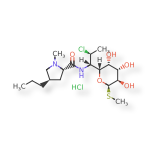
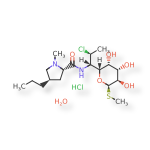
Clindamycin hydrochloride is the hydrated hydrochloride salt of clindamycin. Clindamycin is a semisynthetic antibiotic produced by a 7(S)-chloro-substitution of the 7(R)-hydroxyl group of the parent compound lincomycin. Clindamycin inhibits bacterial protein synthesis by binding to the 50S subunit of the ribosome. It has activity against Gram-positive aerobes and anaerobes as well as some Gram-negative anaerobes.
CNS Activity
Sources: https://www.ncbi.nlm.nih.gov/pubmed/9797245http://www.ncbi.nlm.nih.gov/pmc/articles/PMC105985/pdf/ac003014.pdf
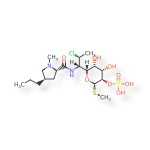
Curator's Comment: Clindamycin phosphate is the prodrug of clindamycin
with no antimicrobial activity in vitro but can be rapidly converted in vivo to the parent drug, clindamycin, by phosphatase ester hydrolysis.
Approval Year
Targets
| Primary Target | Pharmacology | Condition | Potency |
|---|---|---|---|
Target ID: CHEMBL2363135 |
|||
Target ID: CHEMBL2363135 |
Conditions
| Condition | Modality | Targets | Highest Phase | Product |
|---|---|---|---|---|
| Curative | CLEOCIN HYDROCHLORIDE Approved UseClindamycin Injection, USP is indicated in the treatment of serious infections caused by susceptible anaerobic bacteria. Clindamycin Injection, USP is also indicated in the treatment of serious infections due to susceptible strains of streptococci, pneumococci, and staphylococci. Its use should be reserved for penicillin-allergic patients or other patients for whom, in the judgment of the physician, a penicillin is inappropriate. Because of the risk of antibiotic-associated pseudomembranous colitis, as described in the WARNING box, before selecting clindamycin the physician should consider the nature of the infection and the suitability of less toxic alternatives (e.g., erythromycin). Bacteriologic studies should be performed to determine the causative organisms and their susceptibility to clindamycin. Indicated surgical procedures should be performed in conjunction with antibiotic therapy. Clindamycin Injection, USP is indicated in the treatment of serious infections caused by susceptible strains of the designated organisms in the conditions listed below: Lower respiratory tract infections including pneumonia, empyema, and lung abscess caused by anaerobes, Streptococcus pneumoniae, other streptococci (except E. faecalis), and Staphylococcus aureus. Skin and skin structure infections caused by Streptococcus pyogenes, Staphylococcus aureus, and anaerobes. Gynecological infections including endometritis, nongonococcal tubo-ovarian abscess, pelvic cellulitis, and postsurgical vaginal cuff infection caused by susceptible anaerobes. Intra-abdominal infections including peritonitis and intra-abdominal abscess caused by susceptible anaerobic organisms. Septicemia caused by Staphylococcus aureus, streptococci (except Enterococcus faecalis), and susceptible anaerobes. Bone and joint infections including acute hematogenous osteomyelitis caused by Staphylococcus aureus and as adjunctive therapy in the surgical treatment of chronic bone and joint infections due to susceptible organisms. To reduce the development of drug-resistant bacteria and maintain the effectiveness of clindamycin and other antibacterial drugs, clindamycin should be used only to treat or prevent infections that are proven or strongly suspected to be caused by susceptible bacteria. When culture and susceptibility information are available, they should be considered in selecting or modifying antibacterial therapy. In the absence of such data, local epidemiology and susceptibility patterns may contribute to the empiric selection of therapy. Launch Date1970 |
|||
| Curative | CLEOCIN HYDROCHLORIDE Approved UseClindamycin Injection, USP is indicated in the treatment of serious infections caused by susceptible anaerobic bacteria. Clindamycin Injection, USP is also indicated in the treatment of serious infections due to susceptible strains of streptococci, pneumococci, and staphylococci. Its use should be reserved for penicillin-allergic patients or other patients for whom, in the judgment of the physician, a penicillin is inappropriate. Because of the risk of antibiotic-associated pseudomembranous colitis, as described in the WARNING box, before selecting clindamycin the physician should consider the nature of the infection and the suitability of less toxic alternatives (e.g., erythromycin). Bacteriologic studies should be performed to determine the causative organisms and their susceptibility to clindamycin. Indicated surgical procedures should be performed in conjunction with antibiotic therapy. Clindamycin Injection, USP is indicated in the treatment of serious infections caused by susceptible strains of the designated organisms in the conditions listed below: Lower respiratory tract infections including pneumonia, empyema, and lung abscess caused by anaerobes, Streptococcus pneumoniae, other streptococci (except E. faecalis), and Staphylococcus aureus. Skin and skin structure infections caused by Streptococcus pyogenes, Staphylococcus aureus, and anaerobes. Gynecological infections including endometritis, nongonococcal tubo-ovarian abscess, pelvic cellulitis, and postsurgical vaginal cuff infection caused by susceptible anaerobes. Intra-abdominal infections including peritonitis and intra-abdominal abscess caused by susceptible anaerobic organisms. Septicemia caused by Staphylococcus aureus, streptococci (except Enterococcus faecalis), and susceptible anaerobes. Bone and joint infections including acute hematogenous osteomyelitis caused by Staphylococcus aureus and as adjunctive therapy in the surgical treatment of chronic bone and joint infections due to susceptible organisms. To reduce the development of drug-resistant bacteria and maintain the effectiveness of clindamycin and other antibacterial drugs, clindamycin should be used only to treat or prevent infections that are proven or strongly suspected to be caused by susceptible bacteria. When culture and susceptibility information are available, they should be considered in selecting or modifying antibacterial therapy. In the absence of such data, local epidemiology and susceptibility patterns may contribute to the empiric selection of therapy. Launch Date1970 |
|||
| Curative | CLEOCIN HYDROCHLORIDE Approved UseClindamycin Injection, USP is indicated in the treatment of serious infections caused by susceptible anaerobic bacteria. Clindamycin Injection, USP is also indicated in the treatment of serious infections due to susceptible strains of streptococci, pneumococci, and staphylococci. Its use should be reserved for penicillin-allergic patients or other patients for whom, in the judgment of the physician, a penicillin is inappropriate. Because of the risk of antibiotic-associated pseudomembranous colitis, as described in the WARNING box, before selecting clindamycin the physician should consider the nature of the infection and the suitability of less toxic alternatives (e.g., erythromycin). Bacteriologic studies should be performed to determine the causative organisms and their susceptibility to clindamycin. Indicated surgical procedures should be performed in conjunction with antibiotic therapy. Clindamycin Injection, USP is indicated in the treatment of serious infections caused by susceptible strains of the designated organisms in the conditions listed below: Lower respiratory tract infections including pneumonia, empyema, and lung abscess caused by anaerobes, Streptococcus pneumoniae, other streptococci (except E. faecalis), and Staphylococcus aureus. Skin and skin structure infections caused by Streptococcus pyogenes, Staphylococcus aureus, and anaerobes. Gynecological infections including endometritis, nongonococcal tubo-ovarian abscess, pelvic cellulitis, and postsurgical vaginal cuff infection caused by susceptible anaerobes. Intra-abdominal infections including peritonitis and intra-abdominal abscess caused by susceptible anaerobic organisms. Septicemia caused by Staphylococcus aureus, streptococci (except Enterococcus faecalis), and susceptible anaerobes. Bone and joint infections including acute hematogenous osteomyelitis caused by Staphylococcus aureus and as adjunctive therapy in the surgical treatment of chronic bone and joint infections due to susceptible organisms. To reduce the development of drug-resistant bacteria and maintain the effectiveness of clindamycin and other antibacterial drugs, clindamycin should be used only to treat or prevent infections that are proven or strongly suspected to be caused by susceptible bacteria. When culture and susceptibility information are available, they should be considered in selecting or modifying antibacterial therapy. In the absence of such data, local epidemiology and susceptibility patterns may contribute to the empiric selection of therapy. Launch Date1970 |
|||
| Curative | CLEOCIN HYDROCHLORIDE Approved UseClindamycin Injection, USP is indicated in the treatment of serious infections caused by susceptible anaerobic bacteria. Clindamycin Injection, USP is also indicated in the treatment of serious infections due to susceptible strains of streptococci, pneumococci, and staphylococci. Its use should be reserved for penicillin-allergic patients or other patients for whom, in the judgment of the physician, a penicillin is inappropriate. Because of the risk of antibiotic-associated pseudomembranous colitis, as described in the WARNING box, before selecting clindamycin the physician should consider the nature of the infection and the suitability of less toxic alternatives (e.g., erythromycin). Bacteriologic studies should be performed to determine the causative organisms and their susceptibility to clindamycin. Indicated surgical procedures should be performed in conjunction with antibiotic therapy. Clindamycin Injection, USP is indicated in the treatment of serious infections caused by susceptible strains of the designated organisms in the conditions listed below: Lower respiratory tract infections including pneumonia, empyema, and lung abscess caused by anaerobes, Streptococcus pneumoniae, other streptococci (except E. faecalis), and Staphylococcus aureus. Skin and skin structure infections caused by Streptococcus pyogenes, Staphylococcus aureus, and anaerobes. Gynecological infections including endometritis, nongonococcal tubo-ovarian abscess, pelvic cellulitis, and postsurgical vaginal cuff infection caused by susceptible anaerobes. Intra-abdominal infections including peritonitis and intra-abdominal abscess caused by susceptible anaerobic organisms. Septicemia caused by Staphylococcus aureus, streptococci (except Enterococcus faecalis), and susceptible anaerobes. Bone and joint infections including acute hematogenous osteomyelitis caused by Staphylococcus aureus and as adjunctive therapy in the surgical treatment of chronic bone and joint infections due to susceptible organisms. To reduce the development of drug-resistant bacteria and maintain the effectiveness of clindamycin and other antibacterial drugs, clindamycin should be used only to treat or prevent infections that are proven or strongly suspected to be caused by susceptible bacteria. When culture and susceptibility information are available, they should be considered in selecting or modifying antibacterial therapy. In the absence of such data, local epidemiology and susceptibility patterns may contribute to the empiric selection of therapy. Launch Date1970 |
|||
| Curative | CLEOCIN HYDROCHLORIDE Approved UseClindamycin Injection, USP is indicated in the treatment of serious infections caused by susceptible anaerobic bacteria. Clindamycin Injection, USP is also indicated in the treatment of serious infections due to susceptible strains of streptococci, pneumococci, and staphylococci. Its use should be reserved for penicillin-allergic patients or other patients for whom, in the judgment of the physician, a penicillin is inappropriate. Because of the risk of antibiotic-associated pseudomembranous colitis, as described in the WARNING box, before selecting clindamycin the physician should consider the nature of the infection and the suitability of less toxic alternatives (e.g., erythromycin). Bacteriologic studies should be performed to determine the causative organisms and their susceptibility to clindamycin. Indicated surgical procedures should be performed in conjunction with antibiotic therapy. Clindamycin Injection, USP is indicated in the treatment of serious infections caused by susceptible strains of the designated organisms in the conditions listed below: Lower respiratory tract infections including pneumonia, empyema, and lung abscess caused by anaerobes, Streptococcus pneumoniae, other streptococci (except E. faecalis), and Staphylococcus aureus. Skin and skin structure infections caused by Streptococcus pyogenes, Staphylococcus aureus, and anaerobes. Gynecological infections including endometritis, nongonococcal tubo-ovarian abscess, pelvic cellulitis, and postsurgical vaginal cuff infection caused by susceptible anaerobes. Intra-abdominal infections including peritonitis and intra-abdominal abscess caused by susceptible anaerobic organisms. Septicemia caused by Staphylococcus aureus, streptococci (except Enterococcus faecalis), and susceptible anaerobes. Bone and joint infections including acute hematogenous osteomyelitis caused by Staphylococcus aureus and as adjunctive therapy in the surgical treatment of chronic bone and joint infections due to susceptible organisms. To reduce the development of drug-resistant bacteria and maintain the effectiveness of clindamycin and other antibacterial drugs, clindamycin should be used only to treat or prevent infections that are proven or strongly suspected to be caused by susceptible bacteria. When culture and susceptibility information are available, they should be considered in selecting or modifying antibacterial therapy. In the absence of such data, local epidemiology and susceptibility patterns may contribute to the empiric selection of therapy. Launch Date1970 |
|||
| Curative | CLEOCIN HYDROCHLORIDE Approved UseClindamycin Injection, USP is indicated in the treatment of serious infections caused by susceptible anaerobic bacteria. Clindamycin Injection, USP is also indicated in the treatment of serious infections due to susceptible strains of streptococci, pneumococci, and staphylococci. Its use should be reserved for penicillin-allergic patients or other patients for whom, in the judgment of the physician, a penicillin is inappropriate. Because of the risk of antibiotic-associated pseudomembranous colitis, as described in the WARNING box, before selecting clindamycin the physician should consider the nature of the infection and the suitability of less toxic alternatives (e.g., erythromycin). Bacteriologic studies should be performed to determine the causative organisms and their susceptibility to clindamycin. Indicated surgical procedures should be performed in conjunction with antibiotic therapy. Clindamycin Injection, USP is indicated in the treatment of serious infections caused by susceptible strains of the designated organisms in the conditions listed below: Lower respiratory tract infections including pneumonia, empyema, and lung abscess caused by anaerobes, Streptococcus pneumoniae, other streptococci (except E. faecalis), and Staphylococcus aureus. Skin and skin structure infections caused by Streptococcus pyogenes, Staphylococcus aureus, and anaerobes. Gynecological infections including endometritis, nongonococcal tubo-ovarian abscess, pelvic cellulitis, and postsurgical vaginal cuff infection caused by susceptible anaerobes. Intra-abdominal infections including peritonitis and intra-abdominal abscess caused by susceptible anaerobic organisms. Septicemia caused by Staphylococcus aureus, streptococci (except Enterococcus faecalis), and susceptible anaerobes. Bone and joint infections including acute hematogenous osteomyelitis caused by Staphylococcus aureus and as adjunctive therapy in the surgical treatment of chronic bone and joint infections due to susceptible organisms. To reduce the development of drug-resistant bacteria and maintain the effectiveness of clindamycin and other antibacterial drugs, clindamycin should be used only to treat or prevent infections that are proven or strongly suspected to be caused by susceptible bacteria. When culture and susceptibility information are available, they should be considered in selecting or modifying antibacterial therapy. In the absence of such data, local epidemiology and susceptibility patterns may contribute to the empiric selection of therapy. Launch Date1970 |
|||
| Curative | CLEOCIN HYDROCHLORIDE Approved UseClindamycin Injection, USP is indicated in the treatment of serious infections caused by susceptible anaerobic bacteria. Clindamycin Injection, USP is also indicated in the treatment of serious infections due to susceptible strains of streptococci, pneumococci, and staphylococci. Its use should be reserved for penicillin-allergic patients or other patients for whom, in the judgment of the physician, a penicillin is inappropriate. Because of the risk of antibiotic-associated pseudomembranous colitis, as described in the WARNING box, before selecting clindamycin the physician should consider the nature of the infection and the suitability of less toxic alternatives (e.g., erythromycin). Bacteriologic studies should be performed to determine the causative organisms and their susceptibility to clindamycin. Indicated surgical procedures should be performed in conjunction with antibiotic therapy. Clindamycin Injection, USP is indicated in the treatment of serious infections caused by susceptible strains of the designated organisms in the conditions listed below: Lower respiratory tract infections including pneumonia, empyema, and lung abscess caused by anaerobes, Streptococcus pneumoniae, other streptococci (except E. faecalis), and Staphylococcus aureus. Skin and skin structure infections caused by Streptococcus pyogenes, Staphylococcus aureus, and anaerobes. Gynecological infections including endometritis, nongonococcal tubo-ovarian abscess, pelvic cellulitis, and postsurgical vaginal cuff infection caused by susceptible anaerobes. Intra-abdominal infections including peritonitis and intra-abdominal abscess caused by susceptible anaerobic organisms. Septicemia caused by Staphylococcus aureus, streptococci (except Enterococcus faecalis), and susceptible anaerobes. Bone and joint infections including acute hematogenous osteomyelitis caused by Staphylococcus aureus and as adjunctive therapy in the surgical treatment of chronic bone and joint infections due to susceptible organisms. To reduce the development of drug-resistant bacteria and maintain the effectiveness of clindamycin and other antibacterial drugs, clindamycin should be used only to treat or prevent infections that are proven or strongly suspected to be caused by susceptible bacteria. When culture and susceptibility information are available, they should be considered in selecting or modifying antibacterial therapy. In the absence of such data, local epidemiology and susceptibility patterns may contribute to the empiric selection of therapy. Launch Date1970 |
|||
| Curative | CLEOCIN T Approved UseClindamycin Phosphate is indicated in the treatment of acne vulgaris. Launch Date1980 |
|||
| Curative | CLEOCIN PHOSPHATE Approved UseLower respiratory tract infections including pneumonia, empyema, and lung abscess
caused by anaerobes, Streptococcus pneumoniae, other streptococci (except E. faecalis),
and Staphylococcus aureus. Launch Date1972 |
|||
| Curative | CLEOCIN PHOSPHATE Approved UseSkin and skin structure infections caused by Streptococcus pyogenes, Staphylococcus
aureus, and anaerobes. Launch Date1972 |
|||
| Curative | CLEOCIN PHOSPHATE Approved UseGynecological infections including endometritis, nongonococcal tubo-ovarian abscess,
pelvic cellulitis, and postsurgical vaginal cuff infection caused by susceptible anaerobes. Launch Date1972 |
|||
| Curative | CLEOCIN PHOSPHATE Approved UseIntra-abdominal infections including peritonitis and intra-abdominal abscess caused by
susceptible anaerobic organisms. Launch Date1972 |
|||
| Curative | CLEOCIN PHOSPHATE Approved UseSepticemia caused by Staphylococcus aureus, streptococci (except Enterococcus
faecalis), and susceptible anaerobes. Launch Date1972 |
|||
| Curative | CLEOCIN PHOSPHATE Approved UseBone and joint infections including acute hematogenous osteomyelitis caused by
Staphylococcus aureus and as adjunctive therapy in the surgical treatment of chronic
bone and joint infections due to susceptible organisms. Launch Date1972 |
Cmax
| Value | Dose | Co-administered | Analyte | Population |
|---|---|---|---|---|
3.1 μg/mL EXPERIMENT https://pubmed.ncbi.nlm.nih.gov/10475141/ |
600 mg single, oral dose: 600 mg route of administration: Oral experiment type: SINGLE co-administered: |
CLINDAMYCIN plasma | Homo sapiens population: HEALTHY age: ADULT sex: MALE food status: UNKNOWN |
|
0.92 ng/mL |
0.03 g 1 times / day steady-state, topical dose: 0.03 g route of administration: Topical experiment type: STEADY-STATE co-administered: |
CLINDAMYCIN plasma | Homo sapiens population: UNHEALTHY age: CHILD sex: FEMALE / MALE food status: UNKNOWN |
AUC
| Value | Dose | Co-administered | Analyte | Population |
|---|---|---|---|---|
12.2 μg × h/mL EXPERIMENT https://pubmed.ncbi.nlm.nih.gov/10475141/ |
600 mg single, oral dose: 600 mg route of administration: Oral experiment type: SINGLE co-administered: |
CLINDAMYCIN plasma | Homo sapiens population: HEALTHY age: ADULT sex: MALE food status: UNKNOWN |
|
13.54 ng × h/mL |
0.03 g 1 times / day steady-state, topical dose: 0.03 g route of administration: Topical experiment type: STEADY-STATE co-administered: |
CLINDAMYCIN plasma | Homo sapiens population: UNHEALTHY age: CHILD sex: FEMALE / MALE food status: UNKNOWN |
T1/2
| Value | Dose | Co-administered | Analyte | Population |
|---|---|---|---|---|
2.3 h EXPERIMENT https://pubmed.ncbi.nlm.nih.gov/10475141/ |
600 mg single, oral dose: 600 mg route of administration: Oral experiment type: SINGLE co-administered: |
CLINDAMYCIN plasma | Homo sapiens population: HEALTHY age: ADULT sex: MALE food status: UNKNOWN |
Doses
| Dose | Population | Adverse events |
|---|---|---|
5 g 7 times / day multiple, vaginal Recommended Dose: 5 g, 7 times / day Route: vaginal Route: multiple Dose: 5 g, 7 times / day Sources: |
unhealthy, 16 - 51 |
Disc. AE: Vaginal pain or burning... AEs leading to discontinuation/dose reduction: Vaginal pain or burning (1.2%) Sources: |
1200 mg 4 times / day multiple, intravenous Recommended Dose: 1200 mg, 4 times / day Route: intravenous Route: multiple Dose: 1200 mg, 4 times / day Sources: |
unhealthy Health Status: unhealthy Sources: |
Disc. AE: Diarrhea, Clostridium difficile, Anaphylactic shock... AEs leading to discontinuation/dose reduction: Diarrhea, Clostridium difficile Sources: Anaphylactic shock Hypersensitivity reaction (severe) |
300 mg 4 times / day multiple, intramuscular Recommended Dose: 300 mg, 4 times / day Route: intramuscular Route: multiple Dose: 300 mg, 4 times / day Sources: |
unhealthy Health Status: unhealthy Sources: |
Disc. AE: Diarrhea, Clostridium difficile, Anaphylactic shock... AEs leading to discontinuation/dose reduction: Diarrhea, Clostridium difficile Sources: Anaphylactic shock Hypersensitivity reaction (severe) |
300 mg 4 times / day multiple, intravenous Recommended Dose: 300 mg, 4 times / day Route: intravenous Route: multiple Dose: 300 mg, 4 times / day Sources: |
unhealthy Health Status: unhealthy Sources: |
Disc. AE: Diarrhea, Clostridium difficile, Anaphylactic shock... AEs leading to discontinuation/dose reduction: Diarrhea, Clostridium difficile Sources: Anaphylactic shock Hypersensitivity reaction (severe) |
450 mg 4 times / day multiple, oral Recommended Dose: 450 mg, 4 times / day Route: oral Route: multiple Dose: 450 mg, 4 times / day Sources: |
unhealthy Health Status: unhealthy Sources: |
Disc. AE: Diarrhea, Clostridium difficile, Reaction skin... AEs leading to discontinuation/dose reduction: Diarrhea, Clostridium difficile Sources: Reaction skin (severe) Toxic epidermal necrolysis (grade 3-5) |
AEs
| AE | Significance | Dose | Population |
|---|---|---|---|
| Vaginal pain or burning | 1.2% Disc. AE |
5 g 7 times / day multiple, vaginal Recommended Dose: 5 g, 7 times / day Route: vaginal Route: multiple Dose: 5 g, 7 times / day Sources: |
unhealthy, 16 - 51 |
| Anaphylactic shock | Disc. AE | 1200 mg 4 times / day multiple, intravenous Recommended Dose: 1200 mg, 4 times / day Route: intravenous Route: multiple Dose: 1200 mg, 4 times / day Sources: |
unhealthy Health Status: unhealthy Sources: |
| Diarrhea, Clostridium difficile | Disc. AE | 1200 mg 4 times / day multiple, intravenous Recommended Dose: 1200 mg, 4 times / day Route: intravenous Route: multiple Dose: 1200 mg, 4 times / day Sources: |
unhealthy Health Status: unhealthy Sources: |
| Hypersensitivity reaction | severe Disc. AE |
1200 mg 4 times / day multiple, intravenous Recommended Dose: 1200 mg, 4 times / day Route: intravenous Route: multiple Dose: 1200 mg, 4 times / day Sources: |
unhealthy Health Status: unhealthy Sources: |
| Anaphylactic shock | Disc. AE | 300 mg 4 times / day multiple, intramuscular Recommended Dose: 300 mg, 4 times / day Route: intramuscular Route: multiple Dose: 300 mg, 4 times / day Sources: |
unhealthy Health Status: unhealthy Sources: |
| Diarrhea, Clostridium difficile | Disc. AE | 300 mg 4 times / day multiple, intramuscular Recommended Dose: 300 mg, 4 times / day Route: intramuscular Route: multiple Dose: 300 mg, 4 times / day Sources: |
unhealthy Health Status: unhealthy Sources: |
| Hypersensitivity reaction | severe Disc. AE |
300 mg 4 times / day multiple, intramuscular Recommended Dose: 300 mg, 4 times / day Route: intramuscular Route: multiple Dose: 300 mg, 4 times / day Sources: |
unhealthy Health Status: unhealthy Sources: |
| Anaphylactic shock | Disc. AE | 300 mg 4 times / day multiple, intravenous Recommended Dose: 300 mg, 4 times / day Route: intravenous Route: multiple Dose: 300 mg, 4 times / day Sources: |
unhealthy Health Status: unhealthy Sources: |
| Diarrhea, Clostridium difficile | Disc. AE | 300 mg 4 times / day multiple, intravenous Recommended Dose: 300 mg, 4 times / day Route: intravenous Route: multiple Dose: 300 mg, 4 times / day Sources: |
unhealthy Health Status: unhealthy Sources: |
| Hypersensitivity reaction | severe Disc. AE |
300 mg 4 times / day multiple, intravenous Recommended Dose: 300 mg, 4 times / day Route: intravenous Route: multiple Dose: 300 mg, 4 times / day Sources: |
unhealthy Health Status: unhealthy Sources: |
| Diarrhea, Clostridium difficile | Disc. AE | 450 mg 4 times / day multiple, oral Recommended Dose: 450 mg, 4 times / day Route: oral Route: multiple Dose: 450 mg, 4 times / day Sources: |
unhealthy Health Status: unhealthy Sources: |
| Toxic epidermal necrolysis | grade 3-5 Disc. AE |
450 mg 4 times / day multiple, oral Recommended Dose: 450 mg, 4 times / day Route: oral Route: multiple Dose: 450 mg, 4 times / day Sources: |
unhealthy Health Status: unhealthy Sources: |
| Reaction skin | severe Disc. AE |
450 mg 4 times / day multiple, oral Recommended Dose: 450 mg, 4 times / day Route: oral Route: multiple Dose: 450 mg, 4 times / day Sources: |
unhealthy Health Status: unhealthy Sources: |
Overview
| CYP3A4 | CYP2C9 | CYP2D6 | hERG |
|---|---|---|---|
OverviewOther
| Other Inhibitor | Other Substrate | Other Inducer |
|---|---|---|
Drug as perpetrator
| Target | Modality | Activity | Metabolite | Clinical evidence |
|---|---|---|---|---|
Page: 1.0 |
moderate [Inhibition 100 uM] | |||
Page: 7;9 |
no | |||
Page: 7;9 |
no | |||
Page: 7;9 |
no | |||
Page: 7;9 |
no | |||
Page: 7;9 |
no |
Drug as victim
| Target | Modality | Activity | Metabolite | Clinical evidence |
|---|---|---|---|---|
| major | likely (co-administration study) Comment: inhibitors of CYP3A4 and CYP3A5 may increase plasma concentrations of clindamycin and inducers of these isoenzymes may reduce plasma concentrations of clindamycin Page: 5.0 |
|||
| minor | likely (co-administration study) Comment: inhibitors of CYP3A4 and CYP3A5 may increase plasma concentrations of clindamycin and inducers of these isoenzymes may reduce plasma concentrations of clindamycin Page: 5.0 |
|||
Page: 5.0 |
not determined | |||
Page: 5.0 |
not determined | |||
Page: 5.0 |
not determined | |||
Page: 5.0 |
not determined | |||
Page: 5.0 |
not determined | |||
Page: 5.0 |
not determined | |||
Page: 5.0 |
not determined | |||
Page: 5.0 |
not determined |
PubMed
| Title | Date | PubMed |
|---|---|---|
| Clindamycin hydrochloride and clindamycin phosphate: two drugs or one? A retrospective analysis of a spontaneous reporting system. | 2017-02 |
|
| Design and development of intraocular polymeric implant systems for long-term controlled-release of clindamycin phosphate for toxoplasmic retinochoroiditis. | 2015 |
|
| Preparation and characterization of chitosan-based spray-dried microparticles for the delivery of clindamycin phosphate to periodontal pockets. | 2014 |
|
| Multi-laboratory assessment of the linezolid spectrum of activity using the Kirby-Bauer disk diffusion method: Report of the Zyvox Antimicrobial Potency Study (ZAPS) in the United States. | 2001-07-13 |
|
| Lipid analysis of follicular casts from cyanoacrylate strips as a new method for studying therapeutic effects of antiacne agents. | 2001-07 |
|
| A rare case of primary group A streptococcal peritonitis. | 2001-07 |
|
| Susceptibility of the Bacteroides fragilis group to newer quinolones and other standard anti-anaerobic agents. | 2001-07 |
|
| Elution characteristics of vancomycin, teicoplanin, gentamicin and clindamycin from calcium sulphate beads. | 2001-07 |
|
| Cutaneous botryomycosis of the cervicofacial region. | 2001-07 |
|
| A meta-analysis of salvage therapy for Pneumocystis carinii pneumonia. | 2001-06-25 |
|
| Infection of hamsters with epidemiologically important strains of Clostridium difficile. | 2001-06-15 |
|
| Transfusion-transmitted babesiosis in Ontario: first reported case in Canada. | 2001-06-12 |
|
| Laparoscopic management of adnexal masses. | 2001-06-08 |
|
| Comparison of in-vitro activities of SCH27899 and other antibiotics against Mycoplasma pneumoniae. | 2001-06 |
|
| The emergence of erythromycin-resistant Streptococcus pyogenes in Seoul, Korea. | 2001-06 |
|
| Eikenella corrodens: an unusual cause of severe parapneumonic infection and empyema in immunocompetent patients. | 2001-06 |
|
| [Chronic osteomyelitis of the ilium after autologous bone harvesting in Albers-Schonberg osteopetrosis. A case report]. | 2001-06 |
|
| Bilateral peritonsillar abscess: case report and presentation of its clinical appearance. | 2001-06 |
|
| Intravitreal clindamycin and dexamethasone for toxoplasmic retinochoroiditis. | 2001-05-24 |
|
| When to suspect and how to monitor babesiosis. | 2001-05-15 |
|
| Worldwide prevalence of antimicrobial resistance in Streptococcus pneumoniae, Haemophilus influenzae, and Moraxella catarrhalis in the SENTRY Antimicrobial Surveillance Program, 1997-1999. | 2001-05-15 |
|
| Sensitive and specific determination of clindamycin in human serum and bone tissue applying liquid chromatography-atmospheric pressure chemical ionization-mass spectrometry. | 2001-05-05 |
|
| Serotyping and antimicrobial susceptibility of group B Streptococcus over an eight-year period in southern Taiwan. | 2001-05 |
|
| Effect of clindamycin therapy on phagocytic and oxidative activity profiles of spleen mononuclear cells in Babesia rodhaini-infected mice. | 2001-05 |
|
| Clinical inquiries. What are the most effective treatments for bacterial vaginosis in nonpregnant women? | 2001-05 |
|
| Antibiotic resistance patterns of group B streptococci in late third-trimester rectovaginal cultures. | 2001-05 |
|
| Vaginal clindamycin in preventing preterm birth and peripartal infections in asymptomatic women with bacterial vaginosis: a randomized, controlled trial. | 2001-05 |
|
| High prevalence of carriage of antibiotic-resistant Streptococcus pneumoniae in children in Kampala Uganda. | 2001-05 |
|
| Clindamycin suspension and endocarditis prophylaxis. | 2001-04-28 |
|
| Lemierre's syndrome with spondylitis and pulmonary and gluteal abscesses associated with Mycoplasma pneumoniae pneumonia. | 2001-04 |
|
| Clinical features of patients with invasive Eikenella corrodens infections and microbiological characteristics of the causative isolates. | 2001-04 |
|
| Chronic granulomatous disease: a case report. | 2001-04 |
|
| Thoracic spondylitis mimicking idiopathic scoliosis: a case report. | 2001-04 |
|
| [Dermo-hypodermitis and necrotizing fasciitis]. | 2001-03-31 |
|
| Dose-escalation, phase I/II study of azithromycin and pyrimethamine for the treatment of toxoplasmic encephalitis in AIDS. | 2001-03-30 |
|
| [Antibiotic prophylaxis in oncologic pharyngolaryngeal surgery: ceftriaxone versus clindamycin and gentamycin]. | 2001-03 |
|
| Antibiotic susceptibility of Clostridium difficile isolates from adult patients at two Jamaican hospitals. Clinical and epidemiological implications. | 2001-03 |
|
| [Ocular parasitoses and mycoses: cases diagnosed in the Central University Hospital of Sfax between 1996 and 1999]. | 2001-03 |
|
| Prevalence and phenotypes of erythromycin-resistant Streptococcus pneumoniae in Shanghai, China. | 2001-03 |
|
| A 2-step non-surgical procedure and systemic antibiotics in the treatment of rapidly progressive periodontitis. | 2001-03 |
|
| Persistence of Plasmodium falciparum in the placenta after apparently effective quinidine/clindamycin therapy. | 2001-03 |
|
| [The therapeutic approach to necrotizing fasciitis]. | 2001-03 |
|
| [Cellulitis and necrotizing fasciitis: microbiology and pathogenesis]. | 2001-03 |
|
| Antimicrobial resistance in viridans group streptococci among patients with and without the diagnosis of cancer in the USA, Canada and Latin America. | 2001-03 |
|
| In vitro activity and pharmacodynamics of azithromycin and clarithromycin against Streptococcus pneumoniae based on serum and intrapulmonary pharmacokinetics. | 2001-03 |
|
| Antimicrobial susceptibilities of Erysipelothrix rhusiopathiae isolated from pigs with swine erysipelas in Japan, 1988-1998. | 2001-03 |
|
| A simple, efficient and inexpensive program for preventing prematurity. | 2001 |
|
| Occurrence of metronidazole and imipenem resistance among Bacteroides fragilis group clinical isolates in Hungary. | 2001 |
|
| Efficacy of clindamycin vaginal ovule (3-day treatment) vs. clindamycin vaginal cream (7-day treatment) in bacterial vaginosis. | 2001 |
|
| Erythromycin and amoxicillin? | 2001 |
Sample Use Guides
Intravenous and Intramuscular: 600-1200 mg/day in 2,3 or 4 equal doses; for the more severe infections: 1200-2700 mg/day in 2,3 or equal doses. Doses of as much as 4800 mg daily have been given intravenously. Single intramuscular injection of greater than 600 mg not recommended.
Topical: apply a thin film of solution, lotion or gel twice daily to affected area.
Route of Administration:
Other
In Vitro Use Guide
Curator's Comment: The Minimum Inhibitory Concentration was 0.03-0.12 ug/ml (Streptococcus pneumoniae ATCC 49619) when testing aerobic pathogens and 0.06-0.25 ug/ml (Eubacterium lentum ATCC 43055) when testing anaerobs.
The minimal inhibitory concentration (MIC) for clindamycin against Staph. Aureus is 0.5 ug/ml with 97% of strains inhibited at this level. For anaerobes, the MIC is 1.6 ug/ml.
| Substance Class |
Chemical
Created
by
admin
on
Edited
Wed Apr 02 06:53:42 GMT 2025
by
admin
on
Wed Apr 02 06:53:42 GMT 2025
|
| Record UNII |
3U02EL437C
|
| Record Status |
Validated (UNII)
|
| Record Version |
|
-
Download
| Name | Type | Language | ||
|---|---|---|---|---|
|
Preferred Name | English | ||
|
Official Name | English | ||
|
Common Name | English | ||
|
Code | English | ||
|
Common Name | English | ||
|
Common Name | English | ||
|
Common Name | English | ||
|
Common Name | English | ||
|
Common Name | English | ||
|
Common Name | English | ||
|
Common Name | English | ||
|
Common Name | English | ||
|
Common Name | English | ||
|
Common Name | English | ||
|
Common Name | English |
| Classification Tree | Code System | Code | ||
|---|---|---|---|---|
|
WHO-VATC |
QD10AF01
Created by
admin on Wed Apr 02 06:53:42 GMT 2025 , Edited by admin on Wed Apr 02 06:53:42 GMT 2025
|
||
|
CFR |
21 CFR 520.447
Created by
admin on Wed Apr 02 06:53:42 GMT 2025 , Edited by admin on Wed Apr 02 06:53:42 GMT 2025
|
||
|
WHO-ATC |
J01FF01
Created by
admin on Wed Apr 02 06:53:42 GMT 2025 , Edited by admin on Wed Apr 02 06:53:42 GMT 2025
|
||
|
WHO-VATC |
QJ01FF01
Created by
admin on Wed Apr 02 06:53:42 GMT 2025 , Edited by admin on Wed Apr 02 06:53:42 GMT 2025
|
||
|
NDF-RT |
N0000175442
Created by
admin on Wed Apr 02 06:53:42 GMT 2025 , Edited by admin on Wed Apr 02 06:53:42 GMT 2025
|
||
|
WHO-ATC |
G01AA10
Created by
admin on Wed Apr 02 06:53:42 GMT 2025 , Edited by admin on Wed Apr 02 06:53:42 GMT 2025
|
||
|
CFR |
21 CFR 520.446
Created by
admin on Wed Apr 02 06:53:42 GMT 2025 , Edited by admin on Wed Apr 02 06:53:42 GMT 2025
|
||
|
WHO-ATC |
D10AF51
Created by
admin on Wed Apr 02 06:53:42 GMT 2025 , Edited by admin on Wed Apr 02 06:53:42 GMT 2025
|
||
|
LIVERTOX |
NBK548292
Created by
admin on Wed Apr 02 06:53:42 GMT 2025 , Edited by admin on Wed Apr 02 06:53:42 GMT 2025
|
||
|
NDF-RT |
N0000175442
Created by
admin on Wed Apr 02 06:53:42 GMT 2025 , Edited by admin on Wed Apr 02 06:53:42 GMT 2025
|
||
|
NDF-RT |
N0000175443
Created by
admin on Wed Apr 02 06:53:42 GMT 2025 , Edited by admin on Wed Apr 02 06:53:42 GMT 2025
|
||
|
WHO-VATC |
QG01AA10
Created by
admin on Wed Apr 02 06:53:42 GMT 2025 , Edited by admin on Wed Apr 02 06:53:42 GMT 2025
|
||
|
WHO-ATC |
D10AF01
Created by
admin on Wed Apr 02 06:53:42 GMT 2025 , Edited by admin on Wed Apr 02 06:53:42 GMT 2025
|
||
|
FDA ORPHAN DRUG |
26988
Created by
admin on Wed Apr 02 06:53:42 GMT 2025 , Edited by admin on Wed Apr 02 06:53:42 GMT 2025
|
||
|
NDF-RT |
N0000009982
Created by
admin on Wed Apr 02 06:53:42 GMT 2025 , Edited by admin on Wed Apr 02 06:53:42 GMT 2025
|
||
|
WHO-ESSENTIAL MEDICINES LIST |
6.2.2
Created by
admin on Wed Apr 02 06:53:42 GMT 2025 , Edited by admin on Wed Apr 02 06:53:42 GMT 2025
|
||
|
NCI_THESAURUS |
C82922
Created by
admin on Wed Apr 02 06:53:42 GMT 2025 , Edited by admin on Wed Apr 02 06:53:42 GMT 2025
|
||
|
FDA ORPHAN DRUG |
27088
Created by
admin on Wed Apr 02 06:53:42 GMT 2025 , Edited by admin on Wed Apr 02 06:53:42 GMT 2025
|
||
|
WHO-VATC |
QD10AF51
Created by
admin on Wed Apr 02 06:53:42 GMT 2025 , Edited by admin on Wed Apr 02 06:53:42 GMT 2025
|
| Code System | Code | Type | Description | ||
|---|---|---|---|---|---|
|
3745
Created by
admin on Wed Apr 02 06:53:42 GMT 2025 , Edited by admin on Wed Apr 02 06:53:42 GMT 2025
|
PRIMARY | |||
|
Clindamycin
Created by
admin on Wed Apr 02 06:53:42 GMT 2025 , Edited by admin on Wed Apr 02 06:53:42 GMT 2025
|
PRIMARY | |||
|
2550
Created by
admin on Wed Apr 02 06:53:42 GMT 2025 , Edited by admin on Wed Apr 02 06:53:42 GMT 2025
|
PRIMARY | |||
|
CLINDAMYCIN
Created by
admin on Wed Apr 02 06:53:42 GMT 2025 , Edited by admin on Wed Apr 02 06:53:42 GMT 2025
|
PRIMARY | |||
|
m3624
Created by
admin on Wed Apr 02 06:53:42 GMT 2025 , Edited by admin on Wed Apr 02 06:53:42 GMT 2025
|
PRIMARY | Merck Index | ||
|
3U02EL437C
Created by
admin on Wed Apr 02 06:53:42 GMT 2025 , Edited by admin on Wed Apr 02 06:53:42 GMT 2025
|
PRIMARY | |||
|
DTXSID2022836
Created by
admin on Wed Apr 02 06:53:42 GMT 2025 , Edited by admin on Wed Apr 02 06:53:42 GMT 2025
|
PRIMARY | |||
|
678
Created by
admin on Wed Apr 02 06:53:42 GMT 2025 , Edited by admin on Wed Apr 02 06:53:42 GMT 2025
|
PRIMARY | |||
|
18323-44-9
Created by
admin on Wed Apr 02 06:53:42 GMT 2025 , Edited by admin on Wed Apr 02 06:53:42 GMT 2025
|
PRIMARY | |||
|
C377
Created by
admin on Wed Apr 02 06:53:42 GMT 2025 , Edited by admin on Wed Apr 02 06:53:42 GMT 2025
|
PRIMARY | |||
|
100000084276
Created by
admin on Wed Apr 02 06:53:42 GMT 2025 , Edited by admin on Wed Apr 02 06:53:42 GMT 2025
|
PRIMARY | |||
|
SUB06665MIG
Created by
admin on Wed Apr 02 06:53:42 GMT 2025 , Edited by admin on Wed Apr 02 06:53:42 GMT 2025
|
PRIMARY | |||
|
242-209-1
Created by
admin on Wed Apr 02 06:53:42 GMT 2025 , Edited by admin on Wed Apr 02 06:53:42 GMT 2025
|
PRIMARY | |||
|
D002981
Created by
admin on Wed Apr 02 06:53:42 GMT 2025 , Edited by admin on Wed Apr 02 06:53:42 GMT 2025
|
PRIMARY | |||
|
3U02EL437C
Created by
admin on Wed Apr 02 06:53:42 GMT 2025 , Edited by admin on Wed Apr 02 06:53:42 GMT 2025
|
PRIMARY | |||
|
CHEMBL1753
Created by
admin on Wed Apr 02 06:53:42 GMT 2025 , Edited by admin on Wed Apr 02 06:53:42 GMT 2025
|
PRIMARY | |||
|
446598
Created by
admin on Wed Apr 02 06:53:42 GMT 2025 , Edited by admin on Wed Apr 02 06:53:42 GMT 2025
|
PRIMARY | |||
|
2582
Created by
admin on Wed Apr 02 06:53:42 GMT 2025 , Edited by admin on Wed Apr 02 06:53:42 GMT 2025
|
PRIMARY | RxNorm | ||
|
3037
Created by
admin on Wed Apr 02 06:53:42 GMT 2025 , Edited by admin on Wed Apr 02 06:53:42 GMT 2025
|
PRIMARY | |||
|
DB01190
Created by
admin on Wed Apr 02 06:53:42 GMT 2025 , Edited by admin on Wed Apr 02 06:53:42 GMT 2025
|
PRIMARY |
| Related Record | Type | Details | ||
|---|---|---|---|---|
|
TARGET ORGANISM->INHIBITOR |
18 STRAINS; MIC range listed
MIC90
|
||
|
METABOLIC ENZYME -> SUBSTRATE | |||
|
BINDER->LIGAND |
BINDING
|
||
|
METABOLIC ENZYME -> SUBSTRATE | |||
|
METABOLIC ENZYME -> INHIBITOR | |||
|
|
SALT/SOLVATE -> PARENT | |||
|
|
SALT/SOLVATE -> PARENT | |||
|
TARGET ORGANISM->INHIBITOR |
|



| Related Record | Type | Details | ||
|---|---|---|---|---|
|
METABOLITE -> PARENT |
IN VITRO
|
||
|
PARENT -> METABOLITE |
IN VITRO
|
| Related Record | Type | Details | ||
|---|---|---|---|---|
|
PARENT -> IMPURITY |
CHROMATOGRAPHIC PURITY (HPLC/UV)
USP
|
||
|
PARENT -> IMPURITY |
CHROMATOGRAPHIC PURITY (HPLC/UV)
EP
|
| Related Record | Type | Details | ||
|---|---|---|---|---|
|
|
ACTIVE MOIETY |
| Name | Property Type | Amount | Referenced Substance | Defining | Parameters | References |
|---|---|---|---|---|---|---|
| Tmax | PHARMACOKINETIC |
|
ROUTE OF ADMINSTRATION: IM |
|
||
| MIC | BIOLOGICAL |
|
PATHOGEN: ANAEROBIC BACTERIA |
|
||
| ORAL BIOAVAILABILITY | PHARMACOKINETIC |
|
|
|||
| Biological Half-life | BIOLOGICAL |
|
POPULATION: ELDERLY |
|
||
| Biological Half-life | PHARMACOKINETIC |
|
POPULATION: CHILDREN |
|
||
| MIC | BIOLOGICAL |
|
SUSCEPTIBILITY: RESISTANT |
|
||
| MIC | BIOLOGICAL |
|
PATHOGEN: STAPHYLOCOCCUS spp. |
|
||
| Tmax | PHARMACOKINETIC |
|
ROUTE OF ADMINISTRATION: ORAL |
|
||
| MIC | BIOLOGICAL |
|
PATHOGEN: STAPHYLOCOCCUS spp. |
|
||
| MIC | BIOLOGICAL |
|
PATHOGEN: STAPHYLOCOCCUS spp. |
|
||
| Biological Half-life | PHARMACOKINETIC |
|
POPULATION: ADULTS |
|
||
| Biological Half-life | PHARMACOKINETIC |
|
POPULATION: PREMATURE NEONATES |
|
||
| MIC | BIOLOGICAL |
|
PATHOGEN: S. PNEUMONIAE AND OTHER STREPTOCOCCUS spp. |
|
||
| Biological Half-life | PHARMACOKINETIC |
|
POPULATION: FULL-TERM NEONATES |
|
||
| MIC | BIOLOGICAL |
|
SUSCEPTIBILITY: SUSCEPTIBLE |
|
||
| Biological Half-life | PHARMACOKINETIC |
|
POPULATION: INFANTS 1 MONTH TO 1 YEAR |
|
||
| MIC | BIOLOGICAL |
|
PATHOGEN: S. PNEUMONIAE AND OTHER STREPTOCOCCUS spp. |
|
||
| MIC | BIOLOGICAL |
|
SUSCEPTIBILITY: SUSCEPTIBLE |
|
||