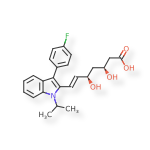
Details
| Stereochemistry | RACEMIC |
| Molecular Formula | C24H26FNO4 |
| Molecular Weight | 411.4659 |
| Optical Activity | ( + / - ) |
| Defined Stereocenters | 2 / 2 |
| E/Z Centers | 1 |
| Charge | 0 |
SHOW SMILES / InChI
SMILES
CC(C)N1C(\C=C\[C@H](O)C[C@H](O)CC(O)=O)=C(C2=C1C=CC=C2)C3=CC=C(F)C=C3
InChI
InChIKey=FJLGEFLZQAZZCD-JUFISIKESA-N
InChI=1S/C24H26FNO4/c1-15(2)26-21-6-4-3-5-20(21)24(16-7-9-17(25)10-8-16)22(26)12-11-18(27)13-19(28)14-23(29)30/h3-12,15,18-19,27-28H,13-14H2,1-2H3,(H,29,30)/b12-11+/t18-,19-/m0/s1
| Molecular Formula | C24H26FNO4 |
| Molecular Weight | 411.4659 |
| Charge | 0 |
| Count |
|
| Stereochemistry | ABSOLUTE |
| Additional Stereochemistry | No |
| Defined Stereocenters | 2 / 2 |
| E/Z Centers | 1 |
| Optical Activity | UNSPECIFIED |
Fluvastatin is an antilipemic agent that competitively inhibits hydroxymethylglutaryl-coenzyme A (HMG-CoA) reductase. Fluvastatin is marketed under the trade names Lescol, Canef, Vastin. LESCOL/LESCOL XL is an HMG-CoA reductase inhibitor (statin) indicated as
an adjunctive therapy to diet to:
Reduce elevated TC, LDL-C, Apo B, and TG, and to increase HDL-C in adult
patients with primary hypercholesterolemia and mixed dyslipidemia
Reduce elevated TC, LDL-C, and Apo B levels in boys and post-menarchal
girls, 10 to 16 years of age, with heterozygous familial hypercholesterolemia
after failing an adequate trial of diet therapy
Reduce the risk of undergoing revascularization procedures in patients with
clinically evident CHD
Slow the progression of atherosclerosis in patients with CHD.
Fluvastatin selectively and competitively inhibits the hepatic enzyme hydroxymethylglutaryl-coenzyme A (HMG-CoA) reductase. HMG-CoA reductase is responsible for converting HMG-CoA to mevalonate, the rate-limiting step in cholesterol biosynthesis. Inhibition results in a decrease in hepatic cholesterol levels which stimulates the synthesis of LDL receptors and increases hepatic uptake of LDL cholesterol. The end result is decreased levels of plasma total and LDL cholesterol.
Originator
Approval Year
Targets
| Primary Target | Pharmacology | Condition | Potency |
|---|---|---|---|
| 28.0 nM [IC50] | |||
Target ID: CHEMBL4605 |
337.0 µM [IC50] |
Conditions
| Condition | Modality | Targets | Highest Phase | Product |
|---|---|---|---|---|
| Primary | LESCOL Approved UseLESCOL/LESCOL XL is an HMG-CoA reductase inhibitor (statin) indicated as
an adjunctive therapy to diet to:
Reduce elevated TC, LDL-C, Apo B, and TG, and to increase HDL-C in adult
patients with primary hypercholesterolemia and mixed dyslipidemia (1.1)
Reduce elevated TC, LDL-C, and Apo B levels in boys and post-menarchal
girls, 10 to 16 years of age, with heterozygous familial hypercholesterolemia
after failing an adequate trial of diet therapy (1.1)
Reduce the risk of undergoing revascularization procedures in patients with
clinically evident CHD (1.2)
Slow the progression of atherosclerosis in patients with CHD (1.2) Launch Date1993 |
|||
| Primary | LESCOL Approved UseLESCOL/LESCOL XL is an HMG-CoA reductase inhibitor (statin) indicated as
an adjunctive therapy to diet to:
Reduce elevated TC, LDL-C, Apo B, and TG, and to increase HDL-C in adult
patients with primary hypercholesterolemia and mixed dyslipidemia (1.1)
Reduce elevated TC, LDL-C, and Apo B levels in boys and post-menarchal
girls, 10 to 16 years of age, with heterozygous familial hypercholesterolemia
after failing an adequate trial of diet therapy (1.1)
Reduce the risk of undergoing revascularization procedures in patients with
clinically evident CHD (1.2)
Slow the progression of atherosclerosis in patients with CHD (1.2) Launch Date1993 |
|||
| Primary | LESCOL Approved UseLESCOL/LESCOL XL is an HMG-CoA reductase inhibitor (statin) indicated as
an adjunctive therapy to diet to:
Reduce elevated TC, LDL-C, Apo B, and TG, and to increase HDL-C in adult
patients with primary hypercholesterolemia and mixed dyslipidemia (1.1)
Reduce elevated TC, LDL-C, and Apo B levels in boys and post-menarchal
girls, 10 to 16 years of age, with heterozygous familial hypercholesterolemia
after failing an adequate trial of diet therapy (1.1)
Reduce the risk of undergoing revascularization procedures in patients with
clinically evident CHD (1.2)
Slow the progression of atherosclerosis in patients with CHD (1.2) Launch Date1993 |
Cmax
| Value | Dose | Co-administered | Analyte | Population |
|---|---|---|---|---|
205 μg/mL EXPERIMENT https://www.ncbi.nlm.nih.gov/pubmed/29368187 |
20 mg single, oral dose: 20 mg route of administration: Oral experiment type: SINGLE co-administered: |
FLUVASTATIN plasma | Homo sapiens population: HEALTHY age: ADULT sex: FEMALE / MALE food status: FASTED |
AUC
| Value | Dose | Co-administered | Analyte | Population |
|---|---|---|---|---|
206.2 μg × h/mL EXPERIMENT https://www.ncbi.nlm.nih.gov/pubmed/29368187 |
20 mg single, oral dose: 20 mg route of administration: Oral experiment type: SINGLE co-administered: |
FLUVASTATIN plasma | Homo sapiens population: HEALTHY age: ADULT sex: FEMALE / MALE food status: FASTED |
T1/2
| Value | Dose | Co-administered | Analyte | Population |
|---|---|---|---|---|
0.54 h EXPERIMENT https://www.ncbi.nlm.nih.gov/pubmed/29368187 |
20 mg single, oral dose: 20 mg route of administration: Oral experiment type: SINGLE co-administered: |
FLUVASTATIN plasma | Homo sapiens population: HEALTHY age: ADULT sex: FEMALE / MALE food status: FASTED |
Overview
| CYP3A4 | CYP2C9 | CYP2D6 | hERG |
|---|---|---|---|
OverviewOther
Drug as perpetrator
| Target | Modality | Activity | Metabolite | Clinical evidence |
|---|---|---|---|---|
Page: 3.0 |
moderate [IC50 100 uM] | |||
| no | ||||
| no | ||||
| no | ||||
| not significant | ||||
| weak [Ki 94.3 uM] | ||||
| yes [IC50 20 uM] | ||||
| yes [IC50 26.3 uM] | ||||
| yes [IC50 5.79 uM] | ||||
| yes [Ki 0.3 uM] | ||||
Page: 5.0 |
yes [Ki 5.43 uM] | |||
| yes |
Drug as victim
| Target | Modality | Activity | Metabolite | Clinical evidence |
|---|---|---|---|---|
| major | yes (co-administration study) Comment: Coadministration with rifampicin (CYP2C9 inducer) increased the CL/F of fluvastatin by 95% and to reduce AUC by 50%. |
|||
| minor | ||||
| minor | ||||
| minor | ||||
| minor | unknown (co-administration study) Comment: Coadministration with cyclocporine resulted in 3.1-fold increase in AUC; however, cannot be explained through these mechanisms, since neither pravastatin nor fluvastatin has been shown to be a substrate for either P-gp or CYP3A4; coadministration with itraconazole had no significant impact on Cmax and AUC of fluvastatin |
|||
| no | ||||
| no | ||||
| no | ||||
| no | ||||
| no | ||||
| no | ||||
Page: 14.0 |
no | unknown (co-administration study) Comment: Coadministration with cyclocporine resulted in 3.1-fold increase in AUC; however, cannot be explained through these mechanisms, since neither pravastatin nor fluvastatin has been shown to be a substrate for either P-gp or CYP3A4 Page: 14.0 |
||
| yes | ||||
| yes | ||||
| yes | unlikely (co-administration study) Comment: coadministered with rifampin. See https://pubmed.ncbi.nlm.nih.gov/29768081/. Pharmacogenomic study also performed. Not significant: see https://www.lipidjournal.com/article/S1933-2874(14)00072-5/pdf |
|||
| yes | yes (pharmacogenomic study) Comment: AUC of drug increased by 72% |
PubMed
| Title | Date | PubMed |
|---|---|---|
| Systems pharmacological analysis of drugs inducing stevens-johnson syndrome and toxic epidermal necrolysis. | 2015-05-18 |
|
| Statins alter the hepatobiliary transport of unconjugated and conjugated bilirubin in sandwich-cultured rat hepatocytes. | 2014-09 |
|
| Statin-induced inhibition of breast cancer proliferation and invasion involves attenuation of iron transport: intermediacy of nitric oxide and antioxidant defence mechanisms. | 2014-08 |
|
| Drug-Induced Acute Liver Injury Within 12 Hours After Fluvastatin Therapy. | 2014-01-24 |
|
| Detection of statin cytotoxicity is increased in cells expressing the OATP1B1 transporter. | 2013-07 |
|
| ATP-dependent transport of statins by human and rat MRP2/Mrp2. | 2013-06-01 |
|
| Identification of old drugs as potential inhibitors of HIV-1 integrase - human LEDGF/p75 interaction via molecular docking. | 2012-12 |
|
| Interference with bile salt export pump function is a susceptibility factor for human liver injury in drug development. | 2010-12 |
|
| Effects of add-on fluvastatin therapy in patients with chronic proteinuric nephropathy on dual renin-angiotensin system blockade: the ESPLANADE trial. | 2010-11 |
|
| The phototoxicity of fluvastatin, an HMG-CoA reductase inhibitor, is mediated by the formation of a benzocarbazole-like photoproduct. | 2010-11 |
|
| Effect of an antimicrobial agent on atherosclerotic plaques: assessment of metalloproteinase activity by molecular imaging. | 2010-03-23 |
|
| A gene score of nine LDL and HDL regulating genes is associated with fluvastatin-induced cholesterol changes in women. | 2010-03 |
|
| In vitro interactions between primycin and different statins in their effects against some clinically important fungi. | 2010-02 |
|
| Roles of different CYP enzymes in the formation of specific fluvastatin metabolites by human liver microsomes. | 2009-11 |
|
| Application of a 3,3-diphenylpentane skeleton as a multi-template for creation of HMG-CoA reductase inhibitors. | 2009-08-01 |
|
| Enantioselectivity in the pharmacokinetic interaction between fluvastatin and lercanidipine in healthy volunteers. | 2009-02 |
|
| Pretreatment with statin attenuates the cardiotoxicity of Doxorubicin in mice. | 2009-01-15 |
|
| Cardioprotective effect of fluvastatin on isoproterenol-induced myocardial infarction in rat. | 2008-05-31 |
|
| Comprehensive analysis of the effects of ordinary nutrients on hepatitis C virus RNA replication in cell culture. | 2007-06 |
|
| Inhibitors of the mevalonate pathway as potential therapeutic agents in multiple myeloma. | 2007-03 |
|
| Effects of chronic treatment with statins and fenofibrate on rat skeletal muscle: a biochemical, histological and electrophysiological study. | 2006-12 |
|
| Effect of low-density lipoprotein cholesterol on angiotensin II sensitivity: a randomized trial with fluvastatin. | 2006-06 |
|
| Chiral evaluation of fluvastatin in human plasma by high-performance liquid chromatography electrospray mass spectrometry. | 2006-03-07 |
|
| Fluvastatin ameliorates podocyte injury in proteinuric rats via modulation of excessive Rho signaling. | 2006-03 |
|
| Muscle symptoms associated with statins: a series of twenty patients. | 2006-01 |
|
| [Fluvastatin-induced dermatomyositis]. | 2005-12 |
|
| Focal seizures after treatment with fluvastatin in a patient with a history of catastrophic antiphospholipid syndrome. | 2005-11-15 |
|
| Prediction of CYP2C9-mediated drug-drug interactions: a comparison using data from recombinant enzymes and human hepatocytes. | 2005-11 |
|
| Evaluation of the anti-HIV activity of statins. | 2005-10-14 |
|
| Human hepatobiliary transport of organic anions analyzed by quadruple-transfected cells. | 2005-10 |
|
| Binding thermodynamics of statins to HMG-CoA reductase. | 2005-09-06 |
|
| Effect of atorvastatin and fluvastatin on the metabolism of midazolam by cytochrome P450 in vitro. | 2005-08 |
|
| Bile salt export pump (BSEP/ABCB11) can transport a nonbile acid substrate, pravastatin. | 2005-08 |
|
| Regional intestinal absorption and biliary excretion of fluvastatin in the rat: possible involvement of mrp2. | 2005-07-20 |
|
| Immediate effects of fluvastain on circulating soluble endothelial protein C and free tissue factor pathway inhibitor in acute coronary syndromes. | 2005-05 |
|
| In vitro and pharmacophore-based discovery of novel hPEPT1 inhibitors. | 2005-04 |
|
| Expression of serum and glucocorticoid-inducible kinase1 in diabetic rats and its modulation by fluvastatin. | 2005 |
|
| [Cardiology in 1997]. | 1998-10-05 |
|
| Troglitazone upregulates LDL receptor activity in HepG2 cells. | 1998-08 |
|
| Postural hypotension induced by paroxetine. | 1998-02-21 |
|
| A head-to-head comparison of the cost effectiveness of HMG-CoA reductase inhibitors and fibrates in different types of primary hyperlipidemia. | 1997-01 |
|
| Effect of fluvastatin or bezafibrate on the distribution of high density lipoprotein subpopulations in patients with familial hypercholesterolemia. | 1996-09 |
|
| Fluvastatin in combination with other lipid-lowering agents. | 1996-01 |
|
| Currently available hypolipidaemic drugs and future therapeutic developments. | 1995-10 |
|
| Efficacy and safety of triple therapy (fluvastatin-bezafibrate-cholestyramine) for severe familial hypercholesterolemia. | 1995-07-13 |
|
| Fluvastatin in combination with other lipid-lowering agents. | 1994-12 |
|
| Treatment of primary hypercholesterolemia: fluvastatin versus bezafibrate. | 1994-06-06 |
|
| Efficacy and safety of a combination fluvastatin-bezafibrate treatment for familial hypercholesterolemia: comparative analysis with a fluvastatin-cholestyramine combination. | 1994-05 |
|
| HMG-CoA reductase inhibitors: design, synthesis, and biological activity of tetrahydroindazole-substituted 3,5-dihydroxy-6-heptenoic acid sodium salts. | 1993-11-12 |
|
| Synthesis and biological activity of new HMG-CoA reductase inhibitors. 3. Lactones of 6-phenoxy-3,5-dihydroxyhexanoic acids. | 1991-10 |
Sample Use Guides
Usual Adult Dose for Hyperlipidemia
Immediate Release Capsules:
-Low-density lipoprotein cholesterol (LDL-C) reduction to a goal of 25% or greater: Initial dose of 40 mg orally once a day in the evening or 40 mg orally twice a day
-LDL-C reduction to a goal of less than 25%: Initial dose of 20 mg orally once a day
-Maintenance dose: 20 mg to 80 mg per day
Usual Adult Dose for Hyperlipoproteinemia Type IIa (Elevated LDL)
Immediate Release Capsules:
-Low-density lipoprotein cholesterol (LDL-C) reduction to a goal of 25% or greater: Initial dose of 40 mg orally once a day in the evening or 40 mg orally twice a day
-LDL-C reduction to a goal of less than 25%: Initial dose of 20 mg orally once a day
-Maintenance dose: 20 mg to 80 mg per day
Route of Administration:
Oral
Fluvastatin markedly inhibits the formation of thiobarbituric acid reactive substances in iron (II)-supported peroxidation of liposomes with IC50 of 12 uM. Fluvastatin ranging from 1 uM to 100 uM inhibits peroxyl radical-mediated peroxidation of liposomes induced by water-soluble and lipid-soluble radical generators, 2,2'-azobis (2-amidinopropane) dihydro-chloride and 2,2'-azobis (2,4-dimethylvaleronitrile), respectively.
| Substance Class |
Chemical
Created
by
admin
on
Edited
Mon Mar 31 18:21:19 GMT 2025
by
admin
on
Mon Mar 31 18:21:19 GMT 2025
|
| Record UNII |
4L066368AS
|
| Record Status |
Validated (UNII)
|
| Record Version |
|
-
Download
| Name | Type | Language | ||
|---|---|---|---|---|
|
Official Name | English | ||
|
Preferred Name | English | ||
|
Common Name | English | ||
|
Common Name | English | ||
|
Code | English | ||
|
Common Name | English | ||
|
Common Name | English | ||
|
Systematic Name | English |
| Classification Tree | Code System | Code | ||
|---|---|---|---|---|
|
WHO-VATC |
QC10AA04
Created by
admin on Mon Mar 31 18:21:19 GMT 2025 , Edited by admin on Mon Mar 31 18:21:19 GMT 2025
|
||
|
NDF-RT |
N0000175589
Created by
admin on Mon Mar 31 18:21:19 GMT 2025 , Edited by admin on Mon Mar 31 18:21:19 GMT 2025
|
||
|
LIVERTOX |
NBK548435
Created by
admin on Mon Mar 31 18:21:19 GMT 2025 , Edited by admin on Mon Mar 31 18:21:19 GMT 2025
|
||
|
NDF-RT |
N0000000121
Created by
admin on Mon Mar 31 18:21:19 GMT 2025 , Edited by admin on Mon Mar 31 18:21:19 GMT 2025
|
||
|
NCI_THESAURUS |
C1655
Created by
admin on Mon Mar 31 18:21:19 GMT 2025 , Edited by admin on Mon Mar 31 18:21:19 GMT 2025
|
||
|
WHO-ATC |
C10AA04
Created by
admin on Mon Mar 31 18:21:19 GMT 2025 , Edited by admin on Mon Mar 31 18:21:19 GMT 2025
|
| Code System | Code | Type | Description | ||
|---|---|---|---|---|---|
|
4L066368AS
Created by
admin on Mon Mar 31 18:21:19 GMT 2025 , Edited by admin on Mon Mar 31 18:21:19 GMT 2025
|
PRIMARY | |||
|
1548972
Created by
admin on Mon Mar 31 18:21:19 GMT 2025 , Edited by admin on Mon Mar 31 18:21:19 GMT 2025
|
PRIMARY | |||
|
38561
Created by
admin on Mon Mar 31 18:21:19 GMT 2025 , Edited by admin on Mon Mar 31 18:21:19 GMT 2025
|
PRIMARY | |||
|
C61768
Created by
admin on Mon Mar 31 18:21:19 GMT 2025 , Edited by admin on Mon Mar 31 18:21:19 GMT 2025
|
PRIMARY | |||
|
41127
Created by
admin on Mon Mar 31 18:21:19 GMT 2025 , Edited by admin on Mon Mar 31 18:21:19 GMT 2025
|
PRIMARY | RxNorm | ||
|
CHEMBL2220442
Created by
admin on Mon Mar 31 18:21:19 GMT 2025 , Edited by admin on Mon Mar 31 18:21:19 GMT 2025
|
PRIMARY | |||
|
4L066368AS
Created by
admin on Mon Mar 31 18:21:19 GMT 2025 , Edited by admin on Mon Mar 31 18:21:19 GMT 2025
|
PRIMARY | |||
|
2951
Created by
admin on Mon Mar 31 18:21:19 GMT 2025 , Edited by admin on Mon Mar 31 18:21:19 GMT 2025
|
PRIMARY | |||
|
C065180
Created by
admin on Mon Mar 31 18:21:19 GMT 2025 , Edited by admin on Mon Mar 31 18:21:19 GMT 2025
|
PRIMARY | |||
|
758896
Created by
admin on Mon Mar 31 18:21:19 GMT 2025 , Edited by admin on Mon Mar 31 18:21:19 GMT 2025
|
PRIMARY | |||
|
6547
Created by
admin on Mon Mar 31 18:21:19 GMT 2025 , Edited by admin on Mon Mar 31 18:21:19 GMT 2025
|
PRIMARY | |||
|
8366
Created by
admin on Mon Mar 31 18:21:19 GMT 2025 , Edited by admin on Mon Mar 31 18:21:19 GMT 2025
|
PRIMARY | |||
|
SUB07768MIG
Created by
admin on Mon Mar 31 18:21:19 GMT 2025 , Edited by admin on Mon Mar 31 18:21:19 GMT 2025
|
PRIMARY | |||
|
DB01095
Created by
admin on Mon Mar 31 18:21:19 GMT 2025 , Edited by admin on Mon Mar 31 18:21:19 GMT 2025
|
PRIMARY | |||
|
DTXSID2020636
Created by
admin on Mon Mar 31 18:21:19 GMT 2025 , Edited by admin on Mon Mar 31 18:21:19 GMT 2025
|
PRIMARY | |||
|
93957-54-1
Created by
admin on Mon Mar 31 18:21:19 GMT 2025 , Edited by admin on Mon Mar 31 18:21:19 GMT 2025
|
PRIMARY | |||
|
Fluvastatin
Created by
admin on Mon Mar 31 18:21:19 GMT 2025 , Edited by admin on Mon Mar 31 18:21:19 GMT 2025
|
PRIMARY | |||
|
100000092352
Created by
admin on Mon Mar 31 18:21:19 GMT 2025 , Edited by admin on Mon Mar 31 18:21:19 GMT 2025
|
PRIMARY | |||
|
m5515
Created by
admin on Mon Mar 31 18:21:19 GMT 2025 , Edited by admin on Mon Mar 31 18:21:19 GMT 2025
|
PRIMARY | Merck Index | ||
|
FLUVASTATIN
Created by
admin on Mon Mar 31 18:21:19 GMT 2025 , Edited by admin on Mon Mar 31 18:21:19 GMT 2025
|
PRIMARY | |||
|
1229
Created by
admin on Mon Mar 31 18:21:19 GMT 2025 , Edited by admin on Mon Mar 31 18:21:19 GMT 2025
|
PRIMARY |
| Related Record | Type | Details | ||
|---|---|---|---|---|
|
|
SALT/SOLVATE -> PARENT | |||
|
TRANSPORTER -> INHIBITOR | |||
|
TRANSPORTER -> INHIBITOR | |||
|
TARGET -> INHIBITOR | |||
|
TRANSPORTER -> INHIBITOR |
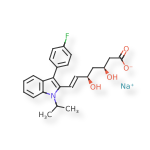

| Related Record | Type | Details | ||
|---|---|---|---|---|
|
|
ACTIVE MOIETY |