


Details
| Stereochemistry | ABSOLUTE |
| Molecular Formula | C37H67NO13 |
| Molecular Weight | 733.9268 |
| Optical Activity | UNSPECIFIED |
| Defined Stereocenters | 18 / 18 |
| E/Z Centers | 0 |
| Charge | 0 |
SHOW SMILES / InChI
SMILES
CC[C@H]1OC(=O)[C@H](C)[C@@H](O[C@H]2C[C@@](C)(OC)[C@@H](O)[C@H](C)O2)[C@H](C)[C@@H](O[C@@H]3O[C@H](C)C[C@@H]([C@H]3O)N(C)C)[C@](C)(O)C[C@@H](C)C(=O)[C@H](C)[C@@H](O)[C@]1(C)O
InChI
InChIKey=ULGZDMOVFRHVEP-RWJQBGPGSA-N
InChI=1S/C37H67NO13/c1-14-25-37(10,45)30(41)20(4)27(39)18(2)16-35(8,44)32(51-34-28(40)24(38(11)12)15-19(3)47-34)21(5)29(22(6)33(43)49-25)50-26-17-36(9,46-13)31(42)23(7)48-26/h18-26,28-32,34,40-42,44-45H,14-17H2,1-13H3/t18-,19-,20+,21+,22-,23+,24+,25-,26+,28-,29+,30-,31+,32-,34+,35-,36-,37-/m1/s1
| Molecular Formula | C37H67NO13 |
| Molecular Weight | 733.9268 |
| Charge | 0 |
| Count |
|
| Stereochemistry | ABSOLUTE |
| Additional Stereochemistry | No |
| Defined Stereocenters | 18 / 18 |
| E/Z Centers | 0 |
| Optical Activity | UNSPECIFIED |
DescriptionSources: http://www.accessdata.fda.gov/drugsatfda_docs/label/2013/061621s039lbl.pdfhttp://www.accessdata.fda.gov/drugsatfda_docs/label/2012/050207s071lbl.pdfhttp://www.przychodnia.pl/el/leki.php3?lek=628Curator's Comment: description was created based on several sources, including:
https://www.ncbi.nlm.nih.gov/pubmed/7023159 | http://www.polfa-tarchomin.com.pl/wp-content/uploads/2013/07/Ulotka_Davercin-tabletki-powlekane-250mg.pdf | https://www.doz.pl/leki/p2615-Davercin_tabletki
Sources: http://www.accessdata.fda.gov/drugsatfda_docs/label/2013/061621s039lbl.pdfhttp://www.accessdata.fda.gov/drugsatfda_docs/label/2012/050207s071lbl.pdfhttp://www.przychodnia.pl/el/leki.php3?lek=628
Curator's Comment: description was created based on several sources, including:
https://www.ncbi.nlm.nih.gov/pubmed/7023159 | http://www.polfa-tarchomin.com.pl/wp-content/uploads/2013/07/Ulotka_Davercin-tabletki-powlekane-250mg.pdf | https://www.doz.pl/leki/p2615-Davercin_tabletki
Erythromycin cyclocarbonate (Davercin) is a first generation semi-synthetic erythromycin. It is active against Gram-positive and some Gram-negative microorganisms. Davercin shows comparable or better in vitro potency, low host toxicity and improved pharmacokinetics compared with erythromycin. It is approved for the treatment of acne, atypical pneumonia (caused by Mycoplasma pneumoniae, Chlamydia pneumoniae, Legionella pneumophila), whooping cough (treatment and prevention), urethritis (caused by Ureaplasma urealyticum and Chlamydia trachomatis), gastrointestinal infection caused by Campylobacter spp., short-term infections of the skin and soft tissues (e.g. acne, staphylococcal dermatitis). In streptococcal infections, diphtheria, gonorrhea, early syphilis in patients who are allergic to penicillin, and in the prevention of bacterial endocarditis before the planned dental procedures. Adverse effects are: nausea, vomiting, abdominal pain, diarrhea, skin allergic reactions.
CNS Activity
Sources: https://www.ncbi.nlm.nih.gov/pubmed/15808097http://www.accessdata.fda.gov/drugsatfda_docs/label/2012/050207s071lbl.pdf
Curator's Comment: Information about erythromycin ethylsuccinate is unavailable.
Approval Year
Targets
| Primary Target | Pharmacology | Condition | Potency |
|---|---|---|---|
Target ID: CHEMBL2363135 |
14.0 nM [Kd] | ||
Target ID: CHEMBL2363135 |
|||
Target ID: CHEMBL2363135 |
14.0 nM [Kd] |
Conditions
| Condition | Modality | Targets | Highest Phase | Product |
|---|---|---|---|---|
| Curative | Erythromycin Approved UseErythromycin is indicated in the treatment of respiratory tract infections due to Mycoplasma pneumoniae; skin and skin structure infections of mild to moderate severity caused by Streptococcus pyogenes or Staphylococcus aureus; listeriosis caused by Listeria monocytogenes; diphtheria due to Corynebacterium diphtheriae infection, as an adjunct to antitoxin, to prevent establishment of carriers and to eradicate the organism in carriers; erythrasma due to Corynebacterium minutissimum infection. Launch Date1972 |
|||
| Curative | Erythromycin Approved UseErythromycin is indicated in the treatment of respiratory tract infections due to Mycoplasma pneumoniae; skin and skin structure infections of mild to moderate severity caused by Streptococcus pyogenes or Staphylococcus aureus; listeriosis caused by Listeria monocytogenes; diphtheria due to Corynebacterium diphtheriae infection, as an adjunct to antitoxin, to prevent establishment of carriers and to eradicate the organism in carriers; erythrasma due to Corynebacterium minutissimum infection. Launch Date1972 |
|||
| Curative | Erythromycin Approved UseErythromycin is indicated in the treatment of respiratory tract infections due to Mycoplasma pneumoniae; skin and skin structure infections of mild to moderate severity caused by Streptococcus pyogenes or Staphylococcus aureus; listeriosis caused by Listeria monocytogenes; diphtheria due to Corynebacterium diphtheriae infection, as an adjunct to antitoxin, to prevent establishment of carriers and to eradicate the organism in carriers; erythrasma due to Corynebacterium minutissimum infection. Launch Date1972 |
|||
| Curative | Erythromycin Approved UseErythromycin is indicated in the treatment of respiratory tract infections due to Mycoplasma pneumoniae; skin and skin structure infections of mild to moderate severity caused by Streptococcus pyogenes or Staphylococcus aureus; listeriosis caused by Listeria monocytogenes; diphtheria due to Corynebacterium diphtheriae infection, as an adjunct to antitoxin, to prevent establishment of carriers and to eradicate the organism in carriers; erythrasma due to Corynebacterium minutissimum infection. Launch Date1972 |
|||
| Curative | Erythromycin Approved UseErythromycin is indicated in the treatment of respiratory tract infections due to Mycoplasma pneumoniae; skin and skin structure infections of mild to moderate severity caused by Streptococcus pyogenes or Staphylococcus aureus; listeriosis caused by Listeria monocytogenes; diphtheria due to Corynebacterium diphtheriae infection, as an adjunct to antitoxin, to prevent establishment of carriers and to eradicate the organism in carriers; erythrasma due to Corynebacterium minutissimum infection. Launch Date1972 |
|||
| Curative | Davercin Approved UseFor the topical treatment of acne vulgaris |
|||
| Curative | Davercin Approved UseFor the topical treatment of pneumonia |
|||
| Curative | Davercin Approved UseIndicated for the treatment of bacterial endocarditis |
|||
| Curative | Davercin Approved UseUnknown |
|||
| Curative | E.E.S. Approved UseE.E.S. is indicated in the treatment of infections caused by susceptible strains of the designated organisms in the diseases listed below:
Upper respiratory tract infections of mild to moderate degree caused by Streptococcus pyogenes, Streptococcus pneumoniae, or Haemophilus influenzae (when used concomitantly with adequate doses of sulfonamides, since many strains of H.influenzae are not susceptible to the erythromycin concentrations ordinarily achieved).
Lower-respiratory tract infections of mild to moderate severity caused by Streptococcus pneumonia or Streptococcus pyogenes.
Listeriosis caused by Listeria monocytogenes.
Pertussis (whooping cough) caused by Bordetella pertussis. Erythromycin is effective in eliminating the organism from the nasopharynx of infected individuals rendering them noninfectious. Some clinical studies suggest that erythromycin may be helpful in the prophylaxis of pertussis in exposed susceptible individuals.
Respiratory tract infections due to Mycoplasma pneumoniae.
Skin and skin structure infections of mild to moderate severity caused by Streptococcus pyogenes or Staphylococcus aureus (resistant staphylococci may emerge during treatment).
Diphtheria: Infections due to Corynebacterium diphtheria , as an adjunct to antitoxin, to prevent establishment of carriers and to eradicate the organism in carriers.
Erythrasma: In the treatment of infections due to Corynebacterium minutissimum.
Intestinal amebiasis caused by Entamoeba histolytica (oral erythromycins only).
Extraenteric amebiasis requires treatment with other agents.
Acute pelvic inflammatory disease caused by Neisseria gonorrhoeae: As an alternative drug in treatment of acute pelvic inflammatory disease caused by N.gonorrhoeae in female patients with a history of sensitivity to penicillin. Patients should have a serologic test for syphilis before receiving erythromycin as treatment of gonorrhea and a follow-up serologic test for syphilis after 3 months.
Syphilis caused by Treponema pallidum: Erythromycin is an alternate choice of treatment for primary syphilis in patients allergic to the penicillins. In treatment of primary syphilis, spinal fluid examinations should be done before treatment and as part of follow-up after therapy.
Erythromycins are indicated for the treatment of the following infections caused by Chlamydia trachomatis: conjunctivitis of the newborn, pneumonia of infancy, and urogenital infections during pregnancy. When tetracyclines are contraindicated or not tolerated, erythromycin is indicated for the treatment of uncomplicated urethral, endocervical, or rectal infections in adults due to Chlamydia trachomatis.
When tetracyclines are contraindicated or not tolerated, erythromycin is indicated for the treatment of nongonococcal urethritis caused by Ureaplasma urealyticum.
Legionnaires' Disease caused by Legionella pneumophila . Although no controlled clinical efficacy studies have been conducted, in vitro and limited preliminary clinical data suggest that erythromycin may be effective in treating Legionnaires' Disease. Launch Date1965 |
|||
| Curative | E.E.S. Approved UseE.E.S. is indicated in the treatment of infections caused by susceptible strains of the designated organisms in the diseases listed below:
Upper respiratory tract infections of mild to moderate degree caused by Streptococcus pyogenes, Streptococcus pneumoniae, or Haemophilus influenzae (when used concomitantly with adequate doses of sulfonamides, since many strains of H.influenzae are not susceptible to the erythromycin concentrations ordinarily achieved).
Lower-respiratory tract infections of mild to moderate severity caused by Streptococcus pneumonia or Streptococcus pyogenes.
Listeriosis caused by Listeria monocytogenes.
Pertussis (whooping cough) caused by Bordetella pertussis. Erythromycin is effective in eliminating the organism from the nasopharynx of infected individuals rendering them noninfectious. Some clinical studies suggest that erythromycin may be helpful in the prophylaxis of pertussis in exposed susceptible individuals.
Respiratory tract infections due to Mycoplasma pneumoniae.
Skin and skin structure infections of mild to moderate severity caused by Streptococcus pyogenes or Staphylococcus aureus (resistant staphylococci may emerge during treatment).
Diphtheria: Infections due to Corynebacterium diphtheria , as an adjunct to antitoxin, to prevent establishment of carriers and to eradicate the organism in carriers.
Erythrasma: In the treatment of infections due to Corynebacterium minutissimum.
Intestinal amebiasis caused by Entamoeba histolytica (oral erythromycins only).
Extraenteric amebiasis requires treatment with other agents.
Acute pelvic inflammatory disease caused by Neisseria gonorrhoeae: As an alternative drug in treatment of acute pelvic inflammatory disease caused by N.gonorrhoeae in female patients with a history of sensitivity to penicillin. Patients should have a serologic test for syphilis before receiving erythromycin as treatment of gonorrhea and a follow-up serologic test for syphilis after 3 months.
Syphilis caused by Treponema pallidum: Erythromycin is an alternate choice of treatment for primary syphilis in patients allergic to the penicillins. In treatment of primary syphilis, spinal fluid examinations should be done before treatment and as part of follow-up after therapy.
Erythromycins are indicated for the treatment of the following infections caused by Chlamydia trachomatis: conjunctivitis of the newborn, pneumonia of infancy, and urogenital infections during pregnancy. When tetracyclines are contraindicated or not tolerated, erythromycin is indicated for the treatment of uncomplicated urethral, endocervical, or rectal infections in adults due to Chlamydia trachomatis.
When tetracyclines are contraindicated or not tolerated, erythromycin is indicated for the treatment of nongonococcal urethritis caused by Ureaplasma urealyticum.
Legionnaires' Disease caused by Legionella pneumophila . Although no controlled clinical efficacy studies have been conducted, in vitro and limited preliminary clinical data suggest that erythromycin may be effective in treating Legionnaires' Disease. Launch Date1965 |
|||
| Curative | E.E.S Approved UseE.E.S. is indicated in the treatment of infections caused by susceptible strains of the designated organisms in the diseases listed below:
Upper respiratory tract infections of mild to moderate degree caused by Streptococcus pyogenes, Streptococcus pneumoniae, or Haemophilus influenzae (when used concomitantly with adequate doses of sulfonamides, since many strains of H.influenzae are not susceptible to the erythromycin concentrations ordinarily achieved).
Lower-respiratory tract infections of mild to moderate severity caused by Streptococcus pneumonia or Streptococcus pyogenes.
Listeriosis caused by Listeria monocytogenes.
Pertussis (whooping cough) caused by Bordetella pertussis. Erythromycin is effective in eliminating the organism from the nasopharynx of infected individuals rendering them noninfectious. Some clinical studies suggest that erythromycin may be helpful in the prophylaxis of pertussis in exposed susceptible individuals.
Respiratory tract infections due to Mycoplasma pneumoniae.
Skin and skin structure infections of mild to moderate severity caused by Streptococcus pyogenes or Staphylococcus aureus (resistant staphylococci may emerge during treatment).
Diphtheria: Infections due to Corynebacterium diphtheria , as an adjunct to antitoxin, to prevent establishment of carriers and to eradicate the organism in carriers.
Erythrasma: In the treatment of infections due to Corynebacterium minutissimum.
Intestinal amebiasis caused by Entamoeba histolytica (oral erythromycins only).
Extraenteric amebiasis requires treatment with other agents.
Acute pelvic inflammatory disease caused by Neisseria gonorrhoeae: As an alternative drug in treatment of acute pelvic inflammatory disease caused by N.gonorrhoeae in female patients with a history of sensitivity to penicillin. Patients should have a serologic test for syphilis before receiving erythromycin as treatment of gonorrhea and a follow-up serologic test for syphilis after 3 months.
Syphilis caused by Treponema pallidum: Erythromycin is an alternate choice of treatment for primary syphilis in patients allergic to the penicillins. In treatment of primary syphilis, spinal fluid examinations should be done before treatment and as part of follow-up after therapy.
Erythromycins are indicated for the treatment of the following infections caused by Chlamydia trachomatis: conjunctivitis of the newborn, pneumonia of infancy, and urogenital infections during pregnancy. When tetracyclines are contraindicated or not tolerated, erythromycin is indicated for the treatment of uncomplicated urethral, endocervical, or rectal infections in adults due to Chlamydia trachomatis.
When tetracyclines are contraindicated or not tolerated, erythromycin is indicated for the treatment of nongonococcal urethritis caused by Ureaplasma urealyticum.
Legionnaires' Disease caused by Legionella pneumophila . Although no controlled clinical efficacy studies have been conducted, in vitro and limited preliminary clinical data suggest that erythromycin may be effective in treating Legionnaires' Disease. Launch Date1965 |
|||
| Curative | E.E.S. Approved UseE.E.S. is indicated in the treatment of infections caused by susceptible strains of the designated organisms in the diseases listed below:
Upper respiratory tract infections of mild to moderate degree caused by Streptococcus pyogenes, Streptococcus pneumoniae, or Haemophilus influenzae (when used concomitantly with adequate doses of sulfonamides, since many strains of H.influenzae are not susceptible to the erythromycin concentrations ordinarily achieved).
Lower-respiratory tract infections of mild to moderate severity caused by Streptococcus pneumonia or Streptococcus pyogenes.
Listeriosis caused by Listeria monocytogenes.
Pertussis (whooping cough) caused by Bordetella pertussis. Erythromycin is effective in eliminating the organism from the nasopharynx of infected individuals rendering them noninfectious. Some clinical studies suggest that erythromycin may be helpful in the prophylaxis of pertussis in exposed susceptible individuals.
Respiratory tract infections due to Mycoplasma pneumoniae.
Skin and skin structure infections of mild to moderate severity caused by Streptococcus pyogenes or Staphylococcus aureus (resistant staphylococci may emerge during treatment).
Diphtheria: Infections due to Corynebacterium diphtheria , as an adjunct to antitoxin, to prevent establishment of carriers and to eradicate the organism in carriers.
Erythrasma: In the treatment of infections due to Corynebacterium minutissimum.
Intestinal amebiasis caused by Entamoeba histolytica (oral erythromycins only).
Extraenteric amebiasis requires treatment with other agents.
Acute pelvic inflammatory disease caused by Neisseria gonorrhoeae: As an alternative drug in treatment of acute pelvic inflammatory disease caused by N.gonorrhoeae in female patients with a history of sensitivity to penicillin. Patients should have a serologic test for syphilis before receiving erythromycin as treatment of gonorrhea and a follow-up serologic test for syphilis after 3 months.
Syphilis caused by Treponema pallidum: Erythromycin is an alternate choice of treatment for primary syphilis in patients allergic to the penicillins. In treatment of primary syphilis, spinal fluid examinations should be done before treatment and as part of follow-up after therapy.
Erythromycins are indicated for the treatment of the following infections caused by Chlamydia trachomatis: conjunctivitis of the newborn, pneumonia of infancy, and urogenital infections during pregnancy. When tetracyclines are contraindicated or not tolerated, erythromycin is indicated for the treatment of uncomplicated urethral, endocervical, or rectal infections in adults due to Chlamydia trachomatis.
When tetracyclines are contraindicated or not tolerated, erythromycin is indicated for the treatment of nongonococcal urethritis caused by Ureaplasma urealyticum.
Legionnaires' Disease caused by Legionella pneumophila . Although no controlled clinical efficacy studies have been conducted, in vitro and limited preliminary clinical data suggest that erythromycin may be effective in treating Legionnaires' Disease. Launch Date1965 |
|||
| Curative | E.E.S. Approved UseE.E.S. is indicated in the treatment of infections caused by susceptible strains of the designated organisms in the diseases listed below:
Upper respiratory tract infections of mild to moderate degree caused by Streptococcus pyogenes, Streptococcus pneumoniae, or Haemophilus influenzae (when used concomitantly with adequate doses of sulfonamides, since many strains of H.influenzae are not susceptible to the erythromycin concentrations ordinarily achieved).
Lower-respiratory tract infections of mild to moderate severity caused by Streptococcus pneumonia or Streptococcus pyogenes.
Listeriosis caused by Listeria monocytogenes.
Pertussis (whooping cough) caused by Bordetella pertussis. Erythromycin is effective in eliminating the organism from the nasopharynx of infected individuals rendering them noninfectious. Some clinical studies suggest that erythromycin may be helpful in the prophylaxis of pertussis in exposed susceptible individuals.
Respiratory tract infections due to Mycoplasma pneumoniae.
Skin and skin structure infections of mild to moderate severity caused by Streptococcus pyogenes or Staphylococcus aureus (resistant staphylococci may emerge during treatment).
Diphtheria: Infections due to Corynebacterium diphtheria , as an adjunct to antitoxin, to prevent establishment of carriers and to eradicate the organism in carriers.
Erythrasma: In the treatment of infections due to Corynebacterium minutissimum.
Intestinal amebiasis caused by Entamoeba histolytica (oral erythromycins only).
Extraenteric amebiasis requires treatment with other agents.
Acute pelvic inflammatory disease caused by Neisseria gonorrhoeae: As an alternative drug in treatment of acute pelvic inflammatory disease caused by N.gonorrhoeae in female patients with a history of sensitivity to penicillin. Patients should have a serologic test for syphilis before receiving erythromycin as treatment of gonorrhea and a follow-up serologic test for syphilis after 3 months.
Syphilis caused by Treponema pallidum: Erythromycin is an alternate choice of treatment for primary syphilis in patients allergic to the penicillins. In treatment of primary syphilis, spinal fluid examinations should be done before treatment and as part of follow-up after therapy.
Erythromycins are indicated for the treatment of the following infections caused by Chlamydia trachomatis: conjunctivitis of the newborn, pneumonia of infancy, and urogenital infections during pregnancy. When tetracyclines are contraindicated or not tolerated, erythromycin is indicated for the treatment of uncomplicated urethral, endocervical, or rectal infections in adults due to Chlamydia trachomatis.
When tetracyclines are contraindicated or not tolerated, erythromycin is indicated for the treatment of nongonococcal urethritis caused by Ureaplasma urealyticum.
Legionnaires' Disease caused by Legionella pneumophila . Although no controlled clinical efficacy studies have been conducted, in vitro and limited preliminary clinical data suggest that erythromycin may be effective in treating Legionnaires' Disease. Launch Date1965 |
Cmax
| Value | Dose | Co-administered | Analyte | Population |
|---|---|---|---|---|
2.44 μg/mL EXPERIMENT https://pubmed.ncbi.nlm.nih.gov/6628511/ |
500 mg single, oral dose: 500 mg route of administration: Oral experiment type: SINGLE co-administered: |
ERYTHROMYCIN serum | Homo sapiens population: HEALTHY age: ADULT sex: FEMALE / MALE food status: FASTED |
|
1.18 μg/mL EXPERIMENT https://pubmed.ncbi.nlm.nih.gov/6628511/ |
500 mg single, oral dose: 500 mg route of administration: Oral experiment type: SINGLE co-administered: |
ERYTHROMYCIN serum | Homo sapiens population: HEALTHY age: ADULT sex: FEMALE / MALE food status: FASTED |
|
1.99 μg/mL EXPERIMENT https://pubmed.ncbi.nlm.nih.gov/6628511/ |
250 mg 4 times / day multiple, oral dose: 250 mg route of administration: Oral experiment type: MULTIPLE co-administered: |
ERYTHROMYCIN serum | Homo sapiens population: HEALTHY age: ADULT sex: FEMALE / MALE food status: FASTED |
|
1.62 μg/mL EXPERIMENT https://pubmed.ncbi.nlm.nih.gov/6628511/ |
250 mg 4 times / day multiple, oral dose: 250 mg route of administration: Oral experiment type: MULTIPLE co-administered: |
ERYTHROMYCIN serum | Homo sapiens population: HEALTHY age: ADULT sex: FEMALE / MALE food status: FASTED |
|
1161.5 ng/mL |
200 mg single, oral dose: 200 mg route of administration: Oral experiment type: SINGLE co-administered: |
ERYTHROMYCIN plasma | Homo sapiens population: HEALTHY age: ADULT sex: MALE food status: FASTED |
|
1386.1 ng/mL |
200 mg single, oral dose: 200 mg route of administration: Oral experiment type: SINGLE co-administered: |
ERYTHROMYCIN plasma | Homo sapiens population: HEALTHY age: ADULT sex: MALE food status: FASTED |
AUC
| Value | Dose | Co-administered | Analyte | Population |
|---|---|---|---|---|
6.1 μg × h/mL EXPERIMENT https://pubmed.ncbi.nlm.nih.gov/6628511/ |
500 mg single, oral dose: 500 mg route of administration: Oral experiment type: SINGLE co-administered: |
ERYTHROMYCIN serum | Homo sapiens population: HEALTHY age: ADULT sex: FEMALE / MALE food status: FASTED |
|
3.1 μg × h/mL EXPERIMENT https://pubmed.ncbi.nlm.nih.gov/6628511/ |
500 mg single, oral dose: 500 mg route of administration: Oral experiment type: SINGLE co-administered: |
ERYTHROMYCIN serum | Homo sapiens population: HEALTHY age: ADULT sex: FEMALE / MALE food status: FASTED |
|
3544.7 ng × h/mL |
200 mg single, oral dose: 200 mg route of administration: Oral experiment type: SINGLE co-administered: |
ERYTHROMYCIN plasma | Homo sapiens population: HEALTHY age: ADULT sex: MALE food status: FASTED |
|
4096.7 ng × h/mL |
200 mg single, oral dose: 200 mg route of administration: Oral experiment type: SINGLE co-administered: |
ERYTHROMYCIN plasma | Homo sapiens population: HEALTHY age: ADULT sex: MALE food status: FASTED |
T1/2
| Value | Dose | Co-administered | Analyte | Population |
|---|---|---|---|---|
4.48 h |
200 mg single, oral dose: 200 mg route of administration: Oral experiment type: SINGLE co-administered: |
ERYTHROMYCIN plasma | Homo sapiens population: HEALTHY age: ADULT sex: MALE food status: FASTED |
|
5.31 h |
200 mg single, oral dose: 200 mg route of administration: Oral experiment type: SINGLE co-administered: |
ERYTHROMYCIN plasma | Homo sapiens population: HEALTHY age: ADULT sex: MALE food status: FASTED |
Doses
| Dose | Population | Adverse events |
|---|---|---|
5 g 1 times / day single, oral Studied dose Dose: 5 g, 1 times / day Route: oral Route: single Dose: 5 g, 1 times / day Sources: |
healthy, 12 years |
Other AEs: Pancreatitis... |
5.3 g 1 times / day single, oral Studied dose Dose: 5.3 g, 1 times / day Route: oral Route: single Dose: 5.3 g, 1 times / day Sources: |
healthy, 15 years |
Other AEs: Pancreatitis... |
500 mg 2 times / day multiple, oral Recommended Dose: 500 mg, 2 times / day Route: oral Route: multiple Dose: 500 mg, 2 times / day Sources: |
unhealthy, mean age 30 years Health Status: unhealthy Age Group: mean age 30 years Sex: M+F Sources: |
Disc. AE: Vomiting... AEs leading to discontinuation/dose reduction: Vomiting (2.8%) Sources: |
500 mg 3 times / day multiple, oral Recommended Dose: 500 mg, 3 times / day Route: oral Route: multiple Dose: 500 mg, 3 times / day Sources: |
unhealthy, mean age 30 years Health Status: unhealthy Age Group: mean age 30 years Sex: M+F Sources: |
Disc. AE: Nausea, Abdominal pain... AEs leading to discontinuation/dose reduction: Nausea (14.6%) Sources: Abdominal pain (4.9%) |
500 mg 2 times / day multiple, oral Recommended Dose: 500 mg, 2 times / day Route: oral Route: multiple Dose: 500 mg, 2 times / day Sources: |
unhealthy, mean age 44 years Health Status: unhealthy Age Group: mean age 44 years Sex: M+F Sources: |
Disc. AE: Epigastralgia, Nausea... AEs leading to discontinuation/dose reduction: Epigastralgia (grade 2-3, 2.5%) Sources: Nausea (grade 3, 3.3%) Vomiting (grade 2, 0.8%) |
100 mg single, intravenous Dose: 100 mg Route: intravenous Route: single Dose: 100 mg Sources: |
unhealthy |
Other AEs: Akathisia, Diarrhea... Other AEs: Akathisia (below serious, 1 patient) Sources: Diarrhea (below serious, 1 patient) |
AEs
| AE | Significance | Dose | Population |
|---|---|---|---|
| Pancreatitis | 5 g 1 times / day single, oral Studied dose Dose: 5 g, 1 times / day Route: oral Route: single Dose: 5 g, 1 times / day Sources: |
healthy, 12 years |
|
| Pancreatitis | 5.3 g 1 times / day single, oral Studied dose Dose: 5.3 g, 1 times / day Route: oral Route: single Dose: 5.3 g, 1 times / day Sources: |
healthy, 15 years |
|
| Vomiting | 2.8% Disc. AE |
500 mg 2 times / day multiple, oral Recommended Dose: 500 mg, 2 times / day Route: oral Route: multiple Dose: 500 mg, 2 times / day Sources: |
unhealthy, mean age 30 years Health Status: unhealthy Age Group: mean age 30 years Sex: M+F Sources: |
| Nausea | 14.6% Disc. AE |
500 mg 3 times / day multiple, oral Recommended Dose: 500 mg, 3 times / day Route: oral Route: multiple Dose: 500 mg, 3 times / day Sources: |
unhealthy, mean age 30 years Health Status: unhealthy Age Group: mean age 30 years Sex: M+F Sources: |
| Abdominal pain | 4.9% Disc. AE |
500 mg 3 times / day multiple, oral Recommended Dose: 500 mg, 3 times / day Route: oral Route: multiple Dose: 500 mg, 3 times / day Sources: |
unhealthy, mean age 30 years Health Status: unhealthy Age Group: mean age 30 years Sex: M+F Sources: |
| Vomiting | grade 2, 0.8% Disc. AE |
500 mg 2 times / day multiple, oral Recommended Dose: 500 mg, 2 times / day Route: oral Route: multiple Dose: 500 mg, 2 times / day Sources: |
unhealthy, mean age 44 years Health Status: unhealthy Age Group: mean age 44 years Sex: M+F Sources: |
| Epigastralgia | grade 2-3, 2.5% Disc. AE |
500 mg 2 times / day multiple, oral Recommended Dose: 500 mg, 2 times / day Route: oral Route: multiple Dose: 500 mg, 2 times / day Sources: |
unhealthy, mean age 44 years Health Status: unhealthy Age Group: mean age 44 years Sex: M+F Sources: |
| Nausea | grade 3, 3.3% Disc. AE |
500 mg 2 times / day multiple, oral Recommended Dose: 500 mg, 2 times / day Route: oral Route: multiple Dose: 500 mg, 2 times / day Sources: |
unhealthy, mean age 44 years Health Status: unhealthy Age Group: mean age 44 years Sex: M+F Sources: |
| Akathisia | below serious, 1 patient | 100 mg single, intravenous Dose: 100 mg Route: intravenous Route: single Dose: 100 mg Sources: |
unhealthy |
| Diarrhea | below serious, 1 patient | 100 mg single, intravenous Dose: 100 mg Route: intravenous Route: single Dose: 100 mg Sources: |
unhealthy |
Overview
| CYP3A4 | CYP2C9 | CYP2D6 | hERG |
|---|---|---|---|
OverviewOther
| Other Inhibitor | Other Substrate | Other Inducer |
|---|---|---|
Drug as perpetrator
| Target | Modality | Activity | Metabolite | Clinical evidence |
|---|---|---|---|---|
| likely | ||||
| moderate [IC50 9.9 uM] | yes (co-administration study) Comment: Erythromycin increased mean Cmax value of simvastatin 3.4 fold and AUC0-24 value 6.2 fold; coadministered erythromycin has been reported to increase AUCs of simvastatin, triazolam, and midazolam 6.2-, 3.6-, and 3.8-fold, respectively; A significant increase in colchicine plasma concentration is anticipated when co-administered with moderate CYP3A4 inhibitors such as erythromycin; Page: 10.0 |
|||
| yes [IC50 217 uM] | ||||
| yes [IC50 22.7 uM] | ||||
| yes [IC50 34 uM] |
Drug as victim
| Target | Modality | Activity | Metabolite | Clinical evidence |
|---|---|---|---|---|
| yes | ||||
| yes | likely (co-administration study) Comment: Coadministration of erythromycin and a drug primarily metabolized by CYP3A may be associated with elevations in drug concentrations that could increase or prolong both the therapeutic and adverse effects of the concomitant drug Sources: https://www.accessdata.fda.gov/drugsatfda_docs/label/2018/050207s074,050611s036lbl.pdf#page=9 Page: 9.0 |
Tox targets
| Target | Modality | Activity | Metabolite | Clinical evidence |
|---|---|---|---|---|
PubMed
| Title | Date | PubMed |
|---|---|---|
| On the CH...Cu agostic interaction: chiral copper(II) compounds with ephedrine and pseudoephedrine derivatives. | 2005-08-14 |
|
| Comparison of information on the pharmacokinetic interactions of Ca antagonists in the package inserts from three countries (Japan, USA and UK). | 2005-08 |
|
| On-line identification of sugarcane (Saccharum officinarum L.) methoxyflavones by liquid chromatography-UV detection using post-column derivatization and liquid chromatography-mass spectrometry. | 2005-07-29 |
|
| Molecular recognition of sialic acid end groups by phenylboronates. | 2005-06-20 |
|
| [Biological effects of a natural alkyl-diacylglyceride preparation in rats with experimental cardioangiopathy]. | 2005-06-07 |
|
| Prediction of genotoxicity of chemical compounds by statistical learning methods. | 2005-06 |
|
| Desensitization of the human motilin receptor by motilides. | 2005-06 |
|
| Cytotoxicity of neolignans identified in Saururus chinensis towards human cancer cell lines. | 2005-05 |
|
| Transport mechanism and substrate specificity of human organic anion transporter 2 (hOat2 [SLC22A7]). | 2005-05 |
|
| The effect of erythromycin and fluvoxamine on the pharmacokinetics of intravenous lidocaine. | 2005-05 |
|
| In vitro and in vivo activities of macrolide derivatives against Mycobacterium tuberculosis. | 2005-04 |
|
| Standardization of bone marrow features--does it work in hematopathology for histological discrimination of different disease patterns? | 2005-04 |
|
| Randomised controlled multiple treatment comparison to provide a cost-effectiveness rationale for the selection of antimicrobial therapy in acne. | 2005-01 |
|
| High volume bioassays to assess CYP3A4-mediated drug interactions: induction and inhibition in a single cell line. | 2005-01 |
|
| Initial (latent) polycythemia vera with thrombocytosis mimicking essential thrombocythemia. | 2005 |
|
| Evidence of significant contribution from CYP3A5 to hepatic drug metabolism. | 2004-12 |
|
| Anti-proliferative effects of lichen-derived lipoxygenase inhibitors on twelve human cancer cell lines of different tissue origin in vitro. | 2004-11 |
|
| Comparative pharmacodynamics and plasma concentrations of d-threo-methylphenidate hydrochloride after single doses of d-threo-methylphenidate hydrochloride and d,l-threo-methylphenidate hydrochloride in a double-blind, placebo-controlled, crossover laboratory school study in children with attention-deficit/hyperactivity disorder. | 2004-11 |
|
| Enantiomeric separation of racemic neolignans on chiralcel OD and determination of their absolute configuration with online circular dichroism. | 2004-10 |
|
| Effects of colchicine on the maximum biliary excretion of cholephilic compounds in rats. | 2004-09 |
|
| Bitterness evaluation of medicines for pediatric use by a taste sensor. | 2004-08 |
|
| Delayed Gastric Emptying in Functional Dyspepsia. | 2004-08 |
|
| Highly diastereoselective reductive coupling of 2-bromo-2,3,3,3-tetrafluoropropanamide with aldehydes promoted by triphenylphosphine-titanium(IV) isopropoxide. An efficient route to the synthesis of erythro-alpha-fluoro-alpha-(trifluoromethyl)-beta-hydroxy amides. | 2004-07-23 |
|
| Validation of a [3H]astemizole binding assay in HEK293 cells expressing HERG K+ channels. | 2004-07 |
|
| Mechanism of beta-silyl diacyl peroxide decomposition: a mild and stereoselective synthesis of beta-silyl esters. | 2004-05-28 |
|
| Straightforward synthesis of sphinganines via a serine-derived Weinreb amide. | 2004-04-30 |
|
| [Usefulness of oral exfoliative cytology for the diagnosis of oral squamous dysplasia and carcinoma]. | 2004-03 |
|
| Effect of particle size on mixing degree in dispensation. | 2004-03 |
|
| Effect of mixing method on the mixing degree during the preparation of triturations. | 2004-03 |
|
| Conformational study of a guaiacyl beta-O-4 lignin model compound by NMR. Examination of intramolecular hydrogen bonding interactions and conformational flexibility in solution. | 2004-03 |
|
| Cytochrome P450/NADPH-dependent formation of trans epoxides from trans-arachidonic acids. | 2004-02-23 |
|
| [3 + 2] Cycloreversion of bicyclo[m.3.0]alkan-3-on-2-yl-1-oxonium ylides to alkenyloxyketenes. Stereospecific aspect. | 2004-02-20 |
|
| Local mechanisms underlying the regulatory effect of Kropanol on hemopoiesis during paradoxical sleep deprivation. | 2004-02 |
|
| Dicloxacillin and erythromycin at high concentrations increase ICAM-1 expression by endothelial cells: a possible factor in the pathogenesis of infusion phlebitis. | 2004-02 |
|
| Iclaprim, a novel diaminopyrimidine with potent activity on trimethoprim sensitive and resistant bacteria. | 2003-12-01 |
|
| Ratio of erythro and threo forms of beta-O-4 structures in tension wood lignin. | 2003-11 |
|
| A novel three-component reaction catalyzed by dirhodium(II) acetate: decomposition of phenyldiazoacetate with arylamine and imine for highly diastereoselective synthesis of 1,2-diamines. | 2003-10-16 |
|
| [Hantavirus-induced acute renal failure. A case report]. | 2003-10 |
|
| erythro-1-Naphthyl-1-(2-piperidyl)methanol: synthesis, resolution, NMR relative configuration, and VCD absolute configuration. | 2003-09-19 |
|
| The relationship of physico-chemical properties and structure to the differential antiplasmodial activity of the cinchona alkaloids. | 2003-09-01 |
|
| Isolation and antimicrobial susceptibility of Aeromonas salmonicida in rainbow trout (Oncorhynchus mykiss) in turkey hatchery farms. | 2003-09 |
|
| Effects of amphotericin B and caspofungin on histamine expression. | 2003-08 |
|
| Effect of erythromycin on contractile response of uterine smooth muscle strips in non-pregnant rats. | 2003-07-15 |
|
| Massive venlafaxine overdose resulted in a false positive Abbott AxSYM urine immunoassay for phencyclidine. | 2003 |
|
| Mixed chimerism of erythro- and megakaryopoiesis following allogeneic bone marrow transplantation. | 2003 |
|
| Treatment of experimental pneumocystosis: review of 7 years of experience and development of a new system for classifying antimicrobial drugs. | 1992-09 |
|
| The in-vitro activity of two new quinolones: rufloxacin and MF 961. | 1992-06 |
|
| [Bacteriostatic activity and killing curves of eight antibiotics against seven strains of penicillin G-resistant pneumococci]. | 1992-05 |
|
| [In vitro activity of sparfloxacin against mycoplasmas]. | 1992-05 |
|
| Drug-induced gallbladder disease. Incidence, aetiology and management. | 1992-01-01 |
Patents
Sample Use Guides
The usual dosage of erythromycin tablets is one 250 mg tablet four times daily in equally spaced doses or one 500 mg tablet every 12 hours. Dosage may be increased up to 4 g per day according to the severity of the infection. However, twice-a-day dosing is not recommended when doses larger than 1 g daily are administered.
Route of Administration:
Oral
| Substance Class |
Chemical
Created
by
admin
on
Edited
Wed Apr 02 08:46:53 GMT 2025
by
admin
on
Wed Apr 02 08:46:53 GMT 2025
|
| Record UNII |
63937KV33D
|
| Record Status |
Validated (UNII)
|
| Record Version |
|
-
Download
| Name | Type | Language | ||
|---|---|---|---|---|
|
Official Name | English | ||
|
Preferred Name | English | ||
|
Common Name | English | ||
|
Common Name | English | ||
|
Common Name | English | ||
|
Brand Name | English | ||
|
Brand Name | English | ||
|
Common Name | English | ||
|
Common Name | English | ||
|
Brand Name | English | ||
|
Brand Name | English | ||
|
Common Name | English | ||
|
Brand Name | English | ||
|
Brand Name | English | ||
|
Code | English | ||
|
Brand Name | English | ||
|
Common Name | English | ||
|
Brand Name | English | ||
|
Common Name | English | ||
|
Common Name | English | ||
|
Brand Name | English | ||
|
Brand Name | English | ||
|
Common Name | English | ||
|
Brand Name | English | ||
|
Common Name | English | ||
|
Common Name | English | ||
|
Brand Name | English | ||
|
Brand Name | English | ||
|
Common Name | English | ||
|
Common Name | English | ||
|
Common Name | English | ||
|
Brand Name | English | ||
|
Brand Name | English | ||
|
Brand Name | English | ||
|
Brand Name | English | ||
|
Common Name | English | ||
|
Brand Name | English | ||
|
Brand Name | English | ||
|
Common Name | English | ||
|
Common Name | English | ||
|
Brand Name | English | ||
|
Common Name | English | ||
|
Common Name | English | ||
|
Brand Name | English | ||
|
Brand Name | English | ||
|
Common Name | English | ||
|
Brand Name | English |
| Classification Tree | Code System | Code | ||
|---|---|---|---|---|
|
NDF-RT |
N0000007529
Created by
admin on Wed Apr 02 08:46:53 GMT 2025 , Edited by admin on Wed Apr 02 08:46:53 GMT 2025
|
||
|
WHO-ATC |
S01AA17
Created by
admin on Wed Apr 02 08:46:53 GMT 2025 , Edited by admin on Wed Apr 02 08:46:53 GMT 2025
|
||
|
WHO-ATC |
D10AF52
Created by
admin on Wed Apr 02 08:46:53 GMT 2025 , Edited by admin on Wed Apr 02 08:46:53 GMT 2025
|
||
|
LIVERTOX |
NBK547881
Created by
admin on Wed Apr 02 08:46:53 GMT 2025 , Edited by admin on Wed Apr 02 08:46:53 GMT 2025
|
||
|
WHO-ATC |
D10AF02
Created by
admin on Wed Apr 02 08:46:53 GMT 2025 , Edited by admin on Wed Apr 02 08:46:53 GMT 2025
|
||
|
NDF-RT |
N0000175877
Created by
admin on Wed Apr 02 08:46:53 GMT 2025 , Edited by admin on Wed Apr 02 08:46:53 GMT 2025
|
||
|
WHO-VATC |
QJ51RF02
Created by
admin on Wed Apr 02 08:46:53 GMT 2025 , Edited by admin on Wed Apr 02 08:46:53 GMT 2025
|
||
|
WHO-ESSENTIAL MEDICINES LIST |
6.2.2
Created by
admin on Wed Apr 02 08:46:53 GMT 2025 , Edited by admin on Wed Apr 02 08:46:53 GMT 2025
|
||
|
CFR |
21 CFR 520.823
Created by
admin on Wed Apr 02 08:46:53 GMT 2025 , Edited by admin on Wed Apr 02 08:46:53 GMT 2025
|
||
|
WHO-VATC |
QD10AF02
Created by
admin on Wed Apr 02 08:46:53 GMT 2025 , Edited by admin on Wed Apr 02 08:46:53 GMT 2025
|
||
|
WHO-VATC |
QS01AA17
Created by
admin on Wed Apr 02 08:46:53 GMT 2025 , Edited by admin on Wed Apr 02 08:46:53 GMT 2025
|
||
|
NDF-RT |
N0000007529
Created by
admin on Wed Apr 02 08:46:53 GMT 2025 , Edited by admin on Wed Apr 02 08:46:53 GMT 2025
|
||
|
NDF-RT |
N0000009982
Created by
admin on Wed Apr 02 08:46:53 GMT 2025 , Edited by admin on Wed Apr 02 08:46:53 GMT 2025
|
||
|
NCI_THESAURUS |
C261
Created by
admin on Wed Apr 02 08:46:53 GMT 2025 , Edited by admin on Wed Apr 02 08:46:53 GMT 2025
|
||
|
WHO-VATC |
QJ01FA01
Created by
admin on Wed Apr 02 08:46:53 GMT 2025 , Edited by admin on Wed Apr 02 08:46:53 GMT 2025
|
||
|
WHO-VATC |
QJ51FA01
Created by
admin on Wed Apr 02 08:46:53 GMT 2025 , Edited by admin on Wed Apr 02 08:46:53 GMT 2025
|
||
|
NDF-RT |
N0000175935
Created by
admin on Wed Apr 02 08:46:53 GMT 2025 , Edited by admin on Wed Apr 02 08:46:53 GMT 2025
|
||
|
WHO-ATC |
J01FA01
Created by
admin on Wed Apr 02 08:46:53 GMT 2025 , Edited by admin on Wed Apr 02 08:46:53 GMT 2025
|
||
|
CFR |
21 CFR 522.820
Created by
admin on Wed Apr 02 08:46:53 GMT 2025 , Edited by admin on Wed Apr 02 08:46:53 GMT 2025
|
||
|
CFR |
21 CFR 526.820
Created by
admin on Wed Apr 02 08:46:53 GMT 2025 , Edited by admin on Wed Apr 02 08:46:53 GMT 2025
|
||
|
CFR |
21 CFR 556.230
Created by
admin on Wed Apr 02 08:46:53 GMT 2025 , Edited by admin on Wed Apr 02 08:46:53 GMT 2025
|
||
|
CFR |
21 CFR 558.248
Created by
admin on Wed Apr 02 08:46:53 GMT 2025 , Edited by admin on Wed Apr 02 08:46:53 GMT 2025
|
||
|
NDF-RT |
N0000007529
Created by
admin on Wed Apr 02 08:46:53 GMT 2025 , Edited by admin on Wed Apr 02 08:46:53 GMT 2025
|
| Code System | Code | Type | Description | ||
|---|---|---|---|---|---|
|
CHEMBL2110577
Created by
admin on Wed Apr 02 08:46:53 GMT 2025 , Edited by admin on Wed Apr 02 08:46:53 GMT 2025
|
PRIMARY | |||
|
CHEMBL532
Created by
admin on Wed Apr 02 08:46:53 GMT 2025 , Edited by admin on Wed Apr 02 08:46:53 GMT 2025
|
PRIMARY | |||
|
12560
Created by
admin on Wed Apr 02 08:46:53 GMT 2025 , Edited by admin on Wed Apr 02 08:46:53 GMT 2025
|
PRIMARY | |||
|
55929
Created by
admin on Wed Apr 02 08:46:53 GMT 2025 , Edited by admin on Wed Apr 02 08:46:53 GMT 2025
|
PRIMARY | |||
|
Erythromycin
Created by
admin on Wed Apr 02 08:46:53 GMT 2025 , Edited by admin on Wed Apr 02 08:46:53 GMT 2025
|
PRIMARY | |||
|
1456
Created by
admin on Wed Apr 02 08:46:53 GMT 2025 , Edited by admin on Wed Apr 02 08:46:53 GMT 2025
|
PRIMARY | |||
|
100000092382
Created by
admin on Wed Apr 02 08:46:53 GMT 2025 , Edited by admin on Wed Apr 02 08:46:53 GMT 2025
|
PRIMARY | |||
|
SUB06605MIG
Created by
admin on Wed Apr 02 08:46:53 GMT 2025 , Edited by admin on Wed Apr 02 08:46:53 GMT 2025
|
PRIMARY | |||
|
1242000
Created by
admin on Wed Apr 02 08:46:53 GMT 2025 , Edited by admin on Wed Apr 02 08:46:53 GMT 2025
|
PRIMARY | |||
|
3074
Created by
admin on Wed Apr 02 08:46:53 GMT 2025 , Edited by admin on Wed Apr 02 08:46:53 GMT 2025
|
PRIMARY | |||
|
63937KV33D
Created by
admin on Wed Apr 02 08:46:53 GMT 2025 , Edited by admin on Wed Apr 02 08:46:53 GMT 2025
|
PRIMARY | |||
|
1048
Created by
admin on Wed Apr 02 08:46:53 GMT 2025 , Edited by admin on Wed Apr 02 08:46:53 GMT 2025
|
PRIMARY | |||
|
63937KV33D
Created by
admin on Wed Apr 02 08:46:53 GMT 2025 , Edited by admin on Wed Apr 02 08:46:53 GMT 2025
|
PRIMARY | |||
|
64268
Created by
admin on Wed Apr 02 08:46:53 GMT 2025 , Edited by admin on Wed Apr 02 08:46:53 GMT 2025
|
PRIMARY | |||
|
39
Created by
admin on Wed Apr 02 08:46:53 GMT 2025 , Edited by admin on Wed Apr 02 08:46:53 GMT 2025
|
PRIMARY | |||
|
DB00199
Created by
admin on Wed Apr 02 08:46:53 GMT 2025 , Edited by admin on Wed Apr 02 08:46:53 GMT 2025
|
PRIMARY | |||
|
4053
Created by
admin on Wed Apr 02 08:46:53 GMT 2025 , Edited by admin on Wed Apr 02 08:46:53 GMT 2025
|
PRIMARY | RxNorm | ||
|
ERYTHROMYCIN
Created by
admin on Wed Apr 02 08:46:53 GMT 2025 , Edited by admin on Wed Apr 02 08:46:53 GMT 2025
|
PRIMARY | Description: White or slightly yellow crystals or powder; odourless or almost odourless.Solubility: Soluble in 1000 parts of water but less soluble in hot water; freely soluble in ethanol (~750 g/l) TS and ether R.Category: Antibacterial drug.Storage: Erythromycin should be kept in a tightly closed container, protected from light.Additional information: Erythromycin is slightly hygroscopic.Definition: Erythromycin is a mixture of substances produced by the growth of certain strains of Streptomyces erythreus. The main component of the mixture is erythromycin A with lesser amounts of erythromycins B and C. | ||
|
DTXSID4022991
Created by
admin on Wed Apr 02 08:46:53 GMT 2025 , Edited by admin on Wed Apr 02 08:46:53 GMT 2025
|
PRIMARY | |||
|
ERYTHROMYCIN
Created by
admin on Wed Apr 02 08:46:53 GMT 2025 , Edited by admin on Wed Apr 02 08:46:53 GMT 2025
|
PRIMARY | |||
|
m5009
Created by
admin on Wed Apr 02 08:46:53 GMT 2025 , Edited by admin on Wed Apr 02 08:46:53 GMT 2025
|
PRIMARY | Merck Index | ||
|
C476
Created by
admin on Wed Apr 02 08:46:53 GMT 2025 , Edited by admin on Wed Apr 02 08:46:53 GMT 2025
|
PRIMARY | |||
|
114-07-8
Created by
admin on Wed Apr 02 08:46:53 GMT 2025 , Edited by admin on Wed Apr 02 08:46:53 GMT 2025
|
PRIMARY | |||
|
42355
Created by
admin on Wed Apr 02 08:46:53 GMT 2025 , Edited by admin on Wed Apr 02 08:46:53 GMT 2025
|
PRIMARY | |||
|
D004917
Created by
admin on Wed Apr 02 08:46:53 GMT 2025 , Edited by admin on Wed Apr 02 08:46:53 GMT 2025
|
PRIMARY | |||
|
204-040-1
Created by
admin on Wed Apr 02 08:46:53 GMT 2025 , Edited by admin on Wed Apr 02 08:46:53 GMT 2025
|
PRIMARY |
| Related Record | Type | Details | ||
|---|---|---|---|---|
|
SOLVATE->ANHYDROUS | |||
|
SOLVATE->ANHYDROUS | |||
|
METABOLIC ENZYME -> SUBSTRATE | |||
|
SALT/SOLVATE -> PARENT | |||
|
SALT/SOLVATE -> PARENT | |||
|
BINDER->LIGAND |
BINDING
|
||
|
LABELED -> NON-LABELED | |||
|
TRANSPORTER -> SUBSTRATE | |||
|
METABOLIC ENZYME -> SUBSTRATE | |||
|
|
SUBSTANCE->BASIS OF STRENGTH | |||
|
METABOLIC ENZYME -> INHIBITOR |
IC50
|
||
|
LABELED -> NON-LABELED | |||
|
METABOLIC ENZYME -> SUBSTRATE |
|
||
|
METABOLIC ENZYME -> SUBSTRATE | |||
|
TRANSPORTER -> INHIBITOR |
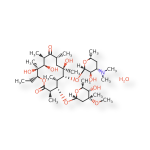
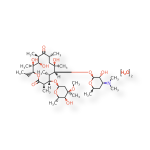

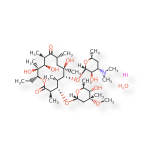
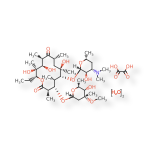

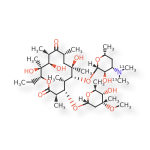
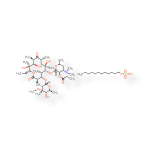
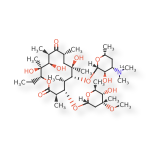
| Related Record | Type | Details | ||
|---|---|---|---|---|
|
|
IMPURITY -> PARENT |
|
||
|
IMPURITY -> PARENT |
CHROMATOGRAPHIC PURITY (HPLC/UV)
EP
|
||
|
IMPURITY -> PARENT |
|
||
|
IMPURITY -> PARENT |
CHROMATOGRAPHIC PURITY (HPLC/UV)
EP
|
||
|
IMPURITY -> PARENT |
CHROMATOGRAPHIC PURITY (HPLC/UV)
EP
|
||
|
IMPURITY -> PARENT |
CHROMATOGRAPHIC PURITY (HPLC/UV)
EP
|
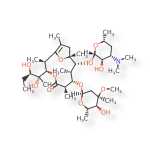


| Related Record | Type | Details | ||
|---|---|---|---|---|
|
|
ACTIVE MOIETY |
| Name | Property Type | Amount | Referenced Substance | Defining | Parameters | References |
|---|---|---|---|---|---|---|
| Biological Half-life | PHARMACOKINETIC |
|
POPULATION: ADULTS |
|
||
| MIC | BIOLOGICAL |
|
SUSCEPTIBILITY: S. PNEUMONIAE, S. PYOGENES |
|
||
| MIC | BIOLOGICAL |
|
SUSCEPTIBILITY: S. PNEUMONIAE, S. PYOGENES |
|
||
| Tmax | PHARMACOKINETIC |
|
COMBINATION FORM: ERYTHROMYCIN ETHYLSUCCINATE |
|
||
| Biological Half-life | PHARMACOKINETIC |
|
POPULATION: END-STAGE RENAL DISEASE |
|
||
| Volume of Distribution | PHARMACOKINETIC |
|
|
|||
| MIC | BIOLOGICAL |
|
SUSCEPTIBILITY: S. AUREUS |
|
||
| MIC | BIOLOGICAL |
|
SUSCEPTIBILITY: S. AUREUS |
|
||
| Tmax | PHARMACOKINETIC |
|
FOOD EFFECT: DELAYED Tmax |
|
||
| Tmax | PHARMACOKINETIC |
|
FOOD EFFECT: BASE |
|
||
| MIC | BIOLOGICAL |
|
SUSCEPTIBILITY: S. PNEUMONIAE, S. PYOGENES |
|
||
| Biological Half-life | PHARMACOKINETIC |
|
POPULATION: NEONATES (LESS THAN OR EQUAL TO 15 DAYS OF AGE) |
|
||
| MIC | BIOLOGICAL |
|
SUSCEPTIBILITY: S. AUREUS |
|
||