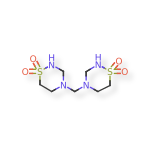
Details
| Stereochemistry | ACHIRAL |
| Molecular Formula | C7H16N4O4S2 |
| Molecular Weight | 284.356 |
| Optical Activity | NONE |
| Defined Stereocenters | 0 / 0 |
| E/Z Centers | 0 |
| Charge | 0 |
SHOW SMILES / InChI
SMILES
O=S1(=O)CCN(CN2CCS(=O)(=O)NC2)CN1
InChI
InChIKey=AJKIRUJIDFJUKJ-UHFFFAOYSA-N
InChI=1S/C7H16N4O4S2/c12-16(13)3-1-10(5-8-16)7-11-2-4-17(14,15)9-6-11/h8-9H,1-7H2
| Molecular Formula | C7H16N4O4S2 |
| Molecular Weight | 284.356 |
| Charge | 0 |
| Count |
|
| Stereochemistry | ACHIRAL |
| Additional Stereochemistry | No |
| Defined Stereocenters | 0 / 0 |
| E/Z Centers | 0 |
| Optical Activity | NONE |
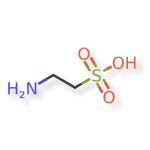
Taurolidine [bis(1,1-dioxoperhydro-1,2,4-thiadiazinyl-4)-methane (TRD)], a product derived from the aminosulfoacid taurin, was first described as an anti-bacterial substance. Taurolidine is a small dimeric molecule with
molecular weight 284. It comprises the semiconditional
amino acid taurine. Taurolidine was originally
designed as a broad-spectrum antibiotic. Taurolidine has a broad antimicrobial spectrum of activity that is effective against aerobes and anaerobes, Gram-negative and Gram-posi-tive bacteria as well as yeasts and moulds in vitro. Taurolidine is also effective against methicillin-resistant and vancomycin-resistant bacteria (MRSA, VISA and VRE). It was mainly used in the treatment of patients with peritonis as well as antiendoxic agent in patients with systematic inflammatory response syndrome. It has been shown to be an effective bactericidal agent against both aerobic and
anaerobic bacteria. It is currently licensed for intraperitoneal use in several European countries for the treatment
of peritonitis. The compound appears to be nontoxic and
has an excellent safety record since its initial introduction
over 30 years ago. Taurolidine also possesses antiadherence properties and has been shown in vivo to reduce
the extent and severity of postoperative peritoneal adhesions. It also possesses a strong anti-inflammatory action.
This action appears, at least in part, to arise through its
ability to inactivate endotoxin. Inflammation-induced
tumor development is well described in the literature. Taurolidine’s anti-inflammatory and antiadherence properties prompted an investigation to examine whether it has
a role in antitumor therapy. Taurolidine induces cancer cell death through a variety
of mechanisms. It appears to act through enhancing
apoptosis, inhibiting angiogenesis and tumor adherence,
downregulating proinflammatory cytokine and endotoxin
levels, and stimulating the immune system in response to
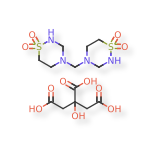
surgically induced trauma. Taurolidine is currently in preclinical development for neuroblastoma. In February 23, 2018 the U.S. Food and Drug Administration (FDA) granted orphan drug designation to taurolidine for the treatment of neuroblastoma. Taurolidine is a key component in the Neutrolin®, a novel anti-infective solution for the reduction and prevention of catheter-related infections and thrombosis in patients requiring central venous cathers in end stage renal disease. Neutrolin contains a mix of Taurolidine, Citrate and Heparin. Neutrolin is designed to:
1) Aid in the prevention of Catheter-Related Bloodstream Infections (CRBIs) and
2) Prevent catheter dysfunction (due to blood clotting).
Originator
Approval Year
PubMed
| Title | Date | PubMed |
|---|---|---|
| The antiendotoxin agent taurolidine potentially reduces ischemia/reperfusion injury through its metabolite taurine. | 2010-09 |
|
| Taurolidine lock is highly effective in preventing catheter-related bloodstream infections in patients on home parenteral nutrition: a heparin-controlled prospective trial. | 2010-08 |
|
| A randomized double-blind controlled trial of taurolidine-citrate catheter locks for the prevention of bacteremia in patients treated with hemodialysis. | 2010-06 |
|
| Establishment and identification of a rabbit model of peritoneal carcinomatosis from gastric cancer. | 2010-04-01 |
|
| The evolving role of taurolidine in cancer therapy. | 2010-04 |
|
| Comparative analysis of cell death induction by Taurolidine in different malignant human cancer cell lines. | 2010-03-07 |
|
| Multimodal approach for treatment of peritoneal surface malignancies in a tumour-bearing rat model. | 2010-02 |
|
| Taurolidine antiadhesive properties on interaction with E. coli; its transformation in biological environment and interaction with bacteria cell wall. | 2010-01-28 |
|
| Taurolidine in the prevention and therapy of lung metastases. | 2009-12 |
|
| Taurolidine and oxidative stress: a rationale for local treatment of mesothelioma. | 2009-12 |
|
| Principles of the therapy of bone infections in adult extremities : Are there any new developments? | 2009-10 |
|
| Arsenic trioxide exerts synergistic effects with cisplatin on non-small cell lung cancer cells via apoptosis induction. | 2009-08-08 |
|
| [Spectrum of indications and perioperative management in i. v. port-a-cath explantation--alternative administration of taurolin in case of i. v. port-a-cath infection]. | 2009-08 |
|
| Divergent effects of taurolidine as potential anti-neoplastic agent: inhibition of bladder carcinoma cells in vitro and promotion of bladder tumor in vivo. | 2009-08 |
|
| Microbial inactivation properties of a new antimicrobial/antithrombotic catheter lock solution (citrate/methylene blue/parabens). | 2009-06 |
|
| All-you-can-eat: autophagy in neurodegeneration and neuroprotection. | 2009-04-06 |
|
| Taurolidine reduces the tumor stimulating cytokine interleukin-1beta in patients with resectable gastrointestinal cancer: a multicentre prospective randomized trial. | 2009-03-23 |
|
| The antibacterial substance taurolidine exhibits anti-neoplastic action based on a mixed type of programmed cell death. | 2009-02 |
|
| Wound healing is not impaired in rats undergoing perioperative treatment with the antineoplastic agent taurolidine. | 2009 |
|
| TRAIL and Taurolidine induce apoptosis and decrease proliferation in human fibrosarcoma. | 2008-12-12 |
|
| Using detachment-promoting agents for the prevention of chronic peritoneal dialysis-associated infections. | 2008-12 |
|
| A new haemodialysis catheter-locking agent reduces infections in haemodialysis patients. | 2008-09 |
|
| Effects of topical application of taurolidine on second intention healing of experimentally induced wounds in rats. | 2008-09 |
|
| Taurolidine and catheter-related bloodstream infection: a systematic review of the literature. | 2008-08 |
|
| Taurolidine-citrate lock solution (TauroLock) significantly reduces CVAD-associated grampositive infections in pediatric cancer patients. | 2008-07-29 |
|
| Synergistic apoptotic effects of taurolidine and TRAIL on squamous carcinoma cells of the esophagus. | 2008-06 |
|
| Novel anti-angiogenic compounds for application in tumor therapy - COP9 signalosome-associated kinases as possible targets. | 2008-05 |
|
| Re: Endophthalmitis: a review of current evaluation and management. | 2008-02 |
|
| The effect of taurolidine on experimental thrombus formation. | 2008-01-14 |
|
| An evaluation of normal saline and taurolidine on intra-abdominal adhesion formation and peritoneal fibrinolysis. | 2008-01 |
|
| Leukopoiesis is not affected after intravenous treatment with the novel antineoplastic agent taurolidine. Results of an experimental study in rats. | 2008 |
|
| Synergistic effects in apoptosis induction by taurolidine and TRAIL in HCT-15 colon carcinoma cells. | 2007-12-22 |
|
| Intra-abdominal use of taurolidine or heparin as alternative products to an antiadhesive barrier (Seprafilm) in adhesion prevention: an experimental study on mice. | 2007-12 |
|
| The tumor suppressive reagent taurolidine inhibits growth of malignant melanoma--a mouse model. | 2007-12 |
|
| Oral administration of taurolidine ameliorates chronic DSS colitis in mice. | 2007-11-01 |
|
| Taurolidine induces apoptosis of murine melanoma cells in vitro and in vivo by modulation of the Bcl-2 family proteins. | 2007-09-01 |
|
| Taurolidine: a novel anti-neoplastic agent induces apoptosis of osteosarcoma cell lines. | 2007-08 |
|
| Noninvasive monitoring of myocardial function after surgical and cytostatic therapy in a peritoneal metastasis rat model: assessment with tissue Doppler and non-Doppler 2D strain echocardiography. | 2007-07-12 |
|
| Peritoneal instillation of taurolidine or polihexanide modulates intestinal microcirculation in experimental endotoxemia. | 2007-07 |
|
| Treatment of multiple liver metastasis from gastric carcinoma. | 2007-06-21 |
|
| Is Taurolidine a candidate for treatment of rheumatoid arthritis? | 2007-06-05 |
|
| The pharmacokinetics of taurolidine metabolites in healthy volunteers. | 2007-06 |
|
| Taurolidine and povidone-iodine induce different types of cell death in malignant pleural mesothelioma. | 2007-06 |
|
| Local recurrence model of malignant pleural mesothelioma for investigation of intrapleural treatment. | 2007-05 |
|
| Influence of intraperitoneal application of taurolidine/heparin on expression of adhesion molecules and colon cancer in rats undergoing laparoscopy. | 2007-01 |
|
| Estimating in vivo airway surface liquid concentration in trials of inhaled antibiotics. | 2007 |
|
| Pharmacokinetics of taurolidine following repeated intravenous infusions measured by HPLC-ESI-MS/MS of the derivatives taurultame and taurinamide in glioblastoma patients. | 2007 |
|
| Instillation of taurolidine/heparin after laparotomy reduces intraperitoneal tumour growth in a colon cancer rat model. | 2007 |
|
| Catheter lock solutions: it's time for a change. | 2006-10-05 |
|
| Anti-inflammatory effects of taurine derivatives (taurine chloramine, taurine bromamine, and taurolidine) are mediated by different mechanisms. | 2006 |
Sample Use Guides
TauroSept® contains a 2% taurolidine solution (0.2 g /10 ml), Sterile Water for Injection, 5% Polyvinylpyrrolidone (PVP) and traces of hydrochloric acid or sodium hydroxide for adjusting the pH value to 7.3. TauroSept® is intended for instillation in central vascular access devices.
TauroSept® is a heat sterilized medical device and comes supplied as a clear, sterile, non-pyrogenic solution. It comes in glass vials that each contains 6 ml or 10 ml solution.
Instructions for use
Always follow the individual catheter manufacturer’s instructions for use carefully. The recommended priming volumes for each individual catheter must be strictly adhered to. Use 10 ml of sterile physiological saline to flush the catheter before instilling TauroSept®. Draw the required amount of TauroSept® from the vial with a sterile syringe and use it to fill the catheter lumen with solution. Allow TauroSept® in the catheter to work for at least 30 minutes or until the next treatment. Aspirate TauroSept®, if possible, and dispose of it as prescribed before using the catheter for the next treatment.
Route of Administration:
Other
In Vitro Use Guide
Curator's Comment: The range of minimum inhibitory concentration (MIC) for anaerobic bacteria is between 0.03– 0.6 mg/ml, for aerobic bacteria between 0.5– 5 mg/ml and for fungi between 0.3–5 mg/ml. http://pharoly.com/documents/monographie_taurosept.pdf
Taurolidine was cytotoxic to osteosarcoma cells and increased the toxicity of doxorubicin and carboplatin in vitro. Apoptosis was greatly induced in cells exposed to 125 uM taurolidine and less so in cells exposed to 250 uM taurolidine.
| Substance Class |
Chemical
Created
by
admin
on
Edited
Wed Apr 02 08:59:15 GMT 2025
by
admin
on
Wed Apr 02 08:59:15 GMT 2025
|
| Record UNII |
8OBZ1M4V3V
|
| Record Status |
Validated (UNII)
|
| Record Version |
|
-
Download
| Name | Type | Language | ||
|---|---|---|---|---|
|
Official Name | English | ||
|
Preferred Name | English | ||
|
Common Name | English | ||
|
Common Name | English | ||
|
Brand Name | English | ||
|
Common Name | English | ||
|
Common Name | English | ||
|
Brand Name | English | ||
|
Common Name | English | ||
|
Common Name | English | ||
|
Common Name | English | ||
|
Common Name | English |
| Classification Tree | Code System | Code | ||
|---|---|---|---|---|
|
NCI_THESAURUS |
C258
Created by
admin on Wed Apr 02 08:59:15 GMT 2025 , Edited by admin on Wed Apr 02 08:59:15 GMT 2025
|
||
|
FDA ORPHAN DRUG |
528816
Created by
admin on Wed Apr 02 08:59:15 GMT 2025 , Edited by admin on Wed Apr 02 08:59:15 GMT 2025
|
||
|
FDA ORPHAN DRUG |
500015
Created by
admin on Wed Apr 02 08:59:15 GMT 2025 , Edited by admin on Wed Apr 02 08:59:15 GMT 2025
|
||
|
WHO-ATC |
B05CA05
Created by
admin on Wed Apr 02 08:59:15 GMT 2025 , Edited by admin on Wed Apr 02 08:59:15 GMT 2025
|
||
|
WHO-VATC |
QB05CA05
Created by
admin on Wed Apr 02 08:59:15 GMT 2025 , Edited by admin on Wed Apr 02 08:59:15 GMT 2025
|
| Code System | Code | Type | Description | ||
|---|---|---|---|---|---|
|
C2639
Created by
admin on Wed Apr 02 08:59:15 GMT 2025 , Edited by admin on Wed Apr 02 08:59:15 GMT 2025
|
PRIMARY | |||
|
100000082427
Created by
admin on Wed Apr 02 08:59:15 GMT 2025 , Edited by admin on Wed Apr 02 08:59:15 GMT 2025
|
PRIMARY | |||
|
19388-87-5
Created by
admin on Wed Apr 02 08:59:15 GMT 2025 , Edited by admin on Wed Apr 02 08:59:15 GMT 2025
|
PRIMARY | |||
|
DTXSID00173001
Created by
admin on Wed Apr 02 08:59:15 GMT 2025 , Edited by admin on Wed Apr 02 08:59:15 GMT 2025
|
PRIMARY | |||
|
2885
Created by
admin on Wed Apr 02 08:59:15 GMT 2025 , Edited by admin on Wed Apr 02 08:59:15 GMT 2025
|
PRIMARY | |||
|
C012566
Created by
admin on Wed Apr 02 08:59:15 GMT 2025 , Edited by admin on Wed Apr 02 08:59:15 GMT 2025
|
PRIMARY | |||
|
SUB10837MIG
Created by
admin on Wed Apr 02 08:59:15 GMT 2025 , Edited by admin on Wed Apr 02 08:59:15 GMT 2025
|
PRIMARY | |||
|
2568
Created by
admin on Wed Apr 02 08:59:15 GMT 2025 , Edited by admin on Wed Apr 02 08:59:15 GMT 2025
|
PRIMARY | |||
|
29566
Created by
admin on Wed Apr 02 08:59:15 GMT 2025 , Edited by admin on Wed Apr 02 08:59:15 GMT 2025
|
PRIMARY | |||
|
TAUROLIDINE
Created by
admin on Wed Apr 02 08:59:15 GMT 2025 , Edited by admin on Wed Apr 02 08:59:15 GMT 2025
|
PRIMARY | |||
|
243-016-5
Created by
admin on Wed Apr 02 08:59:15 GMT 2025 , Edited by admin on Wed Apr 02 08:59:15 GMT 2025
|
PRIMARY | |||
|
8OBZ1M4V3V
Created by
admin on Wed Apr 02 08:59:15 GMT 2025 , Edited by admin on Wed Apr 02 08:59:15 GMT 2025
|
PRIMARY | |||
|
m10483
Created by
admin on Wed Apr 02 08:59:15 GMT 2025 , Edited by admin on Wed Apr 02 08:59:15 GMT 2025
|
PRIMARY | Merck Index | ||
|
CHEMBL2105420
Created by
admin on Wed Apr 02 08:59:15 GMT 2025 , Edited by admin on Wed Apr 02 08:59:15 GMT 2025
|
PRIMARY | |||
|
DB12473
Created by
admin on Wed Apr 02 08:59:15 GMT 2025 , Edited by admin on Wed Apr 02 08:59:15 GMT 2025
|
PRIMARY | |||
|
8OBZ1M4V3V
Created by
admin on Wed Apr 02 08:59:15 GMT 2025 , Edited by admin on Wed Apr 02 08:59:15 GMT 2025
|
PRIMARY |
| Related Record | Type | Details | ||
|---|---|---|---|---|
|
|
SALT/SOLVATE -> PARENT |
|
| Related Record | Type | Details | ||
|---|---|---|---|---|
|
METABOLITE -> PARENT |
|
||
|
METABOLITE -> PARENT | |||
|
METABOLITE -> PARENT | |||
|
METABOLITE ACTIVE -> PARENT |
|
||
|
METABOLITE ACTIVE -> PARENT |
|
| Related Record | Type | Details | ||
|---|---|---|---|---|
|
|
ACTIVE MOIETY |
|