


Details
| Stereochemistry | ACHIRAL |
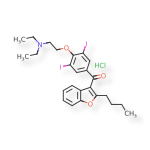
| Molecular Formula | C25H29I2NO3.ClH |
| Molecular Weight | 681.773 |
| Optical Activity | NONE |
| Defined Stereocenters | 0 / 0 |
| E/Z Centers | 0 |
| Charge | 0 |
SHOW SMILES / InChI
SMILES
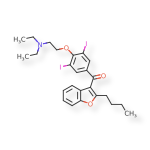
Cl.CCCCC1=C(C(=O)C2=CC(I)=C(OCCN(CC)CC)C(I)=C2)C3=C(O1)C=CC=C3
InChI
InChIKey=ITPDYQOUSLNIHG-UHFFFAOYSA-N
InChI=1S/C25H29I2NO3.ClH/c1-4-7-11-22-23(18-10-8-9-12-21(18)31-22)24(29)17-15-19(26)25(20(27)16-17)30-14-13-28(5-2)6-3;/h8-10,12,15-16H,4-7,11,13-14H2,1-3H3;1H
| Molecular Formula | ClH |
| Molecular Weight | 36.461 |
| Charge | 0 |
| Count |
|
| Stereochemistry | ACHIRAL |
| Additional Stereochemistry | No |
| Defined Stereocenters | 0 / 0 |
| E/Z Centers | 0 |
| Optical Activity | NONE |
| Molecular Formula | C25H29I2NO3 |
| Molecular Weight | 645.3116 |
| Charge | 0 |
| Count |
|
| Stereochemistry | ACHIRAL |
| Additional Stereochemistry | No |
| Defined Stereocenters | 0 / 0 |
| E/Z Centers | 0 |
| Optical Activity | NONE |
DescriptionCurator's Comment: description was created based on several sources, including:
https://www.drugs.com/pro/amiodarone.html | DOI: 10.1007/978-1-4613-2827-8_26
Curator's Comment: description was created based on several sources, including:
https://www.drugs.com/pro/amiodarone.html | DOI: 10.1007/978-1-4613-2827-8_26
Amiodarone is an antiarrhythmic with mainly class III properties, but it possesses electrophysiologic characteristics of all four Vaughan Williams classes. Like class I drugs, amiodarone blocks sodium channels at rapid pacing frequencies, and like class II drugs, amiodarone exerts a noncompetitive antisympathetic action. In addition to blocking sodium channels, amiodarone blocks myocardial potassium channels, which contributes to slowing of conduction and prolongation of refractoriness. It is indicated for initiation of treatment and prophylaxis of frequently recurring ventricular fibrillation and hemodynamically unstable ventricular tachycardia in patients refractory to other therapy. The most common adverse reactions (1-2%) leading to discontinuation of intravenous amiodarone therapy are hypotension, asystole/cardiac arrest/pulseless electrical activity, VT, and cardiogenic shock. Other important adverse reactions are, torsade de pointes (TdP), congestive heart failure, and liver function test abnormalities. Fluoroquinolones, macrolide antibiotics, and azoles are known to cause QTc prolongation. There have been reports of QTc prolongation, with or without TdP, in patients taking amiodarone when fluoroquinolones, macrolide antibiotics, or azoles were administered concomitantly. Since amiodarone is a substrate for CYP3A and CYP2C8, drugs/substances that inhibit these isoenzymes may decrease the metabolism and increase serum concentration of amiodarone.
Originator
Approval Year
Targets
| Primary Target | Pharmacology | Condition | Potency |
|---|---|---|---|
Target ID: CHEMBL2094118 |
|||
Target ID: CHEMBL240 |
9.8 µM [IC50] | ||
Target ID: Voltage-gated T-type calcium channel (guinea pig) |
|||
Target ID: Voltage-gated L-type calcium channel (guinea pig) |
|||
Target ID: CHEMBL2364675 |
|||
Target ID: CHEMBL3721 |
Conditions
| Condition | Modality | Targets | Highest Phase | Product |
|---|---|---|---|---|
| Primary | PACERONE Approved UseAmiodarone injection is indicated for initiation of treatment and prophylaxis of frequently recurring ventricular fibrillation (VF) and hemodynamically unstable ventricular tachycardia (VT) in patients refractory to other therapy. Amiodarone also can be used to treat patients with VT/VF for whom oral amiodarone is indicated, but who are unable to take oral medication. During or after treatment with amiodarone, patients may be transferred to oral amiodarone therapy. Launch Date1998 |
|||
| Primary | PACERONE Approved UseAmiodarone injection is indicated for initiation of treatment and prophylaxis of frequently recurring ventricular fibrillation (VF) and hemodynamically unstable ventricular tachycardia (VT) in patients refractory to other therapy. Amiodarone also can be used to treat patients with VT/VF for whom oral amiodarone is indicated, but who are unable to take oral medication. During or after treatment with amiodarone, patients may be transferred to oral amiodarone therapy [ see Dosage and Administration (2) Launch Date1998 |
Cmax
| Value | Dose | Co-administered | Analyte | Population |
|---|---|---|---|---|
2920 ng/mL EXPERIMENT https://pubmed.ncbi.nlm.nih.gov/21052689/ |
1.25 mg/kg single, intravenous dose: 1.25 mg/kg route of administration: Intravenous experiment type: SINGLE co-administered: |
AMIODARONE serum | Homo sapiens population: HEALTHY age: ADULT sex: MALE food status: UNKNOWN |
|
7140 ng/mL EXPERIMENT https://pubmed.ncbi.nlm.nih.gov/21052689/ |
2.5 mg/kg single, intravenous dose: 2.5 mg/kg route of administration: Intravenous experiment type: SINGLE co-administered: |
AMIODARONE serum | Homo sapiens population: HEALTHY age: ADULT sex: MALE food status: UNKNOWN |
|
13660 ng/mL EXPERIMENT https://pubmed.ncbi.nlm.nih.gov/21052689/ |
5 mg/kg single, intravenous dose: 5 mg/kg route of administration: Intravenous experiment type: SINGLE co-administered: |
AMIODARONE serum | Homo sapiens population: HEALTHY age: ADULT sex: MALE food status: UNKNOWN |
|
9 ng/mL EXPERIMENT https://pubmed.ncbi.nlm.nih.gov/21052689/ |
1.25 mg/kg single, intravenous dose: 1.25 mg/kg route of administration: Intravenous experiment type: SINGLE co-administered: |
DESETHYLAMIODARONE serum | Homo sapiens population: HEALTHY age: ADULT sex: MALE food status: UNKNOWN |
|
23.8 ng/mL EXPERIMENT https://pubmed.ncbi.nlm.nih.gov/21052689/ |
2.5 mg/kg single, intravenous dose: 2.5 mg/kg route of administration: Intravenous experiment type: SINGLE co-administered: |
DESETHYLAMIODARONE serum | Homo sapiens population: HEALTHY age: ADULT sex: MALE food status: UNKNOWN |
|
41.2 ng/mL EXPERIMENT https://pubmed.ncbi.nlm.nih.gov/21052689/ |
5 mg/kg single, intravenous dose: 5 mg/kg route of administration: Intravenous experiment type: SINGLE co-administered: |
DESETHYLAMIODARONE serum | Homo sapiens population: HEALTHY age: ADULT sex: MALE food status: UNKNOWN |
|
1.7 mg/L EXPERIMENT https://pubmed.ncbi.nlm.nih.gov/6851030/ |
800 mg single, oral dose: 800 mg route of administration: Oral experiment type: SINGLE co-administered: |
AMIODARONE serum | Homo sapiens population: UNKNOWN age: UNKNOWN sex: UNKNOWN food status: UNKNOWN |
AUC
| Value | Dose | Co-administered | Analyte | Population |
|---|---|---|---|---|
3600 ng × h/mL EXPERIMENT https://pubmed.ncbi.nlm.nih.gov/21052689/ |
1.25 mg/kg single, intravenous dose: 1.25 mg/kg route of administration: Intravenous experiment type: SINGLE co-administered: |
AMIODARONE serum | Homo sapiens population: HEALTHY age: ADULT sex: MALE food status: UNKNOWN |
|
8100 ng × h/mL EXPERIMENT https://pubmed.ncbi.nlm.nih.gov/21052689/ |
2.5 mg/kg single, intravenous dose: 2.5 mg/kg route of administration: Intravenous experiment type: SINGLE co-administered: |
AMIODARONE serum | Homo sapiens population: HEALTHY age: ADULT sex: MALE food status: UNKNOWN |
|
16600 ng × h/mL EXPERIMENT https://pubmed.ncbi.nlm.nih.gov/21052689/ |
5 mg/kg single, intravenous dose: 5 mg/kg route of administration: Intravenous experiment type: SINGLE co-administered: |
AMIODARONE serum | Homo sapiens population: HEALTHY age: ADULT sex: MALE food status: UNKNOWN |
|
16900 ng × h/mL EXPERIMENT https://pubmed.ncbi.nlm.nih.gov/21052689/ |
5 mg/kg single, intravenous dose: 5 mg/kg route of administration: Intravenous experiment type: SINGLE co-administered: |
DESETHYLAMIODARONE serum | Homo sapiens population: HEALTHY age: ADULT sex: MALE food status: UNKNOWN |
T1/2
| Value | Dose | Co-administered | Analyte | Population |
|---|---|---|---|---|
14.6 day EXPERIMENT https://pubmed.ncbi.nlm.nih.gov/21052689/ |
5 mg/kg single, intravenous dose: 5 mg/kg route of administration: Intravenous experiment type: SINGLE co-administered: |
AMIODARONE serum | Homo sapiens population: HEALTHY age: ADULT sex: MALE food status: UNKNOWN |
|
14.2 day EXPERIMENT https://pubmed.ncbi.nlm.nih.gov/21052689/ |
5 mg/kg single, intravenous dose: 5 mg/kg route of administration: Intravenous experiment type: SINGLE co-administered: |
DESETHYLAMIODARONE serum | Homo sapiens population: HEALTHY age: ADULT sex: MALE food status: UNKNOWN |
|
4.62 h EXPERIMENT https://pubmed.ncbi.nlm.nih.gov/6851030/ |
800 mg single, oral dose: 800 mg route of administration: Oral experiment type: SINGLE co-administered: |
AMIODARONE serum | Homo sapiens population: UNKNOWN age: UNKNOWN sex: UNKNOWN food status: UNKNOWN |
Funbound
| Value | Dose | Co-administered | Analyte | Population |
|---|---|---|---|---|
0.023% EXPERIMENT https://pubmed.ncbi.nlm.nih.gov/3242577/ |
200 mg 1 times / day multiple, oral dose: 200 mg route of administration: Oral experiment type: MULTIPLE co-administered: |
AMIODARONE plasma | Homo sapiens population: UNHEALTHY age: ADULT sex: FEMALE / MALE food status: UNKNOWN |
Overview
| CYP3A4 | CYP2C9 | CYP2D6 | hERG |
|---|---|---|---|
OverviewOther
| Other Inhibitor | Other Substrate | Other Inducer |
|---|---|---|
Drug as perpetrator
| Target | Modality | Activity | Metabolite | Clinical evidence |
|---|---|---|---|---|
| yes [IC50 15 uM] | yes (co-administration study) Comment: reversible inhibition; The area under the plasma concentration-time curve (AUC) of metoprolol increased from 767 before to 1,387 ug * hours/L after the amiodarone loading dose |
|||
| yes [IC50 5.48 uM] | ||||
| yes [IC50 >50 uM] | yes (co-administration study) Comment: reversible inhibition; After treatment with 3 g amiodarone (phase I), this parameter (AUC of lidocaine) increased to 135.3 ± 34.6 (p = 0.016), whereas the AUC of MEGEX decreased from 19.2 ± 6.5 to 15.8 ± 8.3 μg/min/ml (p = 0.04). |
|||
| yes [IC50 >50 uM] | yes (co-administration study) Comment: reversible inhibition; The mean warfarin AUC during the amiodarone regimen increased to 200% of the control value of anticoagulant alone, from 624 ± 59 Rg/ml-hr to 1249 ± 115 p,g/ml-hr, a significant difference |
|||
| yes [IC50 >50 uM] | yes (co-administration study) Comment: reversible inhibition; The mean warfarin AUC during the amiodarone regimen increased to 200% of the control value of anticoagulant alone, from 624 ± 59 Rg/ml-hr to 1249 ± 115 p,g/ml-hr, a significant difference |
Drug as victim
| Target | Modality | Activity | Metabolite | Clinical evidence |
|---|---|---|---|---|
| yes | likely (co-administration study) Comment: CYP450 inhibitors: grapefruit juice, certain fluoroquinolone and macrolide antibiotics, azole antifungals, cimetidine, certain protease inhibitors: increased exposure of amiodarone. Avoid concomitant use. CYP450 inducers (St. John's Wort): reduced amiodarone serum levels |
|||
| yes | likely (co-administration study) Comment: CYP450 inhibitors: grapefruit juice, certain fluoroquinolone and macrolide antibiotics, azole antifungals, cimetidine, certain protease inhibitors: increased exposure of amiodarone. Avoid concomitant use. CYP450 inducers (St. John's Wort): reduced amiodarone serum levels |
|||
| yes | likely (co-administration study) Comment: CYP450 inhibitors: grapefruit juice, certain fluoroquinolone and macrolide antibiotics, azole antifungals, cimetidine, certain protease inhibitors: increased exposure of amiodarone. Avoid concomitant use. CYP450 inducers (St. John's Wort): reduced amiodarone serum levels |
|||
| yes | likely (co-administration study) Comment: CYP450 inhibitors: grapefruit juice, certain fluoroquinolone and macrolide antibiotics, azole antifungals, cimetidine, certain protease inhibitors: increased exposure of amiodarone. Avoid concomitant use. CYP450 inducers (St. John's Wort): reduced amiodarone serum levels Page: 9.0 |
|||
| yes | likely (co-administration study) Comment: CYP450 inhibitors: grapefruit juice, certain fluoroquinolone and macrolide antibiotics, azole antifungals, cimetidine, certain protease inhibitors: increased exposure of amiodarone. Avoid concomitant use. CYP450 inducers (St. John's Wort): reduced amiodarone serum levels |
|||
| yes | likely (co-administration study) Comment: CYP450 inhibitors: grapefruit juice, certain fluoroquinolone and macrolide antibiotics, azole antifungals, cimetidine, certain protease inhibitors: increased exposure of amiodarone. Avoid concomitant use. CYP450 inducers (St. John's Wort): reduced amiodarone serum levels Page: 9.0 |
Tox targets
| Target | Modality | Activity | Metabolite | Clinical evidence |
|---|---|---|---|---|
PubMed
| Title | Date | PubMed |
|---|---|---|
| The effects of amiodarone on the thyroid. | 2001-04 |
|
| [Radiofrequency catheter ablation in children with Wolff-Parkinson-White syndrome and sudden cardiac death who had been resuscitated]. | 2001-04 |
|
| Structure-activity relationships and electrophysiological effects of short-acting amiodarone homologs in guinea pig isolated heart. | 2001-04 |
|
| Oral amiodarone for prevention of atrial fibrillation after open heart surgery, the Atrial Fibrillation Suppression Trial (AFIST): a randomised placebo-controlled trial. | 2001-03-17 |
|
| [Hyperthyroidism and heart]. | 2001-03-15 |
|
| Visual compatibility of amiodarone hydrochloride injection with various intravenous drugs. | 2001-03-15 |
|
| Patients at lower risk of arrhythmia recurrence: a subgroup in whom implantable defibrillators may not offer benefit. Antiarrhythmics Versus Implantable Defibrillator (AVID) Trial Investigators. | 2001-03-15 |
|
| Circadian variation of paroxysmal atrial fibrillation. PA3 Investigators. Atrial Pacing Peri-ablation for Prevention of Atrial Fibrillation Trial. | 2001-03-15 |
|
| Cost-effectiveness of the implantable cardioverter-defibrillator: results from the Canadian Implantable Defibrillator Study (CIDS). | 2001-03-13 |
|
| Polymorphic ventricular tachycardia after use of intravenous amiodarone for postoperative junctional ectopic tachycardia. | 2001-03-07 |
|
| Short- and long-term effects of amiodarone on the two components of cardiac delayed rectifier K(+) current. | 2001-03-06 |
|
| Moxifloxacin: clinical efficacy and safety. | 2001-03-01 |
|
| Torsade de pointes induced by intravenous and long-term oral amiodarone therapy in a patient with dilated cardiomyopathy. | 2001-03 |
|
| Does prophylaxis against atrial fibrillation after cardiac surgery reduce length of stay or hospital costs? | 2001-03 |
|
| The role of pharmacologic treatment to prevent sudden death in the implantable cardioverter defibrillator era. | 2001-03 |
|
| Efficacy of sequential antiarrhythmic treatment in sinus rhythm maintenance after successful electrocardioversion in patients with chronic non-valvular atrial fibrillation. | 2001-02-24 |
|
| Bioavailability of amiodarone tablets administered with and without food in healthy subjects. | 2001-02-15 |
|
| Prenatal diagnosis of junctional ectopic tachycardia. | 2001-02-15 |
|
| Thyroid hormone and the cardiovascular system. | 2001-02-15 |
|
| Amiodarone stimulates interleukin-6 production in cultured human thyrocytes, exerting cytotoxic effects on thyroid follicles in suspension culture. | 2001-02 |
|
| Oral anticoagulants. Pharmacologic issues for use in the elderly. | 2001-02 |
|
| Intravenous amiodarone in cardiac arrest. | 2001-02 |
|
| Effects of amiodarone administration during pregnancy on neonatal thyroid function and subsequent neurodevelopment. | 2001-02 |
|
| [Acute papilledema. A 69-year-old patient with acute bilateral papilledema]. | 2001-02 |
|
| Anaesthesia for amiodarone-induced thyrotoxicosis: a case review. | 2001-02 |
|
| Inhibitory effects of CYP3A4 substrates and their metabolites on P-glycoprotein-mediated transport. | 2001-02 |
|
| Differential effects of dofetilide, amiodarone, and class lc drugs on left and right atrial refractoriness and left atrial vulnerability in pigs. | 2001-02 |
|
| Single oral loading dose of propafenone for pharmacological cardioversion of recent-onset atrial fibrillation. | 2001-02 |
|
| Coronary artery revascularization in patients with sustained ventricular arrhythmias in the chronic phase of a myocardial infarction: effects on the electrophysiologic substrate and outcome. | 2001-02 |
|
| Pharmacologic management of atrial fibrillation: current therapeutic strategies. | 2001-02 |
|
| Metabolism of amiodarone (part I): identification of a new hydroxylated metabolite of amiodarone. | 2001-02 |
|
| [Diagnostic quiz. Increasing dyspnea after bypass operation. Interstitial lung disease]. | 2001-01-25 |
|
| Amiodarone-induced hyperthyroidism. | 2001-01-22 |
|
| Chemical cardioversion of atrial fibrillation or flutter with ibutilide in patients receiving amiodarone therapy. | 2001-01-16 |
|
| "Stable" ventricular tachycardia is not a benign rhythm : insights from the antiarrhythmics versus implantable defibrillators (AVID) registry. | 2001-01-16 |
|
| Impressive amelioration of clinical (NYHA class) and echocardiographic parameters in heart failure patients treated with amiodarone and carvedilol. | 2001-01 |
|
| Predictors of failure of transoesophageal cardioversion of common atrial flutter. | 2001-01 |
|
| [The best in 2000 on arrhythmia]. | 2001-01 |
|
| [How I treat...persistent atrial fibrillation, by internal cardioversion, in a patient with exreme obesity]. | 2001-01 |
|
| [Incidence and timing of thyroid dysfunction with long-term amiodarone therapy]. | 2001-01 |
|
| Amiodarone-induced thyrotoxicosis. | 2001-01 |
|
| Development of heart failure in bradycardic sick sinus syndrome. | 2001-01 |
|
| Thyroidectomy for selected patients with thyrotoxicosis. | 2001-01 |
|
| The frequency analysis of signal-averaged ECG of P wave as predictor of efficacy of class III antiarrhythmic drugs to maintain sinus rhythm in recurrent idiopathic atrial fibrillation. | 2001-01 |
|
| Dofetilide: a new class III antiarrhythmic agent. | 2001-01 |
|
| The effect of amiodarone and/or antioxidant treatment on splenocyte blast transformation. | 2001-01 |
|
| Protection against drug- and chemical-induced multiorgan toxicity by a novel IH636 grape seed proanthocyanidin extract. | 2001 |
|
| [Toxic hepatitis caused by intravenous amiodarone]. | 2000-12-09 |
|
| How to manage atrial fibrillation: an update on recent clinical trials. | 2000-10-27 |
|
| Amiodarone-induced AV block and ventricular standstill. A forme fruste of an idiopathic long QT syndrome. | 2000-08 |
Sample Use Guides
Intravenous: Initial dose: 1000 mg over the first 24 hours of therapy, delivered by the following infusion regimen:
-Loading infusions: 150 mg over the first 10 minutes (15 mg/min), followed by 360 mg over the next 6 hours (1 mg/min)
-Maintenance infusion: 540 mg over the remaining 18 hours (0.5 mg/min)
Maintenance dose: After the first 24 hours, continue the maintenance infusion rate of 0.5 mg/min; may increase infusion rate to achieve effective arrhythmia suppression.
-Supplemental infusions: 150 mg over 10 minutes (15 mg/min) for breakthrough episodes of ventricular fibrillation (VF) or hemodynamically unstable ventricular tachycardia(VT)
Maximum dose: Initial infusion rate: 30 mg/min
Oral: Loading dose: 800 to 1600 mg orally per day for 1 to 3 weeks (occasionally longer) until adequate arrhythmia control is achieved or if side effects become prominent, then switch to adjustment dose
Adjustment dose: 600 to 800 mg orally per day for 1 month, then switch to maintenance dose
Maintenance dose: 400 mg orally per day
Route of Administration:
Other
At concentrations ranging from 75-200 uM, amiodarone induced a significant and dose-dependent release of 51Cr in FRTL-5 cells. In the same molar concentrations, amiodarone was also cytotoxic in CHO cells. In hTF, the release of 51Cr produced by amiodarone occurred at a lower concentration (37.5 vs. 75 uM) and was significantly greater than that in FRTL-5 cells.
| Substance Class |
Chemical
Created
by
admin
on
Edited
Mon Mar 31 17:36:29 GMT 2025
by
admin
on
Mon Mar 31 17:36:29 GMT 2025
|
| Record UNII |
976728SY6Z
|
| Record Status |
Validated (UNII)
|
| Record Version |
|
-
Download
| Name | Type | Language | ||
|---|---|---|---|---|
|
Common Name | English | ||
|
Preferred Name | English | ||
|
Common Name | English | ||
|
Systematic Name | English | ||
|
Common Name | English | ||
|
Common Name | English | ||
|
Common Name | English | ||
|
Common Name | English | ||
|
Common Name | English | ||
|
Common Name | English | ||
|
Common Name | English | ||
|
Common Name | English | ||
|
Code | English | ||
|
Common Name | English | ||
|
Common Name | English | ||
|
Code | English | ||
|
Common Name | English | ||
|
Code | English | ||
|
Common Name | English | ||
|
Systematic Name | English | ||
|
Common Name | English | ||
|
Common Name | English | ||
|
Common Name | English | ||
|
Brand Name | English | ||
|
Code | English | ||
|
Systematic Name | English | ||
|
Brand Name | English | ||
|
Common Name | English |
| Classification Tree | Code System | Code | ||
|---|---|---|---|---|
|
NCI_THESAURUS |
C93038
Created by
admin on Mon Mar 31 17:36:29 GMT 2025 , Edited by admin on Mon Mar 31 17:36:29 GMT 2025
|
||
|
FDA ORPHAN DRUG |
77293
Created by
admin on Mon Mar 31 17:36:29 GMT 2025 , Edited by admin on Mon Mar 31 17:36:29 GMT 2025
|
||
|
NCI_THESAURUS |
C47793
Created by
admin on Mon Mar 31 17:36:29 GMT 2025 , Edited by admin on Mon Mar 31 17:36:29 GMT 2025
|
| Code System | Code | Type | Description | ||
|---|---|---|---|---|---|
|
1027302
Created by
admin on Mon Mar 31 17:36:29 GMT 2025 , Edited by admin on Mon Mar 31 17:36:29 GMT 2025
|
PRIMARY | |||
|
243-293-2
Created by
admin on Mon Mar 31 17:36:29 GMT 2025 , Edited by admin on Mon Mar 31 17:36:29 GMT 2025
|
PRIMARY | |||
|
85442
Created by
admin on Mon Mar 31 17:36:29 GMT 2025 , Edited by admin on Mon Mar 31 17:36:29 GMT 2025
|
PRIMARY | |||
|
CHEMBL633
Created by
admin on Mon Mar 31 17:36:29 GMT 2025 , Edited by admin on Mon Mar 31 17:36:29 GMT 2025
|
PRIMARY | |||
|
DTXSID7037185
Created by
admin on Mon Mar 31 17:36:29 GMT 2025 , Edited by admin on Mon Mar 31 17:36:29 GMT 2025
|
PRIMARY | |||
|
976728SY6Z
Created by
admin on Mon Mar 31 17:36:29 GMT 2025 , Edited by admin on Mon Mar 31 17:36:29 GMT 2025
|
PRIMARY | |||
|
203114
Created by
admin on Mon Mar 31 17:36:29 GMT 2025 , Edited by admin on Mon Mar 31 17:36:29 GMT 2025
|
PRIMARY | RxNorm | ||
|
29770
Created by
admin on Mon Mar 31 17:36:29 GMT 2025 , Edited by admin on Mon Mar 31 17:36:29 GMT 2025
|
PRIMARY | |||
|
6525
Created by
admin on Mon Mar 31 17:36:29 GMT 2025 , Edited by admin on Mon Mar 31 17:36:29 GMT 2025
|
PRIMARY | |||
|
100000092847
Created by
admin on Mon Mar 31 17:36:29 GMT 2025 , Edited by admin on Mon Mar 31 17:36:29 GMT 2025
|
PRIMARY | |||
|
C236
Created by
admin on Mon Mar 31 17:36:29 GMT 2025 , Edited by admin on Mon Mar 31 17:36:29 GMT 2025
|
PRIMARY | |||
|
SUB00472MIG
Created by
admin on Mon Mar 31 17:36:29 GMT 2025 , Edited by admin on Mon Mar 31 17:36:29 GMT 2025
|
PRIMARY | |||
|
976728SY6Z
Created by
admin on Mon Mar 31 17:36:29 GMT 2025 , Edited by admin on Mon Mar 31 17:36:29 GMT 2025
|
PRIMARY | |||
|
DBSALT000355
Created by
admin on Mon Mar 31 17:36:29 GMT 2025 , Edited by admin on Mon Mar 31 17:36:29 GMT 2025
|
PRIMARY | |||
|
19774-82-4
Created by
admin on Mon Mar 31 17:36:29 GMT 2025 , Edited by admin on Mon Mar 31 17:36:29 GMT 2025
|
PRIMARY | |||
|
m1748
Created by
admin on Mon Mar 31 17:36:29 GMT 2025 , Edited by admin on Mon Mar 31 17:36:29 GMT 2025
|
PRIMARY | Merck Index |
| Related Record | Type | Details | ||
|---|---|---|---|---|
|
BASIS OF STRENGTH->SUBSTANCE |
ASSAY (HPLC)
|
||
|
|
PARENT -> SALT/SOLVATE |
|
||
|
BASIS OF STRENGTH->SUBSTANCE |
ASSAY (TITRATION)
|
| Related Record | Type | Details | ||
|---|---|---|---|---|
|
IMPURITY -> PARENT |
CHROMATOGRAPHIC PURITY (HPLC/UV)
USP
|
||
|
IMPURITY -> PARENT |
|
||
|
IMPURITY -> PARENT |
CHROMATOGRAPHIC PURITY (HPLC/UV)
EP
|
||
|
IMPURITY -> PARENT |
CHROMATOGRAPHIC PURITY (HPLC/UV)
USP
|
||
|
IMPURITY -> PARENT |
CHROMATOGRAPHIC PURITY (TLC)
EP
|
||
|
IMPURITY -> PARENT |
CHROMATOGRAPHIC PURITY (HPLC/UV)
USP
|
||
|
IMPURITY -> PARENT |
CHROMATOGRAPHIC PURITY (HPLC/UV)
EP
|
||
|
IMPURITY -> PARENT |
CHROMATOGRAPHIC PURITY (HPLC/UV)
EP
|
||
|
IMPURITY -> PARENT |
CHROMATOGRAPHIC PURITY (HPLC/UV)
EP
|
||
|
IMPURITY -> PARENT |
CHROMATOGRAPHIC PURITY (HPLC/UV)
EP
|
||
|
IMPURITY -> PARENT |
CHROMATOGRAPHIC PURITY (HPLC/UV)
USP
|
||
|
IMPURITY -> PARENT |
CHROMATOGRAPHIC PURITY (HPLC/UV)
USP
|
||
|
IMPURITY -> PARENT |
CHROMATOGRAPHIC PURITY (HPLC/UV)
EP
|
||
|
IMPURITY -> PARENT |
CHROMATOGRAPHIC PURITY (HPLC/UV)
|


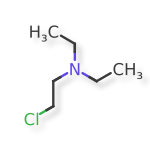
![Structure of (2-Butylbenzofuran-3-yl){4-[2-(diethylamino)ethoxy]-3-iodophenyl}methanone](/img/1ff39b88-5035-4f1e-98fa-079ebe1ea82c.svg "Structure of (2-Butylbenzofuran-3-yl){4-[2-(diethylamino)ethoxy]-3-iodophenyl}methanone")
| Related Record | Type | Details | ||
|---|---|---|---|---|
|
|
ACTIVE MOIETY |
|