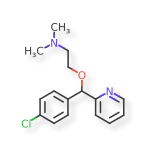
Details
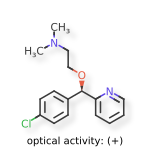
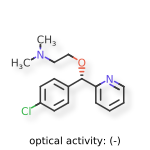
| Stereochemistry | RACEMIC |
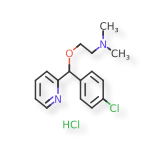
| Molecular Formula | C16H19ClN2O |
| Molecular Weight | 290.788 |
| Optical Activity | ( + / - ) |
| Defined Stereocenters | 0 / 1 |
| E/Z Centers | 0 |
| Charge | 0 |
SHOW SMILES / InChI
SMILES
CN(C)CCOC(C1=CC=C(Cl)C=C1)C2=CC=CC=N2
InChI
InChIKey=OJFSXZCBGQGRNV-UHFFFAOYSA-N
InChI=1S/C16H19ClN2O/c1-19(2)11-12-20-16(15-5-3-4-10-18-15)13-6-8-14(17)9-7-13/h3-10,16H,11-12H2,1-2H3
| Molecular Formula | C16H19ClN2O |
| Molecular Weight | 290.788 |
| Charge | 0 |
| Count |
|
| Stereochemistry | RACEMIC |
| Additional Stereochemistry | No |
| Defined Stereocenters | 0 / 1 |
| E/Z Centers | 0 |
| Optical Activity | ( + / - ) |
DescriptionCurator's Comment: description was created based on several sources, including:
https://www.drugs.com/pro/carbinoxamine.html
Curator's Comment: description was created based on several sources, including:
https://www.drugs.com/pro/carbinoxamine.html
Carbinoxamine is a histamine-H1 receptor blocking agent. It is an antihistamine with anticholinergic (drying) and sedative properties. Carbinoxamine appears to compete with histamine (type H1) for receptor sites on effector cells in the gastrointestinal tract, blood vessels and respiratory tract. Carbinoxamine is effective for the symptomatic treatment of seasonal and perennial allergic rhinitis; vasomotor rhinitis; allergic conjunctivitis due to inhalant allergens and foods; mild, uncomplicated allergic skin manifestations of urticaria and angioedema; dermatographism; as therapy for anaphylactic reactions adjunctive to epinephrine and other standard measures after the acute manifestations have been controlled. Most common adverse reactions are: sedation, sleepiness, dizziness, disturbed coordination, epigastric distress, and thickening of bronchial secretions. Avoid concomitant use of alcohol and CNS depressants (hypnotics sedatives, tranquilizers, etc.) due to additive adverse effects.
Originator
Approval Year
Targets
| Primary Target | Pharmacology | Condition | Potency |
|---|---|---|---|
Target ID: CHEMBL231 |
2.3 nM [Ki] | ||
Target ID: CHEMBL289 Sources: DOI: 10.14896/jssxmeeting.21.0.296.1 |
25.0 µM [Ki] |
Conditions
| Condition | Modality | Targets | Highest Phase | Product |
|---|---|---|---|---|
| Palliative | CARBINOXAMINE MALEATE Approved UseCarbinoxamine maleate is effective for the symptomatic treatment of: Seasonal and perennial allergic rhinitis. Vasomotor rhinitis. Allergic conjunctivitis due to inhalant allergens and foods. Mild, uncomplicated allergic skin manifestations of urticaria and angioedema. Dermatographism. As therapy for anaphylactic reactions adjunctive to epinephrine and other standard measures after the acute manifestations have been controlled. Amelioration of the severity of allergic reactions to blood or plasma. Launch Date2003 |
|||
| Palliative | CARBINOXAMINE MALEATE Approved UseCarbinoxamine maleate is effective for the symptomatic treatment of: Seasonal and perennial allergic rhinitis. Vasomotor rhinitis. Allergic conjunctivitis due to inhalant allergens and foods. Mild, uncomplicated allergic skin manifestations of urticaria and angioedema. Dermatographism. As therapy for anaphylactic reactions adjunctive to epinephrine and other standard measures after the acute manifestations have been controlled. Amelioration of the severity of allergic reactions to blood or plasma. Launch Date2003 |
|||
| Palliative | CARBINOXAMINE MALEATE Approved UseCarbinoxamine maleate is effective for the symptomatic treatment of: Seasonal and perennial allergic rhinitis. Vasomotor rhinitis. Allergic conjunctivitis due to inhalant allergens and foods. Mild, uncomplicated allergic skin manifestations of urticaria and angioedema. Dermatographism. As therapy for anaphylactic reactions adjunctive to epinephrine and other standard measures after the acute manifestations have been controlled. Amelioration of the severity of allergic reactions to blood or plasma. Launch Date2003 |
|||
| Palliative | CARBINOXAMINE MALEATE Approved UseCarbinoxamine maleate is effective for the symptomatic treatment of: Seasonal and perennial allergic rhinitis. Vasomotor rhinitis. Allergic conjunctivitis due to inhalant allergens and foods. Mild, uncomplicated allergic skin manifestations of urticaria and angioedema. Dermatographism. As therapy for anaphylactic reactions adjunctive to epinephrine and other standard measures after the acute manifestations have been controlled. Amelioration of the severity of allergic reactions to blood or plasma. Launch Date2003 |
|||
| Palliative | CARBINOXAMINE MALEATE Approved UseCarbinoxamine maleate is effective for the symptomatic treatment of: Seasonal and perennial allergic rhinitis. Vasomotor rhinitis. Allergic conjunctivitis due to inhalant allergens and foods. Mild, uncomplicated allergic skin manifestations of urticaria and angioedema. Dermatographism. As therapy for anaphylactic reactions adjunctive to epinephrine and other standard measures after the acute manifestations have been controlled. Amelioration of the severity of allergic reactions to blood or plasma. Launch Date2003 |
|||
| Palliative | CARBINOXAMINE MALEATE Approved UseCarbinoxamine maleate is effective for the symptomatic treatment of: Seasonal and perennial allergic rhinitis. Vasomotor rhinitis. Allergic conjunctivitis due to inhalant allergens and foods. Mild, uncomplicated allergic skin manifestations of urticaria and angioedema. Dermatographism. As therapy for anaphylactic reactions adjunctive to epinephrine and other standard measures after the acute manifestations have been controlled. Amelioration of the severity of allergic reactions to blood or plasma. Launch Date2003 |
|||
| Palliative | CARBINOXAMINE MALEATE Approved UseCarbinoxamine maleate is effective for the symptomatic treatment of: Seasonal and perennial allergic rhinitis. Vasomotor rhinitis. Allergic conjunctivitis due to inhalant allergens and foods. Mild, uncomplicated allergic skin manifestations of urticaria and angioedema. Dermatographism. As therapy for anaphylactic reactions adjunctive to epinephrine and other standard measures after the acute manifestations have been controlled. Amelioration of the severity of allergic reactions to blood or plasma. Launch Date2003 |
Cmax
| Value | Dose | Co-administered | Analyte | Population |
|---|---|---|---|---|
16.9 ng/mL EXPERIMENT https://pubmed.ncbi.nlm.nih.gov/1363194 |
8 mg single, oral dose: 8 mg route of administration: Oral experiment type: SINGLE co-administered: PHENYLPROPANOLAMINE |
CARBINOXAMINE MALEATE plasma | Homo sapiens population: HEALTHY age: ADULT sex: UNKNOWN food status: UNKNOWN |
|
4.5 ng/mL EXPERIMENT https://pubmed.ncbi.nlm.nih.gov/7488301 |
4 mg single, oral dose: 4 mg route of administration: Oral experiment type: SINGLE co-administered: PHENYLEPHRINE |
CARBINOXAMINE MALEATE plasma | Homo sapiens population: HEALTHY age: ADULT sex: UNKNOWN food status: UNKNOWN |
|
13.5 ng/mL EXPERIMENT https://pubmed.ncbi.nlm.nih.gov/7488301 |
4 mg 2 times / day multiple, oral dose: 4 mg route of administration: Oral experiment type: MULTIPLE co-administered: PHENYLEPHRINE |
CARBINOXAMINE MALEATE plasma | Homo sapiens population: HEALTHY age: ADULT sex: UNKNOWN food status: UNKNOWN |
T1/2
| Value | Dose | Co-administered | Analyte | Population |
|---|---|---|---|---|
14.5 h EXPERIMENT https://pubmed.ncbi.nlm.nih.gov/1363194 |
8 mg single, oral dose: 8 mg route of administration: Oral experiment type: SINGLE co-administered: PHENYLPROPANOLAMINE |
CARBINOXAMINE MALEATE plasma | Homo sapiens population: HEALTHY age: ADULT sex: UNKNOWN food status: UNKNOWN |
|
30 h EXPERIMENT https://pubmed.ncbi.nlm.nih.gov/7488301 |
4 mg single, oral dose: 4 mg route of administration: Oral experiment type: SINGLE co-administered: PHENYLEPHRINE |
CARBINOXAMINE MALEATE plasma | Homo sapiens population: HEALTHY age: ADULT sex: UNKNOWN food status: UNKNOWN |
|
22 h EXPERIMENT https://pubmed.ncbi.nlm.nih.gov/7488301 |
4 mg 2 times / day multiple, oral dose: 4 mg route of administration: Oral experiment type: MULTIPLE co-administered: PHENYLEPHRINE |
CARBINOXAMINE MALEATE plasma | Homo sapiens population: HEALTHY age: ADULT sex: UNKNOWN food status: UNKNOWN |
Funbound
| Value | Dose | Co-administered | Analyte | Population |
|---|---|---|---|---|
31% EXPERIMENT https://pubmed.ncbi.nlm.nih.gov/17339039 |
unknown, unknown |
CARBINOXAMINE MALEATE plasma | Homo sapiens population: UNKNOWN age: UNKNOWN sex: UNKNOWN food status: UNKNOWN |
PubMed
| Title | Date | PubMed |
|---|---|---|
| Profiling of a prescription drug library for potential renal drug-drug interactions mediated by the organic cation transporter 2. | 2011-07-14 |
|
| Development of a list of potentially inappropriate drugs for the korean elderly using the delphi method. | 2010-12 |
|
| 4-(4-Chloro-phen-yl)-4-hy-droxy-piperidinium maleate maleic acid solvate. | 2010-07-14 |
|
| LC for analysis of two sustained-release mixtures containing cough cold suppressant drugs. | 2010-07 |
|
| [1,2]-Anionic rearrangement of 2-benzyloxypyridine and related pyridyl ethers. | 2009-10-16 |
|
| Discovery of novel and cardioselective diltiazem-like calcium channel blockers via virtual screening. | 2008-09-25 |
|
| Characterization of antihistamine-human serum protein interactions by capillary electrophoresis. | 2007-04-20 |
|
| Possible role of pseudoephedrine and other over-the-counter cold medications in the deaths of very young children. | 2007-03 |
|
| Mechanism of the condensation of homocysteine thiolactone with aldehydes. | 2006-10-25 |
|
| Spectrophotometric determination of carbinoxamine maleate in pharmaceutical formulations by ternary complex formation with Cu(II) and eosin. | 2006-06-01 |
|
| Over-the-counter cold medications-postmortem findings in infants and the relationship to cause of death. | 2005-10 |
|
| Simultaneous determination of ingredients in a cold medicine by cyclodextrin-modified microemulsion electrokinetic chromatography. | 2005-03-09 |
|
| Quantitation of antihistamines in pharmaceutical preparations by liquid chromatography with a micellar mobile phase of sodium dodecyl sulfate and pentanol. | 2002-01-05 |
|
| Cold-syrup induced movement disorder. | 2001-06 |
|
| Chromatographic analysis of phenethylamine-antihistamine combinations using C8, C18 or cyano columns and micellar sodium dodecyl sulfate-pentanol mixtures. | 2001-04 |
|
| [Serous otitis media. Comparative study of carbinoxamine- pseudoephedrine vs astemizole-pseudoephedrine]. | 1997-05-01 |
|
| The need for rational therapeutics in the use of cough and cold medicine in infants. | 1992-04 |
|
| [Antimycobacterial antihistaminics]. | 1989-08 |
|
| Clistin maleate; a clinical appraisal of a new antihistaminic. | 1954-11 |
Patents
| Substance Class |
Chemical
Created
by
admin
on
Edited
Mon Mar 31 17:59:37 GMT 2025
by
admin
on
Mon Mar 31 17:59:37 GMT 2025
|
| Record UNII |
982A7M02H5
|
| Record Status |
Validated (UNII)
|
| Record Version |
|
-
Download
| Name | Type | Language | ||
|---|---|---|---|---|
|
Official Name | English | ||
|
Preferred Name | English | ||
|
Systematic Name | English | ||
|
Common Name | English | ||
|
Common Name | English | ||
|
Common Name | English | ||
|
Common Name | English |
| Classification Tree | Code System | Code | ||
|---|---|---|---|---|
|
NCI_THESAURUS |
C29578
Created by
admin on Mon Mar 31 17:59:37 GMT 2025 , Edited by admin on Mon Mar 31 17:59:37 GMT 2025
|
||
|
WHO-ATC |
R06AA08
Created by
admin on Mon Mar 31 17:59:37 GMT 2025 , Edited by admin on Mon Mar 31 17:59:37 GMT 2025
|
||
|
WHO-VATC |
QR06AA08
Created by
admin on Mon Mar 31 17:59:37 GMT 2025 , Edited by admin on Mon Mar 31 17:59:37 GMT 2025
|
||
|
NDF-RT |
N0000175587
Created by
admin on Mon Mar 31 17:59:37 GMT 2025 , Edited by admin on Mon Mar 31 17:59:37 GMT 2025
|
||
|
LIVERTOX |
NBK548003
Created by
admin on Mon Mar 31 17:59:37 GMT 2025 , Edited by admin on Mon Mar 31 17:59:37 GMT 2025
|
| Code System | Code | Type | Description | ||
|---|---|---|---|---|---|
|
DB00748
Created by
admin on Mon Mar 31 17:59:37 GMT 2025 , Edited by admin on Mon Mar 31 17:59:37 GMT 2025
|
PRIMARY | |||
|
DTXSID4022737
Created by
admin on Mon Mar 31 17:59:37 GMT 2025 , Edited by admin on Mon Mar 31 17:59:37 GMT 2025
|
PRIMARY | |||
|
982A7M02H5
Created by
admin on Mon Mar 31 17:59:37 GMT 2025 , Edited by admin on Mon Mar 31 17:59:37 GMT 2025
|
PRIMARY | |||
|
486-16-8
Created by
admin on Mon Mar 31 17:59:37 GMT 2025 , Edited by admin on Mon Mar 31 17:59:37 GMT 2025
|
PRIMARY | |||
|
m3070
Created by
admin on Mon Mar 31 17:59:37 GMT 2025 , Edited by admin on Mon Mar 31 17:59:37 GMT 2025
|
PRIMARY | Merck Index | ||
|
Carbinoxamine
Created by
admin on Mon Mar 31 17:59:37 GMT 2025 , Edited by admin on Mon Mar 31 17:59:37 GMT 2025
|
PRIMARY | |||
|
207-628-6
Created by
admin on Mon Mar 31 17:59:37 GMT 2025 , Edited by admin on Mon Mar 31 17:59:37 GMT 2025
|
PRIMARY | |||
|
C004649
Created by
admin on Mon Mar 31 17:59:37 GMT 2025 , Edited by admin on Mon Mar 31 17:59:37 GMT 2025
|
PRIMARY | |||
|
3398
Created by
admin on Mon Mar 31 17:59:37 GMT 2025 , Edited by admin on Mon Mar 31 17:59:37 GMT 2025
|
PRIMARY | |||
|
499
Created by
admin on Mon Mar 31 17:59:37 GMT 2025 , Edited by admin on Mon Mar 31 17:59:37 GMT 2025
|
PRIMARY | |||
|
CARBINOXAMINE
Created by
admin on Mon Mar 31 17:59:37 GMT 2025 , Edited by admin on Mon Mar 31 17:59:37 GMT 2025
|
PRIMARY | |||
|
2564
Created by
admin on Mon Mar 31 17:59:37 GMT 2025 , Edited by admin on Mon Mar 31 17:59:37 GMT 2025
|
PRIMARY | |||
|
359
Created by
admin on Mon Mar 31 17:59:37 GMT 2025 , Edited by admin on Mon Mar 31 17:59:37 GMT 2025
|
PRIMARY | |||
|
20220
Created by
admin on Mon Mar 31 17:59:37 GMT 2025 , Edited by admin on Mon Mar 31 17:59:37 GMT 2025
|
PRIMARY | RxNorm | ||
|
982A7M02H5
Created by
admin on Mon Mar 31 17:59:37 GMT 2025 , Edited by admin on Mon Mar 31 17:59:37 GMT 2025
|
PRIMARY | |||
|
100000081340
Created by
admin on Mon Mar 31 17:59:37 GMT 2025 , Edited by admin on Mon Mar 31 17:59:37 GMT 2025
|
PRIMARY | |||
|
CHEMBL864
Created by
admin on Mon Mar 31 17:59:37 GMT 2025 , Edited by admin on Mon Mar 31 17:59:37 GMT 2025
|
PRIMARY | |||
|
7139
Created by
admin on Mon Mar 31 17:59:37 GMT 2025 , Edited by admin on Mon Mar 31 17:59:37 GMT 2025
|
PRIMARY | |||
|
C65286
Created by
admin on Mon Mar 31 17:59:37 GMT 2025 , Edited by admin on Mon Mar 31 17:59:37 GMT 2025
|
PRIMARY | |||
|
SUB06128MIG
Created by
admin on Mon Mar 31 17:59:37 GMT 2025 , Edited by admin on Mon Mar 31 17:59:37 GMT 2025
|
PRIMARY |
| Related Record | Type | Details | ||
|---|---|---|---|---|
|
|
SALT/SOLVATE -> PARENT | |||
|
|
SALT/SOLVATE -> PARENT | |||
|
|
SALT/SOLVATE -> PARENT | |||
|
|
ENANTIOMER -> RACEMATE | |||
|
|
ENANTIOMER -> RACEMATE | |||
|
|
SALT/SOLVATE -> PARENT | |||
|
TARGET -> INHIBITOR |
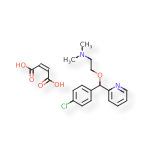
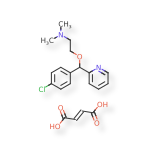
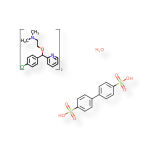

| Related Record | Type | Details | ||
|---|---|---|---|---|
|
|
ACTIVE MOIETY |