


Details
| Stereochemistry | RACEMIC |
| Molecular Formula | C20H30NO3.Br.H2O |
| Molecular Weight | 430.376 |
| Optical Activity | ( + / - ) |
| Defined Stereocenters | 4 / 5 |
| E/Z Centers | 0 |
| Charge | 0 |
SHOW SMILES / InChI
SMILES
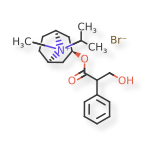
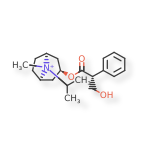
O.[Br-].CC(C)[N@+]1(C)[C@H]2CC[C@@H]1C[C@@H](C2)OC(=O)C(CO)C3=CC=CC=C3
InChI
InChIKey=KEWHKYJURDBRMN-ZEODDXGYSA-M
InChI=1S/C20H30NO3.BrH.H2O/c1-14(2)21(3)16-9-10-17(21)12-18(11-16)24-20(23)19(13-22)15-7-5-4-6-8-15;;/h4-8,14,16-19,22H,9-13H2,1-3H3;1H;1H2/q+1;;/p-1/t16-,17+,18+,19?,21+;;
| Molecular Formula | C20H30NO3 |
| Molecular Weight | 332.4571 |
| Charge | 1 |
| Count |
|
| Stereochemistry | EPIMERIC |
| Additional Stereochemistry | No |
| Defined Stereocenters | 4 / 5 |
| E/Z Centers | 0 |
| Optical Activity | UNSPECIFIED |
| Molecular Formula | Br |
| Molecular Weight | 79.904 |
| Charge | -1 |
| Count |
|
| Stereochemistry | ACHIRAL |
| Additional Stereochemistry | No |
| Defined Stereocenters | 0 / 0 |
| E/Z Centers | 0 |
| Optical Activity | NONE |
| Molecular Formula | H2O |
| Molecular Weight | 18.0153 |
| Charge | 0 |
| Count |
|
| Stereochemistry | ACHIRAL |
| Additional Stereochemistry | No |
| Defined Stereocenters | 0 / 0 |
| E/Z Centers | 0 |
| Optical Activity | NONE |
DescriptionCurator's Comment: description was created based on several sources, including
https://www.ncbi.nlm.nih.gov/mesh/68009241
Curator's Comment: description was created based on several sources, including
https://www.ncbi.nlm.nih.gov/mesh/68009241
Ipratropium (ipratropium bromide, ATROVENT® HFA) is a muscarinic antagonist structurally related to atropine but often considered safer and more effective for inhalation use. It is indicated for the maintenance treatment of bronchospasm associated with chronic obstructive pulmonary disease (COPD), including chronic bronchitis and emphysema. Ipratropium (ipratropium bromide, ATROVENT® HFA) is an anticholinergic (parasympatholytic) agent which, based on animal studies, appears to inhibit vagally-mediated reflexes by antagonizing the action of acetylcholine, the transmitter agent released at the neuromuscular junctions in the lung. Anticholinergics prevent the increases in intracellular concentration of Ca2+ which is caused by interaction of acetylcholine with the muscarinic receptors on bronchial smooth muscle.
Approval Year
Targets
| Primary Target | Pharmacology | Condition | Potency |
|---|---|---|---|
Target ID: CHEMBL216 |
0.49 nM [Ki] | ||
Target ID: CHEMBL211 |
1.5 nM [Ki] | ||
Target ID: CHEMBL245 |
0.51 nM [Ki] | ||
Target ID: CHEMBL1821 |
0.66 nM [Ki] | ||
Target ID: CHEMBL2035 |
1.7 nM [Ki] |
Conditions
| Condition | Modality | Targets | Highest Phase | Product |
|---|---|---|---|---|
| Primary | ATROVENT HFA Approved UseATROVENT HFA Inhalation Aerosol is indicated as a bronchodilator for maintenance treatment of bronchospasm associated with chronic obstructive pulmonary disease (COPD), including chronic bronchitis and emphysema. Launch Date2004 |
Cmax
| Value | Dose | Co-administered | Analyte | Population |
|---|---|---|---|---|
33.5 pg/mL |
20 μg 4 times / day multiple, respiratory dose: 20 μg route of administration: Respiratory experiment type: MULTIPLE co-administered: ALBUTEROL |
IPRATROPIUM plasma | Homo sapiens population: UNHEALTHY age: ADULT sex: FEMALE / MALE food status: UNKNOWN |
|
35.4 pg/mL |
20 μg 4 times / day steady-state, respiratory dose: 20 μg route of administration: Respiratory experiment type: STEADY-STATE co-administered: ALBUTEROL |
IPRATROPIUM plasma | Homo sapiens population: UNKNOWN age: ADULT sex: MALE food status: UNKNOWN |
|
31.7 pg/mL |
20 μg 4 times / day steady-state, respiratory dose: 20 μg route of administration: Respiratory experiment type: STEADY-STATE co-administered: ALBUTEROL |
IPRATROPIUM plasma | Homo sapiens population: UNKNOWN age: ADULT sex: FEMALE food status: UNKNOWN |
AUC
| Value | Dose | Co-administered | Analyte | Population |
|---|---|---|---|---|
1.04 pg × h/mL |
20 μg 4 times / day multiple, respiratory dose: 20 μg route of administration: Respiratory experiment type: MULTIPLE co-administered: ALBUTEROL |
IPRATROPIUM plasma | Homo sapiens population: UNHEALTHY age: ADULT sex: FEMALE / MALE food status: UNKNOWN |
|
131 pg × h/mL |
20 μg 4 times / day steady-state, respiratory dose: 20 μg route of administration: Respiratory experiment type: STEADY-STATE co-administered: ALBUTEROL |
IPRATROPIUM plasma | Homo sapiens population: UNKNOWN age: ADULT sex: MALE food status: UNKNOWN |
|
123 pg × h/mL |
20 μg 4 times / day steady-state, respiratory dose: 20 μg route of administration: Respiratory experiment type: STEADY-STATE co-administered: ALBUTEROL |
IPRATROPIUM plasma | Homo sapiens population: UNKNOWN age: ADULT sex: FEMALE food status: UNKNOWN |
T1/2
| Value | Dose | Co-administered | Analyte | Population |
|---|---|---|---|---|
2 h |
20 μg 4 times / day multiple, respiratory dose: 20 μg route of administration: Respiratory experiment type: MULTIPLE co-administered: ALBUTEROL |
IPRATROPIUM plasma | Homo sapiens population: UNHEALTHY age: ADULT sex: FEMALE / MALE food status: UNKNOWN |
Funbound
| Value | Dose | Co-administered | Analyte | Population |
|---|---|---|---|---|
95.5% |
20 μg 4 times / day multiple, respiratory dose: 20 μg route of administration: Respiratory experiment type: MULTIPLE co-administered: ALBUTEROL |
IPRATROPIUM plasma | Homo sapiens population: UNHEALTHY age: ADULT sex: FEMALE / MALE food status: UNKNOWN |
Doses
| Dose | Population | Adverse events |
|---|---|---|
168 ug 3 times / day steady, respiratory Highest studied dose Dose: 168 ug, 3 times / day Route: respiratory Route: steady Dose: 168 ug, 3 times / day Sources: |
unhealthy, 18 - 75 years Health Status: unhealthy Age Group: 18 - 75 years Sex: M+F Sources: |
Disc. AE: Nasal disorder NOS, Nasal dryness... AEs leading to discontinuation/dose reduction: Nasal disorder NOS (17%) Sources: Nasal dryness (2%) Epistaxis (2%) |
168 ug 3 times / day steady, respiratory Highest studied dose Dose: 168 ug, 3 times / day Route: respiratory Route: steady Dose: 168 ug, 3 times / day Sources: |
unhealthy, 2 - 5 years Health Status: unhealthy Age Group: 2 - 5 years Sex: M+F Sources: |
Disc. AE: Epistaxis... AEs leading to discontinuation/dose reduction: Epistaxis (1 patient) Sources: |
84 ug 3 times / day steady, respiratory Highest studied dose Dose: 84 ug, 3 times / day Route: respiratory Route: steady Dose: 84 ug, 3 times / day Sources: |
unhealthy, 2 - 5 years Health Status: unhealthy Age Group: 2 - 5 years Sex: M+F Sources: |
Disc. AE: Epistaxis, Upper respiratory tract infection... AEs leading to discontinuation/dose reduction: Epistaxis (1 patient) Sources: Upper respiratory tract infection (1 patient) Ear infection (1 patient) Exacerbation of asthma (1 patient) |
200 ug single, respiratory Highest studied dose Dose: 200 ug Route: respiratory Route: single Dose: 200 ug Sources: |
unhealthy, mean 40.7 years Health Status: unhealthy Age Group: mean 40.7 years Sex: M+F Sources: |
Disc. AE: Nausea and vomiting... AEs leading to discontinuation/dose reduction: Nausea and vomiting (1 patient) Sources: |
42 ug 1 times / day steady, respiratory Recommended Dose: 42 ug, 1 times / day Route: respiratory Route: steady Dose: 42 ug, 1 times / day Sources: |
unhealthy, mean 42.6 years Health Status: unhealthy Age Group: mean 42.6 years Sex: M+F Sources: |
Other AEs: Nasal disorder NOS... |
AEs
| AE | Significance | Dose | Population |
|---|---|---|---|
| Nasal disorder NOS | 17% Disc. AE |
168 ug 3 times / day steady, respiratory Highest studied dose Dose: 168 ug, 3 times / day Route: respiratory Route: steady Dose: 168 ug, 3 times / day Sources: |
unhealthy, 18 - 75 years Health Status: unhealthy Age Group: 18 - 75 years Sex: M+F Sources: |
| Epistaxis | 2% Disc. AE |
168 ug 3 times / day steady, respiratory Highest studied dose Dose: 168 ug, 3 times / day Route: respiratory Route: steady Dose: 168 ug, 3 times / day Sources: |
unhealthy, 18 - 75 years Health Status: unhealthy Age Group: 18 - 75 years Sex: M+F Sources: |
| Nasal dryness | 2% Disc. AE |
168 ug 3 times / day steady, respiratory Highest studied dose Dose: 168 ug, 3 times / day Route: respiratory Route: steady Dose: 168 ug, 3 times / day Sources: |
unhealthy, 18 - 75 years Health Status: unhealthy Age Group: 18 - 75 years Sex: M+F Sources: |
| Epistaxis | 1 patient Disc. AE |
168 ug 3 times / day steady, respiratory Highest studied dose Dose: 168 ug, 3 times / day Route: respiratory Route: steady Dose: 168 ug, 3 times / day Sources: |
unhealthy, 2 - 5 years Health Status: unhealthy Age Group: 2 - 5 years Sex: M+F Sources: |
| Ear infection | 1 patient Disc. AE |
84 ug 3 times / day steady, respiratory Highest studied dose Dose: 84 ug, 3 times / day Route: respiratory Route: steady Dose: 84 ug, 3 times / day Sources: |
unhealthy, 2 - 5 years Health Status: unhealthy Age Group: 2 - 5 years Sex: M+F Sources: |
| Epistaxis | 1 patient Disc. AE |
84 ug 3 times / day steady, respiratory Highest studied dose Dose: 84 ug, 3 times / day Route: respiratory Route: steady Dose: 84 ug, 3 times / day Sources: |
unhealthy, 2 - 5 years Health Status: unhealthy Age Group: 2 - 5 years Sex: M+F Sources: |
| Exacerbation of asthma | 1 patient Disc. AE |
84 ug 3 times / day steady, respiratory Highest studied dose Dose: 84 ug, 3 times / day Route: respiratory Route: steady Dose: 84 ug, 3 times / day Sources: |
unhealthy, 2 - 5 years Health Status: unhealthy Age Group: 2 - 5 years Sex: M+F Sources: |
| Upper respiratory tract infection | 1 patient Disc. AE |
84 ug 3 times / day steady, respiratory Highest studied dose Dose: 84 ug, 3 times / day Route: respiratory Route: steady Dose: 84 ug, 3 times / day Sources: |
unhealthy, 2 - 5 years Health Status: unhealthy Age Group: 2 - 5 years Sex: M+F Sources: |
| Nausea and vomiting | 1 patient Disc. AE |
200 ug single, respiratory Highest studied dose Dose: 200 ug Route: respiratory Route: single Dose: 200 ug Sources: |
unhealthy, mean 40.7 years Health Status: unhealthy Age Group: mean 40.7 years Sex: M+F Sources: |
| Nasal disorder NOS | 19 patients | 42 ug 1 times / day steady, respiratory Recommended Dose: 42 ug, 1 times / day Route: respiratory Route: steady Dose: 42 ug, 1 times / day Sources: |
unhealthy, mean 42.6 years Health Status: unhealthy Age Group: mean 42.6 years Sex: M+F Sources: |
Overview
| CYP3A4 | CYP2C9 | CYP2D6 | hERG |
|---|---|---|---|
Drug as perpetrator
| Target | Modality | Activity | Metabolite | Clinical evidence |
|---|---|---|---|---|
Page: 6,21 |
yes [IC50 17.4 uM] | |||
Page: 6,21 |
yes [IC50 2.5 uM] | |||
Page: 6,21 |
yes [IC50 3.6 uM] | |||
Page: 6,21 |
yes [IC50 30.5 uM] | |||
Page: 6,21 |
yes [IC50 62.8 uM] |
Drug as victim
| Target | Modality | Activity | Metabolite | Clinical evidence |
|---|---|---|---|---|
Page: 7,21 |
strong | |||
Page: 7,21 |
strong | |||
Page: 7,21 |
strong | |||
Page: 7,21 |
strong | |||
Page: 7,21 |
strong | |||
| yes | ||||
| yes |
PubMed
| Title | Date | PubMed |
|---|---|---|
| 24-hour efficacy of once-daily desloratadine therapy in patients with seasonal allergic rhinitis [ISRCTN32042139]. | 2002-08-05 |
|
| Hospitalizations and mortality in the Lung Health Study. | 2002-08-01 |
|
| Airways reactivity in patients with CF. | 2002-08 |
|
| Hospital management of children with acute asthma exacerbations in Kuwait: adherence to international guidelines. | 2002-07-26 |
|
| Emergency department asthma: compliance with an evidence-based management algorithm. | 2002-07 |
|
| Management of acute, severe asthma in children. | 2002-06-28 |
|
| Treatment and quality of life in patients with chronic obstructive pulmonary disease. | 2002-06 |
|
| The role of anticholinergics in acute asthma treatment: an evidence-based evaluation. | 2002-06 |
|
| Understanding and use of inhaler medication by asthmatics in specialty care in Trinidad: a study following development of Caribbean guidelines for asthma management and prevention. | 2002-06 |
|
| [Effect of ipratropium bromide on calcium activated potassium channel in tracheal smooth muscle cells from chronically hypoxic rats]. | 2002-05 |
|
| What is the optimal treatment strategy for chronic obstructive pulmonary disease exacerbations? | 2002-05 |
|
| Pharmacodynamic steady state of tiotropium in patients with chronic obstructive pulmonary disease. | 2002-04 |
|
| Do bronchodilators have an effect on bronchiolitis? | 2002-04 |
|
| Differential response of wheezes and ruttles to anticholinergics. | 2002-04 |
|
| Intravenous versus oral corticosteroids for treatment of acute asthma exacerbations. | 2002-04 |
|
| [Effect of anticholinergic therapy on myocardial reserve dynamics in patients with chronic obstructive bronchitis]. | 2002-03-08 |
|
| Comparison of nebulized budesonide and oral prednisolone with placebo in the treatment of acute exacerbations of chronic obstructive pulmonary disease: a randomized controlled trial. | 2002-03-01 |
|
| Mydriasis due to self-administered inhaled ipratropium bromide. | 2002-03 |
|
| In children hospitalized for asthma exacerbations, does adding ipratropium bromide to albuterol and corticosteroids improve outcome? | 2002-03 |
|
| Use of a mucus clearance device enhances the bronchodilator response in patients with stable COPD. | 2002-03 |
|
| Clinical review: severe asthma. | 2002-02 |
|
| [Benefits of ipratropium bromide in the management of asthmatic crises in the emergency department]. | 2002-02 |
|
| Randomized, double-blind, placebo-controlled trial of intravenous salbutamol and nebulized ipratropium bromide in early management of severe acute asthma in children presenting to an emergency department. | 2002-02 |
|
| Improved health outcomes in patients with COPD during 1 yr's treatment with tiotropium. | 2002-02 |
|
| Other option in bronchiolitis. | 2002-02 |
|
| Heterogeneity of release-inhibiting muscarinic autoreceptors in heart atria and urinary bladder: a study with M(2)- and M(4)-receptor-deficient mice. | 2002-02 |
|
| Dry powder ipratropium bromide is as safe and effective as metered-dose inhaler formulation: a cumulative dose-response study in chronic obstructive pulmonary disease patients. | 2002-02 |
|
| Treatment of patients hospitalized for exacerbations of chronic obstructive pulmonary disease: comparison of an oral/metered-dose inhaler regimen and an intravenous/nebulizer regimen. | 2002-02 |
|
| Effects of inhaled ipratropium bromide on breathing mechanics and gas exchange in exercising horses with chronic obstructive pulmonary disease. | 2002-01 |
|
| The incremental shuttle walking test in elderly people with chronic airflow limitation. | 2002-01 |
|
| [Asthma follow-up after treatment of status asthmaticus in ICU Pneumonology Department in Warsaw Medical University]. | 2002 |
|
| Prevention and treatment of respiratory syncytial virus bronchiolitis and postbronchiolitic wheezing. | 2002 |
|
| Role of cholinergic reflexes on the bronchoconstrictor reactivity to neurokinin a in allergic dogs. | 2002 |
|
| Heliox for treatment of exacerbations of chronic obstructive pulmonary disease. | 2002 |
|
| Histochemical and biochemical studies on the secretory mechanisms of some glands of guinea-pigs treated with histamine. | 2002 |
|
| Tiotropium bromide. | 2002 |
|
| [Pharmacodynamics of inhalation broncholytic agents introduced in a single dose by nebulizer in patients with severe exacerbation of bronchial asthma]. | 2002 |
|
| Management of children with severe asthma exacerbation in the emergency department. | 2002 |
|
| Pressurised metered-dose inhalers versus all other hand-held inhalers devices to deliver bronchodilators for chronic obstructive pulmonary disease. | 2002 |
|
| Anticholinergic drugs for wheeze in children under the age of two years. | 2002 |
|
| Pharmacogenetics, pharmacogenomics and airway disease. | 2002 |
|
| Cold-induced rhinitis in skiers--clinical aspects and treatment with ipratropium bromide nasal spray: a randomized controlled trial. | 2001-12-06 |
|
| Standard dose of inhaled albuterol significantly increases QT dispersion compared to low dose of albuterol plus ipratropium bromide therapy in moderate to severe acute asthma attacks in children. | 2001-12 |
|
| Randomized trial of the addition of ipratropium bromide to albuterol and corticosteroid therapy in children hospitalized because of an acute asthma exacerbation. | 2001-12 |
|
| Does adding ipratropium to salbutamol (albuterol) help children with asthma? | 2001-11 |
|
| Lower arrythmogenic risk of low dose albuterol plus ipratropium. | 2001-10 |
|
| Drug therapy of childhood asthma. | 2001-09 |
|
| Pharmacokinetics and tissue distribution of the anticholinergics tiotropium and ipratropium in the rat and dog. | 2001-07 |
|
| Effect of ipratropium bromide on airway and pulmonary muscarinic receptors in a rat model of chronic obstructive pulmonary disease. | 2001-01 |
|
| Asthma medications and their potential adverse effects in the elderly: recommendations for prescribing. | 2001 |
Sample Use Guides
The usual starting dose of ATROVENT® HFA is two inhalations four times a day. Patients may take additional inhalations as required; however, the total number of inhalations should not exceed 12 in 24 hours.
Route of Administration:
Oral
Ba 679 BR, atropine, and ipratropium bromide inhibited electrical field stimulation (EFS)-induced contraction with IC50 values of 0.17, 0.74, and 0.58 nM, respectively, in guinea pig trachea. Ba 679 BR had a slower onset and longer duration of action than atropine or ipratropium bromide (the times required to attain 50% of the maximum response were 34.8, 3.8, and 7.6 min, respectively, and the times required for 50% recovery of the response were 540, 31.6, and 81.2 min, respectively).
| Substance Class |
Chemical
Created
by
admin
on
Edited
Mon Mar 31 18:50:01 GMT 2025
by
admin
on
Mon Mar 31 18:50:01 GMT 2025
|
| Record UNII |
J697UZ2A9J
|
| Record Status |
Validated (UNII)
|
| Record Version |
|
-
Download
| Name | Type | Language | ||
|---|---|---|---|---|
|
Preferred Name | English | ||
|
Official Name | English | ||
|
Systematic Name | English | ||
|
Common Name | English | ||
|
Common Name | English | ||
|
Common Name | English | ||
|
Common Name | English | ||
|
Common Name | English | ||
|
Brand Name | English | ||
|
Code | English | ||
|
Systematic Name | English | ||
|
Common Name | English | ||
|
Systematic Name | English | ||
|
Common Name | English | ||
|
Code | English | ||
|
Common Name | English | ||
|
Common Name | English | ||
|
Systematic Name | English | ||
|
Code | English | ||
|
Brand Name | English | ||
|
Common Name | English | ||
|
Common Name | English | ||
|
Common Name | English |
| Classification Tree | Code System | Code | ||
|---|---|---|---|---|
|
WHO-VATC |
QR01AX03
Created by
admin on Mon Mar 31 18:50:01 GMT 2025 , Edited by admin on Mon Mar 31 18:50:01 GMT 2025
|
||
|
WHO-ATC |
R03AL01
Created by
admin on Mon Mar 31 18:50:01 GMT 2025 , Edited by admin on Mon Mar 31 18:50:01 GMT 2025
|
||
|
WHO-ATC |
R03AL02
Created by
admin on Mon Mar 31 18:50:01 GMT 2025 , Edited by admin on Mon Mar 31 18:50:01 GMT 2025
|
||
|
NCI_THESAURUS |
C319
Created by
admin on Mon Mar 31 18:50:01 GMT 2025 , Edited by admin on Mon Mar 31 18:50:01 GMT 2025
|
||
|
NCI_THESAURUS |
C29704
Created by
admin on Mon Mar 31 18:50:01 GMT 2025 , Edited by admin on Mon Mar 31 18:50:01 GMT 2025
|
||
|
WHO-VATC |
QR03AL01
Created by
admin on Mon Mar 31 18:50:01 GMT 2025 , Edited by admin on Mon Mar 31 18:50:01 GMT 2025
|
||
|
WHO-VATC |
QR03BB01
Created by
admin on Mon Mar 31 18:50:01 GMT 2025 , Edited by admin on Mon Mar 31 18:50:01 GMT 2025
|
||
|
WHO-ATC |
R03BB01
Created by
admin on Mon Mar 31 18:50:01 GMT 2025 , Edited by admin on Mon Mar 31 18:50:01 GMT 2025
|
||
|
WHO-ATC |
R01AX03
Created by
admin on Mon Mar 31 18:50:01 GMT 2025 , Edited by admin on Mon Mar 31 18:50:01 GMT 2025
|
||
|
WHO-ESSENTIAL MEDICINES LIST |
25.1
Created by
admin on Mon Mar 31 18:50:01 GMT 2025 , Edited by admin on Mon Mar 31 18:50:01 GMT 2025
|
||
|
WHO-VATC |
QR03AL02
Created by
admin on Mon Mar 31 18:50:01 GMT 2025 , Edited by admin on Mon Mar 31 18:50:01 GMT 2025
|
| Code System | Code | Type | Description | ||
|---|---|---|---|---|---|
|
SUB22932
Created by
admin on Mon Mar 31 18:50:01 GMT 2025 , Edited by admin on Mon Mar 31 18:50:01 GMT 2025
|
PRIMARY | |||
|
J697UZ2A9J
Created by
admin on Mon Mar 31 18:50:01 GMT 2025 , Edited by admin on Mon Mar 31 18:50:01 GMT 2025
|
PRIMARY | |||
|
C29128
Created by
admin on Mon Mar 31 18:50:01 GMT 2025 , Edited by admin on Mon Mar 31 18:50:01 GMT 2025
|
PRIMARY | |||
|
DBSALT000208
Created by
admin on Mon Mar 31 18:50:01 GMT 2025 , Edited by admin on Mon Mar 31 18:50:01 GMT 2025
|
PRIMARY | |||
|
1347507
Created by
admin on Mon Mar 31 18:50:01 GMT 2025 , Edited by admin on Mon Mar 31 18:50:01 GMT 2025
|
PRIMARY | |||
|
203212
Created by
admin on Mon Mar 31 18:50:01 GMT 2025 , Edited by admin on Mon Mar 31 18:50:01 GMT 2025
|
ALTERNATIVE | |||
|
DTXSID3045772
Created by
admin on Mon Mar 31 18:50:01 GMT 2025 , Edited by admin on Mon Mar 31 18:50:01 GMT 2025
|
PRIMARY | |||
|
66985-17-9
Created by
admin on Mon Mar 31 18:50:01 GMT 2025 , Edited by admin on Mon Mar 31 18:50:01 GMT 2025
|
PRIMARY | |||
|
46659
Created by
admin on Mon Mar 31 18:50:01 GMT 2025 , Edited by admin on Mon Mar 31 18:50:01 GMT 2025
|
PRIMARY | |||
|
759613
Created by
admin on Mon Mar 31 18:50:01 GMT 2025 , Edited by admin on Mon Mar 31 18:50:01 GMT 2025
|
PRIMARY | |||
|
CHEMBL1621597
Created by
admin on Mon Mar 31 18:50:01 GMT 2025 , Edited by admin on Mon Mar 31 18:50:01 GMT 2025
|
PRIMARY | |||
|
J697UZ2A9J
Created by
admin on Mon Mar 31 18:50:01 GMT 2025 , Edited by admin on Mon Mar 31 18:50:01 GMT 2025
|
PRIMARY | |||
|
5957
Created by
admin on Mon Mar 31 18:50:01 GMT 2025 , Edited by admin on Mon Mar 31 18:50:01 GMT 2025
|
PRIMARY | |||
|
IPRATROPIUM BROMIDE
Created by
admin on Mon Mar 31 18:50:01 GMT 2025 , Edited by admin on Mon Mar 31 18:50:01 GMT 2025
|
PRIMARY | |||
|
1309404
Created by
admin on Mon Mar 31 18:50:01 GMT 2025 , Edited by admin on Mon Mar 31 18:50:01 GMT 2025
|
PRIMARY |
| Related Record | Type | Details | ||
|---|---|---|---|---|
|
ANHYDROUS->SOLVATE |
|
||
|
TRANSPORTER -> INHIBITOR | |||
|
|
PARENT -> SALT/SOLVATE |
|

| Related Record | Type | Details | ||
|---|---|---|---|---|
|
IMPURITY -> PARENT |
|
||
|
IMPURITY -> PARENT |
|
||
|
IMPURITY -> PARENT |
|
||
|
|
IMPURITY -> PARENT |
|
||
|
IMPURITY -> PARENT |
CHROMATOGRAPHIC PURITY (TLC)
USP
|
||
|
|
IMPURITY -> PARENT |
|
||
|
IMPURITY -> PARENT |
|
||
|
IMPURITY -> PARENT |
CHROMATOGRAPHIC PURITY (TLC)
USP
|
||
|
|
IMPURITY -> PARENT |
|

![Structure of (3-endo)-8-(1-Methylethyl)-8-azabicyclo[3.2.1]oct-3-yl ?-formylbenzeneacetate](/img/0177913c-8ba9-4860-95eb-e5e4aabc176a.svg "Structure of (3-endo)-8-(1-Methylethyl)-8-azabicyclo[3.2.1]oct-3-yl ?-formylbenzeneacetate")



| Related Record | Type | Details | ||
|---|---|---|---|---|
|
|
ACTIVE MOIETY |
|