


Details
| Stereochemistry | ABSOLUTE |
| Molecular Formula | C7H17NO5.C6H5NO2 |
| Molecular Weight | 318.323 |
| Optical Activity | UNSPECIFIED |
| Defined Stereocenters | 4 / 4 |
| E/Z Centers | 0 |
| Charge | 0 |
SHOW SMILES / InChI
SMILES
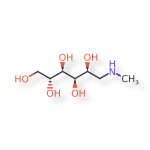
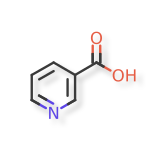
OC(=O)C1=CC=CN=C1.CNC[C@H](O)[C@@H](O)[C@H](O)[C@H](O)CO
InChI
InChIKey=JTSMZNJRRZKHNI-LJTMIZJLSA-N
InChI=1S/C7H17NO5.C6H5NO2/c1-8-2-4(10)6(12)7(13)5(11)3-9;8-6(9)5-2-1-3-7-4-5/h4-13H,2-3H2,1H3;1-4H,(H,8,9)/t4-,5+,6+,7+;/m0./s1
| Molecular Formula | C6H5NO2 |
| Molecular Weight | 123.1094 |
| Charge | 0 |
| Count |
|
| Stereochemistry | ACHIRAL |
| Additional Stereochemistry | No |
| Defined Stereocenters | 0 / 0 |
| E/Z Centers | 0 |
| Optical Activity | NONE |
| Molecular Formula | C7H17NO5 |
| Molecular Weight | 195.2136 |
| Charge | 0 |
| Count |
|
| Stereochemistry | ABSOLUTE |
| Additional Stereochemistry | No |
| Defined Stereocenters | 4 / 4 |
| E/Z Centers | 0 |
| Optical Activity | UNSPECIFIED |
DescriptionCurator's Comment: description was created based on several sources, including
http://reference.medscape.com/drug/vitamin-b3-niacor-niacin-344422
https://www.ncbi.nlm.nih.gov/pubmed/16099840
Curator's Comment: description was created based on several sources, including
http://reference.medscape.com/drug/vitamin-b3-niacor-niacin-344422
https://www.ncbi.nlm.nih.gov/pubmed/16099840
Niacin (also known as vitamin B3 and nicotinic acid) is bio converted to nicotinamide which is further converted to nicotinamide adenine dinucleotide (NAD+) and the hydride equivalent (NADH) which are coenzymes necessary for tissue metabolism, lipid metabolism, and glycogenolysis. Niacin (but not nicotinamide) in gram doses reduces LDL-C, Apo B, Lp(a), TG, and TC, and increases HDL-C. The increase in HDL-C is associated with an increase in apolipoprotein A-I (Apo A-I) and a shift in the distribution of HDL subfractions. These shifts include an increase in the HDL2:HDL3 ratio, and an elevation in lipoprotein A-I (Lp A-I, an HDL-C particle containing only Apo A-I). The mechanism by which niacin alters lipid profiles is not completely understood and may involve several actions, including partial inhibition of release of free fatty acids from adipose tissue, and increased lipoprotein lipase activity (which may increase the rate of chylomicron triglyceride removal from plasma). Niacin decreases the rate of hepatic synthesis of VLDL-C and LDL-C, and does not appear to affect fecal excretion of fats, sterols, or bile acids. As an adjunct to diet, the efficacy of niacin and lovastatin in improving lipid profiles (either individually, or in combination with each other, or niacin in combination with other statins) for the treatment of dyslipidemia has been well documented. The effect of combined therapy with niacin and lovastatin on cardiovascular morbidity and mortality has not been determined. In addition, preliminary reports suggest that niacin causes favorable LDL particle size transformations, although the clinical relevance of this effect is not yet clear. April 15, 2016: Based on several large cardiovascular outcome trials including AIM-HIGH, ACCORD, and HPS2-THRIVE, the FDA decided that "scientific evidence no longer supports the conclusion that a drug-induced reduction in triglyceride levels and/or increase in HDL-cholesterol levels in statin-treated patients results in a reduction in the risk of cardiovascular events" Consistent with this conclusion, the FDA has determined that the benefits of niacin ER tablets for coadministration with statins no longer outweigh the risks, and the approval for this indication should be withdrawn.
CNS Activity
Curator's Comment: Niacin penetration into CSF and the extracellular space of brain from plasma as well as regulation of entry into brain cells by a saturable accumulation system are two distinct parts of the homeostatic system. In vivo, niacin that enters the central nervous system is converted to the principal plasma vitamer, niacinamide, in its free or bound forms such as NAD.
Originator
Approval Year
Targets
| Primary Target | Pharmacology | Condition | Potency |
|---|---|---|---|
Target ID: Q8TDS4 Gene ID: 338442.0 Gene Symbol: HCAR2 Target Organism: Homo sapiens (Human) |
|||
Target ID: P49019 Gene ID: 8843.0 Gene Symbol: HCAR3 Target Organism: Homo sapiens (Human) |
|||
Target ID: P06576 Gene ID: 506.0 Gene Symbol: ATP5B Target Organism: Homo sapiens (Human) |
|||
Target ID: CHEMBL4421 |
|||
Target ID: CHEMBL3785 |
|||
Target ID: GO:0032310 |
|||
Target ID: GO:0070527 |
Conditions
| Condition | Modality | Targets | Highest Phase | Product |
|---|---|---|---|---|
| Preventing | NIASPAN Approved UseTo reduce the risk of recurrent nonfatal myocardial infarction in patients with a history of myocardial infarction and hyperlipidemia. Launch Date1997 |
|||
| Palliative | NIASPAN Approved UseIn combination with a bile acid binding resin slows progression or promotes regression of atherosclerotic disease in patients with a history of coronary artery disease (CAD) and hyperlipidemia. Launch Date1997 |
|||
| Primary | NIASPAN Approved UseNIASPAN contains extended-release niacin (nicotinic acid), and is indicated to reduce elevated TC, LDL-C, Apo B and TG, and to increase HDL-C in patients with primary hyperlipidemia and mixed dyslipidemia. Launch Date1997 |
Cmax
| Value | Dose | Co-administered | Analyte | Population |
|---|---|---|---|---|
5.39 μg/mL EXPERIMENT https://pubmed.ncbi.nlm.nih.gov/17463214/ |
2000 mg single, oral dose: 2000 mg route of administration: Oral experiment type: SINGLE co-administered: |
NIACIN plasma | Homo sapiens population: HEALTHY age: ADULT sex: MALE food status: FASTED |
AUC
| Value | Dose | Co-administered | Analyte | Population |
|---|---|---|---|---|
1150 μg × min/mL EXPERIMENT https://pubmed.ncbi.nlm.nih.gov/17463214/ |
2000 mg single, oral dose: 2000 mg route of administration: Oral experiment type: SINGLE co-administered: |
NIACIN plasma | Homo sapiens population: HEALTHY age: ADULT sex: MALE food status: FASTED |
T1/2
| Value | Dose | Co-administered | Analyte | Population |
|---|---|---|---|---|
30 min EXPERIMENT https://pubmed.ncbi.nlm.nih.gov/17463214/ |
2000 mg single, oral dose: 2000 mg route of administration: Oral experiment type: SINGLE co-administered: |
NIACIN plasma | Homo sapiens population: HEALTHY age: ADULT sex: MALE food status: FASTED |
Overview
| CYP3A4 | CYP2C9 | CYP2D6 | hERG |
|---|---|---|---|
OverviewOther
| Other Inhibitor | Other Substrate | Other Inducer |
|---|---|---|
Drug as perpetrator
| Target | Modality | Activity | Metabolite | Clinical evidence |
|---|---|---|---|---|
Page: 3.0 |
yes [Ki 114 uM] | |||
Page: 3.0 |
yes [Ki 19 uM] | |||
Page: 3.0 |
yes [Ki 237 uM] | |||
Page: 3.0 |
yes [Ki 44 uM] | |||
Page: 3.0 |
yes [Ki 541 uM] |
Drug as victim
| Target | Modality | Activity | Metabolite | Clinical evidence |
|---|---|---|---|---|
| no | ||||
| no | ||||
| no | ||||
| no | ||||
| no | ||||
| no | ||||
| no | ||||
| no | ||||
| no | ||||
| yes |
PubMed
| Title | Date | PubMed |
|---|---|---|
| Structural investigation of the biosynthesis of alternative lower ligands for cobamides by nicotinate mononucleotide: 5,6-dimethylbenzimidazole phosphoribosyltransferase from Salmonella enterica. | 2001-10-05 |
|
| An animal model of nicotinic-acid-induced vasodilation: effect of haloperidol, caffeine and nicotine upon nicotinic acid response. | 2001-07-01 |
|
| H+-ATPase-mediated cytoplasmic pH-responses associated with elevation of cytoplasmic calcium in cultured rabbit nonpigmented ciliary epithelium. | 2001-07-01 |
|
| Use of vitamin supplements and cataract: the Blue Mountains Eye Study. | 2001-07 |
|
| Use of nicotinic acid in the management of recurrent hypoglycemic episodes in diabetes. | 2001-07 |
|
| Complex intracellular messenger pathways regulate one type of neuronal alpha-bungarotoxin-resistant nicotinic acetylcholine receptors expressed in insect neurosecretory cells (dorsal unpaired median neurons). | 2001-07 |
|
| Neural regulation of in vitro giant contractions in the rat colon. | 2001-07 |
|
| Role of calcium channels in the spinal transmission of nociceptive information from the mesentery. | 2001-07 |
|
| Parathyroid cells express dihydropyridine-sensitive cation currents and L-type calcium channel subunits. | 2001-07 |
|
| Hypoxia-induced upregulation of eNOS gene expression is redox-sensitive: a comparison between hypoxia and inhibitors of cell metabolism. | 2001-07 |
|
| Voltage-activated Ca2+ channels and ionotropic GABA receptors localized at axon terminals of mammalian retinal bipolar cells. | 2001-06-22 |
|
| Determination of niacin in infant formula by solid-phase extraction and anion-exchange liquid chromatography. | 2001-06-22 |
|
| Hormonal regulation of the human ghrelin receptor gene transcription. | 2001-06-15 |
|
| 5-Hydroxytryptamine stimulates net Ca2+ flux in the ventricular muscle of a mollusc (Busycon canaliculatum) during cardioexcitation. | 2001-06 |
|
| Does the condition of the mouth and teeth affect the ability to eat certain foods, nutrient and dietary intake and nutritional status amongst older people? | 2001-06 |
|
| [Energy and nutrient intake in compulsory high school students]. | 2001-06 |
|
| Adsorption and degradation of thiazopyr in compost-amended and non-amended soils. | 2001-06 |
|
| Randomized clinical trials and recent patterns in the use of statins. | 2001-06 |
|
| Choice of lipid-regulating drugs. | 2001-05-28 |
|
| Angiotensin II priming of aldosterone secretion with agents that enhance Ca(2+) influx. | 2001-05-25 |
|
| Niacin in patients with diabetes mellitus and coronary artery disease. | 2001-05-01 |
|
| Calcium buffering of resting, voltage-dependent Ca2+ influx by sarcoplasmic reticulum in femoral arteries from spontaneously hypertensive rats at prehypertensive stage. | 2001-05 |
|
| Determination by capillary electrophoresis of total and available niacin in different development stage of raw and processed legumes: comparison with high-performance liquid chromatography. | 2001-05 |
|
| The application of capillary electrophoresis to the analysis of vitamins in food and beverages. | 2001-05 |
|
| Determination of additives in food by capillary electrophoresis. | 2001-05 |
|
| Vitamin and mineral supplement use by healthy teenagers in Korea: motivating factors and dietary consequences. | 2001-05 |
|
| Contents of vitamins, mineral elements, and some phenolic compounds in cultivated mushrooms. | 2001-05 |
|
| (C-rac-5,5,7,12,12,14-Hexamethyl-1,4,8,11-tetraazacyclotetradecane-kappa4N)(nicotinato-O,O')nickel(II) perchlorate. | 2001-05 |
|
| Poor adherence with hypolipidemic drugs: a lost opportunity. | 2001-05 |
|
| New recommendations from the 1999 American College of Cardiology/American Heart Association acute myocardial infarction guidelines. | 2001-05 |
|
| The bio operon on the acquired symbiosis island of Mesorhizobium sp. strain R7A includes a novel gene involved in pimeloyl-CoA synthesis. | 2001-05 |
|
| Ion interaction reagent reversed-phase high-performance liquid chromatography determination of anti-tuberculosis drugs and metabolites in biological fluids. | 2001-04-25 |
|
| Pharmacology of H 394/84, a dihydropyridine neuropeptide Y Y(1) receptor antagonist, in vivo. | 2001-04-20 |
|
| A new niacin. Vitamin with an HDL kick. | 2001-04-16 |
|
| [Cardiology 2000]. | 2001-04-12 |
|
| Lack of association between schizophrenia and the phospholipase-A(2) genes cPLA2 and sPLA2. | 2001-04-08 |
|
| Homocysteine elevation with fibrates: is it a class effect? | 2001-04 |
|
| Do breastfed infants need supplemental vitamins? | 2001-04 |
|
| Utility of PCR assays for rapid diagnosis of BCG infection in children. | 2001-04 |
|
| L-type calcium currents in atrial myocytes from patients with persistent and non-persistent atrial fibrillation. | 2001-04 |
|
| Adsorption of imidazolinone herbicides on ferrihydrite-humic acid associations. | 2001-03 |
|
| Interaction of imidazolinone herbicides with soil humic acids. Experimental results and molecular modeling. | 2001-03 |
|
| Relationships between dietary intake and cognitive function level in Korean elderly people. | 2001-03 |
|
| [Nicotinic acid and the derivative]. | 2001-03 |
|
| [Drug combination therapies for patients with hyperlipidemia and its significance]. | 2001-03 |
|
| Lipids and atherosclerosis: clinical management of hypercholesterolaemia. | 2001-03 |
|
| Nutritional status of vitamin A, E, C, B1, B2, B6, nicotinic acid, B12, folate, and beta-carotene in young women. | 2001-02 |
|
| The relationship among dental status, nutrient intake, and nutritional status in older people. | 2001-02 |
|
| Advancing our knowledge in biochemistry, genetics, and microbiology through studies on tryptophan metabolism. | 2001 |
|
| Biliary lipid composition during treatment with different hypolipidaemic drugs. | 1979-06 |
Patents
Sample Use Guides
Patients not currently on NIASPAN must start ADVICOR at the lowest initial ADVICOR dose, a single 500 mg/20 mg tablet once daily at bedtime. The dose of ADVICOR should not be increased by more than 500 mg daily (based on the NIASPAN component) every 4 weeks. The dose of ADVICOR should be individualized based on targeted goals for cholesterol and triglycerides, and on patient response. Doses of ADVICOR greater than 2000 mg/40 mg daily are not
recommended.
Route of Administration:
Oral
HepG2 cells were preincubated for 48 hours with varying concentrations of niacin (0 to 3.0 mmol/L) in DMEM containing 10% FBS media. Incubation of HepG2 cells with niacin significantly inhibited (by 12% to 15%) fatty acid esterification to produce TG as assessed by the incorporation of 3H-oleic acid into TG. 14C-acetate incorporation into cholesterol and phospholipids was unchanged. The activity of microsomal triglyceride transfer protein MTP), a carrier protein for lipids, was not altered by pretreatment of cells with niacin.
| Substance Class |
Chemical
Created
by
admin
on
Edited
Mon Mar 31 21:28:21 GMT 2025
by
admin
on
Mon Mar 31 21:28:21 GMT 2025
|
| Record UNII |
Q63V3NXS4D
|
| Record Status |
Validated (UNII)
|
| Record Version |
|
-
Download
| Name | Type | Language | ||
|---|---|---|---|---|
|
Common Name | English | ||
|
Preferred Name | English | ||
|
Common Name | English | ||
|
Common Name | English | ||
|
Common Name | English | ||
|
Systematic Name | English |
| Code System | Code | Type | Description | ||
|---|---|---|---|---|---|
|
71652153
Created by
admin on Mon Mar 31 21:28:21 GMT 2025 , Edited by admin on Mon Mar 31 21:28:21 GMT 2025
|
PRIMARY | |||
|
Q63V3NXS4D
Created by
admin on Mon Mar 31 21:28:21 GMT 2025 , Edited by admin on Mon Mar 31 21:28:21 GMT 2025
|
PRIMARY | |||
|
17162-31-1
Created by
admin on Mon Mar 31 21:28:21 GMT 2025 , Edited by admin on Mon Mar 31 21:28:21 GMT 2025
|
PRIMARY | |||
|
DTXSID20169143
Created by
admin on Mon Mar 31 21:28:21 GMT 2025 , Edited by admin on Mon Mar 31 21:28:21 GMT 2025
|
PRIMARY |
| Related Record | Type | Details | ||
|---|---|---|---|---|
|
|
PARENT -> SALT/SOLVATE | |||
|
|
PARENT -> SALT/SOLVATE |
| Related Record | Type | Details | ||
|---|---|---|---|---|
|
|
ACTIVE MOIETY |