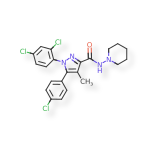
Details
| Stereochemistry | ACHIRAL |
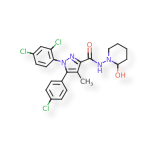
| Molecular Formula | C22H21Cl3N4O |
| Molecular Weight | 463.787 |
| Optical Activity | NONE |
| Defined Stereocenters | 0 / 0 |
| E/Z Centers | 0 |
| Charge | 0 |
SHOW SMILES / InChI
SMILES
CC1=C(N(N=C1C(=O)NN2CCCCC2)C3=CC=C(Cl)C=C3Cl)C4=CC=C(Cl)C=C4
InChI
InChIKey=JZCPYUJPEARBJL-UHFFFAOYSA-N
InChI=1S/C22H21Cl3N4O/c1-14-20(22(30)27-28-11-3-2-4-12-28)26-29(19-10-9-17(24)13-18(19)25)21(14)15-5-7-16(23)8-6-15/h5-10,13H,2-4,11-12H2,1H3,(H,27,30)
| Molecular Formula | C22H21Cl3N4O |
| Molecular Weight | 463.787 |
| Charge | 0 |
| Count |
|
| Stereochemistry | ACHIRAL |
| Additional Stereochemistry | No |
| Defined Stereocenters | 0 / 0 |
| E/Z Centers | 0 |
| Optical Activity | NONE |
DescriptionCurator's Comment: description was created based on several sources, including
https://www.ncbi.nlm.nih.gov/pubmed/21334892 | https://www.ncbi.nlm.nih.gov/pubmed/18712856 | https://www.ncbi.nlm.nih.gov/pubmed/21951309 | https://clinicaltrials.gov/ct2/show/record/NCT00228176 | https://clinicaltrials.gov/ct2/show/NCT00584389 | https://clinicaltrials.gov/ct2/show/NCT00576667 | https://www.ncbi.nlm.nih.gov/pubmed/7776817 | https://www.ncbi.nlm.nih.gov/pubmed/28315677
Curator's Comment: description was created based on several sources, including
https://www.ncbi.nlm.nih.gov/pubmed/21334892 | https://www.ncbi.nlm.nih.gov/pubmed/18712856 | https://www.ncbi.nlm.nih.gov/pubmed/21951309 | https://clinicaltrials.gov/ct2/show/record/NCT00228176 | https://clinicaltrials.gov/ct2/show/NCT00584389 | https://clinicaltrials.gov/ct2/show/NCT00576667 | https://www.ncbi.nlm.nih.gov/pubmed/7776817 | https://www.ncbi.nlm.nih.gov/pubmed/28315677
Rimonabant (also known as SR141716; trade names Acomplia, Zimulti) was an anorectic antiobesity drug that was first approved in Europe in 2006 but was withdrawn worldwide in 2008 due to serious psychiatric side effects. Rimonabant is an inverse agonist for the cannabinoid receptor CB1 and was the first drug approved in that class. There is considerable evidence that the endocannabinoid (endogenous cannabinoid) system plays a significant role in appetitive drive and associated behaviors. It is, therefore, reasonable to hypothesize that the attenuation of the activity of this system would have therapeutic benefit in treating disorders that might have a component of excess appetitive drive or over-activity of the endocannabinoid system, such as obesity, ethanol and other drug abuse, and a variety of central nervous system and other disorders. Data from clinical trials submitted to regulatory authorities showed that rimonabant caused depressive disorders or mood alterations in up to 10% of subjects and suicidal ideation in around 1%, and in Europe, it was contraindicated for people with any psychiatric disorder, including depressed or suicidal people. Additionally, nausea and upper respiratory tract infections were very common (occurring in more than 10% of people) adverse effects; common adverse effects (occurring in between 1% and 10% of people) included gastroenteritis, anxiety, irritability, insomnia and other sleep disorders, hot flushes, diarrhea, vomiting, dry or itchy skin, tendonitis, muscle cramps and spasms, fatigue, flu-like symptoms, and increased risk of falling.
CNS Activity
Originator
Approval Year
Targets
| Primary Target | Pharmacology | Condition | Potency |
|---|---|---|---|
Target ID: CHEMBL218 |
11.22 nM [IC50] | ||
Target ID: CHEMBL253 |
1939.8 nM [IC50] |
Conditions
| Condition | Modality | Targets | Highest Phase | Product |
|---|---|---|---|---|
| Primary | Zimulti Approved UseUnknown |
|||
| Primary | Zimulti Approved UseUnknown |
|||
| Primary | Zimulti Approved UseUnknown |
Cmax
| Value | Dose | Co-administered | Analyte | Population |
|---|---|---|---|---|
57.9 ng/mL |
3 mg 1 times / day steady-state, oral dose: 3 mg route of administration: Oral experiment type: STEADY-STATE co-administered: |
RIMONABANT plasma | Homo sapiens population: HEALTHY age: ADULT sex: MALE food status: UNKNOWN |
|
118 ng/mL |
10 mg 1 times / day steady-state, oral dose: 10 mg route of administration: Oral experiment type: STEADY-STATE co-administered: |
RIMONABANT plasma | Homo sapiens population: HEALTHY age: ADULT sex: MALE food status: UNKNOWN |
|
196 ng/mL |
20 mg 1 times / day steady-state, oral dose: 20 mg route of administration: Oral experiment type: STEADY-STATE co-administered: |
RIMONABANT plasma | Homo sapiens population: HEALTHY age: ADULT sex: MALE food status: UNKNOWN |
|
326 ng/mL |
40 mg 1 times / day steady-state, oral dose: 40 mg route of administration: Oral experiment type: STEADY-STATE co-administered: |
RIMONABANT plasma | Homo sapiens population: HEALTHY age: ADULT sex: MALE food status: UNKNOWN |
|
416 ng/mL |
60 mg 1 times / day steady-state, oral dose: 60 mg route of administration: Oral experiment type: STEADY-STATE co-administered: |
RIMONABANT plasma | Homo sapiens population: HEALTHY age: ADULT sex: MALE food status: UNKNOWN |
|
188 ng/mL |
20 mg 1 times / day steady-state, oral dose: 20 mg route of administration: Oral experiment type: STEADY-STATE co-administered: |
RIMONABANT plasma | Homo sapiens population: UNHEALTHY age: ADULT sex: FEMALE / MALE food status: UNKNOWN |
|
28.1 ng/mL |
20 mg 1 times / day steady-state, oral dose: 20 mg route of administration: Oral experiment type: STEADY-STATE co-administered: |
RIMONABANT plasma | Homo sapiens population: HEALTHY age: ADULT sex: UNKNOWN food status: FASTED |
AUC
| Value | Dose | Co-administered | Analyte | Population |
|---|---|---|---|---|
665 ng × h/mL |
3 mg 1 times / day steady-state, oral dose: 3 mg route of administration: Oral experiment type: STEADY-STATE co-administered: |
RIMONABANT plasma | Homo sapiens population: HEALTHY age: ADULT sex: MALE food status: UNKNOWN |
|
1480 ng × h/mL |
10 mg 1 times / day steady-state, oral dose: 10 mg route of administration: Oral experiment type: STEADY-STATE co-administered: |
RIMONABANT plasma | Homo sapiens population: HEALTHY age: ADULT sex: MALE food status: UNKNOWN |
|
2960 ng × h/mL |
20 mg 1 times / day steady-state, oral dose: 20 mg route of administration: Oral experiment type: STEADY-STATE co-administered: |
RIMONABANT plasma | Homo sapiens population: HEALTHY age: ADULT sex: MALE food status: UNKNOWN |
|
4830 ng × h/mL |
40 mg 1 times / day steady-state, oral dose: 40 mg route of administration: Oral experiment type: STEADY-STATE co-administered: |
RIMONABANT plasma | Homo sapiens population: HEALTHY age: ADULT sex: MALE food status: UNKNOWN |
|
6760 ng × h/mL |
60 mg 1 times / day steady-state, oral dose: 60 mg route of administration: Oral experiment type: STEADY-STATE co-administered: |
RIMONABANT plasma | Homo sapiens population: HEALTHY age: ADULT sex: MALE food status: UNKNOWN |
|
2480 ng × h/mL |
20 mg 1 times / day steady-state, oral dose: 20 mg route of administration: Oral experiment type: STEADY-STATE co-administered: |
RIMONABANT plasma | Homo sapiens population: UNHEALTHY age: ADULT sex: FEMALE / MALE food status: UNKNOWN |
|
2959.98 ng × h/mL |
20 mg 1 times / day steady-state, oral dose: 20 mg route of administration: Oral experiment type: STEADY-STATE co-administered: |
RIMONABANT plasma | Homo sapiens population: HEALTHY age: ADULT sex: UNKNOWN food status: FASTED |
T1/2
| Value | Dose | Co-administered | Analyte | Population |
|---|---|---|---|---|
210 h |
3 mg 1 times / day steady-state, oral dose: 3 mg route of administration: Oral experiment type: STEADY-STATE co-administered: |
RIMONABANT plasma | Homo sapiens population: HEALTHY age: ADULT sex: MALE food status: UNKNOWN |
|
180 h |
10 mg 1 times / day steady-state, oral dose: 10 mg route of administration: Oral experiment type: STEADY-STATE co-administered: |
RIMONABANT plasma | Homo sapiens population: HEALTHY age: ADULT sex: MALE food status: UNKNOWN |
|
216 h |
20 mg 1 times / day steady-state, oral dose: 20 mg route of administration: Oral experiment type: STEADY-STATE co-administered: |
RIMONABANT plasma | Homo sapiens population: HEALTHY age: ADULT sex: MALE food status: UNKNOWN |
|
193 h |
40 mg 1 times / day steady-state, oral dose: 40 mg route of administration: Oral experiment type: STEADY-STATE co-administered: |
RIMONABANT plasma | Homo sapiens population: HEALTHY age: ADULT sex: MALE food status: UNKNOWN |
|
151 h |
60 mg 1 times / day steady-state, oral dose: 60 mg route of administration: Oral experiment type: STEADY-STATE co-administered: |
RIMONABANT plasma | Homo sapiens population: HEALTHY age: ADULT sex: MALE food status: UNKNOWN |
|
376 h |
20 mg 1 times / day steady-state, oral dose: 20 mg route of administration: Oral experiment type: STEADY-STATE co-administered: |
RIMONABANT plasma | Homo sapiens population: UNHEALTHY age: ADULT sex: FEMALE / MALE food status: UNKNOWN |
|
9 day |
20 mg 1 times / day steady-state, oral dose: 20 mg route of administration: Oral experiment type: STEADY-STATE co-administered: |
RIMONABANT plasma | Homo sapiens population: HEALTHY age: ADULT sex: UNKNOWN food status: FASTED |
Funbound
| Value | Dose | Co-administered | Analyte | Population |
|---|---|---|---|---|
0.1% |
20 mg 1 times / day steady-state, oral dose: 20 mg route of administration: Oral experiment type: STEADY-STATE co-administered: |
RIMONABANT plasma | Homo sapiens population: HEALTHY age: ADULT sex: UNKNOWN food status: FASTED |
Doses
| Dose | Population | Adverse events |
|---|---|---|
20 mg 1 times / day multiple, oral Recommended Dose: 20 mg, 1 times / day Route: oral Route: multiple Dose: 20 mg, 1 times / day Sources: |
unhealthy, ADULT Health Status: unhealthy Age Group: ADULT Sex: M+F Food Status: UNKNOWN Sources: |
Disc. AE: Depressed mood disorders and disturbances, Anxiety... AEs leading to discontinuation/dose reduction: Depressed mood disorders and disturbances (3%) Sources: Anxiety (0.6%) Headache (0.6%) Dizziness (0.9%) Paraesthesia (0.6%) Nausea (1.5%) Vomiting (0.6%) Chest pain (0.6%) Asthenia (0.3%) Fatigue (0.3%) |
20 mg 1 times / day multiple, oral Recommended Dose: 20 mg, 1 times / day Route: oral Route: multiple Dose: 20 mg, 1 times / day Sources: |
unhealthy, ADULT Health Status: unhealthy Age Group: ADULT Sex: M+F Food Status: UNKNOWN Sources: |
Disc. AE: Psychiatric and behavioural symptoms NEC, Depressed mood... AEs leading to discontinuation/dose reduction: Psychiatric and behavioural symptoms NEC (5.1%) Sources: Depressed mood (2.2%) Nervous system disorder (3.6%) Paresthesia (2.2%) Dizziness (1.4%) Hyposmia (1.4%) Gastrointestinal disorder (2.9%) Anorexia (1.4%) |
AEs
| AE | Significance | Dose | Population |
|---|---|---|---|
| Asthenia | 0.3% Disc. AE |
20 mg 1 times / day multiple, oral Recommended Dose: 20 mg, 1 times / day Route: oral Route: multiple Dose: 20 mg, 1 times / day Sources: |
unhealthy, ADULT Health Status: unhealthy Age Group: ADULT Sex: M+F Food Status: UNKNOWN Sources: |
| Fatigue | 0.3% Disc. AE |
20 mg 1 times / day multiple, oral Recommended Dose: 20 mg, 1 times / day Route: oral Route: multiple Dose: 20 mg, 1 times / day Sources: |
unhealthy, ADULT Health Status: unhealthy Age Group: ADULT Sex: M+F Food Status: UNKNOWN Sources: |
| Anxiety | 0.6% Disc. AE |
20 mg 1 times / day multiple, oral Recommended Dose: 20 mg, 1 times / day Route: oral Route: multiple Dose: 20 mg, 1 times / day Sources: |
unhealthy, ADULT Health Status: unhealthy Age Group: ADULT Sex: M+F Food Status: UNKNOWN Sources: |
| Chest pain | 0.6% Disc. AE |
20 mg 1 times / day multiple, oral Recommended Dose: 20 mg, 1 times / day Route: oral Route: multiple Dose: 20 mg, 1 times / day Sources: |
unhealthy, ADULT Health Status: unhealthy Age Group: ADULT Sex: M+F Food Status: UNKNOWN Sources: |
| Headache | 0.6% Disc. AE |
20 mg 1 times / day multiple, oral Recommended Dose: 20 mg, 1 times / day Route: oral Route: multiple Dose: 20 mg, 1 times / day Sources: |
unhealthy, ADULT Health Status: unhealthy Age Group: ADULT Sex: M+F Food Status: UNKNOWN Sources: |
| Paraesthesia | 0.6% Disc. AE |
20 mg 1 times / day multiple, oral Recommended Dose: 20 mg, 1 times / day Route: oral Route: multiple Dose: 20 mg, 1 times / day Sources: |
unhealthy, ADULT Health Status: unhealthy Age Group: ADULT Sex: M+F Food Status: UNKNOWN Sources: |
| Vomiting | 0.6% Disc. AE |
20 mg 1 times / day multiple, oral Recommended Dose: 20 mg, 1 times / day Route: oral Route: multiple Dose: 20 mg, 1 times / day Sources: |
unhealthy, ADULT Health Status: unhealthy Age Group: ADULT Sex: M+F Food Status: UNKNOWN Sources: |
| Dizziness | 0.9% Disc. AE |
20 mg 1 times / day multiple, oral Recommended Dose: 20 mg, 1 times / day Route: oral Route: multiple Dose: 20 mg, 1 times / day Sources: |
unhealthy, ADULT Health Status: unhealthy Age Group: ADULT Sex: M+F Food Status: UNKNOWN Sources: |
| Nausea | 1.5% Disc. AE |
20 mg 1 times / day multiple, oral Recommended Dose: 20 mg, 1 times / day Route: oral Route: multiple Dose: 20 mg, 1 times / day Sources: |
unhealthy, ADULT Health Status: unhealthy Age Group: ADULT Sex: M+F Food Status: UNKNOWN Sources: |
| Depressed mood disorders and disturbances | 3% Disc. AE |
20 mg 1 times / day multiple, oral Recommended Dose: 20 mg, 1 times / day Route: oral Route: multiple Dose: 20 mg, 1 times / day Sources: |
unhealthy, ADULT Health Status: unhealthy Age Group: ADULT Sex: M+F Food Status: UNKNOWN Sources: |
| Anorexia | 1.4% Disc. AE |
20 mg 1 times / day multiple, oral Recommended Dose: 20 mg, 1 times / day Route: oral Route: multiple Dose: 20 mg, 1 times / day Sources: |
unhealthy, ADULT Health Status: unhealthy Age Group: ADULT Sex: M+F Food Status: UNKNOWN Sources: |
| Dizziness | 1.4% Disc. AE |
20 mg 1 times / day multiple, oral Recommended Dose: 20 mg, 1 times / day Route: oral Route: multiple Dose: 20 mg, 1 times / day Sources: |
unhealthy, ADULT Health Status: unhealthy Age Group: ADULT Sex: M+F Food Status: UNKNOWN Sources: |
| Hyposmia | 1.4% Disc. AE |
20 mg 1 times / day multiple, oral Recommended Dose: 20 mg, 1 times / day Route: oral Route: multiple Dose: 20 mg, 1 times / day Sources: |
unhealthy, ADULT Health Status: unhealthy Age Group: ADULT Sex: M+F Food Status: UNKNOWN Sources: |
| Depressed mood | 2.2% Disc. AE |
20 mg 1 times / day multiple, oral Recommended Dose: 20 mg, 1 times / day Route: oral Route: multiple Dose: 20 mg, 1 times / day Sources: |
unhealthy, ADULT Health Status: unhealthy Age Group: ADULT Sex: M+F Food Status: UNKNOWN Sources: |
| Paresthesia | 2.2% Disc. AE |
20 mg 1 times / day multiple, oral Recommended Dose: 20 mg, 1 times / day Route: oral Route: multiple Dose: 20 mg, 1 times / day Sources: |
unhealthy, ADULT Health Status: unhealthy Age Group: ADULT Sex: M+F Food Status: UNKNOWN Sources: |
| Gastrointestinal disorder | 2.9% Disc. AE |
20 mg 1 times / day multiple, oral Recommended Dose: 20 mg, 1 times / day Route: oral Route: multiple Dose: 20 mg, 1 times / day Sources: |
unhealthy, ADULT Health Status: unhealthy Age Group: ADULT Sex: M+F Food Status: UNKNOWN Sources: |
| Nervous system disorder | 3.6% Disc. AE |
20 mg 1 times / day multiple, oral Recommended Dose: 20 mg, 1 times / day Route: oral Route: multiple Dose: 20 mg, 1 times / day Sources: |
unhealthy, ADULT Health Status: unhealthy Age Group: ADULT Sex: M+F Food Status: UNKNOWN Sources: |
| Psychiatric and behavioural symptoms NEC | 5.1% Disc. AE |
20 mg 1 times / day multiple, oral Recommended Dose: 20 mg, 1 times / day Route: oral Route: multiple Dose: 20 mg, 1 times / day Sources: |
unhealthy, ADULT Health Status: unhealthy Age Group: ADULT Sex: M+F Food Status: UNKNOWN Sources: |
Overview
| CYP3A4 | CYP2C9 | CYP2D6 | hERG |
|---|---|---|---|
OverviewOther
| Other Inhibitor | Other Substrate | Other Inducer |
|---|---|---|
Drug as perpetrator
| Target | Modality | Activity | Metabolite | Clinical evidence |
|---|---|---|---|---|
| no [IC50 >0.02 uM] | ||||
| no [IC50 >0.02 uM] | ||||
| no [IC50 >133 uM] | ||||
| no [IC50 >133 uM] | ||||
| no [IC50 >133 uM] | ||||
| no | ||||
| no | ||||
| no | ||||
| no | ||||
| no | ||||
| no | ||||
| no | ||||
| yes [IC50 0.0053 uM] | no (co-administration study) Comment: No effect of rimonabant (40 mg o.d. for 8 days and 6 days continued after warfarin administration) on the pharmacokinetics of warfarin (30 mg single dose), a narrow therapeutic index drug and a CYP2C9 substrate, was observed. Page: 13.0 |
|||
| yes [IC50 <10 uM] | ||||
| yes [Ki 1.4 uM] |
Drug as victim
| Target | Modality | Activity | Metabolite | Clinical evidence |
|---|---|---|---|---|
| major | yes (co-administration study) Comment: Seven days of treatment with a daily oral dose of 200 mg ketoconazole increased Cmax, AUC0-24h, and AUCinf of rimonabant by 1.42 (90% C.I.: 1.18, 1.70), 1.55 (90% C.I.: 1.43, 1.68), and 2.04 (90% C.I.: 1.89, 2.23)-fold, respectively. Page: 12 | 13 |
|||
| no | ||||
| no | ||||
| no | ||||
| no |
Tox targets
| Target | Modality | Activity | Metabolite | Clinical evidence |
|---|---|---|---|---|
PubMed
| Title | Date | PubMed |
|---|---|---|
| Inhibition of rat C6 glioma cell proliferation by endogenous and synthetic cannabinoids. Relative involvement of cannabinoid and vanilloid receptors. | 2001-12 |
|
| Control by the endogenous cannabinoid system of ras oncogene-dependent tumor growth. | 2001-12 |
|
| Cannabinoid CB(1) receptor expression, activation and detection of endogenous ligand in trabecular meshwork and ciliary process tissues. | 2001-11-23 |
|
| Rapid tolerance to Delta(9)-tetrahydrocannabinol and cross-tolerance between ethanol and Delta(9)-tetrahydrocannabinol in mice. | 2001-11-16 |
|
| The cannabinoid receptor antagonist SR 141716 prevents acquisition of drinking behavior in alcohol-preferring rats. | 2001-11-02 |
|
| Effects of cannabinoids on adrenaline release from adrenal medullary cells. | 2001-11 |
|
| Anandamide administration into the ventromedial hypothalamus stimulates appetite in rats. | 2001-11 |
|
| Anandamide-induced relaxation of sheep coronary arteries: the role of the vascular endothelium, arachidonic acid metabolites and potassium channels. | 2001-11 |
|
| Inhibitory effect of palmitoylethanolamide on gastrointestinal motility in mice. | 2001-11 |
|
| The cannabinoid CB1 receptor antagonist SR 141716A reverses the antiemetic and motor depressant actions of WIN 55, 212-2. | 2001-10-26 |
|
| Cannabinoid receptor agonist WIN 55,212-2 inhibits rat cortical dialysate gamma-aminobutyric acid levels. | 2001-10-15 |
|
| Interaction of anandamide with the M(1) and M(4) muscarinic acetylcholine receptors. | 2001-10-05 |
|
| Mechanisms of anandamide-induced vasorelaxation in rat isolated coronary arteries. | 2001-10 |
|
| A cannabinoid mechanism in relapse to cocaine seeking. | 2001-10 |
|
| Cannabinoid activity curtails cocaine craving. | 2001-10 |
|
| Cannabinoid CB1-receptor mediated regulation of gastrointestinal motility in mice in a model of intestinal inflammation. | 2001-10 |
|
| Cannabinoids inhibit nitric oxide production in bone marrow derived feline macrophages. | 2001-10 |
|
| [Antiarrhythmic properties of a cannabinoid (CB) receptor agonist]. | 2001-09-18 |
|
| Neuroprotection by Delta9-tetrahydrocannabinol, the main active compound in marijuana, against ouabain-induced in vivo excitotoxicity. | 2001-09-01 |
|
| SR141716, a CB1 receptor antagonist, decreases the sensitivity to the reinforcing effects of electrical brain stimulation in rats. | 2001-09 |
|
| Effects of CB1 cannabinoid receptor blockade on ethanol preference after chronic ethanol administration. | 2001-09 |
|
| Cannabinoid effects on anxiety-related behaviours and hypothalamic neurotransmitters. | 2001-09 |
|
| Differential effects of anandamide on acetylcholine release in the guinea-pig ileum mediated via vanilloid and non-CB1 cannabinoid receptors. | 2001-09 |
|
| A possible role of lipoxygenase in the activation of vanilloid receptors by anandamide in the guinea-pig bronchus. | 2001-09 |
|
| Effects of chronic Delta(9)-tetrahydrocannabinol treatment on hippocampal extracellular acetylcholine concentration and alternation performance in the T-maze. | 2001-09 |
|
| Cannabinoids attenuate capsaicin-evoked hyperalgesia through spinal and peripheral mechanisms. | 2001-09 |
|
| Opioid and cannabinoid modulation of precipitated withdrawal in delta(9)-tetrahydrocannabinol and morphine-dependent mice. | 2001-09 |
|
| The cannabinoid CB(1) receptor antagonist SR141716A increases norepinephrine outflow in the rat anterior hypothalamus. | 2001-08-31 |
|
| Activation of the CB1 cannabinoid receptor protects cultured mouse spinal neurons against excitotoxicity. | 2001-08-31 |
|
| Modulation of cytokine responses in Corynebacterium parvum-primed endotoxemic mice by centrally administered cannabinoid ligands. | 2001-08-03 |
|
| Inhibition of glioma growth in vivo by selective activation of the CB(2) cannabinoid receptor. | 2001-08-01 |
|
| Intravenous self-administration of the cannabinoid CB1 receptor agonist WIN 55,212-2 in rats. | 2001-08 |
|
| (R)-methanandamide and Delta 9-THC as discriminative stimuli in rats: tests with the cannabinoid antagonist SR-141716 and the endogenous ligand anandamide. | 2001-08 |
|
| The cannabinoid receptor agonist WIN 55,212-2 regulates glutamate transmission in rat cerebral cortex: an in vivo and in vitro study. | 2001-08 |
|
| CB1 receptor mediated analgesia from the Nucleus Reticularis Gigantocellularis pars alpha is activated in an animal model of neuropathic pain. | 2001-07-20 |
|
| Anandamide-induced sleep is blocked by SR141716A, a CB1 receptor antagonist and by U73122, a phospholipase C inhibitor. | 2001-07-20 |
|
| Functional interaction between opioid and cannabinoid receptors in drug self-administration. | 2001-07-15 |
|
| Endogenously produced cannabinoids and liver cirrhosis. | 2001-07-07 |
|
| Hemodynamic effects of cannabinoids: coronary and cerebral vasodilation mediated by cannabinoid CB(1) receptors. | 2001-07-06 |
|
| Comparative characterization in the rat of the interaction between cannabinoids and opiates for their immunosuppressive and analgesic effects. | 2001-07-02 |
|
| Delta 9-tetrahydrocannabinol-induced MAPK/ERK and Elk-1 activation in vivo depends on dopaminergic transmission. | 2001-07 |
|
| Effects of cannabinoids on prefrontal neuronal responses to ventral tegmental area stimulation. | 2001-07 |
|
| Identification of two distinct vasodilator pathways activated by ATP in the mesenteric bed of the rat. | 2001-07 |
|
| Endocannabinoids acting at vascular CB1 receptors mediate the vasodilated state in advanced liver cirrhosis. | 2001-07 |
|
| Cannabinoid receptor agonist and antagonist effects on motor function in normal and 1-methyl-4-phenyl-1,2,5,6-tetrahydropyridine (MPTP)-treated non-human primates. | 2001-06 |
|
| Cannabinoids and pain. | 2001-03 |
|
| Endogenous cannabinoid anandamide increases heart resistance to arrhythmogenic effects of epinephrine: role of CB(1) and CB(2) receptors. | 2001-03 |
|
| Cannabinoid-mediated inhibition of inducible nitric oxide production by rat microglial cells: evidence for CB1 receptor participation. | 2001 |
|
| Novel cannabinoid-sensitive receptor mediates inhibition of glutamatergic synaptic transmission in the hippocampus. | 2001 |
|
| Conditioned place preference induced by the cannabinoid agonist CP 55,940: interaction with the opioid system. | 2001 |
Patents
Sample Use Guides
The 661 W cells were seeded at 3×10³ cells per well in 96-well plates and then incubated for 24 h. The entire medium was then replaced with fresh medium containing 1% fetal bovine serum. Rimonabant (Cayman Chemical, Ann Arbor, MI, USA) at 1–100 nM and trolox (Wako, Osaka, Japan) at 100 nM were added and, 1 h following treatment, the cells were exposed to 2500 lx of white fluorescent light (C-FPS115D; Nikon, Tokyo, Japan) for 24 h at 37 °C. The luminance was measured using a light meter, LM-332 (As One, Osaka, Japan). Nuclear staining assays were performed after an additional 24 h of incubation.
| Substance Class |
Chemical
Created
by
admin
on
Edited
Mon Mar 31 21:32:31 GMT 2025
by
admin
on
Mon Mar 31 21:32:31 GMT 2025
|
| Record UNII |
RML78EN3XE
|
| Record Status |
Validated (UNII)
|
| Record Version |
|
-
Download
| Name | Type | Language | ||
|---|---|---|---|---|
|
Preferred Name | English | ||
|
Official Name | English | ||
|
Common Name | English | ||
|
Common Name | English | ||
|
Common Name | English | ||
|
Common Name | English | ||
|
Common Name | English | ||
|
Common Name | English | ||
|
Code | English | ||
|
Code | English | ||
|
Code | English | ||
|
Code | English | ||
|
Common Name | English |
| Classification Tree | Code System | Code | ||
|---|---|---|---|---|
|
NCI_THESAURUS |
C28197
Created by
admin on Mon Mar 31 21:32:31 GMT 2025 , Edited by admin on Mon Mar 31 21:32:31 GMT 2025
|
||
|
EMA ASSESSMENT REPORTS |
ZIMULTI (WITHDRAWN: OBESITY)
Created by
admin on Mon Mar 31 21:32:31 GMT 2025 , Edited by admin on Mon Mar 31 21:32:31 GMT 2025
|
||
|
EMA ASSESSMENT REPORTS |
ACOMPLIA (WITHDRAWN: OBESITY)
Created by
admin on Mon Mar 31 21:32:31 GMT 2025 , Edited by admin on Mon Mar 31 21:32:31 GMT 2025
|
||
|
WHO-VATC |
QA08AX01
Created by
admin on Mon Mar 31 21:32:31 GMT 2025 , Edited by admin on Mon Mar 31 21:32:31 GMT 2025
|
||
|
WHO-ATC |
A08AX01
Created by
admin on Mon Mar 31 21:32:31 GMT 2025 , Edited by admin on Mon Mar 31 21:32:31 GMT 2025
|
| Code System | Code | Type | Description | ||
|---|---|---|---|---|---|
|
8029
Created by
admin on Mon Mar 31 21:32:31 GMT 2025 , Edited by admin on Mon Mar 31 21:32:31 GMT 2025
|
PRIMARY | |||
|
C089032
Created by
admin on Mon Mar 31 21:32:31 GMT 2025 , Edited by admin on Mon Mar 31 21:32:31 GMT 2025
|
PRIMARY | |||
|
RIMONABANT
Created by
admin on Mon Mar 31 21:32:31 GMT 2025 , Edited by admin on Mon Mar 31 21:32:31 GMT 2025
|
PRIMARY | |||
|
SUB21719
Created by
admin on Mon Mar 31 21:32:31 GMT 2025 , Edited by admin on Mon Mar 31 21:32:31 GMT 2025
|
PRIMARY | |||
|
RR-26
Created by
admin on Mon Mar 31 21:32:31 GMT 2025 , Edited by admin on Mon Mar 31 21:32:31 GMT 2025
|
PRIMARY | |||
|
100000089586
Created by
admin on Mon Mar 31 21:32:31 GMT 2025 , Edited by admin on Mon Mar 31 21:32:31 GMT 2025
|
PRIMARY | |||
|
34967
Created by
admin on Mon Mar 31 21:32:31 GMT 2025 , Edited by admin on Mon Mar 31 21:32:31 GMT 2025
|
PRIMARY | |||
|
DB06155
Created by
admin on Mon Mar 31 21:32:31 GMT 2025 , Edited by admin on Mon Mar 31 21:32:31 GMT 2025
|
PRIMARY | |||
|
m9625
Created by
admin on Mon Mar 31 21:32:31 GMT 2025 , Edited by admin on Mon Mar 31 21:32:31 GMT 2025
|
PRIMARY | Merck Index | ||
|
743
Created by
admin on Mon Mar 31 21:32:31 GMT 2025 , Edited by admin on Mon Mar 31 21:32:31 GMT 2025
|
PRIMARY | |||
|
C73244
Created by
admin on Mon Mar 31 21:32:31 GMT 2025 , Edited by admin on Mon Mar 31 21:32:31 GMT 2025
|
PRIMARY | |||
|
RML78EN3XE
Created by
admin on Mon Mar 31 21:32:31 GMT 2025 , Edited by admin on Mon Mar 31 21:32:31 GMT 2025
|
PRIMARY | |||
|
CHEMBL111
Created by
admin on Mon Mar 31 21:32:31 GMT 2025 , Edited by admin on Mon Mar 31 21:32:31 GMT 2025
|
PRIMARY | |||
|
DTXSID3046453
Created by
admin on Mon Mar 31 21:32:31 GMT 2025 , Edited by admin on Mon Mar 31 21:32:31 GMT 2025
|
PRIMARY | |||
|
168273-06-1
Created by
admin on Mon Mar 31 21:32:31 GMT 2025 , Edited by admin on Mon Mar 31 21:32:31 GMT 2025
|
PRIMARY | |||
|
104850
Created by
admin on Mon Mar 31 21:32:31 GMT 2025 , Edited by admin on Mon Mar 31 21:32:31 GMT 2025
|
PRIMARY | |||
|
4150
Created by
admin on Mon Mar 31 21:32:31 GMT 2025 , Edited by admin on Mon Mar 31 21:32:31 GMT 2025
|
PRIMARY |
| Related Record | Type | Details | ||
|---|---|---|---|---|
|
|
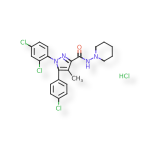
SALT/SOLVATE -> PARENT |
|
||
|
TARGET->INVERSE AGONIST |
Rimonabant was the first CB1r antagonist to be approved for the treatment of obesity in Europe (Van Gaal et al., 2005; Henness et al., 2006). It was withdrawn from the market in 2008 because it was found to cause a significant drug-related risk of serious psychiatric disorders including anxiety and depression (Christensen et al., 2007).
Ki
|
||
|
TARGET -> INHIBITOR |
Rimonabant (SR141716) is a highly potent, brain penetrated and selective central cannabinoid receptor (CB1) antagonist
BINDING
IC50
|
||
|
METABOLIC ENZYME -> INHIBITOR |
TIME-DEPENDENT INHIBITION
|

| Related Record | Type | Details | ||
|---|---|---|---|---|
|
METABOLITE TOXIC -> PARENT |
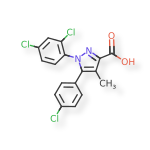
Reactive metabolite that reacts with proteins and leads to cellular necrosis.
|
||
|
METABOLITE -> PARENT |
|
||
|
|
METABOLITE -> PARENT |
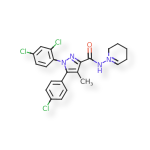
Transient existence forms imminium ion through dehydration.
|
| Related Record | Type | Details | ||
|---|---|---|---|---|
|
|
ACTIVE MOIETY |
|