


Details
| Stereochemistry | ACHIRAL |
| Molecular Formula | C13H18N4O3 |
| Molecular Weight | 278.307 |
| Optical Activity | NONE |
| Defined Stereocenters | 0 / 0 |
| E/Z Centers | 0 |
| Charge | 0 |
SHOW SMILES / InChI
SMILES
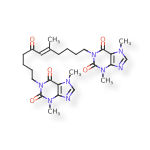
CN1C=NC2=C1C(=O)N(CCCCC(C)=O)C(=O)N2C
InChI
InChIKey=BYPFEZZEUUWMEJ-UHFFFAOYSA-N
InChI=1S/C13H18N4O3/c1-9(18)6-4-5-7-17-12(19)10-11(14-8-15(10)2)16(3)13(17)20/h8H,4-7H2,1-3H3
| Molecular Formula | C13H18N4O3 |
| Molecular Weight | 278.307 |
| Charge | 0 |
| Count |
|
| Stereochemistry | ACHIRAL |
| Additional Stereochemistry | No |
| Defined Stereocenters | 0 / 0 |
| E/Z Centers | 0 |
| Optical Activity | NONE |
Pentoxil (Pentoxifylline Extended-release Tablets, USP) is indicated for the treatment of patients with intermittent claudication based on chronic occlusive arterial disease of the limbs. Pentoxil can improve function and symptoms but is not intended to replace more definitive therapy, such as surgical bypass, or removal of arterial obstructions when treating peripheral vascular disease. Pentoxifylline and its metabolites improve the flow properties of blood by decreasing its viscosity. In patients with chronic peripheral arterial disease, this increases blood flow to the affected microcirculation and enhances tissue oxygenation. The precise mode of action of pentoxifylline and the sequence of events leading to clinical improvement are still to be defined. Pentoxifylline inhibits erythrocyte phosphodiesterase, resulting in an increase in erythrocyte cAMP activity. Subsequently, the erythrocyte membrane becomes more resistant to deformity. Along with erythrocyte activity, pentoxifylline also decreases blood viscosity by reducing plasma fibrinogen concentrations and increasing fibrinolytic activity. It is also a non-selective adenosine receptor antagonist. Pentoxifylline administration has been shown to produce dose-related hemorrheologic effects, lowering blood viscosity, and improving erythrocyte flexibility. Pentoxifylline has been shown to increase leukocyte deformability and to inhibit neutrophil adhesion and activation. Tissue oxygen levels have been shown to be significantly increased by therapeutic doses of pentoxifylline in patients with peripheral arterial disease. Clinical trials were conducted using either extended-release pentoxifylline tablets for up to 60 weeks or immediate-release pentoxifylline capsules for up to 24 weeks. Dosage ranges in the tablet studies were 400 mg bid to tid and in the capsule studies, 200-400 mg tid. The incidence of adverse reactions was higher in the capsule studies (where dose related increases were seen in digestive and nervous system side effects) than in the tablet studies. Studies with the capsule include domestic experience, whereas studies with the extended-release tablets were conducted outside the U.S.
Originator
Approval Year
Targets
| Primary Target | Pharmacology | Condition | Potency |
|---|---|---|---|
Target ID: CHEMBL2094257 |
|||
Target ID: CHEMBL2363066 |
Conditions
| Condition | Modality | Targets | Highest Phase | Product |
|---|---|---|---|---|
| Primary | PENTOXIL Approved UseINDICATIONS & USAGE Pentoxifylline extended-release tablets are indicated for the treatment of patients with intermittent claudication on the basis of chronic occlusive arterial disease of the limbs. Pentoxifylline can improve function and symptoms but is not intended to replace more definitive therapy, such as surgical bypass, or removal of arterial obstructions when treating peripheral vascular disease. Launch Date1999 |
Cmax
| Value | Dose | Co-administered | Analyte | Population |
|---|---|---|---|---|
719 ng/mL EXPERIMENT https://pubmed.ncbi.nlm.nih.gov/23400743 |
600 mg single, oral dose: 600 mg route of administration: Oral experiment type: SINGLE co-administered: |
PENTOXIFYLLINE plasma | Homo sapiens population: UNHEALTHY age: ADULT sex: FEMALE / MALE food status: FASTED |
|
272 ng/mL EXPERIMENT https://pubmed.ncbi.nlm.nih.gov/3958905 |
100 mg single, oral dose: 100 mg route of administration: Oral experiment type: SINGLE co-administered: |
PENTOXIFYLLINE plasma | Homo sapiens population: HEALTHY age: ADULT sex: MALE food status: UNKNOWN |
|
683 ng/mL EXPERIMENT https://pubmed.ncbi.nlm.nih.gov/3958905 |
200 mg single, oral dose: 200 mg route of administration: Oral experiment type: SINGLE co-administered: |
PENTOXIFYLLINE plasma | Homo sapiens population: HEALTHY age: ADULT sex: MALE food status: FASTED |
|
1607 ng/mL EXPERIMENT https://pubmed.ncbi.nlm.nih.gov/3958905 |
400 mg single, oral dose: 400 mg route of administration: Oral experiment type: SINGLE co-administered: |
PENTOXIFYLLINE plasma | Homo sapiens population: HEALTHY age: ADULT sex: MALE food status: FASTED |
AUC
| Value | Dose | Co-administered | Analyte | Population |
|---|---|---|---|---|
4842 ng × h/mL EXPERIMENT https://pubmed.ncbi.nlm.nih.gov/23400743 |
600 mg single, oral dose: 600 mg route of administration: Oral experiment type: SINGLE co-administered: |
PENTOXIFYLLINE plasma | Homo sapiens population: UNHEALTHY age: ADULT sex: FEMALE / MALE food status: FASTED |
|
193 ng × h/mL EXPERIMENT https://pubmed.ncbi.nlm.nih.gov/3958905 |
100 mg single, oral dose: 100 mg route of administration: Oral experiment type: SINGLE co-administered: |
PENTOXIFYLLINE plasma | Homo sapiens population: HEALTHY age: ADULT sex: MALE food status: UNKNOWN |
|
380 ng × h/mL EXPERIMENT https://pubmed.ncbi.nlm.nih.gov/3958905 |
200 mg single, oral dose: 200 mg route of administration: Oral experiment type: SINGLE co-administered: |
PENTOXIFYLLINE plasma | Homo sapiens population: HEALTHY age: ADULT sex: MALE food status: FASTED |
|
1228 ng × h/mL EXPERIMENT https://pubmed.ncbi.nlm.nih.gov/3958905 |
400 mg single, oral dose: 400 mg route of administration: Oral experiment type: SINGLE co-administered: |
PENTOXIFYLLINE plasma | Homo sapiens population: HEALTHY age: ADULT sex: MALE food status: FASTED |
T1/2
| Value | Dose | Co-administered | Analyte | Population |
|---|---|---|---|---|
0.48 h EXPERIMENT https://pubmed.ncbi.nlm.nih.gov/3958905 |
100 mg single, oral dose: 100 mg route of administration: Oral experiment type: SINGLE co-administered: |
PENTOXIFYLLINE plasma | Homo sapiens population: HEALTHY age: ADULT sex: MALE food status: UNKNOWN |
|
0.39 h EXPERIMENT https://pubmed.ncbi.nlm.nih.gov/3958905 |
200 mg single, oral dose: 200 mg route of administration: Oral experiment type: SINGLE co-administered: |
PENTOXIFYLLINE plasma | Homo sapiens population: HEALTHY age: ADULT sex: MALE food status: FASTED |
|
0.84 h EXPERIMENT https://pubmed.ncbi.nlm.nih.gov/3958905 |
400 mg single, oral dose: 400 mg route of administration: Oral experiment type: SINGLE co-administered: |
PENTOXIFYLLINE plasma | Homo sapiens population: HEALTHY age: ADULT sex: MALE food status: FASTED |
Overview
| CYP3A4 | CYP2C9 | CYP2D6 | hERG |
|---|---|---|---|
OverviewOther
| Other Inhibitor | Other Substrate | Other Inducer |
|---|---|---|
Drug as victim
| Target | Modality | Activity | Metabolite | Clinical evidence |
|---|---|---|---|---|
Page: 7.0 |
yes | likely (co-administration study) Comment: Concomitant administration of strong CYP1A2 inhibitors (including e.g. ciprofloxacin or fluvoxamine) may increase the exposure to pentoxifylline Page: 7.0 |
PubMed
| Title | Date | PubMed |
|---|---|---|
| Management of patients with severe oral mucosal disease. | 2001-08-02 |
|
| Administration of pentoxifylline during allergen sensitization dissociates pulmonary allergic inflammation from airway hyperresponsiveness. | 2001-08-01 |
|
| A pilot study of pentoxifylline in the treatment of radiation-induced trismus. | 2001-08 |
|
| Pentoxifylline improves in vitro fertilization and subsequent development of bovine oocytes. | 2001-07-15 |
|
| The role of glucose in supporting motility and capacitation in human spermatozoa. | 2001-07-14 |
|
| A redox-regulated tyrosine phosphorylation cascade in rat spermatozoa. | 2001-07-14 |
|
| Effect of pentoxifylline on nitrogen balance and 3-methylhistidine excretion in parenterally fed endotoxemic rats. | 2001-07-13 |
|
| In vivo downregulation of T helper cell 1 immune responses reduces atherogenesis in apolipoprotein E-knockout mice. | 2001-07-10 |
|
| Intravenous pentoxifylline does not enhance the pulmonary haemodynamic efficacy of frusemide in strenuously exercising thoroughbred horses. | 2001-07 |
|
| Integrating anti-tumor necrosis factor therapy in inflammatory bowel disease: current and future perspectives. | 2001-07 |
|
| Ibudilast attenuates astrocyte apoptosis via cyclic GMP signalling pathway in an in vitro reperfusion model. | 2001-07 |
|
| Oral pentoxifylline inhibits release of tumor necrosis factor-alpha from human peripheral blood monocytes : a potential treatment for aseptic loosening of total joint components. | 2001-07 |
|
| Renal failure, anaemia, cytokines and inflammation. | 2001-07 |
|
| Analysis of the cilostazol safety database. | 2001-06-28 |
|
| Comparative effects of cilostazol and other therapies for intermittent claudication. | 2001-06-28 |
|
| Intermittent claudication: effective medical management of a common circulatory problem. | 2001-06-28 |
|
| Medical management of peripheral arterial disease. | 2001-06-19 |
|
| [Acute alcoholic hepatitis: treatments]. | 2001-06-09 |
|
| [Beneficial effects of pentoxifylline in patients with idiopathic dilated cardiomyopathy treated with angiotensin-converting enzyme inhibitors and carvedilol. Results of a randomised study]. | 2001-06 |
|
| The effect of tumour necrosis factor (TNF) inhibitors in Clostridium difficile toxin-induced paw oedema and neutrophil migration. | 2001-06 |
|
| Improved response of colon cancer xenografts to radioimmunotherapy with pentoxifylline treatment. | 2001-06 |
|
| [Effect of pentoxifylline on the healing of experimental anastomosis of the left colon in rats]. | 2001-06 |
|
| Pentoxifylline rescue preserves lung function in isolated canine lungs injured with phorbol myristate acetate. | 2001-06 |
|
| Pentoxifylline effects on acute and late complications after radiotherapy in rabbit. | 2001-06 |
|
| Therapeutic effects of Vascupump treatment patients with Fontaine Stage II B arteriopathy. | 2001-06 |
|
| Countervailing influence of tumor necrosis factor-alpha and nitric oxide in endotoxemia. | 2001-06 |
|
| Use of pentoxifylline in membranous nephropathy. | 2001-05-26 |
|
| Pentoxifylline: wonder drug? | 2001-05-22 |
|
| The role of cGMP hydrolysing phosphodiesterases 1 and 5 in cerebral artery dilatation. | 2001-05-18 |
|
| [Pentoxifylline: is it useful in multiple sclerosis?]. | 2001-05-17 |
|
| Preventive effect of inhaled nitric oxide and pentoxifylline on ischemia/reperfusion injury after lung transplantation. | 2001-05-15 |
|
| Pentoxifylline inhibits the synthesis and IFN-gamma-inducing activity of IL-18. | 2001-05 |
|
| Controlled perfusion of the transplanted lung. | 2001-05 |
|
| Prophylactic use of pentoxifylline on inflammation in elderly cardiac surgery patients. | 2001-05 |
|
| Influence of prophylactic use of pentoxifylline on postoperative organ function in elderly cardiac surgery patients. | 2001-05 |
|
| Modulation of human peripheral blood mononuclear cell activation by the combination of leflunomide and pentoxifylline. | 2001-05 |
|
| A toast to pentoxifylline. | 2001-05 |
|
| Inhibitory effects of cyclic AMP elevating agents on lipopolysaccharide (LPS)-induced microvascular permeability change in mouse skin. | 2001-05 |
|
| New treatment options in intermittent claudication: the US experience. | 2001-04 |
|
| Cilostazol: a novel treatment option in intermittent claudication. | 2001-04 |
|
| [Effect of pentoxifylline on promoter activity of human alpha 1(I) procollagen gene]. | 2001-04 |
|
| The effects of pentoxifylline treatment on bacterial translocation after hemorrhagic shock in rats. | 2001-03 |
|
| Inhibition of human CYP1A2 activity in vitro by methylxanthines: potent competitive inhibition by 8-phenyltheophylline. | 2001-03 |
|
| Time-dependent influence of pentoxifylline on the pharmacokinetics of orally administered carbamazepine in human subjects. | 2001-03 |
|
| The effect of pentoxifylline on intestinal ischemia/reperfusion injury. | 2001-02 |
|
| [Disturbances of rhythm and atrio-ventricular conduction in digitalis overdose. Case reports]. | 2001 |
|
| Immunotherapy of inflammatory demyelinating diseases of the central nervous system. | 2001 |
|
| Indobufen: an updated review of its use in the management of atherothrombosis. | 2001 |
|
| Microvascular endothelial dysfunction: a renewed appreciation of sepsis pathophysiology. | 2001 |
|
| The alveolar septal thickness and type II pneumocytes number in irradiated lungs, time expression and the effect of pentoxifylline. | 2001 |
Sample Use Guides
The usual dosage of Pentoxil (Pentoxifylline Extended-release Tablets, USP) in extended-release tablet form is one tablet (400 mg) three times a day with meals. While the effect of Pentoxil may be seen within 2 to 4 weeks, it is recommended that treatment be continued for at least 8 weeks. Efficacy has been demonstrated in double-blind clinical studies of 6 months duration.
Route of Administration:
Oral
The proliferation rate of the cells treated with 1 mM Pentoxifylline (PTX) significantly decreased compared with that of the control in T6 cells (78.3 ± 6.03% at 12 h, 61.0 ± 7.55% at 24 h, and 44.7 ± 2.08% at 48 h, p < 0.05). PTX (1 mM) also decreased the fraction of the hepatic stellate cells (HSC) population in the S and G2/M-phases of the cell cycle in primary activated rat HSCs. The Raf-1 inhibitor GW5074 and the ERK inhibitor U0126 had inhibitory effects that were similar to those of PTX on HSC proliferation. In addition, PTX inhibited the phosphorylation of Raf-1 (p-Raf-1) and ERK (p-ERK) in a dose- and time-dependent manner in HSCs.
| Substance Class |
Chemical
Created
by
admin
on
Edited
Mon Mar 31 18:01:22 GMT 2025
by
admin
on
Mon Mar 31 18:01:22 GMT 2025
|
| Record UNII |
SD6QCT3TSU
|
| Record Status |
Validated (UNII)
|
| Record Version |
|
-
Download
| Name | Type | Language | ||
|---|---|---|---|---|
|
Preferred Name | English | ||
|
Official Name | English | ||
|
Common Name | English | ||
|
Common Name | English | ||
|
Code | English | ||
|
Common Name | English | ||
|
Code | English | ||
|
Brand Name | English | ||
|
Common Name | English | ||
|
Common Name | English | ||
|
Common Name | English | ||
|
Brand Name | English | ||
|
Common Name | English | ||
|
Common Name | English | ||
|
Systematic Name | English | ||
|
Code | English | ||
|
Common Name | English | ||
|
Common Name | English | ||
|
Common Name | English | ||
|
Common Name | English | ||
|
Code | English | ||
|
Systematic Name | English | ||
|
Common Name | English |
| Classification Tree | Code System | Code | ||
|---|---|---|---|---|
|
FDA ORPHAN DRUG |
369712
Created by
admin on Mon Mar 31 18:01:22 GMT 2025 , Edited by admin on Mon Mar 31 18:01:22 GMT 2025
|
||
|
WHO-VATC |
QC04AD03
Created by
admin on Mon Mar 31 18:01:22 GMT 2025 , Edited by admin on Mon Mar 31 18:01:22 GMT 2025
|
||
|
NDF-RT |
N0000009065
Created by
admin on Mon Mar 31 18:01:22 GMT 2025 , Edited by admin on Mon Mar 31 18:01:22 GMT 2025
|
||
|
NCI_THESAURUS |
C744
Created by
admin on Mon Mar 31 18:01:22 GMT 2025 , Edited by admin on Mon Mar 31 18:01:22 GMT 2025
|
||
|
NCI_THESAURUS |
C1327
Created by
admin on Mon Mar 31 18:01:22 GMT 2025 , Edited by admin on Mon Mar 31 18:01:22 GMT 2025
|
||
|
NCI_THESAURUS |
C221
Created by
admin on Mon Mar 31 18:01:22 GMT 2025 , Edited by admin on Mon Mar 31 18:01:22 GMT 2025
|
||
|
LIVERTOX |
NBK548672
Created by
admin on Mon Mar 31 18:01:22 GMT 2025 , Edited by admin on Mon Mar 31 18:01:22 GMT 2025
|
||
|
NDF-RT |
N0000175895
Created by
admin on Mon Mar 31 18:01:22 GMT 2025 , Edited by admin on Mon Mar 31 18:01:22 GMT 2025
|
||
|
WHO-ATC |
C04AD03
Created by
admin on Mon Mar 31 18:01:22 GMT 2025 , Edited by admin on Mon Mar 31 18:01:22 GMT 2025
|
| Code System | Code | Type | Description | ||
|---|---|---|---|---|---|
|
637086
Created by
admin on Mon Mar 31 18:01:22 GMT 2025 , Edited by admin on Mon Mar 31 18:01:22 GMT 2025
|
PRIMARY | |||
|
3309
Created by
admin on Mon Mar 31 18:01:22 GMT 2025 , Edited by admin on Mon Mar 31 18:01:22 GMT 2025
|
PRIMARY | |||
|
Pentoxifylline
Created by
admin on Mon Mar 31 18:01:22 GMT 2025 , Edited by admin on Mon Mar 31 18:01:22 GMT 2025
|
PRIMARY | |||
|
SD6QCT3TSU
Created by
admin on Mon Mar 31 18:01:22 GMT 2025 , Edited by admin on Mon Mar 31 18:01:22 GMT 2025
|
PRIMARY | |||
|
SD6QCT3TSU
Created by
admin on Mon Mar 31 18:01:22 GMT 2025 , Edited by admin on Mon Mar 31 18:01:22 GMT 2025
|
PRIMARY | |||
|
1508901
Created by
admin on Mon Mar 31 18:01:22 GMT 2025 , Edited by admin on Mon Mar 31 18:01:22 GMT 2025
|
PRIMARY | |||
|
m8519
Created by
admin on Mon Mar 31 18:01:22 GMT 2025 , Edited by admin on Mon Mar 31 18:01:22 GMT 2025
|
PRIMARY | Merck Index | ||
|
758481
Created by
admin on Mon Mar 31 18:01:22 GMT 2025 , Edited by admin on Mon Mar 31 18:01:22 GMT 2025
|
PRIMARY | |||
|
D010431
Created by
admin on Mon Mar 31 18:01:22 GMT 2025 , Edited by admin on Mon Mar 31 18:01:22 GMT 2025
|
PRIMARY | |||
|
6493-05-6
Created by
admin on Mon Mar 31 18:01:22 GMT 2025 , Edited by admin on Mon Mar 31 18:01:22 GMT 2025
|
PRIMARY | |||
|
SUB09705MIG
Created by
admin on Mon Mar 31 18:01:22 GMT 2025 , Edited by admin on Mon Mar 31 18:01:22 GMT 2025
|
PRIMARY | |||
|
4740
Created by
admin on Mon Mar 31 18:01:22 GMT 2025 , Edited by admin on Mon Mar 31 18:01:22 GMT 2025
|
PRIMARY | |||
|
8013
Created by
admin on Mon Mar 31 18:01:22 GMT 2025 , Edited by admin on Mon Mar 31 18:01:22 GMT 2025
|
PRIMARY | RxNorm | ||
|
2099
Created by
admin on Mon Mar 31 18:01:22 GMT 2025 , Edited by admin on Mon Mar 31 18:01:22 GMT 2025
|
PRIMARY | |||
|
DB00806
Created by
admin on Mon Mar 31 18:01:22 GMT 2025 , Edited by admin on Mon Mar 31 18:01:22 GMT 2025
|
PRIMARY | |||
|
7095
Created by
admin on Mon Mar 31 18:01:22 GMT 2025 , Edited by admin on Mon Mar 31 18:01:22 GMT 2025
|
PRIMARY | |||
|
CHEMBL628
Created by
admin on Mon Mar 31 18:01:22 GMT 2025 , Edited by admin on Mon Mar 31 18:01:22 GMT 2025
|
PRIMARY | |||
|
DTXSID7023437
Created by
admin on Mon Mar 31 18:01:22 GMT 2025 , Edited by admin on Mon Mar 31 18:01:22 GMT 2025
|
PRIMARY | |||
|
C733
Created by
admin on Mon Mar 31 18:01:22 GMT 2025 , Edited by admin on Mon Mar 31 18:01:22 GMT 2025
|
PRIMARY | |||
|
PENTOXIFYLLINE
Created by
admin on Mon Mar 31 18:01:22 GMT 2025 , Edited by admin on Mon Mar 31 18:01:22 GMT 2025
|
PRIMARY | |||
|
229-374-5
Created by
admin on Mon Mar 31 18:01:22 GMT 2025 , Edited by admin on Mon Mar 31 18:01:22 GMT 2025
|
PRIMARY | |||
|
100000091628
Created by
admin on Mon Mar 31 18:01:22 GMT 2025 , Edited by admin on Mon Mar 31 18:01:22 GMT 2025
|
PRIMARY |
| Related Record | Type | Details | ||
|---|---|---|---|---|
|
EXCRETED UNCHANGED |
URINE
|
||
|
DEGRADENT -> PARENT |
|
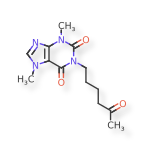
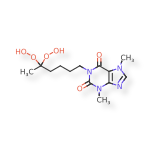
| Related Record | Type | Details | ||
|---|---|---|---|---|
|
METABOLITE -> PARENT | |||
|
METABOLITE ACTIVE -> PARENT |
MINOR
|
||
|
METABOLITE ACTIVE -> PARENT |
OCCURS DURING FIRST PASS METABOLISM. CONCENTRATION MAY 10x HIGHER THAN PENTOXIFYLLINE
MAJOR
PLASMA
|
||
|
METABOLITE -> PARENT | |||
|
PARENT -> METABOLITE ACTIVE | |||
|
METABOLITE INACTIVE -> PARENT |
APPEARS TO OCCUR PREDOMINANTLY IN RED BLOOD CELLS THROUGH NADPH REDUCTASE ENZYMES
MAJOR
|
||
|
METABOLITE -> PARENT | |||
|
METABOLITE -> PARENT | |||
|
METABOLITE -> PARENT |
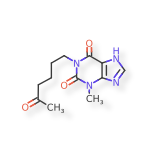
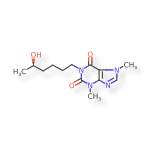
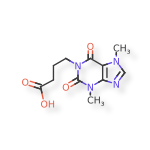
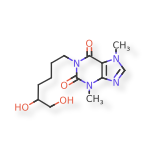
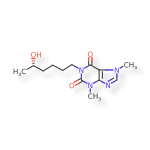
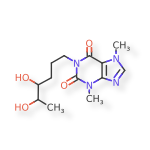
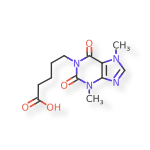
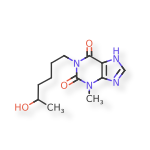
| Related Record | Type | Details | ||
|---|---|---|---|---|
|
IMPURITY -> PARENT |
CHROMATOGRAPHIC PURITY (HPLC/UV)
EP
|
||
|
IMPURITY -> PARENT |
CHROMATOGRAPHIC PURITY (HPLC/UV)
EP
|
||
|
IMPURITY -> PARENT |
CHROMATOGRAPHIC PURITY (HPLC/UV)
EP
|
||
|
IMPURITY -> PARENT |
CHROMATOGRAPHIC PURITY (HPLC/UV)
EP
|
||
|
IMPURITY -> PARENT |
CHROMATOGRAPHIC PURITY (HPLC/UV)
EP
|
||
|
IMPURITY -> PARENT |
CHROMATOGRAPHIC PURITY (HPLC/UV)
EP
|
||
|
IMPURITY -> PARENT |
CHROMATOGRAPHIC PURITY (HPLC/UV)
EP
|
||
|
IMPURITY -> PARENT |
CHROMATOGRAPHIC PURITY (HPLC/UV)
EP
|
||
|
IMPURITY -> PARENT |
CHROMATOGRAPHIC PURITY (HPLC/UV)
EP
|
||
|
IMPURITY -> PARENT |
CHROMATOGRAPHIC PURITY (HPLC/UV)
EP
|
||
|
IMPURITY -> PARENT |
CHROMATOGRAPHIC PURITY (HPLC/UV)
EP
|
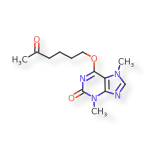
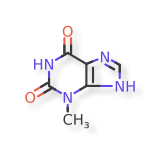
| Related Record | Type | Details | ||
|---|---|---|---|---|
|
|
ACTIVE MOIETY |
|
| Name | Property Type | Amount | Referenced Substance | Defining | Parameters | References |
|---|---|---|---|---|---|---|
| Tmax | PHARMACOKINETIC |
|
ORAL ADMINISTRATION |
|
||
| Biological Half-life | PHARMACOKINETIC |
|
ORAL ADMINISTRATION |
|
||