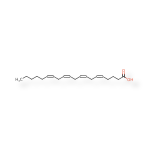
Details
| Stereochemistry | ACHIRAL |
| Molecular Formula | C22H37NO2 |
| Molecular Weight | 347.5347 |
| Optical Activity | NONE |
| Defined Stereocenters | 0 / 0 |
| E/Z Centers | 4 |
| Charge | 0 |
SHOW SMILES / InChI
SMILES
CCCCC\C=C/C\C=C/C\C=C/C\C=C/CCCC(=O)NCCO
InChI
InChIKey=LGEQQWMQCRIYKG-DOFZRALJSA-N
InChI=1S/C22H37NO2/c1-2-3-4-5-6-7-8-9-10-11-12-13-14-15-16-17-18-19-22(25)23-20-21-24/h6-7,9-10,12-13,15-16,24H,2-5,8,11,14,17-21H2,1H3,(H,23,25)/b7-6-,10-9-,13-12-,16-15-
| Molecular Formula | C22H37NO2 |
| Molecular Weight | 347.5347 |
| Charge | 0 |
| Count |
|
| Stereochemistry | ACHIRAL |
| Additional Stereochemistry | No |
| Defined Stereocenters | 0 / 0 |
| E/Z Centers | 4 |
| Optical Activity | NONE |
Anandamide, an endocannabinoid neurotransmitter, acts as a ligand of the cannabinoid receptors. It possesses anti-proliferative effect which was accompanied by a reduction of cells in the S phase of the cell cycle. Anandamide also possesses the positive effects on eating behavior and motivation in mice. Recently was discovered, that anandamide reduced cryocapacitation and improved post-thaw sperm quality in the water buffalo (Bubalus bubalis).
CNS Activity
Approval Year
PubMed
| Title | Date | PubMed |
|---|---|---|
| Decreased anxiety in juvenile rats following exposure to low levels of chlorpyrifos during development. | 2017-03 |
|
| Enhancement of endocannabinoid signaling protects against cocaine-induced neurotoxicity. | 2015-08-01 |
|
| Effects of cannabinoids and related fatty acids upon the viability of P19 embryonal carcinoma cells. | 2013-11 |
|
| Induction of endocannabinoid levels in juvenile rat brain following developmental chlorpyrifos exposure. | 2013-09 |
|
| A re-evaluation of 9-HODE activity at TRPV1 channels in comparison with anandamide: enantioselectivity and effects at other TRP channels and in sensory neurons. | 2012-12 |
|
| Δ(9) -Tetrahydrocannabinol and N-arachidonyl glycine are full agonists at GPR18 receptors and induce migration in human endometrial HEC-1B cells. | 2012-04 |
|
| Axonal neuropathy-associated TRPV4 regulates neurotrophic factor-derived axonal growth. | 2012-02-17 |
|
| Contributions of TRPV1, endovanilloids, and endoplasmic reticulum stress in lung cell death in vitro and lung injury. | 2012-01-01 |
|
| Contrasting protective effects of cannabinoids against oxidative stress and amyloid-β evoked neurotoxicity in vitro. | 2012-01 |
|
| TRPV1 and TRPA1 stimulation induces MUC5B secretion in the human nasal airway in vivo. | 2011-11 |
|
| Covalent inhibitors of fatty acid amide hydrolase: a rationale for the activity of piperidine and piperazine aryl ureas. | 2011-10-13 |
|
| The endogenous cannabinoid anandamide shares discriminative stimulus effects with ∆(9)-tetrahydrocannabinol in fatty acid amide hydrolase knockout mice. | 2011-04-10 |
|
| Minimal peroxide exposure of neuronal cells induces multifaceted adaptive responses. | 2010-12-17 |
|
| Cyclooxygenase-2 mediates anandamide metabolism in the mouse brain. | 2010-11 |
|
| Inhibitors of monoacylglycerol lipase, fatty-acid amide hydrolase and endocannabinoid transport differentially suppress capsaicin-induced behavioral sensitization through peripheral endocannabinoid mechanisms. | 2010-09 |
|
| Mechanisms of TNFalpha-induced cardiac dysfunction in cholestatic bile duct-ligated mice: interaction between TNFalpha and endocannabinoids. | 2010-08 |
|
| CB1 cannabinoid receptors promote oxidative stress and cell death in murine models of doxorubicin-induced cardiomyopathy and in human cardiomyocytes. | 2010-03-01 |
|
| Alterations of the endocannabinoid system in an animal model of migraine: evaluation in cerebral areas of rat. | 2010-03 |
|
| Localization and function of cannabinoid receptors in the corpus cavernosum: basis for modulation of nitric oxide synthase nerve activity. | 2010-02 |
|
| Characterization of anandamide-stimulated cannabinoid receptor signaling in human ULTR myometrial smooth muscle cells. | 2009-09 |
|
| Fatty acid amide hydrolase (FAAH) inhibition enhances memory acquisition through activation of PPAR-alpha nuclear receptors. | 2009-05 |
|
| Distribution and function of cannabinoid receptors 1 and 2 in the rat, monkey and human bladder. | 2009-04 |
|
| Intermediate cannabis dependence phenotypes and the FAAH C385A variant: an exploratory analysis. | 2009-04 |
|
| The endocannabinoid anandamide inhibits kinin B1 receptor sensitization through cannabinoid CB1 receptor stimulation in human umbilical vein. | 2009-01-05 |
|
| Subunit-specific modulation of glycine receptors by cannabinoids and N-arachidonyl-glycine. | 2008-10-15 |
|
| Direct activation of transient receptor potential vanilloid 1(TRPV1) by diacylglycerol (DAG). | 2008-10-01 |
|
| Expression of the endocannabinoid system in human first trimester placenta and its role in trophoblast proliferation. | 2008-10 |
|
| Expression and purification of orphan cytochrome P450 4X1 and oxidation of anandamide. | 2008-07 |
|
| TRPV2 is activated by cannabidiol and mediates CGRP release in cultured rat dorsal root ganglion neurons. | 2008-06-11 |
|
| A comprehensive profile of brain enzymes that hydrolyze the endocannabinoid 2-arachidonoylglycerol. | 2007-12 |
|
| Functional effects of nonsynonymous polymorphisms in the human TRPV1 gene. | 2007-12 |
|
| The orphan receptor GPR55 is a novel cannabinoid receptor. | 2007-12 |
|
| Cannabinoid activation of PPAR alpha; a novel neuroprotective mechanism. | 2007-11 |
|
| Anti-dyskinetic effects of cannabinoids in a rat model of Parkinson's disease: role of CB(1) and TRPV1 receptors. | 2007-11 |
|
| Endocannabinoids acting at CB1 receptors mediate the cardiac contractile dysfunction in vivo in cirrhotic rats. | 2007-09 |
|
| Inhibition of fatty acid amide hydrolase, a key endocannabinoid metabolizing enzyme, by analogues of ibuprofen and indomethacin. | 2007-06-22 |
|
| Cannabinoids ameliorate pain and reduce disease pathology in cerulein-induced acute pancreatitis. | 2007-05 |
|
| Arvanil, anandamide and N-arachidonoyl-dopamine (NADA) inhibit emesis through cannabinoid CB1 and vanilloid TRPV1 receptors in the ferret. | 2007-05 |
|
| Arvanil and anandamide up-regulate CD36 expression in human peripheral blood mononuclear cells. | 2007-04-15 |
|
| Effect of topical application of capsaicin and its related compounds on dermal insulin-like growth factor-I levels in mice and on facial skin elasticity in humans. | 2007-04 |
|
| Endothelium-dependent metabolism by endocannabinoid hydrolases and cyclooxygenases limits vasorelaxation to anandamide and 2-arachidonoylglycerol. | 2007-03 |
|
| Role of cannabinoid receptor agonists in mechanisms of suppression of central pain syndrome. | 2006-07 |
|
| A comparison of delta 9-THC and anandamide induced c-fos expression in the rat forebrain. | 1998-08-17 |
|
| Cannabinoid-induced hypotension and bradycardia in rats mediated by CB1-like cannabinoid receptors. | 1997-06 |
|
| Isolation and measurement of the endogenous cannabinoid receptor agonist, anandamide, in brain and peripheral tissues of human and rat. | 1996-09-16 |
|
| Evaluation of binding in a transfected cell line expressing a peripheral cannabinoid receptor (CB2): identification of cannabinoid receptor subtype selective ligands. | 1996-09 |
|
| Anandamide, an endogenous cannabinoid, inhibits Shaker-related voltage-gated K+ channels. | 1996 |
|
| Comparison of the pharmacology and signal transduction of the human cannabinoid CB1 and CB2 receptors. | 1995-09 |
|
| Identification of an endogenous 2-monoglyceride, present in canine gut, that binds to cannabinoid receptors. | 1995-06-29 |
|
| Molecular characterization of a peripheral receptor for cannabinoids. | 1993-09-02 |
Sample Use Guides
male mice pups were treated with a daily oral dose of anandamide (AEA) 20 μg/g body weight during lactation. Adult mice were also treated with a single oral dose of AEA, to evaluate acute food intake during 4 h. At 21 and 160 days, CB1R protein abundance was calculated by western blot analysis.
Route of Administration:
Oral
Anandamide inhibits human breast cancer cell proliferation. Anandamide dose-dependently inhibited the proliferation of MCF-7 and EFM-19 cells with IC50 values between 0.5 and 1.5 microM and 83-92% maximal inhibition at 5-10 microM. The proliferation of several other non-mammary tumoral cell lines was not affected by 10 microM anandamide. The anti-proliferative effect of anandamide was not due to toxicity or to apoptosis of cells but was accompanied by a reduction of cells in the S phase of the cell cycle.
| Substance Class |
Chemical
Created
by
admin
on
Edited
Mon Mar 31 19:08:20 GMT 2025
by
admin
on
Mon Mar 31 19:08:20 GMT 2025
|
| Record UNII |
UR5G69TJKH
|
| Record Status |
Validated (UNII)
|
| Record Version |
|
-
Download
| Name | Type | Language | ||
|---|---|---|---|---|
|
Preferred Name | English | ||
|
Common Name | English | ||
|
Systematic Name | English | ||
|
Systematic Name | English | ||
|
Common Name | English |
| Code System | Code | Type | Description | ||
|---|---|---|---|---|---|
|
m1888
Created by
admin on Mon Mar 31 19:08:20 GMT 2025 , Edited by admin on Mon Mar 31 19:08:20 GMT 2025
|
PRIMARY | Merck Index | ||
|
2700
Created by
admin on Mon Mar 31 19:08:20 GMT 2025 , Edited by admin on Mon Mar 31 19:08:20 GMT 2025
|
PRIMARY | |||
|
C078814
Created by
admin on Mon Mar 31 19:08:20 GMT 2025 , Edited by admin on Mon Mar 31 19:08:20 GMT 2025
|
PRIMARY | |||
|
5281969
Created by
admin on Mon Mar 31 19:08:20 GMT 2025 , Edited by admin on Mon Mar 31 19:08:20 GMT 2025
|
PRIMARY | |||
|
DTXSID301017453
Created by
admin on Mon Mar 31 19:08:20 GMT 2025 , Edited by admin on Mon Mar 31 19:08:20 GMT 2025
|
PRIMARY | |||
|
94421-68-8
Created by
admin on Mon Mar 31 19:08:20 GMT 2025 , Edited by admin on Mon Mar 31 19:08:20 GMT 2025
|
PRIMARY | |||
|
ANANDAMIDE
Created by
admin on Mon Mar 31 19:08:20 GMT 2025 , Edited by admin on Mon Mar 31 19:08:20 GMT 2025
|
PRIMARY | |||
|
UR5G69TJKH
Created by
admin on Mon Mar 31 19:08:20 GMT 2025 , Edited by admin on Mon Mar 31 19:08:20 GMT 2025
|
PRIMARY |
| Related Record | Type | Details | ||
|---|---|---|---|---|
|
TARGET -> AGONIST |
Natural agonist
|
||
|
METABOLIC ENZYME -> SUBSTRATE |
|
||
|
METABOLIC ENZYME -> SUBSTRATE |
|
||
|
METABOLIC ENZYME -> SUBSTRATE |
MAJOR
|
||
|
ACTIVATOR -> TARGET |
Inhibits reuptake
|
||
|
TARGET -> AGONIST |
IC50
|
||
|
TARGET -> SUBSTRATE |
MAJOR
|

| Related Record | Type | Details | ||
|---|---|---|---|---|
|
METABOLITE -> PARENT |
MAJOR
|