


Details
| Stereochemistry | ABSOLUTE |
| Molecular Formula | C14H18N6O |
| Molecular Weight | 286.3323 |
| Optical Activity | ( - ) |
| Defined Stereocenters | 2 / 2 |
| E/Z Centers | 0 |
| Charge | 0 |
SHOW SMILES / InChI
SMILES
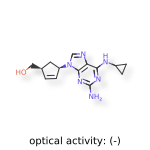
NC1=NC2=C(N=CN2[C@@H]3C[C@H](CO)C=C3)C(NC4CC4)=N1
InChI
InChIKey=MCGSCOLBFJQGHM-SCZZXKLOSA-N
InChI=1S/C14H18N6O/c15-14-18-12(17-9-2-3-9)11-13(19-14)20(7-16-11)10-4-1-8(5-10)6-21/h1,4,7-10,21H,2-3,5-6H2,(H3,15,17,18,19)/t8-,10+/m1/s1
| Molecular Formula | C14H18N6O |
| Molecular Weight | 286.3323 |
| Charge | 0 |
| Count |
|
| Stereochemistry | ABSOLUTE |
| Additional Stereochemistry | No |
| Defined Stereocenters | 2 / 2 |
| E/Z Centers | 0 |
| Optical Activity | UNSPECIFIED |
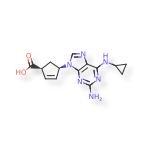
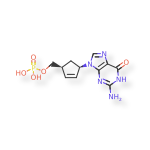
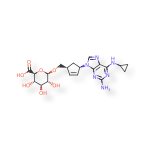
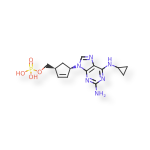
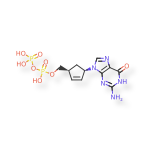
Abacavir is a nucleoside reverse transcriptase inhibitor used for treatment of HIV infection (either alone or in combination with other antiviral drugs). It was shown that abacavir exerts its antiviral activity through its active metabolite, carbovir triphosphate. Carbovir triphosphate is a guanine analogue and a potent and selective inhibitor of viral reverse transcriptases. Upon administration, abacavir is first converted to abacavir monophosphate by ADK, then the monophosphate is deaminated to carbovir monophosphate, which is then anabolized by cellular kinases to carbovir diphosphate and then finally to carbovir triphosphate. Abacavir causes hypersensitivity reaction in patients with HLA-B*57:01 allele.
CNS Activity
Originator
Approval Year
Targets
| Primary Target | Pharmacology | Condition | Potency |
|---|---|---|---|
Target ID: CHEMBL247 |
21.0 nM [Ki] |
Conditions
| Condition | Modality | Targets | Highest Phase | Product |
|---|---|---|---|---|
| Primary | ZIAGEN Approved UseZIAGEN, a nucleoside analogue human immunodeficiency virus (HIV-1) reverse transcriptase inhibitor, is indicated in combination with other antiretroviral agents for the treatment of HIV-1 infection. Launch Date1998 |
Cmax
| Value | Dose | Co-administered | Analyte | Population |
|---|---|---|---|---|
3 μg/mL |
300 mg 2 times / day steady-state, oral dose: 300 mg route of administration: Oral experiment type: STEADY-STATE co-administered: |
ABACAVIR SULFATE plasma | Homo sapiens population: UNKNOWN age: UNKNOWN sex: UNKNOWN food status: UNKNOWN |
|
4.26 μg/mL |
600 mg single, oral dose: 600 mg route of administration: Oral experiment type: SINGLE co-administered: |
ABACAVIR SULFATE plasma | Homo sapiens population: UNKNOWN age: UNKNOWN sex: UNKNOWN food status: UNKNOWN |
AUC
| Value | Dose | Co-administered | Analyte | Population |
|---|---|---|---|---|
6.02 μg × h/mL |
300 mg 2 times / day steady-state, oral dose: 300 mg route of administration: Oral experiment type: STEADY-STATE co-administered: |
ABACAVIR SULFATE plasma | Homo sapiens population: UNKNOWN age: UNKNOWN sex: UNKNOWN food status: UNKNOWN |
|
11.95 μg × h/mL |
600 mg single, oral dose: 600 mg route of administration: Oral experiment type: SINGLE co-administered: |
ABACAVIR SULFATE plasma | Homo sapiens population: UNKNOWN age: UNKNOWN sex: UNKNOWN food status: UNKNOWN |
T1/2
| Value | Dose | Co-administered | Analyte | Population |
|---|---|---|---|---|
1.54 h |
600 mg single, oral dose: 600 mg route of administration: Oral experiment type: SINGLE co-administered: |
ABACAVIR SULFATE plasma | Homo sapiens population: UNKNOWN age: UNKNOWN sex: UNKNOWN food status: UNKNOWN |
Funbound
| Value | Dose | Co-administered | Analyte | Population |
|---|---|---|---|---|
50% |
300 mg 2 times / day steady-state, oral dose: 300 mg route of administration: Oral experiment type: STEADY-STATE co-administered: |
ABACAVIR SULFATE plasma | Homo sapiens population: UNKNOWN age: UNKNOWN sex: UNKNOWN food status: UNKNOWN |
Doses
| Dose | Population | Adverse events |
|---|---|---|
150 mg single, intravenous Dose: 150 mg Route: intravenous Route: single Dose: 150 mg Sources: |
unhealthy, 27–39 years Health Status: unhealthy Age Group: 27–39 years Sex: M Sources: |
|
1200 mg single, oral Highest studied dose |
unhealthy, 38 years (range: 24–48 years) Health Status: unhealthy Age Group: 38 years (range: 24–48 years) Sex: M+F Sources: |
Other AEs: Asthenia, Abdominal pain... Other AEs: Asthenia (33%) Sources: Abdominal pain (33%) Headache (25%) Diarrhea (17%) Dyspepsia (17%) |
600 mg 3 times / day steady, oral Highest studied dose Dose: 600 mg, 3 times / day Route: oral Route: steady Dose: 600 mg, 3 times / day Sources: |
unhealthy, > 13 years Health Status: unhealthy Age Group: > 13 years Sex: M+F Sources: |
|
600 mg 1 times / day steady, oral Recommended Dose: 600 mg, 1 times / day Route: oral Route: steady Dose: 600 mg, 1 times / day Sources: |
unhealthy Health Status: unhealthy Sources: |
Other AEs: Hypersensitivity reaction... Other AEs: Hypersensitivity reaction (serious|grade 5, 8%) Sources: |
AEs
| AE | Significance | Dose | Population |
|---|---|---|---|
| Diarrhea | 17% | 1200 mg single, oral Highest studied dose |
unhealthy, 38 years (range: 24–48 years) Health Status: unhealthy Age Group: 38 years (range: 24–48 years) Sex: M+F Sources: |
| Dyspepsia | 17% | 1200 mg single, oral Highest studied dose |
unhealthy, 38 years (range: 24–48 years) Health Status: unhealthy Age Group: 38 years (range: 24–48 years) Sex: M+F Sources: |
| Headache | 25% | 1200 mg single, oral Highest studied dose |
unhealthy, 38 years (range: 24–48 years) Health Status: unhealthy Age Group: 38 years (range: 24–48 years) Sex: M+F Sources: |
| Abdominal pain | 33% | 1200 mg single, oral Highest studied dose |
unhealthy, 38 years (range: 24–48 years) Health Status: unhealthy Age Group: 38 years (range: 24–48 years) Sex: M+F Sources: |
| Asthenia | 33% | 1200 mg single, oral Highest studied dose |
unhealthy, 38 years (range: 24–48 years) Health Status: unhealthy Age Group: 38 years (range: 24–48 years) Sex: M+F Sources: |
| Hypersensitivity reaction | serious|grade 5, 8% | 600 mg 1 times / day steady, oral Recommended Dose: 600 mg, 1 times / day Route: oral Route: steady Dose: 600 mg, 1 times / day Sources: |
unhealthy Health Status: unhealthy Sources: |
PubMed
| Title | Date | PubMed |
|---|---|---|
| Abacavir hypersensitivity reaction. | 2002-04-15 |
|
| Broad nucleoside-analogue resistance implications for human immunodeficiency virus type 1 reverse-transcriptase mutations at codons 44 and 118. | 2002-04-01 |
|
| Tenofovir exhibits low cytotoxicity in various human cell types: comparison with other nucleoside reverse transcriptase inhibitors. | 2002-04 |
|
| Parallel decline of CD8+/CD38++ T cells and viraemia in response to quadruple highly active antiretroviral therapy in primary HIV infection. | 2002-03-08 |
|
| Comparison of dual nucleoside-analogue reverse-transcriptase inhibitor regimens with and without nelfinavir in children with HIV-1 who have not previously been treated: the PENTA 5 randomised trial. | 2002-03-02 |
|
| Association between presence of HLA-B*5701, HLA-DR7, and HLA-DQ3 and hypersensitivity to HIV-1 reverse-transcriptase inhibitor abacavir. | 2002-03-02 |
|
| Individualising HIV treatment--pharmacogenetics and immunogenetics. | 2002-03-02 |
|
| [Mutations of resistance of HIV-1 in previously untreated patients at penitentiary centers of the Autonomous Community of Valencia, Spain. REPRICOVA study]. | 2002-03-02 |
|
| Novel use of a guanosine prodrug approach to convert 2',3'-didehydro-2',3'-dideoxyguanosine into a viable antiviral agent. | 2002-03 |
|
| Assessment of mitochondrial toxicity in human cells treated with tenofovir: comparison with other nucleoside reverse transcriptase inhibitors. | 2002-03 |
|
| HIV-1 genotype and phenotype correlate with virological response to abacavir, amprenavir and efavirenz in treatment-experienced patients. | 2002-02-15 |
|
| Abacavir expanded access program for adult patients infected with human immunodeficiency virus type 1. | 2002-02-15 |
|
| Response to lamivudine-zidovudine plus abacavir twice daily in antiretroviral-naive, incarcerated patients with HIV infection taking directly observed treatment. | 2002-02-15 |
|
| Role of sequencing in therapy selection. | 2002-02-01 |
|
| Efficacy of highly active antiretroviral therapy in HIV-1 infected children. | 2002-02 |
|
| Case series assessing the safety of mycophenolate as part of multidrug rescue treatment regimens. | 2002-01-31 |
|
| Evidence of immune reconstitution in antiretroviral drug-experienced patients with advanced HIV disease. | 2002-01-20 |
|
| Dioxolane guanosine, the active form of the prodrug diaminopurine dioxolane, is a potent inhibitor of drug-resistant HIV-1 isolates from patients for whom standard nucleoside therapy fails. | 2002-01-01 |
|
| Kawasaki-like syndrome: abacavir hypersensitivity? | 2002-01-01 |
|
| Easier abacavir regimen has promising results. | 2002-01 |
|
| Vertigo and abacavir. | 2002-01 |
|
| Antiretroviral rounds. A very discordant response. | 2002-01 |
|
| Combined effect of zidovudine (ZDV), lamivudine (3TC) and abacavir (ABC) antiretroviral therapy in suppressing in vitro FIV replication. | 2002-01 |
|
| Agranulocytosis and fever seven weeks after starting abacavir. | 2001-12-07 |
|
| Prednisolone does not prevent hypersensitivity reactions in antiretroviral drug regimens containing abacavir with or without nevirapine. | 2001-12-07 |
|
| Editorial comment: the challenge of prescribing abacavir. | 2001-12 |
|
| Understanding drug hypersensitivity: what to look for when prescribing abacavir. | 2001-12 |
|
| Abacavir sulfate, lamivudine, and zidovudine (Trizivir). | 2001-11-29 |
|
| Anti-human immunodeficiency virus drugs are ineffective against Pneumocystis carinii in vitro and in vivo. | 2001-11-15 |
|
| Lipodystrophy in HIV-1-positive patients is associated with insulin resistance in multiple metabolic pathways. | 2001-11-09 |
|
| The role of NNRTIs in antiretroviral combination therapy: an introduction. | 2001-11 |
|
| Improvement of HAART-associated insulin resistance and dyslipidemia after replacement of protease inhibitors with abacavir. | 2001-10-29 |
|
| High-performance liquid chromatographic assay for abacavir and its two major metabolites in human urine and cerebrospinal fluid. | 2001-10-25 |
|
| Prevalence of adverse events associated with potent antiretroviral treatment: Swiss HIV Cohort Study. | 2001-10-20 |
|
| Penetration of the nucleoside analogue abacavir into the genital tract of men infected with human immunodeficiency virus type 1. | 2001-10-15 |
|
| Hypersensitivity reactions during therapy with the nucleoside reverse transcriptase inhibitor abacavir. | 2001-10 |
|
| Hypersensitivity related to abacavir in two members of a family. | 2001-10 |
|
| Methadone blood concentrations are decreased by the administration of abacavir plus amprenavir. | 2001-10 |
|
| Comparing different triple-drug combinations. | 2001-10 |
|
| HIV protease inhibitor substitution in patients with lipodystrophy: a randomized, controlled, open-label, multicentre study. | 2001-09-28 |
|
| Differential human immunodeficiency virus-suppressive activity of reverse transcription inhibitors in resting and activated peripheral blood lymphocytes: implications for therapy. | 2001-09-27 |
|
| [Acceptance of antiretroviral therapy. HIV-infected patients assess convenient triple combination]. | 2001-09-06 |
|
| Antiviral activity of cyclosaligenyl prodrugs of acyclovir, carbovir and abacavir. | 2001-09 |
|
| Genotypic resistance mutations to antiretroviral drugs in HIV-1 B and non-B subtypes from Cuba. | 2001-09 |
|
| Strategies for treating HIV-related lipodystrophy. | 2001-08 |
|
| Resistance and cross-resistance to abacavir. | 2001-07 |
|
| Resistant to everything. | 2001-05 |
|
| Intensification of stable background therapy with abacavir in antiretroviral therapy experienced patients: 48-week data from a randomized, double-blind trial. | 2001-01 |
|
| Mutational patterns in the HIV genome and cross-resistance following nucleoside and nucleotide analogue drug exposure. | 2001 |
|
| Triple nuke therapy--results after one year. | 2001 |
Patents
Sample Use Guides
Adults: 600 mg daily, administered as either 300 mg twice daily or 600 mg once daily. Pediatric Patients Aged 3 Months and Older: Administered either once or twice daily. Dose should be calculated on body weight (kg) and should not exceed 600 mg daily.
Route of Administration:
Oral
| Substance Class |
Chemical
Created
by
admin
on
Edited
Wed Apr 02 09:27:32 GMT 2025
by
admin
on
Wed Apr 02 09:27:32 GMT 2025
|
| Record UNII |
WR2TIP26VS
|
| Record Status |
Validated (UNII)
|
| Record Version |
|
-
Download
| Name | Type | Language | ||
|---|---|---|---|---|
|
Preferred Name | English | ||
|
Official Name | English | ||
|
Common Name | English | ||
|
Common Name | English | ||
|
Systematic Name | English | ||
|
Common Name | English | ||
|
Common Name | English | ||
|
Systematic Name | English | ||
|
Common Name | English | ||
|
Common Name | English | ||
|
Code | English | ||
|
Systematic Name | English | ||
|
Common Name | English |
| Classification Tree | Code System | Code | ||
|---|---|---|---|---|
|
WHO-ATC |
J05AF06
Created by
admin on Wed Apr 02 09:27:32 GMT 2025 , Edited by admin on Wed Apr 02 09:27:32 GMT 2025
|
||
|
NCI_THESAURUS |
C97452
Created by
admin on Wed Apr 02 09:27:32 GMT 2025 , Edited by admin on Wed Apr 02 09:27:32 GMT 2025
|
||
|
WHO-VATC |
QJ05AF06
Created by
admin on Wed Apr 02 09:27:32 GMT 2025 , Edited by admin on Wed Apr 02 09:27:32 GMT 2025
|
||
|
WHO-VATC |
QJ05AR04
Created by
admin on Wed Apr 02 09:27:32 GMT 2025 , Edited by admin on Wed Apr 02 09:27:32 GMT 2025
|
||
|
WHO-VATC |
QJ05AR02
Created by
admin on Wed Apr 02 09:27:32 GMT 2025 , Edited by admin on Wed Apr 02 09:27:32 GMT 2025
|
||
|
WHO-ATC |
J05AR04
Created by
admin on Wed Apr 02 09:27:32 GMT 2025 , Edited by admin on Wed Apr 02 09:27:32 GMT 2025
|
||
|
NDF-RT |
N0000175459
Created by
admin on Wed Apr 02 09:27:32 GMT 2025 , Edited by admin on Wed Apr 02 09:27:32 GMT 2025
|
||
|
EMA ASSESSMENT REPORTS |
KIVEXA (AUHTORIZED: HIV INFECTIONS)
Created by
admin on Wed Apr 02 09:27:32 GMT 2025 , Edited by admin on Wed Apr 02 09:27:32 GMT 2025
|
||
|
NDF-RT |
N0000175462
Created by
admin on Wed Apr 02 09:27:32 GMT 2025 , Edited by admin on Wed Apr 02 09:27:32 GMT 2025
|
||
|
LIVERTOX |
NBK548225
Created by
admin on Wed Apr 02 09:27:32 GMT 2025 , Edited by admin on Wed Apr 02 09:27:32 GMT 2025
|
||
|
WHO-ESSENTIAL MEDICINES LIST |
6.4.2.1
Created by
admin on Wed Apr 02 09:27:32 GMT 2025 , Edited by admin on Wed Apr 02 09:27:32 GMT 2025
|
||
|
NDF-RT |
N0000175459
Created by
admin on Wed Apr 02 09:27:32 GMT 2025 , Edited by admin on Wed Apr 02 09:27:32 GMT 2025
|
||
|
WHO-ATC |
J05AR02
Created by
admin on Wed Apr 02 09:27:32 GMT 2025 , Edited by admin on Wed Apr 02 09:27:32 GMT 2025
|
||
|
NDF-RT |
N0000009947
Created by
admin on Wed Apr 02 09:27:32 GMT 2025 , Edited by admin on Wed Apr 02 09:27:32 GMT 2025
|
||
|
NDF-RT |
N0000175459
Created by
admin on Wed Apr 02 09:27:32 GMT 2025 , Edited by admin on Wed Apr 02 09:27:32 GMT 2025
|
||
|
WHO-ATC |
J05AR13
Created by
admin on Wed Apr 02 09:27:32 GMT 2025 , Edited by admin on Wed Apr 02 09:27:32 GMT 2025
|
| Code System | Code | Type | Description | ||
|---|---|---|---|---|---|
|
CHEMBL1380
Created by
admin on Wed Apr 02 09:27:32 GMT 2025 , Edited by admin on Wed Apr 02 09:27:32 GMT 2025
|
PRIMARY | |||
|
DB01048
Created by
admin on Wed Apr 02 09:27:32 GMT 2025 , Edited by admin on Wed Apr 02 09:27:32 GMT 2025
|
PRIMARY | |||
|
WR2TIP26VS
Created by
admin on Wed Apr 02 09:27:32 GMT 2025 , Edited by admin on Wed Apr 02 09:27:32 GMT 2025
|
PRIMARY | |||
|
34
Created by
admin on Wed Apr 02 09:27:32 GMT 2025 , Edited by admin on Wed Apr 02 09:27:32 GMT 2025
|
PRIMARY | |||
|
742406
Created by
admin on Wed Apr 02 09:27:32 GMT 2025 , Edited by admin on Wed Apr 02 09:27:32 GMT 2025
|
PRIMARY | |||
|
Abacavir
Created by
admin on Wed Apr 02 09:27:32 GMT 2025 , Edited by admin on Wed Apr 02 09:27:32 GMT 2025
|
PRIMARY | |||
|
WR2TIP26VS
Created by
admin on Wed Apr 02 09:27:32 GMT 2025 , Edited by admin on Wed Apr 02 09:27:32 GMT 2025
|
PRIMARY | |||
|
421707
Created by
admin on Wed Apr 02 09:27:32 GMT 2025 , Edited by admin on Wed Apr 02 09:27:32 GMT 2025
|
PRIMARY | |||
|
7544
Created by
admin on Wed Apr 02 09:27:32 GMT 2025 , Edited by admin on Wed Apr 02 09:27:32 GMT 2025
|
PRIMARY | |||
|
ABACAVIR
Created by
admin on Wed Apr 02 09:27:32 GMT 2025 , Edited by admin on Wed Apr 02 09:27:32 GMT 2025
|
PRIMARY | |||
|
DTXSID4046444
Created by
admin on Wed Apr 02 09:27:32 GMT 2025 , Edited by admin on Wed Apr 02 09:27:32 GMT 2025
|
PRIMARY | |||
|
SUB07356MIG
Created by
admin on Wed Apr 02 09:27:32 GMT 2025 , Edited by admin on Wed Apr 02 09:27:32 GMT 2025
|
PRIMARY | |||
|
441300
Created by
admin on Wed Apr 02 09:27:32 GMT 2025 , Edited by admin on Wed Apr 02 09:27:32 GMT 2025
|
PRIMARY | |||
|
190521
Created by
admin on Wed Apr 02 09:27:32 GMT 2025 , Edited by admin on Wed Apr 02 09:27:32 GMT 2025
|
PRIMARY | RxNorm | ||
|
136470-78-5
Created by
admin on Wed Apr 02 09:27:32 GMT 2025 , Edited by admin on Wed Apr 02 09:27:32 GMT 2025
|
PRIMARY | |||
|
100000085435
Created by
admin on Wed Apr 02 09:27:32 GMT 2025 , Edited by admin on Wed Apr 02 09:27:32 GMT 2025
|
PRIMARY | |||
|
m1271
Created by
admin on Wed Apr 02 09:27:32 GMT 2025 , Edited by admin on Wed Apr 02 09:27:32 GMT 2025
|
PRIMARY | Merck Index | ||
|
C61523
Created by
admin on Wed Apr 02 09:27:32 GMT 2025 , Edited by admin on Wed Apr 02 09:27:32 GMT 2025
|
PRIMARY |
| Related Record | Type | Details | ||
|---|---|---|---|---|
|
SALT/SOLVATE -> PARENT |
|
||
|
TRANSPORTER -> INHIBITOR | |||
|
TARGET ORGANISM->INHIBITOR |
|
||
|
|
SALT/SOLVATE -> PARENT |
|
||
|
SALT/SOLVATE -> PARENT |
|
||
|
TARGET -> INHIBITOR |
|
||
|
SALT/SOLVATE -> PARENT |
|
||
|
BINDER->LIGAND |
BINDING
|
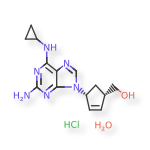


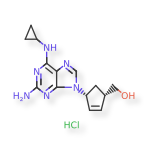
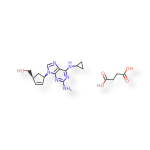


| Related Record | Type | Details | ||
|---|---|---|---|---|
|
METABOLITE ACTIVE -> PARENT |
SUBSTRATE
INTRACELLULAR
|
||
|
METABOLITE INACTIVE -> PARENT |
MAJOR
URINE
|
||
|
|
METABOLITE ACTIVE -> PARENT |
|
||
|
METABOLITE INACTIVE -> PARENT |
MAJOR
URINE
|
||
|
METABOLITE INACTIVE -> PARENT |
83% of the original dose was eliminated in the urine, and 16% in the feces
MAJOR
FECAL; URINE
|
||
|
|
METABOLITE ACTIVE -> PARENT |
SUBSTRATE
INTRACELLULAR
|
||
|
|
METABOLITE ACTIVE -> PARENT |
SUBSTRATE
INTRACELLULAR
|
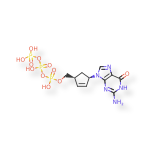
| Related Record | Type | Details | ||
|---|---|---|---|---|
|
ACTIVE MOIETY |
|
| Name | Property Type | Amount | Referenced Substance | Defining | Parameters | References |
|---|---|---|---|---|---|---|
| BREAST MILK/PLASMA RATIO | PHARMACOKINETIC |
|
|
|||
| Biological Half-life | PHARMACOKINETIC |
|
POPULATION PHARMACOKINETIC |
|
||
| Volume of Distribution | PHARMACOKINETIC |
|
|
|||
| Biological Half-life | PHARMACOKINETIC |
|
TYPE PHARMACOKINETIC |
|
||
| CSF/PLASMA RATIO | PHARMACOKINETIC |
|
|
|||