


Details
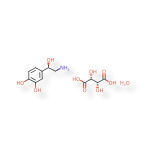
| Stereochemistry | ABSOLUTE |
| Molecular Formula | C8H11NO3.C4H6O6 |
| Molecular Weight | 319.2647 |
| Optical Activity | UNSPECIFIED |
| Defined Stereocenters | 3 / 3 |
| E/Z Centers | 0 |
| Charge | 0 |
SHOW SMILES / InChI
SMILES
O[C@H]([C@@H](O)C(O)=O)C(O)=O.NC[C@H](O)C1=CC(O)=C(O)C=C1
InChI
InChIKey=WNPNNLQNNJQYFA-YIDNRZKSSA-N
InChI=1S/C8H11NO3.C4H6O6/c9-4-8(12)5-1-2-6(10)7(11)3-5;5-1(3(7)8)2(6)4(9)10/h1-3,8,10-12H,4,9H2;1-2,5-6H,(H,7,8)(H,9,10)/t8-;1-,2-/m01/s1
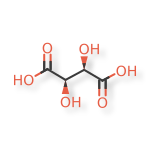
| Molecular Formula | C4H6O6 |
| Molecular Weight | 150.0868 |
| Charge | 0 |
| Count |
|
| Stereochemistry | ABSOLUTE |
| Additional Stereochemistry | No |
| Defined Stereocenters | 2 / 2 |
| E/Z Centers | 0 |
| Optical Activity | UNSPECIFIED |
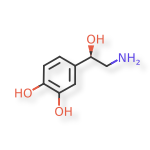
| Molecular Formula | C8H11NO3 |
| Molecular Weight | 169.1778 |
| Charge | 0 |
| Count |
|
| Stereochemistry | ABSOLUTE |
| Additional Stereochemistry | No |
| Defined Stereocenters | 1 / 1 |
| E/Z Centers | 0 |
| Optical Activity | UNSPECIFIED |
DescriptionSources: http://www.accessdata.fda.gov/drugsatfda_docs/label/2014/203202lbl.pdfhttps://www.accessdata.fda.gov/drugsatfda_docs/label/2007/007513Orig1s024lbl.pdfCurator's Comment: description was created based on several sources, including http://www.ncbi.nlm.nih.gov/pubmed/?term=17214596; http://www.ncbi.nlm.nih.gov/pubmed/?term=18368304
Sources: http://www.accessdata.fda.gov/drugsatfda_docs/label/2014/203202lbl.pdfhttps://www.accessdata.fda.gov/drugsatfda_docs/label/2007/007513Orig1s024lbl.pdf
Curator's Comment: description was created based on several sources, including http://www.ncbi.nlm.nih.gov/pubmed/?term=17214596; http://www.ncbi.nlm.nih.gov/pubmed/?term=18368304
Norepinephrine (l-arterenol/Levarterenol or l-norepinephrine) is a sympathomimetic catecholamine with multiple roles including as a hormone and a neurotransmitter. As a stress hormone, norepinephrine affects parts of the brain where attention and responding actions are controlled. Along with epinephrine, norepinephrine also underlies the fight-or-flight response, directly increasing heart rate, triggering the release of glucose from energy stores, and increasing blood flow to skeletal muscle. Norepinephrine can also suppress neuroinflammation when released diffusely in the brain from the locus ceruleus. Norepinephrine may be used for blood pressure control in certain acute hypotensive states (e.g., pheochromocytomectomy, sympathectomy, poliomyelitis, spinal anesthesia, myocardial infarction, septicemia, blood transfusion, and drug reactions) and as an adjunct in the treatment of cardiac arrest and profound hypotension. Norepinephrine performs its action by being released into the synaptic cleft, where it acts on adrenergic receptors, followed by the signal termination, either by degradation of norepinephrine, or by uptake by surrounding cells. Prolonged administration of any potent vasopressor may result in plasma volume depletion which should be continuously corrected by appropriate fluid and electrolyte replacement therapy.If plasma volumes are not corrected, hypotension may recur when Norepinephrine is discontinued, or blood pressure may be maintained at the risk of severe peripheral and visceral vasoconstriction (e.g., decreased renal perfusion)with diminution in blood flow and tissue perfusion with subsequent tissue hypoxia and lactic acidosis and possible ischemic injury. Gangrene of extremities has been rarely reported. Overdoses or conventional doses in hypersensitive persons (e.g., hyperthyroid patients) cause severe hypertension with violent headache, photophobia, stabbing retrosternal pain, pallor, intense sweating, and vomiting.
CNS Activity
Sources: http://www.fda.gov/downloads/AdvisoryCommittees/CommitteesMeetingMaterials/Drugs/CardiovascularandRenalDrugsAdvisoryCommittee/UCM292631.pdfhttp://www.caam.rice.edu/~cox/wrap/norepinephrine.pdf
Curator's Comment: In the brain, norepinephrine is produced in closely packed brain cell neurons or nuclei that are small yet exert powerful effects on other brain areas.
Originator
Sources: http://www.businesswire.com/news/home/20140218006891/en/Chelsea-Therapeutics-Announces-FDA-Accelerated-Approval-NORTHERA%E2%84%A2Comptes Rendus des Seances de la Societe de Biologie et de Ses Filiales (1932), 111, 884-6.
Approval Year
Targets
| Primary Target | Pharmacology | Condition | Potency |
|---|---|---|---|
Target ID: CHEMBL2094118 |
2600.0 nM [EC50] | ||
Target ID: CHEMBL229 |
9.1 nM [EC50] | ||
Target ID: CHEMBL1867 |
128.8 nM [EC50] | ||
Target ID: CHEMBL1942 |
61.7 nM [EC50] | ||
Target ID: CHEMBL1916 |
794.3 nM [EC50] | ||
Conditions
| Condition | Modality | Targets | Highest Phase | Product |
|---|---|---|---|---|
| Primary | LEVOPHED Approved UseINDICATIONS: Temporary relief of sleep, emotional, nervous or memory disorders. Launch Date1950 |
|||
| Primary | LEVOPHED Approved UseINDICATIONS: Temporary relief of sleep, emotional, nervous or memory disorders. Launch Date1950 |
|||
| Primary | LEVOPHED Approved UseINDICATIONS: Temporary relief of sleep, emotional, nervous or memory disorders. Launch Date1950 |
|||
| Primary | NORTHERA Approved UseIndicated for the treatment of orthostatic dizziness, lightheadedness, or the “feeling that you are about to black out” in adult patients with symptomatic neurogenic orthostatic hypotension (NOH) caused by primary autonomic failure [Parkinson's disease (PD), multiple system atrophy and pure autonomic failure], dopamine beta-hydroxylase deficiency, and non-diabetic autonomic neuropathy. Launch Date2014 |
T1/2
| Value | Dose | Co-administered | Analyte | Population |
|---|---|---|---|---|
2.4 min |
unknown, intravenous |
NOREPINEPHRINE plasma | Homo sapiens population: UNKNOWN age: UNKNOWN sex: UNKNOWN food status: UNKNOWN |
Funbound
| Value | Dose | Co-administered | Analyte | Population |
|---|---|---|---|---|
75% |
unknown, intravenous |
NOREPINEPHRINE plasma | Homo sapiens population: UNKNOWN age: UNKNOWN sex: UNKNOWN food status: UNKNOWN |
Doses
| Dose | Population | Adverse events |
|---|---|---|
0.6 ug/kg/min single, intravenous Highest studied dose Dose: 0.6 ug/kg/min Route: intravenous Route: single Dose: 0.6 ug/kg/min Sources: |
unhealthy, mean 65.5 years Health Status: unhealthy Age Group: mean 65.5 years Sex: M+F Sources: |
Other AEs: Mean arterial pressure high... |
AEs
| AE | Significance | Dose | Population |
|---|---|---|---|
| Mean arterial pressure high | 7.2% | 0.6 ug/kg/min single, intravenous Highest studied dose Dose: 0.6 ug/kg/min Route: intravenous Route: single Dose: 0.6 ug/kg/min Sources: |
unhealthy, mean 65.5 years Health Status: unhealthy Age Group: mean 65.5 years Sex: M+F Sources: |
Overview
| CYP3A4 | CYP2C9 | CYP2D6 | hERG |
|---|---|---|---|
Drug as perpetrator
| Target | Modality | Activity | Metabolite | Clinical evidence |
|---|---|---|---|---|
Page: - |
no | |||
Page: - |
no | |||
Page: - |
no |
Drug as victim
| Target | Modality | Activity | Metabolite | Clinical evidence |
|---|---|---|---|---|
| yes [Km 10.65 uM] | ||||
Page: - |
yes [Km 1900 uM] | |||
Page: - |
yes | |||
Page: - |
yes |
PubMed
| Title | Date | PubMed |
|---|---|---|
| Droxidopa, an oral norepinephrine precursor, improves hemodynamic and renal alterations of portal hypertensive rats. | 2012-11 |
|
| L-Dihydroxyphenylserine (L-DOPS): a norepinephrine prodrug. | 2007-01-12 |
|
| Involvement of noradrenaline transporters in S-nitrosocysteine-stimulated noradrenaline release from rat brain slices: existence of functional Na(+)-independent transporter activity. | 2001-04 |
|
| Effect of dexmedetomidine on the release of [3H]-noradrenaline from rat kidney cortex slices: characterization of alpha2-adrenoceptor. | 2001-04 |
|
| Estrogen modulates norepinephrine-induced accumulation of adenosine cyclic monophosphate in a subpopulation of immortalized luteinizing hormone-releasing hormone secreting neurons from the mouse hypothalamus. | 2001-01-26 |
|
| Upregulation of immunoreactive angiotensin II release and angiotensinogen mRNA expression by high-frequency preganglionic stimulation at the canine cardiac sympathetic ganglia. | 2001-01-19 |
|
| Nitric oxide synthase activity in peripheral polymorphonuclear leukocytes in patients with chronic congestive heart failure. | 2001-01-15 |
|
| A proposed pathological model in the hippocampus of subjects with schizophrenia. | 2001-01-12 |
|
| Effect of amlodipine on cardiopulmonary performance in volunteers. | 2001-01-12 |
|
| The effects of phosphodiesterase inhibition on cyclic GMP and cyclic AMP accumulation in the hippocampus of the rat. | 2001-01-12 |
|
| Changes in sensitivity of cholinoceptors and adrenoceptors during transhemispheric cortical reorganisation in rat SmI. | 2001-01-12 |
|
| Characterization of extracellular dopamine clearance in the medial prefrontal cortex: role of monoamine uptake and monoamine oxidase inhibition. | 2001-01-01 |
|
| Potentiation by aminoethylisothiourea of the extra-cellular Ca(2+) component of norepinephrine-induced contraction in rat femoral arteries. | 2001-01-01 |
|
| Dietary restriction in pregnant rats causes gender-related hypertension and vascular dysfunction in offspring. | 2001-01-01 |
|
| alpha(1B) adrenergic receptors in gonadotrophin-releasing hormone neurones: relation to Transport-P. | 2001-01 |
|
| Chronic treatment with reboxetine by osmotic pumps facilitates its effect on extracellular noradrenaline and may desensitize alpha(2)-adrenoceptors in the prefrontal cortex. | 2001-01 |
|
| Simvastatin inhibits noradrenaline-induced hypertrophy of cultured neonatal rat cardiomyocytes. | 2001-01 |
|
| Beta-adrenoceptor stimulation attenuates the hypertrophic effect of alpha-adrenoceptor stimulation in adult rat ventricular cardiomyocytes. | 2001-01 |
|
| Ambulatory norepinephrine treatment of severe autonomic orthostatic hypotension. | 2001-01 |
|
| Contrasting clinical properties and exercise responses in obese and lean hypertensive patients. | 2001-01 |
|
| Projections and pathways of VIP- and nNOS-containing airway neurons in ferret trachea. | 2001-01 |
|
| Arterial remodeling in chronic sinoaortic-denervated rats. | 2001-01 |
|
| Reversal of Haemorrhagic Shock in Rats by Tetrahydroaminoacridine. | 2001-01 |
|
| Modulatory effect of protein kinase C activator on contractility of rat vas deferens. | 2001-01 |
|
| Hormonal responses to exercise in chronic fatigue syndrome. | 2001-01 |
|
| Monoamine compounds in cerebrospinal fluid of healthy subjects punctured without preceding strict bed rest: a pilot study. | 2001-01 |
|
| Levels of circulating CD8(+) T lymphocytes, natural killer cells, and eosinophils increase upon acute psychosocial stress in patients with atopic dermatitis. | 2001-01 |
|
| Acute gastrointestinal manifestations associated with use of crack. | 2001-01 |
|
| N-methyl-D-aspartate receptors mediating hippocampal noradrenaline and striatal dopamine release display differential sensitivity to quinolinic acid, the HIV-1 envelope protein gp120, external pH and protein kinase C inhibition. | 2001-01 |
|
| Differences in central noradrenergic and behavioural responses of Maudsley non-reactive and Maudsley reactive inbred rats on exposure to an aversive novel environment. | 2001-01 |
|
| Autoregulation of cerebral blood flow in patients resuscitated from cardiac arrest. | 2001-01 |
|
| Antagonism of Rho-kinase stimulates rat penile erection via a nitric oxide-independent pathway. | 2001-01 |
|
| Efferent arteriole tubuloglomerular feedback in the renal nephron. | 2001-01 |
|
| Alteration of catecholamines in pheochromocytoma (PC12) cells in vitro by the metabolites of chlorotriazine herbicide. | 2001-01 |
|
| Effects of human pregnancy on cardiac autonomic function above and below the ventilatory threshold. | 2001-01 |
|
| Ventricular activation during sympathetic imbalance and its computational reconstruction. | 2001-01 |
|
| Dorsomedial medulla is more susceptible than rostral ventrolateral medulla to hypoxic insult in cats. | 2001-01 |
|
| Interaction of gender and exercise training: vasomotor reactivity of porcine skeletal muscle arteries. | 2001-01 |
|
| Catecholamine responses to alpha-adrenergic blockade during exercise in women acutely exposed to altitude. | 2001-01 |
|
| Alteration of humoral and peripheral vascular responses during graded exercise in heart failure. | 2001-01 |
|
| Effects of PKC isozyme inhibitors on constrictor responses in the feline pulmonary vascular bed. | 2001-01 |
|
| Neurotransmitter release from bovine adrenal chromaffin cells is modulated by capacitative Ca(2+)entry driven by depleted internal Ca(2+)stores. | 2001-01 |
|
| Reactive oxygen species mediate alpha-adrenergic receptor-stimulated hypertrophy in adult rat ventricular myocytes. | 2001-01 |
|
| Catecholaminergic regulation of Na-K-Cl cotransport in pigmented ciliary epithelium: differences between PE and NPE. | 2001-01 |
|
| The antidepressant-sensitive dopamine transporter in Drosophila melanogaster: a primordial carrier for catecholamines. | 2001-01 |
|
| Neonatal catecholamine levels and neurodevelopmental outcome: a cohort study. | 2001-01 |
|
| In vitro reconstitution of fish melanophore pigment aggregation. | 2001-01 |
|
| Differential alterations in cardiac adrenergic signaling in chronic hypoxia or norepinephrine infusion. | 2001-01 |
|
| A single bout of exercise induces beta-adrenergic desensitization in human adipose tissue. | 2001-01 |
|
| Substance P and NPY differentially potentiate ATP and adrenergic stimulated vasopressin and oxytocin release. | 2001-01 |
Patents
Sample Use Guides
The recommended starting dose is 100 mg, taken orally three times daily: upon arising in the morning, at midday, and in the late afternoon at least 3 hours prior to bedtime (to reduce the potential for supine hypertension during sleep). Administer consistently, either with food or without food. Take capsule whole. Titrate to symptomatic response, in increments of 100 mg three times daily every 2448 hours up to a maximum dose of 600 mg three times daily (i.e., a maximum total daily dose of 1800 mg).
Route of Administration:
Oral
| Substance Class |
Chemical
Created
by
admin
on
Edited
Mon Mar 31 19:12:44 GMT 2025
by
admin
on
Mon Mar 31 19:12:44 GMT 2025
|
| Record UNII |
ZW81GF408B
|
| Record Status |
Validated (UNII)
|
| Record Version |
|
-
Download
| Name | Type | Language | ||
|---|---|---|---|---|
|
Preferred Name | English | ||
|
Common Name | English | ||
|
Systematic Name | English | ||
|
Common Name | English | ||
|
Common Name | English |
| Code System | Code | Type | Description | ||
|---|---|---|---|---|---|
|
169106
Created by
admin on Mon Mar 31 19:12:44 GMT 2025 , Edited by admin on Mon Mar 31 19:12:44 GMT 2025
|
PRIMARY | |||
|
200-095-0
Created by
admin on Mon Mar 31 19:12:44 GMT 2025 , Edited by admin on Mon Mar 31 19:12:44 GMT 2025
|
PRIMARY | |||
|
51-40-1
Created by
admin on Mon Mar 31 19:12:44 GMT 2025 , Edited by admin on Mon Mar 31 19:12:44 GMT 2025
|
PRIMARY | |||
|
DTXSID50148507
Created by
admin on Mon Mar 31 19:12:44 GMT 2025 , Edited by admin on Mon Mar 31 19:12:44 GMT 2025
|
PRIMARY | |||
|
C29152
Created by
admin on Mon Mar 31 19:12:44 GMT 2025 , Edited by admin on Mon Mar 31 19:12:44 GMT 2025
|
PRIMARY | |||
|
25127519
Created by
admin on Mon Mar 31 19:12:44 GMT 2025 , Edited by admin on Mon Mar 31 19:12:44 GMT 2025
|
PRIMARY | |||
|
m8054
Created by
admin on Mon Mar 31 19:12:44 GMT 2025 , Edited by admin on Mon Mar 31 19:12:44 GMT 2025
|
PRIMARY | Merck Index | ||
|
ZW81GF408B
Created by
admin on Mon Mar 31 19:12:44 GMT 2025 , Edited by admin on Mon Mar 31 19:12:44 GMT 2025
|
PRIMARY |
| Related Record | Type | Details | ||
|---|---|---|---|---|
|
|
PARENT -> SALT/SOLVATE |
|
||
|
|
PARENT -> SALT/SOLVATE |
|
||
|
SOLVATE->ANHYDROUS |
|
| Related Record | Type | Details | ||
|---|---|---|---|---|
|
|
ACTIVE MOIETY |
|