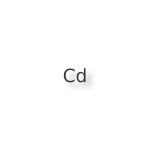
Details
| Stereochemistry | ACHIRAL |
| Molecular Formula | Cd |
| Molecular Weight | 112.411 |
| Optical Activity | NONE |
| Defined Stereocenters | 0 / 0 |
| E/Z Centers | 0 |
| Charge | 0 |
SHOW SMILES / InChI
SMILES
[Cd]
InChI
InChIKey=BDOSMKKIYDKNTQ-UHFFFAOYSA-N
InChI=1S/Cd
| Molecular Formula | Cd |
| Molecular Weight | 112.411 |
| Charge | 0 |
| Count |
|
| Stereochemistry | ACHIRAL |
| Additional Stereochemistry | No |
| Defined Stereocenters | 0 / 0 |
| E/Z Centers | 0 |
| Optical Activity | NONE |
Cadmium is a chemical element with symbol Cd and atomic number 48. Its most common oxidation state is +2. Cadmium has no known biological function in higher organisms, but a cadmium-dependent carbonic anhydrase has been found in marine diatoms. In humans, the highest concentration of cadmium is absorbed by the kidneys and up to 30 mg of cadmium is commonly inhaled during childhood and adolescence. Cadmium is under preliminary research for its toxicity in humans, potentially contributing to risks of cancer, cardiovascular disease, and osteoporosis. The most risk of cadmium toxicity is from industrial exposure to inhalation of dust and fumes, or ingestion of soluble cadmium compounds.
CNS Activity
Approval Year
PubMed
| Title | Date | PubMed |
|---|---|---|
| Involvement of mitogen-activated protein kinases and protein kinase C in cadmium-induced prostaglandin E2 production in primary mouse osteoblastic cells. | 2004-08-05 |
|
| Expression of metallothionein isoform 3 (MT-3) determines the choice between apoptotic or necrotic cell death in Cd+2-exposed human proximal tubule cells. | 2004-08 |
|
| Induction of orphan nuclear receptor Nur77 gene expression and its role in cadmium-induced apoptosis in lung. | 2004-08 |
|
| Response of rainbow trout transcriptome to model chemical contaminants. | 2004-07-30 |
|
| The nitric oxide donor, O2-vinyl 1-(pyrrolidin-1-yl)diazen-1-ium-1,2-diolate (V-PYRRO/NO), protects against cadmium-induced hepatotoxicity in mice. | 2004-07 |
|
| Effect of ascorbic acid supplementation on testicular steroidogenesis and germ cell death in cadmium-treated male rats. | 2004-06-30 |
|
| Induction of a multixenobiotic resistance protein (MXR) in the Asiatic clam Corbicula fluminea after heavy metals exposure. | 2004-05-12 |
|
| Diversity of metallothioneins in the American oyster, Crassostrea virginica, revealed by transcriptomic and proteomic approaches. | 2004-05 |
|
| Sertoli cell junctional proteins as early targets for different classes of reproductive toxicants. | 2004-05 |
|
| Cadmium induces both pyruvate kinase and Na+/H+ exchanger activity through protein kinase C mediated signal transduction, in isolated digestive gland cells of Mytilus galloprovincialis (L.). | 2004-04 |
|
| A comparative assessment of the adrenotoxic effects of cadmium in two teleost species, rainbow trout, Oncorhynchus mykiss, and yellow perch, Perca flavescens. | 2004-03-30 |
|
| Acute cadmium chloride administration induces hepatic and renal CYP2A5 mRNA, protein and activity in the mouse: involvement of transcription factor NRF2. | 2004-03-21 |
|
| Vitamin C and vitamin E protect the rat testes from cadmium-induced reactive oxygen species. | 2004-02-29 |
|
| Mediating of caspase-independent apoptosis by cadmium through the mitochondria-ROS pathway in MRC-5 fibroblasts. | 2004-02-01 |
|
| Differential effect of cadmium on cholinephosphotransferase activity in normal and cancerous human mammary epithelial cell lines. | 2004-02 |
|
| Cadmium-induced apoptosis in C6 glioma cells: influence of oxidative stress. | 2004-02 |
|
| Upregulation of heme oxygenase-1 and p21 confers resistance to apoptosis in human gastric cancer cells. | 2004-01-15 |
|
| Cadmium induces nuclear export of Bach1, a transcriptional repressor of heme oxygenase-1 gene. | 2003-12-05 |
|
| A second binding site revealed by C-terminal truncation of calpain small subunit, a penta-EF-hand protein. | 2003-11-15 |
|
| Induction of mitogenic signalling in the 1LN prostate cell line on exposure to submicromolar concentrations of cadmium+. | 2003-11 |
|
| Regulation of metallothionein and zinc transporter expression in human prostate cancer cells and tissues. | 2003-10-28 |
|
| Mouse kidney expresses mRNA of four highly related sodium-glucose cotransporters: regulation by cadmium. | 2003-10 |
|
| Evidence for heme oxygenase-1 association with caveolin-1 and -2 in mouse mesangial cells. | 2003-09 |
|
| An internal enhancer regulates heme- and cadmium-mediated induction of human heme oxygenase-1. | 2003-09 |
|
| Developing a new method for soil pollution monitoring using molecular genetic biomarkers. | 2003-08-29 |
|
| Hsp27, Hsp70, and metallothionein in MDCK and LLC-PK1 renal epithelial cells: effects of prolonged exposure to cadmium. | 2003-08-15 |
|
| PCR-based subtraction analyses for upregulated gene transcription in cadmium-exposed rat lung type 2 epithelial cells. | 2003-08-15 |
|
| Tissue-dependent induction of heme oxygenase-1 and metallothionein-1/2 by methyl methanesulfonate. | 2003-08 |
|
| Chromium(VI) down-regulates heavy metal-induced metallothionein gene transcription by modifying transactivation potential of the key transcription factor, metal-responsive transcription factor 1. | 2003-07-11 |
|
| Stable transfection and overexpression of metallothionein isoform 3 inhibits the growth of MCF-7 and Hs578T cells but not that of T-47D or MDA-MB-231 cells. | 2003-07 |
|
| Expression of metallothionein gene at different time in testicular interstitial cells and liver of rats treated with cadmium. | 2003-07 |
|
| In vitro effect of metal ions on the activity of two amphibian glyceraldehyde-3-phosphate dehydrogenases: potential metal binding sites. | 2003-06 |
|
| Thioredoxin peroxidases can foster cytoprotection or cell death in response to different stressors: over- and under-expression of thioredoxin peroxidase in Drosophila cells. | 2003-05-01 |
|
| Short-term depletion of catalase suppresses cadmium-elicited c-Jun N-terminal kinase activation and apoptosis: role of protein phosphatases. | 2003-01 |
|
| Effect of DMT1 knockdown on iron, cadmium, and lead uptake in Caco-2 cells. | 2003-01 |
|
| Protective influence of vitamin E on antioxidant defense system in the blood of rats treated with cadmium. | 2003 |
|
| Molecular characterization of a novel, cadmium-inducible gene from the nematode Caenorhabditis elegans. A new gene that contributes to the resistance to cadmium toxicity. | 2002-11-01 |
|
| [Effects of oral cadmium exposure on expression of metallothionein-I and metallothionein-II mRNA in rat prostate]. | 2002-10 |
|
| Differential heat shock gene hsp70-1 response to toxicants revealed by in vivo study of lungs in transgenic mice. | 2002-10 |
|
| Evidence for non-isostructural replacement of Zn(2+) with Cd(2+) in the beta-domain of brain-specific metallothionein-3. | 2002-09-11 |
|
| Sensitizing effects of cadmium on TNF-alpha- and TRAIL-mediated apoptosis of NIH3T3 cells with distinct expression patterns of p53. | 2002-09 |
|
| Metal- and tissue-dependent relationship between metallothionein mRNA and protein. | 2002-07-15 |
|
| N-acetylcysteine and celecoxib lessen cadmium cytotoxicity which is associated with cyclooxygenase-2 up-regulation in mouse neuronal cells. | 2002-07-12 |
|
| Interactive effects of benzo(a)pyrene and cadmium and effects of di(2-ethylhexyl) phthalate on antioxidant and peroxisomal enzymes and peroxisomal volume density in the digestive gland of mussel Mytilus galloprovincialis Lmk. | 2002-07-10 |
|
| Placental endocrine disruption induced by cadmium: effects on P450 cholesterol side-chain cleavage and 3beta-hydroxysteroid dehydrogenase enzymes in cultured human trophoblasts. | 2002-07 |
|
| Upregulation of stress response mRNAs in COS-7 cells exposed to cadmium. | 2002-05-24 |
|
| Brain-specific metallothionein-3 has higher metal-binding capacity than ubiquitous metallothioneins and binds metals noncooperatively. | 2002-05-14 |
|
| Antisense inhibition of translation initiation factor 3 reverses its oncogenic potential. | 2002 |
|
| Glycosylated molecular variants of C-reactive proteins from the major carp Catla catla in fresh and polluted aquatic environments. | 2001-07 |
|
| Nerve growth factor-stimulated calcium uptake into PC12 cells: uniqueness of the channel and evidence for phosphorylation. | 1992-04 |
Sample Use Guides
Rats were intravenously administered doses of 1.34, 2.67, 4.01 mg/kg of Cadmium fluoride. The 24 hour LD50 was determined to be 3.29 mg/kg with severe hepatocellular injury and acute renal failure recorded at 2.67 mg/kg. At doses of 4.01 mg/ kg and higher, there was a marked increase in serum potassium and metabolic acidosis as well as AST and ALT activities greater the 1,500 IU/L.
Route of Administration:
Intravenous
Human keratinocyte HACAT cells were cultured at 37 deg-C in a 5% CO2 atmosphere in RPMI1640 medium containing 10% FCS, 5000 U/mL penicillin and 2 mM L-glutamine. Cadmium chloride was prepared in distilled water and added to the culture medium to obtain final concentrations of 15, 50, and 100 micro-M. Cell cultures were then incubated for 24 hours then analyzed for apoptotic DNA fragmentation, Caspase-9 activity, Caspase-3 activity, p53 activation, cellular content, and other protein expression levels. Cadmium did not induce apoptotic cell death nor did it increase caspase-9 or caspase-3 activity in HaCaT cells. When HaCaT cells were also treated with 9 micro-g/mL of p553 activator and 100 micro-M Cadmium there was a significant reduction in cell viability from 54% to 28%.
| Substance Class |
Chemical
Created
by
admin
on
Edited
Mon Mar 31 18:31:22 GMT 2025
by
admin
on
Mon Mar 31 18:31:22 GMT 2025
|
| Record UNII |
00BH33GNGH
|
| Record Status |
Validated (UNII)
|
| Record Version |
|
-
Download
| Name | Type | Language | ||
|---|---|---|---|---|
|
Systematic Name | English | ||
|
Preferred Name | English | ||
|
Common Name | English | ||
|
Common Name | English | ||
|
Common Name | English | ||
|
Common Name | English | ||
|
Common Name | English | ||
|
Common Name | English | ||
|
Common Name | English | ||
|
Common Name | English | ||
|
Common Name | English | ||
|
Common Name | English | ||
|
Code | English | ||
|
Common Name | English |
| Classification Tree | Code System | Code | ||
|---|---|---|---|---|
|
NCI_THESAURUS |
C637
Created by
admin on Mon Mar 31 18:31:22 GMT 2025 , Edited by admin on Mon Mar 31 18:31:22 GMT 2025
|
||
|
DSLD |
544 (Number of products:8)
Created by
admin on Mon Mar 31 18:31:22 GMT 2025 , Edited by admin on Mon Mar 31 18:31:22 GMT 2025
|
||
|
NCI_THESAURUS |
C45383
Created by
admin on Mon Mar 31 18:31:22 GMT 2025 , Edited by admin on Mon Mar 31 18:31:22 GMT 2025
|
||
|
WHO-ATC |
D11AC02
Created by
admin on Mon Mar 31 18:31:22 GMT 2025 , Edited by admin on Mon Mar 31 18:31:22 GMT 2025
|
| Code System | Code | Type | Description | ||
|---|---|---|---|---|---|
|
282
Created by
admin on Mon Mar 31 18:31:22 GMT 2025 , Edited by admin on Mon Mar 31 18:31:22 GMT 2025
|
PRIMARY | |||
|
7440-43-9
Created by
admin on Mon Mar 31 18:31:22 GMT 2025 , Edited by admin on Mon Mar 31 18:31:22 GMT 2025
|
PRIMARY | |||
|
23973
Created by
admin on Mon Mar 31 18:31:22 GMT 2025 , Edited by admin on Mon Mar 31 18:31:22 GMT 2025
|
PRIMARY | |||
|
231-152-8
Created by
admin on Mon Mar 31 18:31:22 GMT 2025 , Edited by admin on Mon Mar 31 18:31:22 GMT 2025
|
PRIMARY | |||
|
m2888
Created by
admin on Mon Mar 31 18:31:22 GMT 2025 , Edited by admin on Mon Mar 31 18:31:22 GMT 2025
|
PRIMARY | Merck Index | ||
|
Cadmium
Created by
admin on Mon Mar 31 18:31:22 GMT 2025 , Edited by admin on Mon Mar 31 18:31:22 GMT 2025
|
PRIMARY | |||
|
1362694
Created by
admin on Mon Mar 31 18:31:22 GMT 2025 , Edited by admin on Mon Mar 31 18:31:22 GMT 2025
|
PRIMARY | RxNorm | ||
|
00BH33GNGH
Created by
admin on Mon Mar 31 18:31:22 GMT 2025 , Edited by admin on Mon Mar 31 18:31:22 GMT 2025
|
PRIMARY | |||
|
22977
Created by
admin on Mon Mar 31 18:31:22 GMT 2025 , Edited by admin on Mon Mar 31 18:31:22 GMT 2025
|
PRIMARY | |||
|
300000008080
Created by
admin on Mon Mar 31 18:31:22 GMT 2025 , Edited by admin on Mon Mar 31 18:31:22 GMT 2025
|
PRIMARY | |||
|
C44348
Created by
admin on Mon Mar 31 18:31:22 GMT 2025 , Edited by admin on Mon Mar 31 18:31:22 GMT 2025
|
PRIMARY | |||
|
DB14085
Created by
admin on Mon Mar 31 18:31:22 GMT 2025 , Edited by admin on Mon Mar 31 18:31:22 GMT 2025
|
PRIMARY | |||
|
D002104
Created by
admin on Mon Mar 31 18:31:22 GMT 2025 , Edited by admin on Mon Mar 31 18:31:22 GMT 2025
|
PRIMARY | |||
|
DTXSID1023940
Created by
admin on Mon Mar 31 18:31:22 GMT 2025 , Edited by admin on Mon Mar 31 18:31:22 GMT 2025
|
PRIMARY | |||
|
00BH33GNGH
Created by
admin on Mon Mar 31 18:31:22 GMT 2025 , Edited by admin on Mon Mar 31 18:31:22 GMT 2025
|
PRIMARY |
| Related Record | Type | Details | ||
|---|---|---|---|---|
|
PARENT -> CONSTITUENT ALWAYS PRESENT |
CADMIUM (ng/cigarette)
Canadian = 929.7 SD(201.8)
Imported = 765.8 SD(69.8)
|

| Related Record | Type | Details | ||
|---|---|---|---|---|
|
|
ACTIVE MOIETY |