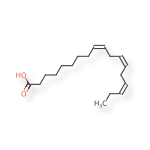
Details
| Stereochemistry | ACHIRAL |
| Molecular Formula | C18H30O2 |
| Molecular Weight | 278.4296 |
| Optical Activity | NONE |
| Defined Stereocenters | 0 / 0 |
| E/Z Centers | 3 |
| Charge | 0 |
SHOW SMILES / InChI
SMILES
CC\C=C/C\C=C/C\C=C/CCCCCCCC(O)=O
InChI
InChIKey=DTOSIQBPPRVQHS-PDBXOOCHSA-N
InChI=1S/C18H30O2/c1-2-3-4-5-6-7-8-9-10-11-12-13-14-15-16-17-18(19)20/h3-4,6-7,9-10H,2,5,8,11-17H2,1H3,(H,19,20)/b4-3-,7-6-,10-9-
| Molecular Formula | C18H30O2 |
| Molecular Weight | 278.4296 |
| Charge | 0 |
| Count |
|
| Stereochemistry | ACHIRAL |
| Additional Stereochemistry | No |
| Defined Stereocenters | 0 / 0 |
| E/Z Centers | 3 |
| Optical Activity | NONE |
Alpha-linolenic acid (ALA), an 18-carbon omega-3 essential fatty acid, is the precursor of eicosapentaenoic acid (EPA) and docosahexaenoic acid (DHA). ALA cannot be synthesized by humans and therefore must be entirely acquired from exogenous sources. Evidence for the essentiality of ALA was first provided by a study showing that ALA supplementation reversed the abnormal neurologic signs observed in a 6-year-old girl who suffered from sensory loss and visual complications. Most of the ALA is catabolized via beta-oxidation for energy generation, and a small proportion of it undergoes conversion to produce another two potent members of omega-3 PUFA family: EPA and DHA. Delta 6 desaturase (D6D) enzyme is responsible the conversion of ALA to DHA. Although not conclusive, it was suggested, that the benefits associated with ALA seem to stem mainly from EPA and DHA, and as major consequence of ALA deficiency it appears that EPA and DHA are not adequately produced.
Originator
Approval Year
Targets
| Primary Target | Pharmacology | Condition | Potency |
|---|---|---|---|
Target ID: O60427|||Q96SV3 Gene ID: 3992.0 Gene Symbol: FADS1 Target Organism: Homo sapiens (Human) |
|||
Target ID: O95864 Gene ID: 9415.0 Gene Symbol: FADS2 Target Organism: Homo sapiens (Human) |
Conditions
| Condition | Modality | Targets | Highest Phase | Product |
|---|---|---|---|---|
| Curative | Intralipid Approved UseIntralipid® 10% is indicated as a source of calories and essential fatty acids for patients requiring parenteral nutrition for extended periods of time (usually for more than 5 days) and as a source of essential fatty acids for prevention of EFAD. Launch Date1996 |
PubMed
| Title | Date | PubMed |
|---|---|---|
| Repeated systemic administration of the nutraceutical alpha-linolenic acid exerts neuroprotective efficacy, an antidepressant effect and improves cognitive performance when given after soman exposure. | 2015-12 |
|
| Association of serum aryl hydrocarbon receptor activity and RBC omega-3 polyunsaturated fatty acids with flow-mediated dilation in healthy, young Hispanic cigarette smokers. | 2015-01-22 |
|
| Exposure to DEHP decreased four fatty acid levels in plasma of prepartum mice. | 2013-07-05 |
|
| Alpha-linolenic acid is a potent neuroprotective agent against soman-induced neuropathology. | 2012-10 |
|
| Discovery of a potent and selective GPR120 agonist. | 2012-05-10 |
|
| Studies on comparative efficacy of α-linolenic acid and α-eleostearic acid on prevention of organic mercury-induced oxidative stress in kidney and liver of rat. | 2012-03 |
|
| PKC activation by resveratrol derivatives with unsaturated aliphatic chain. | 2012 |
|
| Activation of the nuclear receptor PPARγ by metabolites isolated from sage (Salvia officinalis L.). | 2010-10-28 |
|
| Cross-talk between vitamin D receptor (VDR)- and peroxisome proliferator-activated receptor (PPAR)-signaling in melanoma cells. | 2009-09 |
|
| Differential effects of steroids on the synthesis of polyunsaturated fatty acids by human neuroblastoma cells. | 2009-09 |
|
| Cloning and characterization of the rat free fatty acid receptor GPR120: in vivo effect of the natural ligand on GLP-1 secretion and proliferation of pancreatic beta cells. | 2008-06 |
|
| Changing ratios of omega-6 to omega-3 fatty acids can differentially modulate polychlorinated biphenyl toxicity in endothelial cells. | 2008-03-10 |
|
| Differential effects of long-chain fatty acids and clofibrate on gene expression profiles in cardiomyocytes. | 2008-01 |
|
| TRPV1 is a novel target for omega-3 polyunsaturated fatty acids. | 2007-01-15 |
|
| The inhibitory effect of polyunsaturated fatty acids on human CYP enzymes. | 2006-11-25 |
|
| Conjugated linoleic acid, unlike other unsaturated fatty acids, strongly induces glutathione synthesis without any lipoperoxidation. | 2006-11 |
|
| Differential activation of nuclear receptors by perfluorinated fatty acid analogs and natural fatty acids: a comparison of human, mouse, and rat peroxisome proliferator-activated receptor-alpha, -beta, and -gamma, liver X receptor-beta, and retinoid X receptor-alpha. | 2006-08 |
|
| PPARalpha activators and fasting induce the expression of adipose differentiation-related protein in liver. | 2006-05 |
|
| Prostate tissue and leukocyte levels of n-3 polyunsaturated fatty acids in men with benign prostate hyperplasia or prostate cancer. | 2006-02 |
|
| Omega-3 fatty acids inhibit an increase of proinflammatory cytokines in patients with active Crohn's disease compared with omega-6 fatty acids. | 2005-12 |
|
| Specificity of receptor-ligand interactions and their effect on dimerisation as observed by electrospray mass spectrometry: bile acids form stable adducts to the RXRalpha. | 2005-11 |
|
| Effect of a sustained reduction in plasma free fatty acid concentration on intramuscular long-chain fatty Acyl-CoAs and insulin action in type 2 diabetic patients. | 2005-11 |
|
| Free fatty acids regulate gut incretin glucagon-like peptide-1 secretion through GPR120. | 2005-01 |
|
| Effect of chemical penetration enhancer and iontophoresis on the in vitro percutaneous absorption enhancement of insulin through porcine epidermis. | 2005 |
|
| Polyunsaturated fatty acids are FXR ligands and differentially regulate expression of FXR targets. | 2004-08 |
|
| Dietary alpha-linolenic acid is associated with reduced risk of fatal coronary heart disease, but increased prostate cancer risk: a meta-analysis. | 2004-04 |
|
| Alpha-linolenic acid and the risk of prostate cancer. What is the evidence? | 2004-04 |
|
| Dietary alpha-linolenic acid reduces COX-2 expression and induces apoptosis of hepatoma cells. | 2004-02 |
|
| Adipose tissue alpha-linolenic acid and nonfatal acute myocardial infarction in Costa Rica. | 2003-04-01 |
|
| The orphan G protein-coupled receptor GPR40 is activated by medium and long chain fatty acids. | 2003-03-28 |
|
| Free fatty acids regulate insulin secretion from pancreatic beta cells through GPR40. | 2003-03-13 |
|
| A human cell surface receptor activated by free fatty acids and thiazolidinedione drugs. | 2003-02-07 |
|
| Fish consumption, fish oil, omega-3 fatty acids, and cardiovascular disease. | 2002-11-19 |
|
| Identification of a fatty acid delta6-desaturase deficiency in human skin fibroblasts. | 2001-04 |
|
| Prospective study of dietary fat and the risk of age-related macular degeneration. | 2001-02 |
|
| Abundant expression of uncoupling protein-2 in the small intestine: up-regulation by dietary fish oil and fibrates. | 2001-01-15 |
|
| Short-term supplementation of low-dose gamma-linolenic acid (GLA), alpha-linolenic acid (ALA), or GLA plus ALA does not augment LCP omega 3 status of Dutch vegans to an appreciable extent. | 2000-11 |
|
| Fatty acid binding proteins from different tissues show distinct patterns of fatty acid interactions. | 2000-06-20 |
|
| Polyunsaturated fatty acids are potent neuroprotectors. | 2000-04-17 |
|
| Importance of n-3 fatty acids in health and disease. | 2000-01 |
|
| Evidence for direct binding of fatty acids and eicosanoids to human peroxisome proliferators-activated receptor alpha. | 1999-07-14 |
|
| Effects of butter oil blends with increased concentrations of stearic, oleic and linolenic acid on blood lipids in young adults. | 1999-07 |
|
| Preferential uptake of long chain polyunsaturated fatty acids by isolated human placental membranes. | 1996-02-09 |
|
| Fatty acids and fibrates are potent inducers of transcription of the phosphenolpyruvate carboxykinase gene in adipocytes. | 1995-12-01 |
|
| High susceptibility to paraquat-driven lipid peroxidation of cultured hepatocytes loaded with linolenic acid. | 1995-07 |
|
| Supplementation with flaxseed oil versus sunflowerseed oil in healthy young men consuming a low fat diet: effects on platelet composition and function. | 1995-03 |
|
| Nutritional attributes of traditional flaxseed in healthy young adults. | 1995-01 |
|
| Equilibrium constants for the binding of fatty acids with fatty acid-binding proteins from adipocyte, intestine, heart, and liver measured with the fluorescent probe ADIFAB. | 1994-09-30 |
|
| [Biological effects on premature neonates of a milk formula enriched with alpha-linolenic acid: a multicenter study]. | 1994-02 |
|
| Glucose, insulin and platelet fatty acids following myocardial infarction: an association with infarct size. | 1987-07-01 |
Patents
Sample Use Guides
It was examined the effect of the oral consumption of α-Linolenic acid (ALA) on blood levels of BDNF and Malondialdehyde (MDA) in healthy adult humans. 30 healthy volunteers, 15 men and 15 women, were selected randomly. During the experiment, each individual was given 3 oral capsules of flaxseed oil, containing 500mg of alpha linolenic acid, daily for one week. Then, plasma levels of brain-derived neurotrophic factors (BDNF) and MDA were tested.
Route of Administration:
Oral
It was examined the effects of omega-3 alpha-linolenic acid (ALA) during in vitro oocyte maturation (IVM) in the presence of PSO on subsequent embryo development and quality, and the cellular mechanisms that might be involved. Bovine cumulus oocyte complexes (COCs) were supplemented during IVM with ALA (50 μM), PSO (425 μM), or PSO+ALA. Compared with FFA-free controls (P < 0.05), PSO increased embryo fragmentation and decreased good quality embryos on Day 2 post-fertilization. Day 7 blastocyst rate was also reduced. Day 8 blastocysts had lower cell counts and higher apoptosis but normal metabolic profile. It was found, that adding ALA in the presence of PSO normalised embryo fragmentation, cleavage, blastocyst rates and blastocyst quality compared to controls (P > 0.05). Combined treatment with ALA also reduced CC apoptosis, partially recovered CC expansion, abrogated the reduction in MMP in the CCs but not in the oocytes, and reduced BiP and HSP70 expression in CCs, compared with PSO only (P < 0.05). In conclusion, ALA supplementation protected oocyte developmental capacity under lipotoxic conditions mainly by protecting cumulus cell viability.
| Substance Class |
Chemical
Created
by
admin
on
Edited
Mon Mar 31 21:23:42 GMT 2025
by
admin
on
Mon Mar 31 21:23:42 GMT 2025
|
| Record UNII |
0RBV727H71
|
| Record Status |
Validated (UNII)
|
| Record Version |
|
-
Download
| Name | Type | Language | ||
|---|---|---|---|---|
|
Official Name | English | ||
|
Preferred Name | English | ||
|
Common Name | English | ||
|
Systematic Name | English | ||
|
Common Name | English | ||
|
Systematic Name | English | ||
|
Systematic Name | English | ||
|
Code | English | ||
|
Common Name | English | ||
|
Brand Name | English | ||
|
Common Name | English | ||
|
Common Name | English | ||
|
Common Name | English | ||
|
Common Name | English | ||
|
Common Name | English | ||
|
Common Name | English | ||
|
Common Name | English | ||
|
Systematic Name | English | ||
|
Code | English | ||
|
Brand Name | English | ||
|
Common Name | English | ||
|
Common Name | English | ||
|
Brand Name | English | ||
|
Common Name | English | ||
|
Code | English | ||
|
Common Name | English | ||
|
Common Name | English | ||
|
Common Name | English |
| Classification Tree | Code System | Code | ||
|---|---|---|---|---|
|
DSLD |
2830 (Number of products:52)
Created by
admin on Mon Mar 31 21:23:42 GMT 2025 , Edited by admin on Mon Mar 31 21:23:42 GMT 2025
|
||
|
CFR |
21 CFR 357.210
Created by
admin on Mon Mar 31 21:23:42 GMT 2025 , Edited by admin on Mon Mar 31 21:23:42 GMT 2025
|
||
|
NCI_THESAURUS |
C493
Created by
admin on Mon Mar 31 21:23:42 GMT 2025 , Edited by admin on Mon Mar 31 21:23:42 GMT 2025
|
||
|
NCI_THESAURUS |
C68403
Created by
admin on Mon Mar 31 21:23:42 GMT 2025 , Edited by admin on Mon Mar 31 21:23:42 GMT 2025
|
||
|
DSLD |
1029 (Number of products:525)
Created by
admin on Mon Mar 31 21:23:42 GMT 2025 , Edited by admin on Mon Mar 31 21:23:42 GMT 2025
|
| Code System | Code | Type | Description | ||
|---|---|---|---|---|---|
|
C997
Created by
admin on Mon Mar 31 21:23:42 GMT 2025 , Edited by admin on Mon Mar 31 21:23:42 GMT 2025
|
PRIMARY | |||
|
SUB21884
Created by
admin on Mon Mar 31 21:23:42 GMT 2025 , Edited by admin on Mon Mar 31 21:23:42 GMT 2025
|
PRIMARY | |||
|
595958
Created by
admin on Mon Mar 31 21:23:42 GMT 2025 , Edited by admin on Mon Mar 31 21:23:42 GMT 2025
|
ALTERNATIVE | |||
|
27432
Created by
admin on Mon Mar 31 21:23:42 GMT 2025 , Edited by admin on Mon Mar 31 21:23:42 GMT 2025
|
PRIMARY | |||
|
207-334-8
Created by
admin on Mon Mar 31 21:23:42 GMT 2025 , Edited by admin on Mon Mar 31 21:23:42 GMT 2025
|
PRIMARY | |||
|
2042
Created by
admin on Mon Mar 31 21:23:42 GMT 2025 , Edited by admin on Mon Mar 31 21:23:42 GMT 2025
|
PRIMARY | |||
|
5280934
Created by
admin on Mon Mar 31 21:23:42 GMT 2025 , Edited by admin on Mon Mar 31 21:23:42 GMT 2025
|
PRIMARY | |||
|
SUB34619
Created by
admin on Mon Mar 31 21:23:42 GMT 2025 , Edited by admin on Mon Mar 31 21:23:42 GMT 2025
|
PRIMARY | |||
|
ALPHA-LINOLENIC ACID
Created by
admin on Mon Mar 31 21:23:42 GMT 2025 , Edited by admin on Mon Mar 31 21:23:42 GMT 2025
|
PRIMARY | |||
|
4618
Created by
admin on Mon Mar 31 21:23:42 GMT 2025 , Edited by admin on Mon Mar 31 21:23:42 GMT 2025
|
PRIMARY | |||
|
100000088243
Created by
admin on Mon Mar 31 21:23:42 GMT 2025 , Edited by admin on Mon Mar 31 21:23:42 GMT 2025
|
PRIMARY | |||
|
52071
Created by
admin on Mon Mar 31 21:23:42 GMT 2025 , Edited by admin on Mon Mar 31 21:23:42 GMT 2025
|
PRIMARY | |||
|
32387
Created by
admin on Mon Mar 31 21:23:42 GMT 2025 , Edited by admin on Mon Mar 31 21:23:42 GMT 2025
|
PRIMARY | |||
|
DTXSID7025506
Created by
admin on Mon Mar 31 21:23:42 GMT 2025 , Edited by admin on Mon Mar 31 21:23:42 GMT 2025
|
PRIMARY | |||
|
0RBV727H71
Created by
admin on Mon Mar 31 21:23:42 GMT 2025 , Edited by admin on Mon Mar 31 21:23:42 GMT 2025
|
PRIMARY | |||
|
D017962
Created by
admin on Mon Mar 31 21:23:42 GMT 2025 , Edited by admin on Mon Mar 31 21:23:42 GMT 2025
|
PRIMARY | |||
|
463-40-1
Created by
admin on Mon Mar 31 21:23:42 GMT 2025 , Edited by admin on Mon Mar 31 21:23:42 GMT 2025
|
PRIMARY | |||
|
0RBV727H71
Created by
admin on Mon Mar 31 21:23:42 GMT 2025 , Edited by admin on Mon Mar 31 21:23:42 GMT 2025
|
PRIMARY | |||
|
DB00132
Created by
admin on Mon Mar 31 21:23:42 GMT 2025 , Edited by admin on Mon Mar 31 21:23:42 GMT 2025
|
PRIMARY | |||
|
m6831
Created by
admin on Mon Mar 31 21:23:42 GMT 2025 , Edited by admin on Mon Mar 31 21:23:42 GMT 2025
|
PRIMARY | Merck Index |
| Related Record | Type | Details | ||
|---|---|---|---|---|
|
LIPID -> FATTY ACID | |||
|
|
LIPID -> FATTY ACID |
MAY BE PRESENT
|
||
|
PARENT -> CONSTITUENT ALWAYS PRESENT | |||
|
LIPID -> FATTY ACID |
Value is fatty acid composition (%) for international corn oil w/std. deviation of 0.4%
LR Strecker, et al; Proc World Conf Edible Fats & Oils Proc, Amer Oil Chem Soc, pp-309-323(1990)
|
||
|
LIPID -> FATTY ACID | |||
|
LIPID -> FATTY ACID | |||
|
PARENT -> CONSTITUENT ALWAYS PRESENT |
From Cannabis seed oil.
|
||
|
PARENT -> CONSTITUENT ALWAYS PRESENT | |||
|
PARENT -> CONSTITUENT ALWAYS PRESENT | |||
|
PARENT -> CONSTITUENT ALWAYS PRESENT |
|
||
|
PARENT -> CONSTITUENT ALWAYS PRESENT | |||
|
|
SALT/SOLVATE -> PARENT |
|
||
|
|
LIPID -> FATTY ACID |
ALWAYS PRESENT
|
||
|
LIPID -> FATTY ACID |
Values are % of weight of fatty acid composition.
O?Connor, RT, Herb, SF; J Am Oil Chem Soc 47, 186A, 195A, 197A(1970)(range)
Brignoli, CA et al: J Am Diet Assoc 68, 224(1976)(average)
|
||
|
LIPID -> FATTY ACID |
|
||
|
LIPID -> FATTY ACID |
Durkee Industrial Foods, Cleveland, Ohio(average value).
Range values as of FAO/WHO Codex Alimentarius Committee on commercial fats and oils.(unspecified percent)
|
||
|
LIPID -> FATTY ACID |
Value is fatty acid composition (%) for US corn oil w/std. deviation of 0.39%
LR Strecker, et al; Proc World Conf Edible Fats & Oils Proc, Amer Oil Chem Soc, pp-309-323(1990)
|


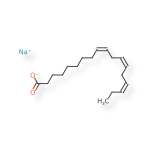
| Related Record | Type | Details | ||
|---|---|---|---|---|
|
|
ACTIVE MOIETY |
|