


Details
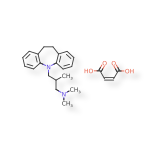
| Stereochemistry | RACEMIC |
| Molecular Formula | C20H26N2.C4H4O4 |
| Molecular Weight | 410.506 |
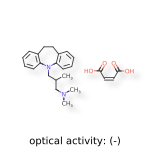
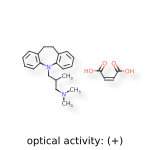
| Optical Activity | ( + / - ) |
| Defined Stereocenters | 0 / 1 |
| E/Z Centers | 1 |
| Charge | 0 |
SHOW SMILES / InChI
SMILES
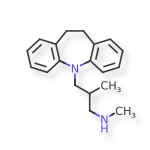
OC(=O)\C=C/C(O)=O.CC(CN(C)C)CN1C2=C(CCC3=C1C=CC=C3)C=CC=C2
InChI
InChIKey=YDGHCKHAXOUQOS-BTJKTKAUSA-N
InChI=1S/C20H26N2.C4H4O4/c1-16(14-21(2)3)15-22-19-10-6-4-8-17(19)12-13-18-9-5-7-11-20(18)22;5-3(6)1-2-4(7)8/h4-11,16H,12-15H2,1-3H3;1-2H,(H,5,6)(H,7,8)/b;2-1-
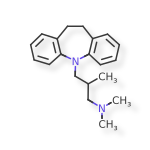
| Molecular Formula | C20H26N2 |
| Molecular Weight | 294.4338 |
| Charge | 0 |
| Count |
|
| Stereochemistry | RACEMIC |
| Additional Stereochemistry | No |
| Defined Stereocenters | 0 / 1 |
| E/Z Centers | 0 |
| Optical Activity | ( + / - ) |
| Molecular Formula | C4H4O4 |
| Molecular Weight | 116.0722 |
| Charge | 0 |
| Count |
|
| Stereochemistry | ACHIRAL |
| Additional Stereochemistry | No |
| Defined Stereocenters | 0 / 0 |
| E/Z Centers | 1 |
| Optical Activity | NONE |
Trimipramine is a tricyclic antidepressant similar to imipramine, but with more antihistaminic and sedative properties. It was sold under brand name surmontil for the relief of symptoms of depression. Endogenous depression is more likely to be alleviated than other depressive states. In studies with neurotic outpatients, the drug appeared to be equivalent to amitriptyline in the less-depressed patients but somewhat less effective than amitriptyline in the more severely depressed patients. In hospitalized depressed patients, trimipramine and imipramine were equally effective in relieving depression. Trimipramine has been reported to differ from other typical tricyclic antidepressant drugs in several aspects, for instance it does not inhibit neuronal transmitter uptake and does not cause down-regulation of beta-adrenoceptors. Moreover, it may possess antipsychotic activity in schizophrenic patients. In addition, was found that it did not antagonize the inhibitory effect of noradrenaline and 5-hydroxytryptamine on the release of transmitter, mediated by presynaptic auto receptors. In radioligand binding studies, trimipramine showed fairly high affinities for some dopamine (DA), noradrenaline and 5-hydroxytryptamine (5-HT) receptor subtypes (5-HT2 receptors = alpha 1A/B-adrenoceptors greater than or equal to D2 receptors), intermediate affinities for D1 receptors, alpha 2B-adrenoceptors and 5-HT1C receptors but only low affinities for alpha 2A-adrenoceptors, 5-HT1A, 5-HT1D and 5-HT3 receptors. It may thus be classified as an atypical neuroleptic drug.
CNS Activity
Approval Year
Targets
| Primary Target | Pharmacology | Condition | Potency |
|---|---|---|---|
Target ID: CHEMBL217 |
|||
Target ID: CHEMBL2095200 |
|||
Target ID: CHEMBL2096676 |
Conditions
| Condition | Modality | Targets | Highest Phase | Product |
|---|---|---|---|---|
| Primary | SURMONTIL Approved UseSURMONTIL is indicated for the relief of symptoms of depression. Endogenous depression is more likely to be alleviated than other depressive states. In studies with neurotic outpatients, the drug appeared to be equivalent to amitriptyline in the less-depressed patients but somewhat less effective than amitriptyline in the more severely depressed patients. In hospitalized depressed patients, trimipramine and imipramine were equally effective in relieving depression. Launch Date1979 |
Cmax
| Value | Dose | Co-administered | Analyte | Population |
|---|---|---|---|---|
92.1 ng/mL EXPERIMENT https://pubmed.ncbi.nlm.nih.gov/14520122/ |
75 mg single, oral dose: 75 mg route of administration: Oral experiment type: SINGLE co-administered: |
TRIMIPRAMINE plasma | Homo sapiens population: HEALTHY age: ADULT sex: FEMALE / MALE food status: FASTED |
AUC
| Value | Dose | Co-administered | Analyte | Population |
|---|---|---|---|---|
2.13 μg × h/mL EXPERIMENT https://pubmed.ncbi.nlm.nih.gov/14520122/ |
75 mg single, oral dose: 75 mg route of administration: Oral experiment type: SINGLE co-administered: |
TRIMIPRAMINE plasma | Homo sapiens population: HEALTHY age: ADULT sex: FEMALE / MALE food status: FASTED |
T1/2
| Value | Dose | Co-administered | Analyte | Population |
|---|---|---|---|---|
31 h EXPERIMENT https://pubmed.ncbi.nlm.nih.gov/14520122/ |
75 mg single, oral dose: 75 mg route of administration: Oral experiment type: SINGLE co-administered: |
TRIMIPRAMINE plasma | Homo sapiens population: HEALTHY age: ADULT sex: FEMALE / MALE food status: FASTED |
Overview
| CYP3A4 | CYP2C9 | CYP2D6 | hERG |
|---|---|---|---|
OverviewOther
| Other Inhibitor | Other Substrate | Other Inducer |
|---|---|---|
Drug as perpetrator
| Target | Modality | Activity | Metabolite | Clinical evidence |
|---|---|---|---|---|
| likely | ||||
| yes [IC50 31 uM] |
Drug as victim
| Target | Modality | Activity | Metabolite | Clinical evidence |
|---|---|---|---|---|
| likely | ||||
| yes [Km 258 uM] | ||||
| yes | ||||
| yes |
Tox targets
| Target | Modality | Activity | Metabolite | Clinical evidence |
|---|---|---|---|---|
PubMed
| Title | Date | PubMed |
|---|---|---|
| Persistent tinnitus induced by tricyclic antidepressants. | 2010-08 |
|
| Acid sphingomyelinase inhibitors normalize pulmonary ceramide and inflammation in cystic fibrosis. | 2010-06 |
|
| Role of human UGT2B10 in N-glucuronidation of tricyclic antidepressants, amitriptyline, imipramine, clomipramine, and trimipramine. | 2010-05 |
|
| Seizure risk associated with neuroactive drugs: data from the WHO adverse drug reactions database. | 2010-03 |
|
| Modulatory effects of neuropsychopharmaca on intracellular pH of hippocampal neurones in vitro. | 2010-01-01 |
|
| Interaction of the human plasma membrane monoamine transporter (hPMAT) with antidepressants and antipsychotics. | 2010-01 |
|
| Drugs associated with more suicidal ideations are also associated with more suicide attempts. | 2009-10-02 |
|
| Accuracy of Veterans Affairs databases for diagnoses of chronic diseases. | 2009-10 |
|
| Imaging biological activity of a glioblastoma treated with an individual patient-tailored, experimental therapy regimen. | 2009-07 |
|
| Different mechanisms are involved in apoptosis induced by melanoma gangliosides on human monocyte-derived dendritic cells. | 2009-06 |
|
| The effect of trimipramine on dream recall and dream emotions in depressive outpatients. | 2009-05-30 |
|
| Antiulcer activity of fluvoxamine in rats and its effect on oxidant and antioxidant parameters in stomach tissue. | 2009-05-20 |
|
| Efficacy of tricyclic antidepressants in irritable bowel syndrome: a meta-analysis. | 2009-04-07 |
|
| Outcome in delusional depression comparing trimipramine monotherapy with a combination of amitriptyline and haloperidol--a double-blind multicenter trial. | 2009-04 |
|
| Serum concentrations of antidepressant drugs in a naturalistic setting: compilation based on a large therapeutic drug monitoring database. | 2009-02 |
|
| Depression following thrombotic cardiovascular events in elderly medicare beneficiaries: risk of morbidity and mortality. | 2009 |
|
| The combined dexamethasone/CRH Test (DEX/CRH test) and prediction of acute treatment response in major depression. | 2009 |
|
| The clinical-familial correlates and naturalistic outcome of panic-disorder-agoraphobia with and without lifetime bipolar II comorbidity. | 2008-11-13 |
|
| Community-based randomised controlled trial evaluating falls and osteoporosis risk management strategies. | 2008-11-04 |
|
| Leptin and ghrelin levels in patients with schizophrenia during different antipsychotics treatment: a review. | 2008-11 |
|
| Determination of tricyclic antidepressants in human plasma using pipette tip solid-phase extraction and gas chromatography-mass spectrometry. | 2008-07 |
|
| Metabolism in adipose tissue in response to citalopram and trimipramine treatment--an in situ microdialysis study. | 2008-06 |
|
| Pharmacokinetic genes do not influence response or tolerance to citalopram in the STAR*D sample. | 2008-04-02 |
|
| Frequency of different anti-depressants associated with suicides and drug deaths. | 2008-03 |
|
| Pharmacogenetics: data, concepts and tools to improve drug discovery and drug treatment. | 2008-02 |
|
| Diverse antidepressants increase CDP-diacylglycerol production and phosphatidylinositide resynthesis in depression-relevant regions of the rat brain. | 2008-01-24 |
|
| Antidepressant interactions with the NMDA NR1-1b subunit. | 2008 |
|
| Antidepressants for the treatment of insomnia : a suitable approach? | 2008 |
|
| Aplastic right coronary artery and left coronary artery with a separate origin of the circumflex branch in a 31-year-old woman. | 2007-12-20 |
|
| Receptor occupancy of mirtazapine determined by PET in healthy volunteers. | 2007-11 |
|
| Differential neurotoxicity of tricyclic antidepressants and novel derivatives in vitro in a dorsal root ganglion cell culture model. | 2007-08 |
|
| Divalproex sodium in severe anaemia: a case report. | 2007-07-10 |
|
| Quantification of tricyclic antidepressants and monoamine oxidase inhibitors by high-performance liquid chromatography-tandem mass spectrometry in whole blood. | 2007-05 |
|
| Antidepressant therapy in tinnitus. | 2007-04 |
|
| Shifts in metabolic parameters surrounding glucose homoeostasis resulting from tricyclic antidepressant therapy: implications of insulin resistance? | 2007-01 |
|
| Heart rate variability reveals risk of arrhythmias after intoxication with antidepressants. | 2007-01 |
|
| An electrospray ionisation tandem mass spectrometric investigation of selected psychoactive pharmaceuticals and its application in drug and metabolite profiling by liquid chromatography/electrospray ionisation tandem mass spectrometry. | 2007 |
|
| Tricyclic antidepressant poisoning: an evidence-based consensus guideline for out-of-hospital management. | 2007 |
|
| Quantitative determination of forty-eight antidepressants and antipsychotics in human serum by HPLC tandem mass spectrometry: a multi-level, single-sample approach. | 2006-10-20 |
|
| Solid-phase extraction and analysis of 20 antidepressant drugs in human plasma by LC/MS with SSI method. | 2006-10-16 |
|
| [Treatment for irritable bowel syndrome--psychotropic drugs, antidepressants and so on]. | 2006-08 |
|
| [Trazodone for the treatment of behavioral and psychological symptoms of dementia (BPSD) in Alzheimer's disease: a retrospective study focused on the aggression and negativism in caregiving situations]. | 2006-06 |
|
| [Effects of antidepressants on sleep]. | 2006-04-30 |
|
| Perazine for schizophrenia. | 2006-04-19 |
|
| Use of antidepressant medications in relation to the incidence of breast cancer. | 2006-04-10 |
|
| The involvement of endogenous opioid mechanisms in the antinociceptive effects induced by antidepressant drugs, desipramine and trimipramine. | 2006-04 |
|
| Trimipramine for refractory panic attacks. | 2006-03 |
|
| A fully automated turbulent-flow liquid chromatography-tandem mass spectrometry technique for monitoring antidepressants in human serum. | 2006-02 |
|
| Depression and sleep: pathophysiology and treatment. | 2006 |
|
| Sleep disturbances, psychiatric disorders, and psychotropic drugs. | 2005 |
Sample Use Guides
Outpatients and Office Patients: initially, 75 mg/day in divided doses, increased to 150 mg/day. Dosages over 200 mg/day are not recommended. Maintenance therapy is in the range of 50 to 150 mg/day. For convenient therapy and to facilitate patient compliance, the total dosage requirement may be given at bedtime.
Hospitalized Patient: initially, 100 mg/day in divided doses. This may be increased gradually in a few days to 200 mg/day, depending upon individual response and tolerance. If improvement does not occur in 2 to 3 weeks, the dose may be increased to the maximum recommended dose of 250 to 300 mg/day.
Adolescent and Geriatric Patients: initially, a dose of 50 mg/day is recommended, with gradual increments up to 100 mg/day, depending upon patient response and tolerance.
Route of Administration:
Oral
It was investigated whether trimipramine and three of its metabolites interact with targets of other antidepressants, namely, the human monoamine transporters for noradrenaline (hNAT), serotonin (hSERT), and dopamine (hDAT), and with the human organic cation transporters (hOCT1, hOCT2, and hOCT3) which are expressed in the brain and are known to be involved in the uptake of monoamines. HEK293 cells heterologously expressing the abovementioned transporters were used to determine the inhibition of [(3)H]MPP(+) uptake by trimipramine and its main metabolites. At concentrations up to 30 μM, all transporters, except hOCT3, were inhibited by all examined substances. With IC(50) values between 2 and 10 μM, trimipramine inhibited hSERT, hNAT, hOCT1, and hOCT2, whereas clearly higher concentrations were needed for half-maximal inhibition of hDAT. Desmethyl-trimipramine showed about the same potencies as trimipramine, whereas 2-hydroxy-trimipramine was less potent at hNAT, hSERT, and hOCT1. Trimipramine-N-oxide preferentially inhibited hSERT.
| Substance Class |
Chemical
Created
by
admin
on
Edited
Mon Mar 31 19:33:57 GMT 2025
by
admin
on
Mon Mar 31 19:33:57 GMT 2025
|
| Record UNII |
269K6498LD
|
| Record Status |
Validated (UNII)
|
| Record Version |
|
-
Download
| Name | Type | Language | ||
|---|---|---|---|---|
|
Official Name | English | ||
|
Preferred Name | English | ||
|
Common Name | English | ||
|
Common Name | English | ||
|
Systematic Name | English | ||
|
Code | English | ||
|
Common Name | English | ||
|
Common Name | English | ||
|
Common Name | English | ||
|
Common Name | English | ||
|
Common Name | English | ||
|
Systematic Name | English | ||
|
Brand Name | English | ||
|
Common Name | English | ||
|
Common Name | English | ||
|
Common Name | English |
| Classification Tree | Code System | Code | ||
|---|---|---|---|---|
|
NCI_THESAURUS |
C94727
Created by
admin on Mon Mar 31 19:33:57 GMT 2025 , Edited by admin on Mon Mar 31 19:33:57 GMT 2025
|
| Code System | Code | Type | Description | ||
|---|---|---|---|---|---|
|
DTXSID2045315
Created by
admin on Mon Mar 31 19:33:57 GMT 2025 , Edited by admin on Mon Mar 31 19:33:57 GMT 2025
|
PRIMARY | |||
|
208-318-3
Created by
admin on Mon Mar 31 19:33:57 GMT 2025 , Edited by admin on Mon Mar 31 19:33:57 GMT 2025
|
PRIMARY | |||
|
1692709
Created by
admin on Mon Mar 31 19:33:57 GMT 2025 , Edited by admin on Mon Mar 31 19:33:57 GMT 2025
|
PRIMARY | |||
|
20230-75-5
Created by
admin on Mon Mar 31 19:33:57 GMT 2025 , Edited by admin on Mon Mar 31 19:33:57 GMT 2025
|
NON-SPECIFIC STOICHIOMETRY | |||
|
269K6498LD
Created by
admin on Mon Mar 31 19:33:57 GMT 2025 , Edited by admin on Mon Mar 31 19:33:57 GMT 2025
|
PRIMARY | |||
|
m11164
Created by
admin on Mon Mar 31 19:33:57 GMT 2025 , Edited by admin on Mon Mar 31 19:33:57 GMT 2025
|
PRIMARY | Merck Index | ||
|
35030
Created by
admin on Mon Mar 31 19:33:57 GMT 2025 , Edited by admin on Mon Mar 31 19:33:57 GMT 2025
|
PRIMARY | |||
|
SUB04977MIG
Created by
admin on Mon Mar 31 19:33:57 GMT 2025 , Edited by admin on Mon Mar 31 19:33:57 GMT 2025
|
PRIMARY | |||
|
71532
Created by
admin on Mon Mar 31 19:33:57 GMT 2025 , Edited by admin on Mon Mar 31 19:33:57 GMT 2025
|
PRIMARY | RxNorm | ||
|
DBSALT000969
Created by
admin on Mon Mar 31 19:33:57 GMT 2025 , Edited by admin on Mon Mar 31 19:33:57 GMT 2025
|
PRIMARY | |||
|
CHEMBL644
Created by
admin on Mon Mar 31 19:33:57 GMT 2025 , Edited by admin on Mon Mar 31 19:33:57 GMT 2025
|
PRIMARY | |||
|
758386
Created by
admin on Mon Mar 31 19:33:57 GMT 2025 , Edited by admin on Mon Mar 31 19:33:57 GMT 2025
|
PRIMARY | |||
|
1217260-65-5
Created by
admin on Mon Mar 31 19:33:57 GMT 2025 , Edited by admin on Mon Mar 31 19:33:57 GMT 2025
|
NON-SPECIFIC STEREOCHEMISTRY | |||
|
100000084667
Created by
admin on Mon Mar 31 19:33:57 GMT 2025 , Edited by admin on Mon Mar 31 19:33:57 GMT 2025
|
PRIMARY | |||
|
521-78-8
Created by
admin on Mon Mar 31 19:33:57 GMT 2025 , Edited by admin on Mon Mar 31 19:33:57 GMT 2025
|
PRIMARY | |||
|
C47773
Created by
admin on Mon Mar 31 19:33:57 GMT 2025 , Edited by admin on Mon Mar 31 19:33:57 GMT 2025
|
PRIMARY | |||
|
269K6498LD
Created by
admin on Mon Mar 31 19:33:57 GMT 2025 , Edited by admin on Mon Mar 31 19:33:57 GMT 2025
|
PRIMARY | |||
|
5282318
Created by
admin on Mon Mar 31 19:33:57 GMT 2025 , Edited by admin on Mon Mar 31 19:33:57 GMT 2025
|
PRIMARY |
| Related Record | Type | Details | ||
|---|---|---|---|---|
|
BASIS OF STRENGTH->SUBSTANCE |
ASSAY (TITRATION)
EP
|
||
|
BASIS OF STRENGTH->SUBSTANCE |
ASSAY (HPLC)
USP
|
||
|
|
ENANTIOMER -> RACEMATE | |||
|
|
ENANTIOMER -> RACEMATE | |||
|
|
PARENT -> SALT/SOLVATE |
| Related Record | Type | Details | ||
|---|---|---|---|---|
|
IMPURITY -> PARENT |
CHROMATOGRAPHIC PURITY (HPLC/UV)
USP
|
||
|
IMPURITY -> PARENT |
CHROMATOGRAPHIC PURITY (HPLC/UV)
USP
|
||
|
IMPURITY -> PARENT |
CHROMATOGRAPHIC PURITY (HPLC/UV)
USP
|
||
|
|
IMPURITY -> PARENT |
CHROMATOGRAPHIC PURITY (HPLC/UV)
EP
|
||
|
IMPURITY -> PARENT |
UNSPECIFIED
EP
|
||
|
IMPURITY -> PARENT |
CHROMATOGRAPHIC PURITY (HPLC/UV)
USP
|
||
|
|
IMPURITY -> PARENT |
CHROMATOGRAPHIC PURITY (HPLC/UV)
EP
|
||
|
IMPURITY -> PARENT |
|
||
|
IMPURITY -> PARENT |
CHROMATOGRAPHIC PURITY (HPLC/UV)
USP
|
||
|
IMPURITY -> PARENT |
CHROMATOGRAPHIC PURITY (HPLC/UV)
EP
|
||
|
IMPURITY -> PARENT |
CHROMATOGRAPHIC PURITY (HPLC/UV)
USP
|
||
|
IMPURITY -> PARENT |
CHROMATOGRAPHIC PURITY (HPLC/UV)
EP
|
||
|
IMPURITY -> PARENT |
CHROMATOGRAPHIC PURITY (HPLC/UV)
EP
|
||
|
IMPURITY -> PARENT |
CHROMATOGRAPHIC PURITY (HPLC/UV)
EP
|
| Related Record | Type | Details | ||
|---|---|---|---|---|
|
|
ACTIVE MOIETY |