


Details
| Stereochemistry | ACHIRAL |
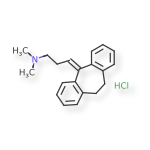
| Molecular Formula | C20H23N.ClH |
| Molecular Weight | 313.864 |
| Optical Activity | NONE |
| Defined Stereocenters | 0 / 0 |
| E/Z Centers | 0 |
| Charge | 0 |
SHOW SMILES / InChI
SMILES
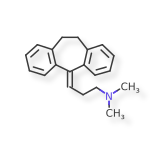
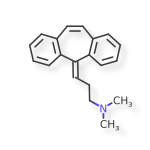
Cl.CN(C)CCC=C1C2=CC=CC=C2CCC3=CC=CC=C13
InChI
InChIKey=KFYRPLNVJVHZGT-UHFFFAOYSA-N
InChI=1S/C20H23N.ClH/c1-21(2)15-7-12-20-18-10-5-3-8-16(18)13-14-17-9-4-6-11-19(17)20;/h3-6,8-12H,7,13-15H2,1-2H3;1H
| Molecular Formula | C20H23N |
| Molecular Weight | 277.4033 |
| Charge | 0 |
| Count |
|
| Stereochemistry | ACHIRAL |
| Additional Stereochemistry | No |
| Defined Stereocenters | 0 / 0 |
| E/Z Centers | 0 |
| Optical Activity | NONE |
| Molecular Formula | ClH |
| Molecular Weight | 36.461 |
| Charge | 0 |
| Count |
|
| Stereochemistry | ACHIRAL |
| Additional Stereochemistry | No |
| Defined Stereocenters | 0 / 0 |
| E/Z Centers | 0 |
| Optical Activity | NONE |
DescriptionCurator's Comment: description was created based on several sources, including
http://www.rxlist.com/elavil-drug.htm
https://www.ncbi.nlm.nih.gov/pubmed/23235671; https://www.ncbi.nlm.nih.gov/pubmed/11157426; http://www.ncbi.nlm.nih.gov/pubmed/16871467; http://www.ncbi.nlm.nih.gov/pubmed/2578912; http://www.ncbi.nlm.nih.gov/pubmed/?term=15943846
Curator's Comment: description was created based on several sources, including
http://www.rxlist.com/elavil-drug.htm
https://www.ncbi.nlm.nih.gov/pubmed/23235671; https://www.ncbi.nlm.nih.gov/pubmed/11157426; http://www.ncbi.nlm.nih.gov/pubmed/16871467; http://www.ncbi.nlm.nih.gov/pubmed/2578912; http://www.ncbi.nlm.nih.gov/pubmed/?term=15943846
Amitriptyline is a derivative of dibenzocycloheptadiene and a tricyclic antidepressant (TCA) and is mainly used to treat symptoms of depression. It works on the central nervous system (CNS) by inhibiting the membrane pump mechanism responsible for uptake of norepinephrine and serotonin in adrenergic and serotonergic neurons. Amitriptyline has been frequently used as an active comparator in clinical trials on newer antidepressants. It is rarely used as a first-line antidepressant nowadays due to its high degree of toxicity in overdose and generally poorer tolerability than the newer antidepressants.
CNS Activity
Approval Year
Targets
| Primary Target | Pharmacology | Condition | Potency |
|---|---|---|---|
Target ID: P23975 Gene ID: 6530.0 Gene Symbol: SLC6A2 Target Organism: Homo sapiens (Human) |
3.45 nM [IC50] | ||
Target ID: P31645 Gene ID: 6532.0 Gene Symbol: SLC6A4 Target Organism: Homo sapiens (Human) |
13.3 nM [IC50] | ||
Target ID: P28223 Gene ID: 3356.0 Gene Symbol: HTR2A Target Organism: Homo sapiens (Human) |
Conditions
| Condition | Modality | Targets | Highest Phase | Product |
|---|---|---|---|---|
| Preventing | AMITRIPTYLINE HYDROCHLORIDE Approved UseFor the relief of symptoms of depression. Endogenous depression is more likely to be alleviated than are other depressive states. Launch Date1997 |
Cmax
| Value | Dose | Co-administered | Analyte | Population |
|---|---|---|---|---|
15.3 ng/mL EXPERIMENT https://pubmed.ncbi.nlm.nih.gov/10383563 |
75 mg single, oral dose: 75 mg route of administration: Oral experiment type: SINGLE co-administered: |
AMITRIPTYLINE plasma | Homo sapiens population: HEALTHY age: ADULT sex: MALE food status: FASTED |
AUC
| Value | Dose | Co-administered | Analyte | Population |
|---|---|---|---|---|
593 ng × h/mL EXPERIMENT https://pubmed.ncbi.nlm.nih.gov/10383563 |
75 mg single, oral dose: 75 mg route of administration: Oral experiment type: SINGLE co-administered: |
AMITRIPTYLINE plasma | Homo sapiens population: HEALTHY age: ADULT sex: MALE food status: FASTED |
T1/2
| Value | Dose | Co-administered | Analyte | Population |
|---|---|---|---|---|
20.4 h EXPERIMENT https://pubmed.ncbi.nlm.nih.gov/10383563 |
75 mg single, oral dose: 75 mg route of administration: Oral experiment type: SINGLE co-administered: |
AMITRIPTYLINE plasma | Homo sapiens population: HEALTHY age: ADULT sex: MALE food status: FASTED |
Funbound
| Value | Dose | Co-administered | Analyte | Population |
|---|---|---|---|---|
7.7% EXPERIMENT https://pubmed.ncbi.nlm.nih.gov/6125396 |
150 mg 1 times / day multiple, oral dose: 150 mg route of administration: Oral experiment type: MULTIPLE co-administered: |
AMITRIPTYLINE plasma | Homo sapiens population: UNHEALTHY age: ADULT sex: FEMALE / MALE food status: FASTED |
Overview
| CYP3A4 | CYP2C9 | CYP2D6 | hERG |
|---|---|---|---|
OverviewOther
| Other Inhibitor | Other Substrate | Other Inducer |
|---|---|---|
Drug as perpetrator
| Target | Modality | Activity | Metabolite | Clinical evidence |
|---|---|---|---|---|
| yes [IC50 14 uM] | ||||
| yes [IC50 6.99 uM] | ||||
| yes [IC50 8.8 uM] | ||||
| yes [Inhibition 200 uM] | ||||
| yes [Ki 31 uM] | ||||
| yes [Ki 37.7 uM] |
Drug as victim
| Target | Modality | Activity | Metabolite | Clinical evidence |
|---|---|---|---|---|
| no | ||||
| no | ||||
| yes | ||||
| yes | ||||
| yes | ||||
| yes | ||||
| yes | ||||
| yes |
Tox targets
| Target | Modality | Activity | Metabolite | Clinical evidence |
|---|---|---|---|---|
PubMed
| Title | Date | PubMed |
|---|---|---|
| Inverse agonist actions of typical and atypical antipsychotic drugs at the human 5-hydroxytryptamine(2C) receptor. | 2001-10 |
|
| Antidepressants as risk factor for ischaemic heart disease: case-control study in primary care. | 2001-09-22 |
|
| HPLC of basic drugs on microparticulate strong cation-exchange materials - a review. | 2001-09-15 |
|
| Efficacy of spinal manipulation for chronic headache: a systematic review. | 2001-09 |
|
| Drug use and five-year incidence of age-related cataracts: The Beaver Dam Eye Study. | 2001-09 |
|
| [Comparative studies of adverse effects in patients with refractory depression treated with amitryptyline, mianserin and unilateral ECT]. | 2001-08-09 |
|
| Review of pharmacokinetic and pharmacodynamic interaction studies with citalopram. | 2001-08 |
|
| Combined pharmacotherapy for nocturnal enuresis. | 2001-08 |
|
| Interaction of psychotropic drugs with monoamine oxidase in rat brain. | 2001-08 |
|
| Adherence to treatment regimen in depressed patients treated with amitriptyline or fluoxetine. | 2001-08 |
|
| Cytochrome P450 2D6.1 and cytochrome P450 2D6.10 differ in catalytic activity for multiple substrates. | 2001-08 |
|
| Serum levels and cardiovascular effects of tricyclic antidepressants and selective serotonin reuptake inhibitors in depressed patients. | 2001-08 |
|
| Efficacy of amitriptyline as a pharmacological adjunct to behavioral modification in the management of aggressive behaviors in dogs. | 2001-07-14 |
|
| [Ciguatera: clinical relevance of a marine neurotoxin]. | 2001-07-13 |
|
| Cyclobenzaprine and back pain: a meta-analysis. | 2001-07-09 |
|
| Late-onset GM2 gangliosidosis presenting as burning dysesthesias. | 2001-07 |
|
| Isolated sural neuropathy presenting as lateral ankle pain. | 2001-07 |
|
| Antinociception by tricyclic antidepressants in the rat formalin test: differential effects on different behaviours following systemic and spinal administration. | 2001-07 |
|
| Mirtazepine: heir apparent to amitriptyline? | 2001-06-16 |
|
| The effect of amitriptyline on pain intensity and perception of stress in bruxers. | 2001-06 |
|
| Assessment of DNA damage in C6 glioma cells after antidepressant treatment using an alkaline comet assay. | 2001-06 |
|
| Acute eosinophilic pneumonia associated with amitriptyline in a hemodialysis patient. | 2001-06 |
|
| Retro-orbital tumour--an uncommon cause of headache in pregnancy. | 2001-06 |
|
| Involvement of adenosine in the effect of antidepressants on glutamate and aspartate release in the rat prefrontal cortex. | 2001-06 |
|
| Pharmacological modulation of SK3 channels. | 2001-06 |
|
| Corticotropin-releasing hormone perturbations in interstitial cystitis patients: evidence for abnormal sympathetic activity. | 2001-06 |
|
| Ring flexibility within tricyclic antidepressant drugs. | 2001-06 |
|
| High-performance liquid chromatographic method combining radiochemical and ultraviolet detection for determination of low activities of uridine 5'-diphosphate-glucuronosyltransferase. | 2001-05-15 |
|
| [St. John's wort: a pharmaceutical with potentially dangerous interactions]. | 2001-05-10 |
|
| Management of chronic tension-type headache with tricyclic antidepressant medication, stress management therapy, and their combination: a randomized controlled trial. | 2001-05-02 |
|
| Effects of amitriptyline on diurnal variations of oxidation-reduction enzyme activities in rat lymphocytes during experimental desynchronosis. | 2001-05 |
|
| Antidepressant drugs in dermatology. | 2001-05 |
|
| Bipolar disorder after mefloquine treatment. | 2001-05 |
|
| Treatment of neuropathic pain with venlafaxine. | 2001-05 |
|
| Advances in the management of neuropathic pain. | 2001-05 |
|
| Inhibition of synovial plasma extravasation by preemptive administration of an antiinflammatory irrigation solution in the rat knee. | 2001-05 |
|
| Patterns of response to repeated total sleep deprivations in depression. | 2001-05 |
|
| Controlling phantom limb pain in Sierra Leone. | 2001-04-21 |
|
| [Sensory neuropathy in HIV infection: pathogenesis and therapy]. | 2001-04-14 |
|
| Amitriptyline versus bupivacaine in rat sciatic nerve blockade. | 2001-04 |
|
| Evidence for the use of gabapentin in the treatment of diabetic peripheral neuropathy. | 2001-04 |
|
| The effects of amitriptyline, citalopram and reboxetine on autonomic nervous system. A randomised placebo-controlled study on healthy volunteers. | 2001-04 |
|
| Noradrenergic dysfunction and antidepressant treatment response. | 2001-04 |
|
| Smoking in patients receiving psychotropic medications: a pharmacokinetic perspective. | 2001 |
|
| Gender differences in depression associated with neurologic illness: clinical correlates and pharmacologic response. | 2001 |
|
| A randomized trial of fluoxetine versus amitriptyline in musculo-skeletal pain. | 2001 |
|
| Tianeptine: a review of its use in depressive disorders. | 2001 |
|
| Long-term effects of tricyclic antidepressants on norepinephrine kinetics in humans. | 2001 |
|
| The concentration of three anti-seizure medications in hair: the effects of hair color, controlling for dose and age. | 2001 |
|
| [Cardiac arrest following amitriptylin and adrenaline]. | 1975-06-16 |
Sample Use Guides
For outpatients, 75 mg of amitriptyline HCl a day in divided doses. If necessary, this may be increased to a total of 150 mg per day. An alternate method of initiating therapy in outpatients is to begin with 50 to 100 mg amitriptyline HCl at bedtime. This may be increased by 25 or 50 mg as necessary in the bedtime dose to a total of 150 mg per day. Hospitalized patients may require 100 mg a day initially. This can be increased gradually to 200 mg a day if necessary up to 300 mg a day. Not recommended for patients under 12 years of age
Route of Administration:
Oral
| Substance Class |
Chemical
Created
by
admin
on
Edited
Mon Mar 31 18:04:15 GMT 2025
by
admin
on
Mon Mar 31 18:04:15 GMT 2025
|
| Record UNII |
26LUD4JO9K
|
| Record Status |
Validated (UNII)
|
| Record Version |
|
-
Download
| Name | Type | Language | ||
|---|---|---|---|---|
|
Common Name | English | ||
|
Preferred Name | English | ||
|
Common Name | English | ||
|
Common Name | English | ||
|
Common Name | English | ||
|
Code | English | ||
|
Common Name | English | ||
|
Common Name | English | ||
|
Common Name | English | ||
|
Common Name | English | ||
|
Brand Name | English | ||
|
Brand Name | English | ||
|
Common Name | English | ||
|
Common Name | English | ||
|
Brand Name | English | ||
|
Brand Name | English | ||
|
Common Name | English | ||
|
Brand Name | English | ||
|
Common Name | English | ||
|
Common Name | English | ||
|
Common Name | English | ||
|
Code | English | ||
|
Common Name | English | ||
|
Common Name | English | ||
|
Common Name | English | ||
|
Common Name | English | ||
|
Systematic Name | English | ||
|
Common Name | English |
| Classification Tree | Code System | Code | ||
|---|---|---|---|---|
|
NCI_THESAURUS |
C94727
Created by
admin on Mon Mar 31 18:04:15 GMT 2025 , Edited by admin on Mon Mar 31 18:04:15 GMT 2025
|
| Code System | Code | Type | Description | ||
|---|---|---|---|---|---|
|
1029002
Created by
admin on Mon Mar 31 18:04:15 GMT 2025 , Edited by admin on Mon Mar 31 18:04:15 GMT 2025
|
PRIMARY | |||
|
549-18-8
Created by
admin on Mon Mar 31 18:04:15 GMT 2025 , Edited by admin on Mon Mar 31 18:04:15 GMT 2025
|
PRIMARY | |||
|
26LUD4JO9K
Created by
admin on Mon Mar 31 18:04:15 GMT 2025 , Edited by admin on Mon Mar 31 18:04:15 GMT 2025
|
PRIMARY | |||
|
AMITRIPTYLINE HYDROCHLORIDE
Created by
admin on Mon Mar 31 18:04:15 GMT 2025 , Edited by admin on Mon Mar 31 18:04:15 GMT 2025
|
PRIMARY | Description: Colourless crystals or a white or almost white powder; odourless or almost odourless. Solubility: Soluble in 1 part of water and in 1.5 parts of ethanol (~750 g/l) TS; practically insoluble in ether R. Category: Antidepressant. Storage: Amitriptyline hydrochloride should be kept in a tightly closed container, protected from light. Additional information: Amitriptyline hydrochloride has a bitter and burning taste that is followed by a sensation of numbness. Even in the absence of light, Amitriptyline hydrochloride is gradually degraded on exposure to a humid atmosphere, the decomposition being faster at higher temperatures. Definition: Amitriptyline hydrochloride contains not less than 99.0% and not more than 101.5% of C20H23N,HCl, calculated with reference to the dried substance. | ||
|
100000090311
Created by
admin on Mon Mar 31 18:04:15 GMT 2025 , Edited by admin on Mon Mar 31 18:04:15 GMT 2025
|
PRIMARY | |||
|
208-964-6
Created by
admin on Mon Mar 31 18:04:15 GMT 2025 , Edited by admin on Mon Mar 31 18:04:15 GMT 2025
|
PRIMARY | |||
|
11065
Created by
admin on Mon Mar 31 18:04:15 GMT 2025 , Edited by admin on Mon Mar 31 18:04:15 GMT 2025
|
PRIMARY | |||
|
26LUD4JO9K
Created by
admin on Mon Mar 31 18:04:15 GMT 2025 , Edited by admin on Mon Mar 31 18:04:15 GMT 2025
|
PRIMARY | |||
|
DBSALT000009
Created by
admin on Mon Mar 31 18:04:15 GMT 2025 , Edited by admin on Mon Mar 31 18:04:15 GMT 2025
|
PRIMARY | |||
|
m1753
Created by
admin on Mon Mar 31 18:04:15 GMT 2025 , Edited by admin on Mon Mar 31 18:04:15 GMT 2025
|
PRIMARY | Merck Index | ||
|
104210
Created by
admin on Mon Mar 31 18:04:15 GMT 2025 , Edited by admin on Mon Mar 31 18:04:15 GMT 2025
|
PRIMARY | |||
|
CHEMBL629
Created by
admin on Mon Mar 31 18:04:15 GMT 2025 , Edited by admin on Mon Mar 31 18:04:15 GMT 2025
|
PRIMARY | |||
|
SUB00474MIG
Created by
admin on Mon Mar 31 18:04:15 GMT 2025 , Edited by admin on Mon Mar 31 18:04:15 GMT 2025
|
PRIMARY | |||
|
C28819
Created by
admin on Mon Mar 31 18:04:15 GMT 2025 , Edited by admin on Mon Mar 31 18:04:15 GMT 2025
|
PRIMARY | |||
|
203168
Created by
admin on Mon Mar 31 18:04:15 GMT 2025 , Edited by admin on Mon Mar 31 18:04:15 GMT 2025
|
PRIMARY | RxNorm | ||
|
DTXSID9033187
Created by
admin on Mon Mar 31 18:04:15 GMT 2025 , Edited by admin on Mon Mar 31 18:04:15 GMT 2025
|
PRIMARY |
| Related Record | Type | Details | ||
|---|---|---|---|---|
|
BASIS OF STRENGTH->SUBSTANCE |
ASSAY (TITRATION)
EP
|
||
|
|
PARENT -> SALT/SOLVATE | |||
|
BASIS OF STRENGTH->SUBSTANCE |
ASSAY (HPLC)
USP
|
| Related Record | Type | Details | ||
|---|---|---|---|---|
|
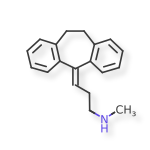
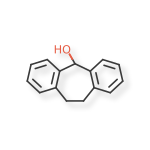
IMPURITY -> PARENT |
CHROMATOGRAPHIC PURITY (HPLC/UV)
USP
|
||
|
IMPURITY -> PARENT |
CHROMATOGRAPHIC PURITY (HPLC/UV)
EP
|
||
|
IMPURITY -> PARENT |
CHROMATOGRAPHIC PURITY (HPLC/UV)
EP
|
||
|
IMPURITY -> PARENT |
CHROMATOGRAPHIC PURITY (HPLC/UV)
EP
|
||
|
IMPURITY -> PARENT |
CHROMATOGRAPHIC PURITY (HPLC/UV)
USP
|
||
|
IMPURITY -> PARENT |
CHROMATOGRAPHIC PURITY (HPLC/UV)
USP
|
||
|
IMPURITY -> PARENT |
|
||
|
IMPURITY -> PARENT |
CHROMATOGRAPHIC PURITY (HPLC/UV)
EP
|
||
|
IMPURITY -> PARENT |
CHROMATOGRAPHIC PURITY (HPLC/UV)
EP
|
||
|
IMPURITY -> PARENT |
CHROMATOGRAPHIC PURITY (HPLC/UV)
USP
|

| Related Record | Type | Details | ||
|---|---|---|---|---|
|
|
ACTIVE MOIETY |