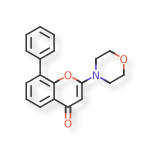
Details
| Stereochemistry | ACHIRAL |
| Molecular Formula | C19H17NO3 |
| Molecular Weight | 307.3432 |
| Optical Activity | NONE |
| Defined Stereocenters | 0 / 0 |
| E/Z Centers | 0 |
| Charge | 0 |
SHOW SMILES / InChI
SMILES
O=C1C=C(OC2=C1C=CC=C2C3=CC=CC=C3)N4CCOCC4
InChI
InChIKey=CZQHHVNHHHRRDU-UHFFFAOYSA-N
InChI=1S/C19H17NO3/c21-17-13-18(20-9-11-22-12-10-20)23-19-15(7-4-8-16(17)19)14-5-2-1-3-6-14/h1-8,13H,9-12H2
| Molecular Formula | C19H17NO3 |
| Molecular Weight | 307.3432 |
| Charge | 0 |
| Count |
|
| Stereochemistry | ACHIRAL |
| Additional Stereochemistry | No |
| Defined Stereocenters | 0 / 0 |
| E/Z Centers | 0 |
| Optical Activity | NONE |
LY294002 is a morpholine-containing chemical compound that is a potent inhibitor of numerous proteins, and a strong inhibitor of phosphoinositide 3-kinases (PI3Ks). It was previously under active development by Eli Lily and was tested in a number of clinical cancer trials including neuroblastomas and head and neck cancer. However, commercialization efforts have been discontinued, and LY294002 is now predominantly used as a research tool.
Originator
Approval Year
Targets
| Primary Target | Pharmacology | Condition | Potency |
|---|---|---|---|
Target ID: P42336 Gene ID: 5290.0 Gene Symbol: PIK3CA Target Organism: Homo sapiens (Human) |
1.4 µM [IC50] | ||
Target ID: P30542 Gene ID: 134.0 Gene Symbol: ADORA1 Target Organism: Homo sapiens (Human) |
Conditions
| Condition | Modality | Targets | Highest Phase | Product |
|---|---|---|---|---|
| Primary | Unknown Approved UseUnknown |
|||
| Primary | Unknown Approved UseUnknown |
Doses
| Dose | Population | Adverse events |
|---|---|---|
1100 mg/m2 2 times / week multiple, intravenous Highest studied dose Dose: 1100 mg/m2, 2 times / week Route: intravenous Route: multiple Dose: 1100 mg/m2, 2 times / week Sources: |
unhealthy Health Status: unhealthy Sex: M+F Food Status: UNKNOWN Sources: |
Other AEs: hypersensitivity... |
180 mg/m2 2 times / week multiple, intravenous Studied dose Dose: 180 mg/m2, 2 times / week Route: intravenous Route: multiple Dose: 180 mg/m2, 2 times / week Sources: |
unhealthy Health Status: unhealthy Sex: M+F Food Status: UNKNOWN Sources: |
DLT: diarrhoea... |
AEs
| AE | Significance | Dose | Population |
|---|---|---|---|
| hypersensitivity | grade 3, 11.1% | 1100 mg/m2 2 times / week multiple, intravenous Highest studied dose Dose: 1100 mg/m2, 2 times / week Route: intravenous Route: multiple Dose: 1100 mg/m2, 2 times / week Sources: |
unhealthy Health Status: unhealthy Sex: M+F Food Status: UNKNOWN Sources: |
| diarrhoea | grade 3, 1 pt DLT |
180 mg/m2 2 times / week multiple, intravenous Studied dose Dose: 180 mg/m2, 2 times / week Route: intravenous Route: multiple Dose: 180 mg/m2, 2 times / week Sources: |
unhealthy Health Status: unhealthy Sex: M+F Food Status: UNKNOWN Sources: |
PubMed
| Title | Date | PubMed |
|---|---|---|
| Ligands of macrophage scavenger receptor induce cytokine expression via differential modulation of protein kinase signaling pathways. | 2001-08-03 |
|
| Rac1 protects epithelial cells against anoikis. | 2001-07-27 |
|
| Potentiation of insulin-related signal transduction by a novel protein-tyrosine phosphatase inhibitor, Et-3,4-dephostatin, on cultured 3T3-L1 adipocytes. | 2001-07-20 |
|
| Mitogen- and stress-activated protein kinase 1 mediates activation of Akt by ultraviolet B irradiation. | 2001-07-06 |
|
| Phosphoinositide 3-kinase-dependent regulation of interleukin-3-induced proliferation: involvement of mitogen-activated protein kinases, SHP2 and Gab2. | 2001-06-29 |
|
| Phosphatidylinositol 4,5-bisphosphate mediates Ca2+-induced platelet alpha-granule secretion: evidence for type II phosphatidylinositol 5-phosphate 4-kinase function. | 2001-06-22 |
|
| Hypoxia induces the activation of the phosphatidylinositol 3-kinase/Akt cell survival pathway in PC12 cells: protective role in apoptosis. | 2001-06-22 |
|
| Enteric neuroblasts require the phosphatidylinositol 3-kinase pathway for GDNF-stimulated proliferation. | 2001-06-15 |
|
| Sustained activation of extracellular signal-regulated kinase stimulated by hepatocyte growth factor leads to integrin alpha 2 expression that is involved in cell scattering. | 2001-06-15 |
|
| Rac1 activity is required for the activation of hypoxia-inducible factor 1. | 2001-06-15 |
|
| Roles of Akt and glycogen synthase kinase 3beta in the ultraviolet B induction of cyclooxygenase-2 transcription in human keratinocytes. | 2001-06-01 |
|
| Ezrin is a downstream effector of trafficking PKC-integrin complexes involved in the control of cell motility. | 2001-06-01 |
|
| Role for phosphatidylinositol in nuclear envelope formation. | 2001-06-01 |
|
| Odor-stimulated phosphatidylinositol 3-kinase in lobster olfactory receptor cells. | 2001-06 |
|
| Disruption of Akt kinase activation is important for immunosuppression induced by measles virus. | 2001-06 |
|
| Antigen-receptor cross-linking and lipopolysaccharide trigger distinct phosphoinositide 3-kinase-dependent pathways to NF-kappa B activation in primary B cells. | 2001-06 |
|
| Regulation of ClC-2 chloride channels in T84 cells by TGF-alpha. | 2001-06 |
|
| Pertussis toxin activates tyrosine kinase signaling cascade in myelomonocytic cells: a mechanism for cell adhesion. | 2001-05-25 |
|
| Mutant epidermal growth factor receptor enhances induction of vascular endothelial growth factor by hypoxia and insulin-like growth factor-1 via a PI3 kinase dependent pathway. | 2001-05-18 |
|
| The Ras radiation resistance pathway. | 2001-05-15 |
|
| Akt/protein kinase B is constitutively active in non-small cell lung cancer cells and promotes cellular survival and resistance to chemotherapy and radiation. | 2001-05-15 |
|
| Effects of structurally related flavonoids on cell cycle progression of human melanoma cells: regulation of cyclin-dependent kinases CDK2 and CDK1. | 2001-05-15 |
|
| Reciprocal phosphorylation and regulation of endothelial nitric-oxide synthase in response to bradykinin stimulation. | 2001-05-11 |
|
| Gastrin-induced DNA synthesis requires p38-MAPK activation via PKC/Ca(2+) and Src-dependent mechanisms. | 2001-05-04 |
|
| Fc alpha receptor cross-linking causes translocation of phosphatidylinositol-dependent protein kinase 1 and protein kinase B alpha to MHC class II peptide-loading-like compartments. | 2001-05-01 |
|
| Role of phosphatidylinositol-3 kinase and its association with Gab1 in thrombopoietin-mediated up-regulation of platelet function. | 2001-05 |
|
| Involvement of the pathway phosphatidylinositol-3-kinase/AKT-1 in the establishment of the survival response to ionizing radiation. | 2001-05 |
|
| Role of extracellular signal-regulated kinase and phosphatidylinositol-3 kinase in chemoattractant and LPS delay of constitutive neutrophil apoptosis. | 2001-05 |
|
| Phosphatidylinositol 3-kinase inhibitors prevent mouse cytotoxic T-cell development in vitro. | 2001-05 |
|
| ERK induces p35, a neuron-specific activator of Cdk5, through induction of Egr1. | 2001-05 |
|
| PI3K inhibitors reverse the suppressive actions of insulin on CYP2E1 expression by activating stress-response pathways in primary rat hepatocytes. | 2001-05 |
|
| Zn(2+) induces stimulation of the c-Jun N-terminal kinase signaling pathway through phosphoinositide 3-Kinase. | 2001-05 |
|
| Importance of PKC and PI3Ks in ethanol-induced contraction of cerebral arterial smooth muscle. | 2001-05 |
|
| HGF regulates tight junctions in new nontumorigenic gastric epithelial cell line. | 2001-05 |
|
| Interferon alpha /beta promotes cell survival by activating nuclear factor kappa B through phosphatidylinositol 3-kinase and Akt. | 2001-04-27 |
|
| Fibroblast growth factors 1 and 2 differently activate MAP kinase in Xenopus oocytes expressing fibroblast growth factor receptors 1 and 4. | 2001-04-23 |
|
| p53 induction of heparin-binding EGF-like growth factor counteracts p53 growth suppression through activation of MAPK and PI3K/Akt signaling cascades. | 2001-04-17 |
|
| Overexpression of components of the Frizzled-Dishevelled cascade results in apoptotic cell death, mediated by beta-catenin. | 2001-04-15 |
|
| Akt mediates insulin induction of glucose uptake and up-regulation of GLUT4 gene expression in brown adipocytes. | 2001-04-13 |
|
| HIV-1 Nef blocks transport of MHC class I molecules to the cell surface via a PI 3-kinase-dependent pathway. | 2001-04-10 |
|
| LY294002-geldanamycin heterodimers as selective inhibitors of the PI3K and PI3K-related family. | 2001-04-09 |
|
| Fibroblast growth factor and insulin-like growth factor differentially modulate the apoptosis and G1 arrest induced by anti-epidermal growth factor receptor monoclonal antibody. | 2001-04-05 |
|
| Regulation of translation initiation by FRAP/mTOR. | 2001-04-01 |
|
| Evaluation of signal transduction pathways in chemoattractant-induced human monocyte chemotaxis. | 2001-04 |
|
| Sibutramine metabolites increase glucose transport by cultured rat muscle cells. | 2001-04 |
|
| Signal transduction pathways for activation of extracellular signal-regulated kinase by arachidonic acid in rat neutrophils. | 2001-04 |
|
| Mechanisms of thrombin-induced MAPK activation associated with cell proliferation in human cultured tracheal smooth muscle cells. | 2001-04 |
|
| Selective small-molecule inhibitors of glycogen synthase kinase-3 activity protect primary neurones from death. | 2001-04 |
|
| Regulation of cardiac myocyte protein synthesis through phosphatidylinositol 3' kinase and protein kinase B. | 2001 |
|
| Glial cell line-derived neurotrophic factor promotes survival and induces differentiation through the phosphatidylinositol 3-kinase and mitogen-activated protein kinase pathway respectively in PC12 cells. | 2001 |
Sample Use Guides
In an open-label Phase II clinical trial patients with recurrent or refractory advanced Squamous Cell Carcinoma of the Head and Neck with PIK3CA mutation received SF1126 (LY294002) intravenously twice per week at a dose of 1110 mg/m^2 in 28-day cycles with each dose separated by at least 3 days for the first 4 cycles followed by once per week in subsequent cycles.
Route of Administration:
Intravenous
LNCaP (CRL-1740) and PC-3 (CRL-1435) human prostate carcinoma cells were cultured in RPMI-1640 medium or Ham's F12 K medium, respectively, supplemented with 10 % heat-inactivated fetal bovine serum, 1% antibiotic-antimycotic and incubated at 37 deg-C in a 5% CO2 atmosphere. LNCaP and PC-3 cells were plated in 6-well tissue culture plates at a concentration of 5 × 10^5 cells per well in complete growth medium for 32 h for LNCaP and 24 h for PC-3 and then sustained growth arrest in growth medium without FBS for 24 h. Cells were stimulated with TNF-α, IL-1β, IL-13, and IFN-γ with or without LY294002. Healthy cells generate a typical cell cycle histogram and the sub-G1 fraction represents the percentage of cell death. Flow cytometric quantification of apoptotic and viable cells with annexin V-FITCH/Propidium Iodide staining was also performed. Treatment of LNCaP cells with LY-294002 resulted in a statistically significant increase of cell death in comparison to control cells. Treatment of PC-3 cells with LY-294002 did not induce statistically significant alterations of cell death in comparison to control cells.
| Substance Class |
Chemical
Created
by
admin
on
Edited
Mon Mar 31 22:07:17 GMT 2025
by
admin
on
Mon Mar 31 22:07:17 GMT 2025
|
| Record UNII |
31M2U1DVID
|
| Record Status |
Validated (UNII)
|
| Record Version |
|
-
Download
| Name | Type | Language | ||
|---|---|---|---|---|
|
Common Name | English | ||
|
Preferred Name | English | ||
|
Systematic Name | English | ||
|
Code | English |
| Code System | Code | Type | Description | ||
|---|---|---|---|---|---|
|
31M2U1DVID
Created by
admin on Mon Mar 31 22:07:17 GMT 2025 , Edited by admin on Mon Mar 31 22:07:17 GMT 2025
|
PRIMARY | |||
|
DTXSID6042650
Created by
admin on Mon Mar 31 22:07:17 GMT 2025 , Edited by admin on Mon Mar 31 22:07:17 GMT 2025
|
PRIMARY | |||
|
3973
Created by
admin on Mon Mar 31 22:07:17 GMT 2025 , Edited by admin on Mon Mar 31 22:07:17 GMT 2025
|
PRIMARY | |||
|
697286
Created by
admin on Mon Mar 31 22:07:17 GMT 2025 , Edited by admin on Mon Mar 31 22:07:17 GMT 2025
|
PRIMARY | |||
|
DB02656
Created by
admin on Mon Mar 31 22:07:17 GMT 2025 , Edited by admin on Mon Mar 31 22:07:17 GMT 2025
|
PRIMARY | |||
|
154447-36-6
Created by
admin on Mon Mar 31 22:07:17 GMT 2025 , Edited by admin on Mon Mar 31 22:07:17 GMT 2025
|
PRIMARY | |||
|
C148229
Created by
admin on Mon Mar 31 22:07:17 GMT 2025 , Edited by admin on Mon Mar 31 22:07:17 GMT 2025
|
PRIMARY | |||
|
65329
Created by
admin on Mon Mar 31 22:07:17 GMT 2025 , Edited by admin on Mon Mar 31 22:07:17 GMT 2025
|
PRIMARY | |||
|
LY294002
Created by
admin on Mon Mar 31 22:07:17 GMT 2025 , Edited by admin on Mon Mar 31 22:07:17 GMT 2025
|
PRIMARY |
| Related Record | Type | Details | ||
|---|---|---|---|---|
|
TARGET -> INHIBITOR | |||
|
TARGET -> INHIBITOR |

| Related Record | Type | Details | ||
|---|---|---|---|---|
|
|
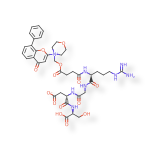
PRODRUG -> METABOLITE ACTIVE |
| Related Record | Type | Details | ||
|---|---|---|---|---|
|
|
ACTIVE MOIETY |