


Details
| Stereochemistry | ACHIRAL |
| Molecular Formula | C17H18FN3O3 |
| Molecular Weight | 331.3415 |
| Optical Activity | NONE |
| Defined Stereocenters | 0 / 0 |
| E/Z Centers | 0 |
| Charge | 0 |
SHOW SMILES / InChI
SMILES
OC(=O)C1=CN(C2CC2)C3=C(C=C(F)C(=C3)N4CCNCC4)C1=O
InChI
InChIKey=MYSWGUAQZAJSOK-UHFFFAOYSA-N
InChI=1S/C17H18FN3O3/c18-13-7-11-14(8-15(13)20-5-3-19-4-6-20)21(10-1-2-10)9-12(16(11)22)17(23)24/h7-10,19H,1-6H2,(H,23,24)
| Molecular Formula | C17H18FN3O3 |
| Molecular Weight | 331.3415 |
| Charge | 0 |
| Count |
|
| Stereochemistry | ACHIRAL |
| Additional Stereochemistry | No |
| Defined Stereocenters | 0 / 0 |
| E/Z Centers | 0 |
| Optical Activity | NONE |
DescriptionCurator's Comment: description was created based on several sources, including
https://www.drugs.com/ciprofloxacin.html | https://clinicaltrials.gov/ct2/show/NCT02598362 | https://www.ncbi.nlm.nih.gov/pubmed/25951434
Curator's Comment: description was created based on several sources, including
https://www.drugs.com/ciprofloxacin.html | https://clinicaltrials.gov/ct2/show/NCT02598362 | https://www.ncbi.nlm.nih.gov/pubmed/25951434
Ciprofloxacin (1-cyclopropyl-6-fluoro-1,4-dihydro-4-oxo-7-(1-piperazinyl)-3-quinolinecarboxylic acid) is the synthetic antimicrobial agent for oral or intravenous administration. Ciprofloxacin is a member of the fluoroquinolone class of antibacterial agents. The bactericidal action of ciprofloxacin results from inhibition of the enzymes topoisomerase II (DNA gyrase) and topoisomerase IV (both Type II topoisomerases), which are required for bacterial DNA replication, transcription, repair, and recombination. Ciprofloxacin is used to treat a wide variety of infections, including infections of bones and joints, endocarditis, gastroenteritis, malignant otitis externa, respiratory tract infections, cellulitis, urinary tract infections, prostatitis, anthrax, and chancroid. In the United States, ciprofloxacin is pregnancy category C. This category includes drugs for which no adequate and well-controlled studies in human pregnancy exist, and for which animal studies have suggested the potential for harm to the fetus, but potential benefits may warrant use of the drug in pregnant women despite potential risks. Fluoroquinolones have been reported as present in a mother's milk and thus passed on to the nursing child. Oral and intravenous ciprofloxacin is approved by the FDA for use in children for only two indications due to the risk of permanent injury to the musculoskeletal system: Inhalational anthrax (postexposure) and Complicated urinary tract infections and pyelonephritis due to Escherichia coli.
Approval Year
Targets
| Primary Target | Pharmacology | Condition | Potency |
|---|---|---|---|
Target ID: CHEMBL3329081 |
|||
Target ID: CHEMBL2311224 |
150.0 nM [IC50] |
Conditions
| Condition | Modality | Targets | Highest Phase | Product |
|---|---|---|---|---|
| Curative | CIPRO Approved UseCiprofloxacin Tablets, USP are indicated for the treatment of infections caused by susceptible strains of the designated microorganisms in the conditions and patient populations listed below. Please see DOSAGE AND ADMINISTRATION for specific recommendations. Adult Patients Urinary Tract Infections caused by Escherichia coli, Klebsiella pneumoniae, Enterobacter cloacae, Serratia marcescens, Proteus mirabilis, Providencia rettgeri, Morganella morganii, Citrobacter diversus, Citrobacter freundii, Pseudomonas aeruginosa, methicillin-susceptible Staphylococcus epidermidis, Staphylococcus saprophyticus, or Enterococcus faecalis. Acute Uncomplicated Cystitis in females caused by Escherichia coli or Staphylococcus saprophyticus. Chronic Bacterial Prostatitis caused by Escherichia coli or Proteus mirabilis. Lower Respiratory Tract Infections caused by Escherichia coli, Klebsiella pneumoniae, Enterobacter cloacae, Proteus mirabilis, Pseudomonas aeruginosa, Haemophilus influenzae, Haemophilus parainfluenzae, or penicillin-susceptible Streptococcus pneumoniae. Also, Moraxella catarrhalis for the treatment of acute exacerbations of chronic bronchitis. NOTE: Although effective in clinical trials, ciprofloxacin is not a drug of first choice in the treatment of presumed or confirmed pneumonia secondary to Streptococcus pneumoniae. Acute Sinusitis caused by Haemophilus influenzae, penicillin-susceptible Streptococcus pneumoniae, or Moraxella catarrhalis. Skin and Skin Structure Infections caused by Escherichia coli, Klebsiella pneumoniae, Enterobacter cloacae, Proteus mirabilis, Proteus vulgaris, Providencia stuartii, Morganella morganii, Citrobacter freundii, Pseudomonas aeruginosa, methicillin susceptible Staphylococcus aureus, methicillin susceptible Staphylococcus epidermidis, or Streptococcus pyogenes. Bone and Joint Infections caused by Enterobacter cloacae, Serratia marcescens, or Pseudomonas aeruginosa. Complicated Intra-Abdominal Infections (used in combination with metronidazole) caused by Escherichia coli, Pseudomonas aeruginosa, Proteus mirabilis, Klebsiella pneumoniae, or Bacteroides fragilis. Infectious Diarrhea caused by Escherichia coli (enterotoxigenic strains), Campylobacter jejuni, Shigella boydii † , Shigella dysenteriae, Shigella flexneri or Shigella sonnei † when antibacterial therapy is indicated. Typhoid Fever (Enteric Fever) caused by Salmonella typhi. NOTE: The efficacy of ciprofloxacin in the eradication of the chronic typhoid carrier state has not been demonstrated. Uncomplicated cervical and urethral gonorrhea due to Neisseria gonorrhoeae. Pediatric patients (1 to 17 years of age)Complicated Urinary Tract Infections and Pyelonephritis due to Escherichia coli. NOTE: Although effective in clinical trials, ciprofloxacin is not a drug of first choice in the pediatric population due to an increased incidence of adverse events compared to controls, including events related to joints and/or surrounding tissues. (See WARNINGS, PRECAUTIONS, Pediatric Use , ADVERSE REACTIONS and CLINICAL STUDIES .) Ciprofloxacin, like other fluoroquinolones, is associated with arthropathy and histopathological changes in weight-bearing joints of juvenile animals. (See ANIMAL PHARMACOLOGY .) Adult and Pediatric PatientsInhalational anthrax (post-exposure): To reduce the incidence or progression of disease following exposure to aerosolized Bacillus anthracis. Ciprofloxacin serum concentrations achieved in humans served as a surrogate endpoint reasonably likely to predict clinical benefit and provided the initial basis for approval of this indication.5 Supportive clinical information for ciprofloxacin for anthrax post-exposure prophylaxis was obtained during the anthrax bioterror attacks of October 2001. (See also, INHALATIONAL ANTHRAX – ADDITIONAL INFORMATION ). †Although treatment of infections due to this organism in this organ system demonstrated a clinically significant outcome, efficacy was studied in fewer than 10 patients. If anaerobic organisms are suspected of contributing to the infection, appropriate therapy should be administered. Appropriate culture and susceptibility tests should be performed before treatment in order to isolate and identify organisms causing infection and to determine their susceptibility to ciprofloxacin. Therapy with Ciprofloxacin Tablets may be initiated before results of these tests are known; once results become available appropriate therapy should be continued. As with other drugs, some strains of Pseudomonas aeruginosa may develop resistance fairly rapidly during treatment with ciprofloxacin. Culture and susceptibility testing performed periodically during therapy will provide information not only on the therapeutic effect of the antimicrobial agent but also on the possible emergence of bacterial resistance. To reduce the development of drug-resistant bacteria and maintain the effectiveness of Ciprofloxacin Tablets and other antibacterial drugs, Ciprofloxacin Tablets should be used only to treat or prevent infections that are proven or strongly suspected to be caused by susceptible bacteria. When culture and susceptibility information are available, they should be considered in selecting or modifying antibacterial therapy. In the absence of such data, local epidemiology and susceptibility patterns may contribute to the empiric selection of therapy. Launch Date1990 |
|||
| Curative | CIPRO Approved UseCiprofloxacin Tablets, USP are indicated for the treatment of infections caused by susceptible strains of the designated microorganisms in the conditions and patient populations listed below. Please see DOSAGE AND ADMINISTRATION for specific recommendations. Adult Patients Urinary Tract Infections caused by Escherichia coli, Klebsiella pneumoniae, Enterobacter cloacae, Serratia marcescens, Proteus mirabilis, Providencia rettgeri, Morganella morganii, Citrobacter diversus, Citrobacter freundii, Pseudomonas aeruginosa, methicillin-susceptible Staphylococcus epidermidis, Staphylococcus saprophyticus, or Enterococcus faecalis. Acute Uncomplicated Cystitis in females caused by Escherichia coli or Staphylococcus saprophyticus. Chronic Bacterial Prostatitis caused by Escherichia coli or Proteus mirabilis. Lower Respiratory Tract Infections caused by Escherichia coli, Klebsiella pneumoniae, Enterobacter cloacae, Proteus mirabilis, Pseudomonas aeruginosa, Haemophilus influenzae, Haemophilus parainfluenzae, or penicillin-susceptible Streptococcus pneumoniae. Also, Moraxella catarrhalis for the treatment of acute exacerbations of chronic bronchitis. NOTE: Although effective in clinical trials, ciprofloxacin is not a drug of first choice in the treatment of presumed or confirmed pneumonia secondary to Streptococcus pneumoniae. Acute Sinusitis caused by Haemophilus influenzae, penicillin-susceptible Streptococcus pneumoniae, or Moraxella catarrhalis. Skin and Skin Structure Infections caused by Escherichia coli, Klebsiella pneumoniae, Enterobacter cloacae, Proteus mirabilis, Proteus vulgaris, Providencia stuartii, Morganella morganii, Citrobacter freundii, Pseudomonas aeruginosa, methicillin susceptible Staphylococcus aureus, methicillin susceptible Staphylococcus epidermidis, or Streptococcus pyogenes. Bone and Joint Infections caused by Enterobacter cloacae, Serratia marcescens, or Pseudomonas aeruginosa. Complicated Intra-Abdominal Infections (used in combination with metronidazole) caused by Escherichia coli, Pseudomonas aeruginosa, Proteus mirabilis, Klebsiella pneumoniae, or Bacteroides fragilis. Infectious Diarrhea caused by Escherichia coli (enterotoxigenic strains), Campylobacter jejuni, Shigella boydii † , Shigella dysenteriae, Shigella flexneri or Shigella sonnei † when antibacterial therapy is indicated. Typhoid Fever (Enteric Fever) caused by Salmonella typhi. NOTE: The efficacy of ciprofloxacin in the eradication of the chronic typhoid carrier state has not been demonstrated. Uncomplicated cervical and urethral gonorrhea due to Neisseria gonorrhoeae. Pediatric patients (1 to 17 years of age)Complicated Urinary Tract Infections and Pyelonephritis due to Escherichia coli. NOTE: Although effective in clinical trials, ciprofloxacin is not a drug of first choice in the pediatric population due to an increased incidence of adverse events compared to controls, including events related to joints and/or surrounding tissues. (See WARNINGS, PRECAUTIONS, Pediatric Use , ADVERSE REACTIONS and CLINICAL STUDIES .) Ciprofloxacin, like other fluoroquinolones, is associated with arthropathy and histopathological changes in weight-bearing joints of juvenile animals. (See ANIMAL PHARMACOLOGY .) Adult and Pediatric PatientsInhalational anthrax (post-exposure): To reduce the incidence or progression of disease following exposure to aerosolized Bacillus anthracis. Ciprofloxacin serum concentrations achieved in humans served as a surrogate endpoint reasonably likely to predict clinical benefit and provided the initial basis for approval of this indication.5 Supportive clinical information for ciprofloxacin for anthrax post-exposure prophylaxis was obtained during the anthrax bioterror attacks of October 2001. (See also, INHALATIONAL ANTHRAX – ADDITIONAL INFORMATION ). †Although treatment of infections due to this organism in this organ system demonstrated a clinically significant outcome, efficacy was studied in fewer than 10 patients. If anaerobic organisms are suspected of contributing to the infection, appropriate therapy should be administered. Appropriate culture and susceptibility tests should be performed before treatment in order to isolate and identify organisms causing infection and to determine their susceptibility to ciprofloxacin. Therapy with Ciprofloxacin Tablets may be initiated before results of these tests are known; once results become available appropriate therapy should be continued. As with other drugs, some strains of Pseudomonas aeruginosa may develop resistance fairly rapidly during treatment with ciprofloxacin. Culture and susceptibility testing performed periodically during therapy will provide information not only on the therapeutic effect of the antimicrobial agent but also on the possible emergence of bacterial resistance. To reduce the development of drug-resistant bacteria and maintain the effectiveness of Ciprofloxacin Tablets and other antibacterial drugs, Ciprofloxacin Tablets should be used only to treat or prevent infections that are proven or strongly suspected to be caused by susceptible bacteria. When culture and susceptibility information are available, they should be considered in selecting or modifying antibacterial therapy. In the absence of such data, local epidemiology and susceptibility patterns may contribute to the empiric selection of therapy. Launch Date1990 |
|||
| Curative | CIPRO Approved UseCiprofloxacin Tablets, USP are indicated for the treatment of infections caused by susceptible strains of the designated microorganisms in the conditions and patient populations listed below. Please see DOSAGE AND ADMINISTRATION for specific recommendations. Adult Patients Urinary Tract Infections caused by Escherichia coli, Klebsiella pneumoniae, Enterobacter cloacae, Serratia marcescens, Proteus mirabilis, Providencia rettgeri, Morganella morganii, Citrobacter diversus, Citrobacter freundii, Pseudomonas aeruginosa, methicillin-susceptible Staphylococcus epidermidis, Staphylococcus saprophyticus, or Enterococcus faecalis. Acute Uncomplicated Cystitis in females caused by Escherichia coli or Staphylococcus saprophyticus. Chronic Bacterial Prostatitis caused by Escherichia coli or Proteus mirabilis. Lower Respiratory Tract Infections caused by Escherichia coli, Klebsiella pneumoniae, Enterobacter cloacae, Proteus mirabilis, Pseudomonas aeruginosa, Haemophilus influenzae, Haemophilus parainfluenzae, or penicillin-susceptible Streptococcus pneumoniae. Also, Moraxella catarrhalis for the treatment of acute exacerbations of chronic bronchitis. NOTE: Although effective in clinical trials, ciprofloxacin is not a drug of first choice in the treatment of presumed or confirmed pneumonia secondary to Streptococcus pneumoniae. Acute Sinusitis caused by Haemophilus influenzae, penicillin-susceptible Streptococcus pneumoniae, or Moraxella catarrhalis. Skin and Skin Structure Infections caused by Escherichia coli, Klebsiella pneumoniae, Enterobacter cloacae, Proteus mirabilis, Proteus vulgaris, Providencia stuartii, Morganella morganii, Citrobacter freundii, Pseudomonas aeruginosa, methicillin susceptible Staphylococcus aureus, methicillin susceptible Staphylococcus epidermidis, or Streptococcus pyogenes. Bone and Joint Infections caused by Enterobacter cloacae, Serratia marcescens, or Pseudomonas aeruginosa. Complicated Intra-Abdominal Infections (used in combination with metronidazole) caused by Escherichia coli, Pseudomonas aeruginosa, Proteus mirabilis, Klebsiella pneumoniae, or Bacteroides fragilis. Infectious Diarrhea caused by Escherichia coli (enterotoxigenic strains), Campylobacter jejuni, Shigella boydii † , Shigella dysenteriae, Shigella flexneri or Shigella sonnei † when antibacterial therapy is indicated. Typhoid Fever (Enteric Fever) caused by Salmonella typhi. NOTE: The efficacy of ciprofloxacin in the eradication of the chronic typhoid carrier state has not been demonstrated. Uncomplicated cervical and urethral gonorrhea due to Neisseria gonorrhoeae. Pediatric patients (1 to 17 years of age)Complicated Urinary Tract Infections and Pyelonephritis due to Escherichia coli. NOTE: Although effective in clinical trials, ciprofloxacin is not a drug of first choice in the pediatric population due to an increased incidence of adverse events compared to controls, including events related to joints and/or surrounding tissues. (See WARNINGS, PRECAUTIONS, Pediatric Use , ADVERSE REACTIONS and CLINICAL STUDIES .) Ciprofloxacin, like other fluoroquinolones, is associated with arthropathy and histopathological changes in weight-bearing joints of juvenile animals. (See ANIMAL PHARMACOLOGY .) Adult and Pediatric PatientsInhalational anthrax (post-exposure): To reduce the incidence or progression of disease following exposure to aerosolized Bacillus anthracis. Ciprofloxacin serum concentrations achieved in humans served as a surrogate endpoint reasonably likely to predict clinical benefit and provided the initial basis for approval of this indication.5 Supportive clinical information for ciprofloxacin for anthrax post-exposure prophylaxis was obtained during the anthrax bioterror attacks of October 2001. (See also, INHALATIONAL ANTHRAX – ADDITIONAL INFORMATION ). †Although treatment of infections due to this organism in this organ system demonstrated a clinically significant outcome, efficacy was studied in fewer than 10 patients. If anaerobic organisms are suspected of contributing to the infection, appropriate therapy should be administered. Appropriate culture and susceptibility tests should be performed before treatment in order to isolate and identify organisms causing infection and to determine their susceptibility to ciprofloxacin. Therapy with Ciprofloxacin Tablets may be initiated before results of these tests are known; once results become available appropriate therapy should be continued. As with other drugs, some strains of Pseudomonas aeruginosa may develop resistance fairly rapidly during treatment with ciprofloxacin. Culture and susceptibility testing performed periodically during therapy will provide information not only on the therapeutic effect of the antimicrobial agent but also on the possible emergence of bacterial resistance. To reduce the development of drug-resistant bacteria and maintain the effectiveness of Ciprofloxacin Tablets and other antibacterial drugs, Ciprofloxacin Tablets should be used only to treat or prevent infections that are proven or strongly suspected to be caused by susceptible bacteria. When culture and susceptibility information are available, they should be considered in selecting or modifying antibacterial therapy. In the absence of such data, local epidemiology and susceptibility patterns may contribute to the empiric selection of therapy. Launch Date1990 |
Cmax
| Value | Dose | Co-administered | Analyte | Population |
|---|---|---|---|---|
2.97 μg/mL |
500 mg 2 times / day steady-state, oral dose: 500 mg route of administration: Oral experiment type: STEADY-STATE co-administered: |
CIPROFLOXACIN serum | Homo sapiens population: UNKNOWN age: UNKNOWN sex: UNKNOWN food status: UNKNOWN |
|
4.56 μg/mL |
400 mg 2 times / day steady-state, intravenous dose: 400 mg route of administration: Intravenous experiment type: STEADY-STATE co-administered: |
CIPROFLOXACIN serum | Homo sapiens population: UNKNOWN age: UNKNOWN sex: UNKNOWN food status: UNKNOWN |
|
3.59 μg/mL |
750 mg 2 times / day steady-state, oral dose: 750 mg route of administration: Oral experiment type: STEADY-STATE co-administered: |
CIPROFLOXACIN serum | Homo sapiens population: UNKNOWN age: UNKNOWN sex: UNKNOWN food status: UNKNOWN |
|
4.07 μg/mL |
400 mg 3 times / day steady-state, intravenous dose: 400 mg route of administration: Intravenous experiment type: STEADY-STATE co-administered: |
CIPROFLOXACIN serum | Homo sapiens population: UNKNOWN age: UNKNOWN sex: UNKNOWN food status: UNKNOWN |
|
1.2 μg/mL |
250 mg single, oral dose: 250 mg route of administration: Oral experiment type: SINGLE co-administered: |
CIPROFLOXACIN serum | Homo sapiens population: UNKNOWN age: UNKNOWN sex: UNKNOWN food status: UNKNOWN |
|
2.4 μg/mL |
500 mg single, oral dose: 500 mg route of administration: Oral experiment type: SINGLE co-administered: |
CIPROFLOXACIN serum | Homo sapiens population: UNKNOWN age: UNKNOWN sex: UNKNOWN food status: UNKNOWN |
|
4.3 μg/mL |
750 mg single, oral dose: 750 mg route of administration: Oral experiment type: SINGLE co-administered: |
CIPROFLOXACIN serum | Homo sapiens population: UNKNOWN age: UNKNOWN sex: UNKNOWN food status: UNKNOWN |
|
5.4 μg/mL |
1000 mg single, oral dose: 1000 mg route of administration: Oral experiment type: SINGLE co-administered: |
CIPROFLOXACIN serum | Homo sapiens population: UNKNOWN age: UNKNOWN sex: UNKNOWN food status: UNKNOWN |
AUC
| Value | Dose | Co-administered | Analyte | Population |
|---|---|---|---|---|
13.7 μg × h/mL |
500 mg 2 times / day steady-state, oral dose: 500 mg route of administration: Oral experiment type: STEADY-STATE co-administered: |
CIPROFLOXACIN serum | Homo sapiens population: UNKNOWN age: UNKNOWN sex: UNKNOWN food status: UNKNOWN |
|
12.7 μg × h/mL |
400 mg 2 times / day steady-state, intravenous dose: 400 mg route of administration: Intravenous experiment type: STEADY-STATE co-administered: |
CIPROFLOXACIN serum | Homo sapiens population: UNKNOWN age: UNKNOWN sex: UNKNOWN food status: UNKNOWN |
|
31.6 μg × h/mL |
750 mg 2 times / day steady-state, oral dose: 750 mg route of administration: Oral experiment type: STEADY-STATE co-administered: |
CIPROFLOXACIN serum | Homo sapiens population: UNKNOWN age: UNKNOWN sex: UNKNOWN food status: UNKNOWN |
|
32.9 μg × h/mL |
400 mg 3 times / day steady-state, intravenous dose: 400 mg route of administration: Intravenous experiment type: STEADY-STATE co-administered: |
CIPROFLOXACIN serum | Homo sapiens population: UNKNOWN age: UNKNOWN sex: UNKNOWN food status: UNKNOWN |
|
4.8 μg × h/mL |
250 mg single, oral dose: 250 mg route of administration: Oral experiment type: SINGLE co-administered: |
CIPROFLOXACIN serum | Homo sapiens population: UNKNOWN age: UNKNOWN sex: UNKNOWN food status: UNKNOWN |
|
11.6 μg × h/mL |
500 mg single, oral dose: 500 mg route of administration: Oral experiment type: SINGLE co-administered: |
CIPROFLOXACIN serum | Homo sapiens population: UNKNOWN age: UNKNOWN sex: UNKNOWN food status: UNKNOWN |
|
20.2 μg × h/mL |
750 mg single, oral dose: 750 mg route of administration: Oral experiment type: SINGLE co-administered: |
CIPROFLOXACIN serum | Homo sapiens population: UNKNOWN age: UNKNOWN sex: UNKNOWN food status: UNKNOWN |
|
30.8 μg × h/mL |
1000 mg single, oral dose: 1000 mg route of administration: Oral experiment type: SINGLE co-administered: |
CIPROFLOXACIN serum | Homo sapiens population: UNKNOWN age: UNKNOWN sex: UNKNOWN food status: UNKNOWN |
T1/2
| Value | Dose | Co-administered | Analyte | Population |
|---|---|---|---|---|
4 h |
500 mg 2 times / day steady-state, oral dose: 500 mg route of administration: Oral experiment type: STEADY-STATE co-administered: |
CIPROFLOXACIN serum | Homo sapiens population: UNKNOWN age: UNKNOWN sex: UNKNOWN food status: UNKNOWN |
|
4 h |
250 mg single, oral dose: 250 mg route of administration: Oral experiment type: SINGLE co-administered: |
CIPROFLOXACIN serum | Homo sapiens population: UNKNOWN age: UNKNOWN sex: UNKNOWN food status: UNKNOWN |
|
4 h |
500 mg single, oral dose: 500 mg route of administration: Oral experiment type: SINGLE co-administered: |
CIPROFLOXACIN serum | Homo sapiens population: UNKNOWN age: UNKNOWN sex: UNKNOWN food status: UNKNOWN |
|
4 h |
750 mg single, oral dose: 750 mg route of administration: Oral experiment type: SINGLE co-administered: |
CIPROFLOXACIN serum | Homo sapiens population: UNKNOWN age: UNKNOWN sex: UNKNOWN food status: UNKNOWN |
|
4 h |
1000 mg single, oral dose: 1000 mg route of administration: Oral experiment type: SINGLE co-administered: |
CIPROFLOXACIN serum | Homo sapiens population: UNKNOWN age: UNKNOWN sex: UNKNOWN food status: UNKNOWN |
Funbound
| Value | Dose | Co-administered | Analyte | Population |
|---|---|---|---|---|
30% |
500 mg 2 times / day steady-state, oral dose: 500 mg route of administration: Oral experiment type: STEADY-STATE co-administered: |
CIPROFLOXACIN serum | Homo sapiens population: UNKNOWN age: UNKNOWN sex: UNKNOWN food status: UNKNOWN |
Doses
| Dose | Population | Adverse events |
|---|---|---|
15 mg/kg 2 times / day steady, oral Recommended Dose: 15 mg/kg, 2 times / day Route: oral Route: steady Dose: 15 mg/kg, 2 times / day Sources: |
unhealthy, 1 - 17 years Health Status: unhealthy Age Group: 1 - 17 years Sex: unknown Sources: |
Disc. AE: Reaction gastrointestinal... Other AEs: Musculoskeletal disorder NOS... AEs leading to discontinuation/dose reduction: Reaction gastrointestinal (3%) Other AEs:Musculoskeletal disorder NOS (9.3%) Sources: |
7.5 g single, oral Overdose |
unhealthy, 15 years |
Disc. AE: Renal tubular necrosis acute... AEs leading to discontinuation/dose reduction: Renal tubular necrosis acute (1 patient) Sources: |
12 g single, oral Overdose |
healthy, 16 years |
Disc. AE: Pain epigastric... AEs leading to discontinuation/dose reduction: Pain epigastric (1 patient) Sources: |
20 mg/kg single, oral Recommended Dose: 20 mg/kg Route: oral Route: single Dose: 20 mg/kg Sources: |
unhealthy, 2-15 years Health Status: unhealthy Age Group: 2-15 years Sex: M+F Sources: |
Other AEs: Vomited... |
28 g single, oral Overdose |
healthy, 29 years |
Disc. AE: Acute renal failure... AEs leading to discontinuation/dose reduction: Acute renal failure (1 patient) Sources: |
750 mg 2 times / day steady, oral Highest studied dose Dose: 750 mg, 2 times / day Route: oral Route: steady Dose: 750 mg, 2 times / day Sources: |
unhealthy, > 70 years Health Status: unhealthy Age Group: > 70 years Sex: M+F Sources: |
Disc. AE: Acute renal failure... AEs leading to discontinuation/dose reduction: Acute renal failure (2 patients) Sources: |
3 g single, oral Overdose |
healthy, adult |
Disc. AE: Nausea and vomiting... AEs leading to discontinuation/dose reduction: Nausea and vomiting (2 patients) Sources: |
228 mg 2 times / day steady, intravenous Recommended Dose: 228 mg, 2 times / day Route: intravenous Route: steady Dose: 228 mg, 2 times / day Sources: |
unhealthy, mean 50 years Health Status: unhealthy Age Group: mean 50 years Sex: M+F Sources: |
Other AEs: Infusion site reactions, Gastrointestinal disorder (NOS)... Other AEs: Infusion site reactions (4.4%) Sources: Gastrointestinal disorder (NOS) (3%) Central nervous system disorder NOS (1.8%) |
10 mg/kg 2 times / day steady, intravenous Recommended Dose: 10 mg/kg, 2 times / day Route: intravenous Route: steady Dose: 10 mg/kg, 2 times / day Sources: |
unhealthy, preterm neonates Health Status: unhealthy Age Group: preterm neonates Sex: unknown Sources: |
Disc. AE: Death... AEs leading to discontinuation/dose reduction: Death (grade 5, 3 patients) Sources: |
500 mg 2 times / day steady, oral Recommended Dose: 500 mg, 2 times / day Route: oral Route: steady Dose: 500 mg, 2 times / day Sources: |
unhealthy, ≥18 years Health Status: unhealthy Age Group: ≥18 years Sex: F Sources: |
Disc. AE: Myalgia... AEs leading to discontinuation/dose reduction: Myalgia (2 patients) Sources: |
500 mg 2 times / day steady, oral Recommended Dose: 500 mg, 2 times / day Route: oral Route: steady Dose: 500 mg, 2 times / day Sources: |
unhealthy, ≥18 years Health Status: unhealthy Age Group: ≥18 years Sex: F Sources: |
Disc. AE: Exanthema... AEs leading to discontinuation/dose reduction: Exanthema (2 patients) Sources: |
500 mg 1 times / day steady, oral Dose: 500 mg, 1 times / day Route: oral Route: steady Dose: 500 mg, 1 times / day Sources: |
unhealthy |
Other AEs: Acute kidney injury, Clostridium difficile infection... Other AEs: Acute kidney injury (serious, 8 patients) Sources: Clostridium difficile infection (serious, 1 patient) Chest pain (serious, 1 patient) Dysuria (serious, 1 patient) Epistaxis (serious, 1 patient) GI bleed (serious, 1 patient) Hematuria (serious, 1 patient) Hyperkalemia (serious, 1 patient) Hypertension malignant (serious, 1 patient) Myocardial infarction (serious, 1 patient) Nausea (serious, 1 patient) Nephrolithiasis (serious, 1 patient) Neutropenia (serious, 1 patient) Pain (serious, 1 patient) Nephrostomy complication (serious, 1 patient) Radial nerve palsy (serious, 1 patient) Sepsis (serious, 2 patients) Small bowel obstruction (serious, 1 patient) Thrombocytopenia (serious, 1 patient) Urinary incontinence (serious, 1 patient) Urinary retention (serious, 3 patients) Vomiting (serious, 2 patients) Venous thromboembolism (serious, 5 patients) Wound complication (serious, 3 patients) Constipation (below serious, 12 patients) Headache (below serious, 7 patients) Hypomagnesemia (below serious, 8 patients) Insomnia (below serious, 8 patients) Osteopenia (below serious, 19 patients) Proteinuria (below serious, 12 patients) |
500 mg 2 times / day steady, oral Dose: 500 mg, 2 times / day Route: oral Route: steady Dose: 500 mg, 2 times / day Sources: |
unhealthy |
Other AEs: Diarrhea, Abdominal pain... Other AEs: Diarrhea (below serious, 2 patients) Sources: Abdominal pain (below serious, 2 patients) Headache (below serious, 2 patients) |
500 mg 2 times / day steady, oral Dose: 500 mg, 2 times / day Route: oral Route: steady Dose: 500 mg, 2 times / day Sources: |
unhealthy |
Other AEs: Rash... |
AEs
| AE | Significance | Dose | Population |
|---|---|---|---|
| Reaction gastrointestinal | 3% Disc. AE |
15 mg/kg 2 times / day steady, oral Recommended Dose: 15 mg/kg, 2 times / day Route: oral Route: steady Dose: 15 mg/kg, 2 times / day Sources: |
unhealthy, 1 - 17 years Health Status: unhealthy Age Group: 1 - 17 years Sex: unknown Sources: |
| Musculoskeletal disorder NOS | 9.3% | 15 mg/kg 2 times / day steady, oral Recommended Dose: 15 mg/kg, 2 times / day Route: oral Route: steady Dose: 15 mg/kg, 2 times / day Sources: |
unhealthy, 1 - 17 years Health Status: unhealthy Age Group: 1 - 17 years Sex: unknown Sources: |
| Renal tubular necrosis acute | 1 patient Disc. AE |
7.5 g single, oral Overdose |
unhealthy, 15 years |
| Pain epigastric | 1 patient Disc. AE |
12 g single, oral Overdose |
healthy, 16 years |
| Vomited | 58% | 20 mg/kg single, oral Recommended Dose: 20 mg/kg Route: oral Route: single Dose: 20 mg/kg Sources: |
unhealthy, 2-15 years Health Status: unhealthy Age Group: 2-15 years Sex: M+F Sources: |
| Acute renal failure | 1 patient Disc. AE |
28 g single, oral Overdose |
healthy, 29 years |
| Acute renal failure | 2 patients Disc. AE |
750 mg 2 times / day steady, oral Highest studied dose Dose: 750 mg, 2 times / day Route: oral Route: steady Dose: 750 mg, 2 times / day Sources: |
unhealthy, > 70 years Health Status: unhealthy Age Group: > 70 years Sex: M+F Sources: |
| Nausea and vomiting | 2 patients Disc. AE |
3 g single, oral Overdose |
healthy, adult |
| Central nervous system disorder NOS | 1.8% | 228 mg 2 times / day steady, intravenous Recommended Dose: 228 mg, 2 times / day Route: intravenous Route: steady Dose: 228 mg, 2 times / day Sources: |
unhealthy, mean 50 years Health Status: unhealthy Age Group: mean 50 years Sex: M+F Sources: |
| Gastrointestinal disorder (NOS) | 3% | 228 mg 2 times / day steady, intravenous Recommended Dose: 228 mg, 2 times / day Route: intravenous Route: steady Dose: 228 mg, 2 times / day Sources: |
unhealthy, mean 50 years Health Status: unhealthy Age Group: mean 50 years Sex: M+F Sources: |
| Infusion site reactions | 4.4% | 228 mg 2 times / day steady, intravenous Recommended Dose: 228 mg, 2 times / day Route: intravenous Route: steady Dose: 228 mg, 2 times / day Sources: |
unhealthy, mean 50 years Health Status: unhealthy Age Group: mean 50 years Sex: M+F Sources: |
| Death | grade 5, 3 patients Disc. AE |
10 mg/kg 2 times / day steady, intravenous Recommended Dose: 10 mg/kg, 2 times / day Route: intravenous Route: steady Dose: 10 mg/kg, 2 times / day Sources: |
unhealthy, preterm neonates Health Status: unhealthy Age Group: preterm neonates Sex: unknown Sources: |
| Myalgia | 2 patients Disc. AE |
500 mg 2 times / day steady, oral Recommended Dose: 500 mg, 2 times / day Route: oral Route: steady Dose: 500 mg, 2 times / day Sources: |
unhealthy, ≥18 years Health Status: unhealthy Age Group: ≥18 years Sex: F Sources: |
| Exanthema | 2 patients Disc. AE |
500 mg 2 times / day steady, oral Recommended Dose: 500 mg, 2 times / day Route: oral Route: steady Dose: 500 mg, 2 times / day Sources: |
unhealthy, ≥18 years Health Status: unhealthy Age Group: ≥18 years Sex: F Sources: |
| Constipation | below serious, 12 patients | 500 mg 1 times / day steady, oral Dose: 500 mg, 1 times / day Route: oral Route: steady Dose: 500 mg, 1 times / day Sources: |
unhealthy |
| Proteinuria | below serious, 12 patients | 500 mg 1 times / day steady, oral Dose: 500 mg, 1 times / day Route: oral Route: steady Dose: 500 mg, 1 times / day Sources: |
unhealthy |
| Osteopenia | below serious, 19 patients | 500 mg 1 times / day steady, oral Dose: 500 mg, 1 times / day Route: oral Route: steady Dose: 500 mg, 1 times / day Sources: |
unhealthy |
| Headache | below serious, 7 patients | 500 mg 1 times / day steady, oral Dose: 500 mg, 1 times / day Route: oral Route: steady Dose: 500 mg, 1 times / day Sources: |
unhealthy |
| Hypomagnesemia | below serious, 8 patients | 500 mg 1 times / day steady, oral Dose: 500 mg, 1 times / day Route: oral Route: steady Dose: 500 mg, 1 times / day Sources: |
unhealthy |
| Insomnia | below serious, 8 patients | 500 mg 1 times / day steady, oral Dose: 500 mg, 1 times / day Route: oral Route: steady Dose: 500 mg, 1 times / day Sources: |
unhealthy |
| Chest pain | serious, 1 patient | 500 mg 1 times / day steady, oral Dose: 500 mg, 1 times / day Route: oral Route: steady Dose: 500 mg, 1 times / day Sources: |
unhealthy |
| Clostridium difficile infection | serious, 1 patient | 500 mg 1 times / day steady, oral Dose: 500 mg, 1 times / day Route: oral Route: steady Dose: 500 mg, 1 times / day Sources: |
unhealthy |
| Dysuria | serious, 1 patient | 500 mg 1 times / day steady, oral Dose: 500 mg, 1 times / day Route: oral Route: steady Dose: 500 mg, 1 times / day Sources: |
unhealthy |
| Epistaxis | serious, 1 patient | 500 mg 1 times / day steady, oral Dose: 500 mg, 1 times / day Route: oral Route: steady Dose: 500 mg, 1 times / day Sources: |
unhealthy |
| GI bleed | serious, 1 patient | 500 mg 1 times / day steady, oral Dose: 500 mg, 1 times / day Route: oral Route: steady Dose: 500 mg, 1 times / day Sources: |
unhealthy |
| Hematuria | serious, 1 patient | 500 mg 1 times / day steady, oral Dose: 500 mg, 1 times / day Route: oral Route: steady Dose: 500 mg, 1 times / day Sources: |
unhealthy |
| Hyperkalemia | serious, 1 patient | 500 mg 1 times / day steady, oral Dose: 500 mg, 1 times / day Route: oral Route: steady Dose: 500 mg, 1 times / day Sources: |
unhealthy |
| Hypertension malignant | serious, 1 patient | 500 mg 1 times / day steady, oral Dose: 500 mg, 1 times / day Route: oral Route: steady Dose: 500 mg, 1 times / day Sources: |
unhealthy |
| Myocardial infarction | serious, 1 patient | 500 mg 1 times / day steady, oral Dose: 500 mg, 1 times / day Route: oral Route: steady Dose: 500 mg, 1 times / day Sources: |
unhealthy |
| Nausea | serious, 1 patient | 500 mg 1 times / day steady, oral Dose: 500 mg, 1 times / day Route: oral Route: steady Dose: 500 mg, 1 times / day Sources: |
unhealthy |
| Nephrolithiasis | serious, 1 patient | 500 mg 1 times / day steady, oral Dose: 500 mg, 1 times / day Route: oral Route: steady Dose: 500 mg, 1 times / day Sources: |
unhealthy |
| Nephrostomy complication | serious, 1 patient | 500 mg 1 times / day steady, oral Dose: 500 mg, 1 times / day Route: oral Route: steady Dose: 500 mg, 1 times / day Sources: |
unhealthy |
| Neutropenia | serious, 1 patient | 500 mg 1 times / day steady, oral Dose: 500 mg, 1 times / day Route: oral Route: steady Dose: 500 mg, 1 times / day Sources: |
unhealthy |
| Pain | serious, 1 patient | 500 mg 1 times / day steady, oral Dose: 500 mg, 1 times / day Route: oral Route: steady Dose: 500 mg, 1 times / day Sources: |
unhealthy |
| Radial nerve palsy | serious, 1 patient | 500 mg 1 times / day steady, oral Dose: 500 mg, 1 times / day Route: oral Route: steady Dose: 500 mg, 1 times / day Sources: |
unhealthy |
| Small bowel obstruction | serious, 1 patient | 500 mg 1 times / day steady, oral Dose: 500 mg, 1 times / day Route: oral Route: steady Dose: 500 mg, 1 times / day Sources: |
unhealthy |
| Thrombocytopenia | serious, 1 patient | 500 mg 1 times / day steady, oral Dose: 500 mg, 1 times / day Route: oral Route: steady Dose: 500 mg, 1 times / day Sources: |
unhealthy |
| Urinary incontinence | serious, 1 patient | 500 mg 1 times / day steady, oral Dose: 500 mg, 1 times / day Route: oral Route: steady Dose: 500 mg, 1 times / day Sources: |
unhealthy |
| Sepsis | serious, 2 patients | 500 mg 1 times / day steady, oral Dose: 500 mg, 1 times / day Route: oral Route: steady Dose: 500 mg, 1 times / day Sources: |
unhealthy |
| Vomiting | serious, 2 patients | 500 mg 1 times / day steady, oral Dose: 500 mg, 1 times / day Route: oral Route: steady Dose: 500 mg, 1 times / day Sources: |
unhealthy |
| Urinary retention | serious, 3 patients | 500 mg 1 times / day steady, oral Dose: 500 mg, 1 times / day Route: oral Route: steady Dose: 500 mg, 1 times / day Sources: |
unhealthy |
| Wound complication | serious, 3 patients | 500 mg 1 times / day steady, oral Dose: 500 mg, 1 times / day Route: oral Route: steady Dose: 500 mg, 1 times / day Sources: |
unhealthy |
| Venous thromboembolism | serious, 5 patients | 500 mg 1 times / day steady, oral Dose: 500 mg, 1 times / day Route: oral Route: steady Dose: 500 mg, 1 times / day Sources: |
unhealthy |
| Acute kidney injury | serious, 8 patients | 500 mg 1 times / day steady, oral Dose: 500 mg, 1 times / day Route: oral Route: steady Dose: 500 mg, 1 times / day Sources: |
unhealthy |
| Abdominal pain | below serious, 2 patients | 500 mg 2 times / day steady, oral Dose: 500 mg, 2 times / day Route: oral Route: steady Dose: 500 mg, 2 times / day Sources: |
unhealthy |
| Diarrhea | below serious, 2 patients | 500 mg 2 times / day steady, oral Dose: 500 mg, 2 times / day Route: oral Route: steady Dose: 500 mg, 2 times / day Sources: |
unhealthy |
| Headache | below serious, 2 patients | 500 mg 2 times / day steady, oral Dose: 500 mg, 2 times / day Route: oral Route: steady Dose: 500 mg, 2 times / day Sources: |
unhealthy |
| Rash | below serious, 1 patient | 500 mg 2 times / day steady, oral Dose: 500 mg, 2 times / day Route: oral Route: steady Dose: 500 mg, 2 times / day Sources: |
unhealthy |
Overview
| CYP3A4 | CYP2C9 | CYP2D6 | hERG |
|---|---|---|---|
OverviewOther
| Other Inhibitor | Other Substrate | Other Inducer |
|---|---|---|
Drug as perpetrator
| Target | Modality | Activity | Metabolite | Clinical evidence |
|---|---|---|---|---|
| inconclusive [Activation 10 uM] | ||||
| no [IC50 >10 uM] | ||||
| no [IC50 >10 uM] | ||||
| no [IC50 >10 uM] | ||||
| no [IC50 >10 uM] | ||||
| no [IC50 >10 uM] | ||||
| no [IC50 >10 uM] | ||||
| no [IC50 >10 uM] | ||||
| no [IC50 >10 uM] | ||||
| no | ||||
| no | ||||
| no | ||||
| no | ||||
| no | ||||
| no | ||||
| no | ||||
| yes [Activation 12.5893 uM] | ||||
| yes [Activation 15.84893 uM] | yes (co-administration study) Comment: Coadministration of Ciprofloxacin increased average Clozapine (CYP1A2 substrate) concentration by approximately 30% and Theophylline blood concentration and average half-life by about 20 to 30%.. |
|||
| yes [IC50 >10 uM] | ||||
| yes |
Drug as victim
| Target | Modality | Activity | Metabolite | Clinical evidence |
|---|---|---|---|---|
| no | ||||
| yes | ||||
| yes |
Tox targets
| Target | Modality | Activity | Metabolite | Clinical evidence |
|---|---|---|---|---|
PubMed
| Title | Date | PubMed |
|---|---|---|
| Mixed pharmacokinetic population study and diffusion model to describe ciprofloxacin lung concentrations. | 2001-05 |
|
| What have we learned from pharmacokinetic and pharmacodynamic theories? | 2001-03-15 |
|
| Successful treatment of an infant with Chromobacterium violaceum sepsis. | 2001-03-15 |
|
| Treatment failure with the use of ciprofloxacin for gonorrhea correlates with the prevalence of fluoroquinolone-resistant Neisseria gonorrhoeae strains in Bangladesh. | 2001-03-15 |
|
| In vitro susceptibilities to topical antibiotics of bacteria isolated from the surface of clinically symptomatic eyes. | 2001-03-13 |
|
| Ciprofloxacin resistance in gonococci. | 2001-03-10 |
|
| Transepithelial intestinal excretion of ciprofloxacin in humans. | 2001-03-01 |
|
| Bacteriologic and clinical efficacy of ofloxacin 0.3% versus ciprofloxacin 0.3% ophthalmic solutions in the treatment of patients with culture-positive bacterial keratitis. | 2001-03 |
|
| Chryseobacterium (Flavobacterium) meningosepticum outbreak associated with colonization of water taps in a neonatal intensive care unit. | 2001-03 |
|
| A case of rhinoscleroma treated with ciprofloxacin. | 2001-03 |
|
| Chryseobacterium in burn wounds. | 2001-03 |
|
| Multi-drug resistant Pseudomonas aeruginosa outbreak in a burns unit--an infection control study. | 2001-03 |
|
| The activity of antibiotics against Legionella pneumophila: in vitro and in vivo studies. | 2001-03 |
|
| Characterization of high-level fluoroquinolone resistance in Escherichia coli O78:K80 isolated from turkeys. | 2001-03 |
|
| Factors associated with antibiotic resistance in coliform organisms from community urinary tract infection in Wales. | 2001-03 |
|
| Antimicrobial activity of fluoroquinolone photodegradation products determined by parallel-line bioassay and high performance liquid chromatography. | 2001-03 |
|
| Pediatric travel consultation in an integrated clinic. | 2001-02-22 |
|
| Radical meatoplasty in the treatment of severe chronic external otitis. | 2001-02-15 |
|
| In vitro activity of gemifloxacin against Streptococcus pneumoniae isolates in Germany. | 2001-02-15 |
|
| Association between antibiotic resistance and the expression of Dr adhesin among uropathogenic Escherichia coli. | 2001-02-15 |
|
| Activity of moxifloxacin and twelve other antimicrobial agents against 216 clinical isolates of Streptococcus pneumoniae. | 2001-02-15 |
|
| Activity and spectrum of BMS 284756, a new des-F (6) quinolone, tested against strains of ciprofloxacin-resistant Gram-positive cocci. | 2001-02 |
|
| Effect of pre-stain viability on the acid-fast staining characteristics of Mycobacterium species. | 2001-02 |
|
| Antimicrobial susceptibilities and plasmid patterns of Neisseria gonorrhoeae in Bénin. | 2001-02 |
|
| Would you get your Gonorrhoea treated in the north of England? | 2001-02 |
|
| Neisseria gonorrhoeae resistant to ciprofloxacin: first report in Cuba. | 2001-02 |
|
| Impact of gemifloxacin on the normal human intestinal microflora. | 2001-02 |
|
| [Effect of subinhibitory levels of aminoglycosides and fluoroquinolines on hydrophobicity and motility of Serratia marcescens]. | 2001-02 |
|
| Epithelial infectious crystalline keratopathy. | 2001-02 |
|
| Lack of interaction between levofloxacin and oxycodone: pharmacokinetics and drug disposition. | 2001-02 |
|
| Treatment of cat-scratch disease. | 2001-02 |
|
| Nosocomial pneumonia: importance of recognition of aetiological agents to define an appropriate initial empirical therapy. | 2001-02 |
|
| Activity of gatifloxacin and ciprofloxacin in combination with other antimicrobial agents. | 2001-02 |
|
| Changes in strategies for optimal antibacterial therapy in cystic fibrosis. | 2001-02 |
|
| Emergence of high level ciprofloxacin resistant Neisseria gonorrhoeae strain in Buenos Aires, Argentina. | 2001-02 |
|
| New approach for accurate simulation of human pharmacokinetics in an in vitro pharmacodynamic model: application to ciprofloxacin. | 2001-02 |
|
| [Acute pyelonephritis. Randomized multicenter double-blind study comparing ciprofloxacin with combined ciprofloxacin and tobramycin]. | 2001-01-13 |
|
| Comparative activities of isepamicin, amikacin, cefepime, and ciprofloxacin alone or in combination with other antibiotics against Stenotrophomonas maltophilia. | 2001-01 |
|
| Antibiotic susceptibilities among recent clinical isolates of Haemophilus influenzae and Moraxella catarrhalis from fifteen countries. | 2001-01 |
|
| Two short peptides including segments of subunit A of Escherichia coli DNA gyrase as potential probes to evaluate the antibacterial activity of quinolones. | 2001-01 |
|
| Comamonas acidovorans keratitis in a hydrogel contact lens wearer. | 2001-01 |
|
| Microbiological profile of a shipboard environment and the flora on contact lenses of seamen. | 2001-01 |
|
| Antimicrobial use and susceptibility rates in isolates from intensive care unit and other nosocomial inpatient and outpatient areas. | 2001-01 |
|
| Determination by fluorimetric titration of the ionization constants of ciprofloxacin in solution and in the presence of liposomes. | 2001-01 |
|
| Nosocomial pneumonia. Diagnostic and therapeutic considerations. | 2001-01 |
|
| Insect wing case: unusual foreign body. | 2001-01 |
|
| Efficacy of ofloxacin and other otic preparations for otitis externa. | 2001-01 |
|
| Compliance issues related to the selection of antibiotic suspensions for children. | 2001-01 |
|
| Urethral stricture associated with malacoplakia: a case report and review of the literature. | 2001-01 |
|
| The role of fluoroquinolones in tuberculosis today. | 2001 |
Sample Use Guides
Skin and Skin Structure 500 -750 mg every 12 hours 7 to 14 days
Bone and Joint 500-750 mg every 12 hours 4 to 8 weeks
Complicated Intra-Abdominal 500 mg every 12 hours 7 to 14 days
Infectious Diarrhea 500 mg every 12 hours 5 to 7 days
Typhoid Fever 500 mg every 12 hours 10 days
Uncomplicated Gonorrhea 250 mg single dose single dose
Inhalational anthrax (pos-exposure) 500 mg every 12 hours 60 days
Plague 500–750 mg every 12 hours 14 days
Chronic Bacterial Prostatitis 500 mg every 12 hours 28 days
Lower Respiratory Tract 500 -750 mg every 12 hours 7 to 14 days
Urinary Tract 250-500 mg every 12 hours 7 to 14 days
Acute Uncomplicated Cystitis 250 mg every 12 hours 3 days
Acute Sinusitis 500 mg every 12 hours 10 days
Route of Administration:
Oral
Eight hospital isolates of methicillin-resistant and two standard strains of S. epidermidis (ATCC 12228, ATCC 35984) were cultured overnight in Tryptone Soy Broth supplemented with 0.5% glucose. The solution of tested compounds in TSB-glucose medium were mixed (1:1) with the bacterial inoculums (10^7 CFU/mL) in sterile 96-well polystyrene microtiter plates (Karell - Medlab, Italy) and incubated at 37 C for 24 h. Ciprofloxacin was used as the reference antimicrobial compound; its final concentration ranged from 0.125 to 8 mkg/ml.
| Substance Class |
Chemical
Created
by
admin
on
Edited
Mon Mar 31 21:27:30 GMT 2025
by
admin
on
Mon Mar 31 21:27:30 GMT 2025
|
| Record UNII |
5E8K9I0O4U
|
| Record Status |
Validated (UNII)
|
| Record Version |
|
-
Download
| Name | Type | Language | ||
|---|---|---|---|---|
|
Official Name | English | ||
|
Preferred Name | English | ||
|
Common Name | English | ||
|
Common Name | English | ||
|
Code | English | ||
|
Common Name | English | ||
|
Common Name | English | ||
|
Common Name | English | ||
|
Systematic Name | English | ||
|
Code | English | ||
|
Common Name | English | ||
|
Common Name | English | ||
|
Common Name | English | ||
|
Common Name | English | ||
|
Code | English | ||
|
Systematic Name | English | ||
|
Common Name | English | ||
|
Common Name | English | ||
|
Code | English | ||
|
Common Name | English | ||
|
Common Name | English | ||
|
Brand Name | English | ||
|
Code | English | ||
|
Code | English | ||
|
Common Name | English | ||
|
Common Name | English |
| Classification Tree | Code System | Code | ||
|---|---|---|---|---|
|
FDA ORPHAN DRUG |
422314
Created by
admin on Mon Mar 31 21:27:30 GMT 2025 , Edited by admin on Mon Mar 31 21:27:30 GMT 2025
|
||
|
WHO-VATC |
QJ01MA02
Created by
admin on Mon Mar 31 21:27:30 GMT 2025 , Edited by admin on Mon Mar 31 21:27:30 GMT 2025
|
||
|
NDF-RT |
N0000175937
Created by
admin on Mon Mar 31 21:27:30 GMT 2025 , Edited by admin on Mon Mar 31 21:27:30 GMT 2025
|
||
|
NDF-RT |
N0000007606
Created by
admin on Mon Mar 31 21:27:30 GMT 2025 , Edited by admin on Mon Mar 31 21:27:30 GMT 2025
|
||
|
FDA ORPHAN DRUG |
216905
Created by
admin on Mon Mar 31 21:27:30 GMT 2025 , Edited by admin on Mon Mar 31 21:27:30 GMT 2025
|
||
|
WHO-ATC |
S01AE03
Created by
admin on Mon Mar 31 21:27:30 GMT 2025 , Edited by admin on Mon Mar 31 21:27:30 GMT 2025
|
||
|
EU-Orphan Drug |
EU/3/07/469
Created by
admin on Mon Mar 31 21:27:30 GMT 2025 , Edited by admin on Mon Mar 31 21:27:30 GMT 2025
|
||
|
WHO-ATC |
S02AA15
Created by
admin on Mon Mar 31 21:27:30 GMT 2025 , Edited by admin on Mon Mar 31 21:27:30 GMT 2025
|
||
|
WHO-ATC |
S03AA07
Created by
admin on Mon Mar 31 21:27:30 GMT 2025 , Edited by admin on Mon Mar 31 21:27:30 GMT 2025
|
||
|
FDA ORPHAN DRUG |
297209
Created by
admin on Mon Mar 31 21:27:30 GMT 2025 , Edited by admin on Mon Mar 31 21:27:30 GMT 2025
|
||
|
WHO-VATC |
QS01AE03
Created by
admin on Mon Mar 31 21:27:30 GMT 2025 , Edited by admin on Mon Mar 31 21:27:30 GMT 2025
|
||
|
FDA ORPHAN DRUG |
718519
Created by
admin on Mon Mar 31 21:27:30 GMT 2025 , Edited by admin on Mon Mar 31 21:27:30 GMT 2025
|
||
|
NCI_THESAURUS |
C280
Created by
admin on Mon Mar 31 21:27:30 GMT 2025 , Edited by admin on Mon Mar 31 21:27:30 GMT 2025
|
||
|
FDA ORPHAN DRUG |
230806
Created by
admin on Mon Mar 31 21:27:30 GMT 2025 , Edited by admin on Mon Mar 31 21:27:30 GMT 2025
|
||
|
FDA ORPHAN DRUG |
339911
Created by
admin on Mon Mar 31 21:27:30 GMT 2025 , Edited by admin on Mon Mar 31 21:27:30 GMT 2025
|
||
|
WHO-ESSENTIAL MEDICINES LIST |
6.2.2
Created by
admin on Mon Mar 31 21:27:30 GMT 2025 , Edited by admin on Mon Mar 31 21:27:30 GMT 2025
|
||
|
NCI_THESAURUS |
C795
Created by
admin on Mon Mar 31 21:27:30 GMT 2025 , Edited by admin on Mon Mar 31 21:27:30 GMT 2025
|
||
|
WHO-ATC |
S01AX13
Created by
admin on Mon Mar 31 21:27:30 GMT 2025 , Edited by admin on Mon Mar 31 21:27:30 GMT 2025
|
||
|
WHO-ATC |
J01MA02
Created by
admin on Mon Mar 31 21:27:30 GMT 2025 , Edited by admin on Mon Mar 31 21:27:30 GMT 2025
|
||
|
WHO-ATC |
J01RA12
Created by
admin on Mon Mar 31 21:27:30 GMT 2025 , Edited by admin on Mon Mar 31 21:27:30 GMT 2025
|
||
|
WHO-ATC |
J01RA10
Created by
admin on Mon Mar 31 21:27:30 GMT 2025 , Edited by admin on Mon Mar 31 21:27:30 GMT 2025
|
||
|
WHO-VATC |
QS03AA07
Created by
admin on Mon Mar 31 21:27:30 GMT 2025 , Edited by admin on Mon Mar 31 21:27:30 GMT 2025
|
||
|
WHO-VATC |
QS02AA15
Created by
admin on Mon Mar 31 21:27:30 GMT 2025 , Edited by admin on Mon Mar 31 21:27:30 GMT 2025
|
||
|
LIVERTOX |
NBK548066
Created by
admin on Mon Mar 31 21:27:30 GMT 2025 , Edited by admin on Mon Mar 31 21:27:30 GMT 2025
|
||
|
WHO-ATC |
J01RA11
Created by
admin on Mon Mar 31 21:27:30 GMT 2025 , Edited by admin on Mon Mar 31 21:27:30 GMT 2025
|
||
|
WHO-ESSENTIAL MEDICINES LIST |
28
Created by
admin on Mon Mar 31 21:27:30 GMT 2025 , Edited by admin on Mon Mar 31 21:27:30 GMT 2025
|
||
|
FDA ORPHAN DRUG |
369812
Created by
admin on Mon Mar 31 21:27:30 GMT 2025 , Edited by admin on Mon Mar 31 21:27:30 GMT 2025
|
| Code System | Code | Type | Description | ||
|---|---|---|---|---|---|
|
D002939
Created by
admin on Mon Mar 31 21:27:30 GMT 2025 , Edited by admin on Mon Mar 31 21:27:30 GMT 2025
|
PRIMARY | |||
|
DB00537
Created by
admin on Mon Mar 31 21:27:30 GMT 2025 , Edited by admin on Mon Mar 31 21:27:30 GMT 2025
|
PRIMARY | |||
|
CIPROFLOXACIN
Created by
admin on Mon Mar 31 21:27:30 GMT 2025 , Edited by admin on Mon Mar 31 21:27:30 GMT 2025
|
PRIMARY | |||
|
CHEMBL8
Created by
admin on Mon Mar 31 21:27:30 GMT 2025 , Edited by admin on Mon Mar 31 21:27:30 GMT 2025
|
PRIMARY | |||
|
2551
Created by
admin on Mon Mar 31 21:27:30 GMT 2025 , Edited by admin on Mon Mar 31 21:27:30 GMT 2025
|
PRIMARY | RxNorm | ||
|
CIPROFLOXACIN
Created by
admin on Mon Mar 31 21:27:30 GMT 2025 , Edited by admin on Mon Mar 31 21:27:30 GMT 2025
|
PRIMARY | Description: A white to pale yellow, crystalline powder.Solubility: Practically insoluble in water; very slightly soluble in ethanol (~750 g/l) TS and dichloromethane R.Category: Antibacterial.Storage: Ciprofloxacin should be kept in a well-closed container, protected from light.Additional information: Ciprofloxacin exists in different polymorphic forms. | ||
|
5E8K9I0O4U
Created by
admin on Mon Mar 31 21:27:30 GMT 2025 , Edited by admin on Mon Mar 31 21:27:30 GMT 2025
|
PRIMARY | |||
|
100000092110
Created by
admin on Mon Mar 31 21:27:30 GMT 2025 , Edited by admin on Mon Mar 31 21:27:30 GMT 2025
|
PRIMARY | |||
|
85721-33-1
Created by
admin on Mon Mar 31 21:27:30 GMT 2025 , Edited by admin on Mon Mar 31 21:27:30 GMT 2025
|
PRIMARY | |||
|
100241
Created by
admin on Mon Mar 31 21:27:30 GMT 2025 , Edited by admin on Mon Mar 31 21:27:30 GMT 2025
|
PRIMARY | |||
|
C375
Created by
admin on Mon Mar 31 21:27:30 GMT 2025 , Edited by admin on Mon Mar 31 21:27:30 GMT 2025
|
PRIMARY | |||
|
m3583
Created by
admin on Mon Mar 31 21:27:30 GMT 2025 , Edited by admin on Mon Mar 31 21:27:30 GMT 2025
|
PRIMARY | Merck Index | ||
|
Y-54
Created by
admin on Mon Mar 31 21:27:30 GMT 2025 , Edited by admin on Mon Mar 31 21:27:30 GMT 2025
|
PRIMARY | |||
|
659
Created by
admin on Mon Mar 31 21:27:30 GMT 2025 , Edited by admin on Mon Mar 31 21:27:30 GMT 2025
|
PRIMARY | |||
|
2764
Created by
admin on Mon Mar 31 21:27:30 GMT 2025 , Edited by admin on Mon Mar 31 21:27:30 GMT 2025
|
PRIMARY | |||
|
DTXSID8022824
Created by
admin on Mon Mar 31 21:27:30 GMT 2025 , Edited by admin on Mon Mar 31 21:27:30 GMT 2025
|
PRIMARY | |||
|
6987
Created by
admin on Mon Mar 31 21:27:30 GMT 2025 , Edited by admin on Mon Mar 31 21:27:30 GMT 2025
|
PRIMARY | |||
|
SUB07470MIG
Created by
admin on Mon Mar 31 21:27:30 GMT 2025 , Edited by admin on Mon Mar 31 21:27:30 GMT 2025
|
PRIMARY | |||
|
5E8K9I0O4U
Created by
admin on Mon Mar 31 21:27:30 GMT 2025 , Edited by admin on Mon Mar 31 21:27:30 GMT 2025
|
PRIMARY | |||
|
758467
Created by
admin on Mon Mar 31 21:27:30 GMT 2025 , Edited by admin on Mon Mar 31 21:27:30 GMT 2025
|
PRIMARY | |||
|
5446
Created by
admin on Mon Mar 31 21:27:30 GMT 2025 , Edited by admin on Mon Mar 31 21:27:30 GMT 2025
|
PRIMARY | |||
|
1134313
Created by
admin on Mon Mar 31 21:27:30 GMT 2025 , Edited by admin on Mon Mar 31 21:27:30 GMT 2025
|
PRIMARY | |||
|
Ciprofloxacin
Created by
admin on Mon Mar 31 21:27:30 GMT 2025 , Edited by admin on Mon Mar 31 21:27:30 GMT 2025
|
PRIMARY |
| Related Record | Type | Details | ||
|---|---|---|---|---|
|
|
SALT/SOLVATE -> PARENT |
|
||
|
BINDER->LIGAND |
BINDING
|
||
|
TARGET -> INHIBITOR |
|
||
|
SOLVATE->ANHYDROUS |
|
||
|
TRANSPORTER -> INHIBITOR |
IC50
|
||
|
SALT/SOLVATE -> PARENT |
|
||
|
METABOLIC ENZYME -> INHIBITOR | |||
|
TRANSPORTER -> INHIBITOR |
IC50
|
||
|
|
SALT/SOLVATE -> PARENT |
|
||
|
|
SALT/SOLVATE -> PARENT |
|
||
|
|
SALT/SOLVATE -> PARENT |
|




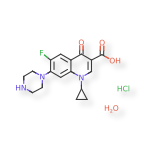
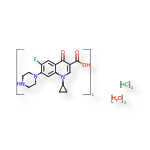
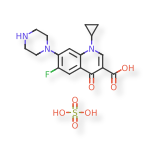
| Related Record | Type | Details | ||
|---|---|---|---|---|
|
METABOLITE LESS ACTIVE -> PARENT |
|
||
|
METABOLITE LESS ACTIVE -> PARENT |
|
||
|
METABOLITE LESS ACTIVE -> PARENT |
|
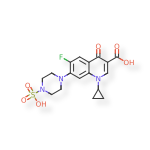


| Related Record | Type | Details | ||
|---|---|---|---|---|
|
IMPURITY -> PARENT |
|
||
|
IMPURITY -> PARENT |
CHROMATOGRAPHIC PURITY (HPLC/UV)
USP
|
||
|
IMPURITY -> PARENT |
|
||
|
IMPURITY -> PARENT |
|
||
|
IMPURITY -> PARENT |
|
||
|
IMPURITY -> PARENT |
CHROMATOGRAPHIC PURITY (HPLC/UV)
USP
|
||
|
PARENT -> IMPURITY | |||
|
IMPURITY -> PARENT |
|
||
|
IMPURITY -> PARENT |
|
||
|
IMPURITY -> PARENT |
|


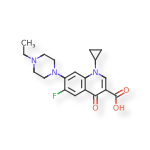


| Related Record | Type | Details | ||
|---|---|---|---|---|
|
|
ACTIVE MOIETY |
|
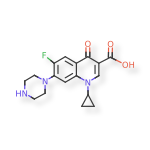
| Name | Property Type | Amount | Referenced Substance | Defining | Parameters | References |
|---|---|---|---|---|---|---|
| ORAL BIOAVAILABILITY | PHARMACOKINETIC |
|
|
|||
| Tmax | PHARMACOKINETIC |
|
ORAL, EXTENDED-RELEASE PHARMACOKINETIC |
|
||
| Volume of Distribution | PHARMACOKINETIC |
|
|
|||
| PROTEIN BINDING (SERUM PROTEINS) | PHARMACOKINETIC |
|
|
|||
| Biological Half-life | PHARMACOKINETIC |
|
NEONATES PHARMACOKINETIC PHARMACOKINETIC PHARMACOKINETIC |
|
||
| Volume of Distribution | PHARMACOKINETIC |
|
|
|||
| Route of Elimination | PHARMACOKINETIC |
|
FECAL PHARMACOKINETIC PHARMACOKINETIC PHARMACOKINETIC PHARMACOKINETIC PHARMACOKINETIC |
|
||
| Biological Half-life | PHARMACOKINETIC |
|
|
|||