


Details
| Stereochemistry | ABSOLUTE |
| Molecular Formula | C46H58N4O9 |
| Molecular Weight | 810.9741 |
| Optical Activity | UNSPECIFIED |
| Defined Stereocenters | 9 / 9 |
| E/Z Centers | 0 |
| Charge | 0 |
SHOW SMILES / InChI
SMILES
CC[C@]1(O)C[C@@H]2CN(C1)CCC3=C(NC4=C3C=CC=C4)[C@@](C2)(C(=O)OC)C5=C(OC)C=C6N(C)[C@@H]7[C@]8(CCN9CC=C[C@](CC)([C@@H]89)[C@@H](OC(C)=O)[C@]7(O)C(=O)OC)C6=C5
InChI
InChIKey=JXLYSJRDGCGARV-CFWMRBGOSA-N
InChI=1S/C46H58N4O9/c1-8-42(54)23-28-24-45(40(52)57-6,36-30(15-19-49(25-28)26-42)29-13-10-11-14-33(29)47-36)32-21-31-34(22-35(32)56-5)48(4)38-44(31)17-20-50-18-12-16-43(9-2,37(44)50)39(59-27(3)51)46(38,55)41(53)58-7/h10-14,16,21-22,28,37-39,47,54-55H,8-9,15,17-20,23-26H2,1-7H3/t28-,37-,38+,39+,42-,43+,44+,45-,46-/m0/s1
| Molecular Formula | C46H58N4O9 |
| Molecular Weight | 810.9741 |
| Charge | 0 |
| Count |
|
| Stereochemistry | ABSOLUTE |
| Additional Stereochemistry | No |
| Defined Stereocenters | 9 / 9 |
| E/Z Centers | 0 |
| Optical Activity | UNSPECIFIED |
DescriptionCurator's Comment: Description was created based on several sources, including
https://www.ncbi.nlm.nih.gov/pubmed/24404355
Curator's Comment: Description was created based on several sources, including
https://www.ncbi.nlm.nih.gov/pubmed/24404355
Vinblastine is a Vinca alkaloid obtained from the Madagascar periwinkle plant. Vinca alkaloids were found out in the 1950's by Canadian scientists, Robert Noble and Charles Beer for the first time. Medicinal applications of this plant lead to the monitoring of these compounds for their hypoglycemic activity, which is of little importance compared to their cytotoxic effects. They have been used to treat diabetes, high blood pressure and the drugs have even been used as disinfectants. Nevertheless, the vinca alkaloids are so important for being cancer fighters. The mechanism of action of vinblastine sulfate has been related to the inhibition of microtubule formation in the mitotic spindle,
resulting in an arrest of dividing cells at the metaphase stage. Vinblastine is an antineoplastic agent used to treat Hodgkin's disease, non-Hodgkin's lymphomas, mycosis fungoides, cancer of the testis, Kaposi's sarcoma, Letterer-Siwe disease, as well as other cancers.
Originator
Approval Year
Targets
| Primary Target | Pharmacology | Condition | Potency |
|---|---|---|---|
Conditions
| Condition | Modality | Targets | Highest Phase | Product |
|---|---|---|---|---|
| Primary | VINBLASTINE SULFATE Approved UseVinblastine Sulfate Injection is indicated in the palliative treatment of the following: I. Frequently Responsive Malignancies Generalized Hodgkin’s disease (Stages III and IV, Ann Arbor modification of Rye staging system) Lymphocytic lymphoma (nodular and diffuse, poorly and well differentiated) Histiocytic lymphoma Mycosis fungoides (advanced stages) Advanced carcinoma of the testis Kaposi’s sarcoma Letterer-Siwe disease (histiocytosis X) II. Less Frequently Responsive Malignancies Choriocarcinoma resistant to other chemotherapeutic agents Carcinoma of the breast, unresponsive to appropriate endocrine surgery and hormonal therapy Current principles of chemotherapy for many types of cancer include the concurrent administration of several antineoplastic agents. For enhanced therapeutic effect without additive toxicity, agents with different dose-limiting clinical toxicities and different mechanisms of action are generally selected. Therefore, although vinblastine sulfate is effective as a single agent in the aforementioned indications, it is usually administered in combination with other antineoplastic drugs. Such combination therapy produces a greater percentage of response than does a single-agent regimen. These principles have been applied, for example, in the chemotherapy of Hodgkin’s disease. Hodgkin's Disease Vinblastine sulfate has been shown to be one of the most effective single agents for the treatment of Hodgkin’s disease. Advanced Hodgkin’s disease has also been successfully treated with several multiple-drug regimens that included vinblastine sulfate. Patients who had relapses after treatment with the MOPP program— mechlorethamine hydrochloride (nitrogen mustard), vincristine sulfate, prednisone and procarbazine—have likewise responded to combination-drug therapy that included vinblastine sulfate. A protocol using cyclophosphamide in place of nitrogen mustard and vinblastine sulfate instead of vincristine sulfate is an alternative therapy for previously untreated patients with advanced Hodgkin’s disease. Advanced testicular germinal-cell cancers (embryonal carcinoma, teratocarcinoma and choriocarcinoma) are sensitive to vinblastine sulfate alone, but better clinical results are achieved when vinblastine sulfate is administered concomitantly with other antineoplastic agents. The effect of bleomycin is significantly enhanced if vinblastine sulfate is administered six to eight hours prior to the administration of bleomycin; this schedule permits more cells to be arrested during metaphase, the stage of the cell cycle in which bleomycin is active., Hodgkin's Disease Vinblastine sulfate has been shown to be one of the most effective single agents for the treatment of Hodgkin’s disease. Advanced Hodgkin’s disease has also been successfully treated with several multiple-drug regimens that included vinblastine sulfate. Patients who had relapses after treatment with the MOPP program— mechlorethamine hydrochloride (nitrogen mustard), vincristine sulfate, prednisone and procarbazine—have likewise responded to combination-drug therapy that included vinblastine sulfate. A protocol using cyclophosphamide in place of nitrogen mustard and vinblastine sulfate instead of vincristine sulfate is an alternative therapy for previously untreated patients with advanced Hodgkin’s disease. Advanced testicular germinal-cell cancers (embryonal carcinoma, teratocarcinoma and choriocarcinoma) are sensitive to vinblastine sulfate alone, but better clinical results are achieved when vinblastine sulfate is administered concomitantly with other antineoplastic agents. The effect of bleomycin is significantly enhanced if vinblastine sulfate is administered six to eight hours prior to the administration of bleomycin; this schedule permits more cells to be arrested during metaphase, the stage of the cell cycle in which bleomycin is active. Launch Date1987 |
|||
| Primary | VINBLASTINE SULFATE Approved UseVinblastine Sulfate Injection is indicated in the palliative treatment of the following: I. Frequently Responsive Malignancies Generalized Hodgkin’s disease (Stages III and IV, Ann Arbor modification of Rye staging system) Lymphocytic lymphoma (nodular and diffuse, poorly and well differentiated) Histiocytic lymphoma Mycosis fungoides (advanced stages) Advanced carcinoma of the testis Kaposi’s sarcoma Letterer-Siwe disease (histiocytosis X) II. Less Frequently Responsive Malignancies Choriocarcinoma resistant to other chemotherapeutic agents Carcinoma of the breast, unresponsive to appropriate endocrine surgery and hormonal therapy Current principles of chemotherapy for many types of cancer include the concurrent administration of several antineoplastic agents. For enhanced therapeutic effect without additive toxicity, agents with different dose-limiting clinical toxicities and different mechanisms of action are generally selected. Therefore, although vinblastine sulfate is effective as a single agent in the aforementioned indications, it is usually administered in combination with other antineoplastic drugs. Such combination therapy produces a greater percentage of response than does a single-agent regimen. These principles have been applied, for example, in the chemotherapy of Hodgkin’s disease. Hodgkin's Disease Vinblastine sulfate has been shown to be one of the most effective single agents for the treatment of Hodgkin’s disease. Advanced Hodgkin’s disease has also been successfully treated with several multiple-drug regimens that included vinblastine sulfate. Patients who had relapses after treatment with the MOPP program— mechlorethamine hydrochloride (nitrogen mustard), vincristine sulfate, prednisone and procarbazine—have likewise responded to combination-drug therapy that included vinblastine sulfate. A protocol using cyclophosphamide in place of nitrogen mustard and vinblastine sulfate instead of vincristine sulfate is an alternative therapy for previously untreated patients with advanced Hodgkin’s disease. Advanced testicular germinal-cell cancers (embryonal carcinoma, teratocarcinoma and choriocarcinoma) are sensitive to vinblastine sulfate alone, but better clinical results are achieved when vinblastine sulfate is administered concomitantly with other antineoplastic agents. The effect of bleomycin is significantly enhanced if vinblastine sulfate is administered six to eight hours prior to the administration of bleomycin; this schedule permits more cells to be arrested during metaphase, the stage of the cell cycle in which bleomycin is active., Hodgkin's Disease Vinblastine sulfate has been shown to be one of the most effective single agents for the treatment of Hodgkin’s disease. Advanced Hodgkin’s disease has also been successfully treated with several multiple-drug regimens that included vinblastine sulfate. Patients who had relapses after treatment with the MOPP program— mechlorethamine hydrochloride (nitrogen mustard), vincristine sulfate, prednisone and procarbazine—have likewise responded to combination-drug therapy that included vinblastine sulfate. A protocol using cyclophosphamide in place of nitrogen mustard and vinblastine sulfate instead of vincristine sulfate is an alternative therapy for previously untreated patients with advanced Hodgkin’s disease. Advanced testicular germinal-cell cancers (embryonal carcinoma, teratocarcinoma and choriocarcinoma) are sensitive to vinblastine sulfate alone, but better clinical results are achieved when vinblastine sulfate is administered concomitantly with other antineoplastic agents. The effect of bleomycin is significantly enhanced if vinblastine sulfate is administered six to eight hours prior to the administration of bleomycin; this schedule permits more cells to be arrested during metaphase, the stage of the cell cycle in which bleomycin is active. Launch Date1987 |
|||
| Primary | VINBLASTINE SULFATE Approved UseVinblastine Sulfate Injection is indicated in the palliative treatment of the following: I. Frequently Responsive Malignancies Generalized Hodgkin’s disease (Stages III and IV, Ann Arbor modification of Rye staging system) Lymphocytic lymphoma (nodular and diffuse, poorly and well differentiated) Histiocytic lymphoma Mycosis fungoides (advanced stages) Advanced carcinoma of the testis Kaposi’s sarcoma Letterer-Siwe disease (histiocytosis X) II. Less Frequently Responsive Malignancies Choriocarcinoma resistant to other chemotherapeutic agents Carcinoma of the breast, unresponsive to appropriate endocrine surgery and hormonal therapy Current principles of chemotherapy for many types of cancer include the concurrent administration of several antineoplastic agents. For enhanced therapeutic effect without additive toxicity, agents with different dose-limiting clinical toxicities and different mechanisms of action are generally selected. Therefore, although vinblastine sulfate is effective as a single agent in the aforementioned indications, it is usually administered in combination with other antineoplastic drugs. Such combination therapy produces a greater percentage of response than does a single-agent regimen. These principles have been applied, for example, in the chemotherapy of Hodgkin’s disease. Hodgkin's Disease Vinblastine sulfate has been shown to be one of the most effective single agents for the treatment of Hodgkin’s disease. Advanced Hodgkin’s disease has also been successfully treated with several multiple-drug regimens that included vinblastine sulfate. Patients who had relapses after treatment with the MOPP program— mechlorethamine hydrochloride (nitrogen mustard), vincristine sulfate, prednisone and procarbazine—have likewise responded to combination-drug therapy that included vinblastine sulfate. A protocol using cyclophosphamide in place of nitrogen mustard and vinblastine sulfate instead of vincristine sulfate is an alternative therapy for previously untreated patients with advanced Hodgkin’s disease. Advanced testicular germinal-cell cancers (embryonal carcinoma, teratocarcinoma and choriocarcinoma) are sensitive to vinblastine sulfate alone, but better clinical results are achieved when vinblastine sulfate is administered concomitantly with other antineoplastic agents. The effect of bleomycin is significantly enhanced if vinblastine sulfate is administered six to eight hours prior to the administration of bleomycin; this schedule permits more cells to be arrested during metaphase, the stage of the cell cycle in which bleomycin is active., Hodgkin's Disease Vinblastine sulfate has been shown to be one of the most effective single agents for the treatment of Hodgkin’s disease. Advanced Hodgkin’s disease has also been successfully treated with several multiple-drug regimens that included vinblastine sulfate. Patients who had relapses after treatment with the MOPP program— mechlorethamine hydrochloride (nitrogen mustard), vincristine sulfate, prednisone and procarbazine—have likewise responded to combination-drug therapy that included vinblastine sulfate. A protocol using cyclophosphamide in place of nitrogen mustard and vinblastine sulfate instead of vincristine sulfate is an alternative therapy for previously untreated patients with advanced Hodgkin’s disease. Advanced testicular germinal-cell cancers (embryonal carcinoma, teratocarcinoma and choriocarcinoma) are sensitive to vinblastine sulfate alone, but better clinical results are achieved when vinblastine sulfate is administered concomitantly with other antineoplastic agents. The effect of bleomycin is significantly enhanced if vinblastine sulfate is administered six to eight hours prior to the administration of bleomycin; this schedule permits more cells to be arrested during metaphase, the stage of the cell cycle in which bleomycin is active. Launch Date1987 |
|||
| Primary | VINBLASTINE SULFATE Approved UseVinblastine Sulfate Injection is indicated in the palliative treatment of the following: I. Frequently Responsive Malignancies Generalized Hodgkin’s disease (Stages III and IV, Ann Arbor modification of Rye staging system) Lymphocytic lymphoma (nodular and diffuse, poorly and well differentiated) Histiocytic lymphoma Mycosis fungoides (advanced stages) Advanced carcinoma of the testis Kaposi’s sarcoma Letterer-Siwe disease (histiocytosis X) II. Less Frequently Responsive Malignancies Choriocarcinoma resistant to other chemotherapeutic agents Carcinoma of the breast, unresponsive to appropriate endocrine surgery and hormonal therapy Current principles of chemotherapy for many types of cancer include the concurrent administration of several antineoplastic agents. For enhanced therapeutic effect without additive toxicity, agents with different dose-limiting clinical toxicities and different mechanisms of action are generally selected. Therefore, although vinblastine sulfate is effective as a single agent in the aforementioned indications, it is usually administered in combination with other antineoplastic drugs. Such combination therapy produces a greater percentage of response than does a single-agent regimen. These principles have been applied, for example, in the chemotherapy of Hodgkin’s disease. Hodgkin's Disease Vinblastine sulfate has been shown to be one of the most effective single agents for the treatment of Hodgkin’s disease. Advanced Hodgkin’s disease has also been successfully treated with several multiple-drug regimens that included vinblastine sulfate. Patients who had relapses after treatment with the MOPP program— mechlorethamine hydrochloride (nitrogen mustard), vincristine sulfate, prednisone and procarbazine—have likewise responded to combination-drug therapy that included vinblastine sulfate. A protocol using cyclophosphamide in place of nitrogen mustard and vinblastine sulfate instead of vincristine sulfate is an alternative therapy for previously untreated patients with advanced Hodgkin’s disease. Advanced testicular germinal-cell cancers (embryonal carcinoma, teratocarcinoma and choriocarcinoma) are sensitive to vinblastine sulfate alone, but better clinical results are achieved when vinblastine sulfate is administered concomitantly with other antineoplastic agents. The effect of bleomycin is significantly enhanced if vinblastine sulfate is administered six to eight hours prior to the administration of bleomycin; this schedule permits more cells to be arrested during metaphase, the stage of the cell cycle in which bleomycin is active., Hodgkin's Disease Vinblastine sulfate has been shown to be one of the most effective single agents for the treatment of Hodgkin’s disease. Advanced Hodgkin’s disease has also been successfully treated with several multiple-drug regimens that included vinblastine sulfate. Patients who had relapses after treatment with the MOPP program— mechlorethamine hydrochloride (nitrogen mustard), vincristine sulfate, prednisone and procarbazine—have likewise responded to combination-drug therapy that included vinblastine sulfate. A protocol using cyclophosphamide in place of nitrogen mustard and vinblastine sulfate instead of vincristine sulfate is an alternative therapy for previously untreated patients with advanced Hodgkin’s disease. Advanced testicular germinal-cell cancers (embryonal carcinoma, teratocarcinoma and choriocarcinoma) are sensitive to vinblastine sulfate alone, but better clinical results are achieved when vinblastine sulfate is administered concomitantly with other antineoplastic agents. The effect of bleomycin is significantly enhanced if vinblastine sulfate is administered six to eight hours prior to the administration of bleomycin; this schedule permits more cells to be arrested during metaphase, the stage of the cell cycle in which bleomycin is active. Launch Date1987 |
|||
| Primary | VINBLASTINE SULFATE Approved UseVinblastine Sulfate Injection is indicated in the palliative treatment of the following: I. Frequently Responsive Malignancies Generalized Hodgkin’s disease (Stages III and IV, Ann Arbor modification of Rye staging system) Lymphocytic lymphoma (nodular and diffuse, poorly and well differentiated) Histiocytic lymphoma Mycosis fungoides (advanced stages) Advanced carcinoma of the testis Kaposi’s sarcoma Letterer-Siwe disease (histiocytosis X) II. Less Frequently Responsive Malignancies Choriocarcinoma resistant to other chemotherapeutic agents Carcinoma of the breast, unresponsive to appropriate endocrine surgery and hormonal therapy Current principles of chemotherapy for many types of cancer include the concurrent administration of several antineoplastic agents. For enhanced therapeutic effect without additive toxicity, agents with different dose-limiting clinical toxicities and different mechanisms of action are generally selected. Therefore, although vinblastine sulfate is effective as a single agent in the aforementioned indications, it is usually administered in combination with other antineoplastic drugs. Such combination therapy produces a greater percentage of response than does a single-agent regimen. These principles have been applied, for example, in the chemotherapy of Hodgkin’s disease. Hodgkin's Disease Vinblastine sulfate has been shown to be one of the most effective single agents for the treatment of Hodgkin’s disease. Advanced Hodgkin’s disease has also been successfully treated with several multiple-drug regimens that included vinblastine sulfate. Patients who had relapses after treatment with the MOPP program— mechlorethamine hydrochloride (nitrogen mustard), vincristine sulfate, prednisone and procarbazine—have likewise responded to combination-drug therapy that included vinblastine sulfate. A protocol using cyclophosphamide in place of nitrogen mustard and vinblastine sulfate instead of vincristine sulfate is an alternative therapy for previously untreated patients with advanced Hodgkin’s disease. Advanced testicular germinal-cell cancers (embryonal carcinoma, teratocarcinoma and choriocarcinoma) are sensitive to vinblastine sulfate alone, but better clinical results are achieved when vinblastine sulfate is administered concomitantly with other antineoplastic agents. The effect of bleomycin is significantly enhanced if vinblastine sulfate is administered six to eight hours prior to the administration of bleomycin; this schedule permits more cells to be arrested during metaphase, the stage of the cell cycle in which bleomycin is active., Hodgkin's Disease Vinblastine sulfate has been shown to be one of the most effective single agents for the treatment of Hodgkin’s disease. Advanced Hodgkin’s disease has also been successfully treated with several multiple-drug regimens that included vinblastine sulfate. Patients who had relapses after treatment with the MOPP program— mechlorethamine hydrochloride (nitrogen mustard), vincristine sulfate, prednisone and procarbazine—have likewise responded to combination-drug therapy that included vinblastine sulfate. A protocol using cyclophosphamide in place of nitrogen mustard and vinblastine sulfate instead of vincristine sulfate is an alternative therapy for previously untreated patients with advanced Hodgkin’s disease. Advanced testicular germinal-cell cancers (embryonal carcinoma, teratocarcinoma and choriocarcinoma) are sensitive to vinblastine sulfate alone, but better clinical results are achieved when vinblastine sulfate is administered concomitantly with other antineoplastic agents. The effect of bleomycin is significantly enhanced if vinblastine sulfate is administered six to eight hours prior to the administration of bleomycin; this schedule permits more cells to be arrested during metaphase, the stage of the cell cycle in which bleomycin is active. Launch Date1987 |
|||
| Primary | VINBLASTINE SULFATE Approved UseVinblastine Sulfate Injection is indicated in the palliative treatment of the following: I. Frequently Responsive Malignancies Generalized Hodgkin’s disease (Stages III and IV, Ann Arbor modification of Rye staging system) Lymphocytic lymphoma (nodular and diffuse, poorly and well differentiated) Histiocytic lymphoma Mycosis fungoides (advanced stages) Advanced carcinoma of the testis Kaposi’s sarcoma Letterer-Siwe disease (histiocytosis X) II. Less Frequently Responsive Malignancies Choriocarcinoma resistant to other chemotherapeutic agents Carcinoma of the breast, unresponsive to appropriate endocrine surgery and hormonal therapy Current principles of chemotherapy for many types of cancer include the concurrent administration of several antineoplastic agents. For enhanced therapeutic effect without additive toxicity, agents with different dose-limiting clinical toxicities and different mechanisms of action are generally selected. Therefore, although vinblastine sulfate is effective as a single agent in the aforementioned indications, it is usually administered in combination with other antineoplastic drugs. Such combination therapy produces a greater percentage of response than does a single-agent regimen. These principles have been applied, for example, in the chemotherapy of Hodgkin’s disease. Hodgkin's Disease Vinblastine sulfate has been shown to be one of the most effective single agents for the treatment of Hodgkin’s disease. Advanced Hodgkin’s disease has also been successfully treated with several multiple-drug regimens that included vinblastine sulfate. Patients who had relapses after treatment with the MOPP program— mechlorethamine hydrochloride (nitrogen mustard), vincristine sulfate, prednisone and procarbazine—have likewise responded to combination-drug therapy that included vinblastine sulfate. A protocol using cyclophosphamide in place of nitrogen mustard and vinblastine sulfate instead of vincristine sulfate is an alternative therapy for previously untreated patients with advanced Hodgkin’s disease. Advanced testicular germinal-cell cancers (embryonal carcinoma, teratocarcinoma and choriocarcinoma) are sensitive to vinblastine sulfate alone, but better clinical results are achieved when vinblastine sulfate is administered concomitantly with other antineoplastic agents. The effect of bleomycin is significantly enhanced if vinblastine sulfate is administered six to eight hours prior to the administration of bleomycin; this schedule permits more cells to be arrested during metaphase, the stage of the cell cycle in which bleomycin is active., Hodgkin's Disease Vinblastine sulfate has been shown to be one of the most effective single agents for the treatment of Hodgkin’s disease. Advanced Hodgkin’s disease has also been successfully treated with several multiple-drug regimens that included vinblastine sulfate. Patients who had relapses after treatment with the MOPP program— mechlorethamine hydrochloride (nitrogen mustard), vincristine sulfate, prednisone and procarbazine—have likewise responded to combination-drug therapy that included vinblastine sulfate. A protocol using cyclophosphamide in place of nitrogen mustard and vinblastine sulfate instead of vincristine sulfate is an alternative therapy for previously untreated patients with advanced Hodgkin’s disease. Advanced testicular germinal-cell cancers (embryonal carcinoma, teratocarcinoma and choriocarcinoma) are sensitive to vinblastine sulfate alone, but better clinical results are achieved when vinblastine sulfate is administered concomitantly with other antineoplastic agents. The effect of bleomycin is significantly enhanced if vinblastine sulfate is administered six to eight hours prior to the administration of bleomycin; this schedule permits more cells to be arrested during metaphase, the stage of the cell cycle in which bleomycin is active. Launch Date1987 |
T1/2
| Value | Dose | Co-administered | Analyte | Population |
|---|---|---|---|---|
31.4 h EXPERIMENT https://pubmed.ncbi.nlm.nih.gov/7070351/ |
7 mg single, intravenous dose: 7 mg route of administration: Intravenous experiment type: SINGLE co-administered: |
VINBLASTINE serum | Homo sapiens population: UNHEALTHY age: UNKNOWN sex: UNKNOWN food status: UNKNOWN |
|
26.2 h EXPERIMENT https://pubmed.ncbi.nlm.nih.gov/7070351/ |
10 mg single, intravenous dose: 10 mg route of administration: Intravenous experiment type: SINGLE co-administered: |
VINBLASTINE serum | Homo sapiens population: UNHEALTHY age: UNKNOWN sex: UNKNOWN food status: UNKNOWN |
|
16.7 h EXPERIMENT https://pubmed.ncbi.nlm.nih.gov/7070351/ |
14 mg single, intravenous dose: 14 mg route of administration: Intravenous experiment type: SINGLE co-administered: |
VINBLASTINE serum | Homo sapiens population: UNHEALTHY age: UNKNOWN sex: UNKNOWN food status: UNKNOWN |
|
1173 min EXPERIMENT https://pubmed.ncbi.nlm.nih.gov/889590/ |
0.2 mg/kg single, intravenous dose: 0.2 mg/kg route of administration: Intravenous experiment type: SINGLE co-administered: |
VINBLASTINE serum | Homo sapiens population: UNKNOWN age: UNKNOWN sex: UNKNOWN food status: UNKNOWN |
Funbound
| Value | Dose | Co-administered | Analyte | Population |
|---|---|---|---|---|
0.3% EXPERIMENT https://pubmed.ncbi.nlm.nih.gov/6873152/ |
VINBLASTINE serum | Homo sapiens population: HEALTHY age: ADULT sex: UNKNOWN food status: UNKNOWN |
||
1.1% EXPERIMENT https://pubmed.ncbi.nlm.nih.gov/6873152/ |
VINBLASTINE serum | Homo sapiens population: UNHEALTHY age: UNKNOWN sex: UNKNOWN food status: UNKNOWN |
Doses
| Dose | Population | Adverse events |
|---|---|---|
1.3 mg/m2 1 times / day multiple, intravenous MTD Dose: 1.3 mg/m2, 1 times / day Route: intravenous Route: multiple Dose: 1.3 mg/m2, 1 times / day Sources: |
unhealthy, 18-73 |
DLT: Neutropenia, Ileus... Dose limiting toxicities: Neutropenia (grade 4, 16.7%) Sources: Ileus (grade 4, 16.7%) |
2.6 mg/m2 1 times / day multiple, intravenous Studied dose Dose: 2.6 mg/m2, 1 times / day Route: intravenous Route: multiple Dose: 2.6 mg/m2, 1 times / day Sources: |
unhealthy, 18-73 |
DLT: Neutropenia, Fatigue... Dose limiting toxicities: Neutropenia (grade 4, 50%) Sources: Fatigue (grade 3, 25%) |
2.6 mg/m2 1 times / day multiple, intravenous Studied dose Dose: 2.6 mg/m2, 1 times / day Route: intravenous Route: multiple Dose: 2.6 mg/m2, 1 times / day Sources: |
unhealthy, 18-73 |
DLT: Neutropenia, Ileus... Dose limiting toxicities: Neutropenia (grade 4, 33.3%) Sources: Ileus (grade 4, 33.3%) Neutropenic fever (grade 4, 33.3%) |
10 mg/m2 1 times / month multiple, intravenous MTD Dose: 10 mg/m2, 1 times / month Route: intravenous Route: multiple Dose: 10 mg/m2, 1 times / month Sources: |
unhealthy, 31-70 |
DLT: Neutropenia, Sepsis... Dose limiting toxicities: Neutropenia (grade 4, 66.7%) Sources: Sepsis (grade 5, 16.7%) |
AEs
| AE | Significance | Dose | Population |
|---|---|---|---|
| Ileus | grade 4, 16.7% DLT |
1.3 mg/m2 1 times / day multiple, intravenous MTD Dose: 1.3 mg/m2, 1 times / day Route: intravenous Route: multiple Dose: 1.3 mg/m2, 1 times / day Sources: |
unhealthy, 18-73 |
| Neutropenia | grade 4, 16.7% DLT |
1.3 mg/m2 1 times / day multiple, intravenous MTD Dose: 1.3 mg/m2, 1 times / day Route: intravenous Route: multiple Dose: 1.3 mg/m2, 1 times / day Sources: |
unhealthy, 18-73 |
| Fatigue | grade 3, 25% DLT |
2.6 mg/m2 1 times / day multiple, intravenous Studied dose Dose: 2.6 mg/m2, 1 times / day Route: intravenous Route: multiple Dose: 2.6 mg/m2, 1 times / day Sources: |
unhealthy, 18-73 |
| Neutropenia | grade 4, 50% DLT |
2.6 mg/m2 1 times / day multiple, intravenous Studied dose Dose: 2.6 mg/m2, 1 times / day Route: intravenous Route: multiple Dose: 2.6 mg/m2, 1 times / day Sources: |
unhealthy, 18-73 |
| Ileus | grade 4, 33.3% DLT |
2.6 mg/m2 1 times / day multiple, intravenous Studied dose Dose: 2.6 mg/m2, 1 times / day Route: intravenous Route: multiple Dose: 2.6 mg/m2, 1 times / day Sources: |
unhealthy, 18-73 |
| Neutropenia | grade 4, 33.3% DLT |
2.6 mg/m2 1 times / day multiple, intravenous Studied dose Dose: 2.6 mg/m2, 1 times / day Route: intravenous Route: multiple Dose: 2.6 mg/m2, 1 times / day Sources: |
unhealthy, 18-73 |
| Neutropenic fever | grade 4, 33.3% DLT |
2.6 mg/m2 1 times / day multiple, intravenous Studied dose Dose: 2.6 mg/m2, 1 times / day Route: intravenous Route: multiple Dose: 2.6 mg/m2, 1 times / day Sources: |
unhealthy, 18-73 |
| Neutropenia | grade 4, 66.7% DLT |
10 mg/m2 1 times / month multiple, intravenous MTD Dose: 10 mg/m2, 1 times / month Route: intravenous Route: multiple Dose: 10 mg/m2, 1 times / month Sources: |
unhealthy, 31-70 |
| Sepsis | grade 5, 16.7% DLT, Disc. AE |
10 mg/m2 1 times / month multiple, intravenous MTD Dose: 10 mg/m2, 1 times / month Route: intravenous Route: multiple Dose: 10 mg/m2, 1 times / month Sources: |
unhealthy, 31-70 |
Overview
| CYP3A4 | CYP2C9 | CYP2D6 | hERG |
|---|---|---|---|
OverviewOther
Drug as perpetrator
| Target | Modality | Activity | Metabolite | Clinical evidence |
|---|---|---|---|---|
| no [IC50 >10 uM] | ||||
| no [IC50 >10 uM] | ||||
| no [IC50 >10 uM] | ||||
| no [IC50 >10 uM] | ||||
| no [IC50 >10 uM] | ||||
| no [IC50 >133 uM] | ||||
| no | ||||
| no | ||||
| no | ||||
| no | ||||
| weak [IC50 100 uM] | ||||
| yes [IC50 21 uM] | ||||
| yes [IC50 30 uM] | ||||
| yes [IC50 32 uM] | ||||
| yes [IC50 35.1 uM] | ||||
| yes [IC50 43.5 uM] | ||||
| yes [IC50 46.8 uM] | ||||
| yes [IC50 62 uM] | ||||
| yes [Ki 42 uM] | ||||
| yes | ||||
| yes | ||||
| yes | ||||
| yes | ||||
| yes | yes (co-administration study) Comment: Vinblastine increased the median (95% CI) clearance of the CYP3A4 phenotyping probe midazolam from 21.7 L/h (12.6 to 28.1) to 32.3 L/h (17.3 to 53.9) (p = 0.0156, Wilcoxon signed-rank test). |
Drug as victim
| Target | Modality | Activity | Metabolite | Clinical evidence |
|---|---|---|---|---|
| yes [Km 137.3 uM] | ||||
| yes [Km 89.2 uM] | ||||
| yes | ||||
| yes | ||||
| yes | ||||
| yes | yes (co-administration study) Comment: Enhanced toxicity has been reported in patients receiving concomitant erythromycin |
PubMed
| Title | Date | PubMed |
|---|---|---|
| Long term outcome of adolescent and adult patients with pineal parenchymal tumors treated with fractionated radiotherapy between 1982 and 2003--a single institution's experience. | 2010-12-26 |
|
| Retroperitoneal lymph node dissection for residual masses after chemotherapy in nonseminomatous germ cell testicular tumor. | 2010-11-09 |
|
| Factors influencing overall survival rates for patients with pineocytoma. | 2010-11 |
|
| Proteomic analysis of annexin A2 phosphorylation induced by microtubule interfering agents and kinesin spindle protein inhibitors. | 2010-09-03 |
|
| Reciprocal competition between lipid nanocapsules and P-gp for paclitaxel transport across Caco-2 cells. | 2010-08-11 |
|
| A screen for kinetochore-microtubule interaction inhibitors identifies novel antitubulin compounds. | 2010-07-15 |
|
| Distinct roles for Dectin-1 and TLR4 in the pathogenesis of Aspergillus fumigatus keratitis. | 2010-07-01 |
|
| Cutaneous lesions of the nose. | 2010-06-04 |
|
| Antinociceptive effect of vinpocetine--a comprehensive survey. | 2010-05-30 |
|
| (2E,4E)-1-(6-Chloro-2-methyl-4-phenyl-3-quinol-yl)-5-phenyl-penta-2,4-dien-1-one. | 2010-05-12 |
|
| Primary pure gastric yolk sac tumor. | 2010-03-31 |
|
| Retrospective French nationwide survey of childhood aggressive vascular anomalies of bone, 1988-2009. | 2010-02-03 |
|
| Recent strategy for the management of advanced testicular cancer. | 2010-02 |
|
| Hodgkin's lymphoma presenting with heart failure: a case report. | 2010-01-20 |
|
| Simple and reproducible HPLC-DAD-ESI-MS/MS analysis of alkaloids in Catharanthus roseus roots. | 2010-01-05 |
|
| Summary of the american college for advancement in medicine november 2007 conference on integrative medicine: advancing science and clinical practice. | 2009-09 |
|
| Valvular dysfunction and left ventricular changes in Hodgkin's lymphoma survivors. A longitudinal study. | 2009-08-18 |
|
| Identifying tumor stem-like cells in mouse melanoma cell lines by analyzing the characteristics of side population cells. | 2009-08 |
|
| Chemomodulation of human dendritic cell function by antineoplastic agents in low noncytotoxic concentrations. | 2009-07-10 |
|
| New approaches for cancer treatment: antitumor drugs based on gene-targeted nucleic acids. | 2009-07 |
|
| Micropapillary bladder cancer: a review of Léon Bérard Cancer Center experience. | 2009-06-17 |
|
| Initiation of hepatitis C virus infection requires the dynamic microtubule network: role of the viral nucleocapsid protein. | 2009-05-15 |
|
| Construction of a model cell line for the assay of MDR1 (multi drug resistance gene-1) substrates/inhibitors using HeLa cells. | 2009-05 |
|
| rac-Methyl 4-azido-3-hydr-oxy-3-(2-nitro-phen-yl)butanoate. | 2009-01-28 |
|
| Vinflunine in the treatment of bladder cancer. | 2008-12 |
|
| [Metastases from urethelial carcinoma: role of chemotherapy]. | 2008-11 |
|
| [Squamous cell carcinoma of the renal pelvis with elevation of G-CSF in the serum: a case report]. | 2008-11 |
|
| Anterior segment manifestations of human immunodeficiency virus/acquired immune deficiency syndrome. | 2008-08-20 |
|
| Kaposi's sarcoma of the hand mimicking squamous cell carcinoma in a woman with no evidence of HIV infection: a case report. | 2008-06-19 |
|
| A review on plant-derived natural products and their analogs with anti-tumor activity. | 2008-03 |
|
| Natural and synthetic polymers as inhibitors of drug efflux pumps. | 2008-03 |
|
| A review of topotecan in combination chemotherapy for advanced cervical cancer. | 2008-02 |
|
| Efficiency of propolis extract against mitochondrial stress induced by antineoplasic agents (doxorubicin and vinblastin) in rats. | 2008-02 |
|
| The effect of platelet autoantibodies on the course of the disease and clinical response of patients with idiopathic thrombocytopenic purpura. | 2008-02 |
|
| Subdural effusion in a CNS involvement of systemic juvenile xanthogranuloma: a case report treated with vinblastin. | 2008-02 |
|
| Wound healing in patients with cancer. | 2008-01-11 |
|
| Treatment of locally advanced and metastatic bladder cancer. | 2008-01 |
|
| Mitigation of nociception via transganglionic degenerative atrophy: possible mechanism of vinpocetine-induced blockade of retrograde axoplasmic transport. | 2008 |
|
| A case of nodular sclerosis Hodgkin's lymphoma repeatedly relapsing in the context of composite plasma cell-hyaline vascular Castleman's disease: successful response to rituximab and radiotherapy. | 2007-11 |
|
| The use of vinca alkaloids in preparation for splenectomy of corticosteroid refractory chronic immune thrombocytopenic purpura patients. | 2007-10 |
|
| Intraoperative radiotherapy (IORT) is an option for patients with localized breast recurrences after previous external-beam radiotherapy. | 2007-09-14 |
|
| Multi-disciplinary treatment of a rare pelvic cavity ependymoma. | 2007-08-31 |
|
| Will BEACOPP be the standard for high risk Hodgkin lymphoma patients in advanced stages? | 2007-08 |
|
| Primary malignant teratoma with a primitive neuroectodermal tumor component in thyroid gland: a case report. | 2007-06 |
|
| [Influence of antitumor preparations on the concentration of free radicals in cells of Fusarium bulbigenum var. blasticola fungus during primary and tumour-like secondary growth]. | 2007-05-05 |
|
| HIV-1 integrase inhibitors are substrates for the multidrug transporter MDR1-P-glycoprotein. | 2007-03-07 |
|
| In silico prediction of pregnane X receptor activators by machine learning approaches. | 2007-01 |
|
| [Chemotherapy of advanced non small cell lung cancer: effect on survival and symptoms affecting quality of life]. | 2007 |
|
| A novel copper complex induces ROS generation in doxorubicin resistant Ehrlich ascitis carcinoma cells and increases activity of antioxidant enzymes in vital organs in vivo. | 2006-11-15 |
|
| [Ten-year outcomes of lymphogranulomatosis treatment according to the protocol MOPP-ABVD+radiotherapy]. | 2006 |
Patents
Sample Use Guides
It is wise to initiate therapy for adults by administering a single intravenous dose of 3.7 mg/m2 of body surface area (bsa).
Thereafter, white-blood-cell counts should be made to determine the patient’s sensitivity to vinblastine sulfate.
A simplified and conservative incremental approach to dosage at weekly intervals for adults may be outlined as follows:
First dose ........................... 3.7 mg/m2 bsa
Second dose ........................... 5.5 mg/m2 bsa
Third dose ........................... 7.4 mg/m2 bsa
Fourth dose ........................... 9.25 mg/m2 bsa
Fifth dose ........................... 11.1 mg/m2 bsa
The above-mentioned increases may be used until a maximum dose not exceeding 18.5 mg/m2 bsa for adults is reached. The dose should
not be increased after that dose which reduces the white-cell count to approximately 3000 cells/mm3
. In some adults, 3.7 mg/m2 bsa
may produce this leukopenia; other adults may require more than 11.1 mg/m2 bsa; and, very rarely, as much as 18.5 mg/m2 bsa may be
necessary. For most adult patients, however, the weekly dosage will prove to be 5.5 to 7.4 mg/m2 bsa.
When the dose of vinblastine sulfate which will produce the above degree of leukopenia has been established, a dose of 1 increment
smaller than this should be administered at weekly intervals for maintenance. Thus, the patient is receiving the maximum dose that does
not cause leukopenia. It should be emphasized that, even though 7 days have elapsed, the next dose of vinblastine sulfate should not be
given until the white-cell count has returned to at least 4000/mm3. In some cases, oncolytic activity may be encountered before leukopenic
effect. When this occurs, there is no need to increase the size of the subsequent doses
Route of Administration:
Intravenous
| Substance Class |
Chemical
Created
by
admin
on
Edited
Mon Mar 31 17:49:29 GMT 2025
by
admin
on
Mon Mar 31 17:49:29 GMT 2025
|
| Record UNII |
5V9KLZ54CY
|
| Record Status |
Validated (UNII)
|
| Record Version |
|
-
Download
| Name | Type | Language | ||
|---|---|---|---|---|
|
Official Name | English | ||
|
Preferred Name | English | ||
|
Common Name | English | ||
|
Common Name | English | ||
|
Common Name | English | ||
|
Common Name | English | ||
|
Code | English | ||
|
Common Name | English | ||
|
Common Name | English | ||
|
Common Name | English |
| Classification Tree | Code System | Code | ||
|---|---|---|---|---|
|
NCI_THESAURUS |
C932
Created by
admin on Mon Mar 31 17:49:29 GMT 2025 , Edited by admin on Mon Mar 31 17:49:29 GMT 2025
|
||
|
WHO-VATC |
QL01CA01
Created by
admin on Mon Mar 31 17:49:29 GMT 2025 , Edited by admin on Mon Mar 31 17:49:29 GMT 2025
|
||
|
LIVERTOX |
1029
Created by
admin on Mon Mar 31 17:49:29 GMT 2025 , Edited by admin on Mon Mar 31 17:49:29 GMT 2025
|
||
|
NDF-RT |
N0000007780
Created by
admin on Mon Mar 31 17:49:29 GMT 2025 , Edited by admin on Mon Mar 31 17:49:29 GMT 2025
|
||
|
NDF-RT |
N0000007780
Created by
admin on Mon Mar 31 17:49:29 GMT 2025 , Edited by admin on Mon Mar 31 17:49:29 GMT 2025
|
||
|
NDF-RT |
N0000175612
Created by
admin on Mon Mar 31 17:49:29 GMT 2025 , Edited by admin on Mon Mar 31 17:49:29 GMT 2025
|
||
|
WHO-ESSENTIAL MEDICINES LIST |
8.2
Created by
admin on Mon Mar 31 17:49:29 GMT 2025 , Edited by admin on Mon Mar 31 17:49:29 GMT 2025
|
||
|
WHO-ATC |
L01CA01
Created by
admin on Mon Mar 31 17:49:29 GMT 2025 , Edited by admin on Mon Mar 31 17:49:29 GMT 2025
|
||
|
EPA PESTICIDE CODE |
600072
Created by
admin on Mon Mar 31 17:49:29 GMT 2025 , Edited by admin on Mon Mar 31 17:49:29 GMT 2025
|
||
|
NCI_THESAURUS |
C67422
Created by
admin on Mon Mar 31 17:49:29 GMT 2025 , Edited by admin on Mon Mar 31 17:49:29 GMT 2025
|
| Code System | Code | Type | Description | ||
|---|---|---|---|---|---|
|
CHEMBL159
Created by
admin on Mon Mar 31 17:49:29 GMT 2025 , Edited by admin on Mon Mar 31 17:49:29 GMT 2025
|
PRIMARY | |||
|
5V9KLZ54CY
Created by
admin on Mon Mar 31 17:49:29 GMT 2025 , Edited by admin on Mon Mar 31 17:49:29 GMT 2025
|
PRIMARY | |||
|
2823
Created by
admin on Mon Mar 31 17:49:29 GMT 2025 , Edited by admin on Mon Mar 31 17:49:29 GMT 2025
|
PRIMARY | |||
|
DB00570
Created by
admin on Mon Mar 31 17:49:29 GMT 2025 , Edited by admin on Mon Mar 31 17:49:29 GMT 2025
|
PRIMARY | |||
|
13342
Created by
admin on Mon Mar 31 17:49:29 GMT 2025 , Edited by admin on Mon Mar 31 17:49:29 GMT 2025
|
PRIMARY | |||
|
5V9KLZ54CY
Created by
admin on Mon Mar 31 17:49:29 GMT 2025 , Edited by admin on Mon Mar 31 17:49:29 GMT 2025
|
PRIMARY | |||
|
3263
Created by
admin on Mon Mar 31 17:49:29 GMT 2025 , Edited by admin on Mon Mar 31 17:49:29 GMT 2025
|
PRIMARY | |||
|
D014747
Created by
admin on Mon Mar 31 17:49:29 GMT 2025 , Edited by admin on Mon Mar 31 17:49:29 GMT 2025
|
PRIMARY | |||
|
27375
Created by
admin on Mon Mar 31 17:49:29 GMT 2025 , Edited by admin on Mon Mar 31 17:49:29 GMT 2025
|
PRIMARY | |||
|
m11449
Created by
admin on Mon Mar 31 17:49:29 GMT 2025 , Edited by admin on Mon Mar 31 17:49:29 GMT 2025
|
PRIMARY | Merck Index | ||
|
212-734-0
Created by
admin on Mon Mar 31 17:49:29 GMT 2025 , Edited by admin on Mon Mar 31 17:49:29 GMT 2025
|
PRIMARY | |||
|
Vinblastine
Created by
admin on Mon Mar 31 17:49:29 GMT 2025 , Edited by admin on Mon Mar 31 17:49:29 GMT 2025
|
PRIMARY | |||
|
SUB00052MIG
Created by
admin on Mon Mar 31 17:49:29 GMT 2025 , Edited by admin on Mon Mar 31 17:49:29 GMT 2025
|
PRIMARY | |||
|
47842
Created by
admin on Mon Mar 31 17:49:29 GMT 2025 , Edited by admin on Mon Mar 31 17:49:29 GMT 2025
|
PRIMARY | |||
|
6851
Created by
admin on Mon Mar 31 17:49:29 GMT 2025 , Edited by admin on Mon Mar 31 17:49:29 GMT 2025
|
PRIMARY | |||
|
C930
Created by
admin on Mon Mar 31 17:49:29 GMT 2025 , Edited by admin on Mon Mar 31 17:49:29 GMT 2025
|
PRIMARY | |||
|
100000079086
Created by
admin on Mon Mar 31 17:49:29 GMT 2025 , Edited by admin on Mon Mar 31 17:49:29 GMT 2025
|
PRIMARY | |||
|
865-21-4
Created by
admin on Mon Mar 31 17:49:29 GMT 2025 , Edited by admin on Mon Mar 31 17:49:29 GMT 2025
|
PRIMARY | |||
|
11198
Created by
admin on Mon Mar 31 17:49:29 GMT 2025 , Edited by admin on Mon Mar 31 17:49:29 GMT 2025
|
PRIMARY | RxNorm | ||
|
VINBLASTINE
Created by
admin on Mon Mar 31 17:49:29 GMT 2025 , Edited by admin on Mon Mar 31 17:49:29 GMT 2025
|
PRIMARY | |||
|
DTXSID8021430
Created by
admin on Mon Mar 31 17:49:29 GMT 2025 , Edited by admin on Mon Mar 31 17:49:29 GMT 2025
|
PRIMARY | |||
|
1101
Created by
admin on Mon Mar 31 17:49:29 GMT 2025 , Edited by admin on Mon Mar 31 17:49:29 GMT 2025
|
PRIMARY |
| Related Record | Type | Details | ||
|---|---|---|---|---|
|
TRANSPORTER -> SUBSTRATE |
|
||
|
|
SALT/SOLVATE -> PARENT | |||
|
TRANSPORTER -> SUBSTRATE | |||
|
TRANSPORTER -> SUBSTRATE |

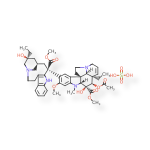
| Related Record | Type | Details | ||
|---|---|---|---|---|
|
PRODRUG -> METABOLITE ACTIVE |
|
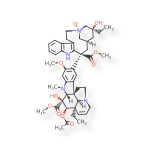
| Related Record | Type | Details | ||
|---|---|---|---|---|
|
PARENT -> IMPURITY |
CHROMATOGRAPHIC PURITY (HPLC/UV)
EP
|
||
|
PARENT -> IMPURITY |
CHROMATOGRAPHIC PURITY (HPLC/UV)
EP
|
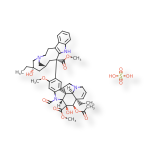

| Related Record | Type | Details | ||
|---|---|---|---|---|
|
|
ACTIVE MOIETY |
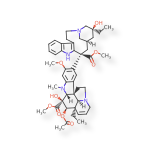
| Name | Property Type | Amount | Referenced Substance | Defining | Parameters | References |
|---|---|---|---|---|---|---|
| Biological Half-life | PHARMACOKINETIC |
|
|
|||
| Route of Elimination | PHARMACOKINETIC |
|
|
|||
| Route of Elimination | PHARMACOKINETIC |
|
|
|||