


Details
| Stereochemistry | ABSOLUTE |
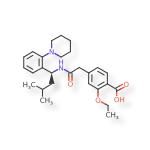
| Molecular Formula | C27H36N2O4 |
| Molecular Weight | 452.5857 |
| Optical Activity | UNSPECIFIED |
| Defined Stereocenters | 1 / 1 |
| E/Z Centers | 0 |
| Charge | 0 |
SHOW SMILES / InChI
SMILES
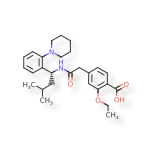
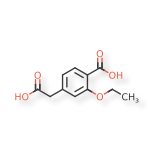
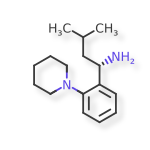
CCOC1=CC(CC(=O)N[C@@H](CC(C)C)C2=CC=CC=C2N3CCCCC3)=CC=C1C(O)=O
InChI
InChIKey=FAEKWTJYAYMJKF-QHCPKHFHSA-N
InChI=1S/C27H36N2O4/c1-4-33-25-17-20(12-13-22(25)27(31)32)18-26(30)28-23(16-19(2)3)21-10-6-7-11-24(21)29-14-8-5-9-15-29/h6-7,10-13,17,19,23H,4-5,8-9,14-16,18H2,1-3H3,(H,28,30)(H,31,32)/t23-/m0/s1
| Molecular Formula | C27H36N2O4 |
| Molecular Weight | 452.5857 |
| Charge | 0 |
| Count |
|
| Stereochemistry | ABSOLUTE |
| Additional Stereochemistry | No |
| Defined Stereocenters | 1 / 1 |
| E/Z Centers | 0 |
| Optical Activity | UNSPECIFIED |
DescriptionCurator's Comment: description was created based on several sources, including
https://www.ncbi.nlm.nih.gov/pubmed/12196472
Curator's Comment: description was created based on several sources, including
https://www.ncbi.nlm.nih.gov/pubmed/12196472
Repaglinide is antidiabetic drug, which is sold under several names including, Prandin in the U.S., Surepost in Japan and GlucoNorm in Canada. It is an oral blood glucose-lowering drug of the meglitinide class used in the management of type 2 diabetes mellitus (also known as non-insulin dependent diabetes mellitus or NIDDM). Repaglinide lowers blood glucose levels by stimulating the release of insulin from the pancreas. This action is dependent upon functioning beta (ß) cells in the pancreatic islets. Insulin secretion by pancreatic β cells is partly controlled by cellular membrane potential. Membrane potential is regulated through an inverse relationship between the activity of cell membrane ATP-sensitive potassium channels (ABCC8) and extracellular glucose concentrations. Extracellular glucose enters the cell via GLUT2 (SLC2A2) transporters. Once inside the cell, glucose is metabolized to produce ATP. High concentrations of ATP inhibit ATP-sensitive potassium channels causing membrane depolarization. High glucose concentrations cause ATP-sensitive potassium channels to close resulting in membrane depolarization and opening of L-type calcium channels. The influx of calcium ions stimulates calcium-dependent exocytosis of insulin granules. Repaglinide closes ATP-dependent potassium channels in the ß-cell membrane by binding at characterizable sites. This potassium channel blockade depolarizes the ß-cell, which leads to an opening of calcium channels. The resulting increased calcium influx induces insulin secretion. The ion channel mechanism is highly tissue selective with low affinity for heart and skeletal muscle. Repaglinide is completely metabolized by oxidative biotransformation and direct conjugation with glucuronic acid after either an IV or oral dose.
Originator
Approval Year
Targets
| Primary Target | Pharmacology | Condition | Potency |
|---|---|---|---|
Target ID: CHEMBL2071 |
21.0 nM [IC50] |
Conditions
| Condition | Modality | Targets | Highest Phase | Product |
|---|---|---|---|---|
| Palliative | PRANDIN Approved UsePRANDIN is indicated as an adjunct to diet and exercise to improve glycemic control in adults with type 2 diabetes mellitus. Launch Date1997 |
Cmax
| Value | Dose | Co-administered | Analyte | Population |
|---|---|---|---|---|
65.8 ng/mL |
4 mg 1 times / day multiple, oral dose: 4 mg route of administration: Oral experiment type: MULTIPLE co-administered: |
REPAGLINIDE plasma | Homo sapiens population: UNHEALTHY age: ADULT sex: UNKNOWN food status: UNKNOWN |
AUC
| Value | Dose | Co-administered | Analyte | Population |
|---|---|---|---|---|
447.4 ng × h/mL |
4 mg 1 times / day multiple, oral dose: 4 mg route of administration: Oral experiment type: MULTIPLE co-administered: |
REPAGLINIDE plasma | Homo sapiens population: UNHEALTHY age: ADULT sex: UNKNOWN food status: UNKNOWN |
T1/2
| Value | Dose | Co-administered | Analyte | Population |
|---|---|---|---|---|
1.4 h |
4 mg 1 times / day multiple, oral dose: 4 mg route of administration: Oral experiment type: MULTIPLE co-administered: |
REPAGLINIDE plasma | Homo sapiens population: UNHEALTHY age: ADULT sex: UNKNOWN food status: UNKNOWN |
Funbound
| Value | Dose | Co-administered | Analyte | Population |
|---|---|---|---|---|
2% |
4 mg 1 times / day multiple, oral dose: 4 mg route of administration: Oral experiment type: MULTIPLE co-administered: |
REPAGLINIDE plasma | Homo sapiens population: UNHEALTHY age: ADULT sex: UNKNOWN food status: UNKNOWN |
Doses
| Dose | Population | Adverse events |
|---|---|---|
4 mg 4 times / day multiple, oral Recommended Dose: 4 mg, 4 times / day Route: oral Route: multiple Dose: 4 mg, 4 times / day Sources: |
unhealthy Health Status: unhealthy Sources: |
Disc. AE: Hypoglycemia... AEs leading to discontinuation/dose reduction: Hypoglycemia Sources: |
AEs
| AE | Significance | Dose | Population |
|---|---|---|---|
| Hypoglycemia | Disc. AE | 4 mg 4 times / day multiple, oral Recommended Dose: 4 mg, 4 times / day Route: oral Route: multiple Dose: 4 mg, 4 times / day Sources: |
unhealthy Health Status: unhealthy Sources: |
PubMed
| Title | Date | PubMed |
|---|---|---|
| Neuronal calcium sensor proteins are direct targets of the insulinotropic agent repaglinide. | 2003-10-01 |
|
| Cardiovascular risk in type 2 diabetics and pharmacological regulation of mealtime glucose excursions. | 2003-09 |
|
| Lack of effect of acute repaglinide administration on postprandial lipaemia in patients with type 2 diabetes mellitus. | 2003-09 |
|
| CYP2C8 and CYP3A4 are the principal enzymes involved in the human in vitro biotransformation of the insulin secretagogue repaglinide. | 2003-09 |
|
| A comparison of costs for four oral antidiabetic regimens within a managed care population. | 2003-07 |
|
| [symbol: see text] Nateglinide and [symbol: see text] repaglinide for type 2 diabetes? | 2003-07 |
|
| Efficacy and safety of combination therapy: repaglinide plus metformin versus nateglinide plus metformin. | 2003-07 |
|
| [Meglitinide analogs: new insulinotropic agents for the treatment of non-insulin dependent diabetes]. | 2003-06 |
|
| Influence of drugs interacting with CYP3A4 on the pharmacokinetics, pharmacodynamics, and safety of the prandial glucose regulator repaglinide. | 2003-06 |
|
| The effect of prandial glucose regulation with repaglinide on treatment satisfaction, wellbeing and health status in patients with pharmacotherapy naïve Type 2 diabetes: a placebo-controlled, multicentre study. | 2003-06 |
|
| Comparison of glycaemic control and cardiovascular risk profile in patients with type 2 diabetes during treatment with either repaglinide or metformin. | 2003-06 |
|
| [Differences between oral antidiabetics]. | 2003-03-20 |
|
| Differential selectivity of insulin secretagogues: mechanisms, clinical implications, and drug interactions. | 2003-03-08 |
|
| Effects of gemfibrozil, itraconazole, and their combination on the pharmacokinetics and pharmacodynamics of repaglinide: potentially hazardous interaction between gemfibrozil and repaglinide. | 2003-03 |
|
| Rationale and options for combination therapy in the treatment of Type 2 diabetes. | 2003-03 |
|
| The mechanisms underlying the unique pharmacodynamics of nateglinide. | 2003-03 |
|
| The role of oral antidiabetic agents: why and when to use an early-phase insulin secretion agent in Type II diabetes mellitus. | 2003-03 |
|
| Pharmacologic restoration of the early insulin response in pre-diabetic monkeys controls mealtime glucose excursions without peripheral hyperinsulinaemia. | 2003-03 |
|
| Metformin-induced hemolytic anemia in a patient with glucose-6- phosphate dehydrogenase deficiency. | 2003-03 |
|
| Safety and efficacy of repaglinide in type 2 diabetic patients with and without impaired renal function. | 2003-03 |
|
| Comparison between repaglinide and glimepiride in patients with type 2 diabetes mellitus: a one-year, randomized, double-blind assessment of metabolic parameters and cardiovascular risk factors. | 2003-02 |
|
| Pharmacokinetics of repaglinide in healthy caucasian and Japanese subjects. | 2003-01 |
|
| The effect of repaglinide on insulin secretion and oxidative stress in type 2 diabetic patients. | 2003-01 |
|
| Economic model of first-line drug strategies to achieve recommended glycaemic control in newly diagnosed type 2 diabetes mellitus. | 2003 |
|
| Effects of S 21403 on hormone secretion from isolated rat pancreas at different glucose concentrations. | 2002-12-05 |
|
| High-frequency insulin pulsatility and type 2 diabetes: from physiology and pathophysiology to clinical pharmacology. | 2002-12 |
|
| Repaglinide in combination therapy. | 2002-12 |
|
| The impact of prandial glucose regulation in practice. | 2002-12 |
|
| Early-phase prandial insulin secretion: its role in the pathogenesis of type 2 diabetes mellitus and its modulation by repaglinide. | 2002-12 |
|
| Repaglinide at a cellular level. | 2002-12 |
|
| Early changes in beta-cell function and insulin pulsatility as predictors for type 2 diabetes. | 2002-12 |
|
| Sulfonylurea stimulation of insulin secretion. | 2002-12 |
|
| No effect of the novel antidiabetic agent nateglinide on the pharmacokinetics and anticoagulant properties of warfarin in healthy volunteers. | 2002-12 |
|
| Repaglinide: a short acting insulin secretagogue for postprandial hyperglycaemia. | 2002-11-15 |
|
| Hypoglycemia probably due to accidental intake of repaglinide. | 2002-11 |
|
| Preventing the progressive nature of type 2 diabetes. | 2002-10-31 |
|
| Repaglinide versus metformin in combination with bedtime NPH insulin in patients with type 2 diabetes established on insulin/metformin combination therapy. | 2002-10 |
|
| Patient perceptions of prandial oral therapy for type 2 diabetes. | 2002-09-06 |
|
| [Repaglinide (NN-623)]. | 2002-09 |
|
| [Structures and mechanisms for non SU insulin secretagogues]. | 2002-09 |
|
| Differential interactions of nateglinide and repaglinide on the human beta-cell sulphonylurea receptor 1. | 2002-09 |
|
| A novel simple method for the investigation of drug binding to the K(ATP) channel sulfonylurea receptor. | 2002-08-15 |
|
| [Differential type 2 diabetes therapy based on pathophysiological aspects]. | 2002-08 |
|
| [Glinides and glitazones in diabetes treatment. Are they really effective?]. | 2002-05-02 |
|
| Control of post-prandial hyperglycemia--an essential part of good diabetes treatment and prevention of cardiovascular complications. | 2002-04 |
|
| Interactions between antiretroviral drugs and drugs used for the therapy of the metabolic complications encountered during HIV infection. | 2002 |
|
| Insulin secretagogues. | 2002 |
|
| Study of the insulinotropic effect of the novel antihyperglycemic agent KAD-1229 using HIT T15 cells, a hamster's insulinoma cell line. | 2002 |
|
| Effectiveness of nateglinide on in vitro insulin secretion from rat pancreatic islets desensitized to sulfonylureas. | 2001 |
|
| Glucose-dependent and glucose-sensitizing insulinotropic effect of nateglinide: comparison to sulfonylureas and repaglinide. | 2001 |
Sample Use Guides
There is no fixed dosage regimen for the management of type 2 diabetes with PRANDIN (repaglinide). PRANDIN doses are usually taken within 15 minutes of the meal but time may vary from immediately preceding the meal to as long as 30 minutes before the meal. For patients not previously treated or whose HbA1c is < 8%, the starting dose should be 0.5 mg with each meal. For patients previously treated with blood glucose-lowering drugs and whose HbA1c is > 8%, the initial dose is 1 or 2 mg with each meal preprandially.
Route of Administration:
Oral
In Vitro Use Guide
Curator's Comment: In vitro studies suggested significant active hepatic uptake of repaglinide. Mechanistic model adequately described repaglinide pharmacokinetics, and successfully predicted DDIs with several OATP1B1 and CYP3A4 inhibitors (<10% error). Furthermore, repaglinide-gemfibrozil interaction at therapeutic dose was closely predicted using in vitro fraction metabolism for CYP2C8 (0.71), when primarily considering reversible inhibition of OATP1B1 and mechanism-based inactivation of CYP2C8 by gemfibrozil and gemfibrozil 1-O-β-glucuronide.
Unknown
| Substance Class |
Chemical
Created
by
admin
on
Edited
Mon Mar 31 18:11:50 GMT 2025
by
admin
on
Mon Mar 31 18:11:50 GMT 2025
|
| Record UNII |
668Z8C33LU
|
| Record Status |
Validated (UNII)
|
| Record Version |
|
-
Download
| Name | Type | Language | ||
|---|---|---|---|---|
|
Official Name | English | ||
|
Preferred Name | English | ||
|
Common Name | English | ||
|
Code | English | ||
|
Brand Name | English | ||
|
Common Name | English | ||
|
Common Name | English | ||
|
Common Name | English | ||
|
Common Name | English | ||
|
Code | English | ||
|
Common Name | English | ||
|
Common Name | English | ||
|
Common Name | English | ||
|
Common Name | English | ||
|
Common Name | English | ||
|
Common Name | English | ||
|
Code | English | ||
|
Code | English | ||
|
Code | English | ||
|
Common Name | English | ||
|
Common Name | English | ||
|
Systematic Name | English |
| Classification Tree | Code System | Code | ||
|---|---|---|---|---|
|
WHO-VATC |
QA10BD14
Created by
admin on Mon Mar 31 18:11:50 GMT 2025 , Edited by admin on Mon Mar 31 18:11:50 GMT 2025
|
||
|
WHO-ATC |
A10BD14
Created by
admin on Mon Mar 31 18:11:50 GMT 2025 , Edited by admin on Mon Mar 31 18:11:50 GMT 2025
|
||
|
NDF-RT |
N0000175448
Created by
admin on Mon Mar 31 18:11:50 GMT 2025 , Edited by admin on Mon Mar 31 18:11:50 GMT 2025
|
||
|
WHO-VATC |
QA10BX02
Created by
admin on Mon Mar 31 18:11:50 GMT 2025 , Edited by admin on Mon Mar 31 18:11:50 GMT 2025
|
||
|
WHO-ATC |
A10BX02
Created by
admin on Mon Mar 31 18:11:50 GMT 2025 , Edited by admin on Mon Mar 31 18:11:50 GMT 2025
|
||
|
LIVERTOX |
NBK548879
Created by
admin on Mon Mar 31 18:11:50 GMT 2025 , Edited by admin on Mon Mar 31 18:11:50 GMT 2025
|
||
|
NDF-RT |
N0000175428
Created by
admin on Mon Mar 31 18:11:50 GMT 2025 , Edited by admin on Mon Mar 31 18:11:50 GMT 2025
|
||
|
NCI_THESAURUS |
C98079
Created by
admin on Mon Mar 31 18:11:50 GMT 2025 , Edited by admin on Mon Mar 31 18:11:50 GMT 2025
|
| Code System | Code | Type | Description | ||
|---|---|---|---|---|---|
|
65981
Created by
admin on Mon Mar 31 18:11:50 GMT 2025 , Edited by admin on Mon Mar 31 18:11:50 GMT 2025
|
PRIMARY | |||
|
CHEMBL1272
Created by
admin on Mon Mar 31 18:11:50 GMT 2025 , Edited by admin on Mon Mar 31 18:11:50 GMT 2025
|
PRIMARY | |||
|
6818
Created by
admin on Mon Mar 31 18:11:50 GMT 2025 , Edited by admin on Mon Mar 31 18:11:50 GMT 2025
|
PRIMARY | |||
|
2366
Created by
admin on Mon Mar 31 18:11:50 GMT 2025 , Edited by admin on Mon Mar 31 18:11:50 GMT 2025
|
PRIMARY | |||
|
REPAGLINIDE
Created by
admin on Mon Mar 31 18:11:50 GMT 2025 , Edited by admin on Mon Mar 31 18:11:50 GMT 2025
|
PRIMARY | |||
|
Repaglinide
Created by
admin on Mon Mar 31 18:11:50 GMT 2025 , Edited by admin on Mon Mar 31 18:11:50 GMT 2025
|
PRIMARY | |||
|
1600813
Created by
admin on Mon Mar 31 18:11:50 GMT 2025 , Edited by admin on Mon Mar 31 18:11:50 GMT 2025
|
PRIMARY | |||
|
668Z8C33LU
Created by
admin on Mon Mar 31 18:11:50 GMT 2025 , Edited by admin on Mon Mar 31 18:11:50 GMT 2025
|
PRIMARY | |||
|
100000091273
Created by
admin on Mon Mar 31 18:11:50 GMT 2025 , Edited by admin on Mon Mar 31 18:11:50 GMT 2025
|
PRIMARY | |||
|
759893
Created by
admin on Mon Mar 31 18:11:50 GMT 2025 , Edited by admin on Mon Mar 31 18:11:50 GMT 2025
|
PRIMARY | |||
|
SUB10280MIG
Created by
admin on Mon Mar 31 18:11:50 GMT 2025 , Edited by admin on Mon Mar 31 18:11:50 GMT 2025
|
PRIMARY | |||
|
73044
Created by
admin on Mon Mar 31 18:11:50 GMT 2025 , Edited by admin on Mon Mar 31 18:11:50 GMT 2025
|
PRIMARY | RxNorm | ||
|
668Z8C33LU
Created by
admin on Mon Mar 31 18:11:50 GMT 2025 , Edited by admin on Mon Mar 31 18:11:50 GMT 2025
|
PRIMARY | |||
|
6841
Created by
admin on Mon Mar 31 18:11:50 GMT 2025 , Edited by admin on Mon Mar 31 18:11:50 GMT 2025
|
PRIMARY | |||
|
DB00912
Created by
admin on Mon Mar 31 18:11:50 GMT 2025 , Edited by admin on Mon Mar 31 18:11:50 GMT 2025
|
PRIMARY | |||
|
DTXSID3023552
Created by
admin on Mon Mar 31 18:11:50 GMT 2025 , Edited by admin on Mon Mar 31 18:11:50 GMT 2025
|
PRIMARY | |||
|
135062-02-1
Created by
admin on Mon Mar 31 18:11:50 GMT 2025 , Edited by admin on Mon Mar 31 18:11:50 GMT 2025
|
PRIMARY | |||
|
KK-76
Created by
admin on Mon Mar 31 18:11:50 GMT 2025 , Edited by admin on Mon Mar 31 18:11:50 GMT 2025
|
PRIMARY | |||
|
C47703
Created by
admin on Mon Mar 31 18:11:50 GMT 2025 , Edited by admin on Mon Mar 31 18:11:50 GMT 2025
|
PRIMARY | |||
|
m9526
Created by
admin on Mon Mar 31 18:11:50 GMT 2025 , Edited by admin on Mon Mar 31 18:11:50 GMT 2025
|
PRIMARY | Merck Index | ||
|
C072379
Created by
admin on Mon Mar 31 18:11:50 GMT 2025 , Edited by admin on Mon Mar 31 18:11:50 GMT 2025
|
PRIMARY |
| Related Record | Type | Details | ||
|---|---|---|---|---|
|
BASIS OF STRENGTH->SUBSTANCE |
ASSAY (TITRATION)
EP
|
||
|
TRANSPORTER -> INHIBITOR | |||
|
METABOLIC ENZYME -> SUBSTRATE | |||
|
TRANSPORTER -> INHIBITOR | |||
|
TRANSPORTER -> INHIBITOR | |||
|
BASIS OF STRENGTH->SUBSTANCE |
ASSAY (HPLC)
USP
|
||
|
TRANSPORTER -> INHIBITOR | |||
|
|
TARGET -> INHIBITOR |

| Related Record | Type | Details | ||
|---|---|---|---|---|
|
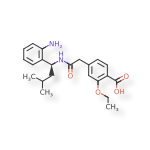
METABOLITE -> PARENT |
CYP2C8 and 3A4 in vitro
FECAL; PLASMA; URINE
|
||
|
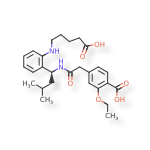
METABOLITE INACTIVE -> PARENT |
CYP2C8 and 3A4 in vitro
MAJOR
FECAL
|
||
|
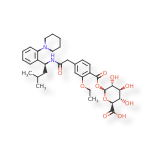
METABOLITE -> PARENT |
PLASMA; URINE
|
| Related Record | Type | Details | ||
|---|---|---|---|---|
|
PARENT -> IMPURITY |
CHROMATOGRAPHIC PURITY (HPLC/UV)
USP
|
||
|
IMPURITY -> PARENT |
CHROMATOGRAPHIC PURITY (HPLC/UV)
EP
|
||
|
IMPURITY -> PARENT |
CHROMATOGRAPHIC PURITY (HPLC/UV)
USP
|
||
|
IMPURITY -> PARENT |
CHROMATOGRAPHIC PURITY (HPLC/UV)
USP
|
||
|
IMPURITY -> PARENT |
CHROMATOGRAPHIC PURITY (HPLC/UV)
EP
|
||
|
IMPURITY -> PARENT |
CHROMATOGRAPHIC PURITY (HPLC/UV)
USP
|
||
|
IMPURITY -> PARENT |
CHROMATOGRAPHIC PURITY (HPLC/UV)
USP
|
||
|
IMPURITY -> PARENT |
correction factors: for the calculation of contents, multiply the peak areas of the following impurity by the corresponding correction factor: impurity B = 0.7
CHROMATOGRAPHIC PURITY (HPLC/UV)
EP
|
||
|
IMPURITY -> PARENT |
correction factors: for the calculation of contents, multiply the peak areas of the following impurity by the corresponding correction factor: impurity A = 0.6
CHROMATOGRAPHIC PURITY (HPLC/UV)
EP
|
||
|
IMPURITY -> PARENT |
correction factors: for the calculation of contents, multiply the peak areas of the following impurity by the corresponding correction factor: impurity C = 3.1
CHROMATOGRAPHIC PURITY (HPLC/UV)
EP
|
| Related Record | Type | Details | ||
|---|---|---|---|---|
|
|
ACTIVE MOIETY |