


Details
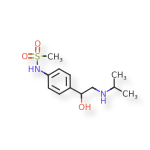
| Stereochemistry | RACEMIC |
| Molecular Formula | C12H20N2O3S |
| Molecular Weight | 272.364 |
| Optical Activity | ( + / - ) |
| Defined Stereocenters | 0 / 1 |
| E/Z Centers | 0 |
| Charge | 0 |
SHOW SMILES / InChI
SMILES
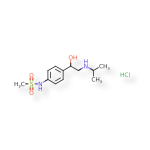
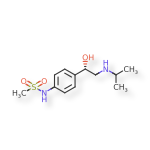
CC(C)NCC(O)C1=CC=C(NS(C)(=O)=O)C=C1
InChI
InChIKey=ZBMZVLHSJCTVON-UHFFFAOYSA-N
InChI=1S/C12H20N2O3S/c1-9(2)13-8-12(15)10-4-6-11(7-5-10)14-18(3,16)17/h4-7,9,12-15H,8H2,1-3H3
| Molecular Formula | C12H20N2O3S |
| Molecular Weight | 272.364 |
| Charge | 0 |
| Count |
|
| Stereochemistry | RACEMIC |
| Additional Stereochemistry | No |
| Defined Stereocenters | 0 / 1 |
| E/Z Centers | 0 |
| Optical Activity | ( + / - ) |
DescriptionCurator's Comment: description was created based on several sources, including:
https://www.drugs.com/mtm/sotalol.html
http://www.rxlist.com/betapace-drug.htm
http://www.wikidoc.org/index.php/Sotalol
Curator's Comment: description was created based on several sources, including:
https://www.drugs.com/mtm/sotalol.html
http://www.rxlist.com/betapace-drug.htm
http://www.wikidoc.org/index.php/Sotalol
Sotalol has both beta-adrenoreceptor blocking and cardiac action potential duration prolongation antiarrhythmic properties. Sotalol inhibits response to adrenergic stimuli by competitively blocking β1-adrenergic receptors within the myocardium and β2-adrenergic receptors within bronchial and vascular smooth muscle. It is FDA approved for the treatment of ventricular arrhythmias, symptomatic atrial fibtillation, symptomatic atriall flutter. Common adverse reactions include bradyarrhythmia, chest pain, lightheadedness, palpitations, rash, nausea, dizziness, headache, dyspnea, fatigue. Proarrhythmic events were more common in sotalol treated patients also receiving digoxin. Sotalol should be administered with caution in conjunction with calcium blocking drugs because of possible additive effects on atrioventricular conduction or ventricular function. Patients treated with sotalol plus a catecholamine depletor should therefore be closely monitored for evidence of hypotension and/or marked bradycardia which may produce syncope.
Originator
Approval Year
Targets
| Primary Target | Pharmacology | Condition | Potency |
|---|---|---|---|
| 5.31 null [pKi] | |||
| 141.0 nM [Kd] | |||
Target ID: CHEMBL240 |
Conditions
| Condition | Modality | Targets | Highest Phase | Product |
|---|---|---|---|---|
| Primary | BETAPACE Approved UseOral sotalol hydrochloride is indicated for the treatment of documented ventricular arrhythmias, such as sustained ventricular tachycardia, that in the judgment of the physician are life-threatening. Because of the proarrhythmic effects of sotalol (see WARNINGS ), including a 1.5 to 2% rate of torsade de pointes or new VT/VF in patients with either NSVT or supraventricular arrhythmias, its use in patients with less severe arrhythmias, even if the patients are symptomatic, is generally not recommended. Treatment of patients with asymptomatic ventricular premature contractions should be avoided. Initiation of sotalol treatment or increasing doses, as with other antiarrhythmic agents used to treat life-threatening arrhythmias, should be carried out in the hospital. The response to treatment should then be evaluated by a suitable method (e.g., PES or Holter monitoring) prior to continuing the patient on chronic therapy. Various approaches have been used to determine the response to antiarrhythmic therapy, including sotalol. In the ESVEM Trial, response by Holter monitoring was tentatively defined as 100% suppression of ventricular tachycardia, 90% suppression of non-sustained VT, 80% suppression of paired VPCs, and 75% suppression of total VPCs in patients who had at least 10 VPCs/hour at baseline; this tentative response was confirmed if VT lasting 5 or more beats was not observed during treadmill exercise testing using a standard Bruce protocol. The PES protocol utilized a maximum of three extrastimuli at three pacing cycle lengths and two right ventricular pacing sites. Response by PES was defined as prevention of induction of the following: 1) monomorphic VT lasting over 15 seconds; 2) non-sustained polymorphic VT containing more than 15 beats of monomorphic VT in patients with a history of monomorphic VT; 3) polymorphic VT or VF greater than 15 beats in patients with VF or a history of aborted sudden death without monomorphic VT; and 4) two episodes of polymorphic VT or VF of greater than 15 beats in a patient presenting with monomorphic VT. Sustained VT or NSVT producing hypotension during the final treadmill test was considered a drug failure. In a multicenter open-label long-term study of sotalol in patients with life-threatening ventricular arrhythmias which had proven refractory to other antiarrhythmic medications, response by Holter monitoring was defined as in ESVEM. Response by PES was defined as non-inducibility of sustained VT by at least double extrastimuli delivered at a pacing cycle length of 400 msec. Overall survival and arrhythmia recurrence rates in this study were similar to those seen in ESVEM, although there was no comparative group to allow a definitive assessment of outcome. Antiarrhythmic drugs have not been shown to enhance survival in patients with ventricular arrhythmias. Sotalol is also indicated for the maintenance of normal sinus rhythm [delay in time to recurrence of atrial fibrillation/atrial flutter (AFIB/AFL) Launch Date1992 |
|||
| Primary | BETAPACE Approved UseOral sotalol hydrochloride is indicated for the treatment of documented ventricular arrhythmias, such as sustained ventricular tachycardia, that in the judgment of the physician are life-threatening. Because of the proarrhythmic effects of sotalol (see WARNINGS ), including a 1.5 to 2% rate of torsade de pointes or new VT/VF in patients with either NSVT or supraventricular arrhythmias, its use in patients with less severe arrhythmias, even if the patients are symptomatic, is generally not recommended. Treatment of patients with asymptomatic ventricular premature contractions should be avoided. Initiation of sotalol treatment or increasing doses, as with other antiarrhythmic agents used to treat life-threatening arrhythmias, should be carried out in the hospital. The response to treatment should then be evaluated by a suitable method (e.g., PES or Holter monitoring) prior to continuing the patient on chronic therapy. Various approaches have been used to determine the response to antiarrhythmic therapy, including sotalol. In the ESVEM Trial, response by Holter monitoring was tentatively defined as 100% suppression of ventricular tachycardia, 90% suppression of non-sustained VT, 80% suppression of paired VPCs, and 75% suppression of total VPCs in patients who had at least 10 VPCs/hour at baseline; this tentative response was confirmed if VT lasting 5 or more beats was not observed during treadmill exercise testing using a standard Bruce protocol. The PES protocol utilized a maximum of three extrastimuli at three pacing cycle lengths and two right ventricular pacing sites. Response by PES was defined as prevention of induction of the following: 1) monomorphic VT lasting over 15 seconds; 2) non-sustained polymorphic VT containing more than 15 beats of monomorphic VT in patients with a history of monomorphic VT; 3) polymorphic VT or VF greater than 15 beats in patients with VF or a history of aborted sudden death without monomorphic VT; and 4) two episodes of polymorphic VT or VF of greater than 15 beats in a patient presenting with monomorphic VT. Sustained VT or NSVT producing hypotension during the final treadmill test was considered a drug failure. In a multicenter open-label long-term study of sotalol in patients with life-threatening ventricular arrhythmias which had proven refractory to other antiarrhythmic medications, response by Holter monitoring was defined as in ESVEM. Response by PES was defined as non-inducibility of sustained VT by at least double extrastimuli delivered at a pacing cycle length of 400 msec. Overall survival and arrhythmia recurrence rates in this study were similar to those seen in ESVEM, although there was no comparative group to allow a definitive assessment of outcome. Antiarrhythmic drugs have not been shown to enhance survival in patients with ventricular arrhythmias. Sotalol is also indicated for the maintenance of normal sinus rhythm [delay in time to recurrence of atrial fibrillation/atrial flutter (AFIB/AFL) Launch Date1992 |
|||
| Primary | BETAPACE Approved UseOral sotalol hydrochloride is indicated for the treatment of documented ventricular arrhythmias, such as sustained ventricular tachycardia, that in the judgment of the physician are life-threatening. Because of the proarrhythmic effects of sotalol (see WARNINGS ), including a 1.5 to 2% rate of torsade de pointes or new VT/VF in patients with either NSVT or supraventricular arrhythmias, its use in patients with less severe arrhythmias, even if the patients are symptomatic, is generally not recommended. Treatment of patients with asymptomatic ventricular premature contractions should be avoided. Initiation of sotalol treatment or increasing doses, as with other antiarrhythmic agents used to treat life-threatening arrhythmias, should be carried out in the hospital. The response to treatment should then be evaluated by a suitable method (e.g., PES or Holter monitoring) prior to continuing the patient on chronic therapy. Various approaches have been used to determine the response to antiarrhythmic therapy, including sotalol. In the ESVEM Trial, response by Holter monitoring was tentatively defined as 100% suppression of ventricular tachycardia, 90% suppression of non-sustained VT, 80% suppression of paired VPCs, and 75% suppression of total VPCs in patients who had at least 10 VPCs/hour at baseline; this tentative response was confirmed if VT lasting 5 or more beats was not observed during treadmill exercise testing using a standard Bruce protocol. The PES protocol utilized a maximum of three extrastimuli at three pacing cycle lengths and two right ventricular pacing sites. Response by PES was defined as prevention of induction of the following: 1) monomorphic VT lasting over 15 seconds; 2) non-sustained polymorphic VT containing more than 15 beats of monomorphic VT in patients with a history of monomorphic VT; 3) polymorphic VT or VF greater than 15 beats in patients with VF or a history of aborted sudden death without monomorphic VT; and 4) two episodes of polymorphic VT or VF of greater than 15 beats in a patient presenting with monomorphic VT. Sustained VT or NSVT producing hypotension during the final treadmill test was considered a drug failure. In a multicenter open-label long-term study of sotalol in patients with life-threatening ventricular arrhythmias which had proven refractory to other antiarrhythmic medications, response by Holter monitoring was defined as in ESVEM. Response by PES was defined as non-inducibility of sustained VT by at least double extrastimuli delivered at a pacing cycle length of 400 msec. Overall survival and arrhythmia recurrence rates in this study were similar to those seen in ESVEM, although there was no comparative group to allow a definitive assessment of outcome. Antiarrhythmic drugs have not been shown to enhance survival in patients with ventricular arrhythmias. Sotalol is also indicated for the maintenance of normal sinus rhythm [delay in time to recurrence of atrial fibrillation/atrial flutter (AFIB/AFL) Launch Date1992 |
Cmax
| Value | Dose | Co-administered | Analyte | Population |
|---|---|---|---|---|
781 ng/mL |
80 mg single, oral dose: 80 mg route of administration: Oral experiment type: SINGLE co-administered: |
SOTALOL plasma | Homo sapiens population: HEALTHY age: ADULT sex: MALE food status: FASTED |
AUC
| Value | Dose | Co-administered | Analyte | Population |
|---|---|---|---|---|
10402 ng × h/mL |
80 mg single, oral dose: 80 mg route of administration: Oral experiment type: SINGLE co-administered: |
SOTALOL plasma | Homo sapiens population: HEALTHY age: ADULT sex: MALE food status: FASTED |
T1/2
| Value | Dose | Co-administered | Analyte | Population |
|---|---|---|---|---|
12 h |
160 mg single, oral dose: 160 mg route of administration: Oral experiment type: SINGLE co-administered: |
SOTALOL plasma | Homo sapiens population: UNKNOWN age: ADULT sex: UNKNOWN food status: UNKNOWN |
Doses
| Dose | Population | Adverse events |
|---|---|---|
60 mg 2 times / day multiple, oral Recommended Dose: 60 mg, 2 times / day Route: oral Route: multiple Dose: 60 mg, 2 times / day Sources: |
unhealthy, 31.8 years (range: 10-67 years) Health Status: unhealthy Age Group: 31.8 years (range: 10-67 years) Sources: |
Disc. AE: Lethargy, Bradycardia... Other AEs: Hypotension, Loss of taste... AEs leading to discontinuation/dose reduction: Lethargy (13 patients) Other AEs:Bradycardia (11 patient) Bronchospasm (6 patients) Nausea and vomiting (2 patients) Erectile dysfunction (2 patients) Visual disturbance (1 patient) Depression (1 patient) Hypotension (1 patient) Sources: Loss of taste (1 patient) |
640 mg/day multiple, oral Highest studied dose Dose: 640 mg/day Route: oral Route: multiple Dose: 640 mg/day Sources: |
unhealthy, adult Health Status: unhealthy Age Group: adult Sources: |
Other AEs: Chest pain, Dyspnea... Other AEs: Chest pain (15.4%) Sources: Dyspnea (20.5%) Palpitation (5.1%) Vasodilation (5.1%) Asthenia (20.5%) Dizziness (17.9%) Fatigue (25.6%) Headache (7.7%) Light-headed (5.1%) Sleep problem (7.7%) Upper respiratory tract signs and symptoms (12.8%) |
240 mg/day multiple, oral Recommended Dose: 240 mg/day Route: oral Route: multiple Dose: 240 mg/day Sources: |
unhealthy, adult Health Status: unhealthy Age Group: adult Sources: |
Other AEs: Bradycardia, Diarrhea... Other AEs: Bradycardia (13.1%) Sources: Diarrhea (5.2%) Nausea and vomiting (7.8%) Abdominal pain NOS (3.9%) Fatigue (19.6%) Hyperhidrosis (5.2%) Weakness (5.2%) Musculoskeletal pain (2.6%) Dizziness (16.3%) Headache (3.3%) Cough (3.3%) Dyspnea (9.2%) |
320 mg/day multiple, oral Recommended Dose: 320 mg/day Route: oral Route: multiple Dose: 320 mg/day Sources: |
unhealthy, adult Health Status: unhealthy Age Group: adult Sources: |
Other AEs: Chest pain, Dyspnea... Other AEs: Chest pain (7.9%) Sources: Dyspnea (18.4%) Palpitation (7.9%) Asthenia (10.5%) Dizziness (13.2%) Fatigue (26.3%) Headache (5.3%) Light-headed (15.8%) Sleep problem (2.6%) Upper respiratory tract signs and symptoms (2.6%) Visual disturbance NOS (5.3%) |
320 mg/day multiple, oral Recommended Dose: 320 mg/day Route: oral Route: multiple Dose: 320 mg/day Sources: |
unhealthy, adult Health Status: unhealthy Age Group: adult Sources: |
Other AEs: Bradycardia, Diarrhea... Other AEs: Bradycardia (12.3%) Sources: Diarrhea (5.7%) Nausea and vomiting (5.7%) Abdominal pain NOS (2.5%) Fatigue (18.9%) Hyperhidrosis (4.9%) Weakness (4.9%) Musculoskeletal pain (4.1%) Dizziness (13.1%) Headache (11.5%) Cough (2.5%) Dyspnea (9.8%) |
AEs
| AE | Significance | Dose | Population |
|---|---|---|---|
| Hypotension | 1 patient | 60 mg 2 times / day multiple, oral Recommended Dose: 60 mg, 2 times / day Route: oral Route: multiple Dose: 60 mg, 2 times / day Sources: |
unhealthy, 31.8 years (range: 10-67 years) Health Status: unhealthy Age Group: 31.8 years (range: 10-67 years) Sources: |
| Loss of taste | 1 patient | 60 mg 2 times / day multiple, oral Recommended Dose: 60 mg, 2 times / day Route: oral Route: multiple Dose: 60 mg, 2 times / day Sources: |
unhealthy, 31.8 years (range: 10-67 years) Health Status: unhealthy Age Group: 31.8 years (range: 10-67 years) Sources: |
| Depression | 1 patient Disc. AE |
60 mg 2 times / day multiple, oral Recommended Dose: 60 mg, 2 times / day Route: oral Route: multiple Dose: 60 mg, 2 times / day Sources: |
unhealthy, 31.8 years (range: 10-67 years) Health Status: unhealthy Age Group: 31.8 years (range: 10-67 years) Sources: |
| Visual disturbance | 1 patient Disc. AE |
60 mg 2 times / day multiple, oral Recommended Dose: 60 mg, 2 times / day Route: oral Route: multiple Dose: 60 mg, 2 times / day Sources: |
unhealthy, 31.8 years (range: 10-67 years) Health Status: unhealthy Age Group: 31.8 years (range: 10-67 years) Sources: |
| Bradycardia | 11 patient Disc. AE |
60 mg 2 times / day multiple, oral Recommended Dose: 60 mg, 2 times / day Route: oral Route: multiple Dose: 60 mg, 2 times / day Sources: |
unhealthy, 31.8 years (range: 10-67 years) Health Status: unhealthy Age Group: 31.8 years (range: 10-67 years) Sources: |
| Lethargy | 13 patients Disc. AE |
60 mg 2 times / day multiple, oral Recommended Dose: 60 mg, 2 times / day Route: oral Route: multiple Dose: 60 mg, 2 times / day Sources: |
unhealthy, 31.8 years (range: 10-67 years) Health Status: unhealthy Age Group: 31.8 years (range: 10-67 years) Sources: |
| Erectile dysfunction | 2 patients Disc. AE |
60 mg 2 times / day multiple, oral Recommended Dose: 60 mg, 2 times / day Route: oral Route: multiple Dose: 60 mg, 2 times / day Sources: |
unhealthy, 31.8 years (range: 10-67 years) Health Status: unhealthy Age Group: 31.8 years (range: 10-67 years) Sources: |
| Nausea and vomiting | 2 patients Disc. AE |
60 mg 2 times / day multiple, oral Recommended Dose: 60 mg, 2 times / day Route: oral Route: multiple Dose: 60 mg, 2 times / day Sources: |
unhealthy, 31.8 years (range: 10-67 years) Health Status: unhealthy Age Group: 31.8 years (range: 10-67 years) Sources: |
| Bronchospasm | 6 patients Disc. AE |
60 mg 2 times / day multiple, oral Recommended Dose: 60 mg, 2 times / day Route: oral Route: multiple Dose: 60 mg, 2 times / day Sources: |
unhealthy, 31.8 years (range: 10-67 years) Health Status: unhealthy Age Group: 31.8 years (range: 10-67 years) Sources: |
| Upper respiratory tract signs and symptoms | 12.8% | 640 mg/day multiple, oral Highest studied dose Dose: 640 mg/day Route: oral Route: multiple Dose: 640 mg/day Sources: |
unhealthy, adult Health Status: unhealthy Age Group: adult Sources: |
| Chest pain | 15.4% | 640 mg/day multiple, oral Highest studied dose Dose: 640 mg/day Route: oral Route: multiple Dose: 640 mg/day Sources: |
unhealthy, adult Health Status: unhealthy Age Group: adult Sources: |
| Dizziness | 17.9% | 640 mg/day multiple, oral Highest studied dose Dose: 640 mg/day Route: oral Route: multiple Dose: 640 mg/day Sources: |
unhealthy, adult Health Status: unhealthy Age Group: adult Sources: |
| Asthenia | 20.5% | 640 mg/day multiple, oral Highest studied dose Dose: 640 mg/day Route: oral Route: multiple Dose: 640 mg/day Sources: |
unhealthy, adult Health Status: unhealthy Age Group: adult Sources: |
| Dyspnea | 20.5% | 640 mg/day multiple, oral Highest studied dose Dose: 640 mg/day Route: oral Route: multiple Dose: 640 mg/day Sources: |
unhealthy, adult Health Status: unhealthy Age Group: adult Sources: |
| Fatigue | 25.6% | 640 mg/day multiple, oral Highest studied dose Dose: 640 mg/day Route: oral Route: multiple Dose: 640 mg/day Sources: |
unhealthy, adult Health Status: unhealthy Age Group: adult Sources: |
| Light-headed | 5.1% | 640 mg/day multiple, oral Highest studied dose Dose: 640 mg/day Route: oral Route: multiple Dose: 640 mg/day Sources: |
unhealthy, adult Health Status: unhealthy Age Group: adult Sources: |
| Palpitation | 5.1% | 640 mg/day multiple, oral Highest studied dose Dose: 640 mg/day Route: oral Route: multiple Dose: 640 mg/day Sources: |
unhealthy, adult Health Status: unhealthy Age Group: adult Sources: |
| Vasodilation | 5.1% | 640 mg/day multiple, oral Highest studied dose Dose: 640 mg/day Route: oral Route: multiple Dose: 640 mg/day Sources: |
unhealthy, adult Health Status: unhealthy Age Group: adult Sources: |
| Headache | 7.7% | 640 mg/day multiple, oral Highest studied dose Dose: 640 mg/day Route: oral Route: multiple Dose: 640 mg/day Sources: |
unhealthy, adult Health Status: unhealthy Age Group: adult Sources: |
| Sleep problem | 7.7% | 640 mg/day multiple, oral Highest studied dose Dose: 640 mg/day Route: oral Route: multiple Dose: 640 mg/day Sources: |
unhealthy, adult Health Status: unhealthy Age Group: adult Sources: |
| Bradycardia | 13.1% | 240 mg/day multiple, oral Recommended Dose: 240 mg/day Route: oral Route: multiple Dose: 240 mg/day Sources: |
unhealthy, adult Health Status: unhealthy Age Group: adult Sources: |
| Dizziness | 16.3% | 240 mg/day multiple, oral Recommended Dose: 240 mg/day Route: oral Route: multiple Dose: 240 mg/day Sources: |
unhealthy, adult Health Status: unhealthy Age Group: adult Sources: |
| Fatigue | 19.6% | 240 mg/day multiple, oral Recommended Dose: 240 mg/day Route: oral Route: multiple Dose: 240 mg/day Sources: |
unhealthy, adult Health Status: unhealthy Age Group: adult Sources: |
| Musculoskeletal pain | 2.6% | 240 mg/day multiple, oral Recommended Dose: 240 mg/day Route: oral Route: multiple Dose: 240 mg/day Sources: |
unhealthy, adult Health Status: unhealthy Age Group: adult Sources: |
| Cough | 3.3% | 240 mg/day multiple, oral Recommended Dose: 240 mg/day Route: oral Route: multiple Dose: 240 mg/day Sources: |
unhealthy, adult Health Status: unhealthy Age Group: adult Sources: |
| Headache | 3.3% | 240 mg/day multiple, oral Recommended Dose: 240 mg/day Route: oral Route: multiple Dose: 240 mg/day Sources: |
unhealthy, adult Health Status: unhealthy Age Group: adult Sources: |
| Abdominal pain NOS | 3.9% | 240 mg/day multiple, oral Recommended Dose: 240 mg/day Route: oral Route: multiple Dose: 240 mg/day Sources: |
unhealthy, adult Health Status: unhealthy Age Group: adult Sources: |
| Diarrhea | 5.2% | 240 mg/day multiple, oral Recommended Dose: 240 mg/day Route: oral Route: multiple Dose: 240 mg/day Sources: |
unhealthy, adult Health Status: unhealthy Age Group: adult Sources: |
| Hyperhidrosis | 5.2% | 240 mg/day multiple, oral Recommended Dose: 240 mg/day Route: oral Route: multiple Dose: 240 mg/day Sources: |
unhealthy, adult Health Status: unhealthy Age Group: adult Sources: |
| Weakness | 5.2% | 240 mg/day multiple, oral Recommended Dose: 240 mg/day Route: oral Route: multiple Dose: 240 mg/day Sources: |
unhealthy, adult Health Status: unhealthy Age Group: adult Sources: |
| Nausea and vomiting | 7.8% | 240 mg/day multiple, oral Recommended Dose: 240 mg/day Route: oral Route: multiple Dose: 240 mg/day Sources: |
unhealthy, adult Health Status: unhealthy Age Group: adult Sources: |
| Dyspnea | 9.2% | 240 mg/day multiple, oral Recommended Dose: 240 mg/day Route: oral Route: multiple Dose: 240 mg/day Sources: |
unhealthy, adult Health Status: unhealthy Age Group: adult Sources: |
| Asthenia | 10.5% | 320 mg/day multiple, oral Recommended Dose: 320 mg/day Route: oral Route: multiple Dose: 320 mg/day Sources: |
unhealthy, adult Health Status: unhealthy Age Group: adult Sources: |
| Dizziness | 13.2% | 320 mg/day multiple, oral Recommended Dose: 320 mg/day Route: oral Route: multiple Dose: 320 mg/day Sources: |
unhealthy, adult Health Status: unhealthy Age Group: adult Sources: |
| Light-headed | 15.8% | 320 mg/day multiple, oral Recommended Dose: 320 mg/day Route: oral Route: multiple Dose: 320 mg/day Sources: |
unhealthy, adult Health Status: unhealthy Age Group: adult Sources: |
| Dyspnea | 18.4% | 320 mg/day multiple, oral Recommended Dose: 320 mg/day Route: oral Route: multiple Dose: 320 mg/day Sources: |
unhealthy, adult Health Status: unhealthy Age Group: adult Sources: |
| Sleep problem | 2.6% | 320 mg/day multiple, oral Recommended Dose: 320 mg/day Route: oral Route: multiple Dose: 320 mg/day Sources: |
unhealthy, adult Health Status: unhealthy Age Group: adult Sources: |
| Upper respiratory tract signs and symptoms | 2.6% | 320 mg/day multiple, oral Recommended Dose: 320 mg/day Route: oral Route: multiple Dose: 320 mg/day Sources: |
unhealthy, adult Health Status: unhealthy Age Group: adult Sources: |
| Fatigue | 26.3% | 320 mg/day multiple, oral Recommended Dose: 320 mg/day Route: oral Route: multiple Dose: 320 mg/day Sources: |
unhealthy, adult Health Status: unhealthy Age Group: adult Sources: |
| Headache | 5.3% | 320 mg/day multiple, oral Recommended Dose: 320 mg/day Route: oral Route: multiple Dose: 320 mg/day Sources: |
unhealthy, adult Health Status: unhealthy Age Group: adult Sources: |
| Visual disturbance NOS | 5.3% | 320 mg/day multiple, oral Recommended Dose: 320 mg/day Route: oral Route: multiple Dose: 320 mg/day Sources: |
unhealthy, adult Health Status: unhealthy Age Group: adult Sources: |
| Chest pain | 7.9% | 320 mg/day multiple, oral Recommended Dose: 320 mg/day Route: oral Route: multiple Dose: 320 mg/day Sources: |
unhealthy, adult Health Status: unhealthy Age Group: adult Sources: |
| Palpitation | 7.9% | 320 mg/day multiple, oral Recommended Dose: 320 mg/day Route: oral Route: multiple Dose: 320 mg/day Sources: |
unhealthy, adult Health Status: unhealthy Age Group: adult Sources: |
| Headache | 11.5% | 320 mg/day multiple, oral Recommended Dose: 320 mg/day Route: oral Route: multiple Dose: 320 mg/day Sources: |
unhealthy, adult Health Status: unhealthy Age Group: adult Sources: |
| Bradycardia | 12.3% | 320 mg/day multiple, oral Recommended Dose: 320 mg/day Route: oral Route: multiple Dose: 320 mg/day Sources: |
unhealthy, adult Health Status: unhealthy Age Group: adult Sources: |
| Dizziness | 13.1% | 320 mg/day multiple, oral Recommended Dose: 320 mg/day Route: oral Route: multiple Dose: 320 mg/day Sources: |
unhealthy, adult Health Status: unhealthy Age Group: adult Sources: |
| Fatigue | 18.9% | 320 mg/day multiple, oral Recommended Dose: 320 mg/day Route: oral Route: multiple Dose: 320 mg/day Sources: |
unhealthy, adult Health Status: unhealthy Age Group: adult Sources: |
| Abdominal pain NOS | 2.5% | 320 mg/day multiple, oral Recommended Dose: 320 mg/day Route: oral Route: multiple Dose: 320 mg/day Sources: |
unhealthy, adult Health Status: unhealthy Age Group: adult Sources: |
| Cough | 2.5% | 320 mg/day multiple, oral Recommended Dose: 320 mg/day Route: oral Route: multiple Dose: 320 mg/day Sources: |
unhealthy, adult Health Status: unhealthy Age Group: adult Sources: |
| Musculoskeletal pain | 4.1% | 320 mg/day multiple, oral Recommended Dose: 320 mg/day Route: oral Route: multiple Dose: 320 mg/day Sources: |
unhealthy, adult Health Status: unhealthy Age Group: adult Sources: |
| Hyperhidrosis | 4.9% | 320 mg/day multiple, oral Recommended Dose: 320 mg/day Route: oral Route: multiple Dose: 320 mg/day Sources: |
unhealthy, adult Health Status: unhealthy Age Group: adult Sources: |
| Weakness | 4.9% | 320 mg/day multiple, oral Recommended Dose: 320 mg/day Route: oral Route: multiple Dose: 320 mg/day Sources: |
unhealthy, adult Health Status: unhealthy Age Group: adult Sources: |
| Diarrhea | 5.7% | 320 mg/day multiple, oral Recommended Dose: 320 mg/day Route: oral Route: multiple Dose: 320 mg/day Sources: |
unhealthy, adult Health Status: unhealthy Age Group: adult Sources: |
| Nausea and vomiting | 5.7% | 320 mg/day multiple, oral Recommended Dose: 320 mg/day Route: oral Route: multiple Dose: 320 mg/day Sources: |
unhealthy, adult Health Status: unhealthy Age Group: adult Sources: |
| Dyspnea | 9.8% | 320 mg/day multiple, oral Recommended Dose: 320 mg/day Route: oral Route: multiple Dose: 320 mg/day Sources: |
unhealthy, adult Health Status: unhealthy Age Group: adult Sources: |
Overview
| CYP3A4 | CYP2C9 | CYP2D6 | hERG |
|---|---|---|---|
OverviewOther
| Other Inhibitor | Other Substrate | Other Inducer |
|---|---|---|
Drug as perpetrator
| Target | Modality | Activity | Metabolite | Clinical evidence |
|---|---|---|---|---|
| no [IC50 >100 uM] | ||||
| no [IC50 >100 uM] | ||||
| no [IC50 >100 uM] | ||||
| no [IC50 >100 uM] | ||||
| no [IC50 >100 uM] | ||||
| no [IC50 >100 uM] | ||||
| no [IC50 >100 uM] | ||||
| no [IC50 >100 uM] | ||||
| no [IC50 >100 uM] | ||||
| no | ||||
| no | ||||
| no | ||||
| no | ||||
| no | ||||
| no | ||||
| yes |
Drug as victim
| Target | Modality | Activity | Metabolite | Clinical evidence |
|---|---|---|---|---|
| yes |
Tox targets
| Target | Modality | Activity | Metabolite | Clinical evidence |
|---|---|---|---|---|
PubMed
| Title | Date | PubMed |
|---|---|---|
| Preconditioning attenuates the shortening of recovery during coronary occlusion in isolated rabbit hearts with D-sotalol-induced long QT intervals. | 2002-05 |
|
| Amiodarone vs. sotalol as prophylaxis against atrial fibrillation/flutter after heart surgery: a meta-analysis. | 2002-04 |
|
| Dauricine-induced changes in monophasic action potentials and effective refractory period of rabbit left ventricle in situ. | 2002-04 |
|
| Maintainance of sinus rhythm after electrical cardioversion of persistent atrial fibrillation. | 2002-04 |
|
| Unique topographical distribution of M cells underlies reentrant mechanism of torsade de pointes in the long-QT syndrome. | 2002-03-12 |
|
| [Advanced prehospital treatment of heart arrest by the mobile emergency unit in Aarhus. 1-year survival after out-of-hospital heart arrest--with focus on response time, survival, the given treatment and admission]. | 2002-03-04 |
|
| [Sudden cardiac death (part 2)]. | 2002-03 |
|
| Antidysrhythmic agents at the turn of the twenty-first century: a current review. | 2002-03 |
|
| Prenatal ultrasound may predict fetal response to therapy in non-hydropic fetuses with supraventricular tachycardia. | 2002-02-15 |
|
| Flecainide and sotalol: a new combination therapy for refractory supraventricular tachycardia in children <1 year of age. | 2002-02-06 |
|
| [Why is QT interval interesting?]. | 2002-02-04 |
|
| An improved HPLC-fluorescence stereoselective method for analysis of (+)-S- and (-)-R-sotalol enantiomers in plasma sample. | 2002-02-02 |
|
| New antiarrhythmic drugs for the treatment of atrial fibrillation. | 2002-02 |
|
| Proarrhythmic effects of intravenous quinidine, amiodarone, D-sotalol, and almokalant in the anesthetized rabbit model of torsade de pointes. | 2002-02 |
|
| [Ventricular tachycardia associated with isolated right ventricular dysfunction as indicator of arrhythmogenic dysplasia of the right ventricle]. | 2002-01-25 |
|
| Rapid determination of partition coefficients between n-octanol/water for cardiovascular therapies. | 2002-01-10 |
|
| Combination IK1 and IKr channel blockade: no additive lowering of the defibrillation threshold. | 2002-01 |
|
| The cellular electrophysiologic effect of a new amiodarone like antiarrhythmic drug GYKI 16638 in undiseased human ventricular muscle: comparison with sotalol and mexiletine. | 2002-01 |
|
| New use of antiarrhythmia drugs in Saskatchewan. | 2002-01 |
|
| Comparison of the affinity of beta-blockers for two states of the beta 1-adrenoceptor in ferret ventricular myocardium. | 2002-01 |
|
| Electrophysiologic characterization of the antipsychotic drug sertindole in a rabbit heart model of torsade de pointes: low torsadogenic potential despite QT prolongation. | 2002-01 |
|
| Standardised in vitro electrophysiologic measurements using isolated perfused porcine hearts--assessment of QT interval alterations. | 2002 |
|
| Drug treatment of fetal tachycardias. | 2002 |
|
| [Atrial fibrillation successfully converted. A new standard in the prevention of recurrence?]. | 2001-12-13 |
|
| [Current management of patients with ventricular tachycardia]. | 2001-12-04 |
|
| [Chronic hepatitis ascribed to the use of sotalol]. | 2001-12-01 |
|
| A case series of drug-induced long QT syndrome and Torsade de Pointes. | 2001-12 |
|
| A multicentre, double-blind randomized crossover comparative study on the efficacy and safety of dofetilide vs sotalol in patients with inducible sustained ventricular tachycardia and ischaemic heart disease. | 2001-12 |
|
| Amplified effects of d,l-sotalol in canine dilated cardiomyopathy. | 2001-12 |
|
| Control of heart rate during thermoregulation in the heliothermic lizard Pogona barbata: importance of cholinergic and adrenergic mechanisms. | 2001-12 |
|
| Cellular basis for complex T waves and arrhythmic activity following combined I(Kr) and I(Ks) block. | 2001-12 |
|
| A review of class III antiarrhythmic agents for atrial fibrillation: maintenance of normal sinus rhythm. | 2001-12 |
|
| Effect of metoprolol and d,l-sotalol on microvolt-level T-wave alternans. Results of a prospective, double-blind, randomized study. | 2001-12 |
|
| Sotalol in treatment of pediatric cardiac arrhythmias. | 2001-12 |
|
| (+/-)-sotalol alters neither the shape of the T wave downslope nor the U wave; a magnetocardiographic study. | 2001-12 |
|
| Amiodarone -- waxed and waned and waxed again. | 2001-11 |
|
| Scavenger effect of experimental and clinically used cardiovascular drugs. | 2001-11 |
|
| Are drugs and catheter ablation effective for treating ventricular arrhythmias in populations that cannot afford implantable cardioverter defibrillators? | 2001-11 |
|
| Is it rational, reasonable or excessive, and consistently applied? One view of the increasing FDA emphasis on safety first for the release and use of antiarrhythmic drugs for supraventricular arrhythmias. | 2001-10 |
|
| Effect of Sotalol in the prevention of atrial fibrillation following coronary artery bypass grafting. | 2001-10 |
|
| Influence of age, the autonomic nervous system and anxiety on QT-interval variability. | 2001-10 |
|
| Pharmacologic conversion of atrial fibrillation: a systematic review of available evidence. | 2001-09-25 |
|
| Long-term efficacy and safety of propafenone and sotalol for the maintenance of sinus rhythm after conversion of recurrent symptomatic atrial fibrillation. | 2001-09-15 |
|
| Multi-morphology wide QRS tachycardias in a patient without structural heart disease: an unusual presentation of ventricular tachycardia. | 2001-09 |
|
| Dual-site atrial pacing for atrial fibrillation in patients without bradycardia. | 2001-08-15 |
|
| Importance of QT interval determination and renal function assessment during antiarrhythmic drug therapy. | 2001-04 |
|
| CIBIS, MERIT-HF, and COPERNICUS trial outcomes: do they complete the chapter on beta-adrenergic blockers as antiarrhythmic and antifibrillatory drugs? | 2001-04 |
|
| Global distribution of atrial ectopic foci triggering recurrence of atrial tachyarrhythmia after electrical cardioversion of long-standing atrial fibrillation: a bi-atrial basket mapping study. | 2001-03-01 |
|
| Therapeutic drug monitoring: antiarrhythmic drugs. | 2001 |
|
| [Effect of sotalol on systemic hemodynamics and electrophysiology in patients with life-threatening ventricular tachyarrhythmias]. | 1999-01 |
Sample Use Guides
In Vivo Use Guide
Curator's Comment: The recommended initial intravenous dose of sotalol is 75 mg (once or twice daily). The 75 mg dose can be titrated upward to 112.5 or 150 mg after at least 3 days.
https://www.drugs.com/pro/sotalol-injection.html
Initial dosage in adults is 80 mg twice daily. Increase the dose as needed in increments of 80 mg/day, every 3 days to a maximum 320 mg total daily dose.
Route of Administration:
Other
| Substance Class |
Chemical
Created
by
admin
on
Edited
Wed Apr 02 09:43:08 GMT 2025
by
admin
on
Wed Apr 02 09:43:08 GMT 2025
|
| Record UNII |
A6D97U294I
|
| Record Status |
Validated (UNII)
|
| Record Version |
|
-
Download
| Name | Type | Language | ||
|---|---|---|---|---|
|
Official Name | English | ||
|
Preferred Name | English | ||
|
Systematic Name | English | ||
|
Common Name | English | ||
|
Systematic Name | English | ||
|
Systematic Name | English | ||
|
Common Name | English | ||
|
Systematic Name | English | ||
|
Code | English | ||
|
Common Name | English | ||
|
Common Name | English | ||
|
Common Name | English | ||
|
Common Name | English | ||
|
Common Name | English | ||
|
Common Name | English |
| Classification Tree | Code System | Code | ||
|---|---|---|---|---|
|
WHO-VATC |
QC07AA57
Created by
admin on Wed Apr 02 09:43:08 GMT 2025 , Edited by admin on Wed Apr 02 09:43:08 GMT 2025
|
||
|
NDF-RT |
N0000175426
Created by
admin on Wed Apr 02 09:43:08 GMT 2025 , Edited by admin on Wed Apr 02 09:43:08 GMT 2025
|
||
|
NCI_THESAURUS |
C72900
Created by
admin on Wed Apr 02 09:43:08 GMT 2025 , Edited by admin on Wed Apr 02 09:43:08 GMT 2025
|
||
|
WHO-ATC |
C07BA07
Created by
admin on Wed Apr 02 09:43:08 GMT 2025 , Edited by admin on Wed Apr 02 09:43:08 GMT 2025
|
||
|
WHO-VATC |
QC07AA07
Created by
admin on Wed Apr 02 09:43:08 GMT 2025 , Edited by admin on Wed Apr 02 09:43:08 GMT 2025
|
||
|
FDA ORPHAN DRUG |
247707
Created by
admin on Wed Apr 02 09:43:08 GMT 2025 , Edited by admin on Wed Apr 02 09:43:08 GMT 2025
|
||
|
NCI_THESAURUS |
C93038
Created by
admin on Wed Apr 02 09:43:08 GMT 2025 , Edited by admin on Wed Apr 02 09:43:08 GMT 2025
|
||
|
WHO-VATC |
QC07BA07
Created by
admin on Wed Apr 02 09:43:08 GMT 2025 , Edited by admin on Wed Apr 02 09:43:08 GMT 2025
|
||
|
WHO-ATC |
C07AA07
Created by
admin on Wed Apr 02 09:43:08 GMT 2025 , Edited by admin on Wed Apr 02 09:43:08 GMT 2025
|
||
|
WHO-ATC |
C07AA57
Created by
admin on Wed Apr 02 09:43:08 GMT 2025 , Edited by admin on Wed Apr 02 09:43:08 GMT 2025
|
||
|
WHO-ATC |
C07FX02
Created by
admin on Wed Apr 02 09:43:08 GMT 2025 , Edited by admin on Wed Apr 02 09:43:08 GMT 2025
|
||
|
LIVERTOX |
NBK548262
Created by
admin on Wed Apr 02 09:43:08 GMT 2025 , Edited by admin on Wed Apr 02 09:43:08 GMT 2025
|
| Code System | Code | Type | Description | ||
|---|---|---|---|---|---|
|
7297
Created by
admin on Wed Apr 02 09:43:08 GMT 2025 , Edited by admin on Wed Apr 02 09:43:08 GMT 2025
|
PRIMARY | |||
|
m10124
Created by
admin on Wed Apr 02 09:43:08 GMT 2025 , Edited by admin on Wed Apr 02 09:43:08 GMT 2025
|
PRIMARY | Merck Index | ||
|
DTXSID0023589
Created by
admin on Wed Apr 02 09:43:08 GMT 2025 , Edited by admin on Wed Apr 02 09:43:08 GMT 2025
|
PRIMARY | |||
|
C61949
Created by
admin on Wed Apr 02 09:43:08 GMT 2025 , Edited by admin on Wed Apr 02 09:43:08 GMT 2025
|
PRIMARY | |||
|
N0000008330
Created by
admin on Wed Apr 02 09:43:08 GMT 2025 , Edited by admin on Wed Apr 02 09:43:08 GMT 2025
|
PRIMARY | Cardiac Rhythm Alteration [PE] | ||
|
A6D97U294I
Created by
admin on Wed Apr 02 09:43:08 GMT 2025 , Edited by admin on Wed Apr 02 09:43:08 GMT 2025
|
PRIMARY | |||
|
D013015
Created by
admin on Wed Apr 02 09:43:08 GMT 2025 , Edited by admin on Wed Apr 02 09:43:08 GMT 2025
|
PRIMARY | |||
|
SUB10607MIG
Created by
admin on Wed Apr 02 09:43:08 GMT 2025 , Edited by admin on Wed Apr 02 09:43:08 GMT 2025
|
PRIMARY | |||
|
100000083797
Created by
admin on Wed Apr 02 09:43:08 GMT 2025 , Edited by admin on Wed Apr 02 09:43:08 GMT 2025
|
PRIMARY | |||
|
9947
Created by
admin on Wed Apr 02 09:43:08 GMT 2025 , Edited by admin on Wed Apr 02 09:43:08 GMT 2025
|
PRIMARY | RxNorm | ||
|
CHEMBL471
Created by
admin on Wed Apr 02 09:43:08 GMT 2025 , Edited by admin on Wed Apr 02 09:43:08 GMT 2025
|
PRIMARY | |||
|
63622
Created by
admin on Wed Apr 02 09:43:08 GMT 2025 , Edited by admin on Wed Apr 02 09:43:08 GMT 2025
|
PRIMARY | |||
|
SOTALOL
Created by
admin on Wed Apr 02 09:43:08 GMT 2025 , Edited by admin on Wed Apr 02 09:43:08 GMT 2025
|
PRIMARY | |||
|
Sotalol
Created by
admin on Wed Apr 02 09:43:08 GMT 2025 , Edited by admin on Wed Apr 02 09:43:08 GMT 2025
|
PRIMARY | |||
|
2464
Created by
admin on Wed Apr 02 09:43:08 GMT 2025 , Edited by admin on Wed Apr 02 09:43:08 GMT 2025
|
PRIMARY | |||
|
5253
Created by
admin on Wed Apr 02 09:43:08 GMT 2025 , Edited by admin on Wed Apr 02 09:43:08 GMT 2025
|
PRIMARY | |||
|
3930-20-9
Created by
admin on Wed Apr 02 09:43:08 GMT 2025 , Edited by admin on Wed Apr 02 09:43:08 GMT 2025
|
PRIMARY | |||
|
DB00489
Created by
admin on Wed Apr 02 09:43:08 GMT 2025 , Edited by admin on Wed Apr 02 09:43:08 GMT 2025
|
PRIMARY | |||
|
2350
Created by
admin on Wed Apr 02 09:43:08 GMT 2025 , Edited by admin on Wed Apr 02 09:43:08 GMT 2025
|
PRIMARY | |||
|
A6D97U294I
Created by
admin on Wed Apr 02 09:43:08 GMT 2025 , Edited by admin on Wed Apr 02 09:43:08 GMT 2025
|
PRIMARY |
| Related Record | Type | Details | ||
|---|---|---|---|---|
|
|
TARGET -> INHIBITOR |
|
||
|
|
SALT/SOLVATE -> PARENT | |||
|
TARGET -> INHIBITOR | |||
|
|
ENANTIOMER -> RACEMATE | |||
|
|
TARGET -> INHIBITOR |
|

| Related Record | Type | Details | ||
|---|---|---|---|---|
|
|
ACTIVE MOIETY |
| Name | Property Type | Amount | Referenced Substance | Defining | Parameters | References |
|---|---|---|---|---|---|---|
| Biological Half-life | PHARMACOKINETIC |
|
|
|||