


Details
| Stereochemistry | ABSOLUTE |
| Molecular Formula | C25H38O5 |
| Molecular Weight | 418.5662 |
| Optical Activity | UNSPECIFIED |
| Defined Stereocenters | 7 / 7 |
| E/Z Centers | 0 |
| Charge | 0 |
SHOW SMILES / InChI
SMILES
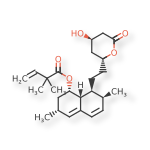
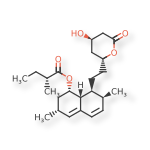
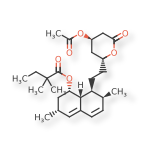
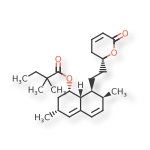
CCC(C)(C)C(=O)O[C@H]1C[C@@H](C)C=C2C=C[C@H](C)[C@H](CC[C@@H]3C[C@@H](O)CC(=O)O3)[C@@H]12
InChI
InChIKey=RYMZZMVNJRMUDD-HGQWONQESA-N
InChI=1S/C25H38O5/c1-6-25(4,5)24(28)30-21-12-15(2)11-17-8-7-16(3)20(23(17)21)10-9-19-13-18(26)14-22(27)29-19/h7-8,11,15-16,18-21,23,26H,6,9-10,12-14H2,1-5H3/t15-,16-,18+,19+,20-,21-,23-/m0/s1
| Molecular Formula | C25H38O5 |
| Molecular Weight | 418.5662 |
| Charge | 0 |
| Count |
|
| Stereochemistry | ABSOLUTE |
| Additional Stereochemistry | No |
| Defined Stereocenters | 7 / 7 |
| E/Z Centers | 0 |
| Optical Activity | UNSPECIFIED |
DescriptionSources: https://www.ncbi.nlm.nih.gov/pubmed/28350522 | https://www.ncbi.nlm.nih.gov/pubmed/28887287http://www.accessdata.fda.gov/drugsatfda_docs/label/2015/019766s093lbl.pdfCurator's Comment: description was created based on several sources, including:
https://www.drugs.com/simvastatin.html
http://www.rxlist.com/zocor-drug.htm
http://www.wikidoc.org/index.php/Simvastatin
Sources: https://www.ncbi.nlm.nih.gov/pubmed/28350522 | https://www.ncbi.nlm.nih.gov/pubmed/28887287http://www.accessdata.fda.gov/drugsatfda_docs/label/2015/019766s093lbl.pdf
Curator's Comment: description was created based on several sources, including:
https://www.drugs.com/simvastatin.html
http://www.rxlist.com/zocor-drug.htm
http://www.wikidoc.org/index.php/Simvastatin
Simvastatin is a HMG-CoA Reductase Inhibitor that is FDA approved for the treatment of hypercholesterolemia and for the reduction in the risk of cardiac heart disease mortality and cardiovascular events. It reduces levels of "bad" cholesterol (low-density lipoprotein, or LDL) and triglycerides in the blood, while increasing levels of "good" cholesterol (high-density lipoprotein, or HDL). Common adverse reactions include abdominal pain, constipation, nausea, headache, upper respiratory infection. Cases of myopathy/rhabdomyolysis have been observed with simvastatin co-administered with lipid-modifying doses ( ≥ 1 g/day niacin) of niacin-containing products. The risk of myopathy, including rhabdomyolysis, is increased by concomitant administration of amiodarone, dronedarone, ranolazine, or calcium channel blockers such as verapamil, diltiazem, or amlodipine.
CNS Activity
Originator
Approval Year
Targets
| Primary Target | Pharmacology | Condition | Potency |
|---|---|---|---|
Target ID: Q9UIG8 Gene ID: 28232.0 Gene Symbol: SLCO3A1 Target Organism: Homo sapiens (Human) |
|||
Target ID: Q9Y6L6 Gene ID: 10599.0 Gene Symbol: SLCO1B1 Target Organism: Homo sapiens (Human) |
|||
Target ID: P04035 Gene ID: 3156.0 Gene Symbol: HMGCR Target Organism: Homo sapiens (Human) |
|||
Target ID: CHEMBL340 |
|||
Target ID: CHEMBL402 |
4.0 nM [IC50] |
Conditions
| Condition | Modality | Targets | Highest Phase | Product |
|---|---|---|---|---|
| Preventing | ZOCOR Approved UseTherapy with lipid-altering agents should be only one component of multiple risk factor intervention in individuals at significantly increased risk for atherosclerotic vascular disease due to hypercholesterolemia. Drug therapy is indicated as an adjunct to diet when the response to a diet restricted in saturated fat and cholesterol and other nonpharmacologic measures alone has been inadequate. In patients with coronary heart disease (CHD) or at high risk of CHD, simvastatin tablets, USP can be started simultaneously with diet. Simvastatin tablets, USP are an HMG-CoA reductase inhibitor (statin) indicated as an adjunctive therapy to diet to: Reduce the risk of total mortality by reducing CHD deaths and reduce the risk of non-fatal myocardial infarction, stroke, and the need for revascularization procedures in patients at high risk of coronary events. (1.1) Reduce elevated total-C, LDL-C, Apo B, TG and increase HDL-C in patients with primary hyperlipidemia (heterozygous familial and nonfamilial) and mixed dyslipidemia. (1.2) Reduce elevated TG in patients with hypertriglyceridemia and reduce TG and VLDL-C in patients with primary dysbetalipoproteinemia. (1.2) Reduce total-C and LDL-C in adult patients with homozygous familial hypercholesterolemia. (1.2) Reduce elevated total-C, LDL-C, and Apo B in boys and postmenarchal girls, 10 to 17 years of age with heterozygous familial hypercholesterolemia after failing an adequate trial of diet therapy. (1.2, 1.3) Limitations of Use Simvastatin tablets, USP have not been studied in Fredrickson Types I and V dyslipidemias. (1.4) 1.1 Reductions in Risk of CHD Mortality and Cardiovascular Events In patients at high risk of coronary events because of existing coronary heart disease, diabetes, peripheral vessel disease, history of stroke or other cerebrovascular disease, simvastatin tablets, USP are indicated to: Reduce the risk of total mortality by reducing CHD deaths. Reduce the risk of non-fatal myocardial infarction and stroke. Reduce the need for coronary and non-coronary revascularization procedures. 1.2 Hyperlipidemia Simvastatin tablets, USP are indicated to: Reduce elevated total cholesterol (total-C), low-density lipoprotein cholesterol (LDL-C), apolipoprotein B (Apo B), and triglycerides (TG), and to increase high-density lipoprotein cholesterol (HDL-C) in patients with primary hyperlipidemia (Fredrickson type IIa, heterozygous familial and nonfamilial) or mixed dyslipidemia (Fredrickson type IIb). Reduce elevated TG in patients with hypertriglyceridemia (Fredrickson type IV hyperlipidemia). Reduce elevated TG and VLDL-C in patients with primary dysbetalipoproteinemia (Fredrickson type III hyperlipidemia). Reduce total-C and LDL-C in patients with homozygous familial hypercholesterolemia as an adjunct to other lipid-lowering treatments (e.g., LDL apheresis) or if such treatments are unavailable. 1.3 Adolescent Patients with Heterozygous Familial Hypercholesterolemia (HeFH) Simvastatin tablets, USP are indicated as an adjunct to diet to reduce total-C, LDL-C, and Apo B levels in adolescent boys and girls who are at least one year post-menarche, 10 to 17 years of age, with HeFH, if after an adequate trial of diet therapy the following findings are present: 1. LDL cholesterol remains ≥190 mg/dL; or 2. LDL cholesterol remains ≥160 mg/dL and There is a positive family history of premature cardiovascular disease (CVD) or Two or more other CVD risk factors are present in the adolescent patient. The minimum goal of treatment in pediatric and adolescent patients is to achieve a mean LDL-C <130 mg/dL. The optimal age at which to initiate lipid-lowering therapy to decrease the risk of symptomatic adulthood CAD has not been determined. 1.4 Limitations of Use Simvastatin tablets, USP have not been studied in conditions where the major abnormality is elevation of chylomicrons (i.e., hyperlipidemia Fredrickson types I and V). Launch Date1991 |
|||
| Primary | ZOCOR Approved UseTherapy with lipid-altering agents should be only one component of multiple risk factor intervention in individuals at significantly increased risk for atherosclerotic vascular disease due to hypercholesterolemia. Drug therapy is indicated as an adjunct to diet when the response to a diet restricted in saturated fat and cholesterol and other nonpharmacologic measures alone has been inadequate. In patients with coronary heart disease (CHD) or at high risk of CHD, simvastatin tablets, USP can be started simultaneously with diet. Simvastatin tablets, USP are an HMG-CoA reductase inhibitor (statin) indicated as an adjunctive therapy to diet to: Reduce the risk of total mortality by reducing CHD deaths and reduce the risk of non-fatal myocardial infarction, stroke, and the need for revascularization procedures in patients at high risk of coronary events. (1.1) Reduce elevated total-C, LDL-C, Apo B, TG and increase HDL-C in patients with primary hyperlipidemia (heterozygous familial and nonfamilial) and mixed dyslipidemia. (1.2) Reduce elevated TG in patients with hypertriglyceridemia and reduce TG and VLDL-C in patients with primary dysbetalipoproteinemia. (1.2) Reduce total-C and LDL-C in adult patients with homozygous familial hypercholesterolemia. (1.2) Reduce elevated total-C, LDL-C, and Apo B in boys and postmenarchal girls, 10 to 17 years of age with heterozygous familial hypercholesterolemia after failing an adequate trial of diet therapy. (1.2, 1.3) Limitations of Use Simvastatin tablets, USP have not been studied in Fredrickson Types I and V dyslipidemias. (1.4) 1.1 Reductions in Risk of CHD Mortality and Cardiovascular Events In patients at high risk of coronary events because of existing coronary heart disease, diabetes, peripheral vessel disease, history of stroke or other cerebrovascular disease, simvastatin tablets, USP are indicated to: Reduce the risk of total mortality by reducing CHD deaths. Reduce the risk of non-fatal myocardial infarction and stroke. Reduce the need for coronary and non-coronary revascularization procedures. 1.2 Hyperlipidemia Simvastatin tablets, USP are indicated to: Reduce elevated total cholesterol (total-C), low-density lipoprotein cholesterol (LDL-C), apolipoprotein B (Apo B), and triglycerides (TG), and to increase high-density lipoprotein cholesterol (HDL-C) in patients with primary hyperlipidemia (Fredrickson type IIa, heterozygous familial and nonfamilial) or mixed dyslipidemia (Fredrickson type IIb). Reduce elevated TG in patients with hypertriglyceridemia (Fredrickson type IV hyperlipidemia). Reduce elevated TG and VLDL-C in patients with primary dysbetalipoproteinemia (Fredrickson type III hyperlipidemia). Reduce total-C and LDL-C in patients with homozygous familial hypercholesterolemia as an adjunct to other lipid-lowering treatments (e.g., LDL apheresis) or if such treatments are unavailable. 1.3 Adolescent Patients with Heterozygous Familial Hypercholesterolemia (HeFH) Simvastatin tablets, USP are indicated as an adjunct to diet to reduce total-C, LDL-C, and Apo B levels in adolescent boys and girls who are at least one year post-menarche, 10 to 17 years of age, with HeFH, if after an adequate trial of diet therapy the following findings are present: 1. LDL cholesterol remains ≥190 mg/dL; or 2. LDL cholesterol remains ≥160 mg/dL and There is a positive family history of premature cardiovascular disease (CVD) or Two or more other CVD risk factors are present in the adolescent patient. The minimum goal of treatment in pediatric and adolescent patients is to achieve a mean LDL-C <130 mg/dL. The optimal age at which to initiate lipid-lowering therapy to decrease the risk of symptomatic adulthood CAD has not been determined. 1.4 Limitations of Use Simvastatin tablets, USP have not been studied in conditions where the major abnormality is elevation of chylomicrons (i.e., hyperlipidemia Fredrickson types I and V). Launch Date1991 |
|||
| Primary | ZOCOR Approved UseTherapy with lipid-altering agents should be only one component of multiple risk factor intervention in individuals at significantly increased risk for atherosclerotic vascular disease due to hypercholesterolemia. Drug therapy is indicated as an adjunct to diet when the response to a diet restricted in saturated fat and cholesterol and other nonpharmacologic measures alone has been inadequate. In patients with coronary heart disease (CHD) or at high risk of CHD, simvastatin tablets, USP can be started simultaneously with diet. Simvastatin tablets, USP are an HMG-CoA reductase inhibitor (statin) indicated as an adjunctive therapy to diet to: Reduce the risk of total mortality by reducing CHD deaths and reduce the risk of non-fatal myocardial infarction, stroke, and the need for revascularization procedures in patients at high risk of coronary events. (1.1) Reduce elevated total-C, LDL-C, Apo B, TG and increase HDL-C in patients with primary hyperlipidemia (heterozygous familial and nonfamilial) and mixed dyslipidemia. (1.2) Reduce elevated TG in patients with hypertriglyceridemia and reduce TG and VLDL-C in patients with primary dysbetalipoproteinemia. (1.2) Reduce total-C and LDL-C in adult patients with homozygous familial hypercholesterolemia. (1.2) Reduce elevated total-C, LDL-C, and Apo B in boys and postmenarchal girls, 10 to 17 years of age with heterozygous familial hypercholesterolemia after failing an adequate trial of diet therapy. (1.2, 1.3) Limitations of Use Simvastatin tablets, USP have not been studied in Fredrickson Types I and V dyslipidemias. (1.4) 1.1 Reductions in Risk of CHD Mortality and Cardiovascular Events In patients at high risk of coronary events because of existing coronary heart disease, diabetes, peripheral vessel disease, history of stroke or other cerebrovascular disease, simvastatin tablets, USP are indicated to: Reduce the risk of total mortality by reducing CHD deaths. Reduce the risk of non-fatal myocardial infarction and stroke. Reduce the need for coronary and non-coronary revascularization procedures. 1.2 Hyperlipidemia Simvastatin tablets, USP are indicated to: Reduce elevated total cholesterol (total-C), low-density lipoprotein cholesterol (LDL-C), apolipoprotein B (Apo B), and triglycerides (TG), and to increase high-density lipoprotein cholesterol (HDL-C) in patients with primary hyperlipidemia (Fredrickson type IIa, heterozygous familial and nonfamilial) or mixed dyslipidemia (Fredrickson type IIb). Reduce elevated TG in patients with hypertriglyceridemia (Fredrickson type IV hyperlipidemia). Reduce elevated TG and VLDL-C in patients with primary dysbetalipoproteinemia (Fredrickson type III hyperlipidemia). Reduce total-C and LDL-C in patients with homozygous familial hypercholesterolemia as an adjunct to other lipid-lowering treatments (e.g., LDL apheresis) or if such treatments are unavailable. 1.3 Adolescent Patients with Heterozygous Familial Hypercholesterolemia (HeFH) Simvastatin tablets, USP are indicated as an adjunct to diet to reduce total-C, LDL-C, and Apo B levels in adolescent boys and girls who are at least one year post-menarche, 10 to 17 years of age, with HeFH, if after an adequate trial of diet therapy the following findings are present: 1. LDL cholesterol remains ≥190 mg/dL; or 2. LDL cholesterol remains ≥160 mg/dL and There is a positive family history of premature cardiovascular disease (CVD) or Two or more other CVD risk factors are present in the adolescent patient. The minimum goal of treatment in pediatric and adolescent patients is to achieve a mean LDL-C <130 mg/dL. The optimal age at which to initiate lipid-lowering therapy to decrease the risk of symptomatic adulthood CAD has not been determined. 1.4 Limitations of Use Simvastatin tablets, USP have not been studied in conditions where the major abnormality is elevation of chylomicrons (i.e., hyperlipidemia Fredrickson types I and V). Launch Date1991 |
Cmax
| Value | Dose | Co-administered | Analyte | Population |
|---|---|---|---|---|
6.85 ng/mL Clinical Trial https://clinicaltrials.gov/ct2/show/NCT01960140 |
40 mg single, oral dose: 40 mg route of administration: oral experiment type: single co-administered: |
SIMVASTATIN plasma | Homo sapiens population: healthy age: sex: food status: |
|
1.93 ng/mL Clinical Trial https://clinicaltrials.gov/ct2/show/NCT01960140 |
40 mg single, oral dose: 40 mg route of administration: oral experiment type: single co-administered: |
TENIVASTATIN plasma | Homo sapiens population: healthy age: sex: food status: |
|
5.006 ng/mL Clinical Trial https://clinicaltrials.gov/ct2/show/NCT01979185 |
20 mg single, oral dose: 20 mg route of administration: oral experiment type: single co-administered: |
SIMVASTATIN plasma | Homo sapiens population: healthy age: Adults sex: food status: |
|
54.711 ng/mL |
80 mg single, oral dose: 80 mg route of administration: Oral experiment type: SINGLE co-administered: |
SIMVASTATIN plasma | Homo sapiens population: HEALTHY age: ADULT sex: MALE food status: FASTED |
AUC
| Value | Dose | Co-administered | Analyte | Population |
|---|---|---|---|---|
38.142 ng*h/mL Clinical Trial https://clinicaltrials.gov/ct2/show/NCT01979185 |
20 mg single, oral dose: 20 mg route of administration: oral experiment type: single co-administered: |
SIMVASTATIN plasma | Homo sapiens population: healthy age: Adults sex: food status: |
|
34.351 ng*h/mL Clinical Trial https://clinicaltrials.gov/ct2/show/NCT01979185 |
20 mg single, oral dose: 20 mg route of administration: oral experiment type: single co-administered: |
SIMVASTATIN plasma | Homo sapiens population: healthy age: Adults sex: food status: |
|
235.795 ng × h/mL |
80 mg single, oral dose: 80 mg route of administration: Oral experiment type: SINGLE co-administered: |
SIMVASTATIN plasma | Homo sapiens population: HEALTHY age: ADULT sex: MALE food status: FASTED |
T1/2
| Value | Dose | Co-administered | Analyte | Population |
|---|---|---|---|---|
6.87 h |
80 mg single, oral dose: 80 mg route of administration: Oral experiment type: SINGLE co-administered: |
SIMVASTATIN plasma | Homo sapiens population: HEALTHY age: ADULT sex: MALE food status: FASTED |
Overview
| CYP3A4 | CYP2C9 | CYP2D6 | hERG |
|---|---|---|---|
OverviewOther
| Other Inhibitor | Other Substrate | Other Inducer |
|---|---|---|
Drug as perpetrator
| Target | Modality | Activity | Metabolite | Clinical evidence |
|---|---|---|---|---|
| moderate [Ki 10 uM] | ||||
| moderate [Ki 7.1 uM] | ||||
| moderate | ||||
| moderate | ||||
| no | ||||
| yes [IC50 9 uM] | ||||
| yes |
Drug as victim
| Target | Modality | Activity | Metabolite | Clinical evidence |
|---|---|---|---|---|
| major | yes (co-administration study) Comment: cyclosporine has been shown to increase the AUC of statins. The increase in AUC for simvastatin acid is presumably due, in part, to inhibition of CYP3A4 |
|||
| minor | ||||
| no | ||||
| no | ||||
| no | ||||
| no | ||||
| no | ||||
| no | ||||
| no | ||||
| yes | ||||
| yes | ||||
| yes | yes (co-administration study) Comment: Administered with cyclosporine: AUC of Simvastatin increased 2.6 fold |
Tox targets
| Target | Modality | Activity | Metabolite | Clinical evidence |
|---|---|---|---|---|
PubMed
| Title | Date | PubMed |
|---|---|---|
| The influences of SLCO1B1 and ABCB1 genotypes on the pharmacokinetics of simvastatin, in relation to CYP3A4 inhibition. | 2017-04 |
|
| Bile salt export pump (BSEP/ABCB11) can transport a nonbile acid substrate, pravastatin. | 2005-08 |
|
| 3-Hydroxy-3-methylglutaryl-CoA reductase inhibitors block calcium-dependent tyrosine kinase Pyk2 activation by angiotensin II in vascular endothelial cells. involvement of geranylgeranylation of small G protein Rap1. | 2001-05-11 |
|
| An omega-3 polyunsaturated fatty acid concentrate administered for one year decreased triglycerides in simvastatin treated patients with coronary heart disease and persisting hypertriglyceridaemia. | 2001-05 |
|
| Effect of hydroxymethyl glutaryl coenzyme a reductase inhibitor therapy on high sensitive C-reactive protein levels. | 2001-04-17 |
|
| Differential effect of simvastatin on various signal transduction intermediates in cultured human smooth muscle cells. | 2001-04-15 |
|
| Efficacy and safety of combination simvastatin and colesevelam in patients with primary hypercholesterolemia. | 2001-04-01 |
|
| Mevastatin, an HMG-CoA reductase inhibitor, reduces stroke damage and upregulates endothelial nitric oxide synthase in mice. | 2001-04 |
|
| A new simvastatin (mevinolin)-resistance marker from Haloarcula hispanica and a new Haloferax volcanii strain cured of plasmid pHV2. | 2001-04 |
|
| Clinical and biochemical features, molecular diagnosis and long-term management of a case of cerebrotendinous xanthomatosis. | 2001-04 |
|
| LpAI in HDL subfractions: serum levels in men and women with coronary heart disease and changes under hypolipemic therapy. | 2001-04 |
|
| Rhabdomyolysis due to simvastatin in a transplant patient: Are some statins safer than others? | 2001-04 |
|
| Comparative study of HMG-CoA reductase inhibitors on fibrinogen. | 2001-04 |
|
| Safety and efficacy of simvastatin for hyperlipidemia in renal transplant recipients: a double-blind, randomized, placebo-controlled study. | 2001-03-27 |
|
| Pro and con: low-density lipoprotein cholesterol lowering is and will be the key to the future of lipid management. | 2001-03-08 |
|
| Preclinical and clinical pharmacology of Rosuvastatin, a new 3-hydroxy-3-methylglutaryl coenzyme A reductase inhibitor. | 2001-03-08 |
|
| Magnetic resonance detects changes in phosphocholine associated with Ras activation and inhibition in NIH 3T3 cells. | 2001-03-02 |
|
| Effect of simvastatin in preventing progression of carotid artery stenosis. | 2001-03-01 |
|
| Comparison of efficacy and safety of atorvastatin (10mg) with simvastatin (10mg) at six weeks. ASSET Investigators. | 2001-03-01 |
|
| [Treatment with statins for the reduction of cardiovascular risk]. | 2001-03 |
|
| High-dose simvastin (80 mg/day) decreases plasma concentrations of total homocyst(e)ine in patients with hypercholesteromia. | 2001-03 |
|
| Statin-fibrate combinations in patients with combined hyperlipedemia. | 2001-03 |
|
| Statin therapy--what now? | 2001-03 |
|
| The influence of short-term treatment with simvastatin on the inflammatory profile of patients with hypercholesterolaemia. | 2001-03 |
|
| Effect of simvastatin on vascular smooth muscle responsiveness: involvement of Ca(2+) homeostasis. | 2001-03 |
|
| Making the most of cholesterol-lowering margarines. | 2001-03 |
|
| Cholesterol metabolism in primary biliary cirrhosis during simvastatin and UDCA administration. | 2001-03 |
|
| HMG-CoA reductase inhibitors and P-glycoprotein modulation. | 2001-03 |
|
| Simvastatin treatment on postprandial hypertriglyceridemia in type 2 diabetes mellitus patients with combined hyperlipidemia. | 2001-03 |
|
| Simvastatin improves arterial compliance in the lower limb but not in the aorta. | 2001-03 |
|
| Effects of simvastatin treatment on sICAM-1 and sE-selectin levels in hypercholesterolemic subjects. | 2001-03 |
|
| Sildenafil-simvastatin interaction: possible cause of rhabdomyolysis? | 2001-02-15 |
|
| Cost-minimization analysis of simvastatin versus atorvastatin for maintenance therapy in patients with coronary or peripheral vascular disease. | 2001-02 |
|
| Clinical relevance of statins: their role in secondary prevention. | 2001-02 |
|
| Myositis, microvesicular hepatitis, and progression to cirrhosis from troglitazone added to simvastatin. | 2001-02 |
|
| The effects of lacidipine on the steady/state plasma concentrations of simvastatin in healthy subjects. | 2001-02 |
|
| Treatment with simvastatin and low-dose aspirin depresses thrombin generation in patients with coronary heart disease and borderline-high cholesterol levels. | 2001-02 |
|
| [Statins: intervention studies, facts and perspectives]. | 2001-02 |
|
| Do HMG-CoA reductase inhibitors affect fibrinogen? | 2001-02 |
|
| The HMG-CoA reductase inhibitor simvastatin inhibits IFN-gamma induced MHC class II expression in human vascular endothelial cells. | 2001-01-27 |
|
| [The role of HDL in the prevention of cardiovascular events]. | 2001-01-21 |
|
| Effective use of statins to prevent coronary heart disease. | 2001-01-15 |
|
| Protective effects of fluvastatin against reactive oxygen species induced DNA damage and mutagenesis. | 2001-01 |
|
| [Cost-effectiveness of atorvastatin against simvastatin as hypolipemic treatment in hypercholesterolemic patients in primary care]. | 2001-01 |
|
| Hypolipidemic effect of NK-104 and other 3-hydroxy-3-methylglutaryl coenzyme A reductase inhibitors in guinea pigs. | 2001-01 |
|
| Simvastatin: building on success. | 2001-01 |
|
| Similar effects of atorvastatin, simvastatin and pravastatin on thrombogenic and inflammatory parameters in patients with hypercholesterolemia. | 2001-01 |
|
| [Antioxidative effects of fluvastatin, and its major metabolites [II]]. | 2001-01 |
|
| Cost effectiveness of HMG-CoA reductase inhibition in Canada. | 2001 |
|
| Advantages of lipid-lowering therapy in cerebral ischemia: role of HMG-CoA reductase inhibitors. | 2001 |
Patents
Sample Use Guides
The pleiotropic effects and uptake of simvastatin acid were analyzed in primary human cardiomyocytes and HEK293 cells transfected with the OATP3A1 (Human organic anion transporting polypeptide 3A1) gene. It was observed a pH-dependent effect on OATP3A1 uptake, with more efficient simvastatin acid uptake at pH5.5 in HEK293 cells transfected with the OATP3A1 gene. The Michaelis-Menten constant (Km) for simvastatin acid uptake by OATP3A1 was 0.017±0.002μM and the Vmax was 0.995±0.027fmol/min/105 cells. Uptake of simvastatin acid was significantly increased by known (benzylpenicillin and estrone-3-sulfate) and potential (indoxyl sulfate and cyclosporine) substrates of OATP3A1.
| Substance Class |
Chemical
Created
by
admin
on
Edited
Wed Apr 02 09:08:40 GMT 2025
by
admin
on
Wed Apr 02 09:08:40 GMT 2025
|
| Record UNII |
AGG2FN16EV
|
| Record Status |
Validated (UNII)
|
| Record Version |
|
-
Download
| Name | Type | Language | ||
|---|---|---|---|---|
|
Preferred Name | English | ||
|
Official Name | English | ||
|
Common Name | English | ||
|
Common Name | English | ||
|
Code | English | ||
|
Brand Name | English | ||
|
Common Name | English | ||
|
Common Name | English | ||
|
Common Name | English | ||
|
Common Name | English | ||
|
Common Name | English | ||
|
Common Name | English | ||
|
Common Name | English | ||
|
Common Name | English | ||
|
Common Name | English | ||
|
Code | English | ||
|
Common Name | English | ||
|
Code | English | ||
|
Common Name | English | ||
|
Common Name | English | ||
|
Common Name | English | ||
|
Brand Name | English | ||
|
Common Name | English | ||
|
Common Name | English |
| Classification Tree | Code System | Code | ||
|---|---|---|---|---|
|
WHO-ATC |
C10BX04
Created by
admin on Wed Apr 02 09:08:41 GMT 2025 , Edited by admin on Wed Apr 02 09:08:41 GMT 2025
|
||
|
WHO-ATC |
C10BA04
Created by
admin on Wed Apr 02 09:08:41 GMT 2025 , Edited by admin on Wed Apr 02 09:08:41 GMT 2025
|
||
|
WHO-VATC |
QC10BA04
Created by
admin on Wed Apr 02 09:08:41 GMT 2025 , Edited by admin on Wed Apr 02 09:08:41 GMT 2025
|
||
|
NCI_THESAURUS |
C1655
Created by
admin on Wed Apr 02 09:08:41 GMT 2025 , Edited by admin on Wed Apr 02 09:08:41 GMT 2025
|
||
|
WHO-ATC |
A10BH51
Created by
admin on Wed Apr 02 09:08:41 GMT 2025 , Edited by admin on Wed Apr 02 09:08:41 GMT 2025
|
||
|
NDF-RT |
N0000175589
Created by
admin on Wed Apr 02 09:08:41 GMT 2025 , Edited by admin on Wed Apr 02 09:08:41 GMT 2025
|
||
|
LIVERTOX |
NBK548720
Created by
admin on Wed Apr 02 09:08:41 GMT 2025 , Edited by admin on Wed Apr 02 09:08:41 GMT 2025
|
||
|
WHO-VATC |
QC10BA02
Created by
admin on Wed Apr 02 09:08:41 GMT 2025 , Edited by admin on Wed Apr 02 09:08:41 GMT 2025
|
||
|
WHO-VATC |
QC10AA01
Created by
admin on Wed Apr 02 09:08:41 GMT 2025 , Edited by admin on Wed Apr 02 09:08:41 GMT 2025
|
||
|
WHO-VATC |
QA10BH51
Created by
admin on Wed Apr 02 09:08:41 GMT 2025 , Edited by admin on Wed Apr 02 09:08:41 GMT 2025
|
||
|
WHO-ATC |
C10BA02
Created by
admin on Wed Apr 02 09:08:41 GMT 2025 , Edited by admin on Wed Apr 02 09:08:41 GMT 2025
|
||
|
NDF-RT |
N0000000121
Created by
admin on Wed Apr 02 09:08:41 GMT 2025 , Edited by admin on Wed Apr 02 09:08:41 GMT 2025
|
||
|
WHO-ATC |
C10AA01
Created by
admin on Wed Apr 02 09:08:41 GMT 2025 , Edited by admin on Wed Apr 02 09:08:41 GMT 2025
|
||
|
WHO-VATC |
QC10BX01
Created by
admin on Wed Apr 02 09:08:41 GMT 2025 , Edited by admin on Wed Apr 02 09:08:41 GMT 2025
|
||
|
WHO-ATC |
C10BX01
Created by
admin on Wed Apr 02 09:08:41 GMT 2025 , Edited by admin on Wed Apr 02 09:08:41 GMT 2025
|
||
|
WHO-ESSENTIAL MEDICINES LIST |
12.6
Created by
admin on Wed Apr 02 09:08:41 GMT 2025 , Edited by admin on Wed Apr 02 09:08:41 GMT 2025
|
||
|
WHO-VATC |
QC10BX04
Created by
admin on Wed Apr 02 09:08:41 GMT 2025 , Edited by admin on Wed Apr 02 09:08:41 GMT 2025
|
| Code System | Code | Type | Description | ||
|---|---|---|---|---|---|
|
AGG2FN16EV
Created by
admin on Wed Apr 02 09:08:41 GMT 2025 , Edited by admin on Wed Apr 02 09:08:41 GMT 2025
|
PRIMARY | |||
|
DTXSID0023581
Created by
admin on Wed Apr 02 09:08:41 GMT 2025 , Edited by admin on Wed Apr 02 09:08:41 GMT 2025
|
PRIMARY | |||
|
7208
Created by
admin on Wed Apr 02 09:08:41 GMT 2025 , Edited by admin on Wed Apr 02 09:08:41 GMT 2025
|
PRIMARY | |||
|
Simvastatin
Created by
admin on Wed Apr 02 09:08:41 GMT 2025 , Edited by admin on Wed Apr 02 09:08:41 GMT 2025
|
PRIMARY | |||
|
CHEMBL1064
Created by
admin on Wed Apr 02 09:08:41 GMT 2025 , Edited by admin on Wed Apr 02 09:08:41 GMT 2025
|
PRIMARY | |||
|
C29454
Created by
admin on Wed Apr 02 09:08:41 GMT 2025 , Edited by admin on Wed Apr 02 09:08:41 GMT 2025
|
PRIMARY | |||
|
Y-41
Created by
admin on Wed Apr 02 09:08:41 GMT 2025 , Edited by admin on Wed Apr 02 09:08:41 GMT 2025
|
PRIMARY | |||
|
6147
Created by
admin on Wed Apr 02 09:08:41 GMT 2025 , Edited by admin on Wed Apr 02 09:08:41 GMT 2025
|
PRIMARY | |||
|
1612700
Created by
admin on Wed Apr 02 09:08:41 GMT 2025 , Edited by admin on Wed Apr 02 09:08:41 GMT 2025
|
PRIMARY | |||
|
m9947
Created by
admin on Wed Apr 02 09:08:41 GMT 2025 , Edited by admin on Wed Apr 02 09:08:41 GMT 2025
|
PRIMARY | Merck Index | ||
|
D019821
Created by
admin on Wed Apr 02 09:08:41 GMT 2025 , Edited by admin on Wed Apr 02 09:08:41 GMT 2025
|
PRIMARY | |||
|
9150
Created by
admin on Wed Apr 02 09:08:41 GMT 2025 , Edited by admin on Wed Apr 02 09:08:41 GMT 2025
|
PRIMARY | |||
|
79902-63-9
Created by
admin on Wed Apr 02 09:08:41 GMT 2025 , Edited by admin on Wed Apr 02 09:08:41 GMT 2025
|
PRIMARY | |||
|
SIMVASTATIN
Created by
admin on Wed Apr 02 09:08:41 GMT 2025 , Edited by admin on Wed Apr 02 09:08:41 GMT 2025
|
PRIMARY | |||
|
DB00641
Created by
admin on Wed Apr 02 09:08:41 GMT 2025 , Edited by admin on Wed Apr 02 09:08:41 GMT 2025
|
PRIMARY | |||
|
SUB10529MIG
Created by
admin on Wed Apr 02 09:08:41 GMT 2025 , Edited by admin on Wed Apr 02 09:08:41 GMT 2025
|
PRIMARY | |||
|
2445
Created by
admin on Wed Apr 02 09:08:41 GMT 2025 , Edited by admin on Wed Apr 02 09:08:41 GMT 2025
|
PRIMARY | |||
|
AGG2FN16EV
Created by
admin on Wed Apr 02 09:08:41 GMT 2025 , Edited by admin on Wed Apr 02 09:08:41 GMT 2025
|
PRIMARY | |||
|
54454
Created by
admin on Wed Apr 02 09:08:41 GMT 2025 , Edited by admin on Wed Apr 02 09:08:41 GMT 2025
|
PRIMARY | |||
|
36567
Created by
admin on Wed Apr 02 09:08:41 GMT 2025 , Edited by admin on Wed Apr 02 09:08:41 GMT 2025
|
PRIMARY | RxNorm | ||
|
758706
Created by
admin on Wed Apr 02 09:08:41 GMT 2025 , Edited by admin on Wed Apr 02 09:08:41 GMT 2025
|
PRIMARY | |||
|
100000091786
Created by
admin on Wed Apr 02 09:08:41 GMT 2025 , Edited by admin on Wed Apr 02 09:08:41 GMT 2025
|
PRIMARY | |||
|
2955
Created by
admin on Wed Apr 02 09:08:41 GMT 2025 , Edited by admin on Wed Apr 02 09:08:41 GMT 2025
|
PRIMARY |
| Related Record | Type | Details | ||
|---|---|---|---|---|
|
BASIS OF STRENGTH->SUBSTANCE |
ASSAY (HPLC)
USP
|
||
|
TRANSPORTER -> SUBSTRATE |
|
||
|
METABOLIC ENZYME -> SUBSTRATE | |||
|
TRANSPORTER -> INHIBITOR | |||
|
BASIS OF STRENGTH->SUBSTANCE |
ASSAY (HPLC)
EP
|
||
|
METABOLIC ENZYME -> SUBSTRATE | |||
|
TRANSPORTER -> INHIBITOR | |||
|
TRANSPORTER -> INHIBITOR | |||
|
TRANSPORTER -> INHIBITOR |
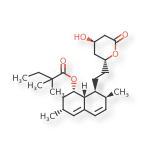

| Related Record | Type | Details | ||
|---|---|---|---|---|
|
METABOLITE ACTIVE -> PARENT |
|
||
|
METABOLITE -> PARENT |
PLASMA
|
||
|
METABOLITE ACTIVE -> PRODRUG |
MAJOR
|
||
|
METABOLITE ACTIVE -> PARENT |
MAJOR
|
||
|
METABOLITE ACTIVE -> PARENT |
MAJOR
|
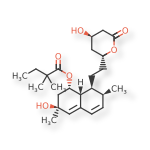
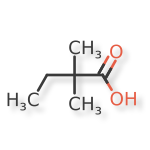
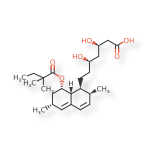
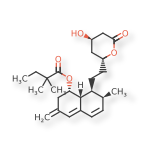
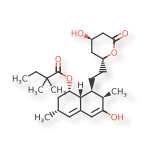
| Related Record | Type | Details | ||
|---|---|---|---|---|
|
IMPURITY -> PARENT |
CHROMATOGRAPHIC PURITY (HPLC/UV)
EP
|
||
|
IMPURITY -> PARENT |
CHROMATOGRAPHIC PURITY (HPLC/UV)
USP
|
||
|
IMPURITY -> PARENT |
sum of impurities E and F: not more than twice the area of the principal peak in the chromatogram obtained with reference solution (b) (1.0 per cent)
CHROMATOGRAPHIC PURITY (HPLC/UV)
EP
|
||
|
IMPURITY -> PARENT |
CHROMATOGRAPHIC PURITY (HPLC/UV)
USP
|
||
|
IMPURITY -> PARENT |
CHROMATOGRAPHIC PURITY (HPLC/UV)
USP
|
||
|
IMPURITY -> PARENT |
CHROMATOGRAPHIC PURITY (HPLC/UV)
EP
|
||
|
IMPURITY -> PARENT |
sum of impurities E and F: not more than twice the area of the principal peak in the chromatogram obtained with reference solution (b) (1.0 per cent)
CHROMATOGRAPHIC PURITY (HPLC/UV)
EP
|
||
|
IMPURITY -> PARENT |
CHROMATOGRAPHIC PURITY (HPLC/UV)
EP
|
||
|
IMPURITY -> PARENT |
Epilovastatin and Lovastatin 1.0%
CHROMATOGRAPHIC PURITY (HPLC/UV)
USP
|
||
|
IMPURITY -> PARENT |
Epilovastatin and Lovastatin 1.0%
CHROMATOGRAPHIC PURITY (HPLC/UV)
USP
|
||
|
IMPURITY -> PARENT |
CHROMATOGRAPHIC PURITY (HPLC/UV)
USP
|
||
|
IMPURITY -> PARENT |
CHROMATOGRAPHIC PURITY (HPLC/UV)
USP
|
||
|
IMPURITY -> PARENT |
sum of impurities B and C: not more than 1.6 times the area of the principal peak in the chromatogram obtained with reference solution (b) (0.8 per cent);
CHROMATOGRAPHIC PURITY (HPLC/UV)
EP
|
||
|
IMPURITY -> PARENT |
sum of impurities B and C: not more than 1.6 times the area of the principal peak in the chromatogram obtained with reference solution (b) (0.8 per cent);
CHROMATOGRAPHIC PURITY (HPLC/UV)
EP
|
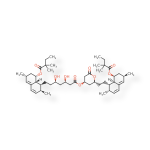
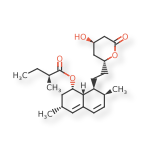
| Related Record | Type | Details | ||
|---|---|---|---|---|
|
|
ACTIVE MOIETY |
|
| Name | Property Type | Amount | Referenced Substance | Defining | Parameters | References |
|---|---|---|---|---|---|---|
| Biological Half-life | PHARMACOKINETIC |
|
SIMVASTATIN ACID PHARMACOKINETIC |
|
||
| Tmax | PHARMACOKINETIC |
|
|
|||
| ORAL BIOAVAILABILITY | PHARMACOKINETIC |
|
|
|||