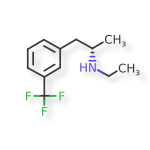
Details
| Stereochemistry | ABSOLUTE |
| Molecular Formula | C12H16F3N |
| Molecular Weight | 231.2573 |
| Optical Activity | UNSPECIFIED |
| Defined Stereocenters | 1 / 1 |
| E/Z Centers | 0 |
| Charge | 0 |
SHOW SMILES / InChI
SMILES
CCN[C@@H](C)CC1=CC(=CC=C1)C(F)(F)F
InChI
InChIKey=DBGIVFWFUFKIQN-VIFPVBQESA-N
InChI=1S/C12H16F3N/c1-3-16-9(2)7-10-5-4-6-11(8-10)12(13,14)15/h4-6,8-9,16H,3,7H2,1-2H3/t9-/m0/s1
| Molecular Formula | C12H16F3N |
| Molecular Weight | 231.2573 |
| Charge | 0 |
| Count |
|
| Stereochemistry | ABSOLUTE |
| Additional Stereochemistry | No |
| Defined Stereocenters | 1 / 1 |
| E/Z Centers | 0 |
| Optical Activity | UNSPECIFIED |
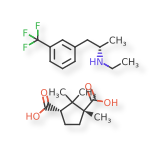
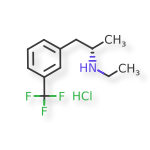
Dexfenfluramine, also marketed under the name Redux, is a serotoninergic anorectic drug. Dexfenfluramine, the dextrorotatory isomer of fenfluramine, is indicated for use in the management of obesity in patients with a body mass index of > or = 30 kg/m2, or > or = 27 kg/m2 in the presence of other risk factors. Unlike fenfluramine, dexfenfluramine is a pure serotonin agonist. Dexfenfluramine increases serotonergic activity by stimulating serotonin (5-hydroxytryptamine; 5-HT) release into brain synapses, inhibiting its reuptake into presynaptic neurons and by directly stimulating postsynaptic serotonin receptors. Dexfenfluramine reduces blood pressure, percent glycosylated hemoglobin, and concentrations of blood glucose and blood lipids, but these benefits may be indirect. Dexfenfluramine may also be of some value in controlling eating habits in diabetic patients, preventing weight gain after smoking cessation, and treating bulimia, seasonal affective disorder, neuroleptic-induced obesity, and premenstrual syndrome. Dexfenfluramine's most frequent adverse effects are insomnia, diarrhea, and headache; it has also been associated with primary pulmonary hypertension. The drug should not be combined with other serotonergic agonists because of the risk of serotonin syndrome. The recommended dosage is 15 mg twice daily. Dexfenfluramine is effective in the treatment of obesity in selected patients. Because its efficacy is lost after six months of continuous treatment, it should be viewed primarily as an adjunct to diet and exercise. Dexfenfluramine was approved by the FDA in 1996 and has been widely used for the treatment of obesity. However, Dexfenfluramine was removed from the U.S. market in 1997 following reports of valvular heart disease and pulmonary hypertension.
Originator
Approval Year
PubMed
| Title | Date | PubMed |
|---|---|---|
| Retest reliability of prolactin response to dl-fenfluramine challenge in adults. | 2002-02 |
|
| Inhibition of cocaine self-administration by fluoxetine or D-fenfluramine combined with phentermine. | 2002-01-29 |
|
| Is long-term heavy alcohol consumption toxic for brain serotonergic neurons? Relationship between years of excessive alcohol consumption and serotonergic neurotransmission. | 2002-01-01 |
|
| Pharmacological studies of the acute effects of (+)-3,4-methylenedioxymethamphetamine on locomotor activity: role of 5-HT(1B/1D) and 5-HT(2) receptors. | 2002-01 |
|
| Anorexigen-induced pulmonary hypertension and the serotonin (5-HT) hypothesis: lessons for the future in pathogenesis. | 2002 |
|
| Aortic and mitral fenfluramine-phentermine valvulopathy in 64 patients treated with anorectic agents. | 2001-12 |
|
| LY393558, a 5-hydroxytryptamine reuptake inhibitor and 5-HT(1B/1D) receptor antagonist: effects on extracellular levels of 5-hydroxytryptamine in the guinea pig and rat. | 2001-11-30 |
|
| MDMA and fenfluramine alter the response of the circadian clock to a serotonin agonist in vitro. | 2001-11-30 |
|
| Fenfluramine and phentermine. | 2001-11-06 |
|
| Fluorometric determination of DL-fenfluramine, DL-norfenfluramine and phentermine in plasma by achiral and chiral high-performance liquid chromatography. | 2001-11-05 |
|
| Clinical and echocardiographic follow-up of patients previously treated with dexfenfluramine or phentermine/fenfluramine. | 2001-11-03 |
|
| Effects of endogenous neurotransmitters on the in vivo binding of dopamine and 5-HT radiotracers in mice. | 2001-11 |
|
| Monoamine oxidase inhibition is unlikely to be relevant to the risks associated with phentermine and fenfluramine: a comparison with their abilities to evoke monoamine release. | 2001-10 |
|
| Operation for anorexigen-associated valvular heart disease. | 2001-10 |
|
| High performance liquid chromatography with UV detection for the simultaneous determination of sympathomimetic amines using 4-(4,5-diphenyl-1H-imidazole-2-yl)benzoyl chloride as a label. | 2001-10 |
|
| Neuroendocrine effects of d-fenfluramine and bromocriptine following repeated smoked cocaine in humans. | 2001-09-01 |
|
| Acute effects of D-fenfluramine on simultaneous measures of aggressive escape and impulsive responses of adult males with and without a history of conduct disorder. | 2001-09 |
|
| Acute anorectic effect of single and combined drugs in mice using a non-deprivation protocol. | 2001-09 |
|
| Risk factors for pulmonary arterial hypertension. | 2001-09 |
|
| The relationship between health-related quality of life and weight loss. | 2001-09 |
|
| Prolactin response to dl-fenfluramine challenge before and after treatment with paroxetine. | 2001-09 |
|
| Relationship between central serotonergic neurotransmission and reduction in alcohol intake by citalopram. | 2001-08-01 |
|
| Neuroendocrine serotonergic and dopaminergic responsivity in male schizophrenic patients during treatment with neuroleptics and after switch to risperidone. | 2001-08 |
|
| Hypothalamo-pituitary-adrenal axis dysfunction in chronic fatigue syndrome, and the effects of low-dose hydrocortisone therapy. | 2001-08 |
|
| Effects of dietary sucrose on hippocampal serotonin release: a microdialysis study in the freely-moving rat. | 2001-08 |
|
| Evidence that hypophagia induced by d-fenfluramine and d-norfenfluramine in the rat is mediated by 5-HT2C receptors. | 2001-08 |
|
| Fenfluramine-induced pulmonary vasoconstriction: role of serotonin receptors and potassium channels. | 2001-08 |
|
| Effect of 5-HT on binding of [(11)C] WAY 100635 to 5-HT(IA) receptors in rat brain, assessed using in vivo microdialysis nd PET after fenfluramine. | 2001-08 |
|
| Pharmacologic options for the treatment of obesity. | 2001-07-15 |
|
| Low risk of significant echocardiographic valvulopathy in patients treated with anorectic drugs. | 2001-07 |
|
| Lack of effect of HPA axis hyperactivity on hormonal responses to d-fenfluramine in major depressed patients: implications for pathogenesis of suicidal behaviour. | 2001-07 |
|
| Prolactin response to d-fenfluramine in postmenopausal women on and off ERT: comparison with young women. | 2001-07 |
|
| Too late, again? | 2001-06-23 |
|
| [Serotonin receptor changes in depression: evidences and limitations]. | 2001-06-20 |
|
| Echocardiographic examination of women previously treated with fenfluramine: long-term follow-up of a randomized, double-blind, placebo-controlled trial. | 2001-06-11 |
|
| Bitter pills, bad medicine. | 2001-06-04 |
|
| "Diet pills" and major depression in the Canadian population. | 2001-06 |
|
| 3,4-Methylenedioxymethamphetamine (MDMA) as a unique model of serotonin receptor function and serotonin-dopamine interactions. | 2001-06 |
|
| Transcranial magnetic stimulation and antidepressive drugs share similar cellular effects in rat hippocampus. | 2001-06 |
|
| Serotonin transporter promoter polymorphism is associated with attenuated prolactin response to fenfluramine. | 2001-05-08 |
|
| By the way, doctor...I used a diet pill--fenfluramine--a few years ago, but stopped as soon as I heard about it causing heart-valve problems. My doctor has been doing echocardiograms on me every six months. So far, everything looks good. How long do you think I need to keep on getting these checkups? | 2001-05 |
|
| Stress hormone dysregulation at rest and after serotonergic stimulation among alcohol-dependent men with extended abstinence and controls. | 2001-05 |
|
| Rapid clot formation and abnormal fibrin structure in a symptomatic patient taking fenfluramine--a case report. | 2001-05 |
|
| Decreased tryptophan availability but normal post-synaptic 5-HT2c receptor sensitivity in chronic fatigue syndrome. | 2001-05 |
|
| Effects of repeated systemic administration of d-Fenfluramine on serotonin and glutamate release in rat ventral hippocampus: comparison with methamphetamine using in vivo microdialysis. | 2001-04 |
|
| The quest for biological correlates of social phobia: an interim assessment. | 2001-04 |
|
| Understanding the neurobiology of suicidal behavior. | 2001 |
|
| Neuroendocrine responses to fenfluramine and its relationship to personality in alcoholism. | 2001 |
|
| High-speed liquid chromatography/tandem mass spectrometry using a monolithic column for high-throughput bioanalysis. | 2001 |
|
| Neurotransmitter and hormonal background of hostility in anorexia nervosa. | 2001 |
Patents
Sample Use Guides
Usual Adult Dose for Weight Loss
15 mg orally twice a day, with meals.
Doses above 30 mg/day are not recommended.
Route of Administration:
Oral
Dexfenfluramine (10(-7)-10(-4) M) caused concentration-dependent contractions in rat and human pulmonary arteries with and without endothelium. In pulmonary arteries of the rat, the response to dexfenfluramine was nearly abolished by treatment with the alpha-adrenoceptor antagonists, phentolamine (10(-6) M) or prazosin (10(-7) M). In human pulmonary arteries, the concentration-response curve to dexfenfluramine was unaltered by the presence of phentolamine (10(-6) M), prazosin (10(-7) M), ketanserin (10(-6) M), or indomethacin (3x10(-6) M).
| Substance Class |
Chemical
Created
by
admin
on
Edited
Mon Mar 31 21:27:22 GMT 2025
by
admin
on
Mon Mar 31 21:27:22 GMT 2025
|
| Record UNII |
E35R3G56OV
|
| Record Status |
Validated (UNII)
|
| Record Version |
|
-
Download
| Name | Type | Language | ||
|---|---|---|---|---|
|
Preferred Name | English | ||
|
Official Name | English | ||
|
Common Name | English | ||
|
Common Name | English | ||
|
Common Name | English | ||
|
Common Name | English | ||
|
Common Name | English | ||
|
Code | English | ||
|
Systematic Name | English | ||
|
Systematic Name | English | ||
|
Systematic Name | English | ||
|
Common Name | English | ||
|
Common Name | English | ||
|
Common Name | English | ||
|
Code | English | ||
|
Common Name | English | ||
|
Common Name | English | ||
|
Brand Name | English | ||
|
Common Name | English |
| Classification Tree | Code System | Code | ||
|---|---|---|---|---|
|
WHO-VATC |
QA08AA04
Created by
admin on Mon Mar 31 21:27:22 GMT 2025 , Edited by admin on Mon Mar 31 21:27:22 GMT 2025
|
||
|
NCI_THESAURUS |
C47794
Created by
admin on Mon Mar 31 21:27:22 GMT 2025 , Edited by admin on Mon Mar 31 21:27:22 GMT 2025
|
||
|
WHO-ATC |
A08AA04
Created by
admin on Mon Mar 31 21:27:22 GMT 2025 , Edited by admin on Mon Mar 31 21:27:22 GMT 2025
|
||
|
DEA NO. |
1670
Created by
admin on Mon Mar 31 21:27:22 GMT 2025 , Edited by admin on Mon Mar 31 21:27:22 GMT 2025
|
||
|
CFR |
21 CFR 216.24
Created by
admin on Mon Mar 31 21:27:22 GMT 2025 , Edited by admin on Mon Mar 31 21:27:22 GMT 2025
|
| Code System | Code | Type | Description | ||
|---|---|---|---|---|---|
|
5220-91-7
Created by
admin on Mon Mar 31 21:27:22 GMT 2025 , Edited by admin on Mon Mar 31 21:27:22 GMT 2025
|
SUPERSEDED | |||
|
439329
Created by
admin on Mon Mar 31 21:27:22 GMT 2025 , Edited by admin on Mon Mar 31 21:27:22 GMT 2025
|
PRIMARY | |||
|
7356
Created by
admin on Mon Mar 31 21:27:22 GMT 2025 , Edited by admin on Mon Mar 31 21:27:22 GMT 2025
|
PRIMARY | |||
|
SUB07028MIG
Created by
admin on Mon Mar 31 21:27:22 GMT 2025 , Edited by admin on Mon Mar 31 21:27:22 GMT 2025
|
PRIMARY | |||
|
100000083203
Created by
admin on Mon Mar 31 21:27:22 GMT 2025 , Edited by admin on Mon Mar 31 21:27:22 GMT 2025
|
PRIMARY | |||
|
DB01191
Created by
admin on Mon Mar 31 21:27:22 GMT 2025 , Edited by admin on Mon Mar 31 21:27:22 GMT 2025
|
PRIMARY | |||
|
DTXSID001025754
Created by
admin on Mon Mar 31 21:27:22 GMT 2025 , Edited by admin on Mon Mar 31 21:27:22 GMT 2025
|
PRIMARY | |||
|
D020372
Created by
admin on Mon Mar 31 21:27:22 GMT 2025 , Edited by admin on Mon Mar 31 21:27:22 GMT 2025
|
PRIMARY | |||
|
m5274
Created by
admin on Mon Mar 31 21:27:22 GMT 2025 , Edited by admin on Mon Mar 31 21:27:22 GMT 2025
|
PRIMARY | Merck Index | ||
|
CHEMBL248702
Created by
admin on Mon Mar 31 21:27:22 GMT 2025 , Edited by admin on Mon Mar 31 21:27:22 GMT 2025
|
PRIMARY | |||
|
66265
Created by
admin on Mon Mar 31 21:27:22 GMT 2025 , Edited by admin on Mon Mar 31 21:27:22 GMT 2025
|
PRIMARY | |||
|
832
Created by
admin on Mon Mar 31 21:27:22 GMT 2025 , Edited by admin on Mon Mar 31 21:27:22 GMT 2025
|
PRIMARY | |||
|
3239-44-9
Created by
admin on Mon Mar 31 21:27:22 GMT 2025 , Edited by admin on Mon Mar 31 21:27:22 GMT 2025
|
PRIMARY | |||
|
3268
Created by
admin on Mon Mar 31 21:27:22 GMT 2025 , Edited by admin on Mon Mar 31 21:27:22 GMT 2025
|
PRIMARY | RxNorm | ||
|
C83665
Created by
admin on Mon Mar 31 21:27:22 GMT 2025 , Edited by admin on Mon Mar 31 21:27:22 GMT 2025
|
PRIMARY | |||
|
DEXFENFLURAMINE
Created by
admin on Mon Mar 31 21:27:22 GMT 2025 , Edited by admin on Mon Mar 31 21:27:22 GMT 2025
|
PRIMARY | |||
|
5818
Created by
admin on Mon Mar 31 21:27:22 GMT 2025 , Edited by admin on Mon Mar 31 21:27:22 GMT 2025
|
PRIMARY | |||
|
5220-90-6
Created by
admin on Mon Mar 31 21:27:22 GMT 2025 , Edited by admin on Mon Mar 31 21:27:22 GMT 2025
|
SUPERSEDED | |||
|
E35R3G56OV
Created by
admin on Mon Mar 31 21:27:22 GMT 2025 , Edited by admin on Mon Mar 31 21:27:22 GMT 2025
|
PRIMARY |
| Related Record | Type | Details | ||
|---|---|---|---|---|
|
OFF-TARGET->AGONIST |
5-HT2B receptors, which were subsequently identified as the target for cardiac valvulopathy and pulmonary hypertension. Release of serotonin leads to 5-HT2B signaling.
|
||
|
|
SALT/SOLVATE -> PARENT |
|
||
|
|
TARGET -> ACTIVATOR |
STIMULATES THE RELEASE OF SEROTONIN RESULTS IN APPETITE SUPPRESSION; LEAD TO 6-16 FOLD INCREASE IN SEROTONIN IN THE HYPOTHALMUS
|
||
|
BINDER->LIGAND |
BINDING
|
||
|
|
SALT/SOLVATE -> PARENT |
|


| Related Record | Type | Details | ||
|---|---|---|---|---|
|
|
METABOLITE TOXIC -> PARENT |
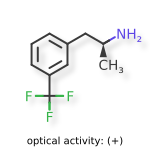
DF itself binds only weakly to the 5-HT2A, 5-HT2B, and 5-HT2C receptors, its primary metabolite, N-des-ethyl-DF (norDF, Figure 2), is a high-affinity 5-HT2B ligand with selectivity relative to 5-HT2A and 5-HT2C (5-HT2B Ki = 11.2 ± 4.3 nM). May be responsible for valvular heart disease (VHD).
|
| Related Record | Type | Details | ||
|---|---|---|---|---|
|
|
ACTIVE MOIETY |
|