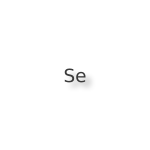
Details
| Stereochemistry | ACHIRAL |
| Molecular Formula | Se |
| Molecular Weight | 78.96 |
| Optical Activity | NONE |
| Defined Stereocenters | 0 / 0 |
| E/Z Centers | 0 |
| Charge | 0 |
SHOW SMILES / InChI
SMILES
[Se]
InChI
InChIKey=SPVXKVOXSXTJOY-UHFFFAOYSA-N
InChI=1S/H2Se/h1H2
| Molecular Formula | Se |
| Molecular Weight | 78.96 |
| Charge | 0 |
| Count |
|
| Stereochemistry | ACHIRAL |
| Additional Stereochemistry | No |
| Defined Stereocenters | 0 / 0 |
| E/Z Centers | 0 |
| Optical Activity | NONE |
Selenium (Se) is mineral that is found in soil and occurs naturally in certain foods (such as whole grains, Brazil nuts, sunflower seeds, and seafood). Selenium, which is nutritionally essential for humans, is a constituent of more than two dozen selenoproteins that play critical roles in reproduction, thyroid hormone metabolism, DNA synthesis, and protection from oxidative damage and infection. Selenium is used to treat or prevent selenium deficiency. Selenium deficiency produces biochemical changes that might predispose people who experience additional stresses to develop certain illnesses. For example, selenium deficiency in combination with a second stress (possibly a viral infection) leads to Keshan disease, a cardiomyopathy that occurred in parts of China prior to a government-sponsored selenium supplementation program that began in the 1970s. Before the Chinese government supplementation program, adults in the Keshan disease areas had average selenium intakes of no more than 11 mcg/day; intakes of at least 20 mcg/day protect adults from Keshan disease. Selenium has been used in alternative medicine as an aid to treat Hashimoto's thyroiditis, and to treat high cholesterol. Selenium is an important enzyme in the prevention of cellular damage by free radicals and reactive oxygen species. Selenium is first metabolized to selenophosphate and selenocysteine. Selenium incorporation is genetically encoded through the RNA sequence UGA. This sequence is recognized by RNA ste loop structures called selenocysteine inserting sequences (SECIS). These structures require the binding of SECIS binding proteins (SBP-2) to recognize selenocystiene. The specialized tRNA is first bound to a serine residue which is then enzymatically processed to a selylcysteyl-tRNA by selenocystiene sythase using selenophosphate as a selenium donor. Other unidentified proteins are required as part of the binding of this tRNA to the ribosome. Numerous studies in animal models and more recent studies in humans have demonstrated cancer chemopreventive effects with Se. There is extensive evidence that monomethylated forms of Se are critical metabolites for chemopreventive effects of Se. Induction of apoptosis in transformed cells is an important chemopreventive mechanism. Apoptosis can be triggered by micromolar levels of monomethylated forms of Se independent of DNA damage and in cells having a null p53 phenotype. Cell cycle protein kinase cdk2 and protein kinase C are strongly inhibited by various forms of Se. Inhibitory mechanisms involving modification of cysteine residues in proteins by Se have been proposed that involve formation of Se adducts of the selenotrisulfide (S-Se-S) or selenenylsulfide (S-Se) type or catalysis of disulfide formation. Selenium may facilitate reactions of protein cysteine residues by the transient formation of more reactive S-Se intermediates. A novel chemopreventive mechanism is proposed involving Se catalysis of reversible cysteine/disulfide transformations that occur in a number of redox-regulated proteins, including transcription factors. A time-limited activation mechanism for such proteins, with deactivation facilitated by Se, would allow normalization of critical cellular processes in the early stages of transformation. Randomized controlled trials of selenium supplementation for cancer prevention have yielded conflicting results. In 2003, the FDA allowed a qualified health claim on foods and dietary supplements containing selenium to state that while “some scientific evidence suggests that consumption of selenium may reduce the risk of certain forms of cancer… FDA has determined that this evidence is limited and not conclusive”. Selenium is available in multivitamin/multimineral supplements and as a stand-alone supplement, often in the forms of selenomethionine or of selenium-enriched yeast (grown in a high-selenium medium) or as sodium selenite or sodium selenate.
Approval Year
PubMed
| Title | Date | PubMed |
|---|---|---|
| Paraquat-induced oxidative stress and dysfunction of cellular redox systems including antioxidative defense enzymes glutathione peroxidase and thioredoxin reductase. | 2007-04 |
|
| Differential regulation of expression of cytosolic and mitochondrial thioredoxin reductase in rat liver and kidney. | 2007-03-15 |
|
| Occurrence of selenoprotein enzyme activities and mRNA in bovine mammary tissue. | 2007-02 |
|
| Selenium and sulforaphane modify the expression of selenoenzymes in the human endothelial cell line EAhy926 and protect cells from oxidative damage. | 2007-02 |
|
| Effect of selenium-deficient diet on tubular epithelium in normal rats. | 2007-02 |
|
| Effects of selenium supplementation on expression of glutathione peroxidase isoforms in cultured human lung adenocarcinoma cell lines. | 2007-01 |
|
| Micronutrients in African-Americans with decompensated and compensated heart failure. | 2006-12 |
|
| Deletion of selenoprotein P upregulates urinary selenium excretion and depresses whole-body selenium content. | 2006-12 |
|
| Selenium-dependent pre- and posttranscriptional mechanisms are responsible for sexual dimorphic expression of selenoproteins in murine tissues. | 2006-12 |
|
| Hypercholesterolemia and LDL receptor mRNA expression: modulation by selenium supplementation. | 2006-10 |
|
| Arsenic-induced changes in optic tectal histoarchitecture and acetylcholinesterase-acetylcholine profile in Channa punctatus: amelioration by selenium. | 2006-09 |
|
| Effect of selenium intake and fetal age on mRNA levels of two selenoproteins in porcine fetal and maternal liver. | 2006-09 |
|
| Synergistic regulation of endothelial tight junctions by antioxidant (Se) and polyunsaturated lipid (GLA) via Claudin-5 modulation. | 2006-08-01 |
|
| Effect of selenium supplementation on activity and mRNA expression of type 1 deiodinase in mice with excessive iodine intake. | 2006-08 |
|
| Modulation of hypercholesterolemia-induced alterations in apolipoprotein B and HMG-CoA reductase expression by selenium supplementation. | 2006-05-15 |
|
| Selenium binding protein 1 in ovarian cancer. | 2006-05-15 |
|
| Lipid peroxidation and antioxidant enzymes in children on maintenance dialysis. | 2006-05 |
|
| Mechanisms of selenium down-regulation of androgen receptor signaling in prostate cancer. | 2006-04 |
|
| T-2 toxin induces apoptosis, and selenium partly blocks, T-2 toxin induced apoptosis in chondrocytes through modulation of the Bax/Bcl-2 ratio. | 2006-04 |
|
| Differential effects of dietary selenium (se) and folate on methyl metabolism in liver and colon of rats. | 2006-03 |
|
| Thioredoxin reductase regulates the induction of haem oxygenase-1 expression in aortic endothelial cells. | 2006-02-15 |
|
| [Effects of selenium on expression of TERT, c-Myc and p53 induced by cadmium in rat liver]. | 2006-01 |
|
| Attenuation of LDL receptor gene expression by selenium deficiency during hypercholesterolemia. | 2006-01 |
|
| Hypercholesterolemia and tissue-specific differential mRNA expression of type-1 5'-iodothyronine deiodinase under different selenium status in rats. | 2006 |
|
| Effect of selenium on Cisplatin-induced nephrotoxicity in rats. | 2006 |
|
| A nutritional supplement formula for influenza A (H5N1) infection in humans. | 2006 |
|
| Selenoprotein deficiency and high levels of selenium compounds can effectively inhibit hepatocarcinogenesis in transgenic mice. | 2005-12-01 |
|
| Hypercholesterolemia and apolipoprotein B expression: regulation by selenium status. | 2005-11-05 |
|
| Effects of gpx4 haploid insufficiency on GPx4 activity, selenium concentration, and paraquat-induced protein oxidation in murine tissues. | 2005-11 |
|
| A randomized, double-blind placebo-controlled trial evaluating the effects of vitamin E and selenium on arsenic-induced skin lesions in Bangladesh. | 2005-10 |
|
| [Effect of selenium on expression of P38 mitogen-activated protein kinase and monocyte chemoattractant protein-1 in diabetic endothelial cells]. | 2005-09 |
|
| Lethal cardiomyopathy in epidermolysis bullosa associated with amitriptyline. | 2005-08 |
|
| [Effect of high-iodine intake on MBP mRNA expression in cerebrum of filial mice and selenium intervention]. | 2005-07 |
|
| Selenium impacts on razorback sucker, Colorado: Colorado River III. Larvae. | 2005-06 |
|
| Selenoprotein W as molecular target of methylmercury in human neuronal cells is down-regulated by GSH depletion. | 2005-05-20 |
|
| Effect of selenium on expression of selenoproteins in mouse fibrosarcoma cells. | 2005-05 |
|
| Epithelium-specific glutathione peroxidase, Gpx2, is involved in the prevention of intestinal inflammation in selenium-deficient mice. | 2005-04 |
|
| Sulforaphane, erucin, and iberin up-regulate thioredoxin reductase 1 expression in human MCF-7 cells. | 2005-03-09 |
|
| Hepatically derived selenoprotein P is a key factor for kidney but not for brain selenium supply. | 2005-03-01 |
|
| Effects of dietary selenium on post-ischemic expression of antioxidant mRNA. | 2005-02 |
|
| Effects of Se-depletion on glutathione peroxidase and selenoprotein W gene expression in the colon. | 2005-01-31 |
|
| Functional characteristics of NaS2, a placenta-specific Na+-coupled transporter for sulfate and oxyanions of the micronutrients selenium and chromium. | 2005-01-25 |
|
| [Regulatory effects of micronutrient complex on the expression of Th1 and Th2 cytokines in diabetic C57BL mice]. | 2005-01 |
|
| Type 2 iodothyronine selenodeiodinase is expressed throughout the mouse skeleton and in the MC3T3-E1 mouse osteoblastic cell line during differentiation. | 2005-01 |
|
| The relationship between trace elements and cardiac markers in acute coronary syndromes. | 2005 |
|
| Overexpression of enzymatically active human cytosolic and mitochondrial thioredoxin reductase in HEK-293 cells. Effect on cell growth and differentiation. | 2004-12-24 |
|
| Cross-species global and subset gene expression profiling identifies genes involved in prostate cancer response to selenium. | 2004-08-20 |
|
| Selenium diet-supplementation improves cocaine-induced myocardial oxidative stress and prevents cardiac dysfunction in rats. | 2004-08 |
|
| Osteopontin is a potential target gene in mouse mammary cancer chemoprevention by Se-methylselenocysteine. | 2004 |
|
| Cephaloridine nephrotoxicity is potentiated by selenium deficiency but not copper deficiency in rats. | 1992-06 |
Sample Use Guides
Dosing: Adult
Parenteral nutrition additive (Vanek 2012): IV: 60 to 100 mcg/day
Deficiency from prolonged parenteral nutrition: IV: 100 mcg/day
Dosing: Pediatric
Adequate intake (AI) (IOM, 2000): Oral:
1 to 6 months: 15 mcg/day
7 to 12 months: 20 mcg/day
Recommended daily allowance (RDA) (IOM, 2000): Oral:
1 to 3 years: 20 mcg/day
4 to 8 years: 30 mcg/day
9 to 13 years 40 mcg/day
14 to 18 years: 55 mcg/day
Parenteral nutrition, maintenance requirement: IV: Infants, Children, and Adolescents:
Manufacturer's labeling: 3 mcg/kg/day; maximum daily dose: 40 mcg/day
ASPEN recommendations:
Age-directed dosing (Vanek, 2012): Infants, Children, and Adolescents: 1 to 3 mcg/kg/day; maximum daily dose: 100 mcg/day
Weight-directed dosing (ASPEN Pediatric Nutrition Support Core Curriculum [Corkins, 2010]; Mirtallo, 2004):
Infants <10 kg: 2 mcg/kg/day
Children 10 to 40 kg: 1 to 2 mcg/kg/day; maximum daily dose: 60 mcg/day
Adolescents >40 kg: 40 to 60 mcg/day
Dietary Considerations
Dietary adequate intake (AI): Note: Breast milk, formula, and food should be the only sources of selenium for infants (NIH 2016)
1 to 6 months: 15 mcg/day
7 to 12 months: 20 mcg/day
Dietary recommended daily allowance (RDA) (IOM 2000):
1 to 3 years: 20 mcg/day
4 to 8 years: 30 mcg/day
9 to 13 years: 40 mcg/day
≥14 years: 55 mcg/day
Pregnancy: 60 mcg/day
Lactation: 70 mcg/day
Route of Administration:
Other
| Substance Class |
Chemical
Created
by
admin
on
Edited
Mon Mar 31 18:26:17 GMT 2025
by
admin
on
Mon Mar 31 18:26:17 GMT 2025
|
| Record UNII |
H6241UJ22B
|
| Record Status |
Validated (UNII)
|
| Record Version |
|
-
Download
| Name | Type | Language | ||
|---|---|---|---|---|
|
Preferred Name | English | ||
|
Systematic Name | English | ||
|
Common Name | English | ||
|
Common Name | English | ||
|
Common Name | English | ||
|
Common Name | English | ||
|
Common Name | English | ||
|
Brand Name | English | ||
|
Common Name | English | ||
|
Common Name | English | ||
|
Common Name | English | ||
|
Code | English | ||
|
Common Name | English | ||
|
Common Name | English | ||
|
Common Name | English | ||
|
Brand Name | English |
| Classification Tree | Code System | Code | ||
|---|---|---|---|---|
|
LOINC |
78696-2
Created by
admin on Mon Mar 31 18:26:17 GMT 2025 , Edited by admin on Mon Mar 31 18:26:17 GMT 2025
|
||
|
EPA PESTICIDE CODE |
72001
Created by
admin on Mon Mar 31 18:26:17 GMT 2025 , Edited by admin on Mon Mar 31 18:26:17 GMT 2025
|
||
|
DSLD |
147 (Number of products:6361)
Created by
admin on Mon Mar 31 18:26:17 GMT 2025 , Edited by admin on Mon Mar 31 18:26:17 GMT 2025
|
||
|
WHO-VATC |
QA12CE99
Created by
admin on Mon Mar 31 18:26:17 GMT 2025 , Edited by admin on Mon Mar 31 18:26:17 GMT 2025
|
||
|
CFR |
21 CFR 520.2100
Created by
admin on Mon Mar 31 18:26:17 GMT 2025 , Edited by admin on Mon Mar 31 18:26:17 GMT 2025
|
||
|
NCI_THESAURUS |
C1940
Created by
admin on Mon Mar 31 18:26:17 GMT 2025 , Edited by admin on Mon Mar 31 18:26:17 GMT 2025
|
||
|
CFR |
21 CFR 522.2100
Created by
admin on Mon Mar 31 18:26:17 GMT 2025 , Edited by admin on Mon Mar 31 18:26:17 GMT 2025
|
||
|
WHO-ATC |
D11AC03
Created by
admin on Mon Mar 31 18:26:17 GMT 2025 , Edited by admin on Mon Mar 31 18:26:17 GMT 2025
|
| Code System | Code | Type | Description | ||
|---|---|---|---|---|---|
|
4493
Created by
admin on Mon Mar 31 18:26:17 GMT 2025 , Edited by admin on Mon Mar 31 18:26:17 GMT 2025
|
PRIMARY | |||
|
231-957-4
Created by
admin on Mon Mar 31 18:26:17 GMT 2025 , Edited by admin on Mon Mar 31 18:26:17 GMT 2025
|
PRIMARY | |||
|
9641
Created by
admin on Mon Mar 31 18:26:17 GMT 2025 , Edited by admin on Mon Mar 31 18:26:17 GMT 2025
|
PRIMARY | RxNorm | ||
|
H6241UJ22B
Created by
admin on Mon Mar 31 18:26:17 GMT 2025 , Edited by admin on Mon Mar 31 18:26:17 GMT 2025
|
PRIMARY | |||
|
7782-49-2
Created by
admin on Mon Mar 31 18:26:17 GMT 2025 , Edited by admin on Mon Mar 31 18:26:17 GMT 2025
|
PRIMARY | |||
|
DTXSID9021261
Created by
admin on Mon Mar 31 18:26:17 GMT 2025 , Edited by admin on Mon Mar 31 18:26:17 GMT 2025
|
PRIMARY | |||
|
C825
Created by
admin on Mon Mar 31 18:26:17 GMT 2025 , Edited by admin on Mon Mar 31 18:26:17 GMT 2025
|
PRIMARY | |||
|
6326970
Created by
admin on Mon Mar 31 18:26:17 GMT 2025 , Edited by admin on Mon Mar 31 18:26:17 GMT 2025
|
PRIMARY | |||
|
SUB130911
Created by
admin on Mon Mar 31 18:26:17 GMT 2025 , Edited by admin on Mon Mar 31 18:26:17 GMT 2025
|
ALTERNATIVE | |||
|
SUB15210MIG
Created by
admin on Mon Mar 31 18:26:17 GMT 2025 , Edited by admin on Mon Mar 31 18:26:17 GMT 2025
|
PRIMARY | |||
|
27568
Created by
admin on Mon Mar 31 18:26:17 GMT 2025 , Edited by admin on Mon Mar 31 18:26:17 GMT 2025
|
PRIMARY | |||
|
DB11135
Created by
admin on Mon Mar 31 18:26:17 GMT 2025 , Edited by admin on Mon Mar 31 18:26:17 GMT 2025
|
PRIMARY | |||
|
D012643
Created by
admin on Mon Mar 31 18:26:17 GMT 2025 , Edited by admin on Mon Mar 31 18:26:17 GMT 2025
|
PRIMARY | |||
|
m9838
Created by
admin on Mon Mar 31 18:26:17 GMT 2025 , Edited by admin on Mon Mar 31 18:26:17 GMT 2025
|
PRIMARY | Merck Index | ||
|
100000091750
Created by
admin on Mon Mar 31 18:26:17 GMT 2025 , Edited by admin on Mon Mar 31 18:26:17 GMT 2025
|
PRIMARY | |||
|
Selenium
Created by
admin on Mon Mar 31 18:26:17 GMT 2025 , Edited by admin on Mon Mar 31 18:26:17 GMT 2025
|
PRIMARY | |||
|
H6241UJ22B
Created by
admin on Mon Mar 31 18:26:17 GMT 2025 , Edited by admin on Mon Mar 31 18:26:17 GMT 2025
|
PRIMARY |
| Related Record | Type | Details | ||
|---|---|---|---|---|
|
PARENT -> CONSTITUENT ALWAYS PRESENT |
SELENIUM (ng/cigarette)
Imported = 110.5 SD(?)
|

| Related Record | Type | Details | ||
|---|---|---|---|---|
|
METABOLITE -> PARENT |
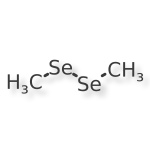
volatile selenium metabolite
|
| Related Record | Type | Details | ||
|---|---|---|---|---|
|
|
ACTIVE MOIETY |