


Details
| Stereochemistry | RACEMIC |
| Molecular Formula | C18H22ClNO |
| Molecular Weight | 303.826 |
| Optical Activity | ( + / - ) |
| Defined Stereocenters | 0 / 1 |
| E/Z Centers | 0 |
| Charge | 0 |
SHOW SMILES / InChI
SMILES
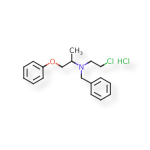
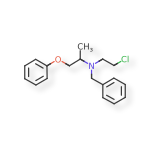
CC(COC1=CC=CC=C1)N(CCCl)CC2=CC=CC=C2
InChI
InChIKey=QZVCTJOXCFMACW-UHFFFAOYSA-N
InChI=1S/C18H22ClNO/c1-16(15-21-18-10-6-3-7-11-18)20(13-12-19)14-17-8-4-2-5-9-17/h2-11,16H,12-15H2,1H3
| Molecular Formula | C18H22ClNO |
| Molecular Weight | 303.826 |
| Charge | 0 |
| Count |
|
| Stereochemistry | RACEMIC |
| Additional Stereochemistry | No |
| Defined Stereocenters | 0 / 1 |
| E/Z Centers | 0 |
| Optical Activity | ( + / - ) |
DescriptionCurator's Comment: description was created based on several sources, including
https://www.ncbi.nlm.nih.gov/pubmed/11395517
Curator's Comment: description was created based on several sources, including
https://www.ncbi.nlm.nih.gov/pubmed/11395517
Phenoxybenzamin (marketed under the trade name Dibenzyline) is an alpha-adrenergic antagonist with long duration of action. It is indicated in the treatment of pheochromocytoma, to control episodes of hypertension and sweating. If tachycardia is excessive, it may be necessary to use a beta-blocking agent concomitantly. Phenoxybenzamine produces its therapeutic actions by blocking alpha receptors, leading to a muscle relaxation and a widening of the blood vessels. This widening of the blood vessels results in a lowering of blood pressure. Phenoxybenzamine hydrochloride can produce and maintain “chemical sympathectomy” by oral administration. It increases blood flow to the skin, mucosa and abdominal viscera, and lowers both supine and erect blood pressures. It has no effect on the parasympathetic system. Twenty to percent of orally administered phenoxybenzamine appears to be absorbed in the active form. The half-life of orally administered phenoxybenzamine hydrochloride is not known; however, the half-life of intravenously administered drug is approximately 24 hours. Demonstrable effects with intravenous administration persist for at least 3 to 4 days, and the effects of daily administration are cumulative for nearly a week. The following adverse reactions have been observed, but there are insufficient data to support an estimate of their frequency: Postural hypotension, tachycardia, inhibition of ejaculation, nasal congestion, and miosis. These so-called “side effects” are actually evidence of adrenergic blockade and vary according to the degree of blockade. Miscellaneous: Gastrointestinal irritation, drowsiness, fatigue.
CNS Activity
Approval Year
Targets
| Primary Target | Pharmacology | Condition | Potency |
|---|---|---|---|
Target ID: CHEMBL2095203 |
Conditions
| Condition | Modality | Targets | Highest Phase | Product |
|---|---|---|---|---|
| Palliative | DIBENZYLINE Approved UseINDICATION AND USAGE Phenoxybenzamine hydrochloride is indicated in the treatment of pheochromocytoma, to control episodes of hypertension and sweating. If tachycardia is excessive, it may be necessary to use a beta-blocking agent concomitantly. Launch Date1953 |
Cmax
| Value | Dose | Co-administered | Analyte | Population |
|---|---|---|---|---|
3332.3 pg/mL |
10 mg single, oral dose: 10 mg route of administration: Oral experiment type: SINGLE co-administered: |
PHENOXYBENZAMINE plasma | Homo sapiens population: HEALTHY age: ADULT sex: FEMALE / MALE food status: FASTED |
AUC
| Value | Dose | Co-administered | Analyte | Population |
|---|---|---|---|---|
3746.5 pg × h/mL |
10 mg single, oral dose: 10 mg route of administration: Oral experiment type: SINGLE co-administered: |
PHENOXYBENZAMINE plasma | Homo sapiens population: HEALTHY age: ADULT sex: FEMALE / MALE food status: FASTED |
T1/2
| Value | Dose | Co-administered | Analyte | Population |
|---|---|---|---|---|
1.54 h |
10 mg single, oral dose: 10 mg route of administration: Oral experiment type: SINGLE co-administered: |
PHENOXYBENZAMINE plasma | Homo sapiens population: HEALTHY age: ADULT sex: FEMALE / MALE food status: FASTED |
Doses
| Dose | Population | Adverse events |
|---|---|---|
40 mg 3 times / day multiple, oral Recommended Dose: 40 mg, 3 times / day Route: oral Route: multiple Dose: 40 mg, 3 times / day Sources: |
unhealthy Health Status: unhealthy Sources: |
Other AEs: Hypotension, Tachycardia... Other AEs: Hypotension Sources: Tachycardia |
AEs
| AE | Significance | Dose | Population |
|---|---|---|---|
| Hypotension | 40 mg 3 times / day multiple, oral Recommended Dose: 40 mg, 3 times / day Route: oral Route: multiple Dose: 40 mg, 3 times / day Sources: |
unhealthy Health Status: unhealthy Sources: |
|
| Tachycardia | 40 mg 3 times / day multiple, oral Recommended Dose: 40 mg, 3 times / day Route: oral Route: multiple Dose: 40 mg, 3 times / day Sources: |
unhealthy Health Status: unhealthy Sources: |
Overview
| CYP3A4 | CYP2C9 | CYP2D6 | hERG |
|---|---|---|---|
OverviewOther
| Other Inhibitor | Other Substrate | Other Inducer |
|---|---|---|
Drug as perpetrator
| Target | Modality | Activity | Metabolite | Clinical evidence |
|---|---|---|---|---|
| no [IC50 >100 uM] | ||||
| yes [Activation 28.1838 uM] | ||||
| yes [IC50 2.72 uM] | ||||
| yes [IC50 4.9 uM] | ||||
| yes [IC50 6.13 uM] | ||||
| yes | ||||
| yes | ||||
| yes | ||||
| yes | ||||
| yes | ||||
| yes | ||||
| yes |
PubMed
| Title | Date | PubMed |
|---|---|---|
| Role of alpha-adrenergic receptors in the effect of the beta-adrenergic receptor ligands, CGP 12177, bupranolol, and SR 59230A, on the contraction of rat intrapulmonary artery. | 2004-04 |
|
| Medicinal plants in Suriname: hypotensive effect of Gossypium barbadense. | 2004-03 |
|
| Alteration of the critical arteriovenous oxygen saturation relationship by sustained afterload reduction after the Norwood procedure. | 2004-03 |
|
| Involvement of different receptors in pituitary adenylate cyclase activating polypeptide induced open field activity in rats. | 2004-02 |
|
| Pheochromocytoma and pregnancy: a case report and review of anesthetic management. | 2004-02 |
|
| Release and functional role of neuropeptide Y as a sympathetic modulator in human saphenous vein biopsies. | 2004-01 |
|
| Effect of moderate pressure distention on the human saphenous vein vasomotor function. | 2004-01 |
|
| Increased reactivity of murine mesenteric veins to adrenergic agonists: functional evidence supporting increased alpha1-adrenoceptor reserve in veins compared with arteries. | 2004-01 |
|
| Norepinephrine release is reduced by I(1)-receptors in addition to alpha(2)-adrenoceptors. | 2003-12 |
|
| Comparative efficacies and durations of action of phenoxybenzamine, verapamil/nitroglycerin solution, and papaverine as topical antispasmodics for radial artery coronary bypass grafting. | 2003-12 |
|
| Remifentanil in the management of laparoscopic resection of phaeochromocytoma--case reports. | 2003-11 |
|
| Pretreatment with phenoxybenzamine attenuates the radial artery's vasoconstrictor response to alpha-adrenergic stimuli. | 2003-11 |
|
| Involvement of transmitters in pituitary adenylate cyclase-activating polypeptide-induced hyperthermia. | 2003-10-15 |
|
| Photoperiod modulates the effects of norepinephrine on lymphocyte proliferation in Siberian hamsters. | 2003-10 |
|
| One hundred years of adrenaline. | 2003-08 |
|
| Phenoxybenzamine treatment is insufficient to prevent spasm in the radial artery: the effect of other vasodilators. | 2003-08 |
|
| Phaeochromocytoma--views on current management. | 2003-08 |
|
| The role of alpha1D-adrenoceptors in prostatic contraction examined using protection studies. | 2003-07-18 |
|
| Neurotransmitter release in an arterial preparation and the action of alpha-adrenoceptor antagonists. | 2003-07-18 |
|
| Functional characterisation of alpha(1)-adrenoceptors in denervated rat vas deferens. | 2003-07 |
|
| Functional characterization of alpha-adrenoceptors mediating pupillary dilation in rats. | 2003-06-20 |
|
| Elevation of the nasal mucosal surface temperature after warming of the feet occurs via a neural reflex. | 2003-06 |
|
| Studies of alpha-adrenoceptor antagonists on sympathetic mydriasis in rabbits. | 2003-06 |
|
| Pheochromocytoma unmasked by imipramine in an 8-year-old girl. | 2003-06 |
|
| Biochemical diagnosis of pheochromocytoma: how to distinguish true- from false-positive test results. | 2003-06 |
|
| Expression of glycerokinase in brown adipose tissue is stimulated by the sympathetic nervous system. | 2003-06 |
|
| Intrinsic regulation of CGRP release by dental pulp sympathetic fibers. | 2003-05 |
|
| Mechanisms involved in the pressor response to noradrenaline injection into the cingulate cortex of unanesthetized rats. | 2003-05 |
|
| [Haematemesis and dysphagia in a 20-year-old woman with congenital spine malformation and situs inversus partialis]. | 2003-04 |
|
| Characterization of adrenoceptor involvement in skeletal and cardiac myotoxicity Induced by sympathomimetic agents: toward a new bioassay for beta-blockers. | 2003-04 |
|
| Dual effect of agmatine in the bisected rat vas deferens. | 2003-03 |
|
| Modification of noradrenaline release in pithed spontaneously hypertensive rats by I1-binding sites in addition to alpha2-adrenoceptors. | 2003-03 |
|
| Use of a 'hospital-at-home' service for patient optimization before resection of phaeochromocytoma. | 2003-03 |
|
| Contractile actions of imidazoline alpha-adrenoceptor agonists and effects of noncompetitive alpha1-adrenoceptor antagonists in human vas deferens. | 2003-02-21 |
|
| Transmitter characteristics of cutaneous, renal and skeletal muscle small arteries in the rat. | 2003-02 |
|
| The vasodilatory effects of hydralazine, nicardipine, nitroglycerin, and fenoldopam in the human umbilical artery. | 2003-02 |
|
| Urethral pressure profile and hemodynamic effects of phenoxybenzamine and prazosin in non-sedated male beagle dogs. | 2003-01 |
|
| Serotonin 5-hydroxytryptamine 2A receptor-coupled phospholipase C and phospholipase A2 signaling pathways have different receptor reserves. | 2003-01 |
|
| Atrial supersensitivity to noradrenaline in stressed female rats. | 2002-11-08 |
|
| Analgesia in phasic and tonic pain tests in a pharmacological model of autotomy. | 2002-11 |
|
| Motilin regulates interdigestive gastric blood flow in dogs. | 2002-11 |
|
| Alpha blockade in preoperative preparation of patients with pheochromocytomas. | 2002-10-31 |
|
| Pheochromocytoma: an approach to antihypertensive management. | 2002-09 |
|
| [Results of surgical treatment of pheochromocytoma at the Institute of Endocrinology of the Clinical Center of Serbia in Belgrade]. | 2002-07 |
|
| Amplifying effect of the selective calmodulin antagonist, calmidazolium, on the potency of nifedipine to inhibit alpha 1D-adrenoceptor-mediated contraction in the rat aorta. | 2002 |
|
| [Prevention and release of epidural-morphine-induced urinary retention with phenoxybenzamine and neostigmine]. | 2000-12 |
|
| [Comparison of selective alpha-1 blockades for alpha-receptors in human hypertrophied prostatic adenomas]. | 1992-03 |
|
| Evidence for antagonistic activity of endothelin for clonidine induced hypotension and bradycardia. | 1992 |
|
| [Effects of 2-(4-benzyl-piperidino)-1-(4-hydroxyphenyl)-1-propanol (ifenprodil) on the cardiovascular system in vivo]. | 1975-09 |
|
| THE EFFECT OF L-3, 4-DIHYDROXYPHENYLALANINE AND DL-5-HYDROXYTRYPTOPHAN ON RIGIDITY AND TREMOR INDUCED BY RESERPINE, CHLORPROMAZINE AND PHENOXYBENZAMINE. | 1964-04 |
Patents
Sample Use Guides
Initially, 10 mg twice a day. Dosage should be increased every other day, usually to 20 to 40 mg 2 or 3 times a day, until an optimal dosage is obtained, as judged by blood pressure control.
Route of Administration:
Oral
In Vitro Use Guide
Curator's Comment: Phenoxybenzamine hydrochloride (PHEN) exhibited a significant inhibitory effect on the proliferation of both U251 and U87MG glioma cell lines in a positive dose-dependent manner. PHEN apparently attenuated the malignancy of glioma in terms of migration and invasion and also suppressed the tumorigenic capacity both in vitro and in vivo. Mechanism study showed that PHEN promoted tumor suppression by inhibiting the TrkB-Akt pathway. The results of the present study demonstrated that PHEN suppressed the proliferation, migration, invasion, and tumorigenesis of glioma cells, induced LINGO-1 expression, and inhibited the TrkB-Akt pathway, which may prove to be the mechanisms underlying the anti-tumor effect of PHEN on glioma cells.
Unknown
| Substance Class |
Chemical
Created
by
admin
on
Edited
Wed Apr 02 08:33:18 GMT 2025
by
admin
on
Wed Apr 02 08:33:18 GMT 2025
|
| Record UNII |
0TTZ664R7Z
|
| Record Status |
Validated (UNII)
|
| Record Version |
|
-
Download
| Name | Type | Language | ||
|---|---|---|---|---|
|
Preferred Name | English | ||
|
Official Name | English | ||
|
Common Name | English | ||
|
Common Name | English | ||
|
Common Name | English | ||
|
Common Name | English | ||
|
Common Name | English | ||
|
Systematic Name | English | ||
|
Systematic Name | English | ||
|
Common Name | English | ||
|
Common Name | English | ||
|
Systematic Name | English | ||
|
Common Name | English | ||
|
Common Name | English | ||
|
Systematic Name | English | ||
|
Common Name | English | ||
|
Systematic Name | English | ||
|
Common Name | English |
| Classification Tree | Code System | Code | ||
|---|---|---|---|---|
|
NDF-RT |
N0000000099
Created by
admin on Wed Apr 02 08:33:18 GMT 2025 , Edited by admin on Wed Apr 02 08:33:18 GMT 2025
|
||
|
WHO-ATC |
C04AX02
Created by
admin on Wed Apr 02 08:33:18 GMT 2025 , Edited by admin on Wed Apr 02 08:33:18 GMT 2025
|
||
|
NDF-RT |
N0000175553
Created by
admin on Wed Apr 02 08:33:18 GMT 2025 , Edited by admin on Wed Apr 02 08:33:18 GMT 2025
|
||
|
WHO-VATC |
QC04AX02
Created by
admin on Wed Apr 02 08:33:18 GMT 2025 , Edited by admin on Wed Apr 02 08:33:18 GMT 2025
|
||
|
NCI_THESAURUS |
C29713
Created by
admin on Wed Apr 02 08:33:18 GMT 2025 , Edited by admin on Wed Apr 02 08:33:18 GMT 2025
|
||
|
NCI_THESAURUS |
C45178
Created by
admin on Wed Apr 02 08:33:18 GMT 2025 , Edited by admin on Wed Apr 02 08:33:18 GMT 2025
|
| Code System | Code | Type | Description | ||
|---|---|---|---|---|---|
|
8149
Created by
admin on Wed Apr 02 08:33:18 GMT 2025 , Edited by admin on Wed Apr 02 08:33:18 GMT 2025
|
PRIMARY | RxNorm | ||
|
608
Created by
admin on Wed Apr 02 08:33:18 GMT 2025 , Edited by admin on Wed Apr 02 08:33:18 GMT 2025
|
PRIMARY | |||
|
4768
Created by
admin on Wed Apr 02 08:33:18 GMT 2025 , Edited by admin on Wed Apr 02 08:33:18 GMT 2025
|
PRIMARY | |||
|
102737-84-8
Created by
admin on Wed Apr 02 08:33:18 GMT 2025 , Edited by admin on Wed Apr 02 08:33:18 GMT 2025
|
SUPERSEDED | |||
|
D010643
Created by
admin on Wed Apr 02 08:33:18 GMT 2025 , Edited by admin on Wed Apr 02 08:33:18 GMT 2025
|
PRIMARY | |||
|
4005
Created by
admin on Wed Apr 02 08:33:18 GMT 2025 , Edited by admin on Wed Apr 02 08:33:18 GMT 2025
|
PRIMARY | |||
|
CHEMBL753
Created by
admin on Wed Apr 02 08:33:18 GMT 2025 , Edited by admin on Wed Apr 02 08:33:18 GMT 2025
|
PRIMARY | |||
|
200-446-8
Created by
admin on Wed Apr 02 08:33:18 GMT 2025 , Edited by admin on Wed Apr 02 08:33:18 GMT 2025
|
PRIMARY | |||
|
SUB09778MIG
Created by
admin on Wed Apr 02 08:33:18 GMT 2025 , Edited by admin on Wed Apr 02 08:33:18 GMT 2025
|
PRIMARY | |||
|
PHENOXYBENZAMINE
Created by
admin on Wed Apr 02 08:33:18 GMT 2025 , Edited by admin on Wed Apr 02 08:33:18 GMT 2025
|
PRIMARY | |||
|
DB00925
Created by
admin on Wed Apr 02 08:33:18 GMT 2025 , Edited by admin on Wed Apr 02 08:33:18 GMT 2025
|
PRIMARY | |||
|
m8638
Created by
admin on Wed Apr 02 08:33:18 GMT 2025 , Edited by admin on Wed Apr 02 08:33:18 GMT 2025
|
PRIMARY | Merck Index | ||
|
2136
Created by
admin on Wed Apr 02 08:33:18 GMT 2025 , Edited by admin on Wed Apr 02 08:33:18 GMT 2025
|
PRIMARY | |||
|
100000082260
Created by
admin on Wed Apr 02 08:33:18 GMT 2025 , Edited by admin on Wed Apr 02 08:33:18 GMT 2025
|
PRIMARY | |||
|
7268
Created by
admin on Wed Apr 02 08:33:18 GMT 2025 , Edited by admin on Wed Apr 02 08:33:18 GMT 2025
|
PRIMARY | |||
|
C62065
Created by
admin on Wed Apr 02 08:33:18 GMT 2025 , Edited by admin on Wed Apr 02 08:33:18 GMT 2025
|
PRIMARY | |||
|
59-96-1
Created by
admin on Wed Apr 02 08:33:18 GMT 2025 , Edited by admin on Wed Apr 02 08:33:18 GMT 2025
|
PRIMARY | |||
|
DTXSID0023458
Created by
admin on Wed Apr 02 08:33:18 GMT 2025 , Edited by admin on Wed Apr 02 08:33:18 GMT 2025
|
PRIMARY | |||
|
0TTZ664R7Z
Created by
admin on Wed Apr 02 08:33:18 GMT 2025 , Edited by admin on Wed Apr 02 08:33:18 GMT 2025
|
PRIMARY | |||
|
0TTZ664R7Z
Created by
admin on Wed Apr 02 08:33:18 GMT 2025 , Edited by admin on Wed Apr 02 08:33:18 GMT 2025
|
PRIMARY |
| Related Record | Type | Details | ||
|---|---|---|---|---|
|
TRANSPORTER -> INHIBITOR | |||
|
TRANSPORTER -> INHIBITOR | |||
|
|
SALT/SOLVATE -> PARENT | |||
|
TRANSPORTER -> INHIBITOR |

| Related Record | Type | Details | ||
|---|---|---|---|---|
|
|
ACTIVE MOIETY |
| Name | Property Type | Amount | Referenced Substance | Defining | Parameters | References |
|---|---|---|---|---|---|---|
| Biological Half-life | PHARMACOKINETIC |
|