


Details
| Stereochemistry | RACEMIC |
| Molecular Formula | C17H27N3O4S |
| Molecular Weight | 369.479 |
| Optical Activity | ( + / - ) |
| Defined Stereocenters | 0 / 1 |
| E/Z Centers | 0 |
| Charge | 0 |
SHOW SMILES / InChI
SMILES
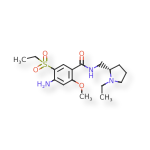
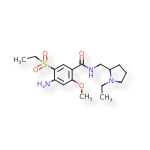
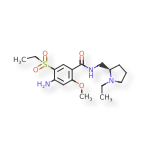
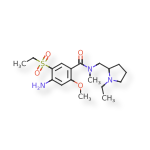
CCN1CCCC1CNC(=O)C2=CC(=C(N)C=C2OC)S(=O)(=O)CC
InChI
InChIKey=NTJOBXMMWNYJFB-UHFFFAOYSA-N
InChI=1S/C17H27N3O4S/c1-4-20-8-6-7-12(20)11-19-17(21)13-9-16(25(22,23)5-2)14(18)10-15(13)24-3/h9-10,12H,4-8,11,18H2,1-3H3,(H,19,21)
| Molecular Formula | C17H27N3O4S |
| Molecular Weight | 369.479 |
| Charge | 0 |
| Count |
|
| Stereochemistry | RACEMIC |
| Additional Stereochemistry | No |
| Defined Stereocenters | 0 / 1 |
| E/Z Centers | 0 |
| Optical Activity | ( + / - ) |
DescriptionCurator's Comment: Description was created based on several sources, including https://www.ncbi.nlm.nih.gov/pubmed/8996185 | https://www.ncbi.nlm.nih.gov/pubmed/19337725 | https://www.ncbi.nlm.nih.gov/pubmed/11735643
Curator's Comment: Description was created based on several sources, including https://www.ncbi.nlm.nih.gov/pubmed/8996185 | https://www.ncbi.nlm.nih.gov/pubmed/19337725 | https://www.ncbi.nlm.nih.gov/pubmed/11735643
Amisulpride, a benzamide derivative, shows a unique therapeutic profile being atypical antipsychotic. At low doses, it enhances dopaminergic neurotransmission by preferentially blocking presynaptic dopamine D2/D3 autoreceptors. At higher doses, amisupride antagonises postsynaptic dopamine D2 and D3 receptors, preferentially in the limbic system rather than the striatum, thereby reducing dopaminergic transmission. In addition its antagonism at serotonin 5-HT7 receptors likely underlies the antidepressant actions. Amisulpride is approved for clinical use in treating schizophrenia in a number of European countries and also for treating dysthymia, a mild form of depression, in Italy.
Originator
Approval Year
Targets
| Primary Target | Pharmacology | Condition | Potency |
|---|---|---|---|
Target ID: P41597 Gene ID: 729230.0 Gene Symbol: CCR2 Target Organism: Homo sapiens (Human) |
360.0 nM [IC50] | ||
Target ID: P35348|||B0ZBD9|||Q6RUJ8 Gene ID: 148.0 Gene Symbol: ADRA1A Target Organism: Homo sapiens (Human) |
130.0 nM [IC50] | ||
Target ID: P25100 Gene ID: 146.0 Gene Symbol: ADRA1D Target Organism: Homo sapiens (Human) |
320.0 nM [IC50] | ||
Target ID: CHEMBL273 |
470.0 nM [IC50] | ||
Target ID: CHEMBL217 |
2.8 nM [Ki] | ||
Target ID: CHEMBL234 |
3.2 nM [Ki] | ||
Target ID: CHEMBL3155 |
11.5 nM [Ki] | ||
Target ID: CHEMBL1833 |
13.0 nM [Ki] |
Conditions
| Condition | Modality | Targets | Highest Phase | Product |
|---|---|---|---|---|
| Primary | SOLIAN Approved UseAmisulpride is indicated for the treatment of acute and chronic schizophrenic disorders, in which positive symptoms (such as delusions, hallucinations, thought disorders) and/or negative symptoms (such as blunted affect, emotional and social withdrawal) are prominent, including patients characterised by predominant negative symptoms. |
Cmax
| Value | Dose | Co-administered | Analyte | Population |
|---|---|---|---|---|
586.3 ng/mL EXPERIMENT https://www.ncbi.nlm.nih.gov/pubmed/28793958 |
200 mg single, oral dose: 200 mg route of administration: Oral experiment type: SINGLE co-administered: |
AMISULPRIDE plasma | Homo sapiens population: HEALTHY age: ADULT sex: FEMALE / MALE food status: FASTED |
AUC
| Value | Dose | Co-administered | Analyte | Population |
|---|---|---|---|---|
5043.2 ng × h/mL EXPERIMENT https://www.ncbi.nlm.nih.gov/pubmed/28793958 |
200 mg single, oral dose: 200 mg route of administration: Oral experiment type: SINGLE co-administered: |
AMISULPRIDE plasma | Homo sapiens population: HEALTHY age: ADULT sex: FEMALE / MALE food status: FASTED |
T1/2
| Value | Dose | Co-administered | Analyte | Population |
|---|---|---|---|---|
11.7 h |
50 mg single, oral dose: 50 mg route of administration: Oral experiment type: SINGLE co-administered: |
AMISULPRIDE plasma | Homo sapiens population: HEALTHY age: ADULT sex: UNKNOWN food status: UNKNOWN |
Doses
| Dose | Population | Adverse events |
|---|---|---|
6 g single, oral Overdose |
unhealthy, 29 years (range: 23-40 years) Health Status: unhealthy Age Group: 29 years (range: 23-40 years) Sex: M+F Sources: |
Other AEs: QT interval prolonged, Tachycardia... Other AEs: QT interval prolonged (64%) Sources: Tachycardia (23%) |
6 g single, oral Overdose |
unhealthy, 29 years (range: 23-40 years) Health Status: unhealthy Age Group: 29 years (range: 23-40 years) Sex: M+F Sources: |
Other AEs: Bradycardia, Dystonic reaction... Other AEs: Bradycardia (24%) Sources: Dystonic reaction (2 patients) |
80 g single, oral Overdose |
unhealthy, 29 years (range: 23-40 years) Health Status: unhealthy Age Group: 29 years (range: 23-40 years) Sex: M+F Sources: |
Other AEs: Torsades de pointes... |
20 mg single, intravenous Highest studied dose Dose: 20 mg Route: intravenous Route: single Dose: 20 mg Sources: |
unhealthy |
|
200 mg single, oral Highest studied dose |
healthy |
|
1200 mg single, oral Overdose Dose: 1200 mg Route: oral Route: single Dose: 1200 mg Sources: |
unhealthy Health Status: unhealthy Sources: |
Other AEs: Extrapyramidal disorder... Other AEs: Extrapyramidal disorder Sources: |
3000 mg single, oral Overdose |
unhealthy |
Other AEs: Hyperthermia, Mydriasis... Other AEs: Hyperthermia (1 patient) Sources: Mydriasis (1 patient) Coma (1 patient) Seizures (1 patient) |
AEs
| AE | Significance | Dose | Population |
|---|---|---|---|
| Tachycardia | 23% | 6 g single, oral Overdose |
unhealthy, 29 years (range: 23-40 years) Health Status: unhealthy Age Group: 29 years (range: 23-40 years) Sex: M+F Sources: |
| QT interval prolonged | 64% | 6 g single, oral Overdose |
unhealthy, 29 years (range: 23-40 years) Health Status: unhealthy Age Group: 29 years (range: 23-40 years) Sex: M+F Sources: |
| Dystonic reaction | 2 patients | 6 g single, oral Overdose |
unhealthy, 29 years (range: 23-40 years) Health Status: unhealthy Age Group: 29 years (range: 23-40 years) Sex: M+F Sources: |
| Bradycardia | 24% | 6 g single, oral Overdose |
unhealthy, 29 years (range: 23-40 years) Health Status: unhealthy Age Group: 29 years (range: 23-40 years) Sex: M+F Sources: |
| Torsades de pointes | 7% | 80 g single, oral Overdose |
unhealthy, 29 years (range: 23-40 years) Health Status: unhealthy Age Group: 29 years (range: 23-40 years) Sex: M+F Sources: |
| Extrapyramidal disorder | 1200 mg single, oral Overdose Dose: 1200 mg Route: oral Route: single Dose: 1200 mg Sources: |
unhealthy Health Status: unhealthy Sources: |
|
| Coma | 1 patient | 3000 mg single, oral Overdose |
unhealthy |
| Hyperthermia | 1 patient | 3000 mg single, oral Overdose |
unhealthy |
| Mydriasis | 1 patient | 3000 mg single, oral Overdose |
unhealthy |
| Seizures | 1 patient | 3000 mg single, oral Overdose |
unhealthy |
Overview
| CYP3A4 | CYP2C9 | CYP2D6 | hERG |
|---|---|---|---|
OverviewOther
| Other Inhibitor | Other Substrate | Other Inducer |
|---|---|---|
Drug as perpetrator
| Target | Modality | Activity | Metabolite | Clinical evidence |
|---|---|---|---|---|
| no [IC50 46.1 uM] | ||||
| no [IC50 >100 uM] | ||||
| no [IC50 >100 uM] | ||||
| no | ||||
| no | ||||
| no | ||||
| no | ||||
| no | ||||
| no | ||||
| no | ||||
| no | ||||
| no | ||||
| no | ||||
| no | ||||
| no | ||||
| weak [Inhibition 100 uM] | ||||
| weak [Inhibition 100 uM] | ||||
| yes [IC50 10.1 uM] | ||||
| yes [IC50 16.1 uM] | ||||
| yes |
Drug as victim
| Target | Modality | Activity | Metabolite | Clinical evidence |
|---|---|---|---|---|
| no | ||||
| no | ||||
| no | ||||
| no | ||||
| no | ||||
| no | ||||
| no | ||||
| no | ||||
| no | ||||
| no | ||||
| no | ||||
| no | ||||
| no | ||||
| no | ||||
| weak | ||||
| yes | ||||
| yes | ||||
| yes |
Tox targets
| Target | Modality | Activity | Metabolite | Clinical evidence |
|---|---|---|---|---|
PubMed
| Title | Date | PubMed |
|---|---|---|
| Prolactinemia is uncoupled from central D2/D3 dopamine receptor occupancy in amisulpride treated patients. | 2004-09 |
|
| Evidence-based pharmacotherapy of schizophrenia. | 2004-06 |
|
| Successful treatment of Tourette's disorder with amisulpride. | 2004-05 |
|
| Amisulpride is an "atypical" antipsychotic associated with low weight gain. | 2004-04 |
|
| Dopaminergic receptors in rat dura mater: pharmacological characteristics. | 2004-03 |
|
| Dosage finding and outcome in the treatment of schizophrenic inpatients with amisulpride. Results of a drug utilization observation study. | 2004-03 |
|
| Lower risk for tardive dyskinesia associated with second-generation antipsychotics: a systematic review of 1-year studies. | 2004-03 |
|
| How do we choose between atypical antipsychotics? The advantages of amisulpride. | 2004-03 |
|
| Amisulpride a selective dopamine antagonist and atypical antipsychotic: results of a meta-analysis of randomized controlled trials. | 2004-03 |
|
| Combination of amisulpride and olanzapine in treatment-resistant schizophrenic psychoses. | 2004-02 |
|
| Combination of clozapine and amisulpride in treatment-resistant schizophrenia--case reports and review of the literature. | 2004-01 |
|
| Characterization of the effects of receptor-selective ligands in rats discriminating the novel antipsychotic quetiapine. | 2004-01 |
|
| Adverse metabolic effects associated with atypical antipsychotics: literature review and clinical implications. | 2004 |
|
| Quetiapine. A review of its use in the management of schizophrenia. | 2004 |
|
| How does the benzamide antipsychotic amisulpride get into the brain?--An in vitro approach comparing amisulpride with clozapine. | 2003-11 |
|
| The antinociceptive effect of amisulpride in mice is mediated through opioid mechanisms. | 2003-10-08 |
|
| Metabolic drug interactions with new psychotropic agents. | 2003-10 |
|
| Amisulpride: limbic specificity and the mechanism of antipsychotic atypicality. | 2003-10 |
|
| Response of catatonic schizophrenia to amisulpride: a case report. | 2003-09 |
|
| Analysis of eighteen antidepressants, four atypical antipsychotics and active metabolites in serum by liquid chromatography: a simple tool for therapeutic drug monitoring. | 2003-08-25 |
|
| Is regionally selective D2/D3 dopamine occupancy sufficient for atypical antipsychotic effect? an in vivo quantitative [123I]epidepride SPET study of amisulpride-treated patients. | 2003-08 |
|
| Rapid high-performance liquid chromatographic measurement of amisulpride in human plasma: application to manage acute intoxication. | 2003-06-05 |
|
| Lack of effect of amisulpride on the pharmacokinetics and safety of lithium. | 2003-06 |
|
| A meta-analysis of the efficacy of second-generation antipsychotics. | 2003-06 |
|
| New generation antipsychotics versus low-potency conventional antipsychotics: a systematic review and meta-analysis. | 2003-05-10 |
|
| [Plasma prolactin level and incidence of adverse endocrinologic effects during therapy with atypical neuroleptics]. | 2003-05 |
|
| The new and evolving pharmacotherapy of schizophrenia. | 2003-03 |
|
| Screening, library-assisted identification and validated quantification of fifteen neuroleptics and three of their metabolites in plasma by liquid chromatography/mass spectrometry with atmospheric pressure chemical ionization. | 2003-03 |
|
| Automated determination of amisulpride by liquid chromatography with column switching and spectrophotometric detection. | 2003-02-05 |
|
| Which neuroleptic would psychiatrists take for themselves or their relatives? | 2003-02 |
|
| Respective roles of dopamine D2 and D3 receptors in food-seeking behaviour in rats. | 2003-02 |
|
| Amisulpride versus risperidone in the treatment of schizophrenic patients: a double-blind pilot study in Taiwan. | 2003-01 |
|
| [Frontal dysfunctions in Huntington's disease -- neuropsychology and therapy]. | 2003-01 |
|
| Quantification of D2-like dopamine receptors in the human brain with 18F-desmethoxyfallypride. | 2003-01 |
|
| New generation antipsychotics for first episode schizophrenia. | 2003 |
|
| Benefits and risks of pharmacotherapy for dysthymia: a systematic appraisal of the evidence. | 2003 |
|
| Dopaminergic deficit and the role of amisulpride in the treatment of schizophrenia. | 2002-12 |
|
| Dopaminergic deficit and the role of amisulpride in the treatment of mood disorders. | 2002-12 |
|
| Liver function tests during treatment with antipsychotic drugs: a case series of 23 patients. | 2002-12 |
|
| Effects of amisulpride on consummatory negative contrast. | 2002-12 |
|
| Amisulpride vs. risperidone in chronic schizophrenia: results of a 6-month double-blind study. | 2002-12 |
|
| Dose-related effects of amisulpride on five dimensions of psychopathology in patients with acute exacerbation of schizophrenia. | 2002-12 |
|
| Discriminative stimulus properties in rats of the novel antipsychotic quetiapine. | 2002-11 |
|
| A comparison of paroxetine versus paroxetine plus amisulpride in the treatment of dysthymic disorder: efficacy and psychosocial outcomes. | 2002-10-10 |
|
| Amisulpride: is there a treatment for negative symptoms in schizophrenia patients? | 2002 |
|
| A double-blind, randomised comparative trial of amisulpride versus olanzapine in the treatment of schizophrenia: short-term results at two months. | 2002 |
|
| Switching to amisulpride. | 2002 |
|
| Amisulpride: progress and outcomes. | 2002 |
|
| Clinical implications of dopamine research in schizophrenia. | 2002 |
|
| Pharmacology of human dopamine D3 receptor expressed in a mammalian cell line: comparison with D2 receptor. | 1992-04-10 |
Patents
Sample Use Guides
For acute psychotic episodes, oral doses between 400 mg/d and 800 mg/d are recommended. In individual cases, the daily dose may be increased up to 1200 mg/d. Doses above 1200 mg/d have not been extensively evaluated for safety and therefore should not be used. Doses above 800 mg/d have not been shown to be superior to lower doses and may increase the incidence of adverse events. No specific titration is required when initiating the treatment with amisulpride. Doses should be adjusted according to individual response.
Route of Administration:
Oral
| Substance Class |
Chemical
Created
by
admin
on
Edited
Wed Apr 02 09:13:21 GMT 2025
by
admin
on
Wed Apr 02 09:13:21 GMT 2025
|
| Record UNII |
8110R61I4U
|
| Record Status |
Validated (UNII)
|
| Record Version |
|
-
Download
| Name | Type | Language | ||
|---|---|---|---|---|
|
Preferred Name | English | ||
|
Official Name | English | ||
|
Common Name | English | ||
|
Code | English | ||
|
Brand Name | English | ||
|
Systematic Name | English | ||
|
Brand Name | English | ||
|
Code | English | ||
|
Common Name | English | ||
|
Code | English | ||
|
Brand Name | English | ||
|
Code | English | ||
|
Common Name | English | ||
|
Common Name | English | ||
|
Brand Name | English | ||
|
Common Name | English | ||
|
Common Name | English | ||
|
Common Name | English | ||
|
Common Name | English | ||
|
Common Name | English |
| Classification Tree | Code System | Code | ||
|---|---|---|---|---|
|
NCI_THESAURUS |
C66883
Created by
admin on Wed Apr 02 09:13:21 GMT 2025 , Edited by admin on Wed Apr 02 09:13:21 GMT 2025
|
||
|
WHO-VATC |
QN05AL05
Created by
admin on Wed Apr 02 09:13:21 GMT 2025 , Edited by admin on Wed Apr 02 09:13:21 GMT 2025
|
||
|
WHO-ATC |
N05AL05
Created by
admin on Wed Apr 02 09:13:21 GMT 2025 , Edited by admin on Wed Apr 02 09:13:21 GMT 2025
|
| Code System | Code | Type | Description | ||
|---|---|---|---|---|---|
|
SUB05458MIG
Created by
admin on Wed Apr 02 09:13:21 GMT 2025 , Edited by admin on Wed Apr 02 09:13:21 GMT 2025
|
PRIMARY | |||
|
8110R61I4U
Created by
admin on Wed Apr 02 09:13:21 GMT 2025 , Edited by admin on Wed Apr 02 09:13:21 GMT 2025
|
PRIMARY | |||
|
4960
Created by
admin on Wed Apr 02 09:13:21 GMT 2025 , Edited by admin on Wed Apr 02 09:13:21 GMT 2025
|
PRIMARY | |||
|
FG-201
Created by
admin on Wed Apr 02 09:13:21 GMT 2025 , Edited by admin on Wed Apr 02 09:13:21 GMT 2025
|
PRIMARY | |||
|
C83533
Created by
admin on Wed Apr 02 09:13:21 GMT 2025 , Edited by admin on Wed Apr 02 09:13:21 GMT 2025
|
PRIMARY | |||
|
64045
Created by
admin on Wed Apr 02 09:13:21 GMT 2025 , Edited by admin on Wed Apr 02 09:13:21 GMT 2025
|
PRIMARY | |||
|
AMISULPRIDE
Created by
admin on Wed Apr 02 09:13:21 GMT 2025 , Edited by admin on Wed Apr 02 09:13:21 GMT 2025
|
PRIMARY | |||
|
DB06288
Created by
admin on Wed Apr 02 09:13:21 GMT 2025 , Edited by admin on Wed Apr 02 09:13:21 GMT 2025
|
PRIMARY | |||
|
CHEMBL243712
Created by
admin on Wed Apr 02 09:13:21 GMT 2025 , Edited by admin on Wed Apr 02 09:13:21 GMT 2025
|
PRIMARY | |||
|
m1751
Created by
admin on Wed Apr 02 09:13:21 GMT 2025 , Edited by admin on Wed Apr 02 09:13:21 GMT 2025
|
PRIMARY | Merck Index | ||
|
71675-85-9
Created by
admin on Wed Apr 02 09:13:21 GMT 2025 , Edited by admin on Wed Apr 02 09:13:21 GMT 2025
|
PRIMARY | |||
|
8110R61I4U
Created by
admin on Wed Apr 02 09:13:21 GMT 2025 , Edited by admin on Wed Apr 02 09:13:21 GMT 2025
|
PRIMARY | |||
|
275-831-7
Created by
admin on Wed Apr 02 09:13:21 GMT 2025 , Edited by admin on Wed Apr 02 09:13:21 GMT 2025
|
PRIMARY | |||
|
100000087234
Created by
admin on Wed Apr 02 09:13:21 GMT 2025 , Edited by admin on Wed Apr 02 09:13:21 GMT 2025
|
PRIMARY | |||
|
179
Created by
admin on Wed Apr 02 09:13:21 GMT 2025 , Edited by admin on Wed Apr 02 09:13:21 GMT 2025
|
PRIMARY | |||
|
963
Created by
admin on Wed Apr 02 09:13:21 GMT 2025 , Edited by admin on Wed Apr 02 09:13:21 GMT 2025
|
PRIMARY | |||
|
2159
Created by
admin on Wed Apr 02 09:13:21 GMT 2025 , Edited by admin on Wed Apr 02 09:13:21 GMT 2025
|
PRIMARY | |||
|
46303
Created by
admin on Wed Apr 02 09:13:21 GMT 2025 , Edited by admin on Wed Apr 02 09:13:21 GMT 2025
|
PRIMARY | RxNorm | ||
|
Amisulpride
Created by
admin on Wed Apr 02 09:13:21 GMT 2025 , Edited by admin on Wed Apr 02 09:13:21 GMT 2025
|
PRIMARY | |||
|
DTXSID5042613
Created by
admin on Wed Apr 02 09:13:21 GMT 2025 , Edited by admin on Wed Apr 02 09:13:21 GMT 2025
|
PRIMARY | |||
|
760085
Created by
admin on Wed Apr 02 09:13:21 GMT 2025 , Edited by admin on Wed Apr 02 09:13:21 GMT 2025
|
PRIMARY |
| Related Record | Type | Details | ||
|---|---|---|---|---|
|
|
ENANTIOMER -> RACEMATE | |||
|
TARGET->ANTAGONIST |
SELECTIVE
|
||
|
TRANSPORTER -> INHIBITOR | |||
|
TRANSPORTER -> SUBSTRATE | |||
|
TRANSPORTER -> SUBSTRATE | |||
|
TARGET->ANTAGONIST |
ANTAGONIST
Ki
|
||
|
TRANSPORTER -> INHIBITOR | |||
|
EXCRETED UNCHANGED |
AMOUNT EXCRETED
URINE
|
||
|
|
ENANTIOMER -> RACEMATE | |||
|
BINDER->LIGAND |
Plasma protein binding is 25% to 30% in the concentration range from 37 to 1850 ng/mL.
BINDING
|
||
|
EXCRETED UNCHANGED |
AMOUNT EXCRETED
FECAL
|
||
|
TRANSPORTER -> SUBSTRATE | |||
|
METABOLIC ENZYME -> SUBSTRATE | |||
|
METABOLIC ENZYME -> SUBSTRATE |


| Related Record | Type | Details | ||
|---|---|---|---|---|
|
|
IMPURITY -> PARENT |
| Related Record | Type | Details | ||
|---|---|---|---|---|
|
|
ACTIVE MOIETY |
| Name | Property Type | Amount | Referenced Substance | Defining | Parameters | References |
|---|---|---|---|---|---|---|
| Volume of Distribution | PHARMACOKINETIC |
|
FOLLOWING INTRAVENOUS INFUSION |
|
||
| Volume of Distribution | PHARMACOKINETIC |
|
IN SURGICAL PATIENTS |
|
||
| Biological Half-life | PHARMACOKINETIC |
|
IN HEALTHY SUBJECTS AND SURGICAL PATIENTS |
|
||