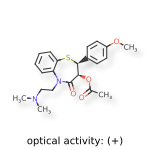
Details
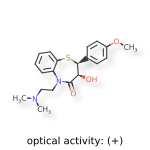
| Stereochemistry | ABSOLUTE |
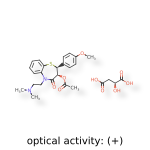
| Molecular Formula | C22H26N2O4S |
| Molecular Weight | 414.518 |
| Optical Activity | ( + ) |
| Defined Stereocenters | 2 / 2 |
| E/Z Centers | 0 |
| Charge | 0 |
SHOW SMILES / InChI
SMILES
COC1=CC=C(C=C1)[C@@H]2SC3=CC=CC=C3N(CCN(C)C)C(=O)[C@@H]2OC(C)=O
InChI
InChIKey=HSUGRBWQSSZJOP-RTWAWAEBSA-N
InChI=1S/C22H26N2O4S/c1-15(25)28-20-21(16-9-11-17(27-4)12-10-16)29-19-8-6-5-7-18(19)24(22(20)26)14-13-23(2)3/h5-12,20-21H,13-14H2,1-4H3/t20-,21+/m1/s1
| Molecular Formula | C22H26N2O4S |
| Molecular Weight | 414.518 |
| Charge | 0 |
| Count |
|
| Stereochemistry | ABSOLUTE |
| Additional Stereochemistry | No |
| Defined Stereocenters | 2 / 2 |
| E/Z Centers | 0 |
| Optical Activity | UNSPECIFIED |
Diltiazem is a nondihydropyridines calcium channel blocker used in the treatment of hypertension, angina pectoris, and some types of arrhythmia. Diltiazem produces its antihypertensive effect primarily by relaxation of vascular smooth muscle and the resultant decrease in peripheral vascular resistance.
CNS Activity
Originator
Approval Year
Targets
| Primary Target | Pharmacology | Condition | Potency |
|---|---|---|---|
Target ID: CHEMBL2095229 |
21.0 nM [Ki] |
Conditions
| Condition | Modality | Targets | Highest Phase | Product |
|---|---|---|---|---|
| Primary | CARDIZEM Approved UseDiltiazem produces its antihypertensive effect primarily by relaxation of vascular smooth muscle and the resultant decrease in peripheral vascular resistance. The magnitude of blood pressure reduction is related to the degree of hypertension; thus hypertensive individuals experience an antihypertensive effect, whereas there is only a modest fall in blood pressure in normotensives. Launch Date1982 |
|||
| Primary | CARDIZEM Approved UseDiltiazem has been shown to produce increases in exercise tolerance, probably due to its ability to reduce myocardial oxygen demand. This is accomplished via reductions in heart rate and systemic blood pressure at submaximal and maximal work loads. Diltiazem has been shown to be a potent dilator of coronary arteries, both epicardial and subendocardial. Spontaneous and ergonovine-induced coronary artery spasm are inhibited by diltiazem. Launch Date1982 |
Cmax
| Value | Dose | Co-administered | Analyte | Population |
|---|---|---|---|---|
166.4 ng/mL EXPERIMENT https://www.ncbi.nlm.nih.gov/pubmed/11329099 |
240 mg 1 times / day steady-state, oral dose: 240 mg route of administration: Oral experiment type: STEADY-STATE co-administered: |
DILTIAZEM plasma | Homo sapiens population: HEALTHY age: ADULT sex: MALE food status: UNKNOWN |
AUC
| Value | Dose | Co-administered | Analyte | Population |
|---|---|---|---|---|
2410 ng × h/mL EXPERIMENT https://www.ncbi.nlm.nih.gov/pubmed/11329099 |
240 mg 1 times / day steady-state, oral dose: 240 mg route of administration: Oral experiment type: STEADY-STATE co-administered: |
DILTIAZEM plasma | Homo sapiens population: HEALTHY age: ADULT sex: MALE food status: UNKNOWN |
T1/2
| Value | Dose | Co-administered | Analyte | Population |
|---|---|---|---|---|
7.5 h |
360 mg single, oral dose: 360 mg route of administration: Oral experiment type: SINGLE co-administered: |
DILTIAZEM plasma | Homo sapiens population: UNHEALTHY age: ADULT sex: UNKNOWN food status: FASTED |
Funbound
| Value | Dose | Co-administered | Analyte | Population |
|---|---|---|---|---|
25% |
360 mg single, oral dose: 360 mg route of administration: Oral experiment type: SINGLE co-administered: |
DILTIAZEM plasma | Homo sapiens population: UNHEALTHY age: ADULT sex: UNKNOWN food status: FASTED |
Overview
| CYP3A4 | CYP2C9 | CYP2D6 | hERG |
|---|---|---|---|
Drug as perpetrator
| Target | Modality | Activity | Metabolite | Clinical evidence |
|---|---|---|---|---|
| weak | ||||
| yes [IC50 0.6 uM] | ||||
| yes [IC50 11 uM] | ||||
| yes [IC50 120 uM] | yes (co-administration study) Comment: Diltiazem is an inhibitor of CYP3A4 and has been shown to increase significantly the AUC of some statins. |
|||
| yes [Ki 117 uM] | ||||
| yes [Ki 12.5 uM] | ||||
| yes [Ki 77.7 uM] |
Drug as victim
| Target | Modality | Activity | Metabolite | Clinical evidence |
|---|---|---|---|---|
| major | ||||
| no | no (pharmacogenomic study) Comment: results suggest that CYP3A5*3 has only a minor effect on the pharmacokinetics and metabolism of diltiazem |
|||
| yes | ||||
| yes | ||||
| yes | weak (pharmacogenomic study) Comment: Two of the most frequent alleles, CYP3A5 3 and CYP2D6 10, among Chinese do not have major impacts on the disposition of diltiazem and N-desmethyl diltiazem. However, the desacetyl diltiazem showed 2-fold accumulation in individuals with CYP2D6 10/10 genotype |
Tox targets
| Target | Modality | Activity | Metabolite | Clinical evidence |
|---|---|---|---|---|
PubMed
| Title | Date | PubMed |
|---|---|---|
| Protein kinase C activates store-operated Ca(2+) channels in human glomerular mesangial cells. | 2001-07-13 |
|
| An alternative method to the evaluation of similarity factor in dissolution testing. | 2001-06-04 |
|
| Na+ effects on mitochondrial respiration and oxidative phosphorylation in diabetic hearts. | 2001-06 |
|
| Amiodarone versus diltiazem for rate control in critically ill patients with atrial tachyarrhythmias. | 2001-06 |
|
| Electrophysiological characteristics of rat gustatory cyclic nucleotide--gated channel expressed in Xenopus oocytes. | 2001-06 |
|
| Photostability and phototoxicity studies on diltiazem. | 2001-06 |
|
| Analysis of multicomponent formulations containing phenylpropanolamine hydrochloride, caffeine and diazepam by using LC. | 2001-06 |
|
| Adsorptive stripping voltammetric determination of antihypertensive agent: diltiazem. | 2001-06 |
|
| cAMP modulates the excitability of immortalized H=hypothalamic (GT1) neurons via a cyclic nucleotide gated channel. | 2001-06 |
|
| Smooth muscle relaxation and local hydraulic impedance properties of the aorta. | 2001-06 |
|
| Calcium signaling pathways utilized by P2X receptors in freshly isolated preglomerular MVSMC. | 2001-06 |
|
| Contraction of human colonic circular smooth muscle cells is inhibited by the calcium channel blocker pinaverium bromide. | 2001-06 |
|
| [Attempted suicide with sustained release diltiazem]. | 2001-05-12 |
|
| Design and evaluation of microcapsules of diltiazem hydrochloride. | 2001-05-08 |
|
| Heart rate-lowering calcium antagonists in hypertensive post-myocardial infarction patients. | 2001-05 |
|
| Inhibitory effects of TA-993 and its metabolite MB3 on platelet activation induced by collagen and U-46619 in human platelets. | 2001-05 |
|
| Dilitiazem reduces nitric oxide production by human immune cells. | 2001-05 |
|
| Randomized trial of rhythm or rate control in atrial fibrillation: the Pharmacological Intervention in Atrial Fibrillation Trial (PIAF). | 2001-05 |
|
| Diltiazem treatment does not alter renal function after thoracic surgery. | 2001-05 |
|
| Calcium-channel antagonists and nitrates in coronary artery bypass patients receiving radial artery grafts. | 2001-05 |
|
| Trimetazidine for stable angina pectoris. | 2001-05 |
|
| Ca2+-dependent exocytosis of L-glutamate by alphaTC6, clonal mouse pancreatic alpha-cells. | 2001-05 |
|
| Left ventricular diastolic heart failure with normal left ventricular systolic function in older persons. | 2001-05 |
|
| Calcium-dependent effects of melatonin inhibition of glutamatergic response in rat striatum. | 2001-05 |
|
| The effects of diltiazem on hemodynamics and seizure duration during electroconvulsive therapy. | 2001-05 |
|
| Structure-hepatic disposition relationships for cationic drugs in isolated perfused rat livers: transmembrane exchange and cytoplasmic binding process. | 2001-05 |
|
| Nifedipine-activated Ca(2+) permeability in newborn rat cortical collecting duct cells in primary culture. | 2001-05 |
|
| [Parkinson syndrome from diltiazem]. | 2001-04-27 |
|
| Involvement of calcium signaling in the fibronectin-stimulated macrophage recognition of oxidatively damaged erythrocytes. | 2001-04-23 |
|
| Characterization of drug release from diltiazem-loaded polylactide microspheres prepared using sodium caseinate and whey protein as emulsifying agents. | 2001-04-20 |
|
| Study of processing parameters influencing the properties of diltiazem hydrochloride microspheres. | 2001-04-20 |
|
| Drug release from and mechanical properties of press-coated tablets with hydroxypropylmethylcellulose acetate succinate and plasticizers in the outer shell. | 2001-04-17 |
|
| Atrial fibrillation control and cardioversion. | 2001-04-07 |
|
| Influence of diltiazem on the pharmacokinetics of amlodipine in elderly hypertensive patients. | 2001-04 |
|
| [Unexpected formation of spiro(benzofuran-2,2'-(1,4)benzothiazines) from aurones]. | 2001-04 |
|
| Atrial fibrillation: is rate stabilization a valid clinical strategy? | 2001-04 |
|
| Effects of chlorthalidone and diltiazem on myocardial ischemia in elderly patients with hypertension and coronary artery disease. | 2001-04 |
|
| Ionic mechanisms of aglycemic axon injury in mammalian central white matter. | 2001-04 |
|
| Effect of the calcium channel blockers nifedipine and diltiazem on pentylenetetrazole kindling-provoked amnesia in rats. | 2001-04 |
|
| Slowing the progression of renal disease in diabetic patients. | 2001-04 |
|
| Topical diltiazem ointment in the treatment of chronic anal fissure. | 2001-04 |
|
| An extremely severe case of cutaneous calcinosis with juvenile dermatomyositis, and successful treatment with diltiazem. | 2001-04 |
|
| Pharmacokinetics of cyclosporine in heart transplant recipients receiving metabolic inhibitors. | 2001-04 |
|
| Clinical outcomes of aneurysmal subarachnoid hemorrhage patients treated with oral diltiazem and limited intensive care management. | 2001-03 |
|
| Hexarelin, but not growth hormone, protects heart from damage induced in vitro by calcium deprivation replenishment. | 2001-02 |
|
| A case of lichenoid purpura possibly caused by diltiazem hydrochloride. | 2001-02 |
|
| Susac's syndrome: beneficial effects of corticosteroid therapy in a Japanese case. | 2001-02 |
|
| Diltiazem for nocturnal leg cramps. | 2001-01 |
|
| Physiology in medicine: importance of hypoxic pulmonary vasoconstriction in maintaining arterial oxygenation during acute respiratory failure. | 2001 |
|
| Improved efficacy and safety of controlled-release diltiazem compared to nifedipine may be related to its negative chronotropic effect. | 2000-01 |
Sample Use Guides
When used as monotherapy, reasonable starting doses are 180 to 240 mg once daily, although some patients may respond to lower doses. Maximum antihypertensive effect is usually observed by 14 days of chronic therapy; therefore, dosage adjustments should be scheduled accordingly. The usual dosage range studied in clinical trials was 240 to 360 mg once daily. Individual patients may respond to higher doses of up to 480 mg once daily. Dosages for the treatment of angina should be adjusted to each patient's needs, starting with a dose of 120 or 180 mg once daily. Individual patients may respond to higher doses of up to 480 mg once daily. When necessary, titration may be carried out over a 7- to 14-day period.
Route of Administration:
Oral
Tissue homogenate of cerebral cortext and heart containing calcium channel receptors was used in a radioligand-binding assays. Cerebral cortices of male SD rats were homogenized. Hearts were also removed, perfused through aorta with ice-cold saline solution, and homogenized. Subsequently, the cardiac homogenates were filtered through four layers of cloth. Both cortical and cardiac homogenates were washed 5 times by centrifugation for 10 min at 48000 g. The final pelle was resuspended to a conc. of 50 mg of original wet tissue wt/mL of buffer and stored at -70°C. Tissue homogenate (200 uL) was incubated for 90 min in a dark room at 0°C with 100 uL of [3H]nitreddipine (3x10^-10M, 87 Ci/mmol) and 100 uL of the test compound dissolved in DMSO in 50 mM of Na-Hepes buffer, pH 7.4. The incubations were stopped by adding 4 mL of cold buffer followed by rapid filtratoin through glass fiber filter disks. The samples were subsequently washed 3 times with 4.5 mL of the same buffer and placed into scintill. vials. Diltiazem inhibited binding of [3H]nitrendipine with Ki of 21 nM.
| Substance Class |
Chemical
Created
by
admin
on
Edited
Wed Apr 02 07:52:35 GMT 2025
by
admin
on
Wed Apr 02 07:52:35 GMT 2025
|
| Record UNII |
EE92BBP03H
|
| Record Status |
Validated (UNII)
|
| Record Version |
|
-
Download
| Name | Type | Language | ||
|---|---|---|---|---|
|
Preferred Name | English | ||
|
Official Name | English | ||
|
Common Name | English | ||
|
Common Name | English | ||
|
Common Name | English | ||
|
Common Name | English | ||
|
Common Name | English | ||
|
Common Name | English | ||
|
Common Name | English | ||
|
Common Name | English | ||
|
Common Name | English |
| Classification Tree | Code System | Code | ||
|---|---|---|---|---|
|
WHO-VATC |
QC08DB01
Created by
admin on Wed Apr 02 07:52:35 GMT 2025 , Edited by admin on Wed Apr 02 07:52:35 GMT 2025
|
||
|
WHO-ATC |
C08DB01
Created by
admin on Wed Apr 02 07:52:35 GMT 2025 , Edited by admin on Wed Apr 02 07:52:35 GMT 2025
|
||
|
NDF-RT |
N0000000069
Created by
admin on Wed Apr 02 07:52:35 GMT 2025 , Edited by admin on Wed Apr 02 07:52:35 GMT 2025
|
||
|
LIVERTOX |
NBK547898
Created by
admin on Wed Apr 02 07:52:35 GMT 2025 , Edited by admin on Wed Apr 02 07:52:35 GMT 2025
|
||
|
WHO-ATC |
C05AE03
Created by
admin on Wed Apr 02 07:52:35 GMT 2025 , Edited by admin on Wed Apr 02 07:52:35 GMT 2025
|
||
|
NDF-RT |
N0000175566
Created by
admin on Wed Apr 02 07:52:35 GMT 2025 , Edited by admin on Wed Apr 02 07:52:35 GMT 2025
|
||
|
NCI_THESAURUS |
C333
Created by
admin on Wed Apr 02 07:52:35 GMT 2025 , Edited by admin on Wed Apr 02 07:52:35 GMT 2025
|
| Code System | Code | Type | Description | ||
|---|---|---|---|---|---|
|
EE92BBP03H
Created by
admin on Wed Apr 02 07:52:35 GMT 2025 , Edited by admin on Wed Apr 02 07:52:35 GMT 2025
|
PRIMARY | |||
|
42399-41-7
Created by
admin on Wed Apr 02 07:52:35 GMT 2025 , Edited by admin on Wed Apr 02 07:52:35 GMT 2025
|
PRIMARY | |||
|
2298
Created by
admin on Wed Apr 02 07:52:35 GMT 2025 , Edited by admin on Wed Apr 02 07:52:35 GMT 2025
|
PRIMARY | |||
|
39186
Created by
admin on Wed Apr 02 07:52:35 GMT 2025 , Edited by admin on Wed Apr 02 07:52:35 GMT 2025
|
PRIMARY | |||
|
255-796-4
Created by
admin on Wed Apr 02 07:52:35 GMT 2025 , Edited by admin on Wed Apr 02 07:52:35 GMT 2025
|
PRIMARY | |||
|
EE92BBP03H
Created by
admin on Wed Apr 02 07:52:35 GMT 2025 , Edited by admin on Wed Apr 02 07:52:35 GMT 2025
|
PRIMARY | |||
|
CHEMBL23
Created by
admin on Wed Apr 02 07:52:35 GMT 2025 , Edited by admin on Wed Apr 02 07:52:35 GMT 2025
|
PRIMARY | |||
|
DB00343
Created by
admin on Wed Apr 02 07:52:35 GMT 2025 , Edited by admin on Wed Apr 02 07:52:35 GMT 2025
|
PRIMARY | |||
|
6528
Created by
admin on Wed Apr 02 07:52:35 GMT 2025 , Edited by admin on Wed Apr 02 07:52:35 GMT 2025
|
PRIMARY | |||
|
3433
Created by
admin on Wed Apr 02 07:52:35 GMT 2025 , Edited by admin on Wed Apr 02 07:52:35 GMT 2025
|
PRIMARY | |||
|
m4494
Created by
admin on Wed Apr 02 07:52:35 GMT 2025 , Edited by admin on Wed Apr 02 07:52:35 GMT 2025
|
PRIMARY | Merck Index | ||
|
SUB07148MIG
Created by
admin on Wed Apr 02 07:52:35 GMT 2025 , Edited by admin on Wed Apr 02 07:52:35 GMT 2025
|
PRIMARY | |||
|
Diltiazem
Created by
admin on Wed Apr 02 07:52:35 GMT 2025 , Edited by admin on Wed Apr 02 07:52:35 GMT 2025
|
PRIMARY | |||
|
DTXSID9022940
Created by
admin on Wed Apr 02 07:52:35 GMT 2025 , Edited by admin on Wed Apr 02 07:52:35 GMT 2025
|
PRIMARY | |||
|
D004110
Created by
admin on Wed Apr 02 07:52:35 GMT 2025 , Edited by admin on Wed Apr 02 07:52:35 GMT 2025
|
PRIMARY | |||
|
897
Created by
admin on Wed Apr 02 07:52:35 GMT 2025 , Edited by admin on Wed Apr 02 07:52:35 GMT 2025
|
PRIMARY | |||
|
101278
Created by
admin on Wed Apr 02 07:52:35 GMT 2025 , Edited by admin on Wed Apr 02 07:52:35 GMT 2025
|
PRIMARY | |||
|
3443
Created by
admin on Wed Apr 02 07:52:35 GMT 2025 , Edited by admin on Wed Apr 02 07:52:35 GMT 2025
|
PRIMARY | RxNorm | ||
|
DILTIAZEM
Created by
admin on Wed Apr 02 07:52:35 GMT 2025 , Edited by admin on Wed Apr 02 07:52:35 GMT 2025
|
PRIMARY | |||
|
C61725
Created by
admin on Wed Apr 02 07:52:35 GMT 2025 , Edited by admin on Wed Apr 02 07:52:35 GMT 2025
|
PRIMARY | |||
|
100000082630
Created by
admin on Wed Apr 02 07:52:35 GMT 2025 , Edited by admin on Wed Apr 02 07:52:35 GMT 2025
|
PRIMARY |
| Related Record | Type | Details | ||
|---|---|---|---|---|
|
TRANSPORTER -> INHIBITOR | |||
|
|
SALT/SOLVATE -> PARENT |
|
||
|
|
DERIVATIVE -> PARENT |
|
||
|
LABELED -> NON-LABELED |
|
||
|
BINDER->LIGAND |
|
||
|
TARGET -> INHIBITOR |
Binding assay
IC50
|
||
|
|
SALT/SOLVATE -> PARENT | |||
|
|
SALT/SOLVATE -> PARENT |
|
||
|
TRANSPORTER -> INHIBITOR | |||
|
TRANSPORTER -> SUBSTRATE | |||
|
METABOLIC ENZYME -> INHIBITOR | |||
|
TARGET -> INHIBITOR |
BINDING
IC50
|

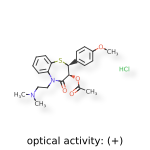

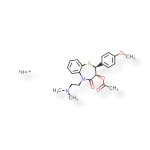

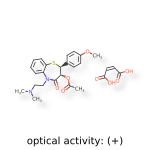
| Related Record | Type | Details | ||
|---|---|---|---|---|
|
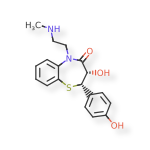
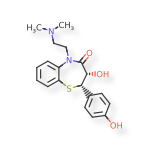
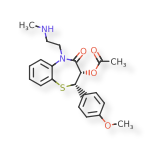
METABOLITE -> PARENT |
MINOR
URINE
|
||
|
METABOLITE -> PARENT |
MINOR
URINE
|
||
|
METABOLITE -> PARENT |
MINOR
URINE
|
||
|
METABOLITE -> PARENT |
In some plasma samples
MAJOR
URINE
|
||
|
METABOLITE -> PARENT |
MINOR
URINE
|

| Related Record | Type | Details | ||
|---|---|---|---|---|
|
|
ACTIVE MOIETY |
|