


Details
| Stereochemistry | ACHIRAL |
| Molecular Formula | C25H25N7O3 |
| Molecular Weight | 471.5111 |
| Optical Activity | NONE |
| Defined Stereocenters | 0 / 0 |
| E/Z Centers | 0 |
| Charge | 0 |
SHOW SMILES / InChI
SMILES
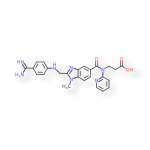
CN1C(CNC2=CC=C(C=C2)C(N)=N)=NC3=C1C=CC(=C3)C(=O)N(CCC(O)=O)C4=CC=CC=N4
InChI
InChIKey=YBSJFWOBGCMAKL-UHFFFAOYSA-N
InChI=1S/C25H25N7O3/c1-31-20-10-7-17(25(35)32(13-11-23(33)34)21-4-2-3-12-28-21)14-19(20)30-22(31)15-29-18-8-5-16(6-9-18)24(26)27/h2-10,12,14,29H,11,13,15H2,1H3,(H3,26,27)(H,33,34)
| Molecular Formula | C25H25N7O3 |
| Molecular Weight | 471.5111 |
| Charge | 0 |
| Count |
|
| Stereochemistry | ACHIRAL |
| Additional Stereochemistry | No |
| Defined Stereocenters | 0 / 0 |
| E/Z Centers | 0 |
| Optical Activity | NONE |
DescriptionCurator's Comment: Description was created based on several sources, including
http://www.accessdata.fda.gov/drugsatfda_docs/label/2011/022512s007lbl.pdf
https://www.pradaxa.com/
Curator's Comment: Description was created based on several sources, including
http://www.accessdata.fda.gov/drugsatfda_docs/label/2011/022512s007lbl.pdf
https://www.pradaxa.com/
Dabigatran (Pradaxa, Prazaxa) is an anticoagulant medication that can be taken by mouth. FDA approved on October 19, 2010. Dabigatran directly inhibits thrombin in a concentration-dependent, reversible, specific, and competitive manner which results in a prolongation of aPTT (partial thromboplastin time), ECT (Ecarin clotting time), and TT (thrombin time). It may increase INR but this laboratory parameter is relatively insensitive to the activity of dabigatran. Dabigatran is indicated for the prevention of venous thromboembolic events in patients who have undergone elective hip or knee replacement surgery (based on RE-NOVATE, RE-MODEL, and RE-MOBILIZE trials). In 2010, it was approved in the US and Canada for prevention of stroke and systemic embolism in patients with atrial fibrillation (approval based on the RE-LY trial). Contraindications: severe renal impairment (CrCL < 30 ml/min); haemorrhagic manifestations, bleeding diathesis or spontaneous or pharmacologic impairment of haemostasis; lesions at risk of clinically significant bleeding (e.g. extensive cerebral infarction (haemorrhagic or ischemic) in the last 6 months, active peptic ulcer disease); concomitant treatment with P-glycoprotein inhibitors (e.g. oral ketoconazole, verapamil); and those with known hypersensitivity to dabigatran, dabigatran etexilate or any ingredient used in the formulation or component of the container. As of December 2012, dabigatran is contraindicated in patients with mechanical prosthetic heart valves.
Originator
Approval Year
Targets
| Primary Target | Pharmacology | Condition | Potency |
|---|---|---|---|
Target ID: CHEMBL2265 |
|||
| 1.2 nM [IC50] | |||
Target ID: CHEMBL3959 |
Conditions
| Condition | Modality | Targets | Highest Phase | Product |
|---|---|---|---|---|
| Preventing | PRADAXA Approved UsePRADAXA is a direct thrombin inhibitor indicated:
To reduce the risk of stroke and systemic embolism in patients with non-valvular atrial fibrillation (1.1)
For the treatment of deep venous thrombosis (DVT) and pulmonary embolism (PE) in patients who have been treated with a parenteral anticoagulant for 5-10 days (1.2)
To reduce the risk of recurrence of DVT and PE in patients who have been previously treated (1.3)
For the prophylaxis of DVT and PE in patients who have undergone hip replacement surgery Launch Date2010 |
|||
| Primary | PRADAXA Approved UsePRADAXA is a direct thrombin inhibitor indicated:
To reduce the risk of stroke and systemic embolism in patients with non-valvular atrial fibrillation (1.1)
For the treatment of deep venous thrombosis (DVT) and pulmonary embolism (PE) in patients who have been treated with a parenteral anticoagulant for 5-10 days (1.2)
To reduce the risk of recurrence of DVT and PE in patients who have been previously treated (1.3)
For the prophylaxis of DVT and PE in patients who have undergone hip replacement surgery Launch Date2010 |
|||
| Preventing | PRADAXA Approved UsePRADAXA is a direct thrombin inhibitor indicated:
To reduce the risk of stroke and systemic embolism in patients with non-valvular atrial fibrillation (1.1)
For the treatment of deep venous thrombosis (DVT) and pulmonary embolism (PE) in patients who have been treated with a parenteral anticoagulant for 5-10 days (1.2)
To reduce the risk of recurrence of DVT and PE in patients who have been previously treated (1.3)
For the prophylaxis of DVT and PE in patients who have undergone hip replacement surgery Launch Date2010 |
|||
Cmax
| Value | Dose | Co-administered | Analyte | Population |
|---|---|---|---|---|
348 ng/mL |
150 mg 2 times / day steady-state, oral dose: 150 mg route of administration: Oral experiment type: STEADY-STATE co-administered: |
DABIGATRAN plasma | Homo sapiens population: HEALTHY age: ADULT sex: FEMALE / MALE food status: UNKNOWN |
AUC
| Value | Dose | Co-administered | Analyte | Population |
|---|---|---|---|---|
2232 ng × h/mL |
150 mg 2 times / day steady-state, oral dose: 150 mg route of administration: Oral experiment type: STEADY-STATE co-administered: |
DABIGATRAN plasma | Homo sapiens population: HEALTHY age: ADULT sex: FEMALE / MALE food status: UNKNOWN |
T1/2
| Value | Dose | Co-administered | Analyte | Population |
|---|---|---|---|---|
11.3 h |
150 mg 2 times / day steady-state, oral dose: 150 mg route of administration: Oral experiment type: STEADY-STATE co-administered: |
DABIGATRAN plasma | Homo sapiens population: HEALTHY age: ADULT sex: FEMALE / MALE food status: UNKNOWN |
Funbound
| Value | Dose | Co-administered | Analyte | Population |
|---|---|---|---|---|
65% |
150 mg 2 times / day steady-state, oral dose: 150 mg route of administration: Oral experiment type: STEADY-STATE co-administered: |
DABIGATRAN plasma | Homo sapiens population: HEALTHY age: ADULT sex: FEMALE / MALE food status: UNKNOWN |
Doses
| Dose | Population | Adverse events |
|---|---|---|
400 mg 3 times / day single, oral Highest studied dose Dose: 400 mg, 3 times / day Route: oral Route: single Dose: 400 mg, 3 times / day Sources: |
healthy, 18–45 |
|
400 mg single, oral Highest studied dose |
healthy, 18–45 |
|
150 mg 6 times / day multiple, oral Recommended Dose: 150 mg, 6 times / day Route: oral Route: multiple Dose: 150 mg, 6 times / day Sources: |
healthy, 18–45 |
Disc. AE: C-reactive protein increased, Alanine aminotransferase increase... AEs leading to discontinuation/dose reduction: C-reactive protein increased (7.14%) Sources: Alanine aminotransferase increase (7.14%) Haematuria (7.14%) Epistaxis (7.14%) Haemorrhoidal haemorrhage (7.14%) |
150 mg 2 times / day multiple, oral Recommended Dose: 150 mg, 2 times / day Route: oral Route: multiple Dose: 150 mg, 2 times / day Sources: |
unhealthy Health Status: unhealthy Sources: |
Disc. AE: Spinal epidural hematoma, Bleeding... AEs leading to discontinuation/dose reduction: Spinal epidural hematoma Sources: Bleeding (grade 3-5) |
150 mg 2 times / day multiple, oral Recommended Dose: 150 mg, 2 times / day Route: oral Route: multiple Dose: 150 mg, 2 times / day Sources: |
unhealthy Health Status: unhealthy Sources: |
Disc. AE: Bleeding, Gastrointestinal disorder NOS... AEs leading to discontinuation/dose reduction: Bleeding Sources: Gastrointestinal disorder NOS |
150 mg 2 times / day multiple, oral Recommended Dose: 150 mg, 2 times / day Route: oral Route: multiple Dose: 150 mg, 2 times / day Sources: |
unhealthy Health Status: unhealthy Sources: |
Disc. AE: Bleeding... AEs leading to discontinuation/dose reduction: Bleeding (grade 5, 0.07%) Sources: |
AEs
| AE | Significance | Dose | Population |
|---|---|---|---|
| Alanine aminotransferase increase | 7.14% Disc. AE |
150 mg 6 times / day multiple, oral Recommended Dose: 150 mg, 6 times / day Route: oral Route: multiple Dose: 150 mg, 6 times / day Sources: |
healthy, 18–45 |
| C-reactive protein increased | 7.14% Disc. AE |
150 mg 6 times / day multiple, oral Recommended Dose: 150 mg, 6 times / day Route: oral Route: multiple Dose: 150 mg, 6 times / day Sources: |
healthy, 18–45 |
| Epistaxis | 7.14% Disc. AE |
150 mg 6 times / day multiple, oral Recommended Dose: 150 mg, 6 times / day Route: oral Route: multiple Dose: 150 mg, 6 times / day Sources: |
healthy, 18–45 |
| Haematuria | 7.14% Disc. AE |
150 mg 6 times / day multiple, oral Recommended Dose: 150 mg, 6 times / day Route: oral Route: multiple Dose: 150 mg, 6 times / day Sources: |
healthy, 18–45 |
| Haemorrhoidal haemorrhage | 7.14% Disc. AE |
150 mg 6 times / day multiple, oral Recommended Dose: 150 mg, 6 times / day Route: oral Route: multiple Dose: 150 mg, 6 times / day Sources: |
healthy, 18–45 |
| Spinal epidural hematoma | Disc. AE | 150 mg 2 times / day multiple, oral Recommended Dose: 150 mg, 2 times / day Route: oral Route: multiple Dose: 150 mg, 2 times / day Sources: |
unhealthy Health Status: unhealthy Sources: |
| Bleeding | grade 3-5 Disc. AE |
150 mg 2 times / day multiple, oral Recommended Dose: 150 mg, 2 times / day Route: oral Route: multiple Dose: 150 mg, 2 times / day Sources: |
unhealthy Health Status: unhealthy Sources: |
| Bleeding | Disc. AE | 150 mg 2 times / day multiple, oral Recommended Dose: 150 mg, 2 times / day Route: oral Route: multiple Dose: 150 mg, 2 times / day Sources: |
unhealthy Health Status: unhealthy Sources: |
| Gastrointestinal disorder NOS | Disc. AE | 150 mg 2 times / day multiple, oral Recommended Dose: 150 mg, 2 times / day Route: oral Route: multiple Dose: 150 mg, 2 times / day Sources: |
unhealthy Health Status: unhealthy Sources: |
| Bleeding | grade 5, 0.07% Disc. AE |
150 mg 2 times / day multiple, oral Recommended Dose: 150 mg, 2 times / day Route: oral Route: multiple Dose: 150 mg, 2 times / day Sources: |
unhealthy Health Status: unhealthy Sources: |
Overview
| CYP3A4 | CYP2C9 | CYP2D6 | hERG |
|---|---|---|---|
OverviewOther
| Other Inhibitor | Other Substrate | Other Inducer |
|---|---|---|
Drug as perpetrator
| Target | Modality | Activity | Metabolite | Clinical evidence |
|---|---|---|---|---|
Page: 68-69, (PMDA_A100_1 Japanese) 32, (PMDA_I100-_ Japanese) 33 |
no [IC50 >100 uM] | |||
Page: 68-69, (PMDA_A100_1 Japanese) 32, (PMDA_I100-_ Japanese) 33 |
no [IC50 >100 uM] | |||
Page: 68-69, (PMDA_A100_1 Japanese) 32, (PMDA_I100-_ Japanese) 33 |
no [IC50 >100 uM] | |||
Page: 68-69, (PMDA_A100_1 Japanese) 32, (PMDA_I100-_ Japanese) 33 |
no [IC50 >100 uM] | |||
Page: 68-69, (PMDA_A100_1 Japanese) 32, (PMDA_I100-_ Japanese) 33 |
no [IC50 >100 uM] | |||
Page: 68-69, (PMDA_A100_1 Japanese) 32, (PMDA_I100-_ Japanese) 33 |
no [IC50 >100 uM] | |||
Page: 68-69, (PMDA_A100_1 Japanese) 32, (PMDA_I100-_ Japanese) 33 |
no [IC50 >100 uM] | |||
Page: 68-69, (PMDA_A100_1 Japanese) 32, (PMDA_I100-_ Japanese) 33 |
no [IC50 >100 uM] | |||
Page: (PMDA_A100_1 Japanese) 33, (PMDA_I100-_ Japanese) 110 |
no | |||
Page: (PMDA_A100_1 Japanese) 33, (PMDA_I100-_ Japanese) 110 |
no | |||
Page: (PMDA_A100_1 Japanese) 33, (PMDA_I100-_ Japanese) 110 |
no | |||
Page: 54-56, 56-57, (PMDA_A100_1 Japanese) 34, (PMDA_I100-_ Japanese) 68 |
no |
Drug as victim
| Target | Modality | Activity | Metabolite | Clinical evidence |
|---|---|---|---|---|
Page: (PMDA_A100_1 Japanese) 32, (PMDA_I100-_ Japanese) 33 |
no | |||
Page: (PMDA_A100_1 Japanese) 32, (PMDA_I100-_ Japanese) 33 |
no | |||
Page: (PMDA_A100_1 Japanese) 32, (PMDA_I100-_ Japanese) 33 |
no | |||
Page: (PMDA_A100_1 Japanese) 32, (PMDA_I100-_ Japanese) 33 |
no | |||
Page: (PMDA_A100_1 Japanese) 32, (PMDA_I100-_ Japanese) 33 |
no | |||
Page: (PMDA_A100_1 Japanese) 32, (PMDA_I100-_ Japanese) 33 |
no | |||
Page: (PMDA_A100_1 Japanese) 32, (PMDA_I100-_ Japanese) 33 |
no | |||
Page: 70-71, (PMDA_A100_1 Japanese) 33, (PMDA_I100-_ Japanese) 101 |
no | |||
Page: 70-71, (PMDA_A100_1 Japanese) 33, (PMDA_I100-_ Japanese) 101 |
no | |||
Page: 70-71, (PMDA_A100_1 Japanese) 33, (PMDA_I100-_ Japanese) 101 |
no | |||
Page: 70-71, (PMDA_A100_1 Japanese) 33, (PMDA_I100-_ Japanese) 101 |
no | |||
Page: 70-71, (PMDA_A100_1 Japanese) 33, (PMDA_I100-_ Japanese) 101 |
no | |||
Page: 70-71, (PMDA_A100_1 Japanese) 33, (PMDA_I100-_ Japanese) 101 |
no | |||
Page: 70-71, (PMDA_A100_1 Japanese) 33, (PMDA_I100-_ Japanese) 101 |
no | |||
Page: 70-71, (PMDA_A100_1 Japanese) 33, (PMDA_I100-_ Japanese) 101 |
no | |||
Page: 70-71, (PMDA_A100_1 Japanese) 33, (PMDA_I100-_ Japanese) 101 |
no | |||
Page: (ClinPharm) 13, (PMDA_A100_1 Japanese) 32, 40-41, (PMDA_I100_1 Japanese) 33 |
no | no (co-administration study) Comment: Coadministration of Atorvastatin (CYP3A4 & P-gp inhibitor, 400 mg QD x 4 days) with Dabigatran metexilate mesylate (150 mg BID x 3 days and 150 mg QD on Day 4) decreased total Dabigatran AUCtau,ss by 58% and Cmax,ss by 50%., Coadministration of Clarithromycin (CYP3A4 & P-gp inhibitor, 500 mg BID x 5 days & 500 mg QD on Day 6) with Dabigatran metexilate mesylate (150 mg QD on Day 6) increased total Dabigatran AUCinf by 19% and Cmax by 15%., Coadministration of Rifampicin (CYP3A4 & P-gp inducer, 600 mg QD x 7 days in the night) with Dabigatran metexilate mesylate (150 mg QD on Day 8 morning) decreased total Dabigatran AUCinf by 67% and Cmax by 66%., Coadministration of Ketoconazole (CYP3A4 & P-gp inhibitor, 400mg QD ) with Dabigatran metexilate mesylate (150 mg QD) increased total Dabigatran AUCinf by 138% and Cmax by 135%. Page: (ClinPharm) 13, (PMDA_A100_1 Japanese) 32, 40-41, (PMDA_I100_1 Japanese) 33 |
||
Page: 54-55, 56-57, (ClinPharm) 12, 13, 33-36, (PMDA_A100_1 Japanese) 33, 39, 40-41, (PMDA_I100_1 Japanese) 66, (PMDA_K103_1 Japanese) 152-156 |
no | no (co-administration study) Comment: Caco-2 cells, Efflux ratio = 1.09 (3 mcM), 0.95 (300 mcM); MDR1-LLC-PK1 cells, Efflux ratio = 1.35 (10 mcM); Coadministration of Amiodarone (P-gp & CYP2C9 inhibitor, 600 mg QD on Day 4) with Dabigatran metexilate mesylate (150 mg BID x 3 days and 150 mg QD on Day 4) increased total Dabigatran AUCtau,ss by 58% and Cmax by 50%., Coadministration of Verapamil (P-gp inhibitor, 120 mg single or multiple doses, or 240 mg single dose) with Dabigatran metexilate mesylate (150 mg single dose) increased total Dabigatran AUCinf by 39~143% and Cmax by 12~179%., Coadministration of Quinidine (200 mg every 2 hr x 5 on Day 3 (3 hr after the first Dabigatran dose), P-gp inhibitor) with Dabigatran metexilate mesylate (150 mg BID x 3 days (2nd dose on Day 3 was administrated 1 hr after the final Quinidine dose) increased total Dabigatran AUCtau,ss by 53% and Cmax,ss by 56%., Coadministration of Ketoconazole (CYP3A4 & P-gp inhibitor, 400mg QD ) with Dabigatran metexilate mesylate (150 mg QD) increased total Dabigatran AUCinf by 138% and Cmax by 135%., Coadministration of Atorvastatin (CYP3A4 & P-gp inhibitor, 400 mg QD x 4 days) with Dabigatran metexilate mesylate (150 mg BID x 3 days and 150 mg QD on Day 4) decreased total Dabigatran AUCtau,ss by 58% and Cmax,ss by 50%., Coadministration of Clarithromycin (CYP3A4 & P-gp inhibitor, 500 mg BID x 5 days & 500 mg QD on Day 6) with Dabigatran metexilate mesylate (150 mg QD on Day 6) increased total Dabigatran AUCinf by 19% and Cmax by 15%., Coadministration of Rifampicin (CYP3A4 & P-gp inducer, 600 mg QD x 7 days in the night) with Dabigatran metexilate mesylate (150 mg QD on Day 8 morning) decreased total Dabigatran AUCinf by 67% and Cmax by 66%. Page: 54-55, 56-57, (ClinPharm) 12, 13, 33-36, (PMDA_A100_1 Japanese) 33, 39, 40-41, (PMDA_I100_1 Japanese) 66, (PMDA_K103_1 Japanese) 152-156 |
||
Page: 70-71, (PMDA_A100_1 Japanese) 33, (PMDA_I100-_ Japanese) 101 |
yes [Km 371.4 uM] | |||
Page: 70-71, (PMDA_A100_1 Japanese) 33, (PMDA_I100-_ Japanese) 101 |
yes [Km 511.7 uM] | |||
Page: 70-71, (PMDA_A100_1 Japanese) 33, (PMDA_I100-_ Japanese) 101 |
yes [Km 987.3 uM] |
Tox targets
| Target | Modality | Activity | Metabolite | Clinical evidence |
|---|---|---|---|---|
PubMed
| Title | Date | PubMed |
|---|---|---|
| Dabigatran and dabigatran ethyl ester: potent inhibitors of ribosyldihydronicotinamide dehydrogenase (NQO2). | 2012-04-26 |
|
| [Oral prevention of thromboembolism with rivaroxaban and dabigatran: are the newly approved drugs innovations in orthopaedic and trauma surgery? ]. | 2010-09 |
|
| Does dabigatran improve stroke prevention in atrial fibrillation? A rebuttal. | 2010-06 |
|
| Thrombin-induced CCN2 expression as a target for anti-fibrotic therapy in scleroderma. | 2010-06 |
|
| Dabigatran enhances clot susceptibility to fibrinolysis by mechanisms dependent on and independent of thrombin-activatable fibrinolysis inhibitor. | 2010-04 |
|
| Comparative efficacy and safety of the novel oral anticoagulants dabigatran, rivaroxaban and apixaban in preclinical and clinical development. | 2010-03 |
|
| Insights from the dabigatran versus warfarin in patients with atrial fibrillation (RE-LY) trial. | 2010-03 |
|
| [Dabigatran: a new therapeutic option for therapy and prophylaxis of thromboembolic diseases?]. | 2010-02 |
|
| Replacing aspirin and warfarin for secondary stroke prevention: is it worth the costs? | 2010-02 |
|
| New oral anticoagulants: a practical guide for clinicians. | 2010-02 |
|
| The potential benefits of low-molecular-weight heparins in cancer patients. | 2010-01-14 |
|
| The new oral anticoagulants. | 2010-01-07 |
|
| Dabigatran versus warfarin in patients with atrial fibrillation. | 2009-12-31 |
|
| Dabigatran versus warfarin in patients with atrial fibrillation. | 2009-12-31 |
|
| Dabigatran versus warfarin in patients with atrial fibrillation. | 2009-12-31 |
|
| Dabigatran versus warfarin in patients with atrial fibrillation. | 2009-12-31 |
|
| Dabigatran versus warfarin in patients with atrial fibrillation. | 2009-12-31 |
|
| Dabigatran versus warfarin in patients with atrial fibrillation. | 2009-12-31 |
|
| Enhancement of pig embryonic implants in factor VIII KO mice: a novel role for the coagulation cascade in organ size control. | 2009-12-21 |
|
| Dabigatran versus warfarin in the treatment of acute venous thromboembolism. | 2009-12-10 |
|
| Clinical trials update from the European Society of Cardiology Meeting 2009: AAA, RELY, PROTECT, ACTIVE-I, European CRT survey, German pre-SCD II registry, and MADIT-CRT. | 2009-12 |
|
| [New oral anticoagulants. Consequences for perioperative coagulation diagnostics and therapy]. | 2009-12 |
|
| Oral direct thrombin inhibitor AZD0837 for the prevention of stroke and systemic embolism in patients with non-valvular atrial fibrillation: a randomized dose-guiding, safety, and tolerability study of four doses of AZD0837 vs. vitamin K antagonists. | 2009-12 |
|
| Dabigatran: safer, more effective and easier to use than warfarin. | 2009-11-13 |
|
| Adherence to a new oral anticoagulant treatment prescription: dabigatran etexilate. | 2009-11-03 |
|
| [The results of the RE-lY study promise more effective, safer and easier prevention of embolic complications in patients with non-valvular atrial fibrillation]. | 2009-11 |
|
| Direct inhibitors of coagulation proteins - the end of the heparin and low-molecular-weight heparin era for anticoagulant therapy? | 2009-11 |
|
| Dabigatran, a direct thrombin inhibitor, demonstrates antifibrotic effects on lung fibroblasts. | 2009-11 |
|
| The RE-LY study: Randomized Evaluation of Long-term anticoagulant therapY: dabigatran vs. warfarin. | 2009-11 |
|
| Dabigatran etexilate in venous thromboembolism. | 2009-10 |
|
| Rivaroxaban for the prevention of venous thromboembolism: a single technology appraisal. | 2009-10 |
|
| Dabigatran versus warfarin in patients with atrial fibrillation. | 2009-09-17 |
|
| [New developments in antithrombotic care]. | 2009-09 |
|
| [Dabigatran: clinical pharmacology]. | 2009-09 |
|
| [Perspectives in cardiology: evidence of efficacy in atrial fibrillation and hopes in acute coronary syndrome]. | 2009-09 |
|
| [Anticoagulants drugs direct trombin inhibitors]. | 2009-09 |
|
| [Dabigatran (Pradaxa): efficacy and safety]. | 2009-09 |
|
| [Pharmacokinetics and pharmacodynamics of the new oral anticoagulants dabigatran and rivaroxaban]. | 2009-08-29 |
|
| [Dabigatran and rivaroxaban, new oral anticoagulants for the treatment of venous thromboembolism]. | 2009-08-29 |
|
| Oral antithrombotic inhibitors: dabigatran etexilate, meeting an unmet need? | 2009-08-27 |
|
| Pharmacology, pharmacokinetics, and pharmacodynamics of dabigatran etexilate, an oral direct thrombin inhibitor. | 2009-08-22 |
|
| [New anticoagulants for secondary haemostasis--anti IIa inhibitors]. | 2009-08 |
|
| Use of emerging oral anticoagulants in clinical practice: translating results from clinical trials to orthopedic and general surgical patient populations. | 2009-08 |
|
| Recent developments in the use of oral anticoagulants. | 2009-08 |
|
| New anticoagulants: focus on venous thromboembolism. | 2009-07 |
|
| Dabigatran: new drug. Continue to use heparin, a better-known option. | 2009-06 |
|
| Recently published papers: Novel therapies in chronic obstructive pulmonary disease, cardiac chemicals and intensive care outcomes. | 2009 |
|
| [Dabigatran versus Warfarin in patients with atrial fibrillation. Results of the RE-LY study]. | 2009 |
|
| A cost-effectiveness model comparing rivaroxaban and dabigatran etexilate with enoxaparin sodium as thromboprophylaxis after total hip and total knee replacement in the irish healthcare setting. | 2009 |
|
| The prevention and treatment of venous thromboembolism with LMWHs and new anticoagulants. | 2009 |
| Substance Class |
Chemical
Created
by
admin
on
Edited
Mon Mar 31 18:22:20 GMT 2025
by
admin
on
Mon Mar 31 18:22:20 GMT 2025
|
| Record UNII |
I0VM4M70GC
|
| Record Status |
Validated (UNII)
|
| Record Version |
|
-
Download
| Name | Type | Language | ||
|---|---|---|---|---|
|
Preferred Name | English | ||
|
Official Name | English | ||
|
Code | English | ||
|
Common Name | English | ||
|
Common Name | English | ||
|
Systematic Name | English | ||
|
Common Name | English | ||
|
Common Name | English | ||
|
Common Name | English | ||
|
Systematic Name | English | ||
|
Common Name | English | ||
|
Brand Name | English | ||
|
Code | English | ||
|
Common Name | English |
| Classification Tree | Code System | Code | ||
|---|---|---|---|---|
|
NCI_THESAURUS |
C263
Created by
admin on Mon Mar 31 18:22:20 GMT 2025 , Edited by admin on Mon Mar 31 18:22:20 GMT 2025
|
||
|
LOINC |
68980-2
Created by
admin on Mon Mar 31 18:22:20 GMT 2025 , Edited by admin on Mon Mar 31 18:22:20 GMT 2025
|
||
|
LOINC |
74220-5
Created by
admin on Mon Mar 31 18:22:20 GMT 2025 , Edited by admin on Mon Mar 31 18:22:20 GMT 2025
|
||
|
LIVERTOX |
NBK547924
Created by
admin on Mon Mar 31 18:22:20 GMT 2025 , Edited by admin on Mon Mar 31 18:22:20 GMT 2025
|
| Code System | Code | Type | Description | ||
|---|---|---|---|---|---|
|
100000089438
Created by
admin on Mon Mar 31 18:22:20 GMT 2025 , Edited by admin on Mon Mar 31 18:22:20 GMT 2025
|
PRIMARY | |||
|
SUB25417
Created by
admin on Mon Mar 31 18:22:20 GMT 2025 , Edited by admin on Mon Mar 31 18:22:20 GMT 2025
|
PRIMARY | |||
|
C554682
Created by
admin on Mon Mar 31 18:22:20 GMT 2025 , Edited by admin on Mon Mar 31 18:22:20 GMT 2025
|
PRIMARY | |||
|
CHEMBL48361
Created by
admin on Mon Mar 31 18:22:20 GMT 2025 , Edited by admin on Mon Mar 31 18:22:20 GMT 2025
|
PRIMARY | |||
|
C73224
Created by
admin on Mon Mar 31 18:22:20 GMT 2025 , Edited by admin on Mon Mar 31 18:22:20 GMT 2025
|
PRIMARY | |||
|
216210
Created by
admin on Mon Mar 31 18:22:20 GMT 2025 , Edited by admin on Mon Mar 31 18:22:20 GMT 2025
|
PRIMARY | |||
|
I0VM4M70GC
Created by
admin on Mon Mar 31 18:22:20 GMT 2025 , Edited by admin on Mon Mar 31 18:22:20 GMT 2025
|
PRIMARY | |||
|
DABIGATRAN
Created by
admin on Mon Mar 31 18:22:20 GMT 2025 , Edited by admin on Mon Mar 31 18:22:20 GMT 2025
|
PRIMARY | |||
|
1546356
Created by
admin on Mon Mar 31 18:22:20 GMT 2025 , Edited by admin on Mon Mar 31 18:22:20 GMT 2025
|
PRIMARY | RxNorm | ||
|
211914-51-1
Created by
admin on Mon Mar 31 18:22:20 GMT 2025 , Edited by admin on Mon Mar 31 18:22:20 GMT 2025
|
PRIMARY | |||
|
Dabigatran
Created by
admin on Mon Mar 31 18:22:20 GMT 2025 , Edited by admin on Mon Mar 31 18:22:20 GMT 2025
|
PRIMARY | |||
|
m4064
Created by
admin on Mon Mar 31 18:22:20 GMT 2025 , Edited by admin on Mon Mar 31 18:22:20 GMT 2025
|
PRIMARY | Merck Index | ||
|
DTXSID50175419
Created by
admin on Mon Mar 31 18:22:20 GMT 2025 , Edited by admin on Mon Mar 31 18:22:20 GMT 2025
|
PRIMARY | |||
|
I0VM4M70GC
Created by
admin on Mon Mar 31 18:22:20 GMT 2025 , Edited by admin on Mon Mar 31 18:22:20 GMT 2025
|
PRIMARY | |||
|
DB14726
Created by
admin on Mon Mar 31 18:22:20 GMT 2025 , Edited by admin on Mon Mar 31 18:22:20 GMT 2025
|
PRIMARY | |||
|
8027
Created by
admin on Mon Mar 31 18:22:20 GMT 2025 , Edited by admin on Mon Mar 31 18:22:20 GMT 2025
|
PRIMARY | |||
|
UU-125
Created by
admin on Mon Mar 31 18:22:20 GMT 2025 , Edited by admin on Mon Mar 31 18:22:20 GMT 2025
|
PRIMARY | |||
|
8062
Created by
admin on Mon Mar 31 18:22:20 GMT 2025 , Edited by admin on Mon Mar 31 18:22:20 GMT 2025
|
PRIMARY | |||
|
70752
Created by
admin on Mon Mar 31 18:22:20 GMT 2025 , Edited by admin on Mon Mar 31 18:22:20 GMT 2025
|
PRIMARY |
| Related Record | Type | Details | ||
|---|---|---|---|---|
|
BINDER->LIGAND |
BINDING
|
||
|
TARGET -> INHIBITOR |
|
||
|
|
INHIBITOR -> TARGET |
|
||
|
|
METABOLIC ENZYME -> SUBSTRATE |
|
||
|
METABOLIC ENZYME -> SUBSTRATE | |||
|
TARGET -> INHIBITOR |
REVERSIBLE
IC50
|


| Related Record | Type | Details | ||
|---|---|---|---|---|
|
METABOLITE -> PARENT |
after p.o. administration of 200 mg of 14C dabigatran etexilate in healthy volunteers
URINE
|
||
|
METABOLITE -> PARENT |
after i.v. infusion of 5 mg of 14C dabigatran in healthy volunteers
TRACE AMOUNT
PLASMA
|
||
|
METABOLITE -> PARENT |
after i.v. infusion of 5 mg of 14C dabigatran in healthy volunteers
PLASMA
|
||
|
METABOLITE -> PARENT |
after i.v. infusion of 5 mg of 14C dabigatran in healthy volunteers
URINE
|
||
|
METABOLITE -> PARENT |
after p.o. administration of 200 mg of 14C dabigatran etexilate in healthy volunteers
TRACE AMOUNT
PLASMA
|
||
|
METABOLITE -> PARENT |
after p.o. administration of 200 mg of 14C dabigatran etexilate in healthy volunteers
URINE
|
||
|
METABOLITE -> PARENT |
after p.o. administration of 200 mg of 14C dabigatran etexilate in healthy volunteers
FECAL
|
||
|
METABOLITE -> PARENT |
after i.v. infusion of 5 mg of 14C dabigatran in healthy volunteers
URINE
|
||
|
METABOLITE -> PARENT |
after p.o. administration of 200 mg of 14C dabigatran etexilate in healthy volunteers
TRACE AMOUNT
URINE
|
||
|
METABOLITE -> PARENT |
after p.o. administration of 200 mg of 14C dabigatran etexilate in healthy volunteers
FECAL
|
||
|
METABOLITE -> PARENT |
after p.o. administration of 200 mg of 14C dabigatran etexilate in healthy volunteers
TRACE AMOUNT
PLASMA; URINE
|
||
|
METABOLITE -> PARENT |
after p.o. administration of 200 mg of 14C dabigatran etexilate in healthy volunteers
FECAL
|
||
|
METABOLITE -> PARENT |
after p.o. administration of 200 mg of 14C dabigatran etexilate in healthy volunteers
URINE
|
||
|
METABOLITE -> PARENT |
after p.o. administration of 200 mg of 14C dabigatran etexilate in healthy volunteers
TRACE AMOUNT
PLASMA
|
||
|
|
PRODRUG -> METABOLITE ACTIVE |
|
||
|
METABOLITE -> PARENT |
after p.o. administration of 200 mg of 14C dabigatran etexilate in healthy volunteers
FECAL
|
||
|
METABOLITE -> PARENT |
after i.v. infusion of 5 mg of 14C dabigatran in healthy volunteers
URINE
|
||
|
METABOLITE -> PARENT |
after i.v. infusion of 5 mg of 14C dabigatran in healthy volunteers
FECAL
|
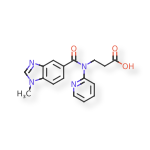
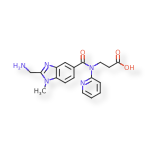
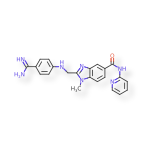
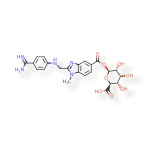
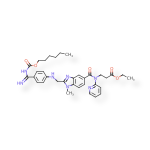
| Related Record | Type | Details | ||
|---|---|---|---|---|
|
|
ACTIVE MOIETY |
|
| Name | Property Type | Amount | Referenced Substance | Defining | Parameters | References |
|---|---|---|---|---|---|---|
| Tmax | PHARMACOKINETIC |
|
INTRAVENOUS ADMINISTRATION |
|
||
| Volume of Distribution | PHARMACOKINETIC |
|
|
|||
| Biological Half-life | PHARMACOKINETIC |
|
|
|||