


Details
| Stereochemistry | ACHIRAL |
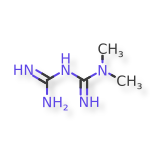
| Molecular Formula | C4H11N5 |
| Molecular Weight | 129.1636 |
| Optical Activity | NONE |
| Defined Stereocenters | 0 / 0 |
| E/Z Centers | 0 |
| Charge | 0 |
SHOW SMILES / InChI
SMILES
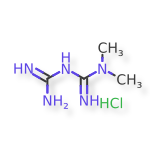
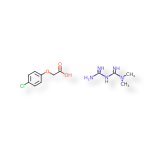
CN(C)C(=N)NC(N)=N
InChI
InChIKey=XZWYZXLIPXDOLR-UHFFFAOYSA-N
InChI=1S/C4H11N5/c1-9(2)4(7)8-3(5)6/h1-2H3,(H5,5,6,7,8)
| Molecular Formula | C4H11N5 |
| Molecular Weight | 129.1636 |
| Charge | 0 |
| Count |
|
| Stereochemistry | ACHIRAL |
| Additional Stereochemistry | No |
| Defined Stereocenters | 0 / 0 |
| E/Z Centers | 0 |
| Optical Activity | NONE |
DescriptionCurator's Comment: Description was created based on several sources, including
https://www.ncbi.nlm.nih.gov/pubmed/25333032 | http://www.rsc.org/images/eic_nov2011_metformin_tcm18-210010.pdf | https://www.ncbi.nlm.nih.gov/pubmed/22117616
Curator's Comment: Description was created based on several sources, including
https://www.ncbi.nlm.nih.gov/pubmed/25333032 | http://www.rsc.org/images/eic_nov2011_metformin_tcm18-210010.pdf | https://www.ncbi.nlm.nih.gov/pubmed/22117616
Metformin is the most widely used drug to treat type 2 diabetes, and is one of only two oral antidiabetic drugs on the World Health Organization (WHO) list of essential medicines.
Metformin is an antihyperglycemic agent which improves glucose tolerance in patients with type 2 diabetes, lowering both basal and postprandial plasma glucose. Metformin decreases hepatic glucose production, decreases intestinal absorption of glucose, and improves insulin sensitivity by increasing peripheral glucose uptake and utilization. However, we still do not completely understand its mechanisms of action. The main effect of this drug from the biguanide family is to acutely decrease hepatic glucose production, mostly through a mild and transient inhibition of the mitochondrial respiratory chain complex I. In addition, the resulting decrease in hepatic energy status activates AMPK (AMP-activated protein kinase), a cellular metabolic sensor, providing a generally accepted mechanism for the action of metformin on hepatic gluconeogenesis. The use of metformin, the most commonly prescribed drug for type 2 diabetes, was repeatedly associated with the decreased risk of the occurrence of various types of cancers, especially of pancreas and colon and hepatocellular carcinoma.
CNS Activity
Approval Year
Targets
| Primary Target | Pharmacology | Condition | Potency |
|---|---|---|---|
Target ID: GO:0006094 |
|||
Target ID: CHEMBL2363065 |
|||
Target ID: CHEMBL2096907 |
Conditions
| Condition | Modality | Targets | Highest Phase | Product |
|---|---|---|---|---|
| Primary | GLUCOPHAGE Approved UseMetformin hydrochloride tablets, USP is indicated as an adjunct to diet and exercise to improve glycemic control in adults and children with type 2 diabetes mellitus. Metformin hydrochloride extended-release tablets, USP is indicated as an adjunct to diet and exercise to improve glycemic control in adults with type 2 diabetes mellitus. Launch Date1995 |
|||
| Primary | Unknown Approved UseUnknown |
Cmax
| Value | Dose | Co-administered | Analyte | Population |
|---|---|---|---|---|
815.39 ng/mL |
750 mg single, oral dose: 750 mg route of administration: Oral experiment type: SINGLE co-administered: |
METFORMIN plasma | Homo sapiens population: HEALTHY age: ADULT sex: MALE food status: HIGH-FAT |
AUC
| Value | Dose | Co-administered | Analyte | Population |
|---|---|---|---|---|
7694.78 ng × h/mL |
750 mg single, oral dose: 750 mg route of administration: Oral experiment type: SINGLE co-administered: |
METFORMIN plasma | Homo sapiens population: HEALTHY age: ADULT sex: MALE food status: HIGH-FAT |
T1/2
| Value | Dose | Co-administered | Analyte | Population |
|---|---|---|---|---|
4.19 h |
750 mg single, oral dose: 750 mg route of administration: Oral experiment type: SINGLE co-administered: |
METFORMIN plasma | Homo sapiens population: HEALTHY age: ADULT sex: MALE food status: HIGH-FAT |
Overview
| CYP3A4 | CYP2C9 | CYP2D6 | hERG |
|---|---|---|---|
Drug as perpetrator
| Target | Modality | Activity | Metabolite | Clinical evidence |
|---|---|---|---|---|
| yes |
Drug as victim
| Target | Modality | Activity | Metabolite | Clinical evidence |
|---|---|---|---|---|
| yes | ||||
| yes | ||||
| yes | ||||
| yes | ||||
| yes | yes (co-administration study) Comment: Co-administration of cimetidine, pyrimethamine, trimethoprim, lansoprazole, dolutegravir and vandetanib with metformin has been shown to increase its AUC by 1.2 to 1.7-fold Page: - |
PubMed
| Title | Date | PubMed |
|---|---|---|
| Effect of metformin on fatty acid and glucose metabolism in freshly isolated hepatocytes and on specific gene expression in cultured hepatocytes. | 2001-08-15 |
|
| Mechanism of fat-induced hepatic gluconeogenesis: effect of metformin. | 2001-08 |
|
| [Effects of metformin on insulin resistance and on ovarian steroidogenesis in women with polycystic ovary syndrome]. | 2001-08 |
|
| Nateglinide. | 2001-07-01 |
|
| Cholestatic jaundice associated with the use of metformin. | 2001-07 |
|
| Case of the month. Hepatic and renal failure in a patient taking troglitazone and metformin. | 2001-07 |
|
| Metformin reduces weight, centripetal obesity, insulin, leptin, and low-density lipoprotein cholesterol in nondiabetic, morbidly obese subjects with body mass index greater than 30. | 2001-07 |
|
| Re: Contrast media-induced nephrotoxicity: identification of patients at risk and algorithms for prevention. | 2001-07 |
|
| Relationship between ethnicity and glycemic control, lipid profiles, and blood pressure during the first 9 years of type 2 diabetes: U.K. Prospective Diabetes Study (UKPDS 55). | 2001-07 |
|
| Gonadotropins at menopause: the influence of obesity, insulin resistance, and estrogens. | 2001-07 |
|
| [Metformin and contrast media--increased risk of lactic acidosis?]. | 2001-06-10 |
|
| Metformin and intervention in polycystic ovary syndrome. Endocrine Society of Australia, the Australian Diabetes Society and the Australian Paediatric Endocrine Group. | 2001-06-04 |
|
| Digestive hemorrhage caused by a Meckel's diverticulum in a metformin-treated patient: is there any connection? | 2001-06 |
|
| Thiazolidinediones and liver toxicity. | 2001-06 |
|
| Management of type 2 diabetes. Evolving strategies for treatment. | 2001-06 |
|
| Lactic acidosis in metformin therapy: searching for a link with metformin in reports of 'metformin-associated lactic acidosis'. | 2001-06 |
|
| Pharmacokinetics of metformin gastric-retentive tablets in healthy volunteers. | 2001-06 |
|
| Use of urea containing dialysate to avoid disequilibrium syndrome, enabling intensive dialysis treatment of a diabetic patient with renal failure and severe metformin induced lactic acidosis. | 2001-06 |
|
| The effects of long-term metformin treatment on adrenal and ovarian steroidogenesis in women with polycystic ovary syndrome. | 2001-06 |
|
| The synergistic effect of miglitol plus metformin combination therapy in the treatment of type 2 diabetes. | 2001-06 |
|
| Safety and efficacy of acarbose in the treatment of Type 2 diabetes: data from a 5-year surveillance study. | 2001-06 |
|
| Effect of a series of novel sulphonylthioureas on glucose tolerance in the obese fa/fa Zucker rat. | 2001-05-31 |
|
| [Insulin therapy in the type 2 obese diabetic patient. Supplementing the deficit]. | 2001-05-24 |
|
| [Metformin in the treatment of type 1 diabetics--a placebo controlled study]. | 2001-05-24 |
|
| [Metformin and anesthesia--how great is the risk of lactic acidosis]. | 2001-05-18 |
|
| The effect of a thiazolidinedione drug, troglitazone, on glycemia in patients with type 2 diabetes mellitus poorly controlled with sulfonylurea and metformin. A multicenter, randomized, double-blind, placebo-controlled trial. | 2001-05-01 |
|
| [Current and future aspects of oral antidiabetic agents in type 2 diabetes]. | 2001-05 |
|
| The oral insulin sensitizer, thiazolidinedione, increases plasma vascular endothelial growth factor in type 2 diabetic patients. | 2001-05 |
|
| Use of the ligand immunofunctional assay for human insulin-like growth factor ((IGF) binding protein-3 (IGFBP-3) to analyze IGFBP-3 proteolysis and igf-i bioavailability in healthy adults, GH-deficient and acromegalic patients, and diabetics. | 2001-05 |
|
| Cardiomyocyte dysfunction in sucrose-fed rats is associated with insulin resistance. | 2001-05 |
|
| Insulin, leptin, IGF-I and insulin-dependent protein concentrations after insulin-sensitizing therapy in obese women with polycystic ovary syndrome. | 2001-05 |
|
| [Metformin and intravascular contrast media. National guidelines 2001-03-16]. | 2001-04-18 |
|
| [Type 2 diabetes mellitus: Which place for thiazolidinediones in the therapeutic strategy?]. | 2001-04 |
|
| [Thiazolidinediones: clinical data and perspectives]. | 2001-04 |
|
| [Insulin sensitivity and polycystic ovarian syndrome]. | 2001-04 |
|
| Homocysteine and cardiovascular risk in patients with diabetes mellitus. | 2001-04 |
|
| Acute postoperative metabolic complications of diabetes. | 2001-04 |
|
| Clinical review of glimepiride. | 2001-04 |
|
| The effects of metformin on body mass index and glucose tolerance in obese adolescents with fasting hyperinsulinemia and a family history of type 2 diabetes. | 2001-04 |
|
| Sulfonylurea treatment of type 2 diabetic patients does not reduce the vasodilator response to ischemia. | 2001-04 |
|
| Additive glucose-lowering effects of glucagon-like peptide-1 and metformin in type 2 diabetes. | 2001-04 |
|
| Improved endothelial function with metformin in type 2 diabetes mellitus. | 2001-04 |
|
| Comparison of the metabolic effects of metformin and troglitazone on fructose-induced insulin resistance in male Sprague-Dawley rats. | 2001-03 |
|
| Rosiglitazone. | 2001-03 |
|
| Cost-effectiveness analysis of intensive blood-glucose control with metformin in overweight patients with type II diabetes (UKPDS No. 51). | 2001-03 |
|
| Oral antidiabetic treatment in patients with coronary disease: time-related increased mortality on combined glyburide/metformin therapy over a 7.7-year follow-up. | 2001-02 |
|
| Management of diabetes mellitus in three settings in Jamaica. | 2001-02 |
|
| Oral hypoglycemic agents: insulin secretagogues, alpha-glucosidase inhibitors and insulin sensitizers. | 2001 |
|
| Metformin, the rebirth of a biguanide: mechanism of action and place in the prevention and treatment of insulin resistance. | 2001 |
|
| Pathogenesis of type 2 diabetes mellitus. | 2001 |
Patents
Sample Use Guides
Recommended Dosing Schedule
Adults
The usual starting dose of GLUCOPHAGE Tablets is 500 mg twice a day or 850 mg once a day,
given with meals. In general, clinically significant responses are not seen at doses below 1500
mg per day. Dosage increases should be made in increments of 500 mg weekly or 850 mg every
2 weeks, up to a total of 2000 mg per day, given in divided doses. The dosage of
GLUCOPHAGE must be individualized on the basis of both effectiveness and tolerability.
Patients can also be titrated from 500 mg twice a day to 850 mg twice a day after 2 weeks. For
those patients requiring additional glycemic control, GLUCOPHAGE may be given to a
maximum daily dose of 2550 mg per day. Doses above 2000 mg may be better tolerated given
3 times a day with meals.
The usual starting dose of GLUCOPHAGE XR (metformin hydrochloride) Extended-Release
Tablets is 500 mg once daily with the evening meal. In general, clinically significant responses
are not seen at doses below 1500 mg per day. Dosage increases should be made in increments of
500 mg weekly, up to a maximum of 2000 mg once daily with the evening meal. The dosage of
GLUCOPHAGE XR must be individualized on the basis of both effectiveness and tolerability. If
glycemic control is not achieved on GLUCOPHAGE XR 2000 mg once daily, a trial of
GLUCOPHAGE XR 1000 mg twice daily should be considered. If higher doses of metformin
are required, GLUCOPHAGE should be used at total daily doses up to 2550 mg administered in
divided daily doses, as described above. (See CLINICAL PHARMACOLOGY: Clinical
Studies.)
Patients receiving GLUCOPHAGE treatment may be safely switched to GLUCOPHAGE XR
once daily at the same total daily dose, up to 2000 mg once daily. Following a switch from
GLUCOPHAGE to GLUCOPHAGE XR, glycemic control should be closely monitored and
dosage adjustments made accordingly (see CLINICAL PHARMACOLOGY: Clinical
Studies).
Pediatrics
The usual starting dose of GLUCOPHAGE is 500 mg twice a day, given with meals. Dosage
increases should be made in increments of 500 mg weekly up to a maximum of 2000 mg per day,
given in divided doses. The dosage of GLUCOPHAGE must be individualized on the basis of
both effectiveness and tolerability. Safety and effectiveness of GLUCOPHAGE XR in pediatric
patients have not been established.
Route of Administration:
Oral
Herein, our aim was to examine whether micromolar concentrations of metformin alone could bring about cancer cell death and whether micromolar metformin could increase the cytotoxic effect of commonly used chemotherapies in A2780 and SKOV3 cell lines and primary cultured cancer cells isolated from the peritoneal fluid of patients with advanced ovarian cancer. Our results in cell lines demonstrate that no significant loss of viability or change in cell cycle was observed with micromolar metformin alone; however, we observed cytotoxicity with micromolar metformin in combination with chemotherapy at concentrations where the chemotherapy alone produced no loss in viability.
| Substance Class |
Chemical
Created
by
admin
on
Edited
Mon Mar 31 17:52:21 GMT 2025
by
admin
on
Mon Mar 31 17:52:21 GMT 2025
|
| Record UNII |
9100L32L2N
|
| Record Status |
Validated (UNII)
|
| Record Version |
|
-
Download
| Name | Type | Language | ||
|---|---|---|---|---|
|
Official Name | English | ||
|
Preferred Name | English | ||
|
Common Name | English | ||
|
Common Name | English | ||
|
Common Name | English | ||
|
Systematic Name | English | ||
|
Common Name | English | ||
|
Systematic Name | English | ||
|
Common Name | English |
| Classification Tree | Code System | Code | ||
|---|---|---|---|---|
|
WHO-VATC |
QA10BD15
Created by
admin on Mon Mar 31 17:52:21 GMT 2025 , Edited by admin on Mon Mar 31 17:52:21 GMT 2025
|
||
|
LIVERTOX |
NBK548726
Created by
admin on Mon Mar 31 17:52:21 GMT 2025 , Edited by admin on Mon Mar 31 17:52:21 GMT 2025
|
||
|
WHO-ESSENTIAL MEDICINES LIST |
18.5
Created by
admin on Mon Mar 31 17:52:21 GMT 2025 , Edited by admin on Mon Mar 31 17:52:21 GMT 2025
|
||
|
WHO-VATC |
QA10BD07
Created by
admin on Mon Mar 31 17:52:21 GMT 2025 , Edited by admin on Mon Mar 31 17:52:21 GMT 2025
|
||
|
WHO-VATC |
QA10BD03
Created by
admin on Mon Mar 31 17:52:21 GMT 2025 , Edited by admin on Mon Mar 31 17:52:21 GMT 2025
|
||
|
WHO-ATC |
A10BD02
Created by
admin on Mon Mar 31 17:52:21 GMT 2025 , Edited by admin on Mon Mar 31 17:52:21 GMT 2025
|
||
|
WHO-VATC |
QA10BD13
Created by
admin on Mon Mar 31 17:52:21 GMT 2025 , Edited by admin on Mon Mar 31 17:52:21 GMT 2025
|
||
|
WHO-ATC |
A10BA02
Created by
admin on Mon Mar 31 17:52:21 GMT 2025 , Edited by admin on Mon Mar 31 17:52:21 GMT 2025
|
||
|
WHO-ATC |
A10BD10
Created by
admin on Mon Mar 31 17:52:21 GMT 2025 , Edited by admin on Mon Mar 31 17:52:21 GMT 2025
|
||
|
WHO-ATC |
A10BD25
Created by
admin on Mon Mar 31 17:52:21 GMT 2025 , Edited by admin on Mon Mar 31 17:52:21 GMT 2025
|
||
|
NCI_THESAURUS |
C1892
Created by
admin on Mon Mar 31 17:52:21 GMT 2025 , Edited by admin on Mon Mar 31 17:52:21 GMT 2025
|
||
|
NDF-RT |
N0000175565
Created by
admin on Mon Mar 31 17:52:21 GMT 2025 , Edited by admin on Mon Mar 31 17:52:21 GMT 2025
|
||
|
EU-Orphan Drug |
EU/3/17/1965
Created by
admin on Mon Mar 31 17:52:21 GMT 2025 , Edited by admin on Mon Mar 31 17:52:21 GMT 2025
|
||
|
WHO-VATC |
QA10BD08
Created by
admin on Mon Mar 31 17:52:21 GMT 2025 , Edited by admin on Mon Mar 31 17:52:21 GMT 2025
|
||
|
WHO-ATC |
A10BD17
Created by
admin on Mon Mar 31 17:52:21 GMT 2025 , Edited by admin on Mon Mar 31 17:52:21 GMT 2025
|
||
|
WHO-ATC |
A10BD14
Created by
admin on Mon Mar 31 17:52:21 GMT 2025 , Edited by admin on Mon Mar 31 17:52:21 GMT 2025
|
||
|
WHO-ATC |
A10BD05
Created by
admin on Mon Mar 31 17:52:21 GMT 2025 , Edited by admin on Mon Mar 31 17:52:21 GMT 2025
|
||
|
FDA ORPHAN DRUG |
432214
Created by
admin on Mon Mar 31 17:52:21 GMT 2025 , Edited by admin on Mon Mar 31 17:52:21 GMT 2025
|
||
|
WHO-VATC |
QA10BD11
Created by
admin on Mon Mar 31 17:52:21 GMT 2025 , Edited by admin on Mon Mar 31 17:52:21 GMT 2025
|
||
|
WHO-ATC |
A10BD13
Created by
admin on Mon Mar 31 17:52:21 GMT 2025 , Edited by admin on Mon Mar 31 17:52:21 GMT 2025
|
||
|
WHO-VATC |
QA10BA02
Created by
admin on Mon Mar 31 17:52:21 GMT 2025 , Edited by admin on Mon Mar 31 17:52:21 GMT 2025
|
||
|
WHO-ATC |
A10BD20
Created by
admin on Mon Mar 31 17:52:21 GMT 2025 , Edited by admin on Mon Mar 31 17:52:21 GMT 2025
|
||
|
FDA ORPHAN DRUG |
616117
Created by
admin on Mon Mar 31 17:52:21 GMT 2025 , Edited by admin on Mon Mar 31 17:52:21 GMT 2025
|
||
|
WHO-ATC |
A10BD11
Created by
admin on Mon Mar 31 17:52:21 GMT 2025 , Edited by admin on Mon Mar 31 17:52:21 GMT 2025
|
||
|
WHO-ATC |
A10BD22
Created by
admin on Mon Mar 31 17:52:21 GMT 2025 , Edited by admin on Mon Mar 31 17:52:21 GMT 2025
|
||
|
WHO-ATC |
A10BD07
Created by
admin on Mon Mar 31 17:52:21 GMT 2025 , Edited by admin on Mon Mar 31 17:52:21 GMT 2025
|
||
|
WHO-ATC |
A10BD15
Created by
admin on Mon Mar 31 17:52:21 GMT 2025 , Edited by admin on Mon Mar 31 17:52:21 GMT 2025
|
||
|
WHO-ATC |
A10BD03
Created by
admin on Mon Mar 31 17:52:21 GMT 2025 , Edited by admin on Mon Mar 31 17:52:21 GMT 2025
|
||
|
WHO-ATC |
A10BD08
Created by
admin on Mon Mar 31 17:52:21 GMT 2025 , Edited by admin on Mon Mar 31 17:52:21 GMT 2025
|
||
|
NCI_THESAURUS |
C98234
Created by
admin on Mon Mar 31 17:52:21 GMT 2025 , Edited by admin on Mon Mar 31 17:52:21 GMT 2025
|
||
|
NDF-RT |
N0000007698
Created by
admin on Mon Mar 31 17:52:21 GMT 2025 , Edited by admin on Mon Mar 31 17:52:21 GMT 2025
|
||
|
WHO-VATC |
QA10BD02
Created by
admin on Mon Mar 31 17:52:21 GMT 2025 , Edited by admin on Mon Mar 31 17:52:21 GMT 2025
|
||
|
WHO-VATC |
QA10BD14
Created by
admin on Mon Mar 31 17:52:21 GMT 2025 , Edited by admin on Mon Mar 31 17:52:21 GMT 2025
|
||
|
WHO-VATC |
QA10BD10
Created by
admin on Mon Mar 31 17:52:21 GMT 2025 , Edited by admin on Mon Mar 31 17:52:21 GMT 2025
|
||
|
WHO-ATC |
A10BD16
Created by
admin on Mon Mar 31 17:52:21 GMT 2025 , Edited by admin on Mon Mar 31 17:52:21 GMT 2025
|
||
|
WHO-VATC |
QA10BD05
Created by
admin on Mon Mar 31 17:52:21 GMT 2025 , Edited by admin on Mon Mar 31 17:52:21 GMT 2025
|
||
|
WHO-ATC |
A10BD18
Created by
admin on Mon Mar 31 17:52:21 GMT 2025 , Edited by admin on Mon Mar 31 17:52:21 GMT 2025
|
| Code System | Code | Type | Description | ||
|---|---|---|---|---|---|
|
1725
Created by
admin on Mon Mar 31 17:52:21 GMT 2025 , Edited by admin on Mon Mar 31 17:52:21 GMT 2025
|
PRIMARY | |||
|
4091
Created by
admin on Mon Mar 31 17:52:21 GMT 2025 , Edited by admin on Mon Mar 31 17:52:21 GMT 2025
|
PRIMARY | |||
|
4779
Created by
admin on Mon Mar 31 17:52:21 GMT 2025 , Edited by admin on Mon Mar 31 17:52:21 GMT 2025
|
PRIMARY | |||
|
9100L32L2N
Created by
admin on Mon Mar 31 17:52:21 GMT 2025 , Edited by admin on Mon Mar 31 17:52:21 GMT 2025
|
PRIMARY | |||
|
SUB08831MIG
Created by
admin on Mon Mar 31 17:52:21 GMT 2025 , Edited by admin on Mon Mar 31 17:52:21 GMT 2025
|
PRIMARY | |||
|
DB00331
Created by
admin on Mon Mar 31 17:52:21 GMT 2025 , Edited by admin on Mon Mar 31 17:52:21 GMT 2025
|
PRIMARY | |||
|
965
Created by
admin on Mon Mar 31 17:52:21 GMT 2025 , Edited by admin on Mon Mar 31 17:52:21 GMT 2025
|
PRIMARY | |||
|
CHEMBL1431
Created by
admin on Mon Mar 31 17:52:21 GMT 2025 , Edited by admin on Mon Mar 31 17:52:21 GMT 2025
|
PRIMARY | |||
|
657-24-9
Created by
admin on Mon Mar 31 17:52:21 GMT 2025 , Edited by admin on Mon Mar 31 17:52:21 GMT 2025
|
PRIMARY | |||
|
9100L32L2N
Created by
admin on Mon Mar 31 17:52:21 GMT 2025 , Edited by admin on Mon Mar 31 17:52:21 GMT 2025
|
PRIMARY | |||
|
D008687
Created by
admin on Mon Mar 31 17:52:21 GMT 2025 , Edited by admin on Mon Mar 31 17:52:21 GMT 2025
|
PRIMARY | |||
|
C61612
Created by
admin on Mon Mar 31 17:52:21 GMT 2025 , Edited by admin on Mon Mar 31 17:52:21 GMT 2025
|
PRIMARY | |||
|
211-517-8
Created by
admin on Mon Mar 31 17:52:21 GMT 2025 , Edited by admin on Mon Mar 31 17:52:21 GMT 2025
|
PRIMARY | |||
|
METFORMIN
Created by
admin on Mon Mar 31 17:52:21 GMT 2025 , Edited by admin on Mon Mar 31 17:52:21 GMT 2025
|
PRIMARY | |||
|
m7280
Created by
admin on Mon Mar 31 17:52:21 GMT 2025 , Edited by admin on Mon Mar 31 17:52:21 GMT 2025
|
PRIMARY | Merck Index | ||
|
Metformin
Created by
admin on Mon Mar 31 17:52:21 GMT 2025 , Edited by admin on Mon Mar 31 17:52:21 GMT 2025
|
PRIMARY | |||
|
6809
Created by
admin on Mon Mar 31 17:52:21 GMT 2025 , Edited by admin on Mon Mar 31 17:52:21 GMT 2025
|
PRIMARY | RxNorm | ||
|
DTXSID2023270
Created by
admin on Mon Mar 31 17:52:21 GMT 2025 , Edited by admin on Mon Mar 31 17:52:21 GMT 2025
|
PRIMARY | |||
|
6801
Created by
admin on Mon Mar 31 17:52:21 GMT 2025 , Edited by admin on Mon Mar 31 17:52:21 GMT 2025
|
PRIMARY | |||
|
100000085448
Created by
admin on Mon Mar 31 17:52:21 GMT 2025 , Edited by admin on Mon Mar 31 17:52:21 GMT 2025
|
PRIMARY |
| Related Record | Type | Details | ||
|---|---|---|---|---|
|
|
SALT/SOLVATE -> PARENT |
|
||
|
TRANSPORTER -> SUBSTRATE | |||
|
TRANSPORTER -> INHIBITOR | |||
|
|
SALT/SOLVATE -> PARENT |
|
||
|
TRANSPORTER -> INHIBITOR | |||
|
TRANSPORTER -> SUBSTRATE |
Km
|
||
|
TRANSPORTER -> SUBSTRATE |
Km
|
||
|
|
TRANSPORTER -> SUBSTRATE | |||
|
TRANSPORTER -> SUBSTRATE |
Vmax
|
||
|
TRANSPORTER -> SUBSTRATE | |||
|
TRANSPORTER -> SUBSTRATE |
Km
|
||
|
TRANSPORTER -> INHIBITOR | |||
|
|
SALT/SOLVATE -> PARENT |
|
||
|
TRANSPORTER -> SUBSTRATE |
Vmax
|
||
|
EXCRETED UNCHANGED |
URINE
|
||
|
|
SALT/SOLVATE -> PARENT | |||
|
TRANSPORTER -> INHIBITOR | |||
|
DERIVATIVE -> PARENT |
|

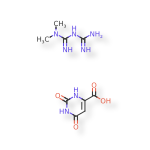
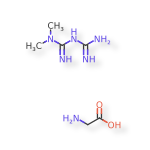
| Related Record | Type | Details | ||
|---|---|---|---|---|
|
|
ACTIVE MOIETY |
|
| Name | Property Type | Amount | Referenced Substance | Defining | Parameters | References |
|---|---|---|---|---|---|---|
| Tmax | PHARMACOKINETIC |
|
ORAL, PREGNANCY PHARMACOKINETIC PHARMACOKINETIC PHARMACOKINETIC PHARMACOKINETIC |
|
||
| Volume of Distribution | PHARMACOKINETIC |
|
|
|||
| Biological Half-life | PHARMACOKINETIC |
|
GERIATRIC |
|
||
| MAXIMUM TOLERATED DOSE | TOXICITY |
|
FORTAMET |
|
||
| ORAL BIOAVAILABILITY | PHARMACOKINETIC |
|
|
|||